
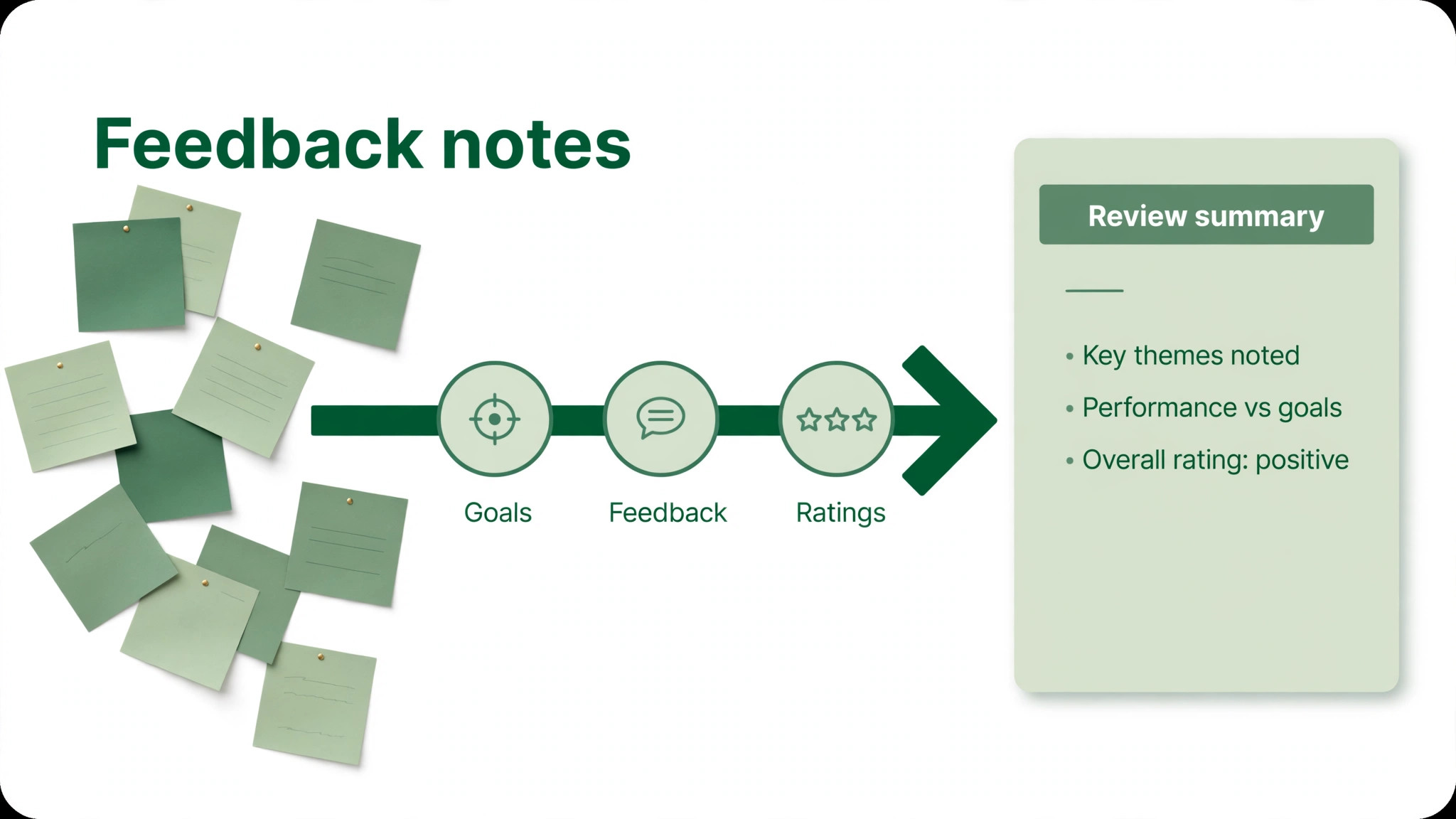
Review season arrives twice a year and eats a month each time. The top 10 ai tools for performance reviews cut that cycle down by gathering feedback all year, drafting the review from real work and flagging the ratings that do not match the evidence, so managers spend the meeting talking about growth instead of hunting for notes.
Review work splits into four jobs that need different tools. Goal tracking keeps the year on course, feedback collection catches the small moments, the review itself needs a fair draft, and calibration keeps ratings honest across teams. This guide compares ten tools on published prices, the job each one does best and the limit that only shows up after the first review cycle runs.
The Full Shortlist in One Place
Use this table to narrow the top 10 ai tools for performance reviews to two or three candidates before you read the full reviews. Monthly list prices apply unless noted, and most tools here price per person, so headcount decides the real bill.
| Job | Best tool | Why it wins |
|---|---|---|
| Reviews plus goals in one place | Lattice | The most complete review platform here |
| Weekly check-ins and praise | 15Five | Lightweight reviews built on weekly habits |
| Goals, reviews and skills | Leapsome | A full people platform for growing teams |
| Engagement plus reviews | Culture Amp | Surveys and reviews from one data set |
| Reviews inside the HR system | BambooHR | Reviews that sit next to payroll data |
| Simple review cycles | PerformYard | Reviews without the enterprise weight |
| Reviews for small teams | Trakstar | A focused tool that does one cycle well |
| Continuous feedback first | Reflektive | Real-time feedback that feeds the review |
| Lightweight reviews on a budget | Small Improvements | Clean reviews at a low per-person price |
| Weekly pulse plus reviews | Workleap Officevibe | Pulse surveys that feed review season |
How We Reviewed the top 10 ai tools for performance reviews
A tool earned a place here only when it does a real people job well in 2026, not when it added an AI label to a form builder. The top 10 ai tools for performance reviews were judged on five things that decide whether a team keeps using a tool after the first cycle: how fairly it drafts reviews, how easily managers adopt it, goal tracking, calibration and the true cost once per-person pricing is counted.
Draft fairness came first, because a review that misstates a person’s year is worse than no review at all. Manager adoption came second, since a tool managers will not open cannot run a cycle. Goal tracking came third, because a review without goals is just opinion. Fourth was calibration across teams, and fifth was the catch, from AI drafting locked behind the top tier to per-person charges that only appear on the invoice.
| Check before you buy | What to ask | Why it matters |
|---|---|---|
| Published price | Is the rate on the pricing page | A hidden price is a hidden bill |
| AI drafting | Which tier includes review drafts | AI on the top tier doubles the real cost |
| Manager adoption | Can a manager finish a review in an hour | A tool managers avoid cannot run a cycle |
| Calibration | Can ratings be compared across teams | Uncalibrated ratings are not fair |
| Trial access | Can you test it on a real cycle | A demo is not a trial |
| Contract terms | Monthly or annual, and what year two costs | Annual billing locks the price but not the need |
Tool by Tool
1. Lattice
Starting price From 11 dollars per person a month. Best for Reviews plus goals in one place. Watch out Add-ons for engagement and growth cost extra.
Lattice runs the whole performance cycle: goals, one-to-ones, feedback, reviews and calibration in one system. Its AI drafts review summaries from the feedback and goals recorded through the year, flags ratings that look out of line with the evidence, and gives managers a starting draft instead of a blank form.
Pricing starts at 11 dollars per person a month for the performance module, with engagement and growth tools as add-ons. It is the most complete platform on this list, and the one most growing companies land on when spreadsheets stop working. A team under fifty people may find it more than it needs.
The first week with Lattice is the real test. Ask how long setup takes, who helps when the first draft needs fixing, and what the team does while the tool is still learning its settings. A tool that takes weeks to set up costs more in lost time than the subscription, so get the first-week plan in writing before you pay.
2. 15Five
Starting price From 4 dollars per person a month. Best for Weekly check-ins and praise. Watch out Full reviews need the higher tiers.
15Five builds reviews on weekly habits: a fifteen-minute check-in where each person reports progress, blockers and mood, plus peer praise that feeds the review. Its AI summarises the check-ins into a review draft, so the annual review reflects the whole year instead of the last month.
Pricing starts at 4 dollars per person a month for the Engage plan, with the Perform plan for full reviews higher. It suits teams that want reviews to feel continuous rather than seasonal. A company that only reviews once a year will not get the value from the weekly rhythm.
Support matters more than most teams expect, because the first problem usually arrives in the first week. Check whether 15Five offers live help, how fast it answers, and whether the help covers your actual workflow. Good support gets a tool adopted, while slow support sees it abandoned and the subscription keeps billing either way.
3. Leapsome
Starting price Starting from 8 dollars per user a month. Best for Goals, reviews and skills. Watch out Priced per module, the full platform costs more.
Leapsome combines reviews, goals, learning paths and skills in one platform. Its AI drafts review summaries from goals and feedback, suggests development goals from skill gaps, and runs 360-degree feedback alongside the manager review. For a team that wants reviews tied to growth, the link between the two is the point.
Pricing starts at 8 dollars per user a month per module, so the full platform costs more than the headline. A team that buys only the review module gets a strong tool at a fair price. A team that buys every module should budget for the bundle, not the single-module rate.
Before you commit to Leapsome, check the export and the exit. Ask whether you can take your reviews, data and templates with you if you leave, and in what format they come out. A tool that locks your reviews inside its own system costs far more to leave than to join, and that is a price worth noting.
4. Culture Amp
Starting price Pricing on request. Best for Engagement plus reviews. Watch out Enterprise pricing, no self-serve trial.
Culture Amp pairs performance reviews with engagement surveys, so the review data and the survey data explain each other. Its AI benchmarks a team’s results against similar companies, flags the drivers of engagement, and drafts review summaries from the survey and feedback data it already holds.
The price is quoted per company, with no published rate. It is built for mid-size and large companies that already run engagement surveys. A small team should start with Lattice or 15Five instead, and come back to Culture Amp when the survey data exists to make it worth the price.
For a team weighing Culture Amp against the next tool on this list, the test is a real week of work. Run it on the review jobs you do most, count the time saved and the edits each draft needs, and compare that against the price. An hour saved a week pays for a review tool at almost any price, while one needing constant correction never pays.
5. BambooHR
Starting price Pricing on request. Best for Reviews inside the HR system. Watch out Reviews are an add-on to the HR platform.
BambooHR runs performance reviews inside the HR system that already holds payroll, time off and employee records. Its AI drafts review summaries from the goals and feedback stored in the system, and managers complete reviews without learning a second tool. For a team already on BambooHR, the review module is the natural next step.
Pricing is quoted per company and the performance module is an add-on to the core HR plan. A team buying BambooHR just for reviews would overpay; a team already running it gets the review feature at a fair incremental cost. The value is the single system, not the review tool alone.
The fit with the systems you already run decides whether BambooHR earns its place. Check the integration list before the trial, and test the one connection your HR stack actually needs on day one. A tool that cannot reach your core HR system forces double entry on every job, and double entry eats the time it was meant to save.
6. PerformYard
Starting price Pricing on request. Best for Simple review cycles. Watch out No published price, quote needed.
PerformYard runs review cycles without the weight of a full people platform: custom review forms, 360 feedback, goal tracking and a simple calibration view. Its AI helps managers write balanced feedback and flags reviews that read as too harsh or too vague before they are submitted.
Pricing comes as a quote per company, with no published rate. It suits teams that want a dedicated review tool rather than a platform, and that found Lattice or Leapsome too broad. Ask for a quote with your headcount in hand, since per-person pricing decides whether it beats the competition.
Read every tier on the pricing page before you pick PerformYard, because the feature you need often sits one tier above the cheapest plan. Pay for the tier that does the daily review job, not the tier that looks cheap. When a plan misses one core feature, the workarounds cost more than the upgrade would have.
7. Trakstar
Starting price Pricing on request. Best for Reviews for small teams. Watch out Smaller vendor, narrower integration list.
Trakstar is a focused review tool for small and mid-size teams: goal tracking, review forms, 360 feedback and a simple reporting view. Its AI drafts review summaries from the notes managers keep through the year, and the interface is simple enough that a manager can finish a review in one sitting.
The vendor quotes pricing per company and publishes no rate. It is a smaller vendor than Lattice or BambooHR, so the integration list is narrower, but the product is focused and the support is personal. For a team of twenty to two hundred people, it is a practical pick.
The first week with Trakstar is the real test. Find out how long setup takes, who helps when the first output needs fixing, and what the team does while the tool is still learning its settings. When setup takes weeks, the lost time costs more than the subscription, so get the week-one plan in writing before you pay.
8. Reflektive
Starting price Pricing on request. Best for Continuous feedback first. Watch out Now part of PeopleFluent, roadmap has shifted.
Reflektive is built on continuous feedback: employees and managers exchange short feedback notes all year, and the review pulls those notes into a draft automatically. Its AI summarises the feedback themes, highlights the strongest and weakest areas, and gives the manager a starting point grounded in the year, not the last month.
Pricing is quoted per company. Reflektive is now part of PeopleFluent, so buyers should ask about the roadmap and the integration plans before signing. For a team that believes reviews should be continuous, the feedback-first design is still the best fit on this list.
Good support matters more than most buyers expect, because the first problem usually arrives in the first week. Check whether Reflektive offers live help, how fast it answers, and whether the help covers your actual workflow. Strong support gets a tool adopted, while slow support gets it abandoned and the subscription keeps billing either way.
9. Small Improvements
Starting price Starting from 7 dollars per user a month. Best for Lightweight reviews on a budget. Watch out Fewer AI features than the bigger platforms.
Small Improvements does reviews, goals, one-to-ones and 360 feedback in a clean interface with almost no setup. Its AI features are lighter than Lattice or Leapsome, but the core review workflow is fast: a manager can run a whole cycle without training, and employees can see their goals and feedback in one place.
Pricing starts at 7 dollars per user a month, which makes it one of the cheapest paid tools here. It suits a team that wants a proper review cycle without paying for a full people platform. A team that needs heavy AI drafting should look at Lattice instead.
Before you commit to Small Improvements, check the export and the exit. Find out whether your work, data and templates can be taken with you if you leave, and in what format they come out. A tool that locks your work inside its own system costs far more to leave than to join, and that exit price is worth noting.
10. Workleap Officevibe
Starting price From 3.50 dollars per user a month. Best for Weekly pulse plus reviews. Watch out Reviews are lighter than a dedicated review tool.
Workleap Officevibe runs weekly pulse surveys that measure engagement, then feeds the results into the review cycle so managers see the trend behind the rating. Its AI summarises the survey comments into themes, and the review templates keep the process short for managers who dread review season.
Pricing starts at 3.50 dollars per user a month, the cheapest paid plan on this list. The review features are lighter than Lattice or Leapsome, so it suits a team that wants pulse surveys first and reviews second. For a team that needs deep calibration, a dedicated review tool fits better.
For a team weighing Workleap Officevibe against the next tool on this list, the test is a real week of work. Try it on the jobs you do most, count the time saved and the edits each output needs, and compare that against the price. Saving an hour a week pays for a tool at almost any price, while one needing constant correction never pays.
The Comparison Table, Explained
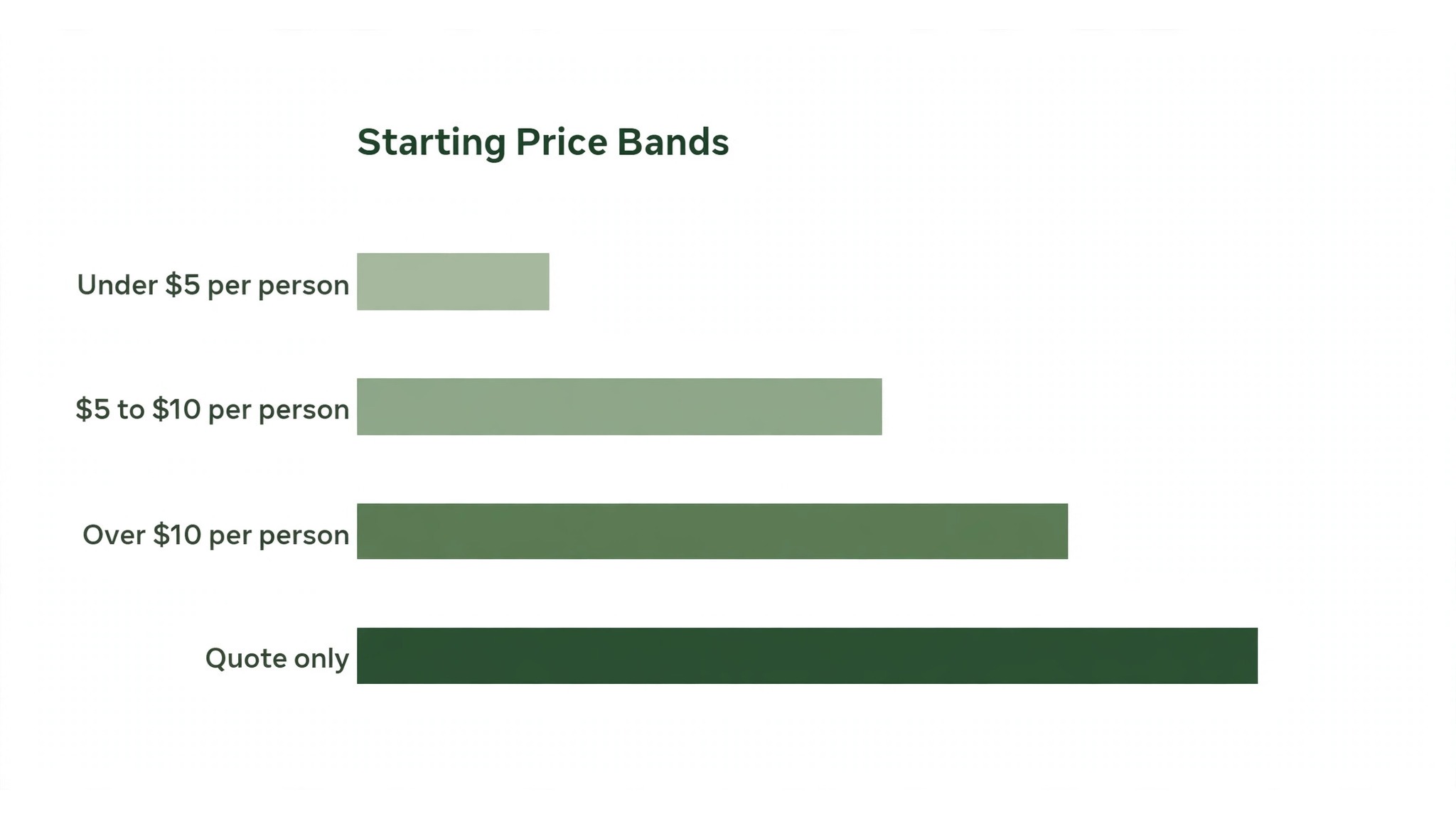
The table below puts the top 10 ai tools for performance reviews side by side on price, best job and free plan, so you can compare the published prices against the quote-only tools at a glance. Read it by job first, because a cheap tool that managers will not open costs more in failed cycles than a pricier one they actually use.
The fastest way through the table is by team size. Small teams should look at the bottom rows, growing teams at the top, and large companies at the quote-only platforms. Check each tool’s best job first, then the price, and the choice normally settles in under a minute.
| Tool | Starting price | Best for | Free plan |
|---|---|---|---|
| Lattice | From 11 dollars per person a month | Reviews plus goals in one place | Trial |
| 15Five | From 4 dollars per person a month | Weekly check-ins and praise | Trial |
| Leapsome | From 8 dollars per user a month | Goals, reviews and skills | Trial |
| Culture Amp | Pricing on request | Engagement plus reviews | No |
| BambooHR | Pricing on request | Reviews inside the HR system | Trial |
| PerformYard | Pricing on request | Simple review cycles | Trial |
| Trakstar | Pricing on request | Reviews for small teams | Trial |
| Reflektive | Pricing on request | Continuous feedback first | No |
| Small Improvements | From 7 dollars per user a month | Lightweight reviews on a budget | Trial |
| Workleap Officevibe | From 3.50 dollars per user a month | Weekly pulse plus reviews | Trial |
How to Choose Without Overbuying
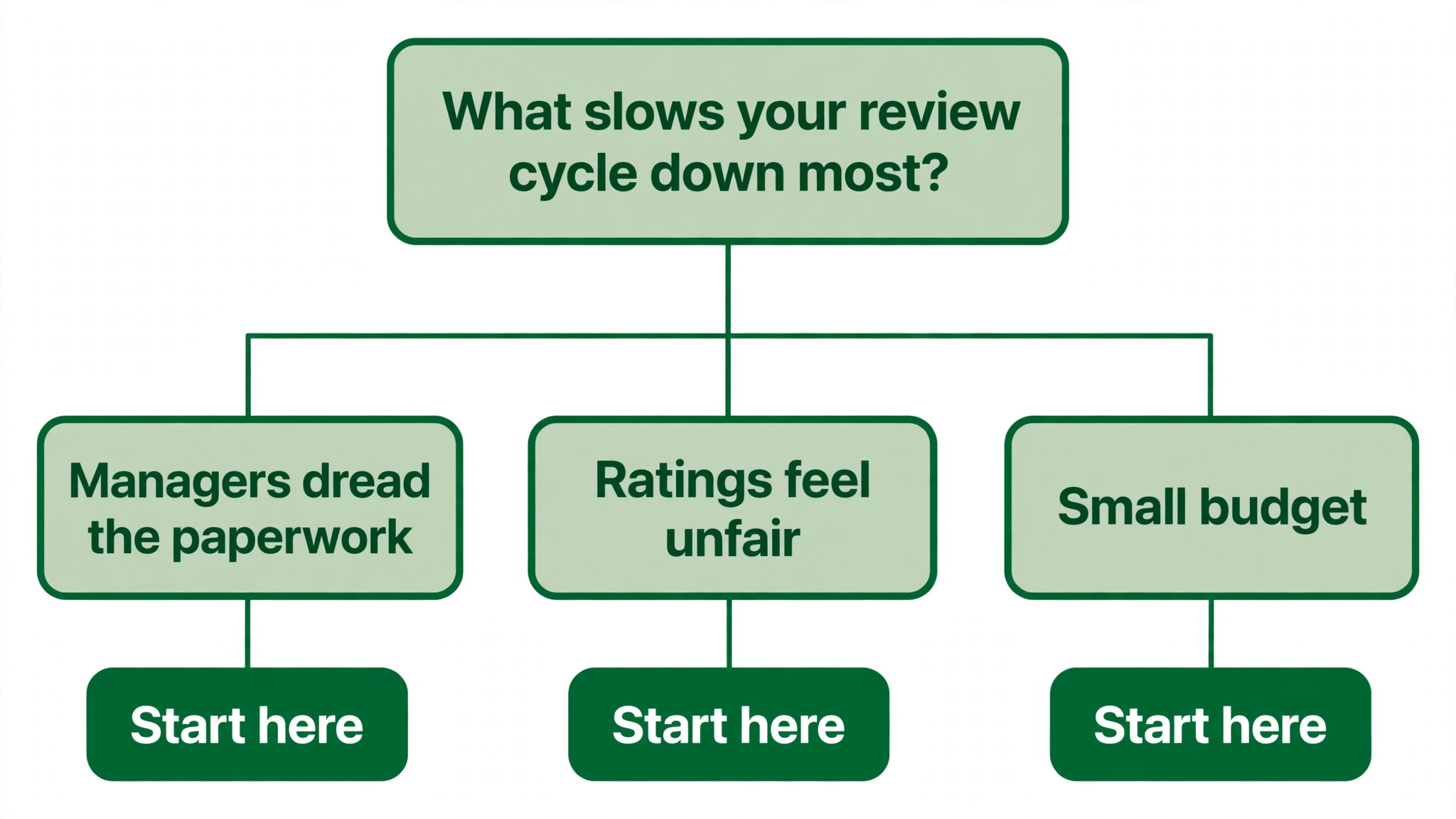
Start from the slowest part of the review cycle, not from the vendor homepage. Teams buried in manager paperwork should buy the tool with the best AI drafts first. Teams losing people to unfair ratings should buy calibration before features. The tool that fixes the slowest bottleneck task in the review cycle earns its price back first, and the rest can wait.
Add the whole stack together rather than judging one headline price. The table below prices year one for a small team and for a larger team on the common combinations, at published starting prices. Ask for per-person charges in writing before signing, since those lines surprise teams, and annual billing usually cuts about twenty percent off the monthly rate.
The second check is the exit. A review tool that exports cleanly is easy to leave, and one that locks the reviews in is expensive to quit. Check the export formats, the data ownership and the contract length on the pricing page before you pay, since the format decides what happens when the team outgrows the tool. Review history belongs to the company, and the tool should treat it that way. Ask how far back the history goes on export, and whether the calibration notes come with it.
| Stack | Monthly cost | What it covers |
|---|---|---|
| Workleap Officevibe alone | Lowest starting price | Pulse surveys plus light reviews |
| 15Five plus Small Improvements | Mid-range | Weekly habits plus a clean review cycle |
| Lattice plus 15Five | Mid-range | Full reviews plus weekly check-ins |
| BambooHR plus Lattice | Check the pricing page | HR system plus a dedicated review platform |
Best Pick by Job
Pick from the table below by the people job you do most each week. The top 10 ai tools for performance reviews are not ranked by features alone; they are ranked by which job each one actually finishes, so the pick that matches your week is the pick that will still be in your stack a year from now.
| Your job | Best pick | Why it wins |
|---|---|---|
| Reviews plus goals in one place | Lattice | The most complete review platform here |
| Weekly check-ins and praise | 15Five | Lightweight reviews built on weekly habits |
| Goals, reviews and skills | Leapsome | A full people platform for growing teams |
| Engagement plus reviews | Culture Amp | Surveys and reviews from one data set |
| Reviews inside the HR system | BambooHR | Reviews that sit next to payroll data |
| Simple review cycles | PerformYard | Reviews without the enterprise weight |
| Reviews for small teams | Trakstar | A focused tool that does one cycle well |
| Continuous feedback first | Reflektive | Real-time feedback that feeds the review |
| Lightweight reviews on a budget | Small Improvements | Clean reviews at a low per-person price |
| Weekly pulse plus reviews | Workleap Officevibe | Pulse surveys that feed review season |
Testing Before You Pay
A trial tells a people team more in five working days than a month of reading reviews, but only when the trial runs on a real review cycle. Pick the two tools that look closest after the shortlist, run them side by side on the same team, and score them on manager time, draft quality and how the review reads to the employee. Never trial on a demo team, because a demo hides the rough edges real people expose. The top 10 ai tools for performance reviews are best judged on a real cycle, not on a demo team.
| Day | What to test | What good looks like |
|---|---|---|
| Day 1 | Setup and first real review | Working in under an hour, no IT ticket |
| Day 2 | The hardest review you write | Draft needs light edits, not a rewrite |
| Day 3 | Calibration across two teams | Ratings compare fairly side by side |
| Day 4 | A manager tries it cold | They finish a review without asking for help |
| Day 5 | Count the time and the cost | Hours saved beat the monthly price |
Keep a simple log through the trial week, noting the daily task, the minutes it took, the edits made and whether the draft could go to the employee unchecked. By the end of the week, the log has made the decision for you. The tool with the best trial log wins, even when it was not the expected favourite, since the log measures your own review work rather than the vendor demo.
Buying Mistakes to Skip
Mistake one is buying for HR and forgetting the manager. A tool that HR loves and managers avoid cannot run a cycle, so trial it with the managers who will actually write the reviews. Mistake two is rolling out to the whole company before one team has run a cycle, since a favourite of one team and a burden to ten is a cost, not a system.
The third mistake is skipping the calibration check. Ask how ratings compare across teams and who can see the calibration view before the first real cycle, because fixing unfair ratings after the fact costs far more than checking first. The fourth mistake is judging the tool on its best day, so trial it on the hardest review itself and let the hard review decide.
Your Questions, Answered
Which tool gives a small team the cheapest good start
Workleap Officevibe is the cheapest credible start on this list at 3.50 dollars per user a month, with 15Five close behind at 4 dollars per person a month. Start with the job you do most each week, trial the tool on a real cycle, and add a bigger platform only when the light tool cannot do a job you are paid to do. That is the cheapest route to a review stack.
Can AI drafts make reviews fairer
They can, when a human checks them. AI drafts pull from the whole year of feedback instead of the last month, which reduces recency bias, but the draft still needs a manager to check the facts and the tone. Use the AI to beat the blank page, then change the details and the judgement, so the review sounds like the manager and not the tool.
For a growing team, which performance review tool wins
Lattice is the pick for a growing team, starting at 11 dollars per person a month with the most complete review platform here, while 15Five at 4 dollars per person a month is the strongest light option. The top 10 ai tools for performance reviews were ranked by the job each one finishes, not by the size of the feature list, so buy the tool that fixes your slowest weekly job first.
How much will a small team spend on review tools in year one
Plan on 50 to 150 dollars a month in year one for a team of twenty on a tool such as 15Five, rising to 200 to 400 dollars a month with a platform such as Lattice added. Multiply the headline price by headcount when you pay per person, since those charges surprise buyers. Price the whole stack and trial each tool on a real cycle before signing an annual contract.
Do these tools offer a trial before payment
Most tools on this list offer a free trial, and Lattice, 15Five and Leapsome all let teams test on a real cycle before paying. Use the trial on your own team, not on a demo, and count the manager hours saved and the edits each draft needs. A trial that covers a real week tells a people team more than a sales call, and a tool that will not trial is one to be careful about.
The Verdict, in Brief
If you buy one tool this quarter, pick Lattice for a growing team or 15Five for a team that wants reviews to feel continuous. Lattice is the most complete platform at 11 dollars per person a month, and 15Five is the easiest place to start at 4 dollars per person a month. The top 10 ai tools for performance reviews earn their keep by turning review season from a month of paperwork into a week of real conversations.
Whatever you pick, trial it on a real cycle, count the manager hours it saves and the edits each draft needs, and keep a human eye on every AI draft before it reaches an employee. Every review tool here can make feedback fairer and clearer. The difference is whether the tool matches the cycle you actually run, and whether you measure the return in hours saved and fairer ratings rather than in features used.