
An invoice that sits unpaid for sixty days is a loan you never agreed to give, and most small businesses discover the gap only when the bank balance drops. The top 10 ai tools for invoice chasing fix that gap by sending the right reminder at the right time, with a payment link attached, so the customer pays without a phone call.
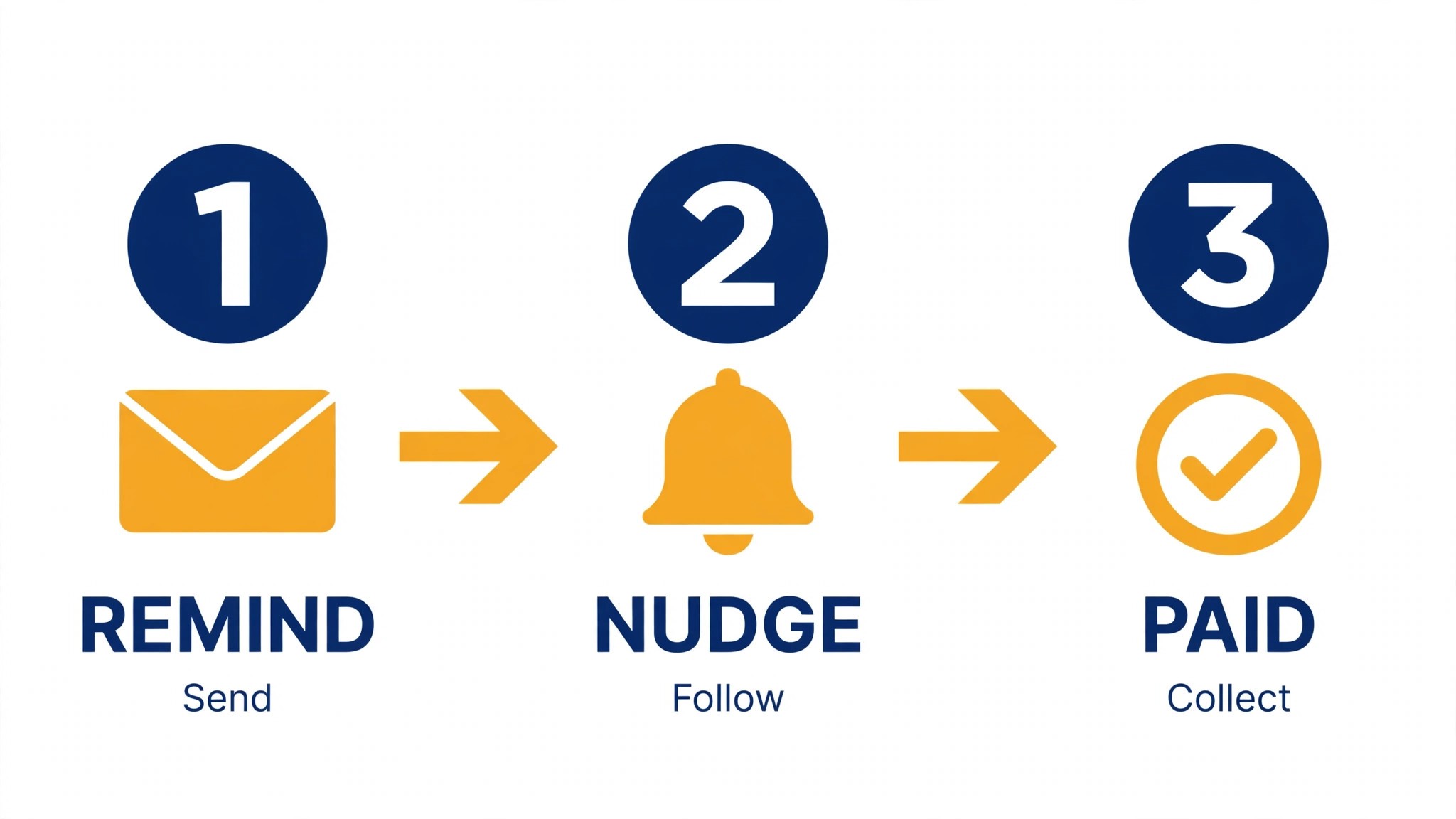
The difference between chasing that gets paid and chasing that burns a customer is tone and timing. A good tool sends a polite nudge first, a firmer note second and a call prompt third, and it stops the moment the payment lands. The tools in this guide are judged on whether their reminders bring money in without costing a relationship, not on how many emails they can send.
This guide compares ten tools on published prices, the chasing job each one does best and the catch that only shows up after the trial ends. Every price in this guide is the vendor’s published starting price as of late 2026, or shown as pricing on request when no rate is published. Start with the shortlist, then read the reviews that match the invoices you chase most.
The Full Shortlist in One Place
Use it to narrow the top 10 ai tools for invoice chasing to two or three candidates before you read the full reviews. Monthly list prices apply unless noted, and annual billing usually beats monthly billing for businesses who chase invoices every month.
| Job | Best tool | Why it wins |
|---|---|---|
| Automated reminders that get paid | Chaser | Reminders that bring money in |
| Collections for growing businesses | Upflow | Collections that scale with you |
| Smart reminders for finance teams | Kolleno | Reminders tuned by payment data |
| Cash flow forecasting plus chasing | Tesorio | Chasing with a cash forecast |
| Automated collections for mid-market | YayPay | Collections for mid-market teams |
| Paying and chasing in one place | Apron | Invoices and payments together |
| Chasing inside your accounting | QuickBooks Online | Books and chasing in one login |
| Small businesses on a tight budget | Xero | The cheapest credible start |
| Freelancers who invoice often | FreshBooks | Invoicing that freelancers love |
| Paying suppliers and chasing for free | Melio | Free payments with basic chasing |
How We Chose the Top 10 Ai Tools For Invoice Chasing
A tool earned a place here only when it chases a real unpaid invoice well in 2026, not when it added an AI label to an old reminder template. The top 10 ai tools for invoice chasing were judged on five things that decide whether a business keeps paying after the first month.
We ranked the tools first on the chasing job each one does, because a single-purpose chasing tool usually beats a general accounting platform that treats reminders as a side feature. Next came published pricing and how it scales, since per-invoice charges decide the real bill for a busy business. Output quality came third, because a reminder with a wrong amount costs more to fix than a month of subscription. Fourth, fit with the accounting tools the business already runs, because a tool that cannot reach real invoices forces double entry on every chase. Fifth, the catch, from free plans that cap invoices to enterprise tools that need a sales call before the first trial.
| Check before you buy | What to ask | Why it matters |
|---|---|---|
| Published price | Is the rate on the pricing page | A hidden price is a hidden bill |
| Reminder control | Can you set the tone and the timing | A rude reminder loses the customer |
| Payment link | Can the customer pay from the email | A reminder without a link is a delay |
| Accounting link | Does it connect to your books | Double entry eats the time it saves |
| Trial access | Can you test it on your real invoices | A demo is not a trial |
| Contract terms | Monthly or annual, and what year two costs | Annual billing locks the price but not the need |
Tool by Tool
1. Chaser
Starting price From 39 dollars a month. Best for Automated reminders that get paid. Watch out Per-invoice pricing adds up fast.
Chaser sends polite, timed reminders with a payment link, escalating the tone as the invoice ages and stopping the moment the payment lands. It connects to the accounting tools a business already uses, so the chase runs itself once it is set up.
The 39 dollar plan is the sensible starting point for a small business, because the core reminders sit in the base tier. Chaser also tracks who opened the reminder, which helps the owner call the right customer first. Check the invoice volume on each tier before you sign.
2. Upflow
Starting price Pricing on request. Best for Collections for growing businesses. Watch out No list price, and a setup that takes real work.
Upflow runs the whole collections workflow, from the first reminder to the payment plan, with a customer portal where payers can see what they owe and pay it. It suits a growing business where chasing has become a job in itself.
The trade-off is the buying process, with no published price and a setup that takes weeks to finish. Upflow suits a business with real overdue volume. For a freelancer with ten late invoices, it is the wrong scale.
3. Kolleno
Starting price Pricing on request. Best for Smart reminders for finance teams. Watch out No list price, and a focus that runs narrow.
Kolleno uses payment history to time each reminder, sending the nudge when the customer is most likely to pay. It suits a finance team that wants the chase tuned by data rather than by a fixed schedule.
The price is quoted and the focus is narrow: smart timing for finance teams. A small business will find it heavy. For a team with hundreds of payers, Kolleno is a strong fit.
4. Tesorio
Starting price Pricing on request. Best for Cash flow forecasting plus chasing. Watch out Enterprise only, no list price.
Tesorio combines invoice chasing with cash flow forecasting, so the finance team sees which payments will land and when. It suits a company where the forecast matters as much as the chase itself.
Tesorio is sold to larger finance teams, so the price comes from a contract and the rollout takes weeks. A business with a simple overdue pile will find it heavy. For a company managing cash tightly, Tesorio is a strong fit.
5. YayPay
Starting price Pricing on request. Best for Automated collections for mid-market. Watch out No list price, and a rollout that is a heavy lift.
YayPay automates the collections workflow for mid-market companies, with reminders, call lists and payment tracking in one system. It suits a finance team that needs the whole collections job handled, not just the email.
The price is quoted and the rollout is a real project, so a small business will find it heavy. YayPay suits a mid-market team with a dedicated collections role. For a small team, a lighter tool wins out.
6. Apron
Starting price Free tier, then paid plans. Best for Paying and chasing in one place. Watch out Chasing depth is lighter than Chaser.
Apron handles supplier payments and invoice chasing in one login, so a small business sees the money going out and the money coming in together. It suits a business that wants the cash picture in one place.
The free tier covers a small business, and the paid plans scale with volume. The trade-off is depth: the chasing is lighter than Chaser. For a business that values the combined view, that trade is usually worth it.
7. QuickBooks Online
Starting price From 35 dollars a month. Best for Chasing inside your accounting. Watch out Reminders are basic on the entry tier.
QuickBooks Online sends invoice reminders from the accounting system itself, so the chase always carries the right amount and the right due date. A business already on QuickBooks gets chasing without a new vendor.
At 35 dollars a month it is a fair price, and the starter plan covers the core books. The reminders are basic, so check what the tier actually sends. Use QuickBooks when the books matter most, and add Chaser when the reminder itself is the bottleneck.
8. Xero
Starting price From 15 dollars a month. Best for Small businesses on a tight budget. Watch out Reminders need the higher tier.
Xero is a cloud accounting tool with invoice reminders, bank feeds and a clean dashboard, at a price a small business can actually pay. It covers the books and the first chase in one subscription.
At 15 dollars a month it undercuts every serious rival, and the starter plan still includes invoicing. The deeper reminders sit higher up, so check the tier before you promise automated chasing. For a small business, Xero is the obvious first buy.
9. FreshBooks
Starting price From 21 dollars a month. Best for Freelancers who invoice often. Watch out Chasing is simpler than Chaser.
FreshBooks is built for freelancers, with clean invoices, late fees and reminders that go out on schedule. It suits a solo operator who invoices every week and wants the chase handled without thinking about it.
At 21 dollars a month it is cheap, and the starter plan covers a freelancer. The trade-off is depth: the chasing is simpler than a dedicated tool. For a freelancer, that trade is usually worth it.
10. Melio
Starting price Free. Best for Paying suppliers and chasing for free. Watch out Chasing is basic, it is a payments tool.
Melio lets a business pay suppliers and send invoices for free, with basic reminders attached. It suits a small business that wants the payments handled without a subscription, and the chasing is a useful extra.
Free is hard to beat, and the payments work well. The catch is the chasing depth: it is basic next to Chaser. Use Melio when the budget is zero, and move to Chaser when the overdue pile becomes the work.
The Comparison Table, Explained
The table below puts the top 10 ai tools for invoice chasing side by side on price, best job and free plan, so you can compare the published prices against the quote-only tools at a glance.
The fastest way through the table is by invoice age, since businesses pay more for a bargain tool that alienates a customer than for a pricier one that gets paid first time. A reminder that lands wrong eats another customer. Start with what each tool is best for, then check the price, and the choice normally settles in under a minute.
| Tool | Starting price | Best for | Free plan |
|---|---|---|---|
| Chaser | From 39 dollars a month | Automated reminders that get paid | Trial |
| Upflow | Pricing on request | Collections for growing businesses | No |
| Kolleno | Pricing on request | Smart reminders for finance teams | No |
| Tesorio | Pricing on request | Cash flow forecasting plus chasing | No |
| YayPay | Pricing on request | Automated collections for mid-market | No |
| Apron | Free tier, then paid plans | Paying and chasing in one place | Yes |
| QuickBooks Online | From 35 dollars a month | Chasing inside your accounting | Trial |
| Xero | From 15 dollars a month | Small businesses on a tight budget | Trial |
| FreshBooks | From 21 dollars a month | Freelancers who invoice often | Trial |
| Melio | Free | Paying suppliers and chasing for free | Yes |
Reading the Price Tags
Most businesses overpay in year one by buying the top tier for a feature they use once. The chasing tools on this list charge 15 to 49 dollars a month at the entry tier, and the gap between tiers is usually the invoice volume, the number of users, and the reminder depth. Buy the tier that covers your current invoices, and upgrade only when a payer asks for something the tier cannot produce.
The free plans are worth a careful look, because two tools on this list let you start without a card. A free tier that caps invoices to a handful, or blocks the payment link, is a trial in disguise. Count how many invoices you will actually chase in a month, check whether the free tier covers them, and treat a free plan that fits as a genuine saving rather than a stepping stone.
The Numbers Behind the Choice
The average small business waits more than a month for payment, and a quarter of invoices arrive more than two weeks late. That delay is not a minor inconvenience, it is the difference between paying the team on time and borrowing to cover payroll. A chasing tool that shortens the average payment time by even a week can transform the cash position of a small business.
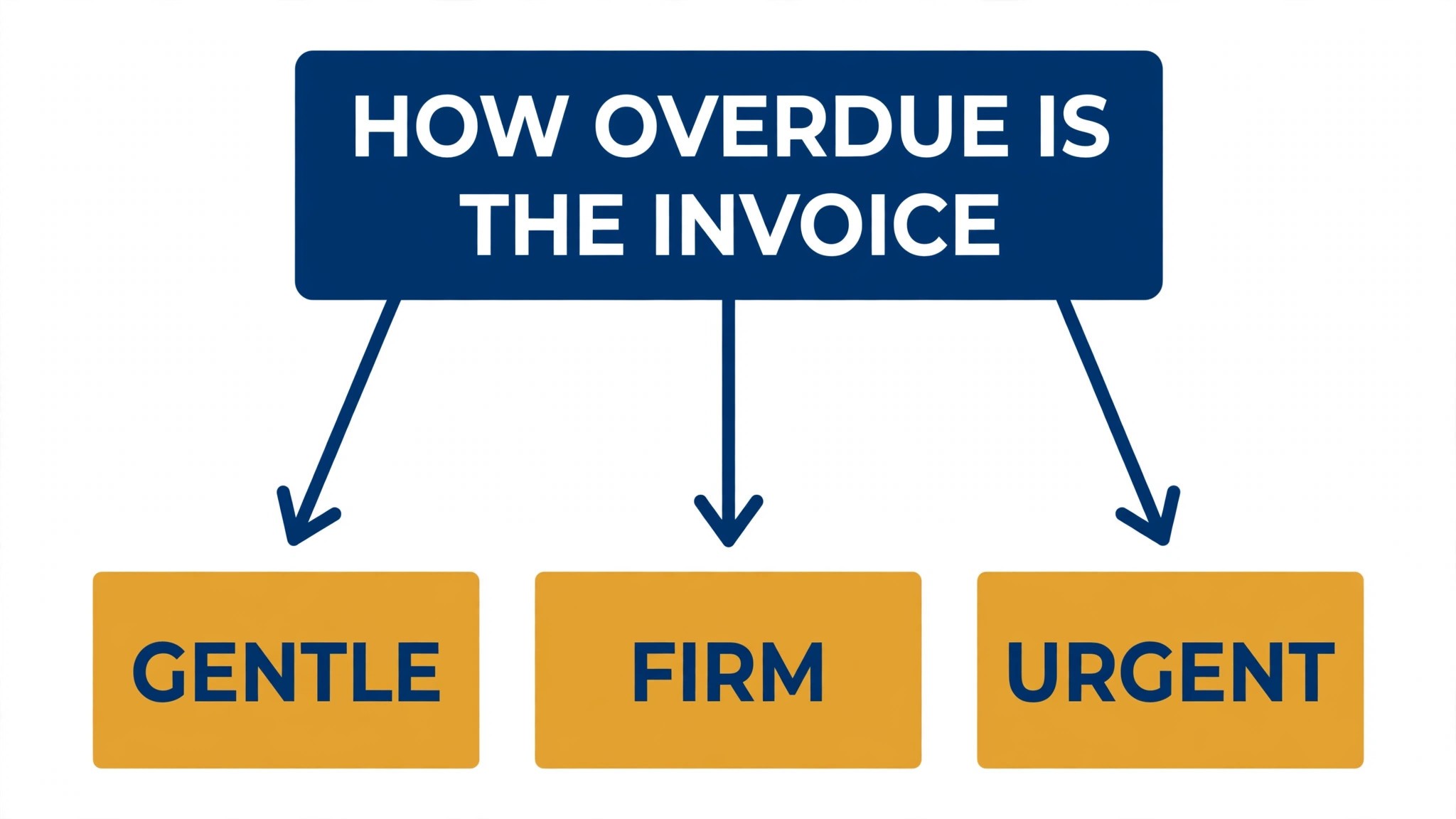
Tone is the hardest part of chasing to get right. A reminder that is too soft will be ignored, and one that is too firm will lose the customer, and the right tone changes as the invoice ages. The best tools on this list let the business set a different tone for each stage, polite at seven days, firm at thirty and direct at sixty, so the customer feels the escalation without feeling attacked.
The payment link is the single most effective feature in this category. An invoice that arrives with a button to pay now will be paid faster than one that asks the customer to find the bank details and make a transfer, because every extra step is a reason to put it off until tomorrow. Tools that include the link in every reminder, and track who clicked it, give the business the fastest route to the money.
Late fees work, but only when they are applied consistently. A business that threatens a fee and never charges it will be ignored, while a business that charges the fee stated in the contract will be taken seriously. The tools that apply the fee automatically, and show it on the reminder, remove the awkward conversation from the owner and put it into the system where it belongs.
The largest unpaid invoices are usually the ones that need a phone call, not an email. A chasing tool that flags the top five overdue accounts and prompts the owner to call them, with the invoice details on screen, turns the call from a dreaded chore into a short, factual conversation. That call is worth more than a dozen automated emails, and the tool that prompts it is the one that understands the job.
Cash flow forecasting starts with the chasing data. A business that knows which invoices are likely to be paid this week, and which are likely to slip, can plan its spending with confidence, while a business that guesses will either hoard cash or run short. The tools that show the expected payment date beside each invoice give the owner a forecast that is worth more than the chasing itself.
A business that chases invoices early, politely and consistently will rarely need to chase them firmly, because the customers learn that the invoice will be followed up. That reputation is built over months, and it is worth more than any single reminder, because it changes the behaviour of every customer who receives an invoice. The tool that makes the early chase automatic is the one that builds that reputation without any extra effort from the owner.
How to Choose Without Overbuying
Start from the invoices that are oldest, not from the vendor homepage. A business with a few large late payers needs a different tool from one chasing hundreds of small invoices, and a freelancer needs something else again. The tool that fixes the slowest part of your chasing week pays for itself first, and the rest can wait.
Price the whole chasing stack, not the headline number. The table below prices year one for a solo freelancer and for a small business on the common combinations, at published starting prices. Ask for per-invoice charges in writing before signing, since those lines surprise businesses, and annual billing usually cuts about twenty percent off the monthly rate.
| Stack | Monthly cost | What it covers |
|---|---|---|
| Xero alone | Lowest starting price | One tool for the main job |
| Chaser alone | Lowest specialist start | Core tool plus automated reminders |
| Chaser plus QuickBooks | Mid-range | Core tool plus an accounting specialist |
| Upflow plus Chaser | Higher | Core tool plus a collections specialist |
Best Pick by Job
Pick from the table below by the chasing job you do most. The top 10 ai tools for invoice chasing are not ranked by features alone; they are ranked by which job each one actually finishes, so the pick that matches your week is the pick that will still be in your stack a year from now.
| Your job | Best pick | Why it wins |
|---|---|---|
| Automated reminders that get paid | Chaser | Reminders that bring money in |
| Collections for growing businesses | Upflow | Collections that scale with you |
| Smart reminders for finance teams | Kolleno | Reminders tuned by payment data |
| Cash flow forecasting plus chasing | Tesorio | Chasing with a cash forecast |
| Automated collections for mid-market | YayPay | Collections for mid-market teams |
| Paying and chasing in one place | Apron | Invoices and payments together |
| Chasing inside your accounting | QuickBooks Online | Books and chasing in one login |
| Small businesses on a tight budget | Xero | The cheapest credible start |
| Freelancers who invoice often | FreshBooks | Invoicing that freelancers love |
| Paying suppliers and chasing for free | Melio | Free payments with basic chasing |
Testing Before You Pay
A trial tells businesses more in five working days than a month of reading reviews, but only when the trial runs on real invoices. Pick the two tools that look closest after the shortlist, run them side by side on the same overdue pile, and score them on money recovered, edits needed and how the reminder reads to a customer. Never trial on a demo file, because a demo hides the rough edges real invoices expose.
Keep a simple log through the trial week, noting the daily chasing task, the minutes it took, the payments recovered and whether the reminder could go to a customer unchecked. At the week’s end, the log is what decides. The tool with the best log wins, even when it was not the expected favourite, because the log measures your own invoices, not the vendor demo.
| Day | What to test | What good looks like |
|---|---|---|
| Day 1 | Setup and first real job | Working in under an hour, no IT ticket |
| Day 2 | The hardest job you do | Output needs light edits, not a rewrite |
| Day 3 | Integration with your core system | Data flows without double entry |
| Day 4 | A colleague tries it cold | They finish a job without asking for help |
| Day 5 | Count the time and the cost | Hours saved beat the monthly price |
Buying Mistakes to Skip
Mistake one is the cheapest plan, when the invoice volume you need sits two tiers up. Read every tier on the pricing page and pay for the tier that does the daily chasing job, not the tier that looks cheap. Mistake two is rolling out to everyone before a single person has used the tool for a week, since a favourite of one and a burden to five is a cost, not a system.
The third mistake is skipping the tone check. Ask a colleague to read the reminder cold, check the amount and the due date before the first real reminder goes out, because fixing a reminder after a customer has been offended costs far more than checking it first. The fourth mistake is judging the tool on its best day, so trial it on the oldest invoice itself and let the oldest invoice decide.
Your Questions, Answered
Which tool gives businesses the cheapest good start
Xero is the cheapest credible start on this list at 15 dollars a month, with FreshBooks close behind at 21 dollars a month. The top 10 ai tools for invoice chasing include free tiers and free plans, so start with the invoice type you chase most, trial the free tier on real invoices, and add a specialist only when the general tool cannot chase a payer you are judged on. That is the cheapest route to a chasing stack, with no payment for features never used.
Can a customer tell the reminder was written with AI
They can when the reminder goes out with the wrong amount or the wrong tone. AI tools draft a usable first version, but the facts, the wording and the judgement still come from the person doing the chasing. An output that goes out unedited reads generic, and customers notice generic reminders fast. Use the AI to beat the blank page, then change the details, the wording and the checks, so the result sounds like your business and not the tool.
For a small business, which invoice chasing tool wins
Chaser is the pick for a small business, starting at 39 dollars a month with almost no setup, while Xero at 15 dollars a month is the strongest all-round option when the budget is tight. The top 10 ai tools for invoice chasing were ranked by the job each one finishes, not by the size of the feature list, so a small business should buy the tool that fixes its slowest weekly job first and add a second tool only when a specific limit starts costing time.
How much will a small team spend on invoice chasing tools in year one
Plan on 15 to 40 dollars a month in year one for a general accounting tool such as Xero, rising to 80 to 200 dollars a month with a specialist such as Chaser added. Multiply the headline price by invoice count when you pay per invoice, since those charges surprise buyers. Price the whole stack and trial each tool on real invoices before signing an annual contract.
Do businesses need a specialist tool as well as a general one
Not always. Most businesses get by with one general tool for months, and a separate specialist only earns its place when a specific chasing task runs every week and the general tool cannot do it well. Add up a week of chasing time before you pay for it. When a chasing job takes hours and the specialist cuts it to minutes, buy it, and when the job already takes minutes, the specialist is a cost.
Do these invoice chasing tools offer a trial before payment
Most tools on this list offer a free plan or a free trial, and Chaser and Xero both let businesses test on real invoices before paying. Use the trial on the invoice type you chase most, not on a demo, and count the money recovered and the edits each output needs. A trial that covers a real week tells businesses more than a sales call, and a tool that will not trial is one to be careful about.
The Verdict, in Brief
If you buy one tool this quarter, pick Chaser for a small business that needs automated reminders that get paid, and Xero when the budget is tight and the books already live there. Chaser is the easiest specialist place to start at 39 dollars a month, and Xero is the cheapest all-round start at 15 dollars a month. The top 10 ai tools for invoice chasing earn their keep by giving you back the week between the due date and the payment, and both of these do that from the first month.
Whatever you pick, trial it on a real pile of overdue invoices, count the payments it recovers and the edits each reminder needs, and keep a human eye on every amount before it goes to a customer. Every chasing tool here can recover overdue payments faster. The difference is whether the chasing tool matches the invoices you actually send, and whether you measure the return in cash collected and customers kept rather than in features used.