
A meeting that ends with no written record might as well not have happened, and the average knowledge worker spends hours each week reconstructing decisions from memory. The top 10 ai tools for meeting notes exist because transcription, summaries and action items can now be produced in minutes, by a tool that sat in the call. This guide compares ten note takers on published prices, the meeting job each one does best and the catch that only shows up after the free plan ends.
The tools here split into three groups. Bot-based recorders such as Fathom, Fireflies and Otter join the call and transcribe everything. Bot-free tools such as Granola record on the laptop and never appear as a participant. Specialist tools such as Avoma and Grain add coaching or video clips on top of the notes. The right group depends on whether the meeting is a sales call, a research interview or an internal stand-up.
Every price below is the published starting price as of late 2026, with annual billing noted where it changes the current note-taking price. Free plans vary widely: one tool gives unlimited recordings, another caps a conversation at thirty minutes. Use the shortlist first, then read the reviews that match the note-taking jobs teams do most.
The Shortlist, Side by Side
The table below matches each common note-taking daily task to the single tool that handles it best. Use it to narrow the list to two or three best note-taking candidates before reading the full reviews. Prices are monthly list prices unless noted, and annual billing usually beats monthly billing for meeting-heavy teams.
| Job | Best tool | Why it wins |
|---|---|---|
| Sales teams and anyone who wants a strong free tier | Fathom | Free plan; Premium from 16 dollars per user a month billed annually |
| Teams that want a searchable archive of every conversation | Fireflies.ai | Free plan; Pro from 10 dollars per seat a month billed annually |
| Lectures, interviews and teams that need live transcription | Otter.ai | Free plan with 300 minutes a month; Pro from 8 |
| Founders and consultants who do not want a bot in their calls | Granola | Free plan; Business from 14 dollars per user a month |
| Teams that want meeting notes emailed automatically after every call | MeetGeek | From 15 |
| Multilingual teams and heavy transcription users | Notta | Free plan with 120 minutes a month; Pro from 8 |
| Sales and customer success teams that want coaching from their calls | Avoma | From 24 dollars per user a month |
| Customer research and product teams that live in video clips | tl;dv | Free plan with unlimited recording; paid plans from 20 dollars a month |
| Teams that want a personal meeting assistant with task tracking | Sembly | From 10 dollars per user a month |
| Sales teams that share video clips of key moments | Grain | From 19 dollars a month |
What We Checked Before Ranking Them
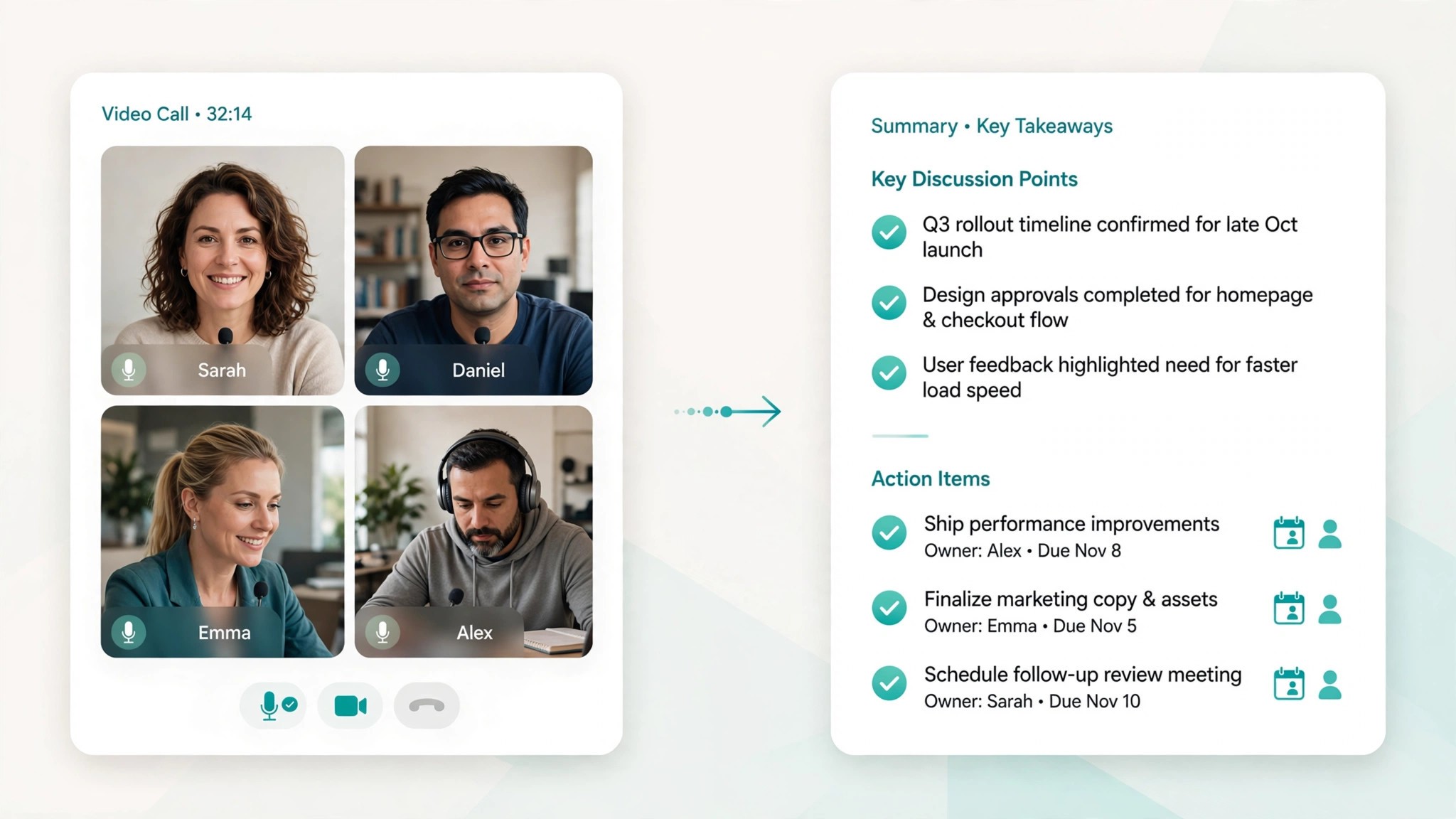
Only tools doing a real note-taking job daily in 2026 made this list for meeting notes, not products with a fresh AI label on old software. The top 10 ai tools for meeting notes were judged on five things that decide whether a buyer keeps paying after the first year.
The job came first, since a tool that does one note-taking core task well beats a platform that does five poorly for meeting-heavy teams. Published pricing and scaling came second, with per-seat charges that change the real bill for meeting-heavy teams as the team grows. Output quality came third, because a wrong note-taking answer today costs more than the subscription saves.
Fourth, how it fits the workflow it claims to serve for meeting-heavy teams, from integrations to the way note-taking data itself gets in and out. Fifth, the catch, from free plans that cap the useful note-taking options here to quote-only pricing that hides the real cost until the call.
| Check before you buy | What to ask | Why it matters |
|---|---|---|
| Published price | Is there a number on the pricing page | A quote-only tool hides the real cost |
| Free plan limits | What is capped or watermarked | A capped free plan cannot be tested properly |
| Data quality | Where does the AI get its facts | A wrong answer costs more than the subscription |
| Integrations | Does it connect to your current stack | A tool that sits alone gets abandoned |
| Contract terms | Monthly or annual, and what year two costs | Annual billing locks the price but not the need |
| Support and setup | How long to go live, and who helps | A tool that takes months to set up delays the return |
Each Tool in Detail

1. Fathom
Starting price Free plan; Premium from 16 dollars per user a month billed annually. Best for Sales teams and anyone who wants a strong free tier.
Fathom records and transcribes meetings on Zoom, Google Meet and Microsoft Teams with no limit on recordings, even on the free plan. Its summaries, action items and call clips are ready to share minutes after the call, and the Business tier pushes structured fields into Salesforce and HubSpot.
The catch is that the deeper AI summaries are capped on the free plan, and CRM sync only arrives on the paid tiers.
Fathom is the right first try for a sales team that wants a strong free tier, since the free version runs real meetings, though the deeper AI summaries are capped and CRM sync only arrives on paid tiers. Test it on live sales calls for a week, then ask for the renewal price of the paid tier in writing, and keep it only if the team still opens it three months from now.
2. Fireflies.ai
Starting price Free plan; Pro from 10 dollars per seat a month billed annually. Best for Teams that want a searchable archive of every conversation.
Fireflies transcribes in more than one hundred languages, stores meetings in a searchable library and integrates with CRMs, Slack and Notion. Its AI summaries, action items and topic tracking turn a call archive into something a team can actually search, instead of a folder nobody opens.
The catch is that the free plan caps team storage at 400 minutes, and the bot joining every call is visible to clients, which some teams dislike.
Skip Fireflies.ai if clients would object to a bot joining every call, because the bot is visible. For a team whose daily job is a searchable archive of every conversation, that archive is the draw, and the free starting tier makes the trial cheap. The free plan caps team storage at 400 minutes, so check what that tier costs before the trial ends, then run it on live calls for a week.
3. Otter.ai
Starting price Free plan with 300 minutes a month; Pro from 8.33 dollars per user a month billed annually. Best for Lectures, interviews and teams that need live transcription.
Otter shows the transcript live while the meeting runs, so participants can read, highlight and correct it in the moment. It also records in person on a phone, which suits interviews and lectures as well as video calls, and the Business tier adds the admin controls a team needs.
The catch is the 300-minute free cap and the 30-minute limit per conversation on the free plan, and HIPAA support only arrives on Enterprise.
Does the team need live transcription, or just a recording to read later? Otter.ai is built for the first job, for lectures, interviews and teams that need the words as they are spoken. The free cap is 300 minutes, with a 30-minute limit per conversation, and HIPAA support only arrives on Enterprise, so confirm the tier before the trial runs out and give it a week on live sessions.
4. Granola
Starting price Free plan; Business from 14 dollars per user a month. Best for Founders and consultants who do not want a bot in their calls.
Granola records audio on the laptop instead of sending a bot into the meeting, then reshapes the notes taken during the call into a clean summary. The result feels like notes written by a careful colleague, with integrations for Notion, HubSpot and Slack on the paid plan.
The catch is that the free plan keeps only 30 days of history, and it is built for personal notes first, so team-wide administration is lighter than Fireflies.
Your own calls will tell you more about Granola than any demo, because the question is whether notes taken without a bot are good enough for founders and consultants who refuse one. The catch is scope: the free plan keeps only 30 days of history, and it is built for personal notes, not a team archive. Get the renewal price in writing, then put it on live calls for a week.
5. MeetGeek
Starting price From 15.99 dollars a month. Best for Teams that want meeting notes emailed automatically after every call.
MeetGeek joins Zoom, Meet and Teams, transcribes the call and emails a summary with action items to everyone who was there. Its meeting insights track talk time and topics across calls, which helps a manager see patterns instead of reading one transcript at a time.
The catch is that the free tier is limited to three hours a month, and the AI insights are less deep than Fathom on sales calls.
At 15.99 dollars a month, MeetGeek pays for itself if the notes emailed automatically after every call save your team even an hour a week. The limit is depth: the free tier allows three hours a month, and the AI insights are less deep than the leaders, so the paid tier is the real product. Price that tier before the trial ends, then trial it on live calls for a week.
6. Notta
Starting price Free plan with 120 minutes a month; Pro from 8.17 dollars a month billed annually. Best for Multilingual teams and heavy transcription users.
Notta transcribes in 58 languages with real-time translation, which suits teams whose calls switch languages mid-sentence. It handles audio files and video uploads as well as live meetings, so an interview recorded on a phone can be transcribed the same way as a Zoom call.
The catch is the short free limit per conversation, and the summaries are simpler than the sales-focused summaries in Fathom or Avoma.
Against Fathom, Notta trades sales depth for language depth: it is the pick for multilingual teams and heavy transcription users, not for a sales team that wants coaching from its calls. The summaries are simpler than Fathom’s sales-focused ones, and the free limit per conversation is short, so confirm the tier before the trial runs out. Spend a week with it on live calls in your languages.
7. Avoma
Starting price From 24 dollars per user a month. Best for Sales and customer success teams that want coaching from their calls.
Avoma records, transcribes and analyses meetings, then scores calls against talk tracks and surfaces coaching moments for managers. Its AI scheduler and agenda features mean the notes start before the call, with context pulled from the CRM.
The catch is the price for a small team, and the coaching features only pay off when a manager actually reviews the scores each week.
Avoma is worth the money only when someone reviews the coaching it produces; without that habit, the price for a small team buys a recorder, not a coach. For buyers whose daily job is coaching from their calls, that review habit is the whole point. Ask what the second year costs before the trial ends, then try it on live calls for a week and check whether the coaching notes change how the team sells.
8. tl;dv
Starting price Free plan with unlimited recording; paid plans from 20 dollars a month. Best for Customer research and product teams that live in video clips.
tl;dv records meetings and lets a team clip, timestamp and share the exact thirty seconds that matter, instead of forwarding a whole recording. Its AI summaries and topic tags make a library of user interviews searchable, which is the whole point for a research team.
The catch is that the deeper AI features sit on paid plans, and CRM integrations are thinner than Fireflies or Fathom.
Three checks before tl;dv goes on the shortlist. First, does the team live in video clips? For customer research and product teams, that is the draw. Second, the deeper AI features sit on paid plans, and CRM integrations are thinner than Fireflies or Fathom, so price the tier you will need. Third, confirm that tier before the trial runs out, then use it on live calls for a week.
9. Sembly
Starting price From 10 dollars per user a month. Best for Teams that want a personal meeting assistant with task tracking.
Sembly joins the call, takes notes, extracts action items and follows up on tasks, so the meeting ends with owners and dates instead of good intentions. It works across Zoom, Meet, Teams and Webex, and its Glance feature prepares a briefing before the next meeting with the same people.
The catch is that the transcript quality varies more than the leaders here, and the interface takes a day or two to learn.
Transcript quality varies more than the leaders, and that is the first thing to test with Sembly, on your own calls rather than a demo. For a buyer whose daily job is a personal meeting assistant with task tracking, the tracking is the draw. Get the tier and the renewal terms in writing first, then let it run on live meetings for a week.
10. Grain
Starting price From 19 dollars a month. Best for Sales teams that share video clips of key moments.
Grain records meetings, transcribes them and makes it easy to clip a customer quote or an objection and drop it into Slack or the CRM. Its AI summaries and story features turn a call into a shareable highlight reel, which suits teams that learn from real customer words.
The catch is the smaller integration list than Fireflies, and the free trial is limited, so a team should test it on real sales calls before paying.
With Grain, the renewal terms matter more than the trial, because the free trial is limited and the smaller integration list than Fireflies only shows up once the team wires it in. At 19 dollars a month it is priced for a sales team that shares video clips of key moments. Get the renewal price in writing, then test it on sales calls for a week and see whether the clips actually get shared.
Side by Side on Price and Fit
The table below puts the top 10 ai tools for meeting notes side by side on price, best job and free plan, so you can compare the published prices against the quote-only tools at a glance. The cheapest way to read it is by note-taking task type, not by price, because a tool that costs little and cannot do the job is more expensive than a tool that costs more and does it well.
| Tool | Starting price | Best for | Free plan |
|---|---|---|---|
| Fathom | Free plan; Premium from 16 dollars per user a month billed annually | Sales teams and anyone who wants a strong free tier | Yes |
| Fireflies.ai | Free plan; Pro from 10 dollars per seat a month billed annually | Teams that want a searchable archive of every conversation | Yes |
| Otter.ai | Free plan with 300 minutes a month; Pro from 8 | Lectures, interviews and teams that need live transcription | Yes |
| Granola | Free plan; Business from 14 dollars per user a month | Founders and consultants who do not want a bot in their calls | Yes |
| MeetGeek | From 15 | Teams that want meeting notes emailed automatically after every call | Trial only |
| Notta | Free plan with 120 minutes a month; Pro from 8 | Multilingual teams and heavy transcription users | Yes |
| Avoma | From 24 dollars per user a month | Sales and customer success teams that want coaching from their calls | Trial only |
| tl;dv | Free plan with unlimited recording; paid plans from 20 dollars a month | Customer research and product teams that live in video clips | Yes |
| Sembly | From 10 dollars per user a month | Teams that want a personal meeting assistant with task tracking | Trial only |
| Grain | From 19 dollars a month | Sales teams that share video clips of key moments | Trial only |
Best Pick by Job: the top 10 ai tools for meeting notes by role
The top 10 ai tools for meeting notes are not the ones with the longest feature list. Those tools fix the slowest part of the week, and for meeting notes that part depends on the note-taking work role. The table below names one pick per role, so a buyer can skip the full reviews and start with the note-taking work tool that fits the job.
| Role | Best pick | Why |
|---|---|---|
| Solo practitioner | Fathom | Sales teams and anyone who wants a strong free tier |
| Small team | Fireflies.ai | Teams that want a searchable archive of every conversation |
| Growing business | Otter.ai | Lectures, interviews and teams that need live transcription |
| Enterprise buyer | Granola | Founders and consultants who do not want a bot in their calls |
| Budget buyer | MeetGeek | Teams that want meeting notes emailed automatically after every call |
Making the Final Choice
Begin with the slowest note-taking bottleneck task, not the vendor homepage. The top 10 ai tools for meeting notes earn their keep by giving back the hours a manual process used to eat, and the right one is the tool that fixes the bottleneck you actually feel, not the one with the longest feature list. Trial it on real note-taking work, with real data, before committing to annual billing.
Price the whole note-taking work bill, not the headline. Per-seat charges, add-ons and setup fees are the lines that surprise meeting-heavy teams, so get them in writing before signing, and annual billing usually saves about twenty percent. Ten dollars a seat looks cheap until meeting notes multiply it by fifty seats.
Run the trial in five steps for meeting-heavy teams. First, pick the two tools from the shortlist that match the main note-taking task. Second, load real data from the team’s own note-taking work, not a vendor demo. Third, do the core note-taking standard task three times and time it. Fourth, check the note-taking work output against a reference the team trusts. Fifth, price the full year, including seats and add-ons, before meeting notes sign.
The 2026 Buying Notes
The note-taking work prices in this guide shifted several times during 2026, so a January homepage number often differed by November. Treat each price as a starting point for meeting-heavy teams, confirm it on the vendor page, and get the renewal price in writing before an annual contract. The cheapest homepage plan is rarely the one a working meeting-heavy teams keeps.
Watch accuracy second. AI summaries, scores and predictions for meeting-heavy teams are drafts, not verdicts, and tools grounded in the team’s own note-taking records now beat tools guessing from general knowledge. Test outputs on real note-taking notes here with a human check before anything reaches a client, and count the cost of one wrong answer against a month of subscription.
Whether the tool connects decides whether meeting-heavy teams still use it in a month. Products wired into the CRM, the practice system or the team’s database get adopted, since the live note-taking data already lives there. Products needing weekly manual exports get abandoned by meeting-heavy teams, however smart the demo looks. Check the vendor integration list and trial the one note-taking work connection that matters most.
Data handling matters more in 2026 than it did two years ago for meeting-heavy teams. Ask where the daily note-taking data is stored, whether it is used to train models, and what happens to it when the subscription ends. The answer should be in the vendor terms for meeting-heavy teams, not in a sales email. For health, legal and financial note-taking work, a signed data agreement and a clear retention policy are not optional extras.
Run the trial like a test, not a tour, for meeting-heavy teams. Take two tools from the shortlist, load real note-taking inputs today, repeat the core job three times and measure the hours saved. No real note-taking work saving in two weeks means no saving in a year for meeting-heavy teams. That discipline is what keeps a note-taking work purchase from becoming a subscription that quietly renews.
| Year-one cost check | What to count | Why buyers miss it |
|---|---|---|
| Seats | Every user, not just the first | Per-seat pricing multiplies fast |
| Add-ons | AI features, integrations, support | The core job often needs a paid tier |
| Implementation | Setup, migration, training | Enterprise tools charge for onboarding |
| Renewal | Year-two price, not the intro offer | Discounts expire and prices rise |
Common Questions, Answered
What is the cheapest good note-taking work option to start with
The cheapest credible start depends on the main note-taking task, and the free plans here are the right first step. Trial the tool that matches the main note-taking routine task on real work for two weeks, and only pay when the free plan hits a limit you actually feel. The top 10 ai tools for meeting notes that cost the least are not always the cheapest in year one, because per-seat charges and add-ons change the real bill.
Will the AI output be accurate enough for meeting notes to trust
It will be accurate enough to draft for meeting-heavy teams, not accurate enough to publish unchecked. Every tool on this list can produce a wrong answer, a wrong number or a fabricated citation, so a human must check the note-taking work output against a trusted source before it goes to a client. The tools that ground their answers in the team’s own note-taking figures today are safer than the ones that guess from general knowledge.
Do meeting notes need one note-taking software tool or a stack of two
One general tool plus one specialist covers most typical note-taking buyers. The general tool does the everyday note-taking standard job, and the specialist fixes the single weekly pain it cannot handle, from bulk review to deep research. Buying three at once is the classic mistake for meeting notes, since the second and third subscriptions sit idle while the first does the work.
How much should small meeting-heavy teams budget in year one
A realistic year-one budget is the monthly price times twelve, plus twenty percent for seats, add-ons and implementation for meeting-heavy teams. A solo buyer can run most of these note-taking work tools for under fifty dollars a month. A team of ten should budget for the per-seat price on every seat for meeting-heavy teams, not just the first, and should ask the vendor for the year-two price in writing.
Can meeting-heavy teams switch note-taking work tools later without losing work
Yes, with exports done as meeting-heavy teams go. Hold source data in the team’s own system, export detailed note-taking summaries and plans often, and skip any tool that charges to release history. Tools on this list that connect to a CRM, EHR or database ease switching, since the data of record stays in a system meeting notes already own.
What should meeting-heavy teams check on the free note-taking trial run
Three checks decide the trial for meeting notes: accuracy on real note-taking inputs today, fit with the workflow the team already uses, and a price at the team’s size that can be defended. Demo-only trials tell nothing, so load real note-taking work, bring in the daily users, and measure the time saved in week one.
What We Would Buy
If you buy one tool this quarter, buy Fathom if it matches the job you do most each week, and buy Fireflies.ai if your work leans the other way. The top 10 ai tools for meeting notes earn their keep by giving you back the hours a manual process used to eat, and both of these do that from the first week. Begin with the slowest note-taking bottleneck task, trial on real work, and check every AI output by eye before a client sees it, for meeting notes.
Judge any pick by hours saved and faster note-taking work decisions, not by feature count, for meeting notes. Every tool here works. What differs is the match to the team’s real note-taking work, and whether the tool is still in use a year from now. That is the test each purchase must pass, and the test this guide helps meeting-heavy teams run.