

A youth sports league is run by volunteers, and volunteers run out of time before they run out of goodwill. Registration opens, 400 families sign up, and suddenly someone has to build the schedule, collect the payments, assign the coaches, answer the parent emails and find a referee for Saturday. The software decides whether that work takes a weekend or a month. The best software for youth sports leagues puts registration, schedules, rosters, team chat and payments in one place, so the board spends its evenings watching games instead of chasing forms.
This guide compares the best software for youth sports leagues on real prices, the job each one does best and what to watch out for. Prices come from vendor pricing pages and third party roundups checked in November 2026, and where a vendor sells by quote only, this guide says so instead of guessing.
The Quick Shortlist
The table below matches each common league job to the single tool that handles it best. Use it to narrow the best software for youth sports leagues down to two or three candidates before you read the full reviews.
| Job | Best tool | Why it wins |
|---|---|---|
| One app every family already knows | TeamSnap | Free plan, paid from 15 dollars 99 cents a month per team |
| Full platform for large organisations | SportsEngine | Registration, websites, scheduling and compliance in one system |
| Leagues run as a business | LeagueApps | Enterprise registration, branded app and partner network |
| Little League affiliated leagues | Sports Connect | 3 dollars per transaction plus around 3.4 to 3.99 percent |
| Simple flat price for volunteers | Jersey Watch | 348 dollars a year after a 19 dollar first month |
| Free registration and scheduling | TeamLinkt | Free core, bundles from 425 Canadian dollars a year |
| Genuinely free team management | Spond | Free, payment processing fees only |
| Cheapest team chat and scheduling | Heja | Free plan, Pro from 8 dollars 33 cents a month per team |
| Game day streaming and scorekeeping | GameChanger | Free, Plus from 39 dollars 99 cents a year |
| Modern platform for clubs and leagues | PlayMetrics | Quote only, built for high volume organisations |
| One flat price, published openly | InSeasonHQ | 750 dollars a year flat |
| Hockey focused league management | Crossbar | Quote only, PlayMetrics hockey platform |
| Long running league websites | TeamSideline | Quote only, built for youth leagues |
| Governing body grade registration | Demosphere | Quote only, trusted by large associations |
| Free league website to start | LeagueLineup | Free basic plan, paid upgrades available |
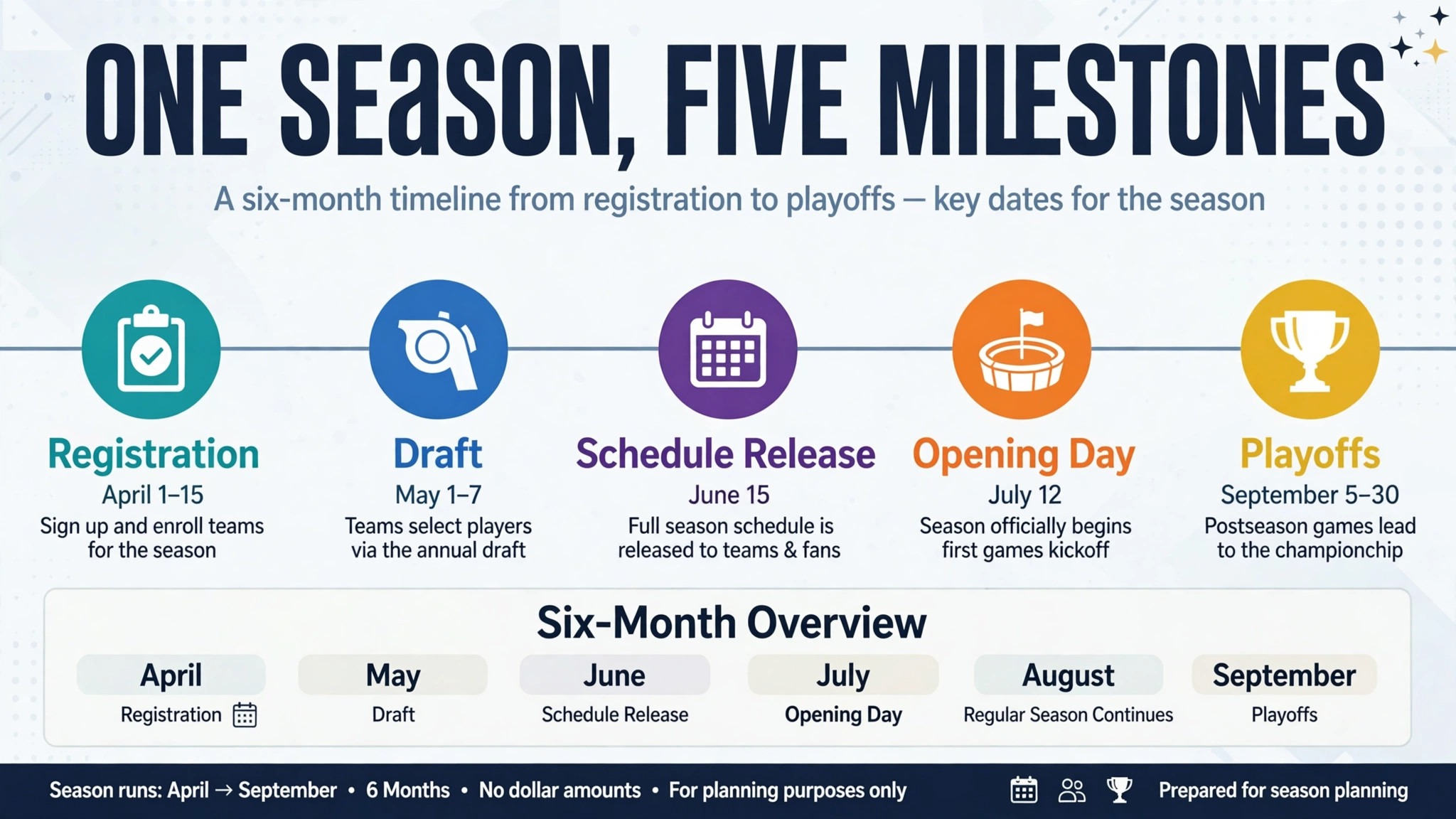
How We Judged the Best Software for Youth Sports Leagues
A tool earned a place here only if it handles the league job in 2026, not if it is a team chat app with a new label. We judged each one on five things that decide whether a league keeps paying after the trial.
First, registration, from online sign up and payment plans to roster offers, waitlists and volunteer sign ups, because a registration that confuses parents creates a month of emails for the board.
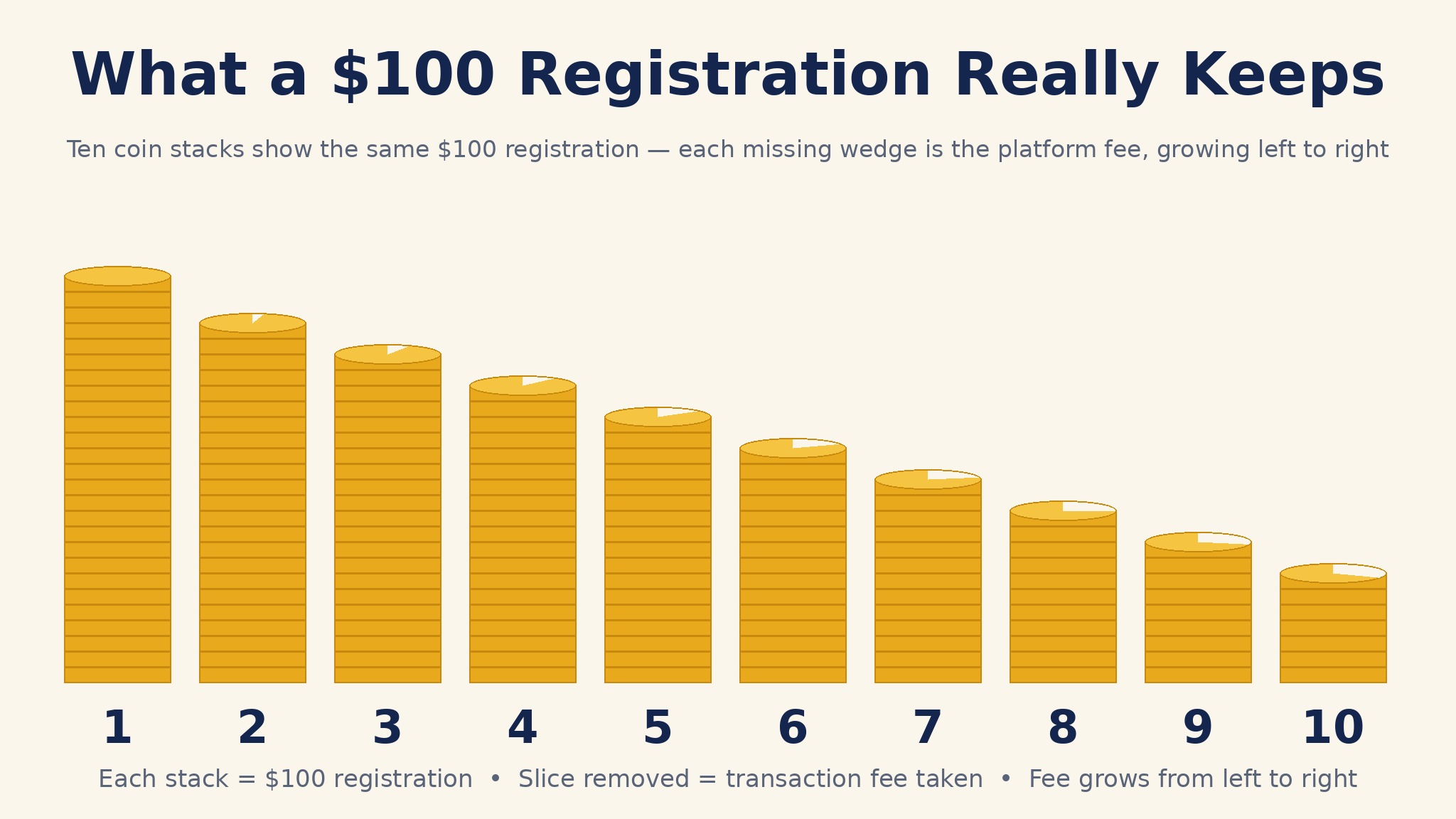
Second, the true cost, including the subscription, the per transaction fee and the payment processing, because a free platform that takes 3 percent of every registration can cost more than a 348 dollar flat plan once 400 families sign up.
Third, scheduling and communication, from game schedules and practice slots to team chat, availability and last minute rainouts, because a league lives or dies on whether families know where to be on Saturday.
Fourth, the scale fit, from a single team to a league with 2,000 athletes across several divisions, because a tool built for one team will break under a whole league and a tool built for a governing body will overwhelm a small board.
Fifth, the hidden costs, from per team pricing that stacks across a club to quote only platforms that hide the real cost until the sales call.
| Check before you buy | What to ask | Why it matters |
|---|---|---|
| Per team pricing | Does one subscription cover one team or the league | TeamSnap covers one team per subscription |
| Transaction fees | Fee per registration and who pays it | 3 percent of 400 registrations is real money |
| Volunteer tools | Sign ups, background checks and hours tracking | Volunteers are the league, and they need managing |
| Website included | Is the league website part of the price | A separate website can add 300 dollars a year |
| Background checks | Integrated or a separate purchase | Compliance is mandatory for most leagues |
| Contract terms | Annual, monthly or per season | Quote only tools often mean annual contracts |
The 15 Tools, Reviewed One by One
1. TeamSnap
Starting price Free plan, paid plans from 15 dollars 99 cents a month per team. Best for One app every family already knows. Watch out Every subscription covers exactly one team, so costs stack fast across a club.
TeamSnap is the name most coaches reach for first, and there is a reason. A single app holds the schedule, the chat, availability tracking, dues collection, drills and practice plans, and even live streaming, so families can follow games even when they cannot attend in person. The free tier fits a casual team of up to 15 players, though it shows ads and drops availability tracking and practice plans. Leagues can organise multiple teams under one umbrella, with apps for iOS and Android that parents already have on their phones.
The strength is familiarity. Millions of families already know TeamSnap, so a league that adopts it does not have to teach parents a new app, and coaches can start the season in an afternoon. The schedule, the chat and the payments live in one place, which is exactly what a volunteer coach needs on a Tuesday night.
2. SportsEngine
Starting price Quote only, with a free basic app. Best for Full platform for large organisations. Watch out Pricing is quoted per product and hard to compare, and most league features need paid plans.
SportsEngine is the enterprise platform for youth sports organisations, owned by NBC Sports Next and acquired by PlayMetrics in May 2026. It covers online registration, websites, scheduling, payments, background checks and communications in one system, with compliance tools that large clubs, leagues and governing bodies need. The free basic app covers simple team needs, but most league management features require paid plans.
The strength is breadth and backing. A large organisation can run registration, its website, its schedule, its payments and its background checks from one platform, instead of stitching five tools together. The compliance layer, including background checks and abuse prevention training, is built in rather than bolted on, which matters for leagues that answer to a governing body.
3. LeagueApps
Starting price Quote only, with a one time setup fee and a percentage of online transactions. Best for Leagues run as a business. Watch out The setup fee and the transaction percentage mean the real cost only appears in the quote.
LeagueApps serves leagues and sports organisations that operate as businesses, from adult leagues and youth organisations to tournaments and facilities. Registration, payments, scheduling, messaging and reporting come with the commercial mindset built in, and the partner network adds services around the platform, from fundraising to a branded mobile app. It is the pick for leagues with 1,000 or more athletes that need complex registration tools or a branded app.
The strength is the business layer. A league that wants to grow revenue, sell sponsorships, run tournaments and manage multiple facilities will find tools that the volunteer focused platforms do not offer. The branded mobile app puts the league in the app store, and the analytics show which programs fill and which need marketing.
4. Sports Connect
Starting price 3 dollars per transaction plus around 3.4 to 3.99 percent. Best for Little League affiliated leagues. Watch out The per transaction fee adds up fast, and the platform is mandated for some Little League organisations.
Sports Connect, formerly Blue Sombrero, serves youth sports organisations with registration, scheduling, websites and background checks under the Stack Sports umbrella. It is the platform many Little League organisations use, and for some it is mandated rather than chosen, which shapes the buying decision. The pricing is 3 dollars per transaction plus around 3.4 to 3.99 percent in processing, which is published openly.
The strength is the fit for affiliated leagues. Registration, rosters, volunteer management, online registration, league websites, announcements and reporting are all covered, and the background check integration handles the compliance that Little League requires. A volunteer run league gets an affordable all in one system without a large subscription.
5. Jersey Watch
Starting price 348 dollars a year after a 19 dollar first month. Best for Simple flat price for volunteers. Watch out The first month is a trial price, so the real cost is the 348 dollar annual renewal.
Jersey Watch is the sports management system for busy volunteers, trusted by over 2,800 organisations. It is built to be easy to use with minimal setup, covering registration, scheduling, rosters, team communication, payments and a league website. Create an account for free to explore all of the features, then get the first month for 19 dollars, including full service website and online registration setup from their team. After the first month, pay 348 dollars to keep the website and registration for the year.
The strength is the simplicity and the price. A volunteer board gets the whole season in one price, with the website and the registration setup done by the Jersey Watch team rather than by a volunteer learning a new tool. The interface is built for people who run a league in their spare time, not for full time administrators.
6. TeamLinkt
Starting price Free core, bundles from 425 Canadian dollars a year. Best for Free registration and scheduling. Watch out The free core is ad funded, and the bundles are priced in Canadian dollars.
TeamLinkt gives away the core product for free and charges only payment processing fees, which makes it the smartest choice for volunteer run leagues with no budget. Registration, scheduling, rosters, team chat and payments are all in the free core, and paid bundles from 425 to 795 Canadian dollars a year add features like a website, live streaming and advanced reporting. The platform is built for leagues that want free registration and scheduling without ads in the parent experience.
The strength is the price. A league can run its whole season on the free core, and only pays when it wants the extras. That is a genuine advantage for a community league where the budget is zero and the board is all volunteers. The scheduling tools are solid, the team chat works, and the registration flow is simple enough for parents to finish on a phone.
7. Spond
Starting price Free, payment processing fees only. Best for Genuinely free team management. Watch out No league level registration or website, so it suits teams more than whole leagues.
Spond is the rare sports app with no catch on the price. Events, availability, messaging and payments are all free, with only payment processing fees when money moves. It is the ideal tool for a volunteer run team that wants scheduling, RSVPs and team chat without a subscription, and it is completely free in a way that TeamSnap’s free tier, with its ads and missing features, is not.
The strength is the honesty. A coach can run a whole season on Spond without ever seeing a paywall, and the parent experience is clean and simple. Availability tracking, event invitations and group messaging all work from the first day, and the app is popular in Europe as well as North America, which helps leagues with international families.
8. Heja
Starting price Free plan, Pro from 8 dollars 33 cents a month per team. Best for Cheapest team chat and scheduling. Watch out Pro is priced per team, so a club with many teams pays per team.
Heja is the grassroots team app, built for community teams that need free or low cost communication. The free plan covers team chat, announcements, scheduling, attendance tracking, media sharing and carpool coordination, and Pro from 8 dollars 33 cents a month per team adds the extras. It is the cheapest paid team tool on this list, and the interface is simple enough for a parent who has never used a sports app.
The strength is the price and the simplicity. A team can run on the free plan indefinitely, and Pro costs less than a single family pizza night per month. The carpool coordination is a small feature that parents genuinely use, and the media sharing lets families post photos without a separate group chat.
9. GameChanger
Starting price Free, Plus from 39 dollars 99 cents a year, Premium from 99 dollars 99 cents a year. Best for Game day streaming and scorekeeping. Watch out It is a game day tool, not a registration or scheduling platform.
GameChanger is the game day app that families actually open during the game. It covers live streaming, scorekeeping, stats and team communication, with a free tier that handles the basics. Plus at 39 dollars 99 cents a year buys unlimited live stream viewing, and Premium at 99 dollars 99 cents a year adds the full stat and video package. It is the cheapest paid tool on this list by a wide margin.
The strength is the game day experience. Parents who cannot attend can watch the live stream, follow the score and see the stats in real time, which is the feature families ask for most after the schedule itself. The scorekeeping is simple enough for a volunteer to run from the sideline, and the stats build a season record that players and coaches both value.
10. PlayMetrics
Starting price Quote only. Best for Modern platform for clubs and leagues. Watch out No published price, and the SportsEngine acquisition means the roadmap is still settling.
PlayMetrics is the modern platform for clubs, leagues and tournament operators, and it acquired SportsEngine in May 2026, which makes it one of the biggest names in the category. It covers registration, scheduling, payments, communication and reporting, with a focus on high volume organisations that need the system to work at scale. Pricing is quote only, set against the size of the organisation.
The strength is the scale. PlayMetrics is built for organisations with thousands of participants and multiple programs, and the platform handles the volume without the workarounds that a small league tool needs. The acquisition of SportsEngine gives it a large existing user base and a deep feature set, from compliance to websites to background checks.
11. InSeasonHQ
Starting price 750 dollars a year flat. Best for One flat price, published openly. Watch out A flat 750 dollars is more than a small league pays on a free platform, so it suits mid size leagues best.
InSeasonHQ is the board’s back office, built for leagues that want a published price and no ads. The price is 750 dollars flat a year, with a fixed fee per family checkout, and the platform covers registration and payments, payment plans, teams and roster offers, scheduling, communication, volunteering, a team store, check in at the door, classes, lessons and rentals, and an organisation website. Both rates are published openly, which is rare in this category.
The strength is the transparency. A board can see the whole cost before it signs, with no setup fee, no percentage of every transaction and no quote to negotiate. The volunteering tools are a real differentiator, because most leagues run on volunteers and most platforms treat them as an afterthought. The team store and the door check in add revenue and control that the cheaper tools do not offer.
12. Crossbar
Starting price Quote only, no published pricing. Best for Hockey focused league management. Watch out Built for hockey, so other sports get less depth, and the price needs a sales call.
Crossbar is PlayMetrics’ hockey platform, built for hockey leagues, clubs and associations. It covers registration, scheduling, rosters, team communication and payments, with hockey specific workflows like tryouts, team formation and ice time scheduling. Pricing is quote only, with no published rate, which puts it in the same conversation as PlayMetrics and SportsEngine.
The strength is the sport fit. A hockey league has needs that a generic league platform does not cover, from ice scheduling to tryout evaluation to the team formation process, and Crossbar is built around those workflows rather than adapted to them. The platform is part of the PlayMetrics family, so it shares the scale and the reporting of the larger system.
13. TeamSideline
Starting price Quote only. Best for Long running league websites. Watch out No published price, and the interface is older than the newer tools.
TeamSideline is the long running league management platform, built for youth leagues that need a website, registration, scheduling and communication in one system. It covers rosters, schedules, standings, team pages and parent communication, with a league website that has served youth leagues for years. Pricing is quote only, set after a demo against the size of the league.
The strength is the website. TeamSideline’s league websites are a known quantity, with team pages, standings and schedules that parents can find without an app, which matters for leagues with families who do not want another login. The platform handles the full season, from registration to playoffs, and the support team knows the youth league calendar.
14. Demosphere
Starting price Quote only. Best for Governing body grade registration. Watch out Built for large associations, so a small league will find it more than it needs.
Demosphere is the platform for governing bodies and large associations, trusted by state and national organisations that need registration, compliance, background checks and reporting at scale. It covers online registration, rostering, scheduling, communication and compliance, with the depth that a governing body requires and a small league does not. Pricing is quote only, set against the size of the organisation.
The strength is the compliance layer. A governing body that needs to track background checks, coaching certifications, abuse prevention training and roster eligibility across hundreds of clubs will find Demosphere built for that job, while the volunteer focused tools treat compliance as an add on. The reporting is deep, and the platform handles the audit trail that a governing body has to produce.
15. LeagueLineup
Starting price Free basic plan, paid upgrades available. Best for Free league website to start. Watch out The free plan is a website first, not a full registration system, so a growing league will need paid upgrades.
LeagueLineup is the free starting point for a league that needs a website before it needs anything else. The free basic plan covers a league website with team pages, schedules, standings and announcements, and paid upgrades add registration, payments and advanced features. It is the cheapest way to put a league online, and the website is simple enough for a volunteer to build in an afternoon.
The strength is the zero cost start. A new league can have a professional looking website, with schedules and standings, without a subscription or a setup fee, and only starts paying when it needs registration and payments. That makes LeagueLineup a good fit for a new league testing demand or a small league that already handles registration another way.
Side by Side Comparison
The table below puts the best software for youth sports leagues side by side on price, best fit and free plan, so you can compare the shortlist at a glance.
| Tool | Starting price | Best for | Free plan |
|---|---|---|---|
| TeamSnap | Free, paid from 15 dollars 99 cents a month per team | One app every family already knows | Yes |
| SportsEngine | Quote only, free basic app | Full platform for large organisations | Basic app |
| LeagueApps | Quote only, setup fee plus transaction percentage | Leagues run as a business | No |
| Sports Connect | 3 dollars per transaction plus 3.4 to 3.99 percent | Little League affiliated leagues | No |
| Jersey Watch | 348 dollars a year | Simple flat price for volunteers | Trial only |
| TeamLinkt | Free core, bundles from 425 Canadian dollars a year | Free registration and scheduling | Yes |
| Spond | Free, processing fees only | Genuinely free team management | Yes |
| Heja | Free, Pro from 8 dollars 33 cents a month per team | Cheapest team chat and scheduling | Yes |
| GameChanger | Free, Plus from 39 dollars 99 cents a year | Game day streaming and scorekeeping | Yes |
| PlayMetrics | Quote only | Modern platform for clubs and leagues | No |
| InSeasonHQ | 750 dollars a year flat | One flat price, published openly | No |
| Crossbar | Quote only | Hockey focused league management | No |
| TeamSideline | Quote only | Long running league websites | No |
| Demosphere | Quote only | Governing body grade registration | No |
| LeagueLineup | Free basic plan | Free league website to start | Yes |
How to Pick the Right Software for Your League
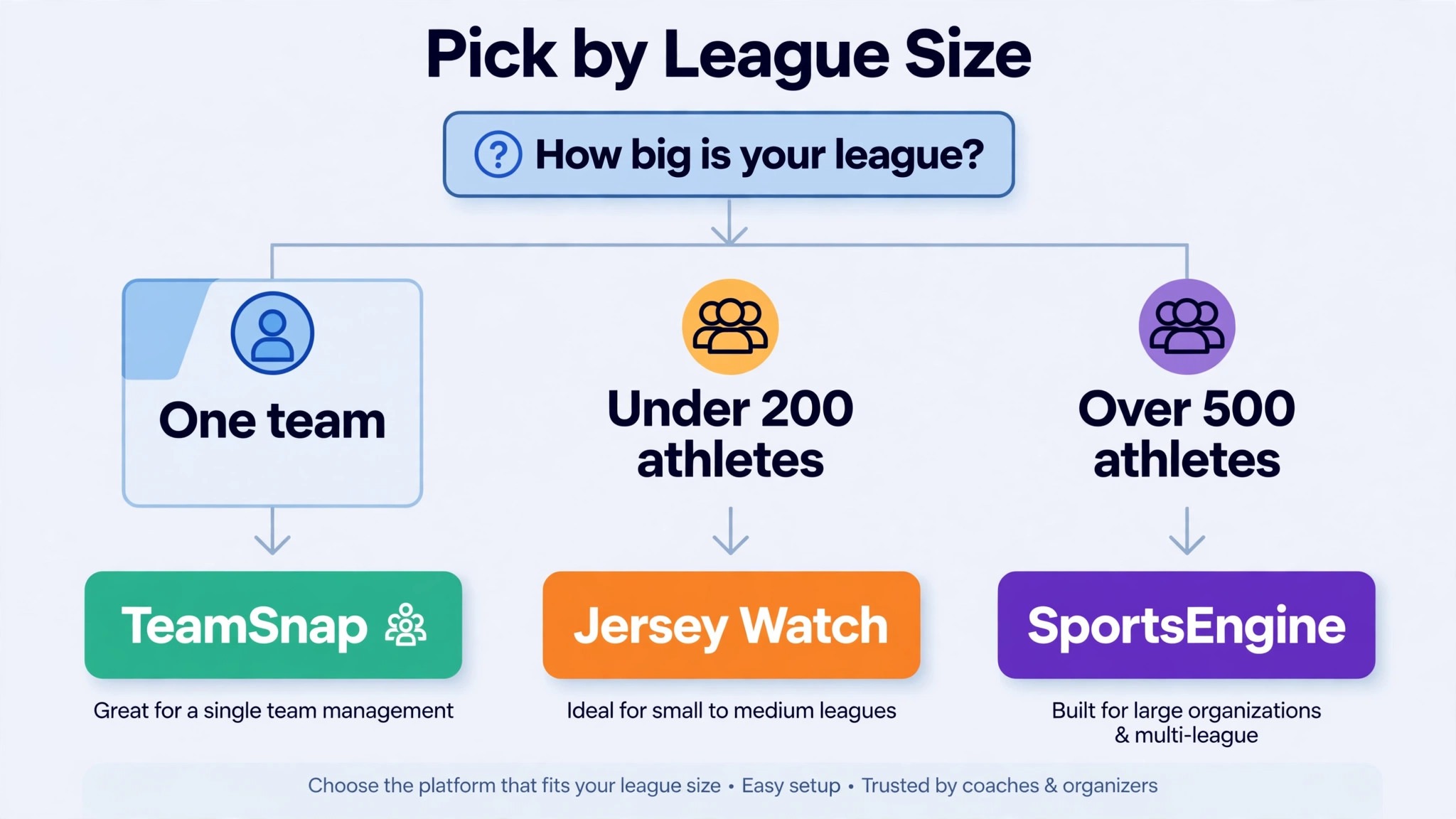
The best software for youth sports leagues is not the one with the longest feature list. It is the one whose pricing model matches how your league actually registers. A single team should buy TeamSnap or Heja, because the family already knows the app and the price is low. A small league with no budget should start on TeamLinkt or Spond, because the core is free and the season can run without a bill.
A mid size league with 200 to 500 athletes should buy Jersey Watch or InSeasonHQ, because a flat price is cheaper than a per transaction fee at that volume. A large league or a governing body should buy SportsEngine, LeagueApps or Demosphere, and accept the quote as the cost of the depth.
Do the per registration arithmetic before you sign. The table below shows what a league with 400 registrations at 100 dollars each actually pays in year one on the most common options, using published rates.
| Option for a 400 athlete league | Yearly platform cost | What it covers |
|---|---|---|
| Jersey Watch | 348 dollars | Website and registration for the year |
| InSeasonHQ | 750 dollars | Registration, scheduling, website, volunteering |
| Sports Connect | About 1,200 dollars in transaction fees | 3 dollars per transaction, processing extra |
| TeamSnap, 10 teams | About 1,919 dollars a year | 15 dollars 99 cents a month per team |
| TeamLinkt free core | 0 dollars, processing only | Registration, scheduling, chat, payments |
| LeagueApps | Quote only, setup fee plus percentage | Enterprise registration, branded app |
Frequently Asked Questions
What is the cheapest good youth sports league software for a small league
TeamLinkt and Spond are the cheapest options, because the core product is free and the league only pays payment processing fees. Jersey Watch at 348 dollars a year is the cheapest flat priced full system, with the website and registration included. The cheapest option among the best software for youth sports leagues depends on your athlete count, because a per transaction fee beats a subscription at very low volume and loses once hundreds of families register.
Do youth sports leagues need background checks in their software
Yes, for most leagues. Background checks are mandatory for coaches and volunteers in most youth sports, and a platform that integrates them saves the board hours of chasing paperwork. SportsEngine, Sports Connect and Demosphere all include background check workflows, while TeamSnap and Spond do not.
How much should a small youth sports league budget for software
A realistic yearly budget for the best software for youth sports leagues is 0 to 750 dollars a year for a small league on a free or flat priced platform, plus card processing of roughly 3 percent per registration. A league on a per transaction model should budget 3 dollars per registration plus the processing percentage instead.
Can I switch league software without losing my registrations
Yes, but plan the switch for the gap between seasons. Export your athlete list, family accounts, rosters, payment history and volunteer records first, then set up the new divisions, schedules and registration forms before you open registration. Most platforms offer migration help, and the switch takes a few days of setup plus a week of parallel running.
Does league software handle volunteers as well as athletes
The better platforms do. InSeasonHQ has dedicated volunteering tools, including sign ups and hour tracking, and Sports Connect covers volunteer management alongside registration. TeamSnap and Heja handle team level volunteers, but not league wide volunteer coordination.
Our Verdict
If you buy one tool this quarter, buy Jersey Watch. It gives a small to mid size league a flat bill, a website and registration in one system, and a team that sets it up for you, and it is the fastest way to stop paying per registration for families your own community brought in. The best software for youth sports leagues earns its keep by giving volunteers their evenings back, and Jersey Watch does that from the first week, without a sales call or a per team price that stacks across the club.
Whatever you pick, price it on your real athlete count, trial with your actual divisions and schedules, and check the transaction fees before you sign. The tools on this list all work. The difference is whether the pricing model matches how your league registers, and whether the scheduling, communication and volunteer tools handle the job your board actually does.