

A client who waits three days for an itinerary books with the agent who sent one in three hours. The trip itself has not changed, only the speed of the answer, and speed is now the product. The best ai tools for travel agents exist because the proposal, the quote and the follow up now decide who plans the trip, not just who knows the destination best.
This guide compares twelve tools on published prices where they exist, the job each one does best and the catch that only shows up after the contract is signed. Several platforms in this category sell by quote or by seat, so where a price is reported by a third party roundup rather than published by the vendor, this guide says so. Start with the shortlist, then read the reviews that match the problem your agency feels most.
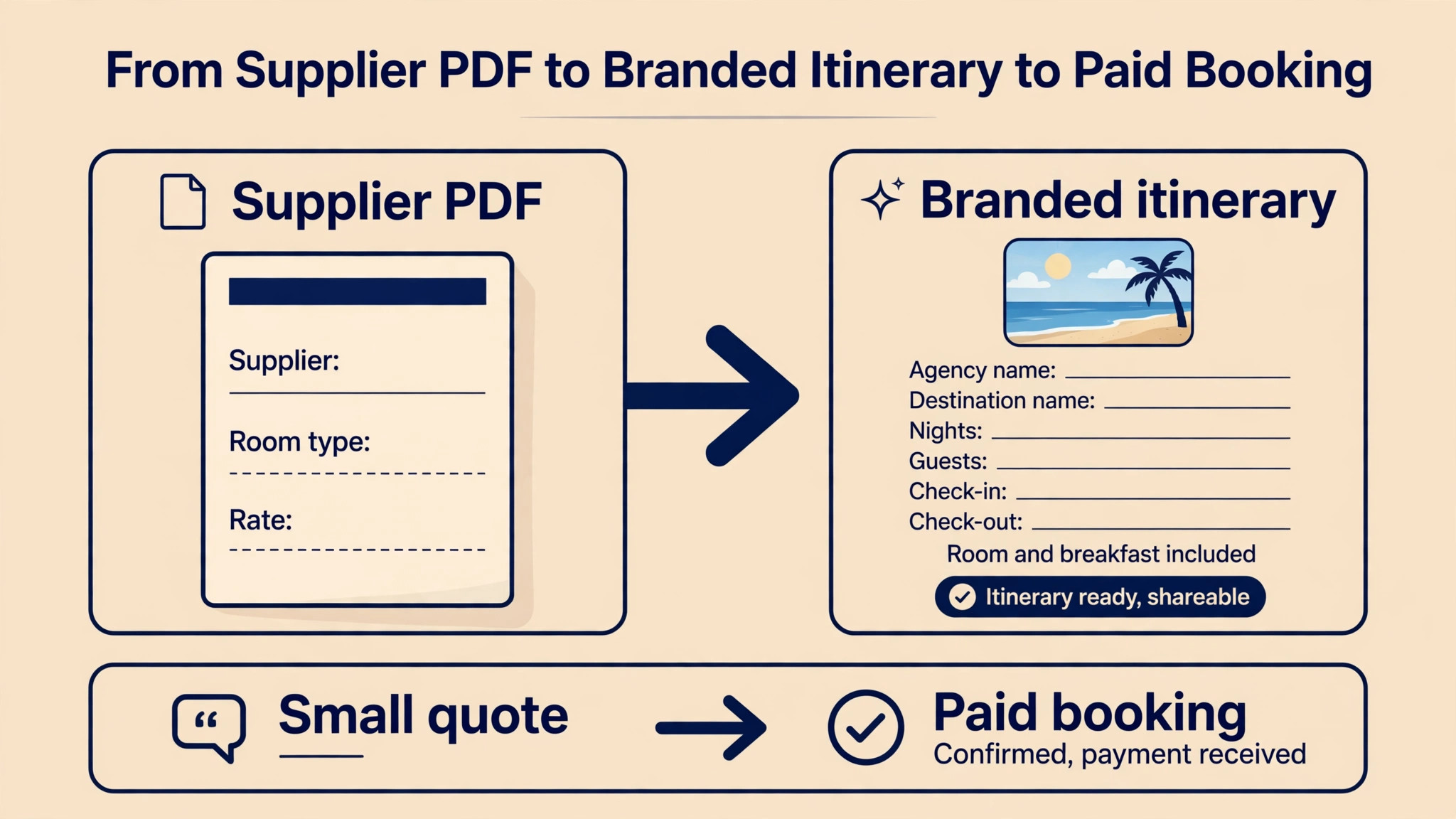
The pattern across all twelve is simple. The tools that win are the ones that turn a supplier PDF into a branded itinerary in minutes, track the commission to the bank, and remind the client before the trip without the agent chasing every message. Everything else is a bonus, and an agent who buys the bonus first usually keeps the leak.
The Quick Shortlist
The table below matches each common travel agents job to the single tool that handles it best. Use it to narrow the best ai tools for travel agents to two or three candidates before you read the full reviews. Prices are monthly list prices unless noted, and annual billing is usually cheaper than paying month to month.
| Need | Best tool | Why it wins |
|---|---|---|
| advisors who sell with polished proposals and itineraries | Travefy | its drag and drop builder creates branded itineraries and proposals with supplier |
| solo advisors who want forms, invoices and payments in one workflow | TravelJoy | it is the cheapest way into a proper travel CRM, built around |
| growing teams that want CRM, itineraries and commissions under one login | Tern | it pitches itself as a single login that replaces a CRM, itinerary |
| advisors who want a clean itinerary app with offline access | Axus | it builds polished itineraries with a traveller app that works offline, which |
| agencies that want proposal software with a European base | Ezus | it builds travel proposals with supplier content and pricing in one flow, |
| tour operators and agencies with high traveller numbers | Vamoos | it gives every traveller a branded app with itineraries, documents and messaging |
| agencies and tour operators with a team that need disruption handling | mTrip | it turns bookings into itineraries, travel documents and an app published under |
| research, drafting and itinerary ideas for any agent | ChatGPT Plus | it is the default general assistant for drafting, brainstorming and explaining travel |
| long itineraries, careful writing and document analysis | Claude Pro | it handles long documents and careful writing better than most assistants, which |
| booking client calls without the email back and forth | Calendly | it lets a client pick a call time from a link, which |
| docs, trip research and a shared agency wiki | Notion | it turns scattered trip research into usable knowledge, with pages, databases and |
| agencies that want commission tracking done properly | Sion | it is built around commission tracking and reconciliation, so the agency sees |
How We Judged the best ai tools for travel agents
A tool earned a place here only if it does a real travel job in 2026, not if it added an AI label to an old product. The best ai tools for travel agents were judged on five things that decide whether an agency keeps paying after the first year.
First, the proposal job it does, from turning a booking confirmation into a structured itinerary to building a quote the client can approve on the spot. Second, whether the price is published or hidden behind a sales call, including per seat charges that multiply fast across an agency. Third, commissions and payments, because a booking that never pays the commission is just work for free.
Fourth, the client experience, because a traveller who gets a polished app and clear messages books again and refers friends. Fifth, the catch, from AI usage limits that cap how much the assistant can do to per seat prices that punish a growing team.
| Check before you buy | What to ask | Why it matters |
|---|---|---|
| Price transparency | Is the price published, or does it need a sales call | Hidden prices hide the real first year bill |
| Integration | Does it write back to the systems you already use | Write back saves double entry every day |
| Price structure | Per user, per seat, per location, or flat | Per user fees multiply across a team |
| Setup and renewal terms | Setup fee, and what year two costs | Renewal increases are common in this category |
| The catch | What does the cheapest plan leave out | The missing feature is usually the one you need |
| Trial on real work | Can you test it on real jobs before you pay | A trial on fake data proves nothing |
The 12 Tools, Reviewed One by One
Read the reviews that match the problem your travel agency feels most, then check the price at your real team size before you trial anything. Each review names the starting price, the job the tool does best and the catch to ask about.
1. Travefy
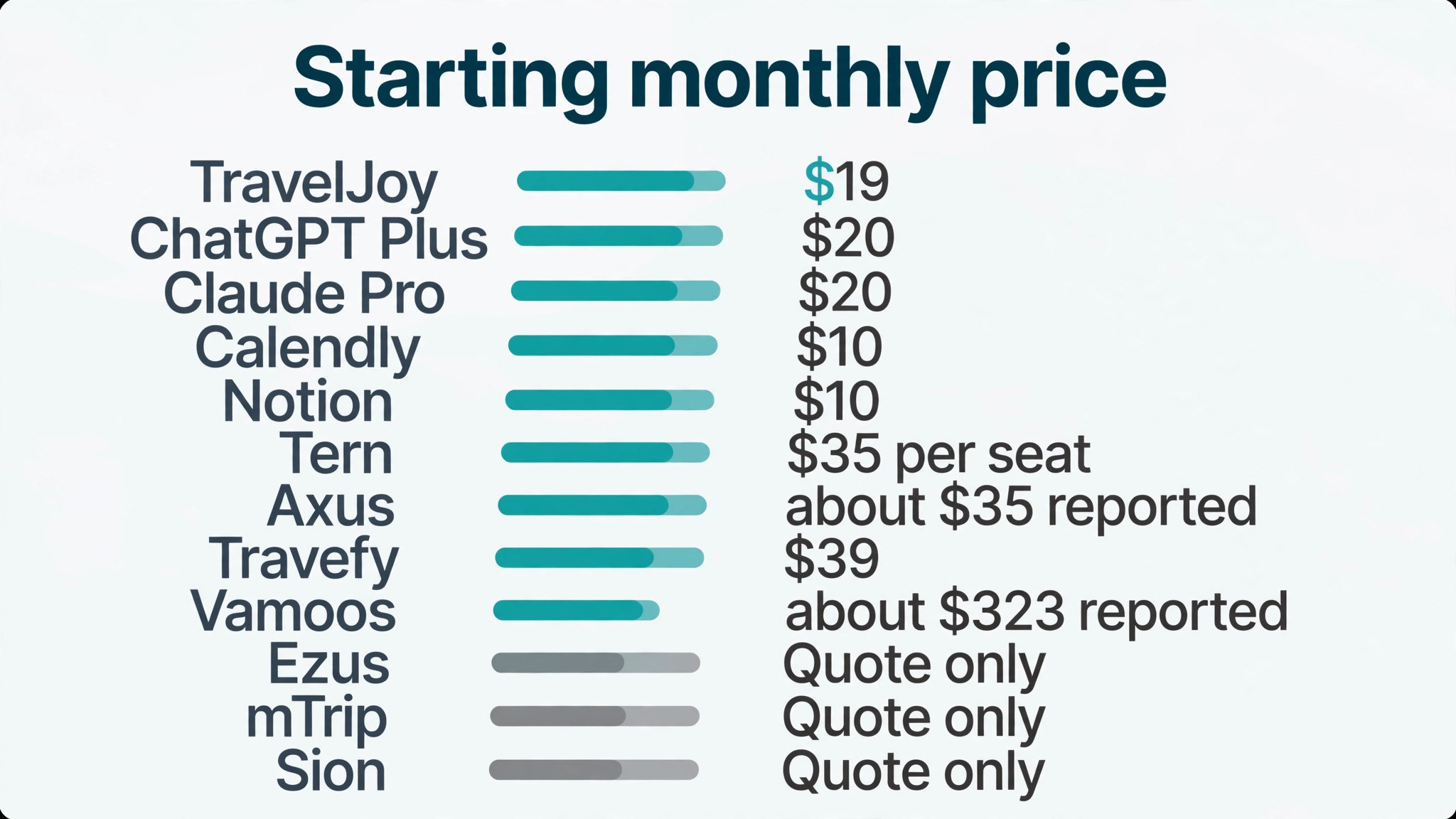
Starting price From 39 dollars a month billed annually for Core, with Premium at 59 dollars a month billed annually. Best for advisors who sell with polished proposals and itineraries Watch out Extra seats cost 20 dollars a month each on Core, so price the full team before you compare.
Travefy is the pick for travel agents who want advisors who sell with polished proposals and itineraries. its drag and drop builder creates branded itineraries and proposals with supplier content built in, plus a client mobile app with live flight updates. For a crew that want the proposal to sell the trip, that combination covers the daily work without a second subscription.
Pricing is where buyers need care. From 39 dollars a month billed annually for Core, with Premium at 59 dollars a month billed annually. Extra seats cost 20 dollars a month each on Core, so price the full team before you compare. The right move is a trial on real jobs, priced at your real team size, so the monthly bill you compare is the bill you will actually pay.
2. TravelJoy
Starting price From 19 dollars a month for Starter, limited to 12 trips a year. Pro is 39 dollars a month, or 32 dollars a month billed annually. Best for solo advisors who want forms, invoices and payments in one workflow Watch out Starter stops at 12 trips a year with no AI, so an active agent should budget for Pro.
What sets TravelJoy apart is it is the cheapest way into a proper travel CRM, built around forms, invoices and payments in one workflow. The result is a tool that carries the job from the first call to the final payment, and most teams learn it in days rather than weeks.
The catch is worth knowing before the trial. Starter stops at 12 trips a year with no AI, so an active agent should budget for Pro. From 19 dollars a month for Starter, limited to 12 trips a year. Pro is 39 dollars a month, or 32 dollars a month billed annually. If that trade off fits the way your travel agents work, the tool earns its place, and if it does not, the next tool on this list probably fits better.
3. Tern
Starting price From 35 dollars per seat a month billed annually, or 49 dollars per seat billed monthly. Best for growing teams that want CRM, itineraries and commissions under one login Watch out Included AI usage limits apply from July 2026, with a Pro add on for heavier use, so check the limit before you rely on it.
Tern built its name on it pitches itself as a single login that replaces a CRM, itinerary builder, scheduler, forms and back office tools., and the 2026 version adds That mix suits a travel agents that wants the job done properly rather than the longest feature list.
The price is the honest part. From 35 dollars per seat a month billed annually, or 49 dollars per seat billed monthly. Included AI usage limits apply from July 2026, with a Pro add on for heavier use, so check the limit before you rely on it. Ask for the full first year cost in writing before you sign, including any setup fee, because the headline price rarely tells the whole story.
4. Axus
Starting price Reported at 35 dollars a month, according to third party roundups. Best for advisors who want a clean itinerary app with offline access Watch out The reported price is not published by the vendor, so confirm the current figure before you budget.
Axus is the pick for travel agents who want advisors who want a clean itinerary app with offline access. it builds polished itineraries with a traveller app that works offline, which matters when the client lands without data. For a crew that want itineraries that work offline, that combination covers the daily work without a second subscription.
Pricing is where buyers need care. Reported at 35 dollars a month, according to third party roundups. The reported price is not published by the vendor, so confirm the current figure before you budget. The right move is a trial on real jobs, priced at your real team size, so the monthly bill you compare is the bill you will actually pay.
5. Ezus
Starting price Quote only, with public per user plans reported by third party roundups. Best for agencies that want proposal software with a European base Watch out Pricing is not published on a clear page, so get the per user figure in writing before you compare.
What sets Ezus apart is it builds travel proposals with supplier content and pricing in one flow, so the quote looks professional without a design step. The result is a tool that carries the job from the first call to the final payment, and most teams learn it in days rather than weeks.
The catch is worth knowing before the trial. Pricing is not published on a clear page, so get the per user figure in writing before you compare. Quote only, with public per user plans reported by third party roundups. If that trade off fits the way your travel agents work, the tool earns its place, and if it does not, the next tool on this list probably fits better.
6. Vamoos
Starting price Reported from 323 dollars a month by annual passenger volume, according to third party roundups. Best for tour operators and agencies with high traveller numbers Watch out The price is high for a solo advisor, so it fits an operator better than an independent agent.
Vamoos built its name on it gives every traveller a branded app with itineraries, documents and messaging in one place., and the 2026 version adds That mix suits a travel agents that wants the job done properly rather than the longest feature list.
The price is the honest part. Reported from 323 dollars a month by annual passenger volume, according to third party roundups. The price is high for a solo advisor, so it fits an operator better than an independent agent. Ask for the full first year cost in writing before you sign, including any setup fee, because the headline price rarely tells the whole story.
7. mTrip
Starting price Quote only, with the monthly fee based on itinerary volume and modules. Best for agencies and tour operators with a team that need disruption handling Watch out No CRM, invoicing or commissions are included, so the agency still needs those tools alongside it.
mTrip is the pick for travel agents who want agencies and tour operators with a team that need disruption handling. it turns bookings into itineraries, travel documents and an app published under the agency own name. For a crew that want traveller tracking and disruption alerts, that combination covers the daily work without a second subscription.
Pricing is where buyers need care. Quote only, with the monthly fee based on itinerary volume and modules. No CRM, invoicing or commissions are included, so the agency still needs those tools alongside it. The right move is a trial on real jobs, priced at your real team size, so the monthly bill you compare is the bill you will actually pay.
8. ChatGPT Plus
Starting price From 20 dollars a month for Plus. Best for research, drafting and itinerary ideas for any agent Watch out It can state wrong facts with confidence, so every hotel, price and date needs checking against the supplier.
What sets ChatGPT Plus apart is it is the default general assistant for drafting, brainstorming and explaining travel options in plain language. The result is a tool that carries the job from the first call to the final payment, and most teams learn it in days rather than weeks.
The catch is worth knowing before the trial. It can state wrong facts with confidence, so every hotel, price and date needs checking against the supplier. From 20 dollars a month for Plus. If that trade off fits the way your travel agents work, the tool earns its place, and if it does not, the next tool on this list probably fits better.
9. Claude Pro
Starting price From 20 dollars a month for Pro, or 17 dollars a month billed annually. Best for long itineraries, careful writing and document analysis Watch out It cannot book travel or check live prices, so the agent still needs the supplier systems for the real booking.
Claude Pro built its name on it handles long documents and careful writing better than most assistants, which suits a multi week itinerary with real detail., and the 2026 version adds That mix suits a travel agents that wants the job done properly rather than the longest feature list.
The price is the honest part. From 20 dollars a month for Pro, or 17 dollars a month billed annually. It cannot book travel or check live prices, so the agent still needs the supplier systems for the real booking. Ask for the full first year cost in writing before you sign, including any setup fee, because the headline price rarely tells the whole story.
10. Calendly
Starting price From 10 dollars per user a month for Standard. Best for booking client calls without the email back and forth Watch out The free plan is thin, so an agent who books a lot of calls should budget for the paid plan.
Calendly is the pick for travel agents who want booking client calls without the email back and forth. it lets a client pick a call time from a link, which removes the three email round trip that kills a busy week. For a crew that want clients to book a call in one click, that combination covers the daily work without a second subscription.
Pricing is where buyers need care. From 10 dollars per user a month for Standard. The free plan is thin, so an agent who books a lot of calls should budget for the paid plan. The right move is a trial on real jobs, priced at your real team size, so the monthly bill you compare is the bill you will actually pay.
11. Notion
Starting price From 10 dollars per member a month billed annually for Plus, with Business at 20 dollars a member a month for the full AI. Best for docs, trip research and a shared agency wiki Watch out Full Notion AI lives on the Business tier, so the cheaper plan only gets a limited trial.
What sets Notion apart is it turns scattered trip research into usable knowledge, with pages, databases and templates for every destination. The result is a tool that carries the job from the first call to the final payment, and most teams learn it in days rather than weeks.
The catch is worth knowing before the trial. Full Notion AI lives on the Business tier, so the cheaper plan only gets a limited trial. From 10 dollars per member a month billed annually for Plus, with Business at 20 dollars a member a month for the full AI. If that trade off fits the way your travel agents work, the tool earns its place, and if it does not, the next tool on this list probably fits better.
12. Sion
Starting price Quote only, priced after a demo. Best for agencies that want commission tracking done properly Watch out No published price means the sales call decides the number, so get the full figure in writing.
Sion built its name on it is built around commission tracking and reconciliation, so the agency sees which supplier payments are missing., and the 2026 version adds That mix suits a travel agents that wants the job done properly rather than the longest feature list.
The price is the honest part. Quote only, priced after a demo. No published price means the sales call decides the number, so get the full figure in writing. Ask for the full first year cost in writing before you sign, including any setup fee, because the headline price rarely tells the whole story.
Side by Side Comparison
The table below puts the best ai tools for travel agents side by side on price, best job and free plan, so you can compare the published prices against the quote only tools at a glance. Use it after the reviews to narrow the list to two finalists, then trial both on real jobs before you sign anything.
| Tool | Starting price | Best for | Free plan |
|---|---|---|---|
| Travefy | From 39 dollars a month billed annually for Core, with Premium at 59 dollars | advisors who sell with polished proposals and itineraries | No |
| TravelJoy | From 19 dollars a month for Starter, limited to 12 trips a year | solo advisors who want forms, invoices and payments in one workflow | No |
| Tern | From 35 dollars per seat a month billed annually, or 49 dollars per seat | growing teams that want CRM, itineraries and commissions under one login | No |
| Axus | Reported at 35 dollars a month, according to third party roundups | advisors who want a clean itinerary app with offline access | No |
| Ezus | Quote only, with public per user plans reported by third party roundups | agencies that want proposal software with a European base | No |
| Vamoos | Reported from 323 dollars a month by annual passenger volume, according to third party | tour operators and agencies with high traveller numbers | No |
| mTrip | Quote only, with the monthly fee based on itinerary volume and modules | agencies and tour operators with a team that need disruption handling | No |
| ChatGPT Plus | From 20 dollars a month for Plus | research, drafting and itinerary ideas for any agent | No |
| Claude Pro | From 20 dollars a month for Pro, or 17 dollars a month billed annually | long itineraries, careful writing and document analysis | No |
| Calendly | From 10 dollars per user a month for Standard | booking client calls without the email back and forth | No |
| Notion | From 10 dollars per member a month billed annually for Plus, with Business at | docs, trip research and a shared agency wiki | No |
| Sion | Quote only, priced after a demo | agencies that want commission tracking done properly | No |
Choosing the Right Tool for Your travel agency
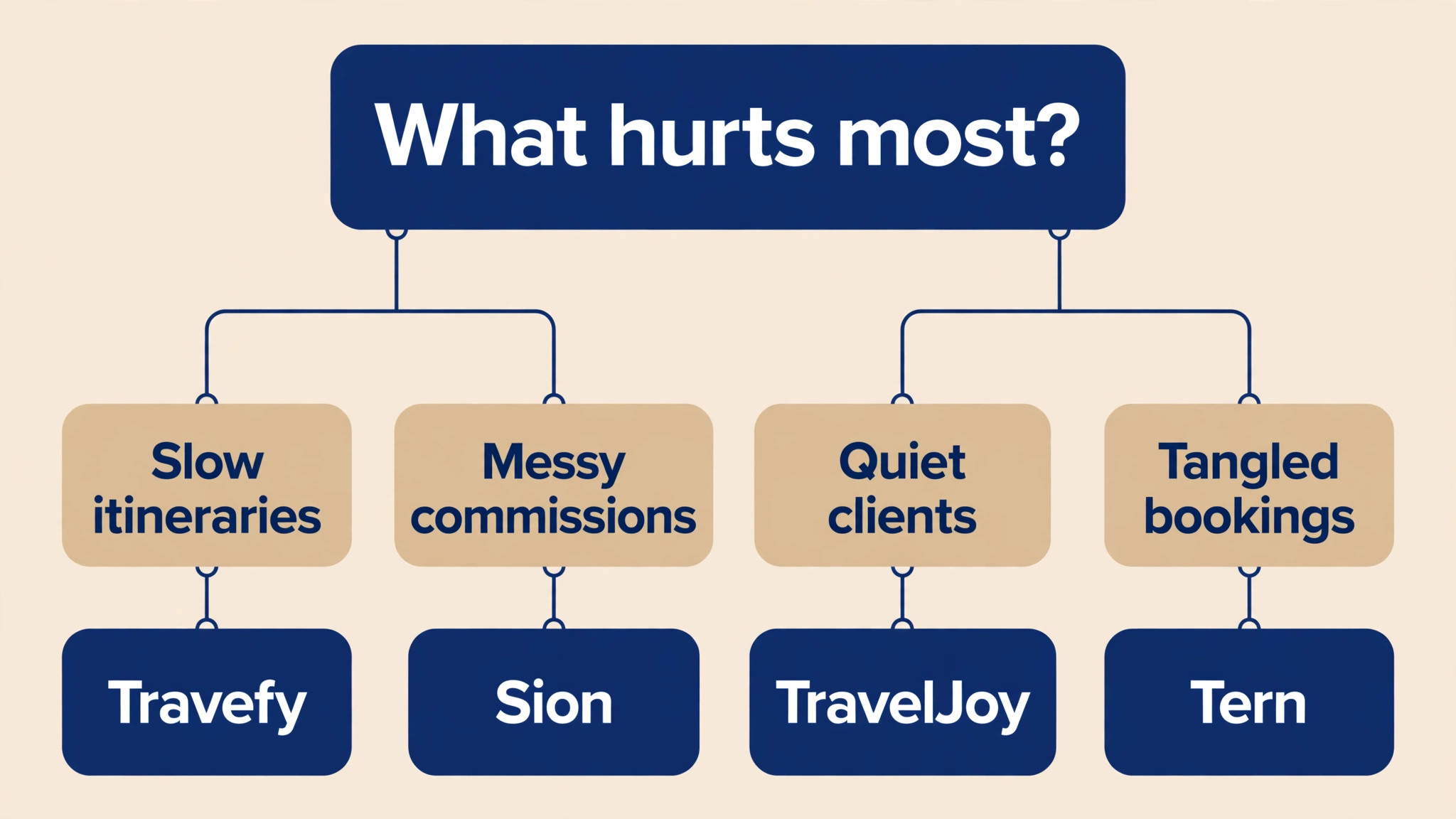
The best ai tools for travel agents are not the ones with the longest feature list. They are the ones that fix the leak your travel agency feels every week. Start from the leak, not from the vendor homepage, and budget the full bill rather than the headline price.
Budget the full bill, not the headline price. The table below shows what a single travel agency actually pays in year one for the most common combinations, using published or reported starting prices. Setup fees, per user charges and renewal increases are the lines that surprise buyers, so ask for them in writing before you sign.
| Stack for one business | Monthly cost | What it covers |
|---|---|---|
| Travefy | From 39 dollars a month billed annually for Core, with Premium at | advisors who sell with polished proposals and itineraries |
| TravelJoy | From 19 dollars a month for Starter, limited to 12 trips a | solo advisors who want forms, invoices and payments in one workflow |
| Tern | From 35 dollars per seat a month billed annually, or 49 dollars | growing teams that want CRM, itineraries and commissions under one login |
| Axus | Reported at 35 dollars a month, according to third party roundups | advisors who want a clean itinerary app with offline access |
| Ezus | Quote only, with public per user plans reported by third party roundups | agencies that want proposal software with a European base |
Start with one tool and one job, then add a second tool only when the first one runs without daily fixes. Two half working tools cost more time than one working tool and a spreadsheet, and the team will tell you quickly which one they open every day and which one they avoid.
Questions Owners Ask Most
What is the cheapest good AI tool for a solo travel agent to start with
TravelJoy Starter at 19 dollars a month is the cheapest proper travel CRM for a solo advisor, though it stops at 12 trips a year. Travefy Core at 39 dollars a month billed annually is the cheapest polished itinerary builder, and ChatGPT Plus at 20 dollars a month is the cheapest drafting assistant. Start with the job that loses you the most time, not with the cheapest tool overall.
Can AI write an itinerary I can send to a client
Yes, with a careful check first. Travefy, Tern and TravelJoy all turn a supplier document into a draft itinerary, and ChatGPT or Claude can draft the day by day plan from your notes. The agent must check every hotel, price, date and transfer against the supplier before sending, because AI can state wrong facts with confidence and the client will hold the agent responsible for the mistake.
Which tool is best for a travel agency with a team
Tern is the strongest pick for a team, because its CRM, itineraries, pipelines and commission reconciliation sit under one login at 35 dollars per seat a month billed annually. Travefy suits a team that sells on the proposal, and mTrip suits a larger agency that needs disruption handling. Price all three at the real seat count before you choose.
How much should a small travel agency budget for this software
A realistic budget for the best ai tools for travel agents is 19 to 59 dollars a month for one platform on a solo advisor, and 100 to 300 dollars a month once the agency runs several seats or adds a drafting assistant and a scheduling tool. Per seat pricing is the line that surprises buyers, so multiply the price by the real number of advisors before you compare.
The Bottom Line
If you buy one tool this quarter, buy Travefy. It covers the job a travel agent feels every week, turning a supplier document into a branded itinerary the client can approve, at a published price a solo advisor can afford, with a CRM and commission tracking in the same subscription. The best ai tools for travel agents earn their keep by turning a slow proposal into a fast yes, and Travefy does that from the first week.
Whatever you pick, start with the leak, trial with real trips, and measure the return in proposals sent and commissions tracked rather than in features used. The best ai tools for travel agents on this list all work. The difference is whether the tool matches the job your agency actually needs done, and whether the client gets the answer before they call someone else.