
A dining room that seats 60 can lose a full table every night to a phone that rings while the host is seating someone else. Industry surveys in 2026 put AI use for reservations at roughly three quarters of diners who are comfortable with it, while only about a quarter of operators actually use it for calls and service. The best ai tools for restaurant owners close that gap by answering the phone, filling the book and replying to reviews while the team works the floor.
This guide compares ten tools on published prices, the restaurant job each one does best and the catch that only shows up after the trial ends. Prices below are published starting prices as of late 2026, with annual billing noted where it changes the number. Start with the shortlist, then read the reviews that match the part of your restaurant that hurts most.
The Quick Shortlist
The table below matches each common restaurant job to the single tool that handles it best. Use it to narrow the best ai tools for restaurant owners to two or three candidates before you read the full reviews. Prices are monthly list prices unless noted, and annual billing is usually cheaper than paying month to month.
| Job | Best tool | Why it wins |
|---|---|---|
| Full service restaurants that want one backbone | Toast | Toast runs ordering, payments, kitchen display and guest marketing on one system, and Toast IQ answers plain language questions about sales, such as how many burgers sold last week, without a report to build |
| Cafes and counter service spots starting free | Square for Restaurants | Square is the easiest POS for a small restaurant to start on, because the free plan covers ordering and payments and the hardware is simple enough for a new hire to learn in a day |
| Full service restaurants that live on regulars | SevenRooms | SevenRooms is the strongest guest data platform on this list, because it remembers who sat where, what they ordered and when they last visited, and turns that memory into seating and marketing that feels personal |
| Restaurants that want diners to find them | OpenTable | OpenTable is still the reservation book most diners search first, and that discovery is the whole point, because a table found on OpenTable is a guest you did not have to advertise for |
| Trendy dining rooms that want a waitlist that works | Resy | Resy built its name on the waitlist, and for a dining room with a line out the door it manages demand better than a plain reservation book, because it tells guests exactly where they stand |
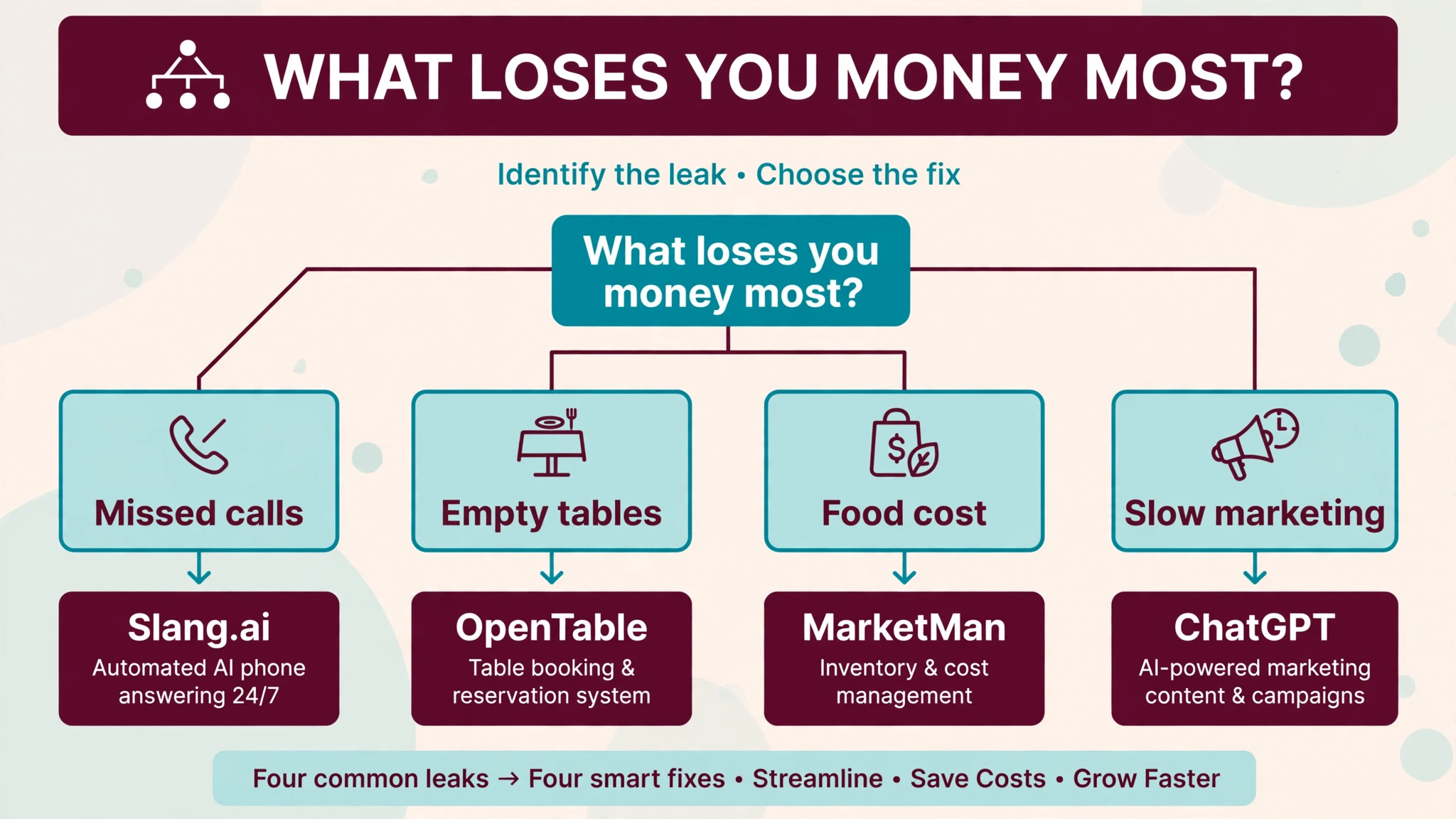
| Full service restaurants drowning in phone calls | Slang.ai | Slang |
| Restaurants that want food cost under control | MarketMan | MarketMan tracks inventory and food cost, and its AI features flag the dishes whose margins are slipping before the month end accounts show the damage |
| Restaurants that want scheduling and labour costs in one place | 7shifts | 7shifts handles staff scheduling, shift swaps and labour compliance, and its forecasting flags when a day part is likely to be over or under staffed before the rota goes out |
| Restaurants that want commission free online ordering | Owner.com | Owner |
| Every restaurant owner who writes anything | ChatGPT | ChatGPT is the cheapest general AI on this list, and it drafts menus, social posts, email campaigns and review replies in minutes, which is the work that usually waits until after close |
How We Judged the Shortlist
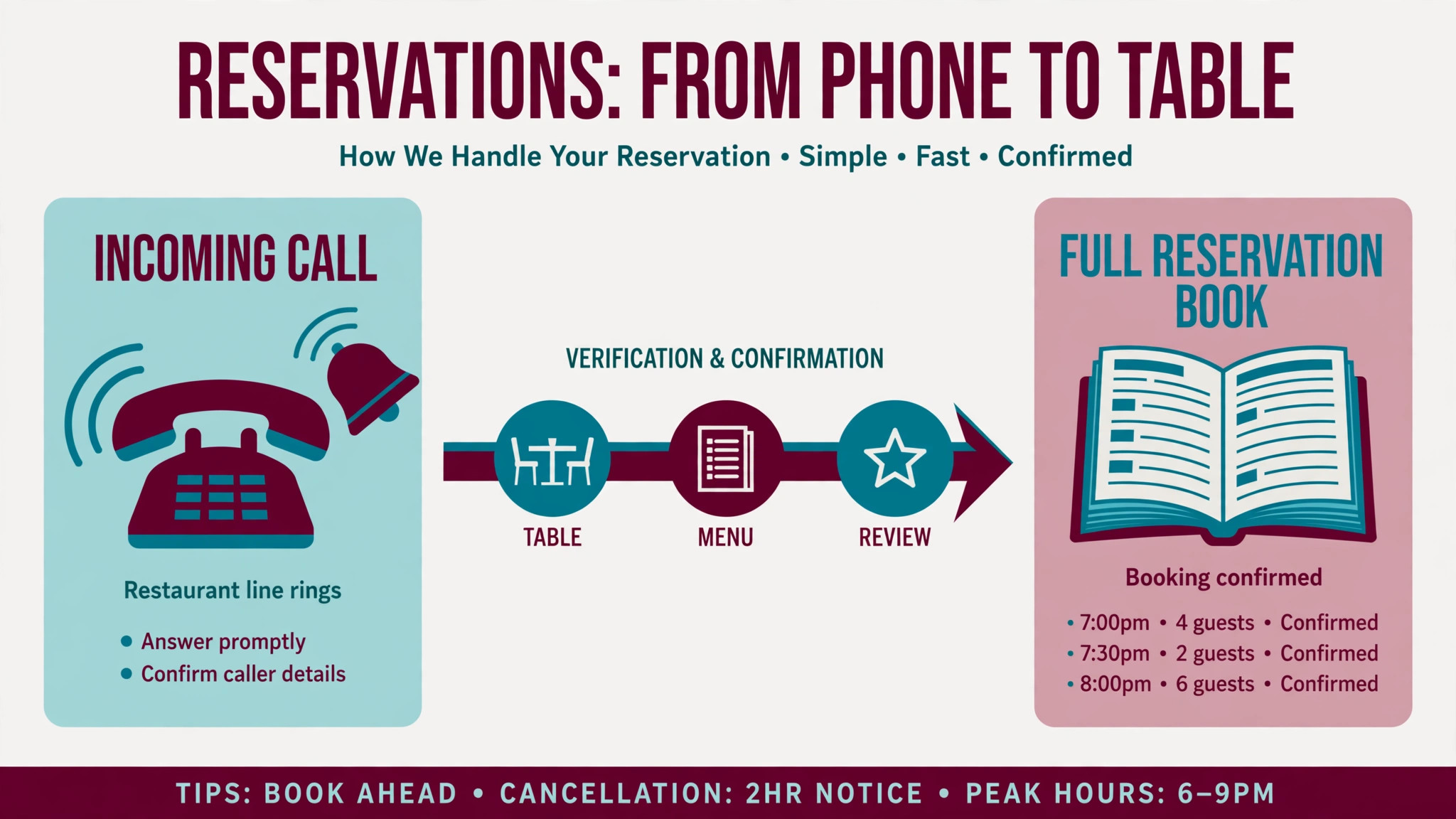
A tool earned a place here only if it does a real restaurant job in 2026, not if it added an AI label to an old booking form. The best ai tools for restaurant owners were judged on the five checks in the table below, because those are the checks that decide whether an owner keeps paying after the first year. A reservation tool that cannot talk to the POS, or a review tool that writes replies no regular would believe, fails no matter how polished the demo looks.
The second check is whether the price is published and how it scales, including per seat and per booking charges that change the real bill as the business grows. The third is output quality in daily use, because a tool that needs a workaround for every second booking costs more time than the old spreadsheet. The fourth is fit with the systems already in place, from the POS to the payment provider, because a tool that cannot talk to them creates double entry.
| Check before you buy | What to ask | Why it matters |
|---|---|---|
| The job it does | Reservations, phone answering, ordering or reviews | A tool that does one restaurant job well beats a platform that lists ten it does badly |
| Published price | Starting price and what scales it | Per cover and per location fees change the real bill fast |
| Fit with your POS | Toast, Square or Clover integration | A tool that cannot write into your POS creates double entry |
| Guest experience | How diners meet the tool | A clumsy booking flow costs covers, not just clicks |
| The catch | Caps, fees and contract terms | A free tier with a per cover fee can cost more than a paid plan |
The 10 Tools, Reviewed One by One
Each review below gives the published starting price, the restaurant job the tool does best and the catch that only shows up after the trial ends. Read the reviews for the best ai tools for restaurant owners that match the work you do most, and skip the rest until you have a shortlist of two or three.
1. Toast
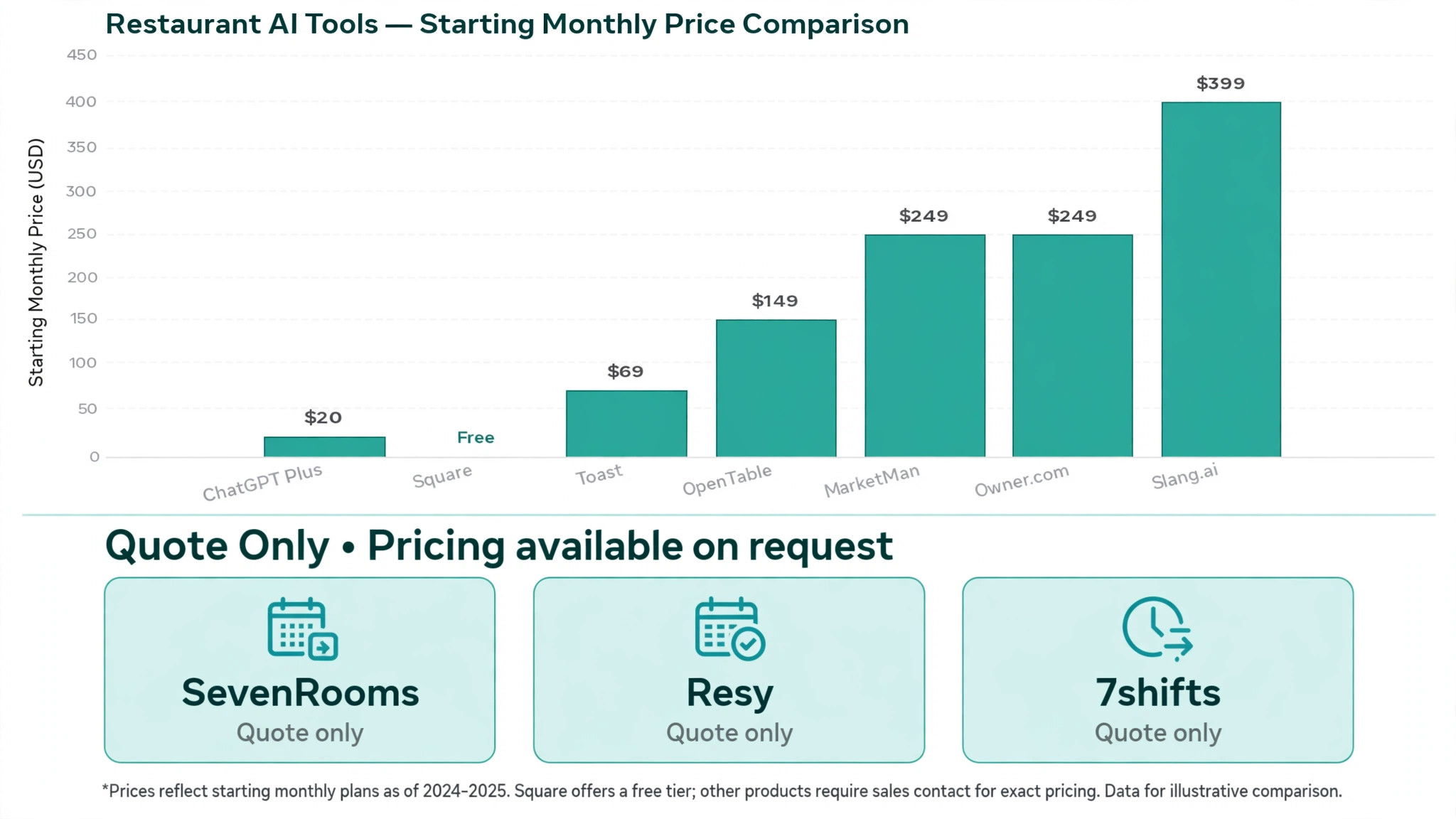
Starting price 69 dollars a month for the Point of Sale plan, or 0 dollars a month for the Starter Kit with higher processing fees. Best for Full service restaurants that want one backbone. Watch out Per location pricing plus hardware leasing adds up, and the best plans are custom quotes.
Toast is the pick for full service restaurants that want one backbone, and it earns that place on the strength of what it does every day rather than on the promise in the demo. Toast runs ordering, payments, kitchen display and guest marketing on one system, and Toast IQ answers plain language questions about sales, such as how many burgers sold last week, without a report to build. Menu engineering suggestions use item velocity and contribution margin, so the menu board starts to reflect what actually sells instead of what the owner guesses sells.
Toast IQ will not take action on your account without your explicit confirmation, which is the right design, but it also means the AI stays an adviser rather than an operator, and the team still does the work.
2. Square for Restaurants
Starting price Free plan, Plus from 49 dollars a month per location, Premium from 149 dollars a month per location. Best for Cafes and counter service spots starting free. Watch out Coursing and advanced reporting sit on the paid tiers.
Square for Restaurants is the pick for cafes and counter service spots starting free, and it earns that place on the strength of what it does every day rather than on the promise in the demo. Square is the easiest POS for a small restaurant to start on, because the free plan covers ordering and payments and the hardware is simple enough for a new hire to learn in a day. Its AI assistant, Managerbot, is included at no extra cost in open beta, and it answers questions about the day’s sales and stock without opening a dashboard.
The free plan is thin for a full service dining room, and coursing, kitchen display integrations and the reporting a busy restaurant needs all sit behind the Plus plan at 49 dollars a month.
3. SevenRooms
Starting price Pricing on request; plans run from Starter to Premium and are sold through a demo. Best for Full service restaurants that live on regulars. Watch out No published price, so the quote decides everything.
SevenRooms is the pick for full service restaurants that live on regulars, and it earns that place on the strength of what it does every day rather than on the promise in the demo. SevenRooms is the strongest guest data platform on this list, because it remembers who sat where, what they ordered and when they last visited, and turns that memory into seating and marketing that feels personal. Its voice AI answers the phone, books, changes and cancels reservations, and hands complex requests or upset guests to a staff number in real time.
The catch is the sales process. With no published price and no self service trial, a small restaurant cannot compare the cost without a demo and a quote, and the platform is priced for venues that fill most nights.
4. OpenTable
Starting price Basic from 149 dollars a month plus 1.50 dollars per cover after the first 30 days. Best for Restaurants that want diners to find them. Watch out Per cover fees grow with every busy night.
OpenTable is the pick for restaurants that want diners to find them, and it earns that place on the strength of what it does every day rather than on the promise in the demo. OpenTable is still the reservation book most diners search first, and that discovery is the whole point, because a table found on OpenTable is a guest you did not have to advertise for. Its AI review replies sit on the Pro plan, and the guest data tools help a host remember a regular’s table and a server remember a regular’s allergy.
The per cover fee is the trap. At 1.50 dollars a cover on Basic after the first month, a busy Friday adds a real line to the bill, so price the plan at your actual cover count before you sign.
5. Resy
Starting price Pricing on request; sold through a sales conversation. Best for Trendy dining rooms that want a waitlist that works. Watch out No published price and a waitlist model that suits some rooms badly.
Resy is the pick for trendy dining rooms that want a waitlist that works, and it earns that place on the strength of what it does every day rather than on the promise in the demo. Resy built its name on the waitlist, and for a dining room with a line out the door it manages demand better than a plain reservation book, because it tells guests exactly where they stand. Its notification tools keep guests informed instead of guessing, which cuts no shows and keeps the host stand calm on a Saturday night.
Resy does not publish prices, so a small restaurant cannot budget for it without a sales call, and the waitlist first model fits a popular room far better than a quiet neighbourhood spot.
6. Slang.ai
Starting price Core from 399 dollars a month per location, Premium from 599 dollars a month per location. Best for Full service restaurants drowning in phone calls. Watch out Quote only in practice for many venues, and payment is not taken by phone.
Slang.ai is the pick for full service restaurants drowning in phone calls, and it earns that place on the strength of what it does every day rather than on the promise in the demo. Slang.ai is a voice AI built only for restaurants, and it books, changes and cancels reservations in OpenTable, SevenRooms and Yelp Guest Manager while capturing private event leads the host would otherwise miss. Managers get recordings, transcripts and a Smart Inbox across what the company says are more than 2,000 locations, so a missed call becomes a record instead of a shrug.
Phone order processing redirects to online ordering rather than taking payment, and Toast and Square integration was still in development when we checked, so confirm the integration you need before you pay.
7. MarketMan
Starting price Starter from 249 dollars a month. Best for Restaurants that want food cost under control. Watch out Inventory software only pays when someone actually counts stock.
MarketMan is the pick for restaurants that want food cost under control, and it earns that place on the strength of what it does every day rather than on the promise in the demo. MarketMan tracks inventory and food cost, and its AI features flag the dishes whose margins are slipping before the month end accounts show the damage. Supplier price tracking catches a quiet price rise on a staple ingredient, which is the kind of leak that costs a restaurant thousands a year without anyone noticing.
The software cannot count stock for you. If the team does not do the weekly count, the numbers are guesses, and at 249 dollars a month that is an expensive guess.
8. 7shifts
Starting price Free plan for small teams; paid plans on request. Best for Restaurants that want scheduling and labour costs in one place. Watch out Paid tiers are quote only, so the price is a negotiation.
7shifts is the pick for restaurants that want scheduling and labour costs in one place, and it earns that place on the strength of what it does every day rather than on the promise in the demo. 7shifts handles staff scheduling, shift swaps and labour compliance, and its forecasting flags when a day part is likely to be over or under staffed before the rota goes out. Managers see labour cost against sales as the week runs, instead of finding out on payday that a quiet Tuesday was staffed like a Friday.
The free plan covers only a small team, and the paid tiers that a growing restaurant needs are sold on request, so get the quote in writing before you build the rota around it.
9. Owner.com
Starting price Flexible plan from 249 dollars a month plus a 5 percent fee per order. Best for Restaurants that want commission free online ordering. Watch out The percentage fee means the bill grows with every order.
Owner.com is the pick for restaurants that want commission free online ordering, and it earns that place on the strength of what it does every day rather than on the promise in the demo. Owner.com builds a branded online ordering site and app that keeps the customer relationship with the restaurant instead of handing it to a marketplace. Its AI tools handle ordering and marketing follow up, and the flat monthly fee plus a percentage is simple to understand even if it is not cheap at volume.
At 249 dollars a month plus 5 percent of every order, a busy takeaway week costs far more than the headline suggests, so compare it against marketplace commission at your real order volume.
10. ChatGPT
Starting price Plus from 20 dollars a month; free plan included. Best for Every restaurant owner who writes anything. Watch out It knows nothing about your menu unless you teach it.
ChatGPT is the pick for every restaurant owner who writes anything, and it earns that place on the strength of what it does every day rather than on the promise in the demo. ChatGPT is the cheapest general AI on this list, and it drafts menus, social posts, email campaigns and review replies in minutes, which is the work that usually waits until after close. With a good brief it writes in the voice of the dining room, and it rewrites fast when the owner says the draft sounds wrong, which is most of the value.
It has no connection to the POS, the reservation book or the inventory, so it cannot tell you what sold or what to reorder, and every fact in its drafts needs a human check before it goes out.
Side by Side Comparison
The table below puts the best ai tools for restaurant owners side by side on the numbers that decide the purchase. Prices are starting monthly prices as published in late 2026, and quote only tools are marked so you can see where the price is a negotiation rather than a number.
| Tool | Starting price | Best for |
|---|---|---|
| Toast | 69 dollars a month for the Point of Sale plan, or 0 dollars a month for the Starter Kit with higher processing fees. | Full service restaurants that want one backbone |
| Square for Restaurants | Free plan, Plus from 49 dollars a month per location, Premium from 149 dollars a month per location. | Cafes and counter service spots starting free |
| SevenRooms | Pricing on request; plans run from Starter to Premium and are sold through a demo. | Full service restaurants that live on regulars |
| OpenTable | Basic from 149 dollars a month plus 1.50 dollars per cover after the first 30 days. | Restaurants that want diners to find them |
| Resy | Pricing on request; sold through a sales conversation. | Trendy dining rooms that want a waitlist that works |
| Slang.ai | Core from 399 dollars a month per location, Premium from 599 dollars a month per location. | Full service restaurants drowning in phone calls |
| MarketMan | Starter from 249 dollars a month. | Restaurants that want food cost under control |
| 7shifts | Free plan for small teams; paid plans on request. | Restaurants that want scheduling and labour costs in one place |
| Owner.com | Flexible plan from 249 dollars a month plus a 5 percent fee per order. | Restaurants that want commission free online ordering |
| ChatGPT | Plus from 20 dollars a month; free plan included. | Every restaurant owner who writes anything |
What It Costs in Year One
A realistic year one budget for one location runs from about 250 dollars a month for a lean stack to about 900 dollars a month once reservations, phone answering and review management are all covered. The table below prices three honest stacks, so you can see what the monthly total looks like before you sign anything. The best ai tools for restaurant owners on this list cover the whole range, from free plans that cost nothing until the bookings arrive to platforms that charge hundreds a month before the first guest walks in, so the stack matters more than any single price.
| Stack | What you get | Monthly cost | Covers |
|---|---|---|---|
| Lean, one location | Square free POS plus ChatGPT Plus | 20 dollars a month | Menus, social posts and review drafts |
| Full service, one location | Toast POS plus OpenTable Basic | 218 dollars a month before cover fees | Ordering, payments, reservations and guest data |
| Full service plus phone AI | Toast plus OpenTable plus Slang.ai Core | 617 dollars a month before cover fees | Every call answered, every table filled |
The honest way to compare is to price the stack at your real volume for a full year, including the transaction fees, the add ons and the renewal price, and then divide by twelve. A cheap month one that doubles in month thirteen is not a cheap tool, and a dear month one that stays flat for three years is often the better buy.
What to Check Before You Sign
Ask what happens at the cap. Every tool on this list has a limit somewhere, whether it is a booking count, a user count, a court count or a transaction fee, and the limit that matters is the one you will hit first. A free plan that caps at fifty bookings a month is a trial, not a system, and a paid plan that charges per location doubles the bill when you open a second site. Get the cap in writing before you sign, and ask what the upgrade costs.
Read the contract and the data export terms before you sign. A platform that holds your customer list, your booking history and your payment records hostage is a platform you cannot leave, and the cost of leaving is the real price of the software. Ask how to export every record, how long the contract runs, and what happens to the data on the day you cancel. A vendor that answers clearly is a vendor worth trusting.
Trial the tool on a real busy day, not on a quiet afternoon. A demo on a Tuesday tells you nothing about a Saturday, and the tool that looks fast with ten bookings may crawl with two hundred. Run a full day on the trial, move a booking, cancel a booking, take a payment and chase a late payer, then ask the team what broke. The answer is worth more than any sales call.
How to Pick the Right Tool from the best ai tools for restaurant owners
Start with the system your guests already touch. If the POS is Toast, pick tools that write into Toast first and treat everything else as second choice, because double entry is where restaurant software goes to die. If the dining room is small and counter service, a free POS plus one AI writing tool beats a full reservation platform you will never fill.
Price the stack at your real volume, not the demo volume. OpenTable Basic looks cheap at 149 dollars a month until the per cover fees arrive, and a phone AI at 399 dollars a month only pays for itself if missed calls were actually costing you tables. Ask each vendor for the bill at your cover count, your busiest month and your quietest month, and compare those three numbers before you sign. That is the test every best ai tools for restaurant owners on this list has to pass, and the tool that passes it at your volume is the one to buy.
Trial each finalist on a real Friday night, not a quiet Tuesday. Book a table through it, change the booking, call the restaurant line and leave a review, then check what the staff sees. The tool that survives a Friday service without a phone call to support is the one to buy.
Frequently Asked Questions
What is the cheapest AI tool for restaurant owners to start with
ChatGPT Plus at 20 dollars a month is the cheapest credible start, because it drafts menus, social posts and review replies from one subscription. Square for Restaurants has a free plan for the POS itself, so a small cafe can run ordering and payments for nothing and add AI writing on top. Start there, and add a reservation or phone tool only when missed calls or empty tables are a real, counted problem.
Which AI tool is best for restaurant reservations
SevenRooms is the strongest guest data platform, because it remembers who sat where, what they ordered and when they last visited, and its voice AI answers the phone. OpenTable is the better pick when discovery matters, because diners already search it to find a table. Pick SevenRooms to keep regulars, and OpenTable to find new ones.
Will AI review replies sound fake to my regulars
They will if you publish them unchanged. The best ai tools for restaurant owners draft the reply, but a manager should still read every one before it goes out for the first month. Edit for the guest by name, the dish they mentioned and the tone your dining room actually uses, and the replies read like your team, not like a template.
How much should a single restaurant budget for AI tools
A realistic year one budget is 20 to 60 dollars a month for one writing tool, 200 to 400 dollars a month once a reservation platform joins the stack, and 600 to 900 dollars a month with phone answering added. Budget for the stack at your cover count, not for one tool, and trial each one on a real service before you commit to annual billing.
Our Verdict
If you buy one tool this quarter, buy Toast if you run a full service dining room and ChatGPT Plus if you run a small cafe. Toast is the backbone most independent restaurants end up on, with Toast IQ included and a POS plan from 69 dollars a month, and it is the platform the other tools on this list are built to connect with. ChatGPT Plus is the best value on this list at 20 dollars a month, with menus, posts and review drafts that need the least fixing.
Across the whole list, the best ai tools for restaurant owners that win are the ones that match the restaurant you actually run, and both of these do that from the first month.
Whatever you pick, start with the job that loses you money today, trial it on a real Friday night, and keep a human reading every AI reply for the first month. The tools on this list all work. The difference is whether the tool writes into the systems you already run, and whether you measure the return in tables filled and calls answered rather than in features used.