
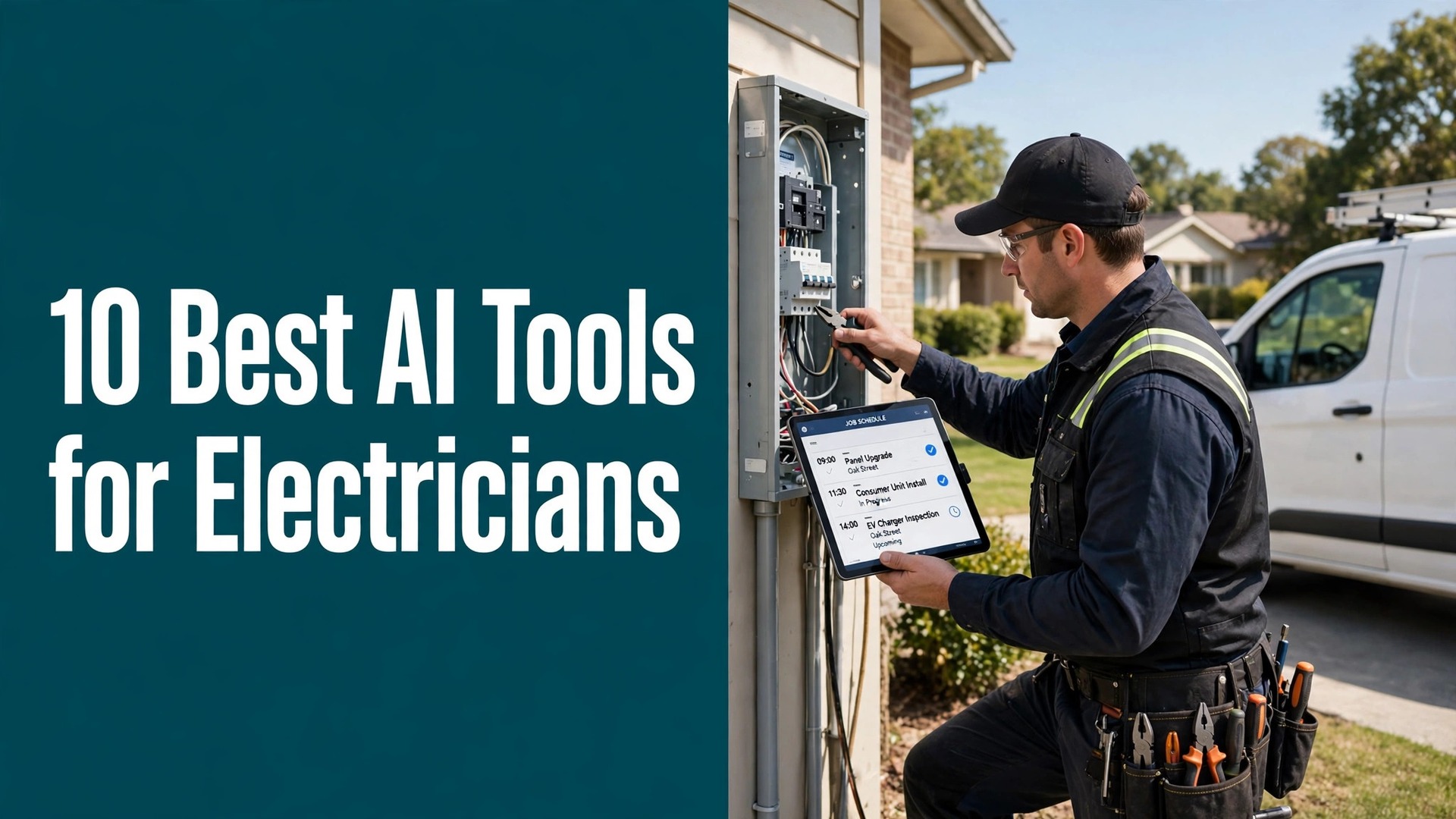
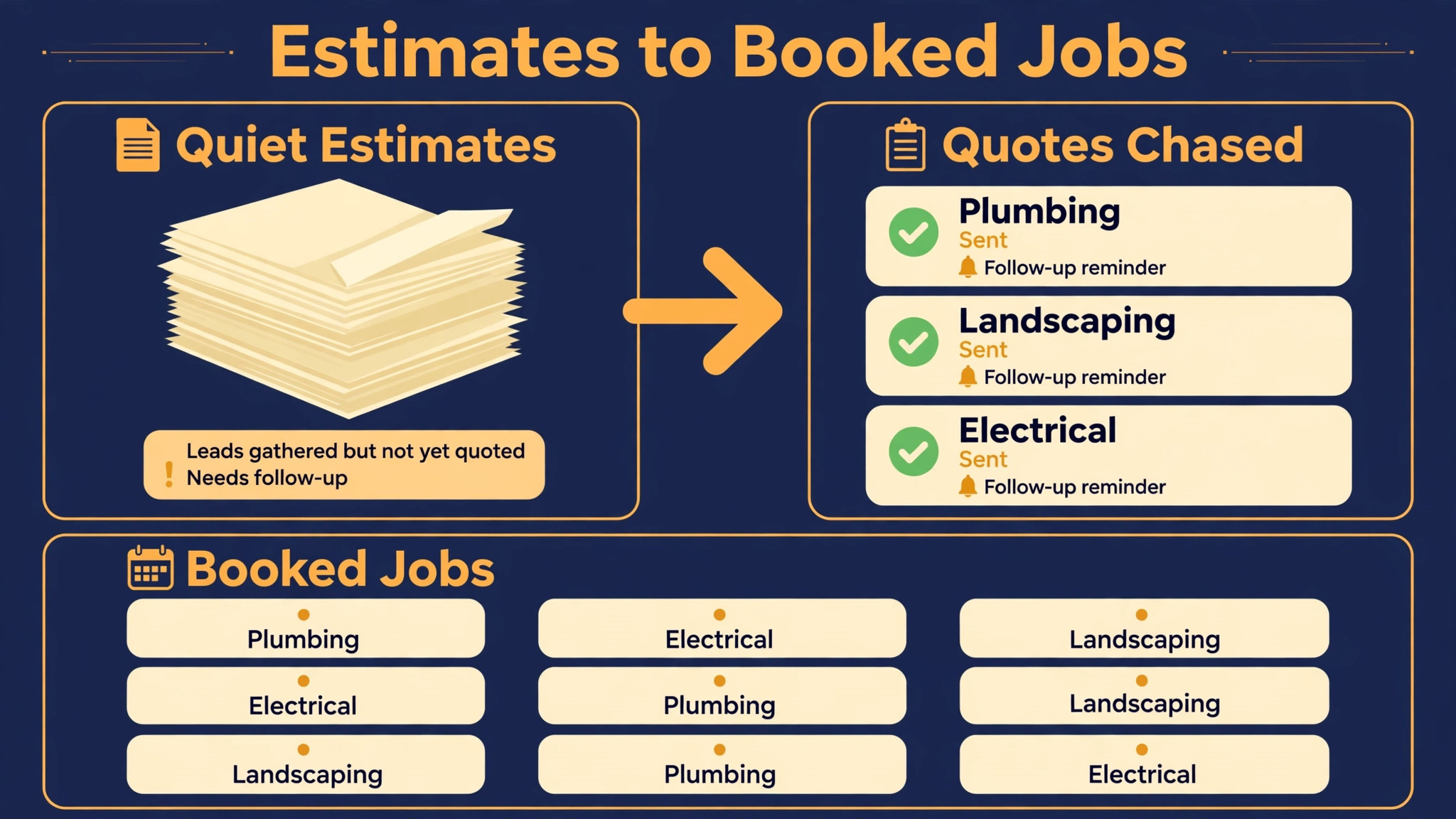
Three out of ten electrical estimates go quiet, and most of them were never lost on price. They were lost because nobody followed up, nobody chased the permit, and nobody called when the maintenance contract lapsed. The best ai tools for electricians exist because the work after the quote now decides who gets paid, not just the work on site.
This guide compares ten tools on published prices where they exist, the job each one does best and the catch that only shows up after the contract is signed. Several platforms in this category sell by quote or by user, so where a price is reported by a third party roundup rather than published by the vendor, this guide says so. Start with the shortlist, then read the reviews that match the problem your shop feels most.
The pattern across all ten is simple. The tools that win are the ones that chase the estimate, track the permit as a task with a due date, and remind the customer before the contract runs out. Everything else is a bonus, and an electrician who buys the bonus first usually keeps the leak.
The Quick Shortlist
The table below matches each common electricians job to the single tool that handles it best. Use it to narrow the best ai tools for electricians to two or three candidates before you read the full reviews. Prices are monthly list prices unless noted, and annual billing is usually cheaper than paying month to month.
| Need | Best tool | Why it wins |
|---|---|---|
| small electrical crews that want quotes, scheduling and invoicing in one place | Jobber | its AI drafts quotes from past jobs and price book items, so |
| small trade crews that want a clean mobile app and strong Xero sync | Tradify | it covers the full job cycle from quote to invoice with a |
| shops that need strong materials and job cost tracking | Fergus | it was built by a plumber and leads with the numbers, matching |
| high volume residential shops that live on the phone | Housecall Pro | its AI team is included on every plan and handles calls, booking |
| larger contractors with many vans and commercial work | ServiceTitan | its dispatch, capacity planning and price book are the deepest in the |
| larger commercial contractors with complex projects | simPRO | it handles complex quoting with labour and materials breakdowns, stock management and |
| high volume service work on iOS | ServiceM8 | it is built for speed on small service jobs, with dispatch, invoicing |
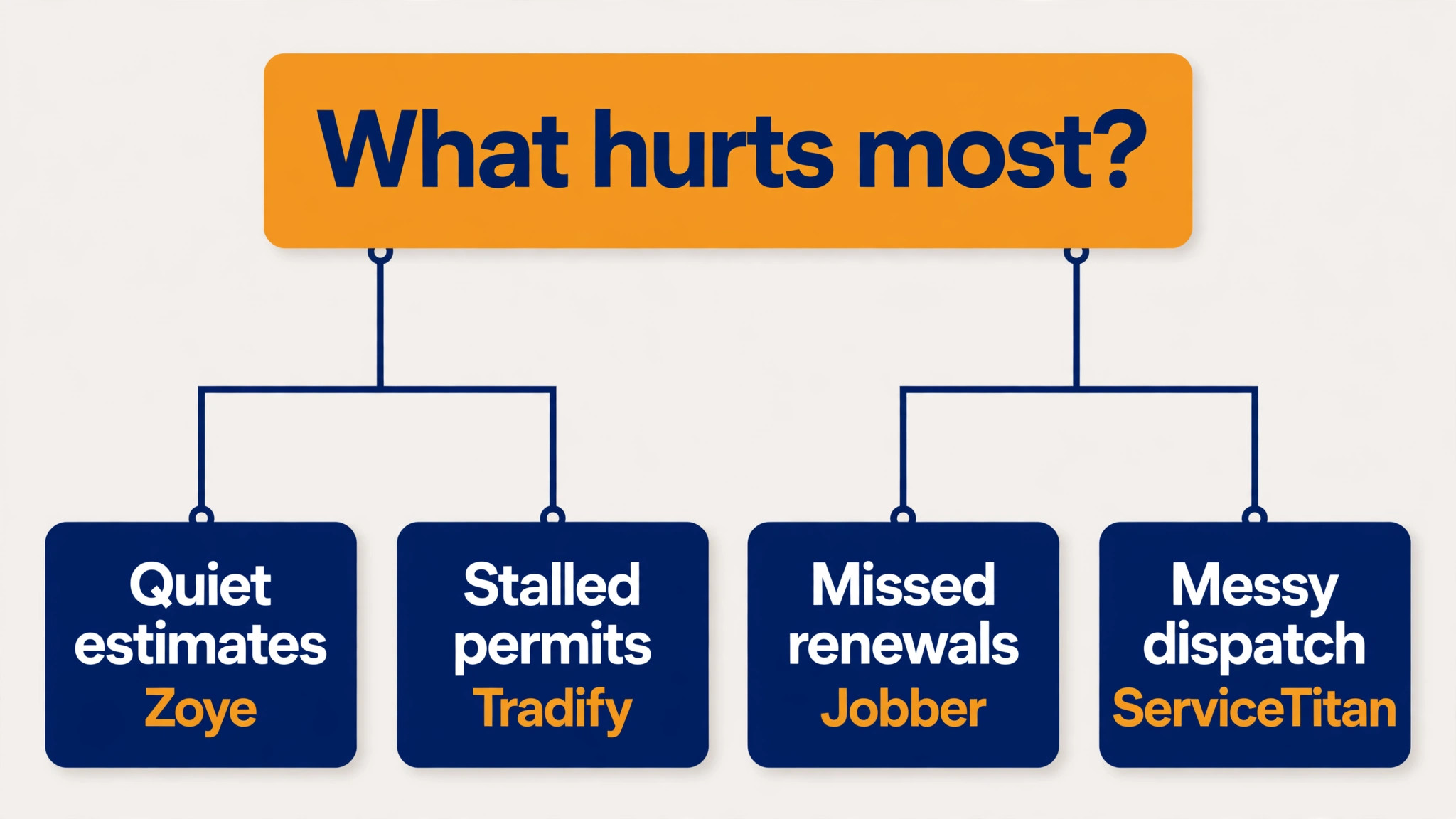
| shops whose biggest losses are quiet estimates and lapsed contracts | Zoye | its AI does the chasing, following up estimates, permit tasks and maintenance |
| shops that want service, sales and customer care in one system | Commusoft | it combines job management with a customer database, service reminders and sales |
| shops that want dispatch and flat rate pricing built in | FieldEdge | its flat rate price book and dispatch board are built for the |
How We Judged the best ai tools for electricians
A tool earned a place here only if it does a real electrical job in 2026, not if it added an AI label to an old product. The best ai tools for electricians were judged on five things that decide whether a shop keeps paying after the first year.
First, the office job it does, from drafting an estimate to chasing it, tracking permits and inspections, and renewing maintenance contracts before they lapse. Second, whether the price is published or hidden behind a sales call, including per user charges that multiply fast across a crew. Third, how it fits the van, because a tool the electricians will not open on site is a tool that gets cancelled in month three.
Fourth, job costing and materials, because electrical work is materials heavy and a job that looks profitable on the quote can lose money on the parts. Fifth, the catch, from quote only pricing that hides the cost until the demo to per user fees that punish growth.
| Check before you buy | What to ask | Why it matters |
|---|---|---|
| Price transparency | Is the price published, or does it need a sales call | Hidden prices hide the real first year bill |
| Integration | Does it write back to the systems you already use | Write back saves double entry every day |
| Price structure | Per user, per seat, per location, or flat | Per user fees multiply across a team |
| Setup and renewal terms | Setup fee, and what year two costs | Renewal increases are common in this category |
| The catch | What does the cheapest plan leave out | The missing feature is usually the one you need |
| Trial on real work | Can you test it on real jobs before you pay | A trial on fake data proves nothing |
The 10 Tools, Reviewed One by One
Read the reviews that match the problem your electrical business feels most, then check the price at your real team size before you trial anything. Each review names the starting price, the job the tool does best and the catch to ask about.
1. Jobber
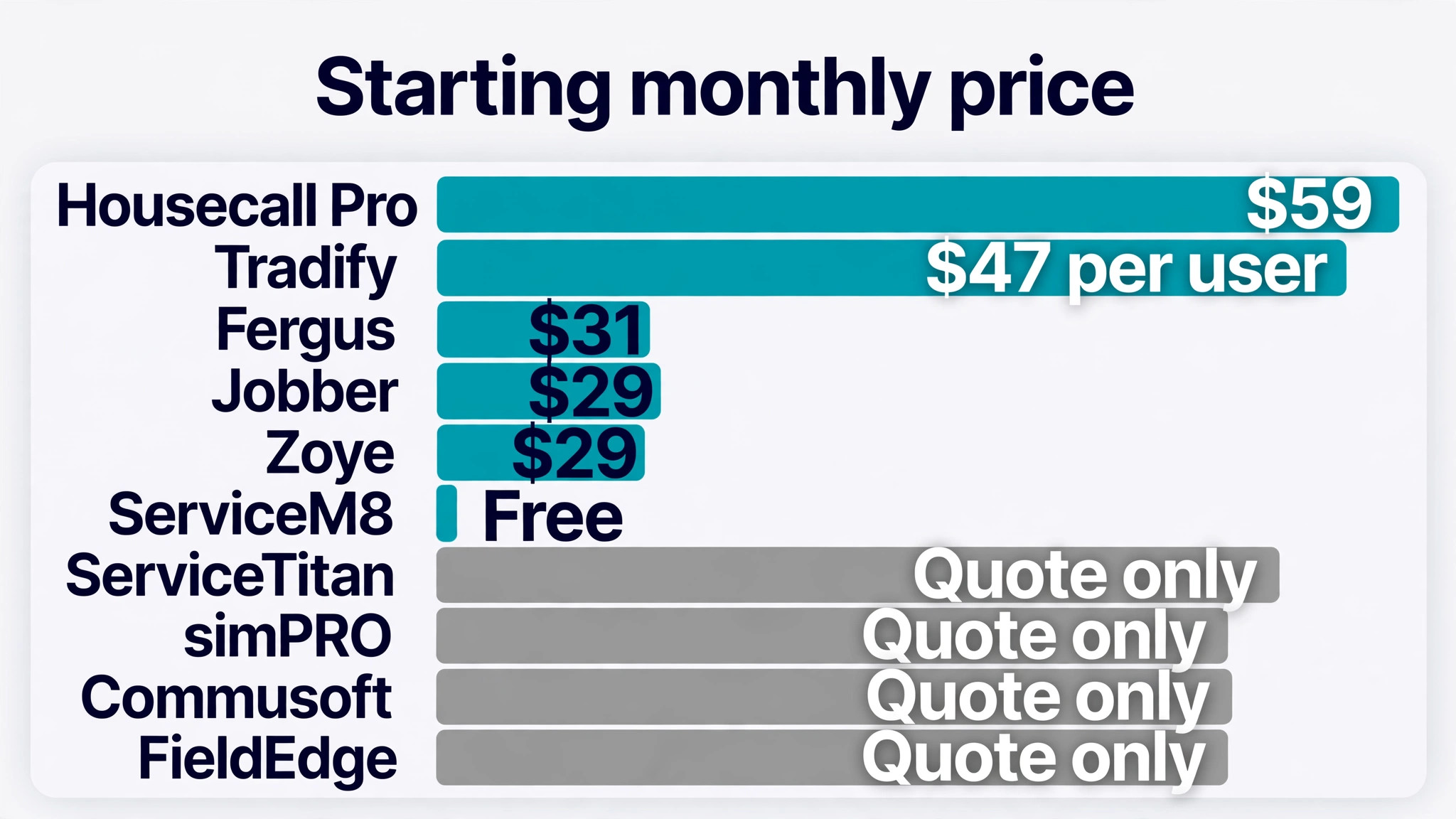
Starting price From 29 dollars a month billed annually for Core with one user, with extra users at 29 dollars a month each. Its AI Receptionist is a 29 dollar a month add on. Best for small electrical crews that want quotes, scheduling and invoicing in one place Watch out The cheapest plan is thin, and most crews need Connect or Grow to get quote follow ups and two way texting.
Jobber is the pick for electricians who want small electrical crews that want quotes, scheduling and invoicing in one place. its AI drafts quotes from past jobs and price book items, so a repeat job takes minutes instead of a fresh estimate every time. Its voice notes turn spoken job notes into written records, and the mobile app is the one crews actually open on site. For a crew that want one system for the office and the van, that combination covers the daily work without a second subscription.
Pricing is where buyers need care. From 29 dollars a month billed annually for Core with one user, with extra users at 29 dollars a month each. Its AI Receptionist is a 29 dollar a month add on. The cheapest plan is thin, and most crews need Connect or Grow to get quote follow ups and two way texting. The right move is a trial on real jobs, priced at your real team size, so the monthly bill you compare is the bill you will actually pay.
2. Tradify
Starting price From 47 dollars per user a month for Lite, with Pro and Plus plans above it. Best for small trade crews that want a clean mobile app and strong Xero sync Watch out Per user pricing adds up fast, so a six person shop on Pro pays about 306 dollars a month.
What sets Tradify apart is it covers the full job cycle from quote to invoice with a mobile app that works well on site, and the Xero integration is strong. Scheduling, time tracking and recurring jobs handle the maintenance work, while job notes and tasks keep permits visible. The result is a tool that carries the job from the first call to the final payment, and most teams learn it in days rather than weeks.
The catch is worth knowing before the trial. Per user pricing adds up fast, so a six person shop on Pro pays about 306 dollars a month. From 47 dollars per user a month for Lite, with Pro and Plus plans above it. If that trade off fits the way your electricians work, the tool earns its place, and if it does not, the next tool on this list probably fits better.
3. Fergus
Starting price From 31 dollars a month for Essentials on monthly billing. Best for shops that need strong materials and job cost tracking Watch out Some features cost extra per user, so price the full team before you compare.
Fergus built its name on it was built by a plumber and leads with the numbers, matching supplier invoices to the right job so nothing goes unbilled., and the 2026 version adds Job cards, progress claims and supplier price books keep materials heavy work honest, which matters on electrical jobs. Recurring jobs and scheduling cover the maintenance side, while the costing view shows which jobs actually made money. That mix suits a electricians that wants the job done properly rather than the longest feature list.
The price is the honest part. From 31 dollars a month for Essentials on monthly billing. Some features cost extra per user, so price the full team before you compare. Ask for the full first year cost in writing before you sign, including any setup fee, because the headline price rarely tells the whole story.
4. Housecall Pro
Starting price From 59 dollars a month billed annually for Basic with one user, 149 dollars for Essentials with five users and 299 dollars for Max with eight users. Best for high volume residential shops that live on the phone Watch out Its call answering AI price is not published, so ask for it in writing before you compare.
Housecall Pro is the pick for electricians who want high volume residential shops that live on the phone. its AI team is included on every plan and handles calls, booking and follow ups without a dispatcher in the middle. Two way texting, online booking and automated reminders keep the schedule full while the crew stays on site. For a crew that take a lot of calls and book fast, that combination covers the daily work without a second subscription.
Pricing is where buyers need care. From 59 dollars a month billed annually for Basic with one user, 149 dollars for Essentials with five users and 299 dollars for Max with eight users. Its call answering AI price is not published, so ask for it in writing before you compare. The right move is a trial on real jobs, priced at your real team size, so the monthly bill you compare is the bill you will actually pay.
5. ServiceTitan
Starting price Quote only, priced per technician, with Starter, Essentials and The Works plans. Best for larger contractors with many vans and commercial work Watch out The bill runs into hundreds of dollars per technician a month once the full platform is loaded, so small shops should not start here.
What sets ServiceTitan apart is its dispatch, capacity planning and price book are the deepest in the trade, and its AI agents now handle calls, booking and follow ups across the whole business. Memberships and maintenance plans keep the recurring revenue visible, while marketing scorecards tie leads to campaigns. The result is a tool that carries the job from the first call to the final payment, and most teams learn it in days rather than weeks.
The catch is worth knowing before the trial. The bill runs into hundreds of dollars per technician a month once the full platform is loaded, so small shops should not start here. Quote only, priced per technician, with Starter, Essentials and The Works plans. If that trade off fits the way your electricians work, the tool earns its place, and if it does not, the next tool on this list probably fits better.
6. simPRO
Starting price Quote only, priced after a demo. Best for larger commercial contractors with complex projects Watch out The sales process is heavy and the price suits a bigger business, so a small residential shop will find it slow to start.
simPRO built its name on it handles complex quoting with labour and materials breakdowns, stock management and detailed reporting at a level smaller tools cannot match., and the 2026 version adds Maintenance planning and service plus project work sit in one system, which suits a contractor doing both call outs and big installs. The platform is the enterprise pick in this list, and buyers should expect a proper implementation rather than a quick signup. That mix suits a electricians that wants the job done properly rather than the longest feature list.
The price is the honest part. Quote only, priced after a demo. The sales process is heavy and the price suits a bigger business, so a small residential shop will find it slow to start. Ask for the full first year cost in writing before you sign, including any setup fee, because the headline price rarely tells the whole story.
7. ServiceM8
Starting price Free for one user up to 30 jobs a month, then from 29 dollars a month. Best for high volume service work on iOS Watch out The platform is iOS only for the field app, so Android crews should look elsewhere.
ServiceM8 is the pick for electricians who want high volume service work on iOS. it is built for speed on small service jobs, with dispatch, invoicing and customer messages in a clean mobile flow. The free tier for one user up to 30 jobs a month makes it the cheapest way to test a real job platform. For a crew that run a lot of small jobs fast, that combination covers the daily work without a second subscription.
Pricing is where buyers need care. Free for one user up to 30 jobs a month, then from 29 dollars a month. The platform is iOS only for the field app, so Android crews should look elsewhere. The right move is a trial on real jobs, priced at your real team size, so the monthly bill you compare is the bill you will actually pay.
8. Zoye
Starting price From 29 dollars a month for 10 members on Starter, with a 5 dollar a month single member plan. Best for shops whose biggest losses are quiet estimates and lapsed contracts Watch out It is not a dispatch or GPS tool, so crews that need route planning should pair it with something else.
What sets Zoye apart is its AI does the chasing, following up estimates, permit tasks and maintenance renewals so nothing slips. WhatsApp updates keep customers informed without a phone call, and the deal view shows which estimates need a nudge today. The result is a tool that carries the job from the first call to the final payment, and most teams learn it in days rather than weeks.
The catch is worth knowing before the trial. It is not a dispatch or GPS tool, so crews that need route planning should pair it with something else. From 29 dollars a month for 10 members on Starter, with a 5 dollar a month single member plan. If that trade off fits the way your electricians work, the tool earns its place, and if it does not, the next tool on this list probably fits better.
9. Commusoft
Starting price Quote only, priced after a demo. Best for shops that want service, sales and customer care in one system Watch out No published price means the sales call decides the number, so get the full figure in writing.
Commusoft built its name on it combines job management with a customer database, service reminders and sales tools, so the office sees the whole customer history., and the 2026 version adds Workflows and automations chase the jobs that go quiet, while the diary and dispatch views keep the vans organised. The platform suits a shop that wants the customer relationship managed as carefully as the job itself. That mix suits a electricians that wants the job done properly rather than the longest feature list.
The price is the honest part. Quote only, priced after a demo. No published price means the sales call decides the number, so get the full figure in writing. Ask for the full first year cost in writing before you sign, including any setup fee, because the headline price rarely tells the whole story.
10. FieldEdge
Starting price Quote only, priced by quote after a demo. Best for shops that want dispatch and flat rate pricing built in Watch out No published price means the sales call decides the number, so get the per technician figure in writing.
FieldEdge is the pick for electricians who want shops that want dispatch and flat rate pricing built in. its flat rate price book and dispatch board are built for the way trade shops actually quote, with good better best options on the quote. The mobile app gives technicians the job details, the price book and the payment screen in one place, so the office stops chasing paperwork. For a crew that price jobs from a flat rate book, that combination covers the daily work without a second subscription.
Pricing is where buyers need care. Quote only, priced by quote after a demo. No published price means the sales call decides the number, so get the per technician figure in writing. The right move is a trial on real jobs, priced at your real team size, so the monthly bill you compare is the bill you will actually pay.
Side by Side Comparison
The table below puts the best ai tools for electricians side by side on price, best job and free plan, so you can compare the published prices against the quote only tools at a glance. Use it after the reviews to narrow the list to two finalists, then trial both on real jobs before you sign anything.
| Tool | Starting price | Best for | Free plan |
|---|---|---|---|
| Jobber | From 29 dollars a month billed annually for Core with one user, with extra | small electrical crews that want quotes, scheduling and invoicing in one place | No |
| Tradify | From 47 dollars per user a month for Lite, with Pro and Plus plans | small trade crews that want a clean mobile app and strong Xero sync | No |
| Fergus | From 31 dollars a month for Essentials on monthly billing | shops that need strong materials and job cost tracking | No |
| Housecall Pro | From 59 dollars a month billed annually for Basic with one user, 149 dollars | high volume residential shops that live on the phone | No |
| ServiceTitan | Quote only, priced per technician, with Starter, Essentials and The Works plans | larger contractors with many vans and commercial work | No |
| simPRO | Quote only, priced after a demo | larger commercial contractors with complex projects | No |
| ServiceM8 | Free for one user up to 30 jobs a month, then from 29 dollars | high volume service work on iOS | Yes |
| Zoye | From 29 dollars a month for 10 members on Starter, with a 5 dollar | shops whose biggest losses are quiet estimates and lapsed contracts | No |
| Commusoft | Quote only, priced after a demo | shops that want service, sales and customer care in one system | No |
| FieldEdge | Quote only, priced by quote after a demo | shops that want dispatch and flat rate pricing built in | No |
Choosing the Right Tool for Your electrical business
The best ai tools for electricians are not the ones with the longest feature list. They are the ones that fix the leak your electrical business feels every week. Start from the leak, not from the vendor homepage, and budget the full bill rather than the headline price.
Budget the full bill, not the headline price. The table below shows what a single electrical business actually pays in year one for the most common combinations, using published or reported starting prices. Setup fees, per user charges and renewal increases are the lines that surprise buyers, so ask for them in writing before you sign.
| Stack for one business | Monthly cost | What it covers |
|---|---|---|
| Jobber | From 29 dollars a month billed annually for Core with one user, | small electrical crews that want quotes, scheduling and invoicing in one place |
| Tradify | From 47 dollars per user a month for Lite, with Pro and | small trade crews that want a clean mobile app and strong Xero sync |
| Fergus | From 31 dollars a month for Essentials on monthly billing | shops that need strong materials and job cost tracking |
| Housecall Pro | From 59 dollars a month billed annually for Basic with one user, | high volume residential shops that live on the phone |
| ServiceTitan | Quote only, priced per technician, with Starter, Essentials and The Works plans | larger contractors with many vans and commercial work |
Start with one tool and one job, then add a second tool only when the first one runs without daily fixes. Two half working tools cost more time than one working tool and a spreadsheet, and the team will tell you quickly which one they open every day and which one they avoid.
## What to Test in the Free Trial
A free trial answers one question only, and that question is whether the tool fits the way your electricians actually work, not whether the demo looked good. Pick three real jobs from last week and run them end to end in the trial, from the first call or message through to the paid invoice or the finished booking. If the trial forces you to fake the data or skip a step your team does every day, that gap will still be there after you pay.
Time the jobs you test. Write down how long each one takes in Jobber and in Tradify, then compare both against the old way of doing it on paper or in a spreadsheet. A tool that saves ten minutes per job and handles twenty jobs a week gives back more than three hours, and that number is the only honest way to judge the monthly price. If the trial cannot show that saving on real work, the tool is not ready for your business yet.
Invite one sceptical member of the team into the trial and ask them to break it. The person who books the jobs or answers the phone will find the awkward screens in an afternoon, and their complaints are worth more than any sales call. If they finish the trial week asking to keep the tool, you have your answer, and if they ask to go back to the old way, believe them.
Questions Owners Ask Most
What is the cheapest good AI tool for a solo electrician to start with
ServiceM8 is free for one user up to 30 jobs a month, which makes it the cheapest honest start for a solo electrician on iOS. Jobber Core at 29 dollars a month billed annually is the cheapest paid platform with real scheduling and an AI receptionist add on, and Zoye at 29 dollars a month for ten members is the cheapest way to chase estimates properly. Start with the job that loses you the most money, not with the cheapest tool overall.
How do these tools handle permits and inspections
No tool on this list has a dedicated permit module. They work when you treat permits and inspections as tasks with due dates linked to the job, with alerts before the date passes. Tradify, Fergus and Zoye all handle this well through job tasks, while Jobber and Housecall Pro cover it through tasks and notes. The habit matters more than the feature, so assign one person to own the permit list every week.
Which tool is best for an electrical shop with commercial work
simPRO is the strongest pick for commercial work, because its quoting, stock control and project reporting are built for multi site jobs. ServiceTitan suits a large residential and commercial mix with a dispatch board. A small shop doing occasional commercial jobs will do better with Tradify or Fergus, which handle the quoting and costing without the enterprise sales process.
How much should a small electrical shop budget for this software
A realistic budget for the best ai tools for electricians is 29 to 149 dollars a month for one platform on a small team, and 300 to 600 dollars a month once the crew passes six people or adds an AI receptionist and payment tools. Per user pricing is the line that surprises buyers, so multiply the per user price by the real team size before you compare.
The Bottom Line
If you buy one tool this quarter, buy Jobber. It covers the jobs a small electrical shop feels every week, quoting, scheduling and invoicing, at a published price a solo electrician can afford, with an AI receptionist add on that answers the calls the office misses. The best ai tools for electricians earn their keep by turning quiet estimates into booked jobs, and Jobber does that from the first week.
Whatever you pick, start with the leak, trial with real jobs, and measure the return in estimates chased and contracts renewed rather than in features used. The best ai tools for electricians on this list all work. The difference is whether the tool matches the job your shop actually needs done, and whether the crew will open it on site every day.