
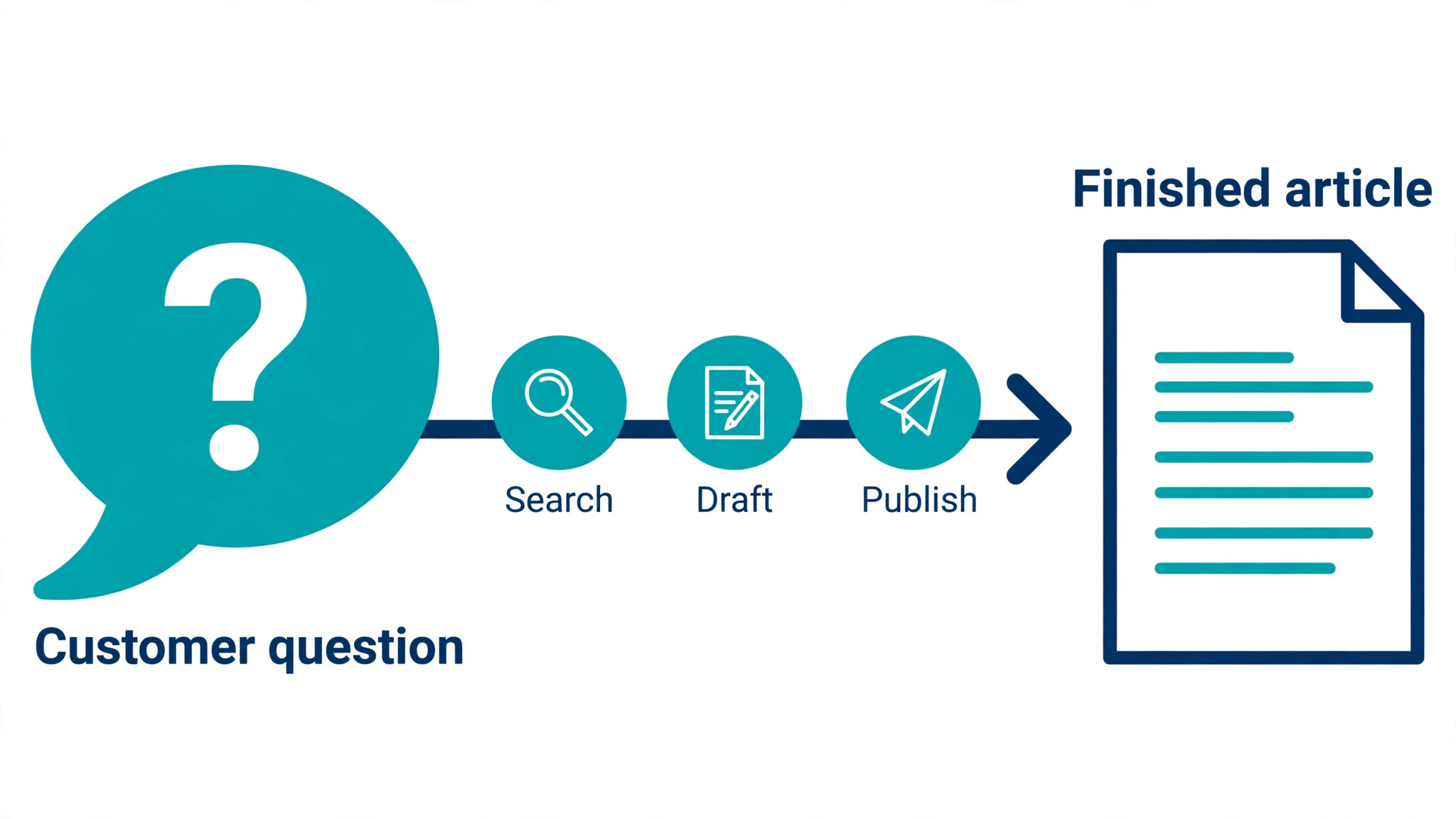
A support team answers the same question forty times a week, and every repeat answer is an article that was never written. The top 10 ai tools for knowledge base articles change that maths by drafting the article from the ticket itself, so the answer gets written once and reused by every customer who asks next.
The catch is that a knowledge base is not one job. Writing the article, keeping it accurate, making it findable and measuring whether customers actually read it are four different jobs, and no single tool does all four equally well. This guide compares ten tools on published prices, the job each one does best and the limit that only shows up after the trial ends.
The Full Shortlist in One Place
Use this table to narrow the top 10 ai tools for knowledge base articles to two or three candidates before you read the full reviews. Monthly list prices apply unless noted, and annual billing usually beats monthly billing for support teams.
| Job | Best tool | Why it wins |
|---|---|---|
| Writing articles from tickets | Zendesk Guide | Drafts that start from real customer questions |
| Chat-first help centres | Intercom Articles | Articles that live inside the chat flow |
| A dedicated knowledge base | Helpjuice | Built only for help content, nothing else |
| Structured product documentation | Document360 | Versioned docs with strong search |
| Internal team wikis | Notion | The fastest wiki a small team will adopt |
| Teams already on Atlassian | Confluence | Docs that sit next to Jira work |
| Verified internal answers | Guru | Answers a team can trust and audit |
| Simple shared team docs | Slab | Clean docs with almost no setup |
| Small support teams | Help Scout Docs | A light help centre that ships fast |
| Support teams on Zoho | Zoho Desk | Help centre included in the desk suite |
How We Tested the top 10 ai tools for knowledge base articles
A tool earned a place here only when it does a real support job well in 2026, not when it added an AI label to an old help centre. The top 10 ai tools for knowledge base articles were judged on five things that decide whether a team keeps paying after the first year: drafting quality, search, upkeep, fit with the support stack and the true cost once seats and AI add-ons are counted.
Drafting quality came first, because an article that needs a full rewrite saves nothing. Search came second, since an article customers cannot find might as well not exist. Upkeep came third, because stale articles create more tickets than they close. Fourth was fit with the help desk the team already runs, and fifth was the catch, from AI features locked behind the top tier to per-article charges that only appear on the invoice.
| Check before you buy | What to ask | Why it matters |
|---|---|---|
| Published price | Is the rate on the pricing page | A hidden price is a hidden bill |
| AI features | Which tier includes drafting and search | AI on the top tier doubles the real cost |
| Search quality | Does it rank the right article first | Customers leave when search fails |
| Version control | Can old articles be rolled back | A bad edit should not break the help centre |
| Trial access | Can you test it on real tickets | A demo is not a trial |
| Contract terms | Monthly or annual, and what year two costs | Annual billing locks the price but not the need |
Tool by Tool
1. Zendesk Guide
Starting price From 55 dollars per agent a month. Best for Support teams already running Zendesk. Watch out AI drafting and search features cost extra on lower tiers.
Zendesk Guide turns resolved tickets into draft articles, suggests related content while an agent types, and keeps every article inside the same system as the conversations it answers. The AI drafts a first version from the ticket thread, and an agent edits it before publishing, so the article carries the exact wording customers used.
The Team plan starts at 55 dollars per agent a month, but the AI features that make Guide worth buying sit on the higher tiers. A team that already runs Zendesk Support gets the most from it, because articles, tickets and chat share one search index and one set of customer data.
The first week with Zendesk Guide is the real test. For knowledge base writing, ask how long setup takes, who helps when the first output needs fixing, and what the team does while the tool is still learning its settings. In knowledge base writing, a tool that takes weeks to set up costs more in lost time than the subscription, so get the week-one plan in writing before you pay.
2. Intercom Articles
Starting price From 29 dollars per seat a month. Best for Chat-first teams that answer in the messenger. Watch out Fin AI resolutions are billed separately from seats.
Intercom Articles puts the help centre inside the messenger, so customers read the article without leaving the chat. The AI drafts articles from past conversations, suggests them while a customer types, and hands the conversation to a human when the article does not resolve the question.
Essential starts at 29 dollars per seat a month, with Articles included. The real cost driver is Fin, the AI agent, which is billed per resolved conversation on top of seats. A chat-first team with heavy volume should model the Fin bill before signing, not after the first month.
In knowledge base writing, support matters more than most buyers expect, because the first problem usually arrives in the first week. Check whether Intercom Articles offers live help, how fast it answers, and whether the help covers your actual workflow. In knowledge base writing, good support gets a tool adopted, while slow support gets it dropped and the subscription keeps billing either way.
3. Helpjuice
Starting price From 120 dollars a month. Best for Teams that want a dedicated knowledge base. Watch out Flat monthly price, add-ons for extra features.
Helpjuice does one thing: it runs a knowledge base. Its editor drafts articles from a prompt, its analytics show which articles customers read and which searches return nothing, and its version history lets an editor roll back a bad change in one click. There is no ticket system attached, so it fits teams that already have one.
Pricing starts at 120 dollars a month for the Starter plan, which covers a single knowledge base with unlimited articles. Larger teams pay more for extra knowledge bases and advanced analytics. It is the simplest buy on this list for a team that wants a help centre without changing its help desk.
Before you commit to Helpjuice, check the export and the exit. For knowledge base writing, ask whether your work, data and templates can leave with you, and in what format they come out. In knowledge base writing, a tool that locks your work inside its own system costs far more to leave than to join, and that is a price worth noting.
4. Document360
Starting price From 149 dollars a month. Best for Structured product documentation. Watch out AI search sits on the higher tiers.
Document360 is built for product documentation that changes with every release. It versions articles, keeps public and private docs in one place, and its AI search answers questions from the docs rather than returning a list of links. The editor supports tables, code blocks and callouts, which suits technical writers.
The Standard plan starts at 149 dollars a month per project. AI-powered search and the advanced analytics are on the Professional tier and above, so a team buying mainly for AI search should price that tier, not the headline. It is the strongest pick here for software teams with deep documentation.
For a team weighing Document360 against the next tool on this list, the test is a real week of work. For knowledge base writing, run it on the jobs you do most, count the time saved and the edits each output needs, then compare that with the price. In knowledge base writing, an hour saved a week pays for a tool at almost any price, while one needing constant correction never pays.
5. Notion
Starting price Paid plans begin at 10 dollars per user a month. Best for Internal wikis a small team will actually use. Watch out Notion AI is an extra charge on the Plus plan for knowledge base writing.
Notion is the wiki most small teams already know, and its AI writes, summarises and rewrites pages inside the same workspace where the team keeps everything else. A support lead can draft a help article from meeting notes, link it to the product spec, and publish it to the web without leaving Notion.
For knowledge base writing, Plus starts at 10 dollars per user a month, with Notion AI charged on top for that tier, while the Business plan at 20 dollars per user a month includes it. For internal knowledge bases, Notion is the cheapest credible start here, but it is a wiki first and a public help centre second.
The fit with the systems you already run decides whether Notion earns its place. For knowledge base writing, check the integration list before the trial, and test the one connection you actually need on day one. In knowledge base writing, a tool that cannot reach your core system forces double entry on every job, and double entry eats the time it was meant to save.
6. Confluence
Starting price Paid plans begin at 6.05 dollars per user a month. Best for Teams already working in Atlassian. Watch out AI features need the Premium plan for knowledge base writing.
For knowledge base writing, teams that live in Jira will find their documentation home in Confluence. Its pages link directly to issues, its templates cover meeting notes and project plans, and Atlassian Intelligence drafts and summarises pages for teams on the Premium plan. For a support team inside an engineering-heavy company, that link to Jira is the point.
In knowledge base writing, Standard starts at 6.05 dollars per user a month, and Premium, which unlocks the AI features, starts at 11.55 dollars per user a month. The price scales per seat, so a large team should count heads before comparing it with a flat-rate knowledge base like Helpjuice.
Read every tier on the pricing page before you pick Confluence, because the feature you need often sits one tier above the cheapest plan. For knowledge base writing, pay for the tier that does the daily job, not the tier that looks cheap. In knowledge base writing, a plan that misses one core feature costs more in workarounds than the upgrade would have.
7. Guru
Starting price The entry paid tier costs 10 dollars per user a month. Best for Verified internal answers. Watch out AI search is strongest on the higher tiers.
Guru is built around trust: every answer has an owner and an expiry date, so stale information gets flagged instead of served to customers. Its AI search pulls answers from Guru and from connected tools like Slack and Salesforce, and it shows the source for every answer it gives.
For knowledge base writing, the Starter plan starts at 10 dollars per user a month, with AI search improving on the Builder and Expert tiers. It suits internal knowledge bases where a wrong answer costs a sale or a support escalation. For a public help centre, a dedicated tool like Helpjuice fits better.
The first week with Guru is the real test. Before buying for knowledge base writing, ask about setup time, who helps when the first output needs a fix, and what the team does while the tool is still learning its settings. Weeks of setup in knowledge base writing cost more in lost time than the subscription itself, so ask for the week-one plan in writing before paying.
8. Slab
Starting price From 12.50 dollars per user a month. Best for Simple shared team docs. Watch out AI features live in the Business tier.
Slab is a clean, fast wiki with a short learning curve. It organises docs into topics, shows who wrote what and when, and its AI can draft and summarise pages for teams on the Business plan. A team that found Confluence heavy will find Slab a relief, and new hires can find answers on day one.
Pricing starts at 12.50 dollars per user a month for the Business plan, with a free tier for small teams. The free tier caps some features, so a growing team should trial the paid plan on real docs. It is a good internal pick, though it is not built as a customer-facing help centre.
For knowledge base writing, good support counts for more than buyers expect, since the first problem usually shows up in week one. Check whether Slab offers live help, how fast it answers, and whether the help covers your actual workflow. For knowledge base writing, fast help turns a tool into a habit, and slow help turns it into an abandoned subscription that still bills.
9. Help Scout Docs
Starting price Paid plans begin at 20 dollars per user a month. Best for Small support teams. Watch out Beacon AI is an extra charge.
Help Scout Docs is the help centre half of Help Scout, and it shares the same inbox as the tickets. Its editor is simple, its search is fast, and Beacon, the help widget, suggests articles before a customer writes in. The AI add-on drafts replies and article suggestions from past conversations.
Standard starts at 20 dollars per user a month, with Docs included. Beacon AI is billed separately, so a team buying mainly for AI drafting should add that line to the budget. For a small team that wants one login for inbox and help centre, it is the easiest buy on this list.
Before you commit to Help Scout Docs, check the export and the exit. Before committing in knowledge base writing, ask if your work, data and templates can be taken elsewhere, and what format the export uses. For knowledge base writing, leaving a tool that traps your work inside its own system costs far more than joining it, which is a price worth noting.
10. Zoho Desk
Starting price From 14 dollars per agent a month. Best for Support teams already on Zoho. Watch out Zia AI features need the higher tiers.
Zoho Desk includes a knowledge base inside the help desk, so articles and tickets share one system. Zia, the AI assistant, drafts article suggestions from resolved tickets, tags incoming tickets, and predicts customer sentiment on the higher tiers. Teams already paying for Zoho One get the most value from it.
Standard starts at 14 dollars per agent a month, with the knowledge base included from the start. Zia features unlock on the Professional and Enterprise tiers, so a team buying for AI drafting should price Professional at 23 dollars per agent a month. It is the natural pick for a Zoho shop.
For a team weighing Zoho Desk against the next tool on this list, the test is a real week of work. Test it on your most common knowledge base writing jobs, count the minutes saved and the edits each output needs, and weigh that against the price. For knowledge base writing, saving an hour a week justifies a tool at almost any price, but a tool that needs constant correction never pays.
The Comparison Table, Explained
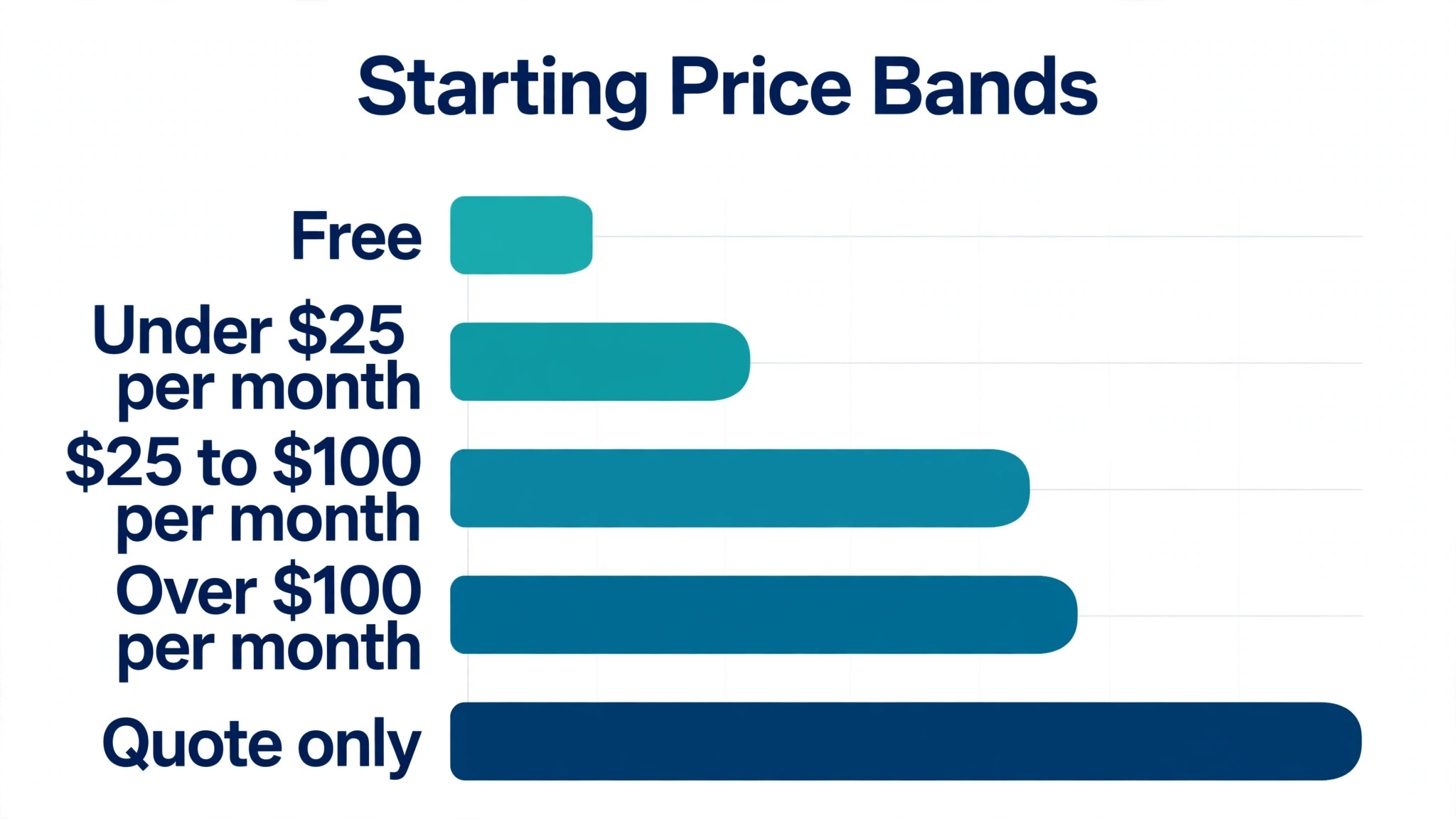
The table below puts the top 10 ai tools for knowledge base articles side by side on price, best job and free plan, so you can compare the published prices against the quote-only tools at a glance. Read it by job first, because a cheap tool that cannot draft well costs more in editing time than a pricier one that drafts cleanly.
The fastest way through the table is by job, since support teams pay more for a bargain tool that fails than for a pricier one that does the work first time. A tool that fails on the first try eats another hour of rework. Match each tool to its best job in knowledge base writing first, then check the price, and the choice usually settles in under a minute.
| Tool | Starting price | Best for | Free plan |
|---|---|---|---|
| Zendesk Guide | From 55 dollars per agent a month | Support teams already running Zendesk | Trial |
| Intercom Articles | From 29 dollars per seat a month | Chat-first teams that answer in the messenger | Trial |
| Helpjuice | From 120 dollars a month | Teams that want a dedicated knowledge base | Trial |
| Document360 | From 149 dollars a month | Structured product documentation | Trial |
| Notion | From 10 dollars per user a month | Internal wikis a small team will actually use | Yes |
| Confluence | From 6.05 dollars per user a month | Teams already working in Atlassian | Yes |
| Guru | From 10 dollars per user a month | Verified internal answers | Trial |
| Slab | From 12.50 dollars per user a month | Simple shared team docs | Yes |
| Help Scout Docs | From 20 dollars per user a month | Small support teams | Trial |
| Zoho Desk | From 14 dollars per agent a month | Support teams already on Zoho | Trial |
How to Choose Without Overbuying
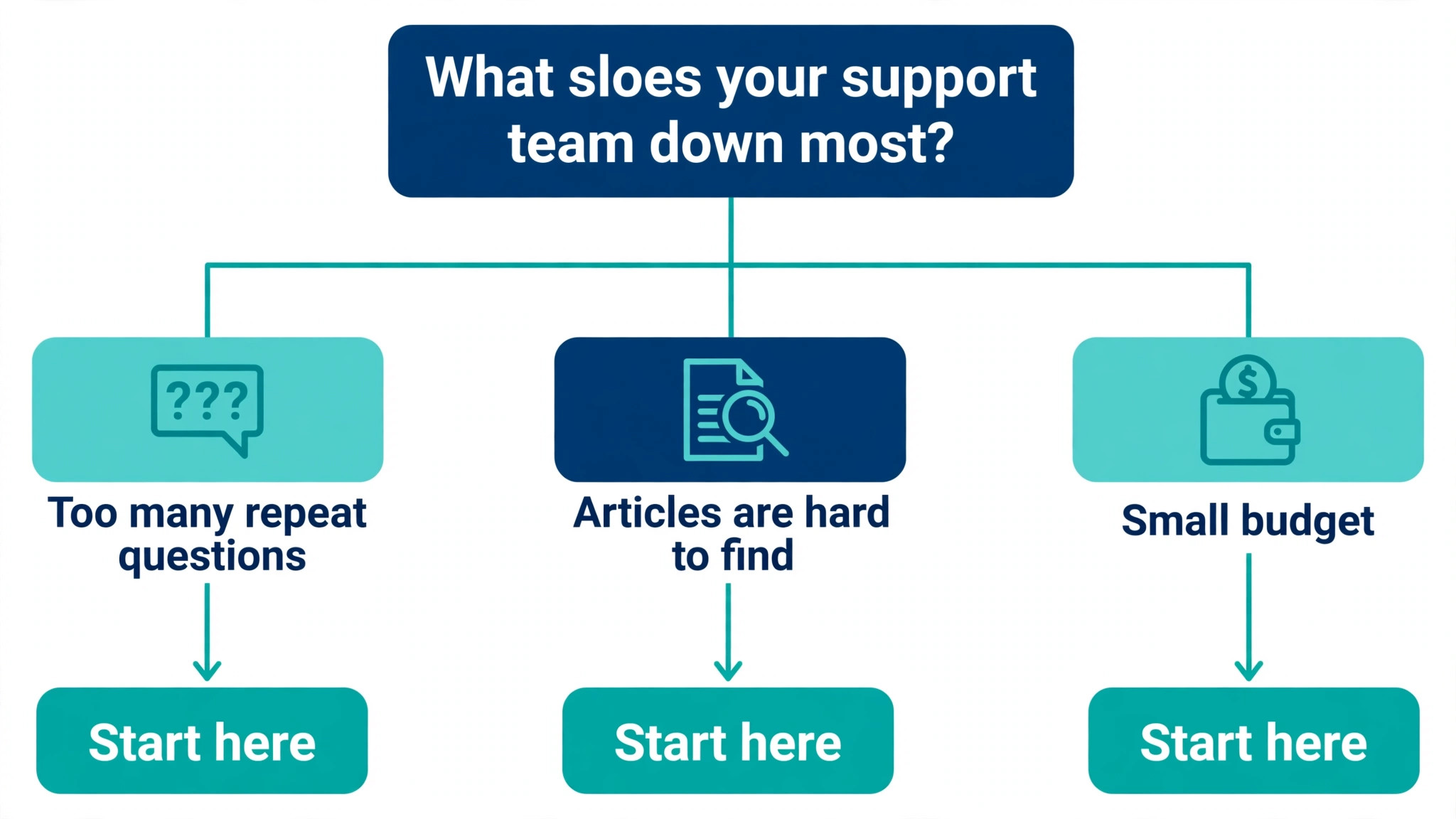
Start from the slowest part of the support week, not from the vendor homepage. Teams buried in repeat questions should buy the tool that turns those questions into articles first. Teams losing hours to stale docs should buy version control and ownership before drafting features. Fix the slowest bottleneck task in knowledge base writing first, because that tool pays for itself before the others, which can wait.
Judge the full stack for knowledge base writing, not the single headline price. The table below prices year one for a solo buyer and for a small team in knowledge base writing on the common combinations, at published starting prices. In knowledge base writing, get per-seat charges in writing before you sign, because those lines surprise teams, and annual billing usually cuts about twenty percent off the monthly rate.
| Stack | Monthly cost | What it covers |
|---|---|---|
| Notion alone | Lowest starting price | One tool for the internal wiki |
| Help Scout Docs plus Notion | Mid-range | Help centre plus an internal wiki |
| Zendesk Guide plus Guru | Mid-range | Public help centre plus verified internal answers |
| Intercom Articles plus Helpjuice | Check the pricing page | Chat help centre plus a dedicated knowledge base |
Best Pick by Job
Pick from the table below by the support job you do most each week. The top 10 ai tools for knowledge base articles are not ranked by features alone; they are ranked by which job each one actually finishes, so the pick that matches your week is the pick that will still be in your stack a year from now.
| Your job | Best pick | Why it wins |
|---|---|---|
| Writing articles from tickets | Zendesk Guide | Drafts that start from real customer questions |
| Chat-first help centres | Intercom Articles | Articles that live inside the chat flow |
| A dedicated knowledge base | Helpjuice | Built only for help content, nothing else |
| Structured product documentation | Document360 | Versioned docs with strong search |
| Internal team wikis | Notion | The fastest wiki a small team will adopt |
| Teams already on Atlassian | Confluence | Docs that sit next to Jira work |
| Verified internal answers | Guru | Answers a team can trust and audit |
| Simple shared team docs | Slab | Clean docs with almost no setup |
| Small support teams | Help Scout Docs | A light help centre that ships fast |
| Support teams on Zoho | Zoho Desk | Help centre included in the desk suite |
Testing Before You Pay
A trial tells a support team more in five working days than a month of reading reviews, but only when the trial runs on real tickets. Pick the two tools that look closest after the shortlist, run them side by side on the same core jobs, and score them on time saved, edits needed and how the article reads to a customer. Never trial on a demo file, because a demo hides the rough edges real tickets expose. The top 10 ai tools for knowledge base articles are best judged on real tickets, not on a sales demo.
| Day | What to test | What good looks like |
|---|---|---|
| Day 1 | Setup and first real article | Working in under an hour, no IT ticket |
| Day 2 | The hardest article you write | Output needs light edits, not a rewrite |
| Day 3 | Search and the help widget | The right article surfaces first |
| Day 4 | A colleague tries it cold | They finish a job without asking for help |
| Day 5 | Count the time and the cost | Hours saved beat the monthly price |
Keep a simple log through the trial week, noting the daily task, the minutes it took, the edits made and whether the article could go out unchecked. When the trial week ends, the log makes the call for knowledge base writing. The tool with the best log wins, even when it was not the expected favourite, because the log measures the team’s own work, not the vendor demo.
Buying Mistakes to Skip
Mistake one is the cheapest plan, when the AI feature the team needs sits two tiers up. Check each tier on the pricing page for knowledge base writing, and pay for the one that covers the daily job rather than the cheapest-looking one. Mistake two in knowledge base writing is rolling out to the whole team before one person has tried the tool for a week, since a favourite of one and a burden to five is a cost, not a system.
The third mistake is skipping the upkeep check. Ask who owns each article, when it expires and what happens when the product changes, before the first real article goes live, because fixing stale docs after the fact costs far more than checking first. The fourth mistake is judging the tool on its best day, so trial it on the hardest article itself and let the hard job decide.
Your Questions, Answered
Which tool gives a support team the cheapest good start
In knowledge base writing, Notion is the cheapest credible start here at 10 dollars per user a month, and Confluence is close behind at 6.05 dollars per user a month. Start with the job you do most each week, trial the free tier on real tickets, and add a specialist only when the general tool cannot do a job you are paid to do. That is the cheapest route to a support stack, with no payment for features never used.
Can a team keep AI-drafted articles from looking generic
It will when a team publishes the template unchanged. AI tools draft a usable first version, but the facts, the wording and the judgement still come from the people doing the support work. An article that goes out unedited reads generic, and customers notice generic help fast. For knowledge base writing, let the AI break the blank page, then rewrite the details, the wording and the checks, so the result sounds like your team and not the tool.
For a small team, which knowledge base tool wins
Help Scout Docs is the pick for a small team, starting at 20 dollars per user a month with almost no setup, while Notion at 10 dollars per user a month is the strongest all-round option as the team grows. The top 10 ai tools for knowledge base articles were ranked by the job each one finishes, not by the size of the feature list, so a small team should buy the tool that fixes its slowest weekly job first.
How much will a small team spend on help tools in year one
Plan on 20 to 50 dollars a month in year one for a general tool such as Notion, rising to 100 to 200 dollars a month with a specialist such as Helpjuice added. On per-seat pricing for knowledge base writing, work out the headline price times headcount first, since that total surprises buyers. Price the whole stack and trial each tool on real tickets before signing an annual contract.
Do these tools offer a trial before payment
Most tools on this list offer a free plan or a free trial, and Notion and Confluence both let teams test on real work before paying. Use the trial on the job itself the team does most, not on a demo, and count the time saved and the edits each output needs. A trial that covers a real week tells a support team more than a sales call, and a tool that will not trial is one to be careful about.
The Verdict, in Brief
If you buy one tool this quarter, pick Help Scout Docs for a small team or Notion for an internal wiki, and Zendesk Guide when your support already runs on Zendesk. Help Scout Docs is the easiest place to start at 20 dollars per user a month, and Zendesk Guide is the strongest all-round help centre at 55 dollars per agent a month. The top 10 ai tools for knowledge base articles earn their keep by turning repeat questions into articles customers actually find.
Whatever you pick, trial it on a real week of tickets, count the articles it produces and the edits each one needs, and keep a human eye on every AI draft before it is published. Each tool on this list works in knowledge base writing. The difference is whether the tool matches the articles you actually write, and whether you measure the return in tickets deflected rather than in features used.