
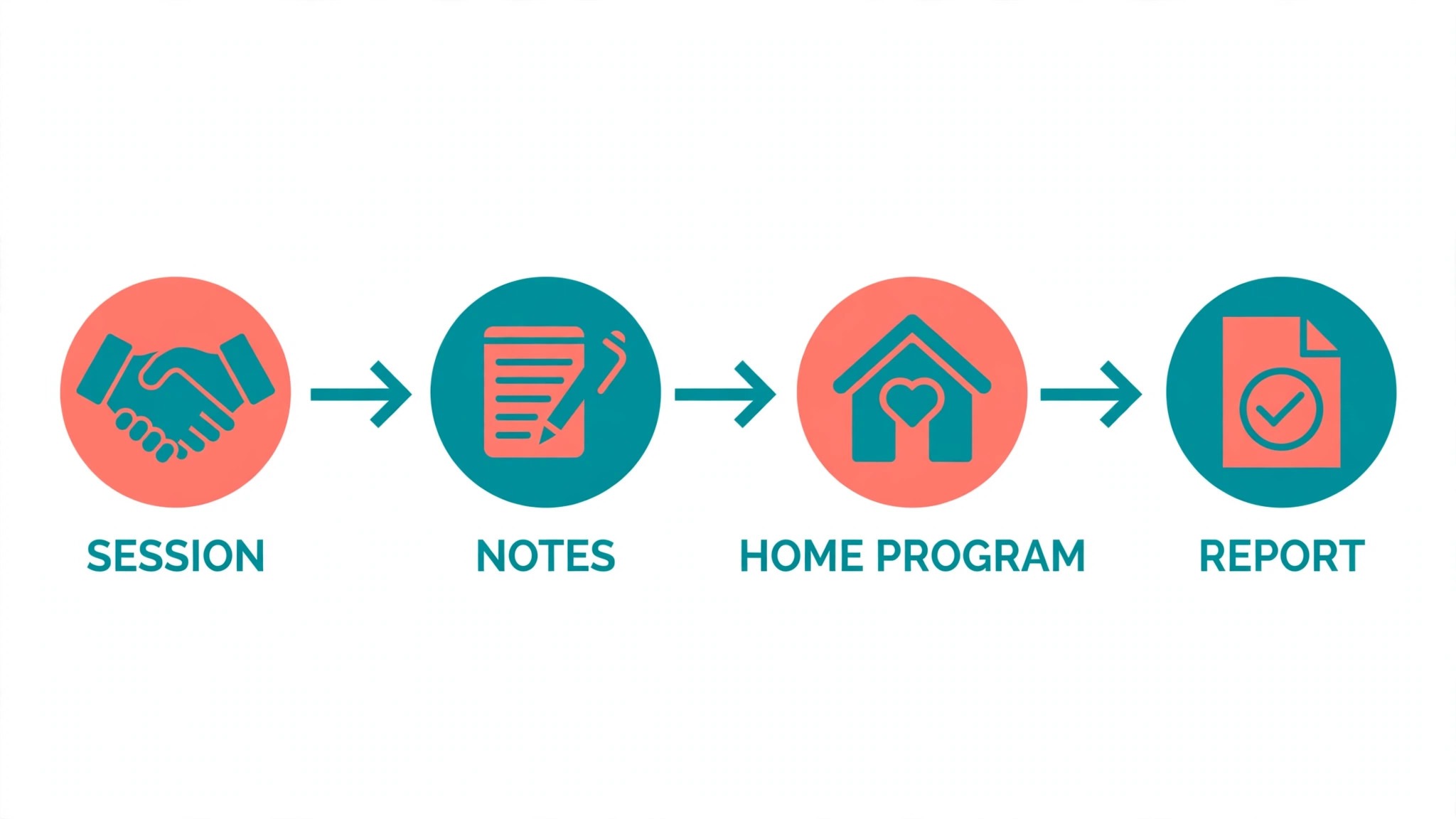
An occupational therapist finishes a session and the notes begin. The goals, the progress, the home program and the report all need writing before the next client arrives. The best ai tools for occupational therapists cut that writing time down, so the therapist spends the day with clients instead of at the keyboard.
Therapy runs on a mix of sessions, notes, plans and reports, and no single tool covers all four well. A scribe handles the note, a practice system handles the clinic, and a planning tool handles the home program. This guide shows which job each tool does, so a therapist can buy the piece that fits the work they actually do most.
This guide compares fifteen tools on published prices, the therapy job each one does best and the catch that only shows up after the trial ends. For occupational therapy, every price in this guide is the vendor’s published starting price as of late 2026, and tools without a published rate are marked pricing on request. Start with the shortlist, then read the reviews that match the therapy work you do most.
The Full Shortlist in One Place
Use it to narrow the best ai tools for occupational therapists to two or three candidates before you read the full reviews. Monthly list prices apply unless noted, and annual billing usually beats monthly billing for therapy clinics.
| Job | Best tool | Why it wins |
|---|---|---|
| Ambient session notes | Nabla | Notes that keep up with a busy clinic day |
| Simple notes, almost no setup | Freed | The fastest note for a small practice |
| Free notes plus admin help | Heidi Health | A free tier that actually works |
| Evidence-linked notes | Abridge | Notes linked back to the audio |
| Voice commands plus notes | Suki AI | Voice-first workflow beyond notes |
| Drafting and planning help | ChatGPT | Fast drafts, summaries and home programs |
| Long reports and analysis | Claude | Strongest on long documents and careful edits |
| Session transcription | Otter.ai | Live transcripts that keep up with a session |
| Practice management | SimplePractice | Scheduling, notes and billing in one login |
| Therapy notes and billing | TherapyNotes | Built for mental health and therapy practices |
| Outpatient rehab records | WebPT | Documentation built for rehab clinics |
| EMR for therapy clinics | Prompt | Scheduling, notes and billing for rehab teams |
| Notes and clinic wiki | Notion AI | One place for notes, plans and team docs |
| Grammar and style checks | Grammarly | Catches errors before a report goes out |
| Handouts and visuals | Canva | Finished handouts from a template in minutes |
How We Chose the Best AI Tools for Occupational Therapists
A tool earned a place here only when it does a real therapy job well in 2026, not when it added an AI label to an old product. The best ai tools for occupational therapists were judged on five things that decide whether a clinic keeps paying after the first year.
We ranked the tools first on the job each one does, because a single-purpose tool usually beats a platform that spreads across five jobs for therapy teams. Next came published pricing and how it scales, since per-seat charges decide the real bill for therapists as they grow. Output quality came third, because an error in therapy work costs more to fix than a month of subscription. Fourth, fit with the systems therapy teams already run, because a tool that cannot reach the core system forces double entry. Fifth is the catch in occupational therapy: free plans that cap usage at one end, and enterprise tools that need a sales call before any trial at the other.
| Check before you buy | What to ask | Why it matters |
|---|---|---|
| Published price | Is the rate on the pricing page | A hidden price is a hidden bill |
| Free plan limits | Usage caps, watermarks or seats | A capped free plan cannot run the real job |
| Compliance | BAA, retention and consent | A fast output that breaks the rules is a risk |
| Integration | Does it connect to your core system | Double entry eats the time it saves |
| Trial access | Can you test it on real work | A demo is not a trial |
| Contract terms | Monthly or annual, and what year two costs | Annual billing locks the price but not the need |
Tool by Tool
1. Nabla
Starting price A free tier is available, and paid plans start from 119 dollars a month. Best for Ambient session notes. Watch out Enterprise setup may need IT support
Nabla records the session and drafts a structured note in seconds, with support for more than 30 languages and links into the main EHRs. A therapist who sees clients back to back gets a note that is ready before the next session starts, without retyping the history.
The free tier covers a set number of consultations a month, enough to test note quality on real clinic days. Paid plans add team controls and deeper EHR work, and the price rises with seats, so a small clinic should trial first and count the notes it actually produces in a week.
2. Freed
Starting price Paid plans begin at 39 dollars a month. Best for Simple notes, almost no setup. Watch out Coding tools and EHR push come with the higher tier
Freed listens to the visit and drafts a note in the clinician style it has learned, with a one-click push into many browser-based EHRs on the higher tier. Setup takes minutes, and the interface has almost nothing to learn, which suits a therapist who wants the note done before the next session.
The Starter plan caps notes at 40 a month, so a busy clinic will need Core or Premier. The higher tier adds coding support and the EHR push, and the per-clinician price is low enough that a two-person practice can run it without a procurement meeting.
3. Heidi Health
Starting price Start on the free tier, with paid plans beginning at 99 dollars a month. Best for Free notes plus admin help. Watch out Free-tier notes often need a second pass
Heidi Health keeps a permanent free tier for ambient notes in occupational therapy, and its paid tiers add templates, team features and supervised agents that draft letters and prep charts. It works in the browser and on mobile, and it covers a wide set of note formats, so a therapist can shape the output to the clinic.
The paid Clinician tier is the sensible starting point for a working therapist, because the free tier caps usage and the notes need a closer edit. Heidi also handles dictation and document work, which makes it more than a scribe for a clinic where half the day is admin.
4. Abridge
Starting price Abridge is priced on request. Best for Evidence-linked notes. Watch out Enterprise only, with no self-serve trial
Abridge turns recorded visits into ambient notes where each line links back to the exact moment it was spoken, so a note can be checked against the recording itself. That traceability helps during an audit and when a colleague wants to confirm what a client really said.
Abridge is sold to health systems, not to individual therapists, so the price comes from a contract and the rollout takes weeks. A therapist in a large hospital will usually meet it through the employer, not by buying it alone.
5. Suki AI
Starting price Suki AI quotes its price on request. Best for Voice commands plus notes. Watch out No published price, and no trial you can start on your own
Suki AI goes beyond note writing and takes voice commands for orders, referrals and coding, working inside the main EHRs for occupational therapy. A therapist can dictate a note, ask for a code and pull up a client summary without touching the keyboard, which is the point for a team that lives inside the EHR all day.
The buying process is the trade-off here for occupational therapy. With no published price and no self-serve trial, a practice needs a sales conversation and an IT plan before the first note. For a large therapy group that already runs Epic, that effort pays off.
6. ChatGPT
Starting price Plans start from 20 dollars a month. Best for Drafting and planning help. Watch out It can invent facts, so every claim needs checking in occupational therapy
ChatGPT drafts home programs, summarizes long reports, turns a rough session note into a clean plan and writes client handouts in minutes. The twenty-dollar Plus plan adds the stronger model, and the free tier is enough to test whether the drafting style fits your clinic.
In occupational therapy, the catch is accuracy. ChatGPT can produce confident-sounding facts that are wrong, so nothing it writes should reach a client unchecked. Treat it as a fast first draft, verify every detail against the client file, and it will save hours a week.
7. Claude
Starting price Paid plans for Claude begin at 20 dollars a month. Best for Long reports and analysis. Watch out You get no live web search on the basic plan
For occupational therapy, Claude is the strongest option on this list for long documents. It reads a lengthy assessment and returns a clean summary, tightens a report without flattening the tone, and handles careful edits better than most rivals. Therapists writing detailed evaluations get the most from it.
For occupational therapy, the Pro plan at twenty dollars a month is the sensible starting point, and the free tier covers short tasks. For occupational therapy, the limit is live research, so pair it with a search tool when the job needs fresh facts or current guidance.
8. Otter.ai
Starting price From 16.99 dollars a month. Best for Session transcription. Watch out Accuracy drops with accents and crosstalk
Otter.ai records and transcribes sessions live, with speaker labels and a searchable transcript ready minutes after the session ends. The Pro plan at sixteen dollars ninety-nine a month covers a working therapist’s session load, and the free tier handles a few hours a month for testing.
Accuracy is strong on clear one-to-one sessions and weaker when voices overlap, so always spot-check quotes against the audio. For a therapist who documents from recordings, the time saved pays for the plan in the first week.
9. SimplePractice
Starting price Paid plans begin at 29 dollars a month. Best for Practice management. Watch out AI features are lighter than the dedicated scribes
SimplePractice covers scheduling, notes, billing and telehealth in one login, and it is built for small therapy practices. A solo therapist can run the whole clinic from it, and the client portal handles intake forms and payments without extra software. The twenty-nine-dollar Starter plan is the entry point.
The AI help inside it is lighter than a dedicated scribe, so a therapist drowning in notes should pair it with one. For a practice that needs one system for the whole operation, it is the practical pick.
10. TherapyNotes
Starting price 49 dollars a month is the lowest paid rate. Best for Therapy notes and billing. Watch out Template-driven, less flexible than a general tool
TherapyNotes is built for therapy practices, with notes, scheduling, billing and a client portal in one system. The templates match how therapists actually document, and the billing tools handle claims without a separate system. The forty-nine-dollar starting price covers a single clinician.
The template structure is both the strength and the limit. It keeps notes consistent, but a therapist who wants free-form AI drafting will find it less flexible than a general tool. For a practice that values structure, it is a strong fit.
11. WebPT
Starting price No published price for WebPT; quotes on request. Best for Outpatient rehab records. Watch out Priced for clinics, not solo therapists
WebPT is documentation and practice management built for outpatient rehab, with therapy-specific templates and compliance checks. It handles the full rehab workflow from intake to discharge, and the reporting tools track outcomes across the clinic. It is the system many rehab clinics standardize on.
The price is quoted per clinic, and the value shows at scale. A solo therapist will find it heavy, while a multi-room rehab clinic will get the most from the templates and the reporting.
12. Prompt
Starting price Prompt does not publish a price. Best for EMR for therapy clinics. Watch out Implementation takes time and training
Prompt is an EMR for physical, occupational and speech therapy clinics, covering scheduling, documentation, billing and outcomes in one system. The AI features help with notes and workflow, and the reporting gives clinic owners a clear view of performance. It is built for teams that run on data.
The rollout is a real project with training and data migration, so a buyer should plan for it. For a growing therapy clinic, the single system pays for itself in fewer double entries and fewer missed follow-ups.
13. Notion AI
Starting price Plans start from 10 dollars a month. Best for Notes and clinic wiki. Watch out Not a medical record system
Notion AI turns a workspace into a clinic wiki: session templates, home program libraries, team docs and planning pages in one place. In occupational therapy, the AI drafts, summarizes and organizes, which helps a team that shares a lot of written material. For occupational therapy, the ten-dollar add-on price is low for what it covers.
It is not a medical record system, so it cannot replace a compliant EHR. Use it for the knowledge around the clinic, not for the clinical record itself, and keep client data in the proper system.
14. Grammarly
Starting price 12 dollars a month is where paid plans begin. Best for Grammar and style checks. Watch out Its style suggestions can flatten a writer’s voice
Grammarly catches grammar, spelling and clarity issues before a report reaches a supervisor or a payer, and it works inside the browser, docs and email where therapists actually write. For occupational therapy, the Pro plan at twelve dollars a month adds tone and full-sentence rewrites, which help when a report needs tightening under deadline pressure.
For occupational therapy, the risk is over-editing. In occupational therapy, accepting every suggestion can flatten a distinctive voice into house style, so use it as a safety net rather than an editor. For therapists filing reports daily, it is cheap insurance against the small errors that slow approval.
15. Canva
Starting price Plans start from 15 dollars a month. Best for Handouts and visuals. Watch out Templates can make every handout look alike
Canva turns a home program into a finished handout with images, steps and clear instructions in minutes. Its Magic Studio tools can remove backgrounds, write copy and resize one design into print and phone formats, and the brand kit keeps colors and fonts consistent across the clinic.
The risk is sameness, since Canva templates are used by millions of people. Build two or three custom templates from your own material and reuse them, so the output stays yours. The fifteen-dollar Pro plan is the one to buy, since the free tier locks the brand kit behind the paywall.
The Comparison Table, Explained
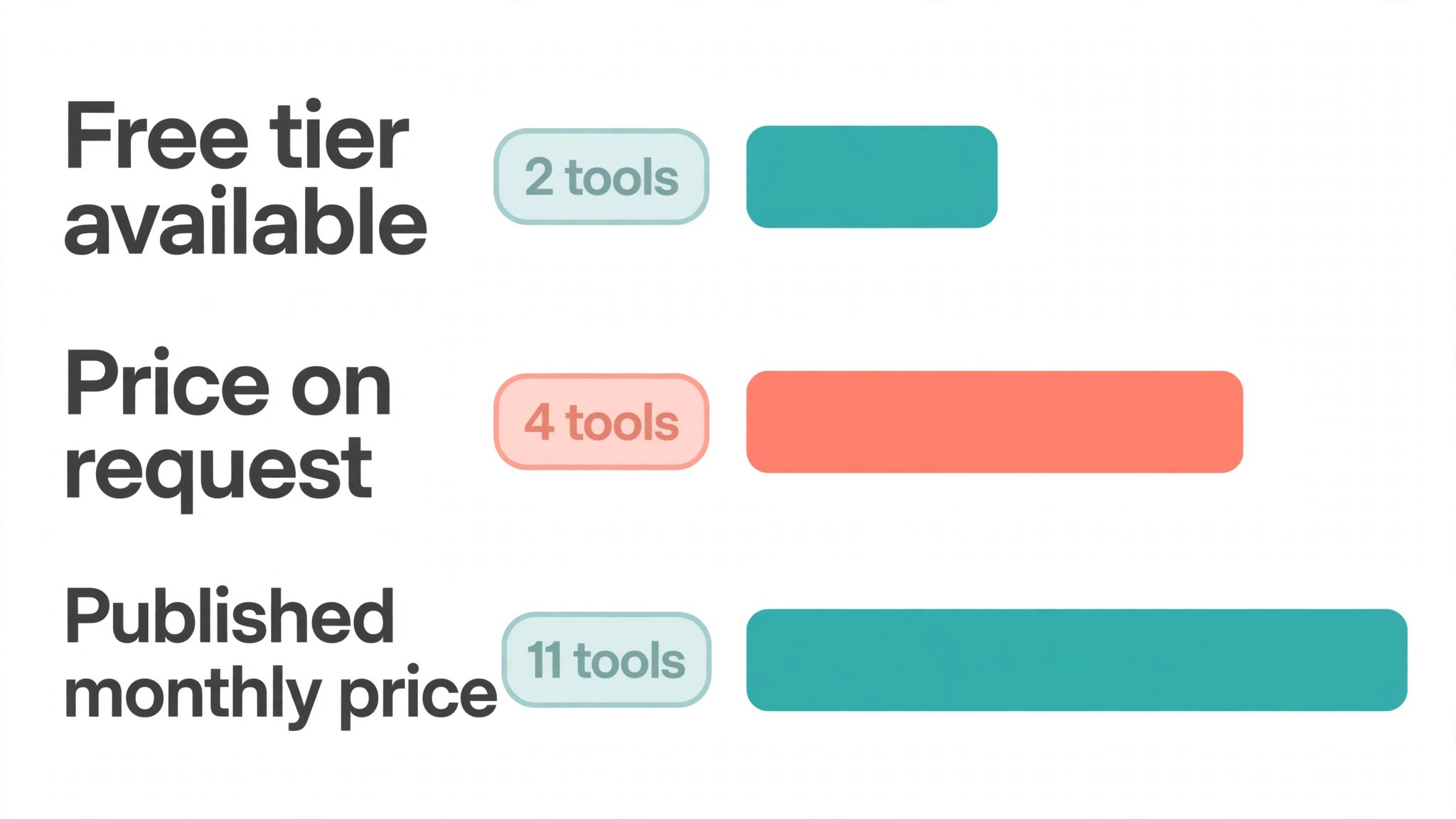
The table below puts the best ai tools for occupational therapists side by side on price, best job and free plan, so you can compare the published prices against the quote-only tools at a glance.
| Tool | Starting price | Best for | Free plan |
|---|---|---|---|
| Nabla | Free tier, then paid plans from 119 dollars a month | Ambient session notes | Yes |
| Freed | From 39 dollars a month | Simple notes, almost no setup | No |
| Heidi Health | Free tier to begin, with paid plans starting at 99 dollars a month | Free notes plus admin help | Yes |
| Abridge | Pricing on request | Evidence-linked notes | No |
| Suki AI | Pricing on request | Voice commands plus notes | No |
| ChatGPT | From 20 dollars a month | Drafting and planning help | No |
| Claude | From 20 dollars a month | Long reports and analysis | No |
| Otter.ai | From 16.99 dollars a month | Session transcription | No |
| SimplePractice | From 29 dollars a month | Practice management | No |
| TherapyNotes | From 49 dollars a month | Therapy notes and billing | No |
| WebPT | Pricing on request | Outpatient rehab records | No |
| Prompt | Pricing on request | EMR for therapy clinics | No |
| Notion AI | From 10 dollars a month | Notes and clinic wiki | No |
| Grammarly | From 12 dollars a month | Grammar and style checks | No |
| Canva | From 15 dollars a month | Handouts and visuals | No |
How to Choose Without Overbuying
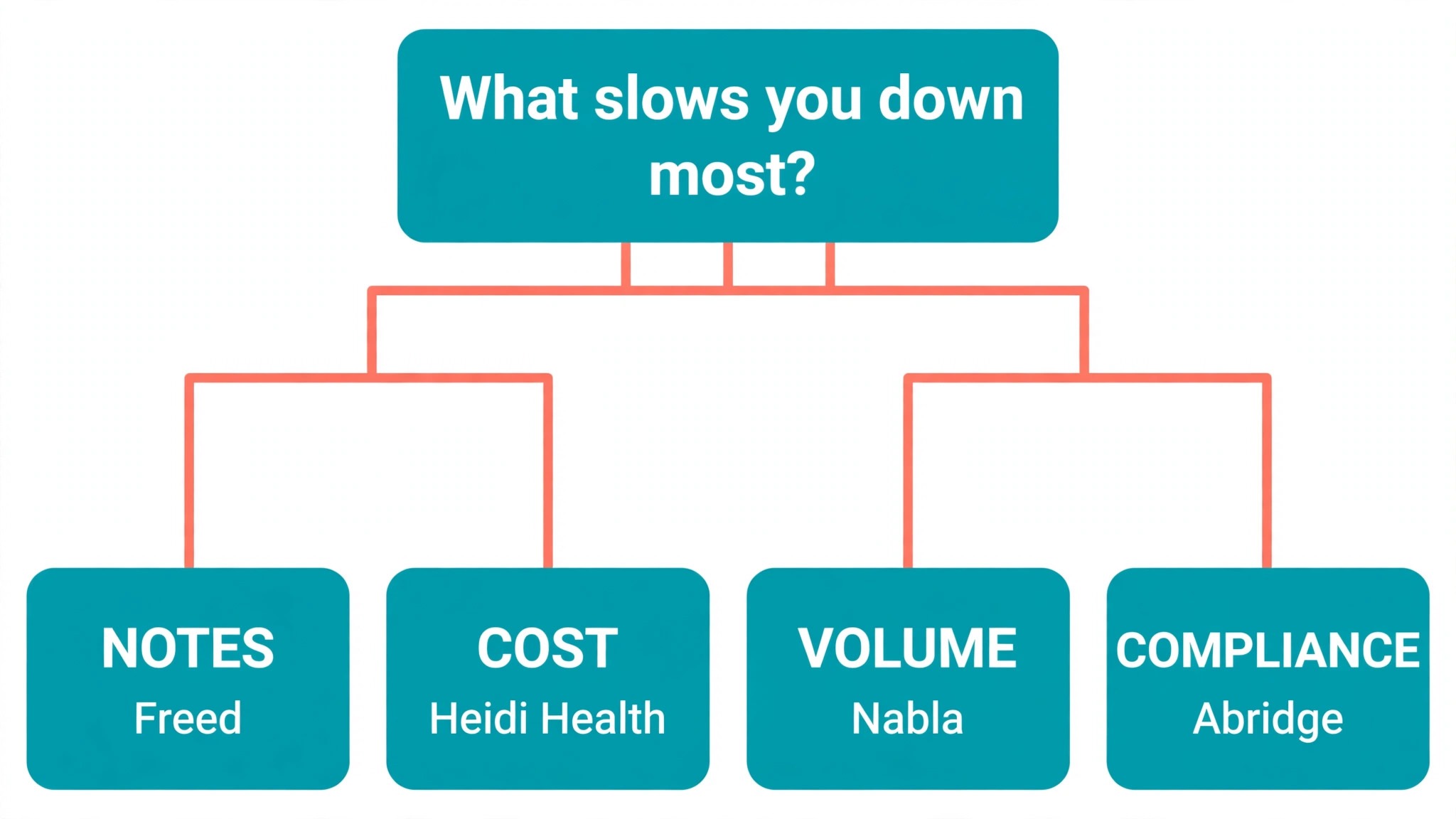
Start from the slowest part of the therapy week, not from the vendor homepage. Therapists buried in notes should buy the tool that clears that pile first. Therapists losing hours to rework should buy accuracy before features. Fix the slowest bottleneck task in occupational therapy first, because that tool pays for itself before the others, which can wait.
Price the whole therapy stack, not the headline number. The table below prices year one for a solo buyer and for a small team on the common therapy combinations, at published starting prices. Ask for per-seat charges in writing before signing, since those lines surprise therapy teams, and annual billing usually cuts about twenty percent off the monthly rate.
| Stack | Monthly cost | What it covers |
|---|---|---|
| Freed plus Notion AI | Check the pricing page | Core tool plus a second specialist |
| Heidi Health alone | Lowest starting price | One tool for the main job |
| Nabla plus ChatGPT | Mid-range | Core tool plus a workflow specialist |
| SimplePractice plus Freed | Mid-range | Specialist pair for a busy week |
A solo therapist should start with Freed and add Notion AI for the clinic wiki once the notes are under control. The best ai tools for occupational therapists prove their worth in the hour between clients, so measure the stack by the notes it finishes, not by the features it lists, and add a practice system only when the admin starts costing sessions.
Best Pick by Job
Pick from the table below by the therapy job you do most each week. The best ai tools for occupational therapists are not ranked by features alone; they are ranked by which job each one actually finishes, so the pick that matches your week is the pick that will still be in your stack a year from now.
| Your job | Best pick | Why it wins |
|---|---|---|
| Ambient session notes | Nabla | Notes that keep up with a busy clinic day |
| Simple notes, almost no setup | Freed | The fastest note for a small practice |
| Free notes plus admin help | Heidi Health | A free tier that actually works |
| Evidence-linked notes | Abridge | Notes linked back to the audio |
| Voice commands plus notes | Suki AI | Voice-first workflow beyond notes |
| Drafting and planning help | ChatGPT | Fast drafts, summaries and home programs |
| Long reports and analysis | Claude | Strongest on long documents and careful edits |
| Session transcription | Otter.ai | Live transcripts that keep up with a session |
| Practice management | SimplePractice | Scheduling, notes and billing in one login |
| Therapy notes and billing | TherapyNotes | Built for mental health and therapy practices |
| Outpatient rehab records | WebPT | Documentation built for rehab clinics |
| EMR for therapy clinics | Prompt | Scheduling, notes and billing for rehab teams |
| Notes and clinic wiki | Notion AI | One place for notes, plans and team docs |
| Grammar and style checks | Grammarly | Catches errors before a report goes out |
| Handouts and visuals | Canva | Finished handouts from a template in minutes |
Your First Week With the New Scribe
Start with three clients you know well, not the hardest cases on the book. Run the scribe on their sessions, read every note before signing, and mark the edits it needed. If the edits are small, the tool is learning your style. If the edits are large, change the template before you judge the tool, since most early failures are template failures rather than tool failures.
| Step | What to do | Done when |
|---|---|---|
| Day 1 | Scribe three familiar clients | Notes need only light edits |
| Day 3 | Adjust the note template | Template matches your style |
| Day 7 | Count notes finished on time | Notes done before next session |
| Day 14 | Try a complex case | Tool holds up on hard notes |
| Day 30 | Count hours saved | Savings beat the monthly price |
Testing Before You Pay
A trial tells therapy teams more in five working days than a month of reading reviews, but only when the trial runs on real therapy work. Pick the two tools that look closest after the shortlist, run them side by side on the same core therapy jobs, and score them on time saved, edits needed and how the output reads to a colleague. Never trial on a demo file, because a demo hides the rough edges real therapy work exposes. The best ai tools for occupational therapists prove themselves on a real caseload, not on a demo note, so run the trial on the clients you are actually seeing this week.
| Day | What to test | What good looks like |
|---|---|---|
| Day 1 | Setup and first real job | Working in under an hour, no IT ticket |
| Day 2 | The hardest job you do | Output needs light edits, not a rewrite |
| Day 3 | Integration with your core system | Data flows without double entry |
| Day 4 | A colleague tries it cold | They finish a job without asking for help |
| Day 5 | Count the time and the cost | Hours saved beat the monthly price |
Keep a simple log through the trial week, noting the daily therapy task, the minutes it took, the edits made and whether the note could be signed unchecked. At the end of the week the log is the decision for therapy teams. The tool with the best log wins, even when it was not the expected favourite, because the log measures the team’s own therapy work, not the vendor demo.
Buying Mistakes to Skip
Mistake one is the cheapest plan, when the feature therapy teams need sits two tiers up. Read every tier on the pricing page and pay for the tier that does the daily therapy job, not the tier that looks cheap. Mistake two is rolling out to the whole team before one person has tried the tool for a week, since a favourite of one and a burden to five is a cost for therapy teams, not a system.
The third mistake is skipping the data and compliance check for therapy teams. Ask for the data agreement, read the retention policy and check the consent wording before the first real client record goes through the tool, because fixing compliance after the fact costs far more than checking it first. The fourth mistake is judging the tool on its best day, so trial it on the hardest therapy job itself and let the hard job decide.
Your Questions, Answered
Which tool gives therapy teams the cheapest good start
For occupational therapy, Freed gives the cheapest credible start here at from 39 dollars a month, and Heidi Health on its free tier sits close behind. The best ai tools for occupational therapists include free tiers and free plans, so start with the job you do most each week, trial the free tier on real work, and add a specialist only when the general tool cannot do a job you are paid to do. That is the cheapest route to a therapy stack, with no payment for features never used.
Can therapy teams keep AI output from looking generic
It will when therapy teams publish the template unchanged. AI tools draft a usable first version, but the facts, the wording and the judgement still come from the professional doing the therapy work. An output that goes out unedited reads generic, and clients notice generic therapy work fast. Use the AI to beat the blank page, then change the details, the wording and the checks, so the result sounds like therapy teams and not the tool.
For a small team, which therapy tool option wins
For occupational therapy, a small team should pick Freed, starting at from 39 dollars a month with almost no setup, while Nabla, free to start and then from 119 dollars a month, is the strongest all-round option as the team grows. Ranking here follows the job each tool finishes in occupational therapy, not the length of its feature list, so buy the tool that fixes the slowest weekly job first and add a second only once a limit starts costing time.
How much will a small team spend on therapy tools in year one
Plan on 20 to 50 dollars a month in year one for a general therapy tool option such as Freed, rising to 100 to 200 dollars a month with a specialist such as SimplePractice added. Multiply the headline price by headcount when therapy teams pay per seat, since those charges surprise buyers. Price the whole stack and trial each tool on real therapy work before signing an annual contract.
Do therapy teams need a specialist tool as well as a general one
Not always. Most therapy teams get by with one general tool for months, and a separate specialist only earns its place when a specific therapy daily task runs every week and the general tool cannot do it well. In occupational therapy, run the clock over the last week before you spend. When the job takes hours and the specialist cuts it to minutes for therapy teams, buy it, and when the job already takes minutes, the specialist is a cost.
The Verdict, in Brief
If you buy one tool this quarter, pick Freed for solo work or a small clinic, and Nabla when you need multilingual notes and deep EHR links. For occupational therapy, Freed is the easiest start at 39 dollars a month, and Nabla is the strongest all-round scribe at 119 dollars a month. The best ai tools for occupational therapists earn their keep by giving you back the hour between clients, and both of these do that from the first week.
Whatever you pick, trial it on a real week of clinic days, count the notes it produces and the edits each one needs, and keep a human eye on every AI note before it is signed. Every tool on this list works for occupational therapy. The difference is whether the scribe matches the notes you actually write, and whether you measure the return in hours saved and sessions completed rather than in features used.