
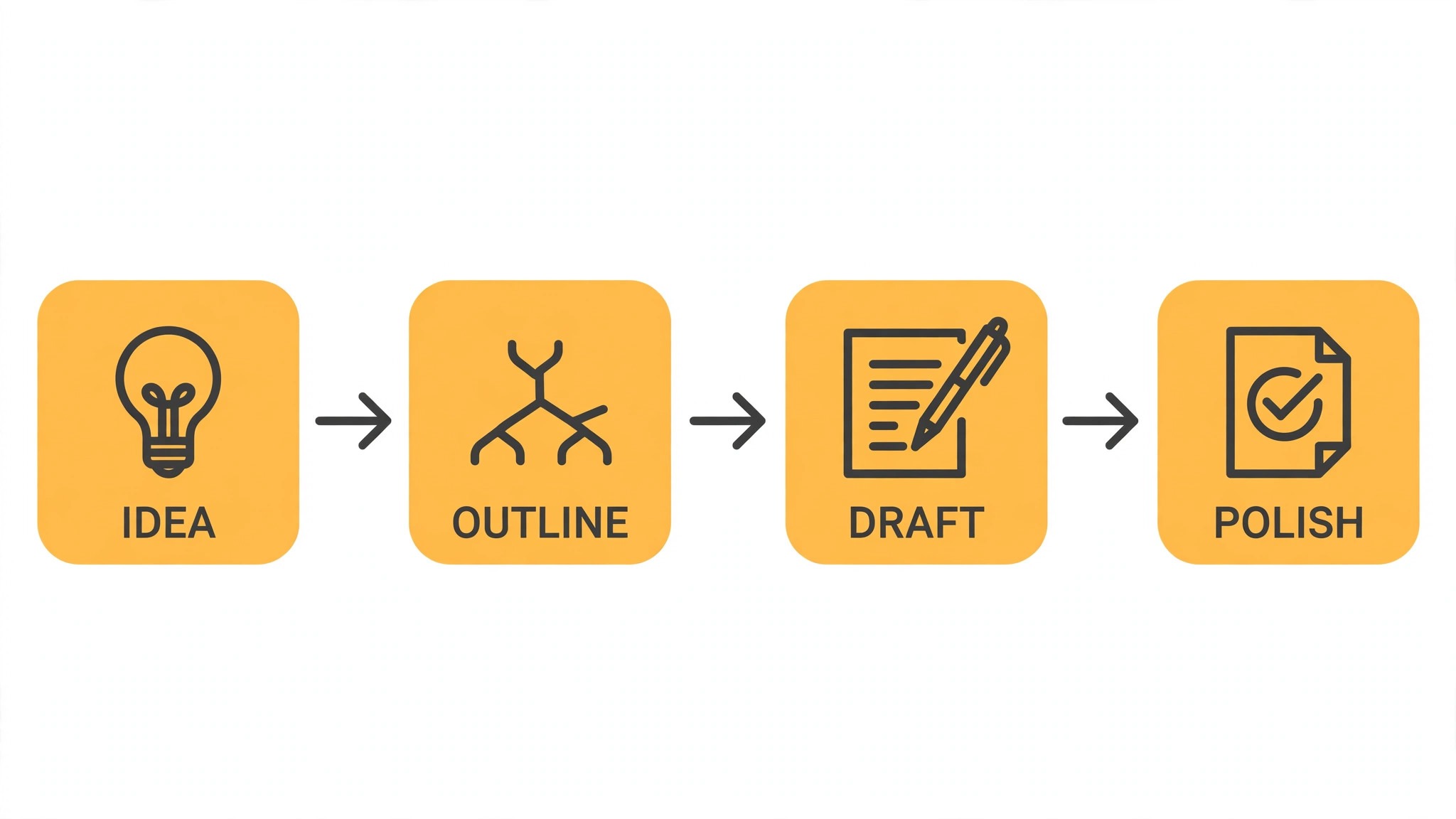
A screenwriter finishes a draft and the rewriting begins. The structure, the dialogue, the pacing and the notes from the producer all need work before the next draft lands. The best ai tools for screenwriters cut the busywork around the rewrite, so the writer spends the time on story instead of formatting and admin.
Screenwriting runs on a mix of drafts, outlines, notes and deadlines, and no single tool covers all four well. A screenwriting app handles the format, an AI assistant handles the brainstorming, and an outlining tool handles the structure. This guide shows which job each tool does, so a writer can buy the piece that fits the work they actually do most.
This guide compares twelve tools on published prices, the screenwriting job each one does best and the catch that only shows up after the trial ends. Each price below is the published starting price as of late 2026 for script work, or marked pricing on request where the vendor publishes no rate. Start with the shortlist, then read the reviews that match the screenwriting work you do most.
The Full Shortlist in One Place
Use it to narrow the best ai tools for screenwriters to two or three candidates before you read the full reviews. Monthly list prices apply unless noted, and annual billing usually beats monthly billing for writing teams.
| Job | Best tool | Why it wins |
|---|---|---|
| Drafting and brainstorming | ChatGPT | Fast ideas, outlines and dialogue options |
| Long scripts and careful edits | Claude | Strongest on long documents and rewrites |
| Industry-standard formatting | Final Draft | The format producers expect to see |
| Writing plus production tools | Celtx | Script, boards and scheduling in one place |
| Outlining and collaboration | Arc Studio Pro | Clean outlines with real-time co-writing |
| Real-time co-writing | WriterDuet | Two writers on one script, live |
| Affordable pro formatting | Fade In | Pro formatting without the big price |
| Long-form writing and research | Scrivener | Organizes research and drafts in one app |
| Beating the blank page | Sudowrite | Ideas and prose when the draft stalls |
| Outlining a first draft | Squibler | Structure first, then the scenes |
| Fast marketing and pitch copy | Jasper | Templates built for publishing speed |
| Notes and script wiki | Notion AI | One place for notes, bibles and team docs |
How We Picked the Best AI Tools for Screenwriters
A tool earned a place here only when it does a real screenwriting job well in 2026, not when it added an AI label to an old product. The best ai tools for screenwriters were judged on five things that decide whether a writer keeps paying after the first year.
Format came first, because a script in the wrong format costs more than any subscription. Next came help on the jobs writers do daily, from outlining to dialogue. Published pricing came third, since freelance budgets and room budgets are very different things. Fourth, respect for the writer’s voice, because a tool that flattens dialogue into generic copy is a liability. Fifth, the catch: free plans that cap script work usage, and enterprise tools that want a sales call before the first trial.
| Check before you buy | What to ask | Why it matters |
|---|---|---|
| Published price | Is the rate on the pricing page | A hidden price is a hidden bill |
| Free plan limits | Usage caps, watermarks or seats | A capped free plan cannot run the real job |
| Format support | Does it export proper screenplay format | A script that cannot be read cannot be sold |
| Voice control | Can you keep your own voice | Writers buy help, not a replacement |
| Trial access | Can you test it on real work | A demo is not a trial |
| Collaboration | Can a room work on one script | A solo tool slows a team down |
Tool by Tool
1. ChatGPT
Starting price From 20 dollars a month. Best for Drafting and brainstorming. Watch out Can invent facts, so every detail needs checking
ChatGPT brainstorms loglines, outlines acts, offers dialogue options and summarizes producer notes in minutes. The twenty-dollar Plus plan adds the stronger model, and the free tier is enough to test whether the brainstorming style fits your writing.
The catch is originality. ChatGPT leans on familiar patterns, so its first ideas are often the obvious ones. Treat it as a sparring partner, push past the first three options, and keep the choices that sound like you.
2. Claude
Starting price From 20 dollars a month. Best for Long scripts and careful edits. Watch out No live web search on the basic plan
Claude is the strongest tool here for long documents. It reads a whole script and returns a clean summary, tightens dialogue without flattening the voice, and handles careful rewrites better than most rivals. Writers working on features get the most from it, especially when the draft is long and the deadline is short.
For script work teams the Pro plan at twenty dollars a month is the sensible place to start, with the free tier covering short tasks. The limit is live research, so pair it with a search tool when the job needs fresh facts or current references.
3. Final Draft
Starting price 249.99 dollars one-time. Best for Industry-standard formatting. Watch out One-time price, upgrades cost extra
Final Draft is the industry-standard screenwriting app, and it is the format producers and readers expect to see. The two-hundred-forty-nine-dollar-ninety-nine one-time price buys the full app, with outlining, beat boards, collaboration and production tools built in. For a writer sending scripts out, that standard is the point.
Upgrades cost extra, so the total over a few years is higher than the headline. For a working screenwriter, the price is a business cost, and the format alone justifies it.
4. Celtx
Starting price From 14.99 dollars a month. Best for Writing plus production tools. Watch out Production tools add complexity
Celtx covers the script plus the production side, with storyboards, shot lists and scheduling in the same login. The fourteen-dollar-ninety-nine starting price covers the core writing tools, and the production features suit a writer who also directs or produces. It is a strong fit for independent filmmakers.
The production tools add complexity, so a writer who only needs the script may find it heavier than a focused app. For a writer-producer, the single login is worth the extra menus.
5. Arc Studio Pro
Starting price From 69 dollars a year. Best for Outlining and collaboration. Watch out Newer app, smaller community
Arc Studio Pro is a modern screenwriting app with clean outlining, real-time collaboration and a simple interface that stays out of the way. The sixty-nine-dollar yearly price is low, and the outlining tools help a writer structure a feature before the first scene is written.
It is newer than Final Draft, so the community and the tutorials are smaller. For a writer who values a clean interface and live co-writing, Arc Studio is the modern pick.
6. WriterDuet
Starting price From 9.99 dollars a month. Best for Real-time co-writing. Watch out Free tier caps the number of scripts
WriterDuet lets two writers work on one script live, with real-time collaboration and a clean screenwriting format. The nine-dollar-ninety-nine starting price covers the core tools, and the free tier is enough to test the collaboration on a short script.
The free tier caps the number of scripts, so a working writer will need the paid plan. For a writing partnership, the live collaboration is the feature that matters most, and WriterDuet does it best.
7. Fade In
Starting price 79.95 dollars one-time. Best for Affordable pro formatting. Watch out Fewer cloud features than the subscription apps
Fade In is professional screenwriting software at a one-time price of seventy-nine dollars ninety-five, with proper formatting, outlining and revision tools. It opens Final Draft files cleanly, so a writer can work in Fade In and deliver in the industry format without paying the bigger price.
The cloud features are lighter than the subscription apps, so a writer who needs live collaboration should look elsewhere. For a solo writer who wants pro formatting at a fair price, Fade In is the practical pick.
8. Scrivener
Starting price 59.99 dollars one-time. Best for Long-form writing and research. Watch out Not a screenwriting app, needs templates
Scrivener organizes research, outlines and drafts in one app, which suits a writer building a feature from months of material. The fifty-nine-dollar-ninety-nine one-time price buys a tool that holds every note, image and draft in one project, and the corkboard view makes restructuring a script fast.
It is not a screenwriting app by default, so a writer needs a screenplay template and a formatting pass at the end. For a writer who researches deeply before drafting, the organization is worth the extra step.
9. Sudowrite
Starting price From 10 dollars a month. Best for Beating the blank page. Watch out Prose can drift toward the generic
Sudowrite helps when the draft stalls, offering ideas, descriptions and dialogue options that push a scene forward. The ten-dollar starting plan covers the core tools, and the brainstorming features are the ones writers mention most. It is the tool for the middle of the night when the scene will not move.
The prose can drift toward the generic, so a writer should treat its output as raw material, not finished copy. Use it to get unstuck, then rewrite the result in your own voice.
10. Squibler
Starting price From 9.99 dollars a month. Best for Outlining a first draft. Watch out Lighter on formatting than the pro apps
Squibler starts with structure, helping a writer outline a script scene by scene before the drafting begins. The nine-dollar-ninety-nine starting price covers the core outlining and writing tools, and the goal-setting features suit a writer working to a deadline.
The formatting is lighter than the pro apps, so a finished script needs a pass in a dedicated formatter. For a writer who outlines first and drafts second, Squibler is the structured start.
11. Jasper
Starting price From 39 dollars a month. Best for Fast marketing and pitch copy. Watch out Priced for teams, not solo writers
Jasper is built for content teams that publish at volume, with templates for pitches, summaries and marketing copy, plus a brand voice setting that keeps output consistent. A writer who also handles pitch decks and loglines can move faster with it, and the thirty-nine-dollar Creator plan is the entry point.
The price is high for a solo writer, and the output needs the same editing as any AI draft. It earns its place when a team produces pitch material daily, not when one writer files a script a month.
12. Notion AI
Starting price From 10 dollars a month. Best for Notes and script wiki. Watch out Not a screenwriting app
Notion AI turns a workspace into a script bible: character notes, worldbuilding, research and outlines in one place. The AI drafts, summarizes and organizes, which helps a writer who keeps a lot of material around a script. The ten-dollar add-on is a low price for what it covers on a script.
It is not a screenwriting app, so it cannot replace a formatter. Use it for the material around the script, not for the script itself, and keep the draft in a proper screenwriting tool.
The Comparison Table, Explained
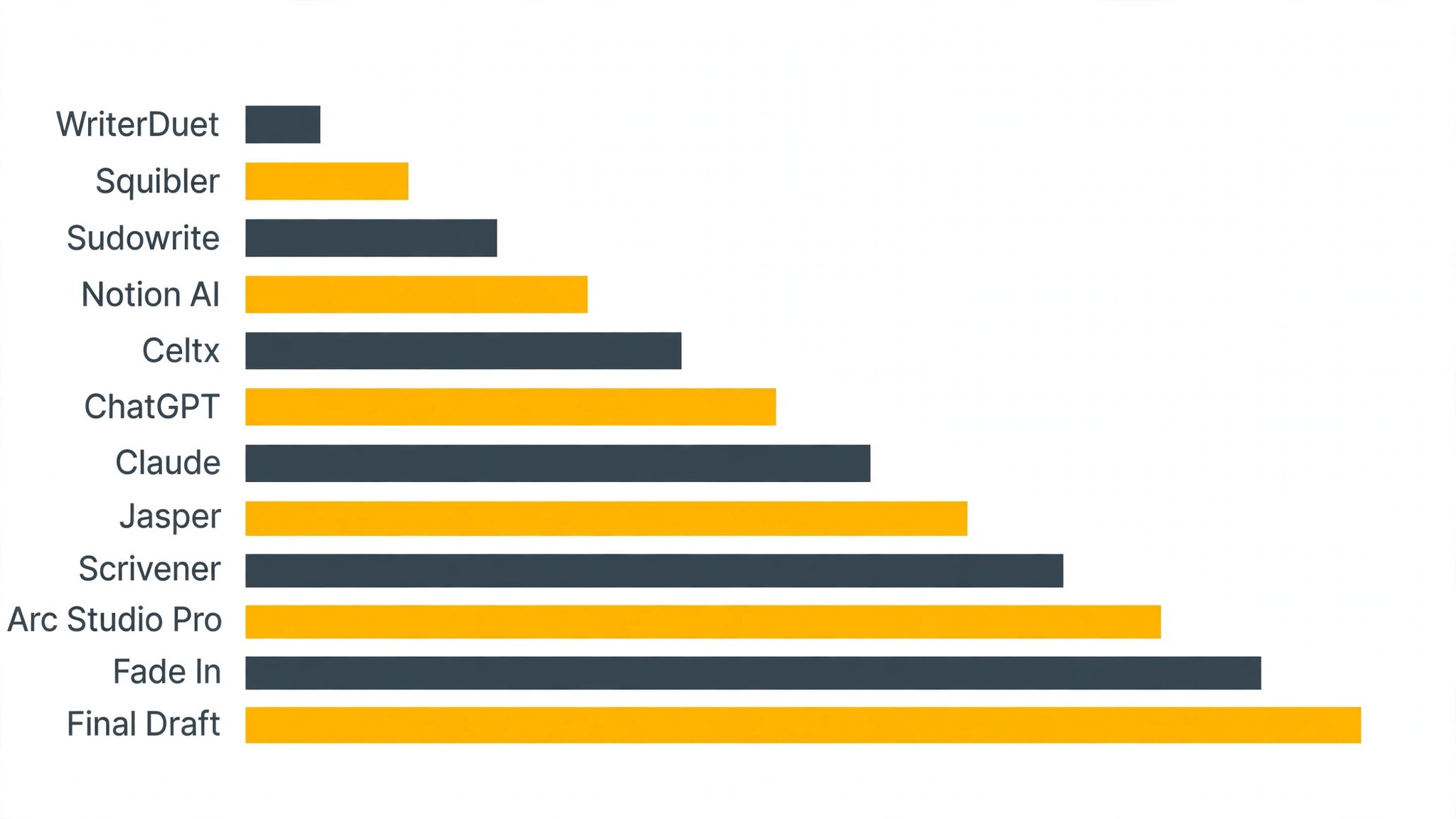
The table below puts the best ai tools for screenwriters side by side on price, best job and free plan, so you can compare the published prices against the quote-only tools at a glance.
| Tool | Starting price | Best for | Free plan |
|---|---|---|---|
| ChatGPT | From 20 dollars a month | Drafting and brainstorming | No |
| Claude | From 20 dollars a month | Long scripts and careful edits | No |
| Final Draft | 249.99 dollars one-time | Industry-standard formatting | No |
| Celtx | From 14.99 dollars a month | Writing plus production tools | No |
| Arc Studio Pro | From 69 dollars a year | Outlining and collaboration | No |
| WriterDuet | From 9.99 dollars a month | Real-time co-writing | No |
| Fade In | 79.95 dollars one-time | Affordable pro formatting | No |
| Scrivener | 59.99 dollars one-time | Long-form writing and research | No |
| Sudowrite | From 10 dollars a month | Beating the blank page | No |
| Squibler | From 9.99 dollars a month | Outlining a first draft | No |
| Jasper | From 39 dollars a month | Fast marketing and pitch copy | No |
| Notion AI | From 10 dollars a month | Notes and script wiki | No |
How to Choose Without Overbuying
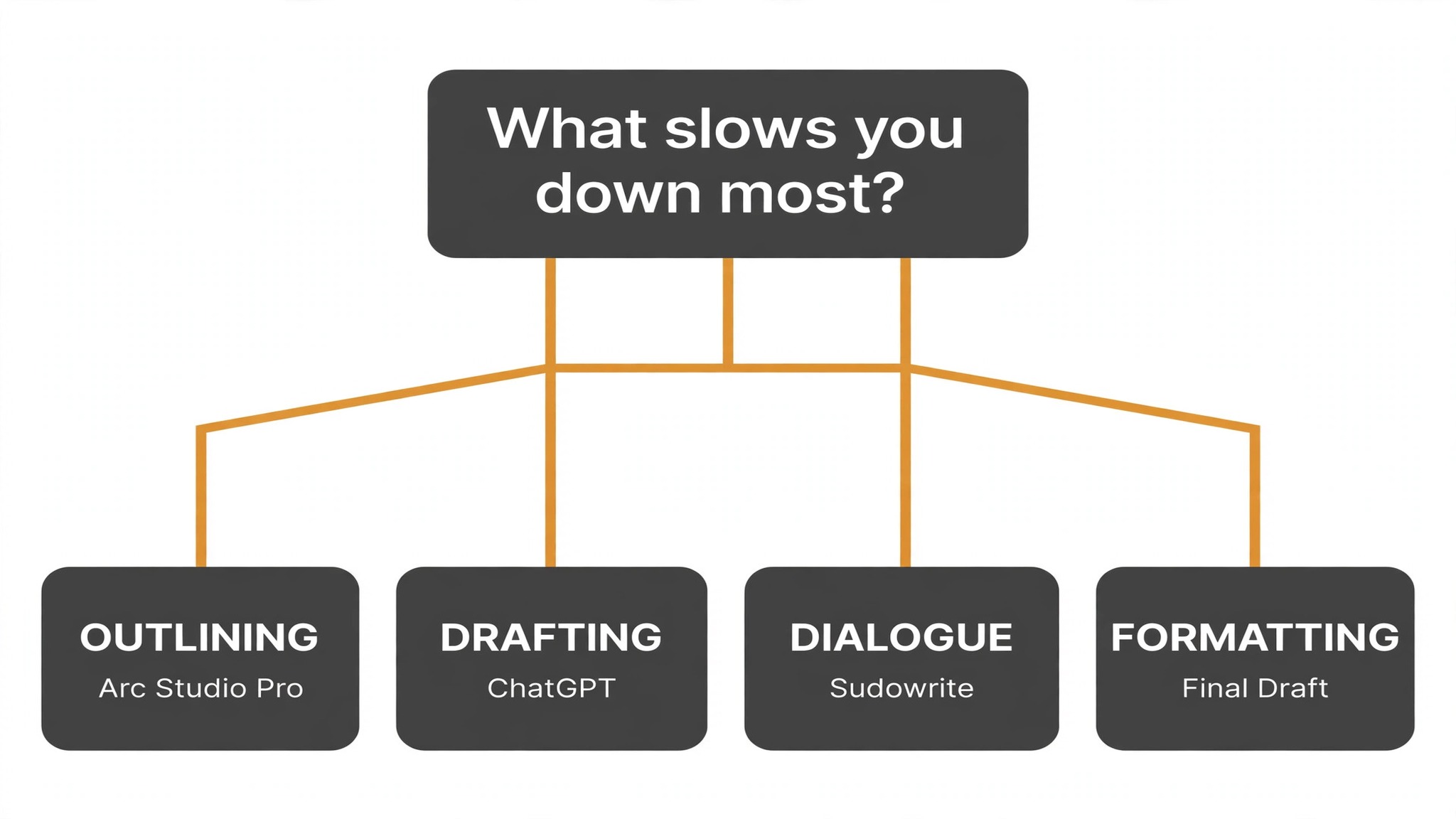
Start from the slowest part of the writing week, not from the vendor homepage. Writers buried in outlines should buy the tool that clears that pile first. Writers losing hours to formatting should buy a proper screenwriting app before an AI assistant. The tool that unblocks your slowest script task pays for itself first, and the rest can wait.
Price the whole writing stack, not the headline number. The table below prices year one for a solo buyer and for a small team on the common screenwriting combinations, at published starting prices. Ask for per-seat charges in writing before signing, since those lines surprise writing teams, and annual billing usually cuts about twenty percent off the monthly rate.
| Stack | Monthly cost | What it covers |
|---|---|---|
| ChatGPT plus Final Draft | Check the pricing page | Core tool plus a second specialist |
| Fade In alone | Lowest starting price | One tool for the main job |
| Claude plus Arc Studio Pro | Mid-range | Core tool plus a workflow specialist |
| WriterDuet plus Sudowrite | Mid-range | Specialist pair for a busy week |
A writer drafting a feature should start with Final Draft and ChatGPT, then add Claude once the rewrite gets long. The best ai tools for screenwriters are the ones that help the draft without touching the voice, so buy the formatter first, add the assistant second, and let the rest of the stack wait until the script is finished.
Best Pick by Job
Pick from the table below by the screenwriting job you do most each week. The best ai tools for screenwriters are not ranked by features alone; they are ranked by which job each one actually finishes, so the pick that matches your week is the pick that will still be in your stack a year from now.
| Your job | Best pick | Why it wins |
|---|---|---|
| Drafting and brainstorming | ChatGPT | Fast ideas, outlines and dialogue options |
| Long scripts and careful edits | Claude | Strongest on long documents and rewrites |
| Industry-standard formatting | Final Draft | The format producers expect to see |
| Writing plus production tools | Celtx | Script, boards and scheduling in one place |
| Outlining and collaboration | Arc Studio Pro | Clean outlines with real-time co-writing |
| Real-time co-writing | WriterDuet | Two writers on one script, live |
| Affordable pro formatting | Fade In | Pro formatting without the big price |
| Long-form writing and research | Scrivener | Organizes research and drafts in one app |
| Beating the blank page | Sudowrite | Ideas and prose when the draft stalls |
| Outlining a first draft | Squibler | Structure first, then the scenes |
| Fast marketing and pitch copy | Jasper | Templates built for publishing speed |
| Notes and script wiki | Notion AI | One place for notes, bibles and team docs |
Your First Draft With the New Tool
Start with a scene you have already written, not a blank page. Run the new tool over it, compare its suggestions with the choices you actually made, and count how many were useful versus how many were generic. A tool that offers a genuinely better line is worth keeping, and one that only offers the obvious will slow the rewrite down.
Week two is about the outline. Build the structure of your next script in the tool, beat by beat, and see whether the outline helps you find the weak act before you write it. A tool that exposes a structural problem early saves weeks of rewriting, and that is worth more than any dialogue suggestion.
Week three is about a live draft. Write ten pages with the tool open, use it when you stall, and ignore it when you are flowing. If the pages come faster without losing your voice, the tool earns its place. If you spend more time arguing with it than writing, close it and finish the pages alone.
Week four is about the reader. Send the draft to one trusted reader and ask whether the pages sound like you. A tool that preserves your voice is invisible in the draft, and one that flattens it will show up in the reader’s notes before it shows up anywhere else.
| Step | What to do | Done when |
|---|---|---|
| Day 1 | Run a finished scene through it | Suggestions beat the obvious |
| Day 7 | Outline the next script | Weak act found early |
| Day 14 | Write ten pages with it open | Pages come faster, voice intact |
| Day 21 | Send pages to a reader | Reader hears your voice |
| Day 30 | Count pages finished | Output beats the monthly price |
Testing Before You Pay
A trial tells writers more in five working days than a month of reading reviews, but only when the trial runs on real screenwriting work. Pick the two tools that look closest after the shortlist, run them side by side on the same core screenwriting jobs, and score them on time saved, edits needed and how the output reads to a reader. Never trial on a demo file, because a demo hides the rough edges real screenwriting work exposes. The best ai tools for screenwriters prove themselves on a real script, not on a demo scene, so run the trial on the pages you are actually writing this week.
| Day | What to test | What good looks like |
|---|---|---|
| Day 1 | Setup and first real job | Working in under an hour, no IT ticket |
| Day 2 | The hardest job you do | Output needs light edits, not a rewrite |
| Day 3 | A full scene test | The scene works without a full redo |
| Day 4 | A colleague tries it cold | They finish a job without asking for help |
| Day 5 | Count the time and the cost | Hours saved beat the monthly price |
Keep a simple log through the trial week, noting the daily screenwriting task, the minutes it took, the edits made and whether the output could go to a reader unchecked. At the end of the week the log is the decision for writing teams. The tool with the best log wins, even when it was not the expected favourite, because the log measures the team’s own screenwriting work, not the vendor demo.
Buying Mistakes to Skip
Mistake one is the cheapest plan, when the feature writing teams need sits two tiers up. Read every tier on the pricing page and pay for the tier that does the daily screenwriting job, not the tier that looks cheap. Mistake two is rolling out to the whole room before one person has tried the tool for a week, since a favourite of one and a burden to five is a cost for writing teams, not a system.
The third mistake is skipping the voice check for writing teams. Ask whether the tool keeps the writer’s voice, whether it can be tuned and what happens to originality before the first real script goes through it, because fixing voice after the fact costs far more than checking it first. The fourth mistake is judging the tool on its best day, so trial it on the hardest screenwriting job itself and let the hard job decide.
The fifth mistake is buying for the room you wish you had instead of the script in front of you. A solo writer does not need team collaboration features, and a writers room does not need a solo outlining app. Buy for the work you do this month, not the work you hope to do next year, and let the stack grow with the scripts.
Your Questions, Answered
Which tool gives screenwriters the cheapest good start
Fade In is the cheapest credible start on this list at 79.95 dollars one-time, with WriterDuet at from 9.99 dollars a month close behind. The best ai tools for screenwriters include free tiers and free plans, so start with the job you do most each week, trial the free tier on real work, and add a specialist only when the general tool cannot do a job you are paid to do. That is the cheapest route to a screenwriting stack, with no payment for features never used.
Can screenwriters keep AI output from looking generic
It will when screenwriters publish the template unchanged. AI tools draft a usable first version, but the facts, the wording and the judgement still come from the professional doing the screenwriting work. An output that goes out unedited reads generic, and readers notice generic screenwriting work fast. Use the AI to beat the blank page, then change the details, the wording and the checks, so the result sounds like screenwriters and not the tool.
For a small team, which screenwriting tool option wins
Final Draft is the pick for a small team, at 249.99 dollars one-time with the industry-standard format, while ChatGPT at from 20 dollars a month is the strongest all-round option as the team grows. Each tool was ranked on the script it finishes, not on how long its feature list runs, so a small team should buy the slowest-job fix first and add a second tool only when a specific limit costs time.
How much will a small team spend on screenwriting tools in year one
Plan on 20 to 50 dollars a month in year one for a general screenwriting tool option such as ChatGPT, rising to 100 to 200 dollars a month with a specialist such as Final Draft added. Multiply the headline price by headcount when writing teams pay per seat, since those charges surprise buyers. Price the whole stack and trial each tool on real screenwriting work before signing an annual contract.
Do screenwriters need a specialist tool as well as a general one
Not always. Most screenwriters get by with one general tool for months, and a separate specialist only earns its place when a specific screenwriting daily task runs every week and the general tool cannot do it well. Time a week of script revisions before you pay anything. When the job takes hours and the specialist cuts it to minutes for screenwriters, buy it, and when the job already takes minutes, the specialist is a cost.
Do these screenwriting tools offer a trial before payment
Most tools on this list offer a free plan or a free trial, and ChatGPT and WriterDuet both let screenwriters test on real screenwriting work before paying. Use the trial on the screenwriting job itself the team does most, not on a demo, and count the time saved and the edits each output needs. A trial that covers a real week tells screenwriters more than a sales call, and a tool that will not trial is one to be careful about.
How do screenwriters protect their voice when using AI
By treating the tool as a sparring partner, not a co-writer. Ask for three options, pick the one that sounds like you, and rewrite it in your own words before it reaches the page. The best ai tools for screenwriters help with structure and momentum, but the voice stays yours when you make the final call on every line, and a reader should never be able to tell where the tool stopped and you started.
The Verdict, in Brief
If you buy one tool this quarter, pick Final Draft for industry-standard formatting or a small room, and ChatGPT when you need brainstorming and drafting help. Final Draft is the easiest place to start at 249.99 dollars one-time, and ChatGPT is the strongest all-round assistant at 20 dollars a month. The best ai tools for screenwriters earn their keep by giving you back the hour after the outline, and both of these do that from the first week.
Whatever you pick, trial it on a real week of writing days, count the scenes it speeds up and the edits each one needs, and keep a human eye on every AI suggestion before it reaches a reader. Every tool here can carry a script from draft to polish. The difference is whether the tool matches the scripts you actually write, and whether you measure the return in hours saved and drafts finished rather than in features used.