
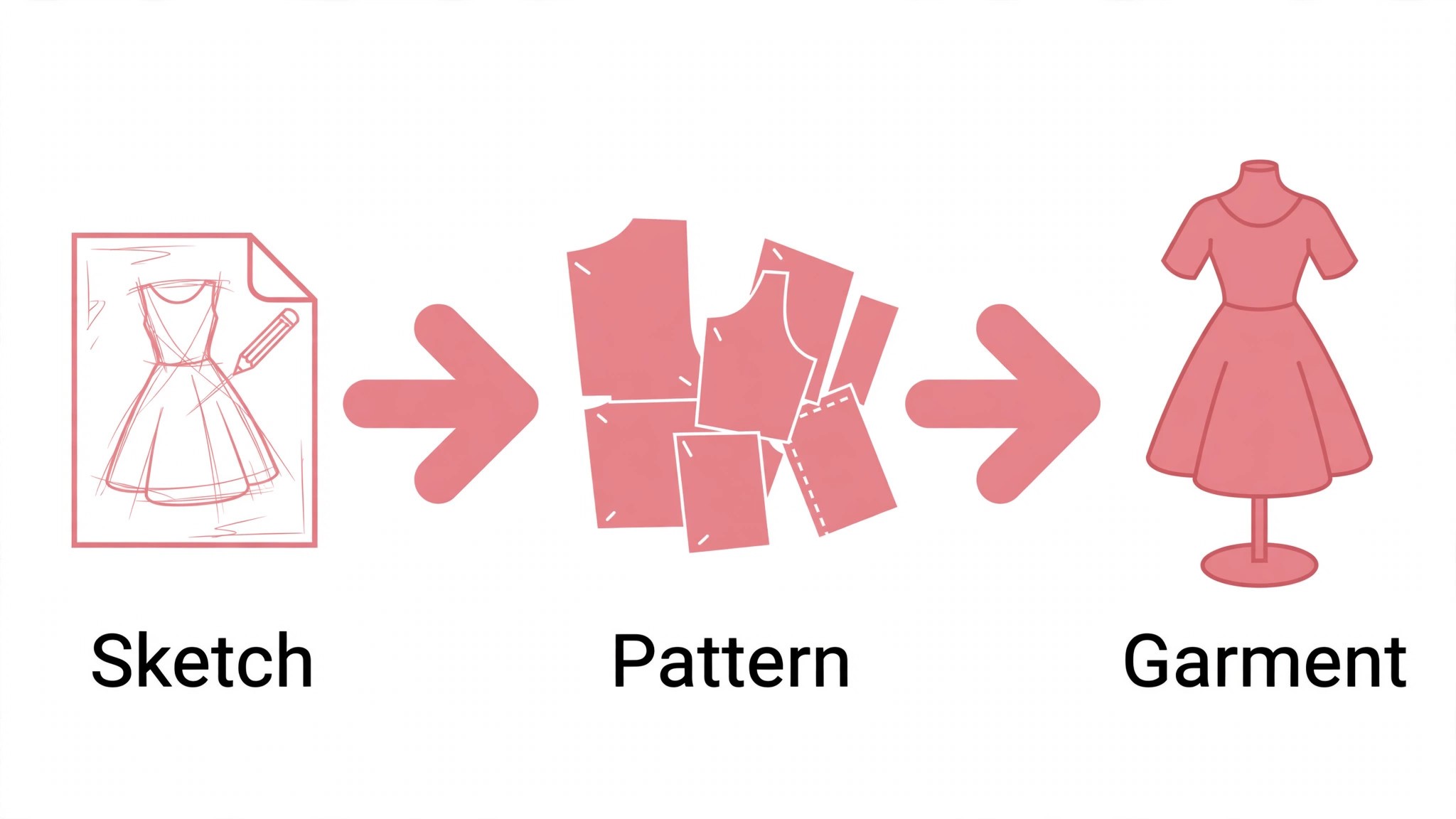
A fashion designer sketches the collection, sources the fabric, fits the sample, and then does it all again when the sample comes back wrong. The pattern, the drape and the colourway each take their turn, and the season moves faster than the sampling loop. The best ai tools for fashion designers take the slowest of those steps and shorten them, turning a sketch into a 3D sample in minutes so the designer spends the saved weeks on the silhouette and the fit that actually sell.
The risk is buying a trend tool when the real problem is sampling cost, or buying a 3D tool when the real problem is knowing what will sell next season. A designer who makes evening wear needs different software from one who makes streetwear, and a small label needs different software from a large house. This guide sorts the tools by the design job they serve, so you buy the piece that matches the collections you actually make.
This guide compares eight tools on published starting prices, the fashion job each one does best and the limit that only shows up after the trial ends. Each price below is the published starting price as of late 2026 for fashion work, or marked pricing on request where the vendor publishes no rate. Use the shortlist to narrow the field, then read the reviews that speak to your usual collection piece work.
The Eight, at a Glance
Use it to narrow the best ai tools for fashion designers to two or three candidates before you read the full reviews. Monthly list prices apply unless noted, and annual billing usually beats monthly billing for a label working through a full season.
| Job | Best tool | Why it wins |
|---|---|---|
| 3D garment sampling and fitting | CLO 3D | CLO 3D is the industry standard for 3D fashion design, letting a designer drape a garment on a |
| Enterprise 3D design for large labels | Browzwear | Browzwear is a 3D fashion design platform used by large labels to design, fit and sell |
| Flats, tech packs and vector design | Adobe Illustrator | Adobe Illustrator is the vector tool most fashion designers use for flats, tech packs and |
| Trend forecasting from social images | Heuritech | Heuritech is a trend forecasting platform that analyses millions of social media images to |
| 3D design plus digital showrooms | Style3D | Style3D is a 3D fashion platform that covers design, sampling and digital showrooms, letting a |
| AI trend analysis for fast fashion | Designovel | Designovel is an AI platform that analyses fashion trends, consumer demand and competitor |
| AI-generated fashion design | Resleeve | Resleeve is an AI fashion design platform that generates garment designs from a prompt, with |
| End-to-end design to production | Cala | Cala is a fashion platform that takes a design from sketch to production, connecting the |
How We Chose the Best AI Tools for Fashion Designers
A tool earned a place here only when it does a real fashion job well in 2026, not when it added an AI label to an old CAD program. The best ai tools for fashion designers were judged on five things that decide whether a designer keeps paying after the first season.
Fit accuracy came first, because a 3D sample that drapes wrong is worse than no sample at all. Next came the pattern and grading quality, since a tool that cannot produce a usable pattern forces a second system. Pricing and how it scales with seats or collections came third, then the trend data, because a designer needs to know what will sell, not just what sold. The catch, from quote-only pricing to fabric limits, came fifth.
| Check before you buy | What to ask | Why it matters |
|---|---|---|
| Published price | Is the rate on the pricing page | A hidden price is a hidden bill |
| Fabric library | Does it simulate the fabrics you use | A wrong drape means a wrong sample |
| Pattern export | Can the pattern go to the factory as is | A bad export means rework on every garment |
| Trend data | Does it show what will sell next season | A stale trend is a dead collection |
| Trial access | Can you test it on a real garment | A demo is not a trial |
| Contract terms | Monthly or annual, and what year two costs | Annual billing locks the price but not the need |
The Eight Tools, Reviewed
Sustainability is the question buyers ask first now, and the tool that tracks fabric waste and sample counts is answering it with numbers. A label that can show it cut three physical samples per style has a story a buyer wants to hear, and the 3D tool that makes that possible is doing more than saving money. Ask the vendor what the platform reports on waste, because the answer belongs in the sales deck.
A tech pack is only as good as its measurements, and the tool that exports a clean, complete pack is worth more than one that draws a prettier sketch. A factory that receives a pack with missing measurements will guess, and the guess will be wrong. Send a trial tech pack to your factory contact and ask whether they can make it without a phone call.
The colourway decision is where a collection wins or loses, and the trend tool that shows which colours are rising in your market is doing the most valuable work on this list. A colour that is rising in one region can be fading in another, so the data has to be local, not global. Check the trend data for your own market on the trial, because a global average will mislead a local label.
1. CLO 3D
Starting price From 50 dollars a month. Best for 3D garment sampling and fitting. Watch out The learning curve, since 3D pattern work is a skill.
CLO 3D is the industry standard for 3D fashion design, letting a designer drape a garment on a virtual avatar, check the fit and change the fabric without cutting a single sample. The AI features suggest pattern adjustments, simulate the drape and export the tech pack, which is the work that used to take three rounds of physical samples.
At 50 dollars a month, CLO 3D is priced for 3D garment sampling and fitting. The catch is the learning curve, since 3D pattern work is a skill, so read the plan limits before you pay for a year. One real collection piece run through a trial says more than any pricing page, since the quality on your own material is what keeps the subscription past month two.
Test the export first, so a collection piece you build today is not stuck inside a system you want to leave tomorrow.
Apply that test to the whole list of best ai tools for fashion designers: an hour saved a week pays for almost any subscription, while a tool that needs rewriting on every job is a cost, not a saving.
2. Browzwear
Starting price Pricing on request. Best for Enterprise 3D design for large labels. Watch out The enterprise pricing, which is built for big houses.
Browzwear is a 3D fashion design platform used by large labels to design, fit and sell garments digitally, with true-to-life fabric simulation and pattern tools. The AI features predict the fit, suggest the grading and keep the whole collection in one digital workspace, so the team stops shipping samples around the world.
With pricing on request, Browzwear is aimed at enterprise 3D design for large labels, and the quote usually reflects team size and the integrations you need. Keep an eye on the enterprise pricing, which is built for big houses, since that is the limit buyers hit first. Judge it on the most demanding collection piece in your week rather than the simplest, and count how many edits the output takes.
The support behind the tool matters more than its feature list, because trouble usually shows up in the first week and slow help stalls a collection piece schedule.
3. Adobe Illustrator
Starting price From 22.99 dollars a month. Best for Flats, tech packs and vector design. Watch out The 3D features, which are thinner than a dedicated 3D tool.
Adobe Illustrator is the vector tool most fashion designers use for flats, tech packs and print design, with AI features that generate patterns, recolour artwork and clean up the lines. A designer can draw the flat, build the tech pack and send it to the factory from the same file, which is the workflow the industry already runs on.
Adobe Illustrator starts at 22.99 dollars a month, which suits flats, tech packs and vector design. The thing to check first is the 3D features, which are thinner than a dedicated 3D tool, because that shapes the real cost once the team grows. Give it five working days on genuine fashion work, note the minutes saved and the edits required, and let those notes decide if it stays in the stack.
Add up the entire fashion work stack instead of trusting the headline price, and ask for per-seat charges in writing before signing.
4. Heuritech
Starting price Pricing on request. Best for Trend forecasting from social images. Watch out The quote-only pricing for a small label.
Heuritech is a trend forecasting platform that analyses millions of social media images to predict which styles, colours and fabrics will sell next season. The AI features track the trend as it rises, show which markets are adopting it and tell the designer when to buy in, which is the decision that makes or breaks a collection.
For trend forecasting from social images, Heuritech sells on a quote, and the higher tiers add the controls a bigger team needs. The weak spot is the quote-only pricing for a small label, so confirm it on a trial before signing anything annual. What matters is not whether the tool works at all, but whether it copes with your collection piece workload at your volume and needs no rewrite.
Set it beside the next tool on this list for a week of actual fashion work and judge it there, not on the vendor demo.
5. Style3D
Starting price Pricing on request. Best for 3D design plus digital showrooms. Watch out The platform complexity, since it covers a lot of ground.
Style3D is a 3D fashion platform that covers design, sampling and digital showrooms, letting a label present a collection to buyers before a single garment is made. The AI features generate the 3D samples, simulate the fabric and build the showroom, so the sales team can take orders on styles that do not exist yet.
Starting with a quote rather than a list price, Style3D fits 3D design plus digital showrooms without a self-serve checkout. Watch for the platform complexity, since it covers a lot of ground, which is where the bill or the workflow usually surprises buyers. One week of real fashion work is the test: score the time saved and the edits needed, then set that score beside the next tool on this list before deciding.
One hour a week saved on real fashion work covers the cost, while a tool that needs constant correction costs more than its price suggests.
6. Designovel
Starting price Pricing on request. Best for AI trend analysis for fast fashion. Watch out The enterprise focus, which is more than a small label needs.
Designovel is an AI platform that analyses fashion trends, consumer demand and competitor pricing to tell a label what to make next. The AI features forecast the demand for a style, suggest the price and flag the trends that are already fading, which is the information a fast-fashion buyer needs every week.
Designovel is quote-only and is aimed squarely at AI trend analysis for fast fashion. The trade-off is the enterprise focus, which is more than a small label needs, so ask what the quote covers and price that package, not the demo. A low price means little if the tool drags on a real collection piece; a dearer tool that finishes first time is the cheaper buy.
Try it on a single real collection piece from your own week first, and judge the result against the time the same work took by hand.
7. Resleeve
Starting price Pricing on request. Best for AI-generated fashion design. Watch out The young platform, with a smaller user base than the leaders.
Resleeve is an AI fashion design platform that generates garment designs from a prompt, with styles, fabrics and silhouettes a designer can refine. The AI features turn a mood board into a set of designs, keep the brand’s style consistent and export the files a pattern maker can use, which is the fastest way from an idea to a sample.
Resleeve is sold on a quote, which suits AI-generated fashion design, and the price depends on seats, volume and the modules you take. The catch is the young platform, with a smaller user base than the leaders, so get the quote in writing before you pay for a year. One real collection piece in a trial or demo says more than the sales call, since the quality on your own material is what keeps the subscription past month two.
Judge it on one real, timed collection piece and count the edits; that trial is the one that decides.
8. Cala
Starting price Pricing on request. Best for End-to-end design to production. Watch out The platform scope, since it runs the whole supply chain.
Cala is a fashion platform that takes a design from sketch to production, connecting the designer with factories, handling the sampling and managing the orders. The AI features suggest the costing, track the production and flag the delays, so a small label can run a collection without hiring a production team.
With pricing on request, Cala is aimed at end-to-end design to production, and the quote usually reflects team size and the integrations you need. Keep an eye on the platform scope, since it runs the whole supply chain, since that is the limit buyers hit first. Judge it on the most demanding collection piece in your week rather than the simplest, and count how many edits the output takes.
Find out from the vendor what the first week involves, who helps you set the tool up, and what happens when an early collection piece result needs correcting.
The Price Table, Explained
The table below puts the best ai tools for fashion designers side by side on price, best job and free plan, so you can compare the published prices against the quote-only tools at a glance.
Sort the table by collection piece and the choice comes fastest. A designer drowning in samples should look at the 3D tools first, while one guessing at trends should look at the trend platforms, because the cheapest tool that cannot drape a garment costs more than a pricier one that can.
| Tool | Starting price | Best for | Free plan |
|---|---|---|---|
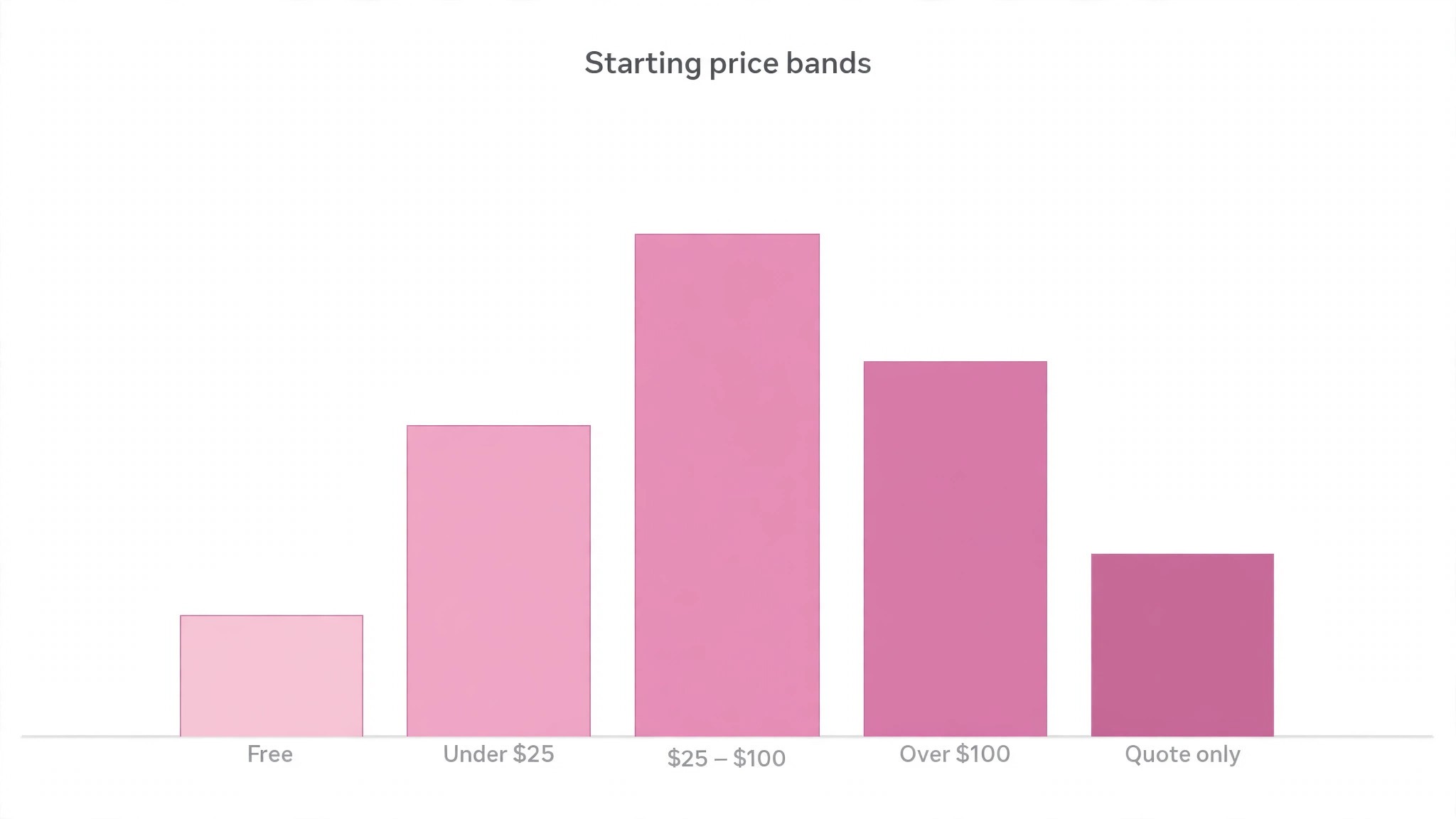
| CLO 3D | From 50 dollars a month | 3D garment sampling and fitting | Trial |
| Browzwear | Pricing on request | Enterprise 3D design for large labels | No |
| Adobe Illustrator | From 22.99 dollars a month | Flats, tech packs and vector design | Trial |
| Heuritech | Pricing on request | Trend forecasting from social images | No |
| Style3D | Pricing on request | 3D design plus digital showrooms | No |
| Designovel | Pricing on request | AI trend analysis for fast fashion | No |
| Resleeve | Pricing on request | AI-generated fashion design | Trial |
| Cala | Pricing on request | End-to-end design to production | No |
Buying for the Collection You Actually Make
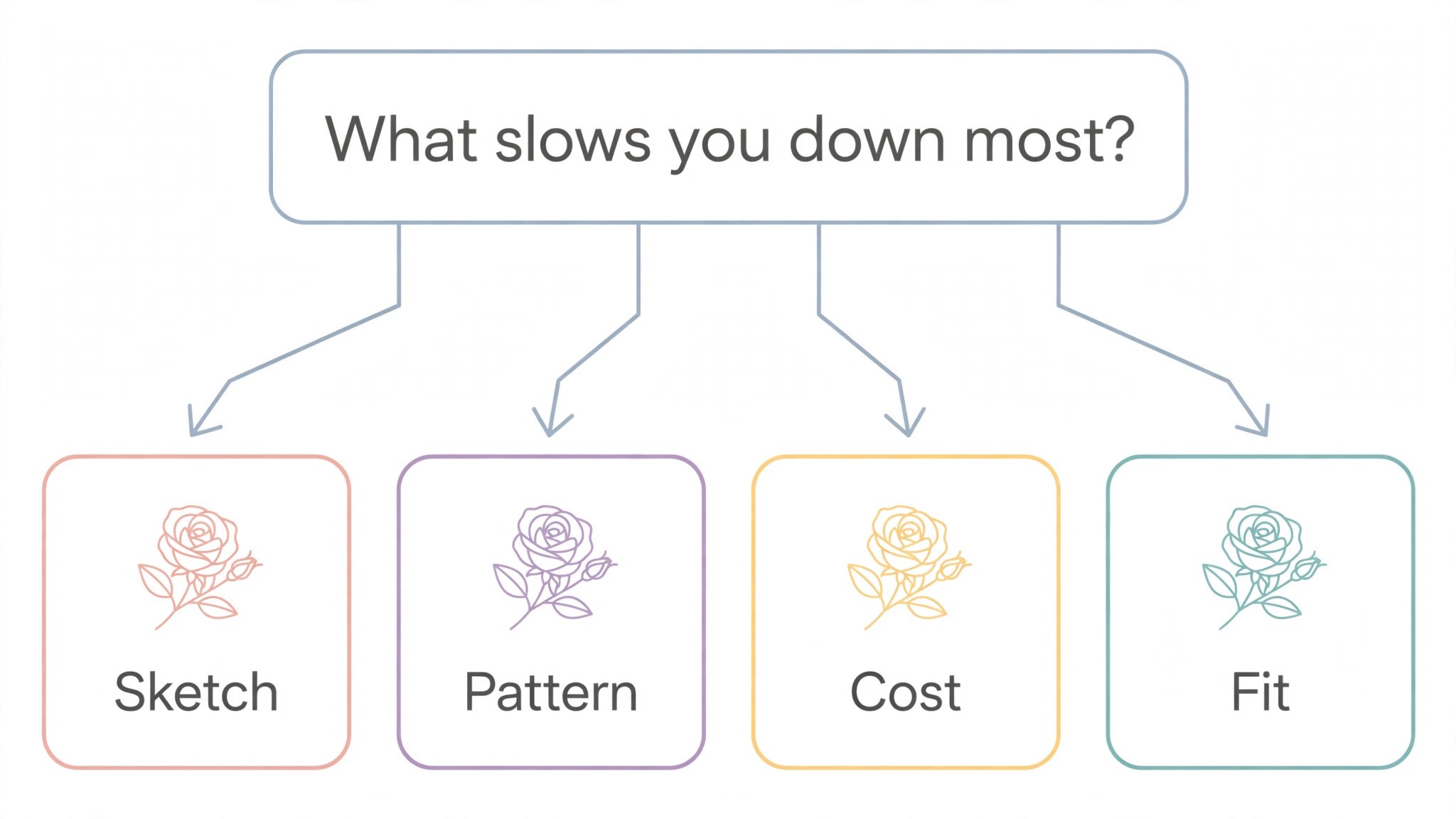
Start from the slowest part of your design week, not from the vendor homepage. Designers buried in sampling should buy the 3D tool that clears that pile first, and designers losing weeks to trend research should buy the trend tool before anything else. The tool that clears your slowest collection piece bottleneck pays for itself first, and the rest can wait.
Judge the entire fashion work stack, not the headline figure. A 3D tool plus a trend platform plus a design tool can cost three subscriptions, so check whether one tool already covers two of your jobs. Ask for per-seat charges in writing before signing, since those lines surprise small labels, and annual billing usually cuts about twenty percent off the monthly rate. The best ai tools for fashion designers on this list were priced at published starting rates, so the stack maths in the table below uses real numbers.
| Stack | Monthly cost | What it covers |
|---|---|---|
| CLO 3D alone | Lowest starting price | One tool for the main job |
| CLO 3D plus Browzwear | Mid-range | Core tool plus a second specialist |
| Browzwear plus Adobe Illustrator | Mid-range | Specialist pair for a busy week |
| CLO 3D plus Adobe Illustrator | Check the pricing page | Core tool plus a workflow specialist |
Best Pick by Job
Pick from the table below by the fashion job you do most each week. The best ai tools for fashion designers are not ranked by features alone; they are ranked by which job each one actually finishes, so the pick that matches your week is the pick that will still be in your stack a year from now.
| Your job | Best pick | Why it wins |
|---|---|---|
| 3D garment sampling and fitting | CLO 3D | CLO 3D is the industry standard for 3D fashion design, letting a designer drape a garment on a |
| Enterprise 3D design for large labels | Browzwear | Browzwear is a 3D fashion design platform used by large labels to design, fit and sell |
| Flats, tech packs and vector design | Adobe Illustrator | Adobe Illustrator is the vector tool most fashion designers use for flats, tech packs and |
| Trend forecasting from social images | Heuritech | Heuritech is a trend forecasting platform that analyses millions of social media images to |
| 3D design plus digital showrooms | Style3D | Style3D is a 3D fashion platform that covers design, sampling and digital showrooms, letting a |
| AI trend analysis for fast fashion | Designovel | Designovel is an AI platform that analyses fashion trends, consumer demand and competitor |
| AI-generated fashion design | Resleeve | Resleeve is an AI fashion design platform that generates garment designs from a prompt, with |
| End-to-end design to production | Cala | Cala is a fashion platform that takes a design from sketch to production, connecting the |
Trial It on a Real Garment
A trial tells a fashion team more in five working days than a month of reading reviews, but only when the trial runs on real work. Pick the two tools that look closest after the shortlist, run them side by side on the same garment, and score them on fit, drape and how the sample reads to a buyer. Never trial on a demo garment, because a demo hides the rough edges real design work exposes. The best ai tools for fashion designers are judged on the same five days, so the comparison stays fair.
| Day | What to test | What good looks like |
|---|---|---|
| Day 1 | Setup and first real garment | Working in under an hour, no IT ticket |
| Day 2 | The hardest garment you do | Output needs light edits, not a rewrite |
| Day 3 | Integration with your core system | Data flows without double entry |
| Day 4 | A colleague tries it cold | They finish a job without asking for help |
| Day 5 | Count the time and the cost | Hours saved beat the monthly price |
Write the trial down as you go, one line a day: the collection piece job, the minutes, the fixes, and whether the result could have gone out as it was. After five days, that notebook holds the whole decision. The tool with the best numbers from your own trial wins, even when it was not the one you expected to like for your fashion work.
Fashion Buying Mistakes
The first mistake is buying the cheapest plan while the feature your team needs for fashion work sits two tiers higher. Read every tier on the pricing page and pay for the one that handles the daily collection piece, not the one that looks cheap. Mistake two is rolling out to the whole studio before one designer has tried the tool for a week, since a favourite of one and a burden to five is a cost, not a system.
The third mistake is skipping the fabric check. Ask for the fabric library, read the export options and check the pattern format before the first real garment goes through the tool, because fixing a fabric mismatch after the fact costs far more than checking it first. The fourth mistake is judging the tool on its best day, so trial it on the hardest garment and let the hard garment decide.
A physical sample is the test no screen can replace. A 3D sample that looks right on screen can still drape wrong in the fabric, so make one physical sample from the digital file on the trial and compare them side by side. If the digital and the physical disagree, the tool is not saving the sampling cost it claims.
Trend data is only useful when it changes a buying decision. A report that shows which colours are rising is useful, and one that shows last season’s bestsellers is not. On the trial, pick one decision the data should change, such as which colourway to lead with, and if the data cannot answer it, the trend feed is decoration.
Tech packs are where collections fail. A beautiful design with a sloppy tech pack comes back from the factory wrong, and the tool that produces a clean, complete pack is worth more than one that draws a prettier sketch. Check the tech pack output on the trial, send one to your factory contact, and ask whether they can make it without a phone call.
Fashion Designer FAQs
Which tool gives a fashion designer the cheapest good start?
Adobe Illustrator is the cheapest credible start on this list at 22.99 dollars a month, with CLO 3D close behind at 50 dollars a month. Start with the job you do most each week, trial the tool on a real garment, and add a specialist only when the general tool cannot do a job you are paid to do. That is the cheapest route to a fashion stack, with no payment for features never used.
Can a designer keep AI designs from looking like everyone else’s?
It will look the same when a designer publishes the AI output unchanged. AI tools draft a usable first version, but the silhouette, the fabric and the judgement still come from the designer doing the work. Use the AI to beat the blank sketchbook, then change the cut, the colour and the details, so the result sounds like your label and not the tool.
For a small label, which fashion tool wins?
CLO 3D is the pick for a small label, starting at 50 dollars a month with almost no setup, while Adobe Illustrator at 22.99 dollars a month is the strongest all-round option for flats and tech packs. Buy the tool that fixes your slowest weekly collection piece job first, and add a second only when a specific limit starts costing time.
How much will a small label spend on fashion tools in year one?
Plan on 25 to 75 dollars a month in year one for a general tool such as Adobe Illustrator, rising to 150 to 300 dollars a month with a specialist such as CLO 3D added. Per-seat pricing means multiplying the headline price by the seats on your fashion work team, and those charges surprise buyers. Price the whole stack and trial each tool on real garments before signing an annual contract.
Do these fashion tools offer a trial before payment?
Most tools on this list offer a free trial or a demo, and CLO 3D and Adobe Illustrator both let designers test on real garments before paying. Use the trial on the garment itself your team makes most, not on a demo, and count the time saved and the fit errors each output needs. A trial across a real week of fashion work tells you more than a sales call.
The Bottom Line
If you buy one tool this quarter, pick CLO 3D for 3D sampling or Adobe Illustrator when flats and tech packs are the daily work. CLO 3D is the strongest all-round sampler at 50 dollars a month, and Illustrator is the cheapest way to draw well at 22.99 dollars a month. The best ai tools for fashion designers earn their keep by giving you back the weeks between a sketch and a sample, and both of these do that from the first season.
Whatever you pick, trial it on a real garment, count the samples it saves and the fit errors it makes, and keep a human eye on every AI design before it reaches a buyer. Every tool here can support a real fashion workflow. The difference is whether the tool matches the collections you actually make, and whether you measure the return in weeks saved and samples cut rather than in features used.