
The cheapest tool on this list costs nothing, and the most expensive costs thousands a year, which tells you the category has no single right price. The best ai tools for sound engineers below are priced from free to enterprise, and the guide shows what each price actually buys, so you pay for the job you do rather than the brand you recognise.
All audio work prices below are published starting prices as of late 2026, and annual billing is noted where it changes the number. Start with the shortlist, then read the reviews that match the audio work you do most. Most teams will use only a few of these 8 tools, not all of them. A general tool plus a specialist covers most audio work, and a third tool earns its place only by fixing one specific weekly pain.
Each review below names the daily audio job its tool does best, so pick two and stop shopping. The best ai tools for sound engineers are not ranked by price alone, because the cheapest tool that cannot do your job is the most expensive mistake on this list.
Every Tool, One Row Each
The table below matches each common mix session to the single tool that handles it best. Use it to narrow the best ai tools for sound engineers to two or three candidates before you read the full reviews. Monthly list prices apply unless noted, and annual billing usually beats monthly billing for audio teams.
| Job | Best tool | Why it wins |
|---|---|---|
| Engineers who mix and master inside a DAW. | iZotope Ozone and RX | Plus from 12.50 dollars a month. |
| Engineers who want one-click mastering plus distribution. | LANDR | Pay per track from 9.99 dollars, with Studio from about 11 dollars a month. |
| Royalty-free tracks for video and ads. | Soundraw | Creator at 11.04 dollars a month billed annually. |
| Orchestral and cinematic scoring. | AIVA | Free plan, then Standard from 11 euros a month billed annually. |
| Fast, vocal-forward song generation. | Suno | Free plan, then Pro at 8 dollars a month billed annually. |
| Engineers in the Adobe ecosystem who edit and repair audio. | Adobe Audition | From 22.99 dollars a month as a single app. |
| Engineers and beginners who want a free editor. | Audacity | Free, open source. |
| Generative background music for streams and videos. | Mubert | Creator from 11.69 dollars a month billed annually. |
How We Chose the Best AI Tools for Sound Engineers
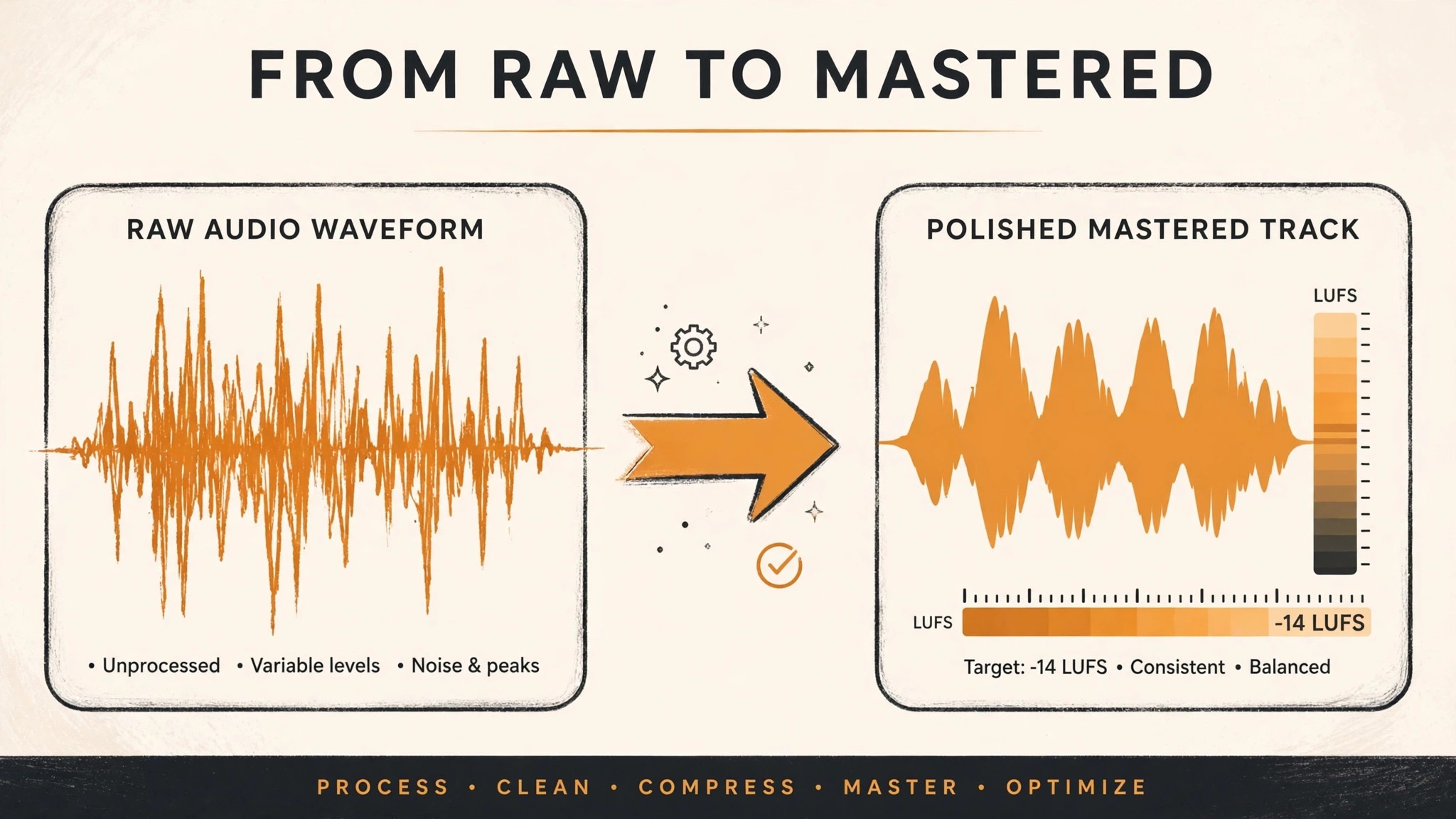
A tool earned a place here only if it does a real mix session in 2026, not if it added an AI label to an old product. The best ai tools for sound engineers were judged on five things that decide whether a team keeps paying after the first year.
The job came first, since a tool that handles one audio output format well beats a platform that handles five badly for sound engineers. Published pricing and scaling came second, with per-seat charges that move the real bill for audio teams as the team grows. Output quality came third, because errors in audio work results cost more in lost trust than the subscription saves.
Fourth, workflow fit for audio teams, because a tool that cannot sit inside the way the team already works forces a rebuild of the whole audio work process. Fifth, the catch, from free plans that watermark audio work exports to libraries that repeat the same ten templates. The table below turns those five checks into questions sound engineers should ask before buying.
| Check before you buy | What to ask | Why it matters |
|---|---|---|
| Real job fit | Does it do my weekly job well | A poor fit wastes the subscription |
| Published price | What does year two cost | Hidden rises break the budget |
| Output quality | Is the result good enough to ship | Errors cost trust with clients |
| Workflow fit | Does it connect to my other tools | A disconnected tool adds manual work |
| Free plan limits | What is locked behind the paywall | A locked export cannot be used |
| Contract terms | Monthly or annual, and what changes | Annual billing locks the price, not the need |
Tool by Tool
1. iZotope Ozone and RX
Starting price Plus from 12.50 dollars a month. Best for Engineers who mix and master inside a DAW. Watch out It needs a DAW, and the learning curve is steep.
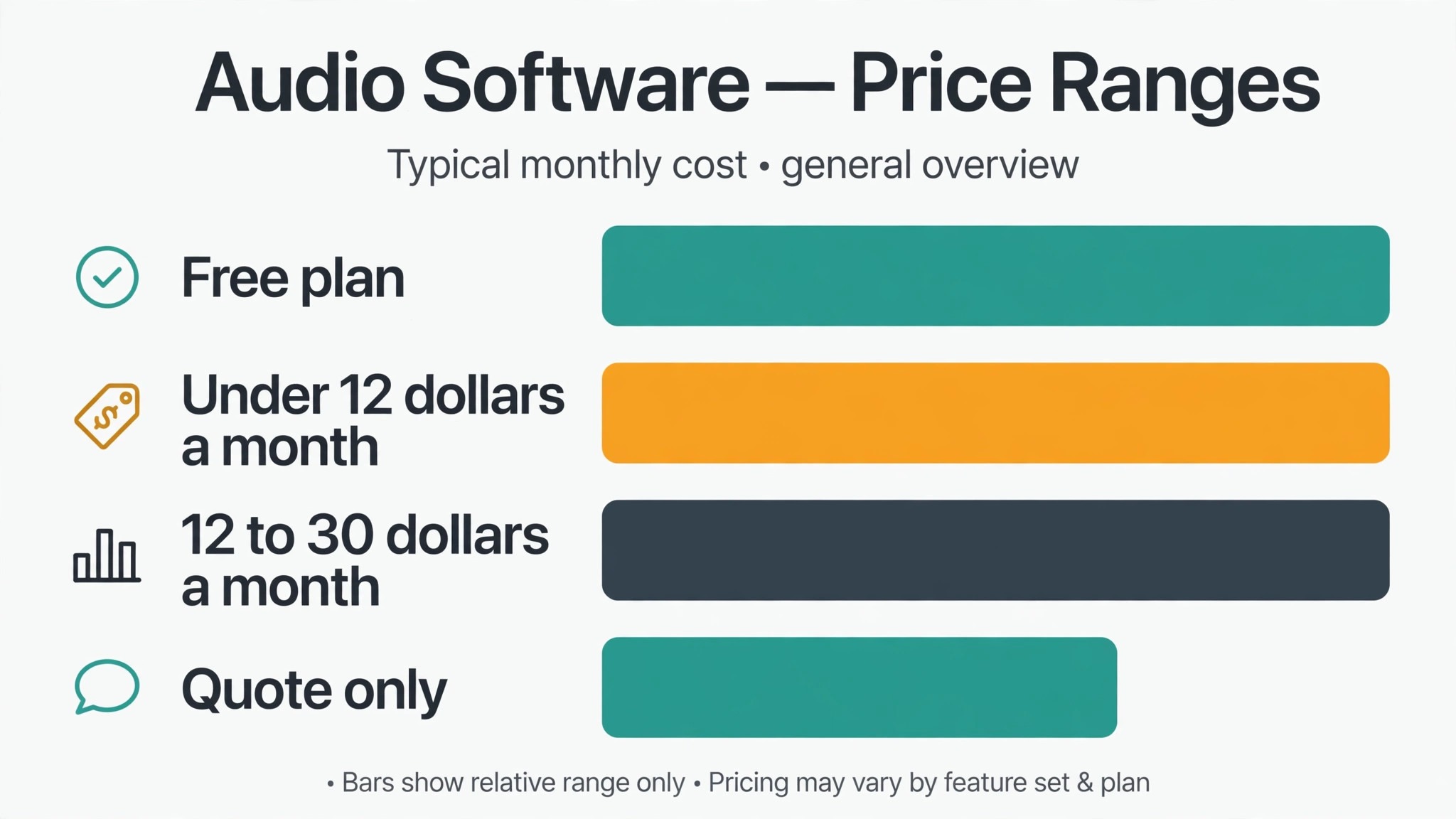
iZotope moved to a Plus and Pro subscription in early 2026, covering Ozone 12 and Nectar 4. Ozone’s AI assistant listens to a mix and suggests a mastering chain, while RX repairs clicks, hum, clipping and room noise that would otherwise need a re-record. The tools run as plugins inside the DAW, so the workflow never leaves the session.
The strength is industry-standard depth. Ozone and RX are the tools other mastering tools are measured against, and the AI suggestions are a starting point a skilled engineer can refine. The catch is the setup: a DAW is required, and the full power takes time to learn. For professional mixing and mastering, iZotope earns its place.
2. LANDR
Starting price Pay per track from 9.99 dollars, with Studio from about 11 dollars a month. Best for Engineers who want one-click mastering plus distribution. Watch out Bundle pricing is layered, and the cheapest tier limits revisions.
LANDR masters a track in minutes: upload the mix, pick a style, and the AI applies EQ, compression and limiting tuned to the genre. The same account distributes the finished track to streaming services, so a small studio can master and release without a second vendor. Reference mastering compares a mix against a released track.
The strength is speed from mix to release. A track that needs a polished master today gets one without booking a mastering engineer. The catch is the layered pricing, where distribution, revisions and higher quality sit on different tiers. For fast masters plus release, LANDR earns its place.
3. Soundraw
Starting price Creator at 11.04 dollars a month billed annually. Best for Royalty-free tracks for video and ads. Watch out Instrumental only, with no vocals, and the licence covers small companies.
Soundraw generates royalty-free music from genre and mood sliders, with unlimited downloads on the Creator plan. The tracks are trained only on in-house music, which keeps the licensing clean for commercial use. An engineer can generate a bed, adjust the length and energy, and export it for a video or an ad in one session.
The strength is legal safety at a low price. Creator at 11.04 dollars a month billed annually buys unlimited commercial tracks, which undercuts licensed libraries. The catch is the scope: instrumental only, and the licence covers individuals and companies under ten people. For video and ad beds, Soundraw earns its place.
4. AIVA
Starting price Free plan, then Standard from 11 euros a month billed annually. Best for Orchestral and cinematic scoring. Watch out Full copyright ownership needs the Pro tier, and prices are in euros.
AIVA composes orchestral, cinematic and ambient scores from more than 250 preset styles, with MIDI export on paid tiers. A sound engineer can generate a score, edit the MIDI in a DAW and shape it to picture, which suits trailers, games and film cues. The free plan allows three downloads a month with credit required.
The strength is scoring depth. AIVA handles classical and cinematic writing better than general music generators, and the MIDI export keeps the engineer in control. The catch is rights: Standard covers limited platforms, and full copyright needs Pro. For cinematic scores, AIVA earns its place.
5. Suno
Starting price Free plan, then Pro at 8 dollars a month billed annually. Best for Fast, vocal-forward song generation. Watch out Pro allows 20 song downloads a month, so heavy use costs more.
Suno turns a text prompt into a full song with vocals, arrangement and production in minutes. It covers the widest style and vocal range on this list, which makes it useful for demos, references and quick sketches a director can react to. The Pro plan at 8 dollars a month billed annually is the cheapest paid step here.
The strength is speed and vocal quality. A sound engineer can sketch a song idea before lunch and play it for a client the same day. The catch is the download cap of 20 songs a month on Pro, and the free tier lost downloads after the Warner deal. For fast song sketches, Suno earns its place.
6. Adobe Audition
Starting price From 22.99 dollars a month as a single app. Best for Engineers in the Adobe ecosystem who edit and repair audio. Watch out The most expensive tool here, and it is an editor, not a generator.
Adobe Audition is a professional audio editor with AI-powered noise reduction, speech enhancement and remix tools that reshape a track to a target length. It fits teams already paying for Creative Cloud, with round-tripping to Premiere Pro for video work. The multitrack editor handles podcasts, dialogue and sound design in one session.
The strength is the Adobe fit. An engineer who already cuts video in Premiere gets audio repair and mixing in the same subscription family. The catch is price: at 22.99 dollars a month it costs more than the AI specialists, and it generates nothing. For Adobe-based audio work, Audition earns its place.
7. Audacity
Starting price Free, open source. Best for Engineers and beginners who want a free editor. Watch out No AI generation, and the interface shows its age.
Audacity is the free, open-source audio editor that has served engineers for two decades. It records, edits and exports multitrack audio, with noise reduction, EQ and a large library of free plugins. Recent updates added basic AI-adjacent tools, but its core value is a capable editor that costs nothing and runs on any machine.
The strength is the price: zero, forever, with no account and no subscription. A beginner can learn editing, and a professional can use it for quick repairs and conversions. The catch is that it generates no music and its interface is plain beside modern tools. For free, capable editing, Audacity earns its place.
8. Mubert
Starting price Creator from 11.69 dollars a month billed annually. Best for Generative background music for streams and videos. Watch out Commercial use needs the Pro tier at 32.49 dollars a month.
Mubert generates adaptive music from text prompts and mood settings, with tracks that adjust in length to fit a stream or a video. It suits creators who need continuous background music rather than a single finished track. The API lets a developer generate music inside an app or a game.
The strength is adaptive generation. A stream that runs for hours gets music that never loops awkwardly, which a fixed track cannot do. The catch is licensing: the Creator tier is non-commercial, and full commercial use needs Pro at 32.49 dollars a month. For streams and long videos, Mubert earns its place.
The Best AI Tools for Sound Engineers Side by Side
The table below puts the best ai tools for sound engineers side by side on price, best job and free plan, so you can compare the published prices at a glance. Check the best-for column before the price, since a five-dollar tool that fails the main audio task costs sound engineers more than a dearer tool that does it well.
| Tool | Starting price | Best for | Free plan |
|---|---|---|---|
| iZotope Ozone and RX | Plus from 12.50 dollars a month. | Engineers who mix and master inside a DAW. | No |
| LANDR | Pay per track from 9.99 dollars, with Studio from about 11 dollars a month. | Engineers who want one-click mastering plus distribution. | No |
| Soundraw | Creator at 11.04 dollars a month billed annually. | Royalty-free tracks for video and ads. | No |
| AIVA | Free plan, then Standard from 11 euros a month billed annually. | Orchestral and cinematic scoring. | Yes |
| Suno | Free plan, then Pro at 8 dollars a month billed annually. | Fast, vocal-forward song generation. | Yes |
| Adobe Audition | From 22.99 dollars a month as a single app. | Engineers in the Adobe ecosystem who edit and repair audio. | No |
| Audacity | Free, open source. | Engineers and beginners who want a free editor. | Yes |
| Mubert | Creator from 11.69 dollars a month billed annually. | Generative background music for streams and videos. | No |
Best Pick by Job
The best ai tools for sound engineers are not the ones with the longest feature list. Those fix the slowest part of the audio work week for audio teams. Start from the slow audio work part, not from the vendor homepage, and budget the full bill, not the headline price.
Check the export second, for sound engineers. A flawless editor result that exports with a watermark is unusable, and a single-format export covers one audio work channel only. Read the export formats on the pricing page before paying, since the format decides where each audio work result can travel.
| Stack for one person | Monthly cost | What it covers |
|---|---|---|
| iZotope Ozone and RX plus LANDR | See prices above | General tool plus specialist |
| iZotope Ozone and RX alone | See price above | The strongest single pick |
| Suno plus a free plan | Low cost | Budget start with room to grow |
Your 14-Day Trial Checklist
Use the checklist below on the audio trial run, and keep score for audio teams. A audio tool option that passes five of the six checks is worth paying for, and a tool that fails the first two is not worth a second week.
| Trial check | Pass means | Fail means |
|---|---|---|
| Real work test | It handles your actual weekly job | It only works on sample data |
| Export test | The result exports cleanly | Watermarks or locked formats |
| Speed test | The job finishes faster than before | It adds steps instead of removing them |
| Team test | A colleague learns it in a day | Only the buyer can use it |
| Price test | Year-two cost is clear in writing | The renewal price is a surprise |
| Support test | Help answers within a day | No answer before the trial ends |
Run the trial on a real mix session, not on sample data, because sample data hides the problems that real data exposes. Test the export first, since an audio software tool that cannot hand back clean work owns it for sound engineers. Ask for the per-seat price in writing, including what year two costs, because the headline price is rarely the full audio work bill. Clock the slowest audio pain point before and after the trial, since the gap is the only return that matters for sound engineers.
Let the daily user test the audio software tool, not just the person signing the contract, for audio teams. Agree the data rules before importing for audio teams, since a cleanup done twice costs more than one done once. One general tool plus one specialist is enough, because five audio work tools become a second job. Read the cancellation terms first, so a bad fit ends with a click, not a negotiation, for sound engineers.
Run the trial on a real mix session, not on sample data, because sample data hides the problems that real data exposes. Check the export before paying, because a tool that cannot export audio work cleanly owns the work. Get the per-seat price in writing, with year two included, since the headline price rarely covers the full audio work bill. Time the slowest part of the audio working week before the trial and after it, because the difference is the only return that matters.
Let the daily user test the solid audio tool, not just the person signing the contract, for audio teams. Agree the data rules before importing for audio teams, since a cleanup done twice costs more than one done once. One general tool plus one specialist is enough, because five audio work tools become a second job. Read the cancellation terms first, so a bad fit ends with a click, not a negotiation, for sound engineers.
Run the trial on a real mix session, not on sample data, because sample data hides the problems that real data exposes. Test the export first, since a right audio tool that cannot hand back clean work owns it for sound engineers. Ask for the per-seat price in writing, including what year two costs, because the headline price is rarely the full audio work bill. Clock the slowest audio bottleneck task before and after the trial, since the gap is the only return that matters for sound engineers.
Let the daily user test the right audio tool, not just the person signing the contract, for audio teams. Agree the data rules before importing for audio teams, since a cleanup done twice costs more than one done once. One general tool plus one specialist is enough, because five audio work tools become a second job. Read the cancellation terms first, so a bad fit ends with a click, not a negotiation, for sound engineers.
Run the trial on a real mix session, not on sample data, because sample data hides the problems that real data exposes. Check the export before paying, because a tool that cannot export audio work cleanly owns the work. Get the per-seat price in writing, with year two included, since the headline price rarely covers the full audio work bill. Time the slowest part of the audio production week before the trial and after it, because the difference is the only return that matters.
Let the daily user test the audio tool pick, not just the person signing the contract, for audio teams. Agree the data rules before importing for audio teams, since a cleanup done twice costs more than one done once. One general tool plus one specialist is enough, because five audio work tools become a second job. Read the cancellation terms first, so a bad fit ends with a click, not a negotiation, for sound engineers.
Run the trial on a real mix session, not on sample data, because sample data hides the problems that real data exposes. Test the export first, since an audio platform tool that cannot hand back clean work owns it for sound engineers. Ask for the per-seat price in writing, including what year two costs, because the headline price is rarely the full audio work bill. Clock the slowest audio job itself before and after the trial, since the gap is the only return that matters for sound engineers.
Let the daily user test the audio platform tool, not just the person signing the contract, for audio teams. Agree the data rules before importing for audio teams, since a cleanup done twice costs more than one done once. One general tool plus one specialist is enough, because five audio work tools become a second job. Read the cancellation terms first, so a bad fit ends with a click, not a negotiation, for sound engineers.
Run the trial on a real mix session, not on sample data, because sample data hides the problems that real data exposes. Check the export before paying, because a tool that cannot export audio work cleanly owns the work. Get the per-seat price in writing, with year two included, since the headline price rarely covers the full audio work bill. Time the slowest part of the full audio week before the trial and after it, because the difference is the only return that matters.
Let the daily user test the proper audio tool, not just the person signing the contract, for audio teams. Agree the data rules before importing for audio teams, since a cleanup done twice costs more than one done once. One general tool plus one specialist is enough, because five audio work tools become a second job. Read the cancellation terms first, so a bad fit ends with a click, not a negotiation, for sound engineers.
Run the trial on a real mix session, not on sample data, because sample data hides the problems that real data exposes. Test the export first, since an audio software tool that cannot hand back clean work owns it for sound engineers. Ask for the per-seat price in writing, including what year two costs, because the headline price is rarely the full audio work bill. Clock the slowest audio task today before and after the trial, since the gap is the only return that matters for sound engineers.
Let the daily user test the audio tool option, not just the person signing the contract, for audio teams. Agree the data rules before importing for audio teams, since a cleanup done twice costs more than one done once. One general tool plus one specialist is enough, because five audio work tools become a second job. Read the cancellation terms first, so a bad fit ends with a click, not a negotiation, for sound engineers.
Run the trial on a real mix session, not on sample data, because sample data hides the problems that real data exposes. Check the export before paying, because a tool that cannot export audio work cleanly owns the work.
Your Questions, Answered
Which low-cost audio software tool is the best starting point
Suno is the cheapest credible start, at 8 dollars a month billed annually, and it covers the core job without a long setup. A free plan is worth testing first when one exists, because the trial shows whether the audio workflow fits before any money moves. Begin with the most common weekly audio daily task, and add a specialist only when the general tool fails a job sound engineers are paid to do. That is the cheapest route to a audio work stack, with no payment for features never used.
Does any audio tool option here have a free plan worth trying
Yes, several tools on this list offer a free plan or a free tier, and the best ones are genuinely usable for audio work rather than a demo. Limits on volume, exports or seats are the usual catch, so a free plan suiting one person may fail audio teams. When you compare the best ai tools for sound engineers, check what the free tier actually includes, because a free plan that covers your weekly volume is worth more than a cheap paid plan that does not.
What is the best pick for a small team doing audio work
iZotope Ozone and RX is the strongest pick for most small teams, because it covers the core job well and the price scales fairly as the team grows. A small team should buy one general audio tool itself first and add a specialist only when a specific weekly pain appears, such as a format the general tool cannot handle. Two tools keep the audio work stack simple and the bill defensible for sound engineers.
How long will setup take for audio teams
A weekend usually sets these audio work tools up properly for sound engineers, imports and connections included. The slow part is the habit change, since the team must use the new audio workflow daily instead of the old spreadsheet. Trial on real work, not sample data, because real work reveals the true setup cost for audio teams.
What do audio teams get wrong most when buying
The biggest mistake is buying for the feature list instead of the slowest hour of the week, and the second is ignoring a licence that does not cover the commercial use you need. A tool with fifty features that never fixes the slow part of the audio working week is a worse buy than a tool with five features that does. Name the costliest audio bottleneck task before paying, and buy the tool that does that job best for sound engineers.
Will switching audio work tools later lose the team’s work
Yes, in most cases, because the tools on this list export data in standard formats, and the best ai tools for sound engineers all support common export options. The harder part is the audio workflow, since templates, automations and saved settings rarely transfer cleanly for audio teams, so expect a few days of rebuilding. Before the audio trial period ends, export the data and keep a copy outside the tool, so switching stays a choice, not a rescue.
The Final Word
If you buy one tool this quarter, buy iZotope Ozone and RX. It is the strongest all-round pick on this list, with the best balance of price, quality and workflow fit for most sound engineers. The best ai tools for sound engineers all work, and the difference is whether the tool matches the mix session you actually do, and whether you measure the return in hours saved rather than in features used.
Start with the slowest audio pain point of the week, trial on real work, and check every result by eye before it ships, for audio teams. These tools earn their place by returning the hours manual audio work used to eat, and that return is the test each purchase must pass.