

An investor who hears nothing for a quarter assumes the worst, and most founders discover that silence only when the next round gets hard. The top 10 ai tools for investor updates fix that gap by turning the month’s numbers into a short, honest update an investor will actually read.
The difference between an update that builds trust and one that gets deleted is whether it answers the question the investor actually asked, with the numbers to back it. A good update tool pulls the metrics itself, so the founder spends the hour on the story instead of the spreadsheet. The tools in this guide are judged on whether their updates get read and replied to, not on how they look in a template gallery.
This guide compares ten tools on published prices, the update job each one does best and the catch that only shows up after the trial ends. Each price quoted for investor updates below is the published starting rate from late 2026; where a vendor publishes no rate, the guide marks it pricing on request. Start with the shortlist, then read the reviews that match the investors you report to most.
The Full Shortlist in One Place
Use it to narrow the top 10 ai tools for investor updates to two or three candidates before you read the full reviews. Monthly list prices apply unless noted, and annual billing usually beats monthly billing for founders who update every month.
| Job | Best tool | Why it wins |
|---|---|---|
| Monthly updates with an investor portal | Visible | Updates investors actually open |
| Cap table plus investor reporting | Carta | Equity and updates in one place |
| Cap table for early startups | Pulley | A cap table that grows with you |
| Fund admin plus investor updates | AngelList | Updates inside the fund stack |
| Portfolio reporting for funds | Rundit | Portfolio numbers in one view |
| Fundraising updates and data rooms | Flowlie | Updates that help you raise |
| Pitch decks that double as updates | Slidebean | Decks that investors remember |
| Sending updates with read tracking | DocSend | Know who read the update |
| Email updates to a small investor list | Mailchimp | Simple email updates that land |
| Updates inside your existing workspace | Notion | Updates where the work already lives |
How We Chose the Top 10 Ai Tools For Investor Updates
A tool earned a place here only when it writes a real investor update well in 2026, not when it added an AI label to an old newsletter tool. The top 10 ai tools for investor updates were judged on five things that decide whether a founder keeps paying after the first quarter.
We ranked the tools first on the update job each one does, because a single-purpose update tool usually beats a general email platform that treats investor updates as a side feature. Next came published pricing and how it scales, since per-investor charges decide the real bill for a growing company. Output quality came third, because an update with a wrong number costs more to fix than a month of subscription. Fourth, fit with the accounting and cap-table tools the founder already runs, because a tool that cannot reach real numbers forces double entry on every update. Fifth, the catch, from free plans that cap investors to enterprise tools that need a sales call before the first trial.
| Check before you buy | What to ask | Why it matters |
|---|---|---|
| Published price | Is the rate on the pricing page | A hidden price is a hidden bill |
| Metric depth | Does it pull your real numbers | Typed numbers go stale fast |
| Investor view | Can investors read it without a login | A login wall kills the open rate |
| Cap table link | Does it connect to your equity tools | Double entry eats the time it saves |
| Trial access | Can you test it on your real numbers | A demo is not a trial |
| Contract terms | Monthly or annual, and what year two costs | Annual billing locks the price but not the need |
Tool by Tool
1. Visible
Starting price Free tier, then from 49 dollars a month. Best for Monthly updates with an investor portal. Watch out Metric depth is lighter than Carta.
Visible is built for investor updates, pulling metrics into a clean monthly letter and a portal where investors can check the numbers any time. It tracks opens and engagement, so the founder knows who read the update and who did not.
The free tier covers a small investor list, and the 49 dollar plan adds the portal and deeper metrics. Visible suits a founder from seed to Series A. Check the investor count on each tier before you sign.
2. Carta
Starting price Carta is priced on request. Best for Cap table plus investor reporting. Watch out No list price, and setup is heavy in data entry.
Carta manages the cap table, the equity and the investor reporting in one system, so the update carries the ownership numbers without retyping. It is the standard for funded startups, and investors already know how to read it.
In investor updates, the trade-off is the buying process, with no published price and a setup that takes weeks. Carta suits a funded company with a real cap table. For a pre-seed founder, it is the wrong scale.
3. Pulley
Starting price Pulley quotes its price on request. Best for Cap table for early startups. Watch out In investor updates, there is no list price, and the focus is narrow.
Pulley is a cap table built for early startups, with investor updates and fundraising tools attached. It is simpler and cheaper-feeling than Carta, and it suits a founder who wants the equity handled properly from the first hire.
The price is quoted and the focus is the cap table first. A founder who only needs updates will find it heavy. For a founder building the equity stack early, Pulley is a strong fit.
4. AngelList
Starting price No published price for AngelList; quotes on request. Best for Fund admin plus investor updates. Watch out No published price, and a service feel in investor updates.
AngelList runs fund administration and investor reporting for funds and syndicates, so the update carries the fund numbers without manual work. It suits a fund manager reporting to limited partners, not a founder reporting to angels.
The price is quoted and the service element makes it heavier than a pure tool. For a fund, that is the value. For a founder, a dedicated update tool wins instead.
5. Rundit
Starting price Rundit does not publish a price. Best for Portfolio reporting for funds. Watch out No list price here, and the focus stays narrow in investor updates.
Rundit collects portfolio company numbers into one reporting view for funds, so the investor sees every company on the same template. It suits a fund that needs clean, comparable updates from many companies at once.
The price is quoted and the focus is the fund side. A founder sending updates will find it thin. For a fund manager, Rundit is a strong fit.
6. Flowlie
Starting price Flowlie is priced on request. Best for Fundraising updates and data rooms. Watch out No list price, and a young product.
Flowlie helps founders send fundraising updates, track investor interest and share a data room, so the update becomes part of the raise rather than a chore. It suits a founder actively raising, where the update is the pipeline.
The price is quoted, and the product is younger than Carta or Visible. For a founder in a live raise, Flowlie is worth a look. For a founder reporting to existing investors only, Visible is the steadier buy.
7. Slidebean
Starting price The entry paid tier costs 99 dollars a month. Best for Pitch decks that double as updates. Watch out Updates need manual work.
Slidebean builds pitch decks and investor presentations with AI design, so the update can arrive as a visual deck instead of a wall of text. It suits a founder whose investors respond to the story as much as the numbers.
At 99 dollars a month it is a serious price, and the update itself still needs manual work. Slidebean is a deck tool first. Pair it with Visible when the audience is visual, and use Visible alone when the numbers matter most.
8. DocSend
Starting price Plans start from 15 dollars for each user, per month. Best for Sending updates with read tracking. Watch out No update writing, it tracks the send.
DocSend sends documents with tracking, so the founder knows who opened the update, how long they read and which page they stopped on. It turns the send into evidence, which helps the founder follow up with the right investor at the right time.
At 15 dollars a user a month it is cheap, but it is a sender, not a writer: the update itself must come from elsewhere. Pair it with Visible or Notion when the read tracking matters, and skip it when the writing is the bottleneck.
9. Mailchimp
Starting price From 13 dollars a month. Best for Email updates to a small investor list. Watch out Metrics need manual entry.
Mailchimp sends the monthly update as a clean email, with templates, scheduling and open tracking. A founder with a small investor list gets a professional-looking update without learning a new system.
At 13 dollars a month it is cheap, and the starter plan covers a small list. The catch is the numbers: metrics are typed in by hand. Use Mailchimp when the list is small and the numbers are simple, and move to Visible when the metrics become the work.
10. Notion
Starting price Paid plans begin at 10 dollars a user a month. Best for Updates inside your existing workspace. Watch out No investor portal, and manual metrics.
Notion keeps the update beside the notes, the metrics and the roadmap it came from, drafting the letter with AI and sharing it as a page. A founder who already runs the company in Notion gets an update without a new tool.
At 10 dollars a user a month it is the cheapest start here, but there is no investor portal and the metrics are manual. Use it for an internal or early-stage update, and move to Visible when investors need a portal and live numbers.
The Comparison Table, Explained
The table below puts the top 10 ai tools for investor updates side by side on price, best job and free plan, so you can compare the published prices against the quote-only tools at a glance.
The fastest way through the table is by investor type, since founders pay more for a bargain tool that confuses an investor than for a pricier one that lands first time. An update that needs explaining eats another hour of calls. Look at the best job for each tool in investor updates, then at the price, and the decision usually takes under a minute.
| Tool | Starting price | Best for | Free plan |
|---|---|---|---|
| Visible | Free tier, then from 49 dollars a month | Monthly updates with an investor portal | Yes |
| Carta | Pricing on request | Cap table plus investor reporting | No |
| Pulley | Pricing on request | Cap table for early startups | No |
| AngelList | Pricing on request | Fund admin plus investor updates | No |
| Rundit | Pricing on request | Portfolio reporting for funds | No |
| Flowlie | Pricing on request | Fundraising updates and data rooms | Trial |
| Slidebean | From 99 dollars a month | Pitch decks that double as updates | Trial |
| DocSend | From 15 dollars a user a month | Sending updates with read tracking | Trial |
| Mailchimp | From 13 dollars a month | Email updates to a small investor list | Trial |
| Notion | From 10 dollars a user a month | Updates inside your existing workspace | Trial |
Reading the Price Tags
In investor updates, most founders overpay in year one by buying the top tier for a feature they use once. The update tools on this list charge 10 to 99 dollars a month at the entry tier, and the gap between tiers is usually the investor count, the metric depth, and the portal features. Buy the tier that covers your current investors, and upgrade only when an investor asks for something the tier cannot produce.
In investor updates, look closely at the free plans, since several tools on this list let you start without a card. A free tier that caps investors to a handful, or blocks the portal, is a trial in disguise. Count how many investors you will actually update in a quarter, check whether the free tier covers them, and treat a free plan that fits as a genuine saving rather than a stepping stone.
The Numbers Behind the Choice
Investors who receive a regular, honest update are far more likely to help when the company needs it, because they feel like insiders rather than outsiders. A founder who only writes when the news is good will find the investors silent when the news turns bad, while a founder who shares the problems early will find the investors offering introductions and advice. The update is the relationship, and the tool is just the way it is sent.
The best investor updates are short. A one-page letter with three numbers, two wins and one problem will be read in full, while a ten-page deck will be skimmed and forgotten. Founders who test their update on a friendly investor usually cut it in half, and the shorter version gets more replies. Brevity is not laziness, it is respect for the reader time.
Metrics are the part of the update that investors actually check. Revenue, burn, runway and hiring are the four numbers that appear in almost every update, and a founder who reports them consistently, month after month, builds a track record that makes the next round easier. A tool that pulls those numbers from the accounting system keeps them honest, while a tool that relies on typed figures invites the kind of error that destroys trust.
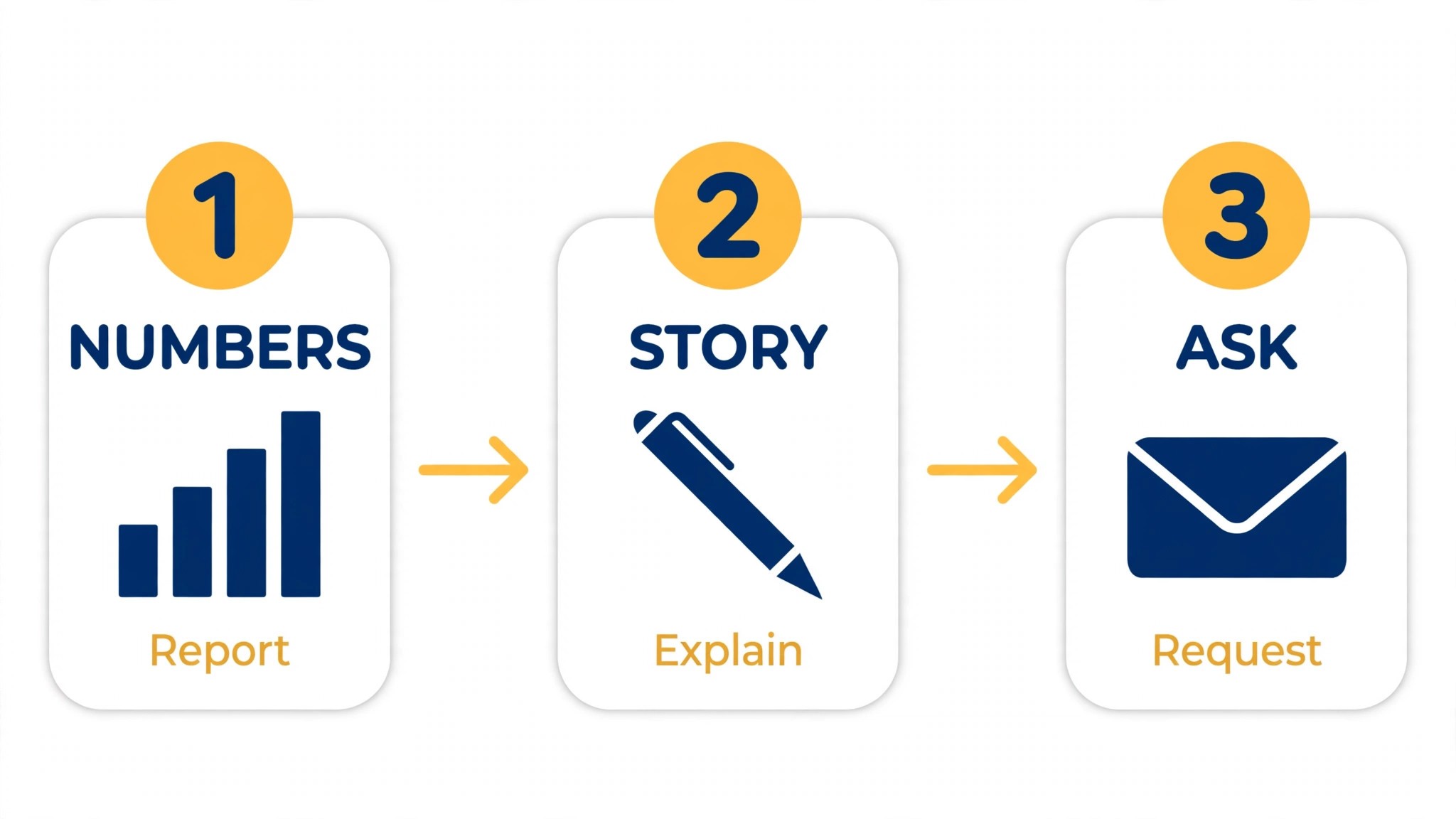
The ask is the most underused part of an investor update. Investors want to help, but they cannot help unless the founder tells them what is needed, whether it is an introduction to a customer, a hire or a piece of advice. An update that ends with a clear, specific ask will generate more help than one that ends with a summary, and the tools that prompt for the ask are the ones that understand what an update is for.
Timing matters. An update that arrives on the same day every month becomes a habit the investor expects, while an update that arrives at random intervals feels like an afterthought. Tools that schedule the send, and remind the founder to write it, turn the update from a chore into a routine, which is the only way it survives a busy quarter.
The cost of silence is higher than most founders think. A quarter without an update will cost the founder more in the next round than a year of software, because the investor who has heard nothing will assume the worst and price that assumption into the deal. Against that cost, the price of an update tool is trivial, and the decision should be made on that basis.
A founder who writes the update the same week every month will find the writing gets easier, because the numbers are fresh and the story is still clear. A founder who leaves it until the end of the quarter will spend twice as long reconstructing what happened, and the update will read like a history lesson rather than a report. The discipline of a fixed day is the cheapest improvement a founder can make to investor relations.
How to Choose Without Overbuying
Start from the update that takes the most hours, not from the vendor homepage. A founder reporting to angels needs a different update from one reporting to a board, and a pre-revenue founder needs something else again. The tool that fixes the slowest part of your reporting month pays for itself first, and the rest can wait.
Price the whole update stack, not the headline number. The table below prices year one for a solo founder and for a small team doing investor updates, on the common combinations, at published starting prices. Ask for per-investor charges in writing before signing, since those lines surprise founders, and annual billing usually cuts about twenty percent off the monthly rate.
| Stack | Monthly cost | What it covers |
|---|---|---|
| Notion alone | Lowest starting price | One tool for the main job |
| Visible alone | Lowest specialist start | Core tool plus an investor portal |
| Visible plus Carta | Mid-range | Core tool plus a cap-table specialist |
| Carta plus Visible | Higher | Core tool plus an update specialist |
Best Pick by Job
Pick from the table below by the update job you do most. The top 10 ai tools for investor updates are not ranked by features alone; they are ranked by which job each one actually finishes, so the pick that matches your month is the pick that will still be in your stack a year from now.
| Your job | Best pick | Why it wins |
|---|---|---|
| Monthly updates with an investor portal | Visible | Updates investors actually open |
| Cap table plus investor reporting | Carta | Equity and updates in one place |
| Cap table for early startups | Pulley | A cap table that grows with you |
| Fund admin plus investor updates | AngelList | Updates inside the fund stack |
| Portfolio reporting for funds | Rundit | Portfolio numbers in one view |
| Fundraising updates and data rooms | Flowlie | Updates that help you raise |
| Pitch decks that double as updates | Slidebean | Decks that investors remember |
| Sending updates with read tracking | DocSend | Know who read the update |
| Email updates to a small investor list | Mailchimp | Simple email updates that land |
| Updates inside your existing workspace | Notion | Updates where the work already lives |
Testing Before You Pay
For investor updates, a trial tells founders more in five working days than a month of reading reviews, but only when the trial runs on real numbers. Pick the two tools that look closest after the shortlist, run them side by side on the same month, and score them on time saved, edits needed and how the update reads to an investor. For investor updates, never trial on a demo file, because a demo hides the rough edges real figures expose.
Keep a simple log through the trial week, noting the daily update task, the minutes it took, the edits made and whether the update could go to an investor unchecked. After a week of investor updates work, that log is what decides. For investor updates, the tool with the best log wins, even when it was not the expected favourite, because the log measures your own numbers, not the vendor demo.
| Day | What to test | What good looks like |
|---|---|---|
| Day 1 | Setup and first real job | Working in under an hour, no IT ticket |
| Day 2 | The hardest job you do | Output needs light edits, not a rewrite |
| Day 3 | Integration with your core system | Data flows without double entry |
| Day 4 | A colleague tries it cold | They finish a job without asking for help |
| Day 5 | Count the time and the cost | Hours saved beat the monthly price |
Buying Mistakes to Skip
Mistake one is the cheapest plan, when the investor count you need sits two tiers up. Read every tier on the pricing page and pay for the tier that does the daily update job, not the tier that looks cheap. Mistake two: in investor updates, rolling the tool out to everyone before one person has tested it for a week, since a tool one person loves and five resent is a cost, not a system.
The third mistake is skipping the investor read-through. Ask an investor to read the update cold, watch where they get stuck and check the numbers before the first real update goes out, because fixing an update after an investor has questioned it costs far more than checking it first. The fourth mistake is judging the tool on its best day, so trial it on the hardest month itself and let the hard month decide.
Your Questions, Answered
Which tool gives founders the cheapest good start
Notion is the cheapest credible start on this list at 10 dollars a user a month, with Mailchimp close behind at 13 dollars a month. The top 10 ai tools for investor updates include free tiers and free plans, so start with the update type you send most, trial the free tier on real numbers, and add a specialist only when the general tool cannot pull a metric you are judged on. That is the cheapest route to an update stack, with no payment for features never used.
Can an investor tell the update was written with AI
Investors can tell when you send the template unchanged. AI tools draft a usable first version, but the facts, the numbers and the judgement still come from the founder doing the reporting. An output that goes out unedited reads generic, and investors notice generic updates fast. For investor updates, use the AI to beat the blank page, then change the details, the wording and the checks, so the result sounds like you and not the tool.
For a solo founder, which investor update tool wins
Visible is the pick for a solo founder, starting with a free tier and paid plans from 49 dollars a month, while Notion at 10 dollars a user a month is the strongest all-round option when the budget is tight. The top 10 ai tools for investor updates were ranked by the job each one finishes, not by the size of the feature list, so a solo founder should buy the tool that fixes its slowest monthly job first and add a second tool only when a specific limit starts costing time.
How much will a small team spend on investor update tools in year one
Plan on 10 to 50 dollars a month in year one for a general update tool such as Notion, rising to 100 to 300 dollars a month with a specialist such as Carta added. Multiply the headline price by investor count when you pay per investor, since those charges surprise buyers. For investor updates, price the whole stack and trial each tool on real numbers before signing an annual contract.
Do founders need a specialist tool as well as a general one
Not always. Most founders get by with one general tool for months, and a separate specialist only earns its place when a specific update task runs every month and the general tool cannot do it well. Time the last month before spending. Buy the specialist for investor updates when it turns an hours-long job into minutes, and skip it when the job already takes minutes.
Do these investor update tools offer a trial before payment
Most tools on this list offer a free plan or a free trial, and Visible and Notion both let founders test on real numbers before paying. Use the trial on the update type you send most, not on a demo, and count the time saved and the edits each output needs. A trial that covers a real month tells founders more than a sales call, and a tool that will not trial is one to be careful about.
The Verdict, in Brief
If you buy one tool this quarter, pick Visible for a founder who needs investor updates and a portal, and Notion when the budget is tight and the team already lives there. Visible is the easiest specialist place to start with a free tier, and Notion is the cheapest all-round start at 10 dollars a user a month. The top 10 ai tools for investor updates earn their keep by giving you back the day between the numbers and the send, and both of these do that from the first month.
Whatever you pick, trial it on a real month of numbers, count the updates it produces and the edits each one needs, and keep a human eye on every figure before it goes to an investor. Every tool on this list works for investor updates. The difference is whether the update tool matches the investors you actually report to, and whether you measure the return in trust kept and rounds eased rather than in features used.