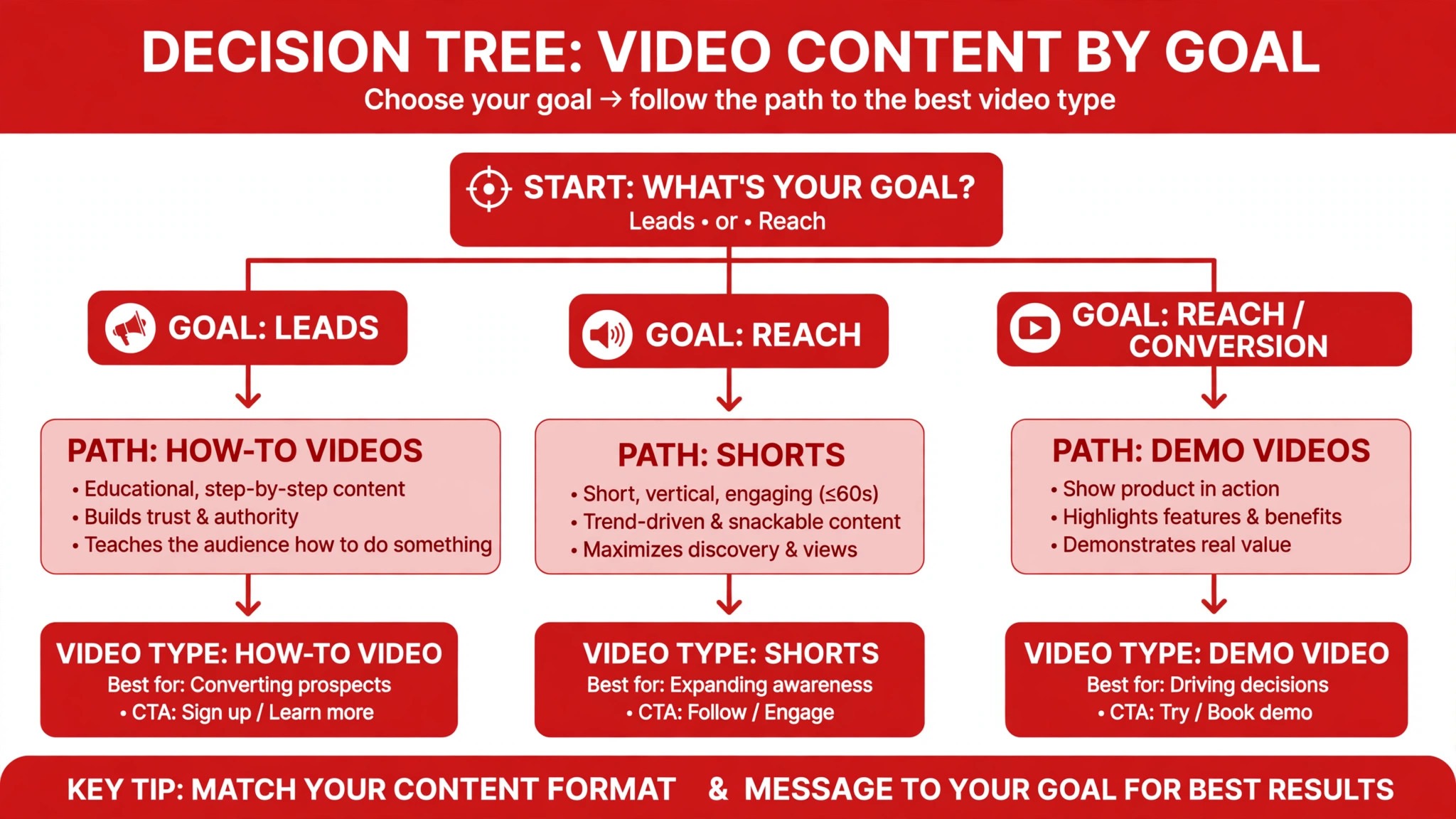
Shorts now average 200 billion daily views, and a small business that ignores that number is ignoring the largest free audience on the internet. A channel with 200 subscribers can reach 20,000 people with one good Short, and that reach costs nothing but an hour of filming. That gap between the audience and the cost is the reason a small business youtube marketing strategy matters in 2026, because no other channel gives a small business that much reach for that little money.
The mistake most small businesses make is to treat YouTube like a television channel, with a polished video once a month and nothing in between. YouTube rewards a rhythm, not a single video, and a channel that posts one strong long video a week plus two to four Shorts will grow faster than a channel that posts one polished video a month. Consistency you can keep for a year beats a burst of daily uploads you abandon in a month, and YouTube itself says growth in views is not tied to how often you upload, yet channels that publish more often do grow faster overall.
The second mistake is to make videos about the business instead of videos about the customer problem. A customer does not search for your business name. A customer searches for how to fix a thing, how to choose a thing, and how much a thing costs. A video that answers one of those questions will be found, and a video that introduces the business will not. This guide builds a small business youtube marketing strategy around that simple fact, with a weekly plan, video types, and numbers to track.
The Quick Shortlist
The table below matches each common small business goal to the single video type that handles it best. Use it to narrow a small business youtube marketing strategy to two or three video types before you film anything. Prices are time costs, not money, because filming is the real budget here.
| Goal | Best video type | Why it wins |
|---|---|---|
| Get found in search | How to video, 8 to 12 minutes | Answers a question people already search for |
| Reach new people fast | Shorts, 30 to 60 seconds | Shorts feed gives free reach to strangers |
| Turn viewers into leads | Product demo with a clear offer | Shows the product working, then asks for the next step |
| Build trust before a sale | Behind the scenes, 5 minutes | Shows the people and the process behind the business |
| Answer the same question once | Customer question video, 3 minutes | Ends repeat phone calls and emails |
| Win a local customer | Local guide or local job video | Ranks for the town and the trade together |
| Keep buyers after the sale | Tutorial for owners, 6 minutes | Helps the customer use what they bought |
| Fill a slow week | Live question session, 30 minutes | Real time answers build a loyal audience |
How We Judged a Good YouTube Strategy
A strategy earned a place here only if it works for a small business with one person and one phone, not if it needs a studio and a team.
A small business youtube marketing strategy was judged on five things that decide whether a channel keeps growing after the first month.
First, whether the video answers a question a real customer already asks, because a video that answers a searched question will be found, and a video that introduces the business will not. Second, whether the pace can be kept for a year, because a plan that needs daily filming will be abandoned in week three.
Third, whether the video leads somewhere, because a view that ends with no next step is a view wasted. Fourth, whether the numbers are honest, because a channel that chases views without leads will grow an audience that never buys. Fifth, whether the work can be batched, because a business that films one day a month and schedules the rest will keep going, and a business that films every day will stop.
| Check before you film | What to ask | Why it matters |
|---|---|---|
| Search demand | Do people search for this question | Search brings viewers every week, not just once |
| Pace | Can I film this every week for a year | A pace you can keep beats a pace you cannot |
| Next step | What should the viewer do after watching | A view without a next step earns nothing |
| Time cost | How many hours does one video take | Time is the real budget for a small business |
| Repurpose value | Can one filming make a Short and a post | One filming should feed three places |
| Measurement | Which number proves this video worked | Views alone do not prove a sale |
The Playbook, Step by Step
1. Pick One Customer and One Problem to Own
A channel that tries to serve everyone serves no one, and a small business youtube marketing strategy starts by picking one customer and one problem. A plumber who makes videos for landlords with blocked drains will be found by landlords with blocked drains. A plumber who makes videos for everyone will be found by no one, because YouTube cannot tell who the video is for. Pick the customer who pays best, and pick the problem they search for most, and make every video for that person.
Start with the questions customers already ask on the phone. Write down the ten questions you answered last month, and rank them by how often they came up. The top three are your first three videos, because they are the questions real buyers already ask, and a video that answers one of them will be found by the next person who asks it. A bakery that answers how long a cake keeps will be found by every person who searches that question, and that search happens every week.
Narrow the audience further by place. A local business that adds the town name to the title will rank for the town and the trade together, and a viewer in that town is worth ten viewers elsewhere, because only the local viewer can buy. A video titled How to Fix a Leaky Tap in Austin will be found by a person in Austin with a leaky tap, and that person is a lead, not a view.
2. Build a Simple Channel That Sells While You Sleep
A channel needs a clear name, a clear promise, and a clear next step, and none of those needs a designer. The channel name should be the business name plus the trade, so a search for the trade finds the channel. The banner should state the promise in one line, such as Weekly fixes for landlords in Austin, because a visitor decides in three seconds whether to subscribe. The About section should state who the videos help and what the viewer should do next, with a link to the booking page.
The next step matters more than the subscriber count. Every video description should carry one link, to the booking page or the product page, and every video should end with one spoken call to action, such as Book a visit from the link below. A channel with 200 subscribers and a booking link will earn more than a channel with 2,000 subscribers and no link, because the link turns a viewer into a lead. A small business youtube marketing strategy that has no next step is a hobby, not a strategy.
Set up the channel once and leave it alone. A channel trailer of 60 seconds that states the promise will greet new visitors, and a playlist for each problem type will keep a viewer watching after the first video ends. A playlist that groups all the drain videos together will turn one view into three, and three views into a subscriber.
3. Film One Long Video a Week, No More and No Less
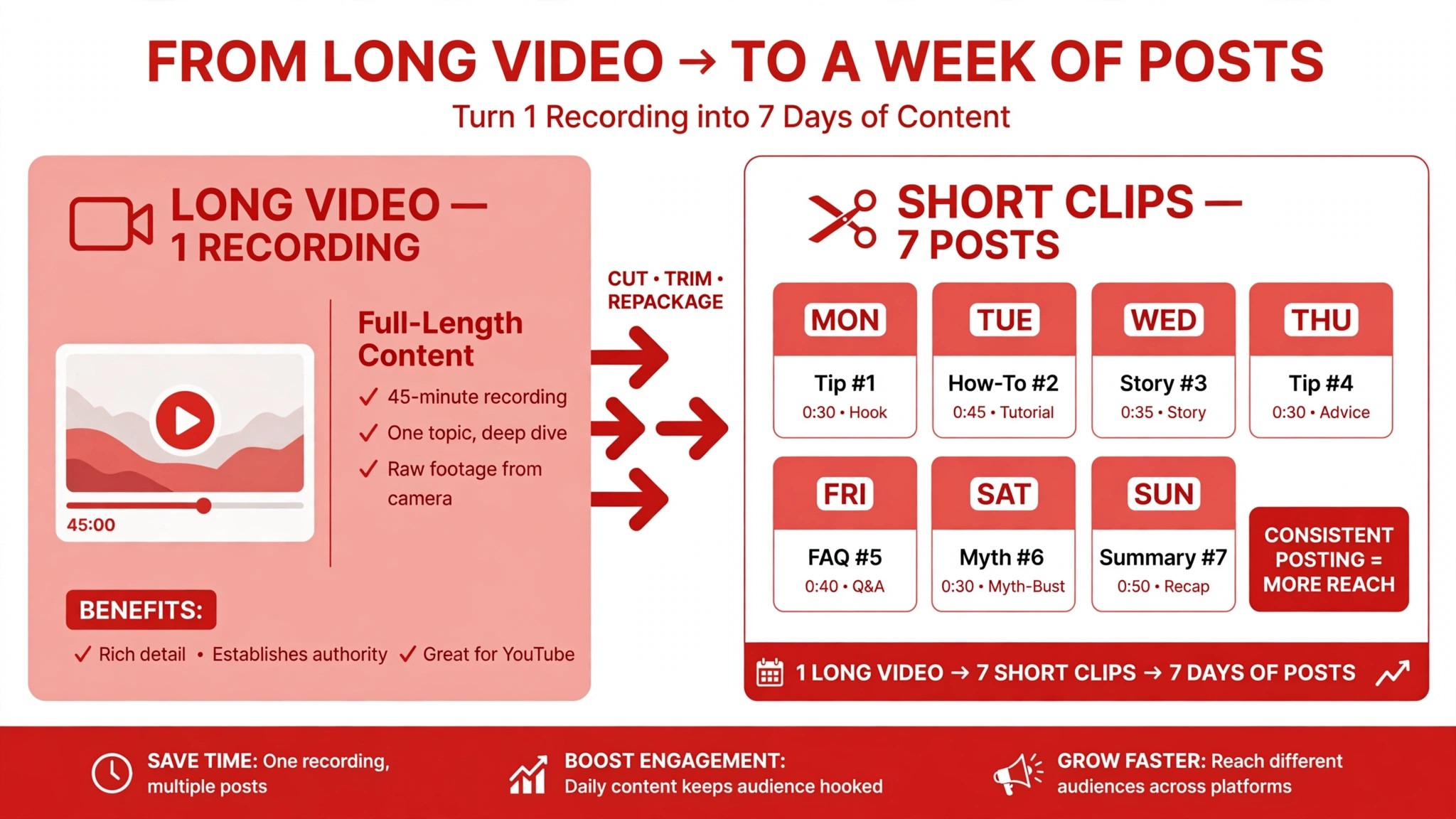
One strong long video a week plus two to four Shorts is the right place to start for most brands, and that pace is the one this guide recommends. A long video of 8 to 12 minutes is long enough to answer a question properly and short enough to film in an hour. A video longer than 20 minutes needs a reason, and a video shorter than 5 minutes rarely ranks for a searched question, because it does not answer the question fully.
Film in one session and keep the setup simple. A phone on a tripod, a window for light, and a quiet room are enough, and a lapel microphone that costs 30 dollars will improve the sound more than any camera upgrade. Film the answer first, then the introduction, because the answer is the part the viewer came for, and the introduction can be trimmed to 15 seconds in the edit. A video that starts with the answer keeps viewers, and a video that starts with a long introduction loses them.
Batch the filming. Film four videos in one afternoon, once a month, and schedule them for the weeks ahead, because a business that films every week will miss a week when work gets busy, and a missed week breaks the rhythm. YouTube Studio supports scheduling natively, so a video can be uploaded, scheduled, and forgotten until it goes live. A channel that is scheduled a month ahead never goes quiet when the owner is busy.
4. Cut Three to Five Shorts From Every Long Video
The cheapest steady source of clips is the long video you already make, because one hour long video can give about ten clips, and three hour long videos can give about 30 clips, one a day for a month. Shorts can now be up to three minutes long, but the ones that work best are as short as the idea allows, and a Short of 30 to 60 seconds that answers one small question will outperform a Short that tries to say everything.
Pick moments that stand alone. A tip, a mistake, a before and after, and a quick answer are the four Short types that work for a small business, and each one should end with a line that points to the long video. A Short that leads viewers to a paired long video is worth more than a standalone snack, because the long video is where the sale happens. The honest conversion rate from a Shorts viewer to a long video viewer is 0.5 to 5 percent depending on how aggressively the channel bridges the two formats, so the bridge has to be built into every Short.
Post two to four Shorts a week to start, and move to one a day once it is easy. YouTube says there is no minimum posting cadence required for Shorts to perform well, and its Shorts lead said frequency does not change reach, so the energy is better spent on fewer, better videos. A pace of three Shorts a week that holds for a year will beat a pace of one a day that lasts a month.
5. Write Titles and Thumbnails That Answer the Search
A title should be the question the customer asks, in the words the customer uses. How to Fix a Leaky Tap is a better title than Plumbing Tips Episode 4, because the first is a search and the second is a filing system. Add the place name for a local business, add the year for a timely topic, and keep the title under 60 characters so it is not cut off on a phone. A thumbnail should show the problem and the result side by side, with three words at most, because a thumbnail with a paragraph will not be read at small size.
The first 30 seconds decide whether a viewer stays. State the answer in the first sentence, then prove it, because a viewer who hears the answer in the first 15 seconds will stay to see how it works. A video that opens with a long introduction will lose half its viewers before the answer starts, and YouTube will read that drop as a weak video. A small business youtube marketing strategy lives or dies in the first 30 seconds, so film the opening last and keep it short.
Use the description to sell the next step, not to repeat the video. The first two lines should state the offer and the link, because only the first two lines show before the viewer clicks More. Add timestamps for a long video, because a viewer who can jump to the part they need will watch longer than a viewer who has to scrub through the whole video.
6. Turn Viewers Into Leads With One Offer Per Video
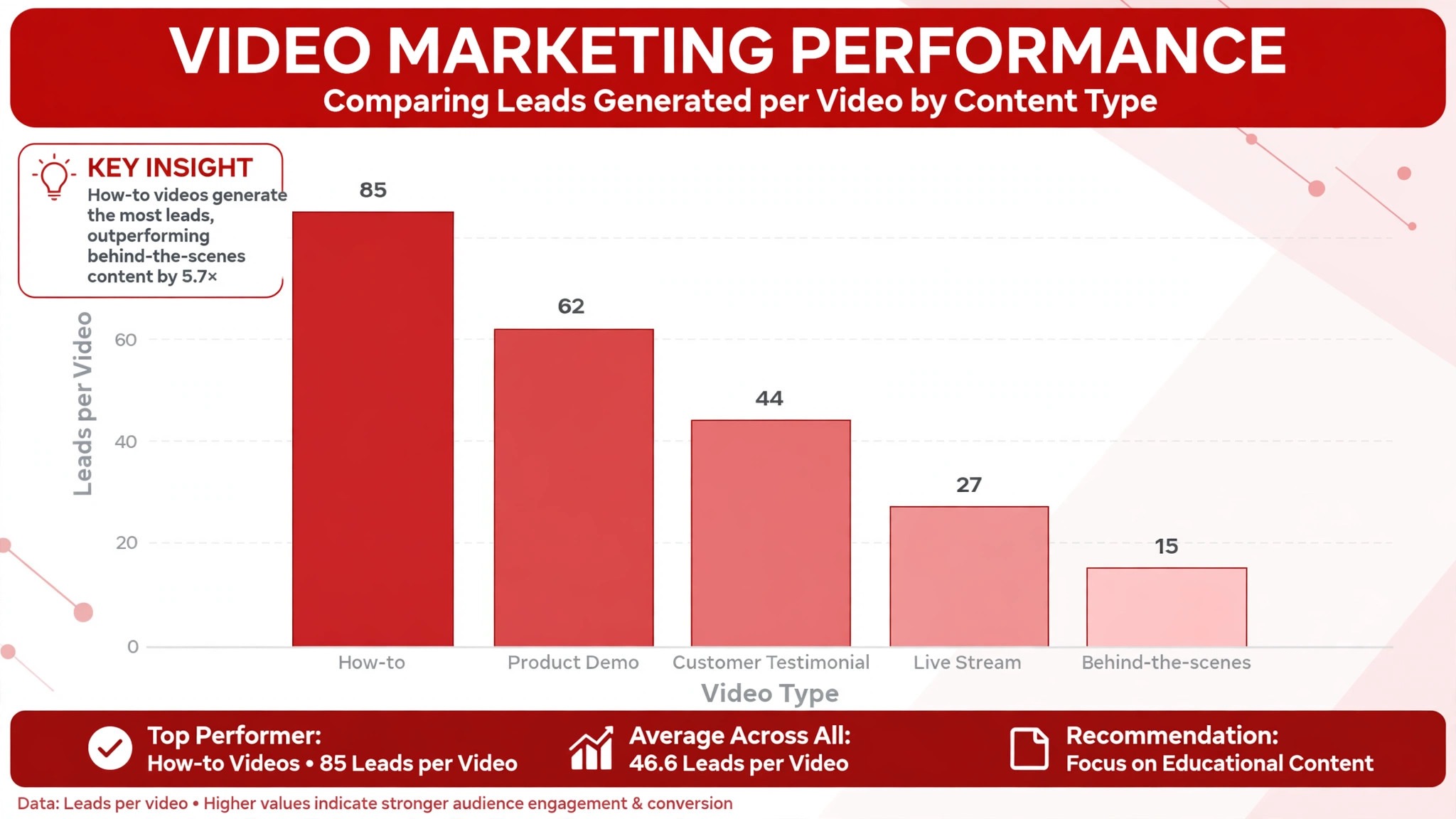
A video without an offer is a view that earns nothing, and a video with five offers is a view that earns nothing because the viewer cannot choose. Pick one offer per video, and make it the obvious next step for the person who just watched. A how to video should offer a free quote, a product demo should offer a discount, and a behind the scenes video should offer a newsletter signup. One offer, one link, one spoken line at the end, and the same offer in the description.
Track the offer, not the view count. A video with 1,000 views and 10 bookings is worth more than a video with 10,000 views and no bookings, and a channel that chases views without leads will grow an audience that never buys. Put a simple tracking link on each video, so the booking page can tell which video sent the customer, and double down on the video type that sends the most bookings. A small business youtube marketing strategy is measured in leads, not in views.
Follow up with the leads the same week. A viewer who books from a video is warm, and a reply within a day will close more of them than a reply within a week. A business that answers fast will win the customer, and a business that answers slowly will lose them to the next listing, no matter how good the video was.
7. Measure Four Numbers and Ignore the Rest
A channel needs four numbers, and the rest are noise. The first is click through rate, which is the share of people who click the video after seeing the thumbnail, and a rate below 4 percent means the title or the thumbnail needs work. The second is average view duration, which is how long people actually watch, and a duration under 40 percent of the video length means the opening needs work. The third is leads per video, which is the bookings or the signups that came from that video, and that number decides whether the video type is worth repeating. The fourth is subscribers gained per video, which shows whether the video brings people back.
Check the numbers once a week, not once a day, because daily numbers are noise and weekly numbers are a trend. A video that looks weak on day one can grow for months in search, and a video that looks strong on day one can fade in a week. Judge each video after four weeks, by retention, shares, follows, and clicks, and judge each change after about four weeks as well, because a change that is judged after one day will be abandoned before it has a chance to work.
Kill the video type that brings views and no leads, and double the video type that brings leads and few views, because leads pay the bills and views do not. A channel that makes more of what sells will grow a business, and a channel that makes more of what gets views will grow an audience that never buys.
Side by Side Comparison
The table below puts the video types side by side on time cost, reach, and lead value, so you can compare a Short against a long video at a glance.
| Video type | Time to make | Reach | Lead value |
|---|---|---|---|
| How to video, 8 to 12 minutes | 2 hours | Medium, search driven | High, searcher wants help now |
| Shorts, 30 to 60 seconds | 20 minutes | High, feed driven | Low, viewer is browsing |
| Product demo, 5 minutes | 1 hour | Low, product search | High, viewer is close to buying |
| Behind the scenes, 5 minutes | 30 minutes | Low, loyal viewers | Medium, builds trust |
| Customer question, 3 minutes | 30 minutes | Medium, search driven | High, questioner is a buyer |
| Local guide, 8 minutes | 2 hours | Low, local search | High, local viewer can buy |
| Tutorial for owners, 6 minutes | 1 hour | Low, existing customers | Medium, reduces support calls |
| Live session, 30 minutes | 30 minutes | Low, live only | Medium, builds loyalty |
The Weekly Plan for Your small business youtube marketing strategy
A week of YouTube for a small business fits on one page, and it starts with one filming day. Film the long video on Monday morning, cut three Shorts from it on Monday afternoon, and schedule the long video for Wednesday and the Shorts for Tuesday, Thursday, and Saturday. Reply to every comment on the long video on Thursday, because a reply in the first 48 hours doubles the chance the commenter subscribes. Check the numbers on Friday, and pick next week topic from the questions customers asked that week.
The monthly version is the same plan repeated four times, with one week a month spent on a live session instead of a long video, because a live session builds loyalty that a recorded video cannot. A business that follows that plan for three months will have 12 long videos, 36 Shorts, and a channel that a customer can browse like a catalogue. A business that follows it for a year will have 52 long videos, and that catalogue will bring leads every week without new filming, because search keeps sending viewers to old videos.
The First 30 Days on YouTube
The first 30 days are the hardest, because the channel is new, the numbers are small, and the temptation is to quit after week two. A small business youtube marketing strategy survives those 30 days by keeping the work small and the wins visible. Film four videos in the first month, one a week, and cut three Shorts from each one, because 4 long videos and 12 Shorts are enough to learn what works without burning out.
In week one, film the question customers asked most last month, because that video will be found in search and it will bring the first real viewers. In week two, film the product demo, because that video will show the product working and it will bring the first real leads. In week three, film a behind the scenes video, because that video will show the people behind the business and it will bring the first real subscribers. In week four, film a customer question video, because that video will answer a question that every new customer asks, and it will save the business repeat phone calls.
At the end of the month, check the four numbers and keep only what worked. A video type that brought leads stays, a video type that brought views and no leads goes, and a video type that brought neither is replaced by a new idea from the customer questions that arrived that month. A channel that learns in the first 30 days will grow in the next 90, and a channel that repeats the same weak video for a year will not. That first month is the test, and the test is worth more than any single video.
Keep a notebook of the questions customers ask in the shop, on the phone, and in video comments, because that notebook is the content plan for the next three months. A question that came up three times in a week is a video that will be found three times a week, and a video that answers a real question will always outperform a video that was invented in a brainstorm. A channel that listens to its customers will never run out of ideas, and a channel that guesses will run out in a month.
Frequently Asked Questions
How often should a small business post on YouTube?
For most brands, one strong long video a week plus two to four Shorts is the right place to start. Consistency you can keep for a year beats a burst of daily uploads you abandon in a month. YouTube says growth in views is not tied to how often you upload, yet channels that publish more often do grow faster overall. A new channel with a small team should start with one long video every one to two weeks and two to three Shorts a week, then move to weekly once the habit is set.
How long should a small business YouTube video be?
A how to video should be 8 to 12 minutes, long enough to answer the question properly and short enough to film in an hour. A Short should be 30 to 60 seconds, as short as the idea allows. A product demo should be about 5 minutes, and a behind the scenes video about 5 minutes. A video longer than 20 minutes needs a reason, and a video shorter than 5 minutes rarely ranks for a searched question.
Do YouTube Shorts help a small business get customers?
Shorts help a business get found, and long videos help a business get customers. Shorts average 200 billion daily views, so they are the fastest way for strangers to discover a channel, but Shorts subscribers convert to long video viewers at a lower rate than long video viewers do. A Short that leads to a paired long video will bring more customers than a Short that stands alone, so every Short should point to the long video that sells.
How much does YouTube marketing cost a small business?
It costs time, not money, because a phone, a tripod, and a 30 dollar microphone are enough to start. One long video takes about two hours to film and edit, and three Shorts cut from it take about an hour together. A business that films four videos in one afternoon a month will spend about eight hours a month on YouTube, and that time is the real budget. Paid ads are optional, and a channel should earn leads organically before it spends on ads.
How do I turn YouTube viewers into customers?
Give every video one offer, one link, and one spoken call to action, and track which video sent each booking. A how to video should offer a free quote, a product demo should offer a discount, and a behind the scenes video should offer a newsletter signup. Reply to leads within a day, because a warm lead that waits a week will buy from the next listing. This strategy is measured in leads, not in views, so the offer matters more than the view count.
Our Verdict
If you film one thing this week, film a how to video that answers the question your customers asked most last month, because that video will be found in search every week for a year, and it will bring leads long after the filming is forgotten. A small business youtube marketing strategy that starts with the customer question will grow a channel that sells, and a strategy that starts with the business will grow a channel that nobody finds.
Whatever you pick, film one long video a week, cut three Shorts from it, give every video one offer, and measure leads per video. A small business youtube marketing strategy is a habit, not a campaign, and the business that keeps the habit for a year will have a catalogue that brings customers every week. Start with one video, keep the pace, and let search do the rest.