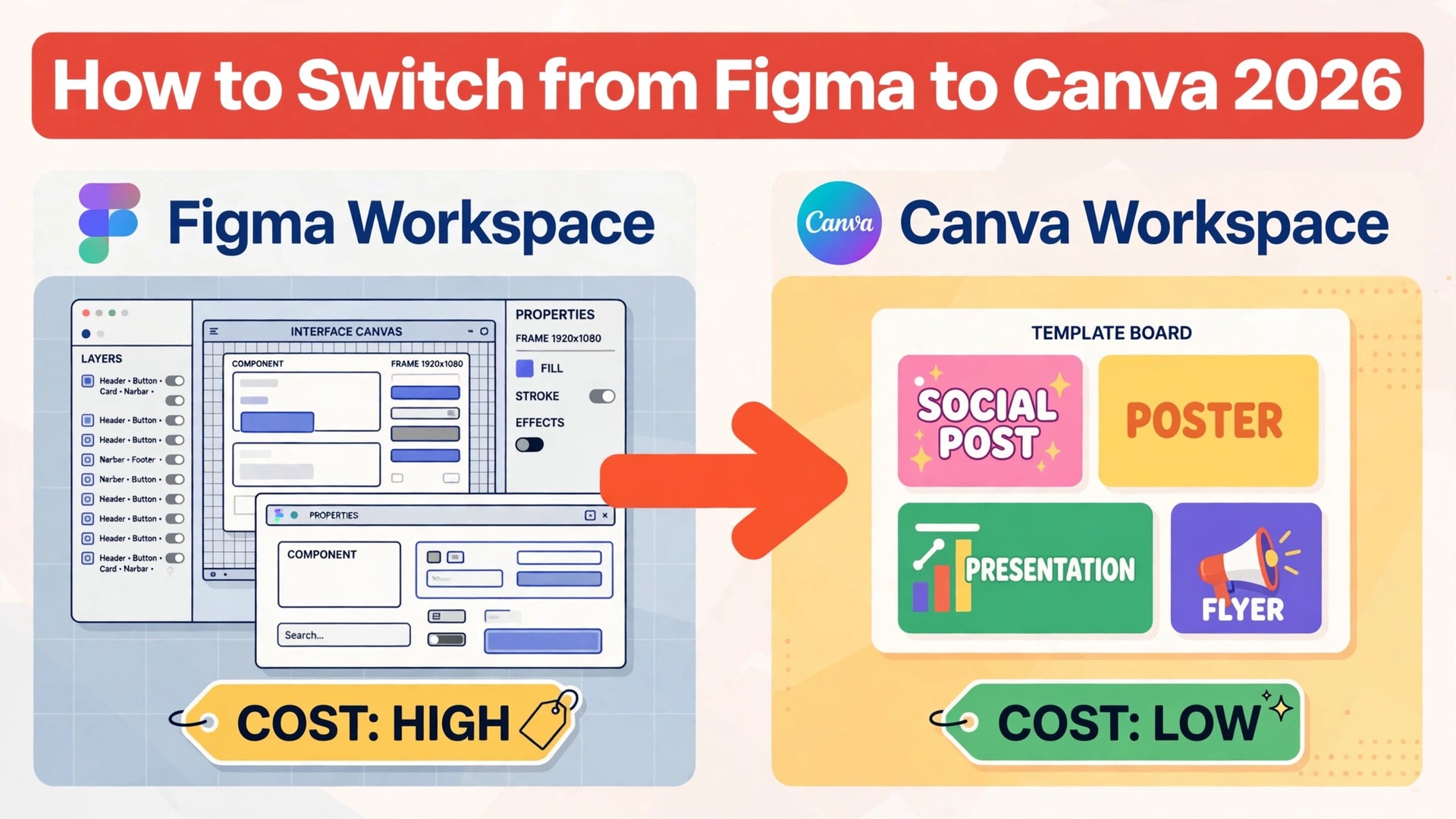
A team of seven pays about 1,152 dollars a year on Figma Professional, with three Full seats, three Dev seats and one Collab seat, and about 1,750 dollars a year on Canva Business for the same seven people. The surprise is that Figma is cheaper for that team, and it is the reason anyone asking how to switch from Figma to Canva should run the seat math before moving anything.
Figma charges by seat type, so the bill depends on how many people edit, how many inspect code, and how many only comment. Professional costs 16 dollars a month per Full seat, 12 dollars per Dev seat and 3 dollars per Collab seat on annual billing. Canva charges per person, so every marketer on Business costs about 25 dollars a month, or 250 dollars a year. A team of two designers and five marketers pays less on Canva, because the marketers are cheap on Figma only if they sit in Collab seats, and most marketers want to edit.
The switch is not about which tool is better at design. Figma is the better product design tool, with components, auto layout, variants and developer handoff, and Canva is the better marketing tool, with templates, publishing and print. A team that ships product screens needs Figma, and a team that ships social posts needs Canva, and the honest question is which kind of work the team does most days. A team that stopped designing product screens months ago is paying for a tool it no longer uses.
This guide walks through how to switch from Figma to Canva in seven steps, with a cost comparison, a clear account of what transfers, what must be rebuilt, and what to test before cancelling Figma. Follow the steps in order, run both tools side by side for two weeks, and the move will be quiet. Skip the steps, cancel early, and components, design systems and developer handoff can vanish without warning.
The Bill That Decides the Switch
Cost is the reason most teams switch, and the numbers explain why, once the seat types are counted. Figma Starter is free, with three Figma files, three FigJam files, unlimited personal files and unlimited collaborators. Professional costs 16 dollars a month per Full seat, 12 dollars per Dev seat and 3 dollars per Collab seat on annual billing, with unlimited files, shared libraries, branching and Dev Mode. Organization costs 55 dollars per Full seat, 25 dollars per Dev seat and 5 dollars per Collab seat. Enterprise costs 90 dollars per Full seat, 35 dollars per Dev seat and 5 dollars per Collab seat.
Canva Free costs nothing, with thousands of templates, 1 million stock photos and graphics, 5 GB of storage and basic design features. Canva Pro costs 18 dollars a month on monthly billing, or 144 dollars a year, for one person, with 1 TB of storage, Brand Kit, background remover and Magic Resize. Canva Business costs about 25 dollars per person a month, or 250 dollars per person a year, and adds team brand controls, approvals and advanced admin. Canva Teams, the old flat team plan, is closed to new sign-ups, which changes the team math for everyone comparing today.
A team of two designers and three marketers pays about 77 dollars a month on Figma Professional, with two Full seats at 16 dollars, three Dev seats at 12 dollars and no Collab seats, or less if the marketers sit in Collab seats at 3 dollars each.
The same five people on Canva Business pay about 125 dollars a month, so Figma wins for that team. A team of one designer and six marketers pays about 34 dollars a month on Figma Professional with one Full seat and six Collab seats, against about 175 dollars a month on Canva Business, so Figma wins by more. The only team where Canva wins on price is a team where everyone edits and nobody needs Dev Mode, because then Figma charges 16 dollars per Full seat and Canva charges 18 dollars for one Pro licence that covers one person only, and the comparison turns on how many Pro licences the team needs.
A team of seven marketers, all editing, pays about 112 dollars a month on Figma Professional with seven Full seats, against about 175 dollars a month on Canva Business, so Figma still wins. The price case for Canva is not the per seat rate, it is the free plan and the single Pro licence, because one designer on Canva Pro at 144 dollars a year covers their own work, while the same designer on Figma Professional at 192 dollars a year costs more. Count the seats by type before deciding, because the seat mix decides the saving.
Figma vs Canva at a Glance
| Feature | Figma | Canva |
|---|---|---|
| Pricing basis | Per seat type, Full, Dev, Collab | Per person, Pro or Business |
| Free plan | Starter, 3 design files, 3 FigJam files | Generous, templates, 5 GB storage |
| Entry paid plan | Professional 16 dollars per Full seat a month annual | Pro 18 dollars a month, or 144 dollars a year, one person |
| Team plan | Organization 55 dollars per Full seat a month annual | Business about 25 dollars a person a month |
| Components | Components, variants, auto layout | No components, templates instead |
| Developer handoff | Dev Mode, CSS and specs, 12 dollars a Dev seat | Not really, PNG and PDF export only |
| Prototyping | Interactive prototypes built in | Basic animation, no real prototyping |
| Publishing | Export only, no direct publishing | Direct publishing to social channels |
| No print-ready PDF output | Print-ready PDF with bleed marks | |
| AI credits | 3,000 a month per Full seat on Professional | Magic Studio, limits vary by plan |
Figma wins on product design, components and handoff. Canva wins on templates, publishing and print. Check which kind of work the team does most days before moving, because the wrong side costs more than the saving.
The Trade-Offs Nobody Mentions First
A switch guide that only lists the saving is not honest, so this section states the trade plainly. Figma is a precision tool. Its components, variants, auto layout and design tokens let a team change one button and update a hundred screens, and its Dev Mode hands a developer the exact spacing, typography and color values for every frame. A team that ships product screens every week will feel the loss of that system in every sprint, and no Canva template replaces it.
Canva is a publishing tool. Its templates cover every social post, flyer, deck and print job a marketer can name, its Magic Resize turns one design into ten sizes in a click, and its direct publishing posts the result without opening another app. A team that ships marketing visuals every day will feel the gain in every hour, and no Figma frame replaces that speed. The question is not which tool is better. The question is whether the team designs product screens or marketing visuals, and learning how to switch from Figma to Canva starts with answering that question honestly.
The file limit also changes. Figma Starter allows three design files, so a team that outgrows the free plan must pay or lose files. Canva free has no file limit that matters, so a team can run on free for months before paying anything. A team that only needs marketing visuals should test Canva free first, because the free plan answers the question before any money moves.
How to Switch from Figma to Canva in 7 Steps
Step 1. Audit the Figma account before touching anything
Open Figma and list every file, every library, every component set, every prototype and every Dev Mode handoff. Export the file list and note the renewal date and the billing cycle, because cancelling mid cycle does not refund the year. Pay special attention to shared libraries with components used across files, prototypes linked to client presentations, and files with developer comments attached, because those are the pieces that do not move cleanly. This audit takes an hour and prevents the most common switch failure, which is discovering a shared library only after it was deleted.
Step 2. Set up Canva and rebuild the brand system
Create the Canva account, choose the plan that matches the team size, and rebuild the brand system first, before moving any design. Add the logo files, the hex codes and the fonts to the Canva Brand Kit, and check that Canva has a match for every font the Figma library uses. Where a font has no match, pick the closest Canva font and record the change, because a font swap changes every design that uses it. Do not export frames yet. A clean brand system decided on paper saves a week of fixing later.
Step 3. Export the frames that must survive
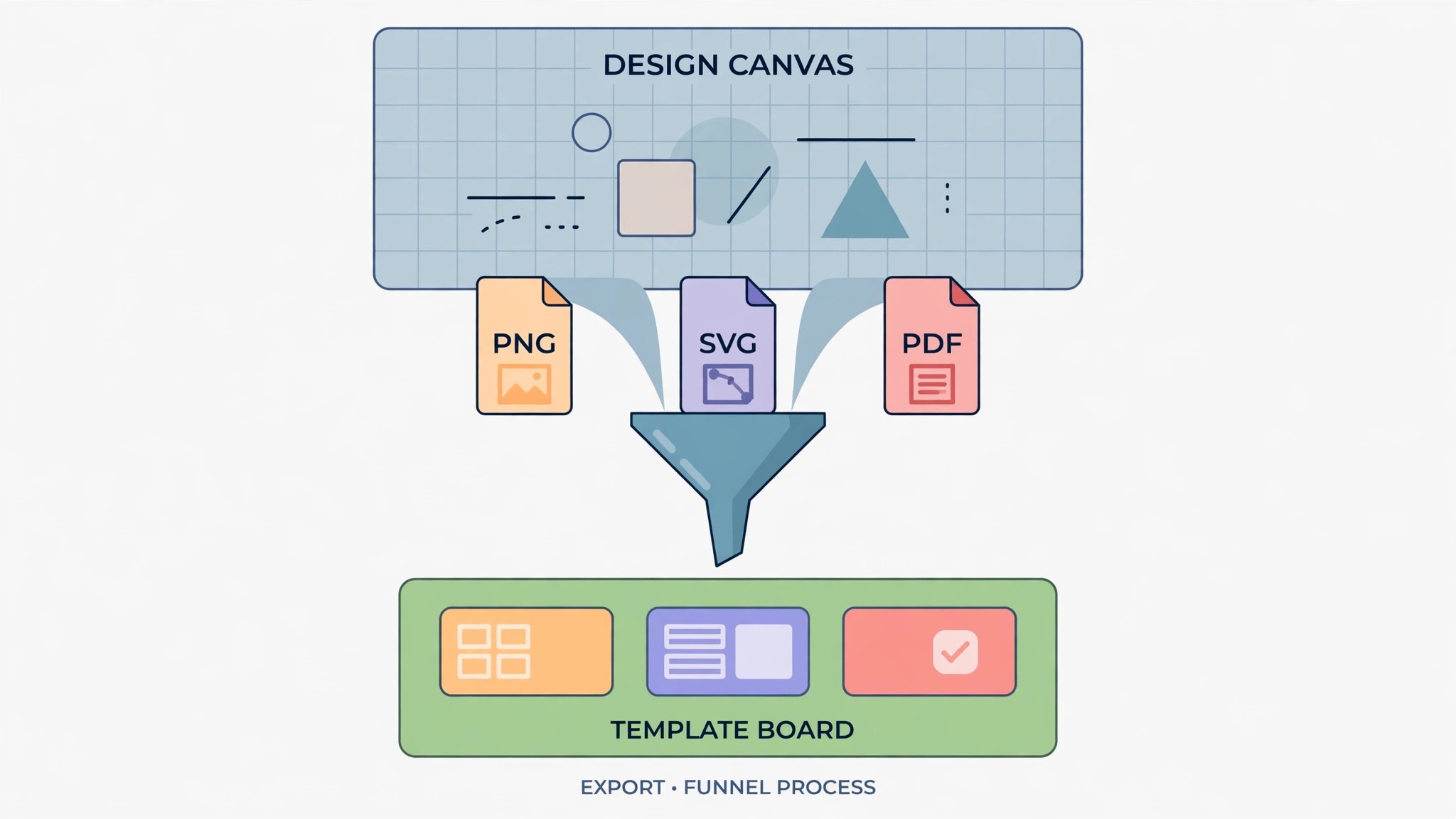
Figma designs do not import into Canva as editable files, so export the frames the team must keep as PNG, SVG or PDF files from Figma, frame by frame. Save the exports in a shared folder with clear names, and keep the original Figma links in a list for reference. Check each export to confirm the text, the images and the spacing survived, and fix the export settings before the big export. A pilot export on one file prevents an account wide mess.
Step 4. Rebuild the marketing templates in Canva
Rebuild the templates the team uses every week inside Canva, starting with the five most used post types. Copy the layout, the copy and the brand colors from the Figma exports, and set the sizes to match the channels the team publishes to. Test each template with a real post before the switch date, and confirm the export quality matches the Figma original. This is the largest single task in the switch, so budget a full afternoon for a normal team and do not promise a one hour migration.
Step 5. Move the assets and the handoff workflow
Export the brand assets from Figma, the logos, the icons and the illustrations, as SVG files where possible, and upload them to the Canva Brand Kit and the team folders. Replace the Dev Mode handoff with the new workflow, because Canva has no developer handoff, and tell the developers where the specs now live. If the team still ships product screens, keep one Figma file for that work instead of forcing it into Canva. A team that skips this step will find developers asking for specs that no longer exist.
Step 6. Run both tools side by side for two weeks
Design in Canva for two weeks while Figma stays open and the old files finish. Watch the export quality, the font rendering and the publishing speed daily, and compare them with the Figma output from the same weeks last month. Confirm the brand kit applies correctly, the templates resize cleanly, and the team can find every asset it needs. Fix the problems while Figma is still available as a fallback, not after it is cancelled. Two quiet weeks of parallel running cost nothing and catch every problem early.
Step 7. Cancel Figma and confirm the data is safe
Once two weeks of Canva designs look clean, export the final file list and any remaining frames from Figma, then cancel the subscription before the renewal date. Confirm the cancellation email arrives, and check that no auto renewal is set. Keep the Figma export files for six months, because the editable files cannot be recovered later and the old exports are the only record of what the team used to design. The switch is done when Canva has run cleanly for two weeks and Figma is cancelled without a surprise charge.
What Moves Across and What You Rebuild
Brand assets move well. Export the logos, icons and illustrations from Figma as SVG or PNG files, and upload them to the Canva Brand Kit with the same hex codes and font names. Finished frames move as flat files, and a PNG, SVG or PDF export keeps the finished look, even though it cannot be edited as a design. The team list moves as a decision, not as a file, and each person must be invited to the Canva team by hand.
What does not transfer is specific, and the team should name it before starting. Figma files do not import into Canva, so every design must be rebuilt in the Canva editor. Components, variants and auto layout do not transfer, so the design system must be rebuilt as Canva templates and brand assets. Prototypes do not transfer, so an interactive prototype must be rebuilt or replaced with a static presentation. Dev Mode does not transfer, because Canva has no developer handoff, so the spec workflow must be replaced.
Shared libraries do not transfer, so a component used across ten files must be rebuilt as a Canva template in each place it is needed. Version history does not transfer, so a file that was edited fifty times in Figma arrives in Canva as one current export. The only things lost are the Figma specific records, which are the components, the libraries, the prototypes and the handoff specs. Export them all before cancelling, and the switch loses nothing that matters.
That is the full picture of how to switch from Figma to Canva without losing the designs that matter.
The Go-Live Checklist
Use this checklist before starting step 1, and do not skip a line.
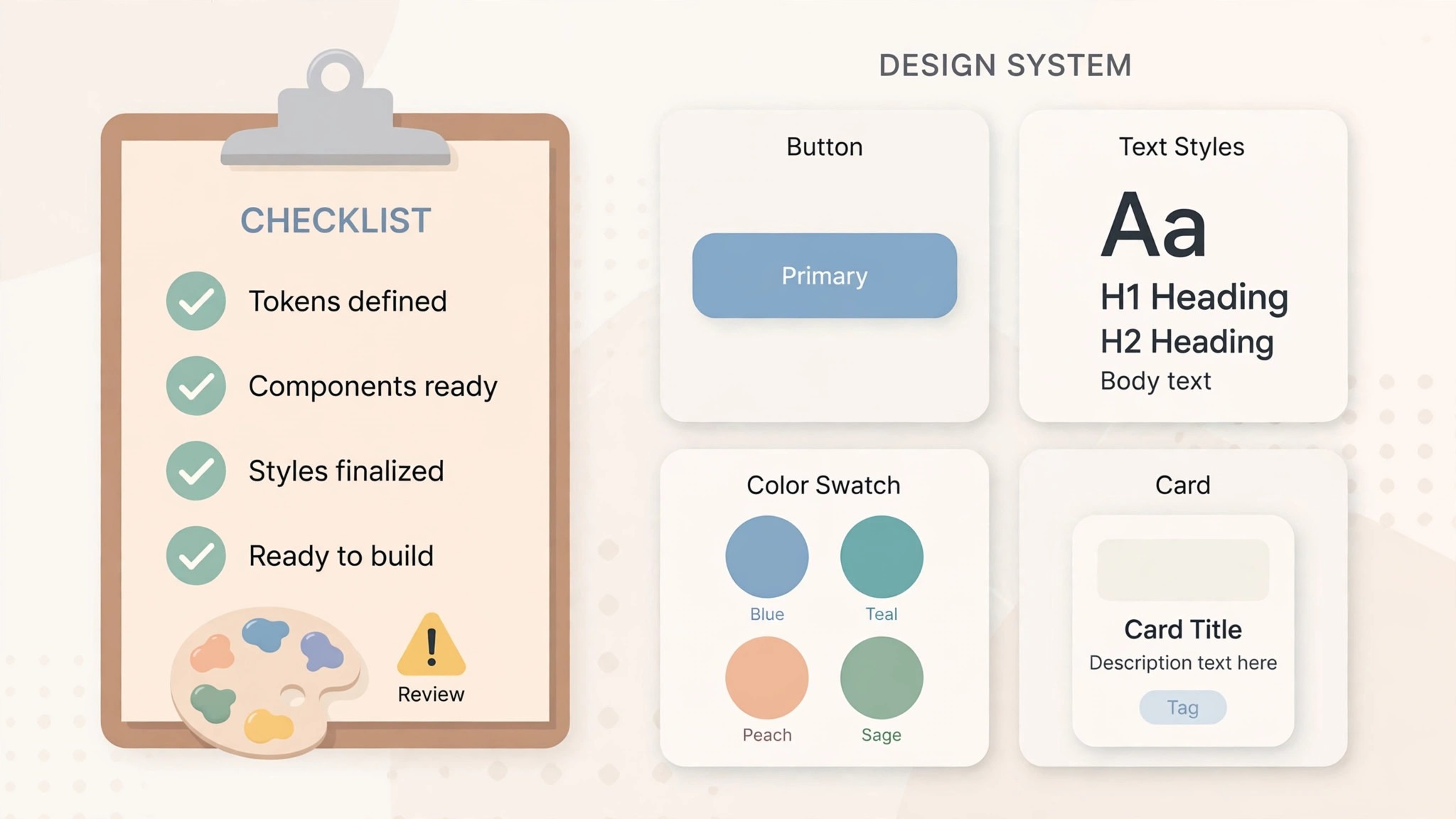
- List every Figma file, library, component set, prototype and handoff. – Export the file list and save the files. – Record the Figma renewal date and any contract term. – Flag shared libraries and prototypes linked to client presentations. – Choose the Canva plan by team size and by editing need. – Rebuild the brand system in Canva before moving any design.
- List the Figma templates and assets the team actually uses. – Confirm Canva has a match for every brand font. – Plan a replacement for Dev Mode and for prototyping. – Set a switch date in a quiet week, not during a launch. – Tell the team the switch date and the new workflow before step 1.
What the Switch Saves in Real Money
The saving depends on the seat mix, because Figma charges by seat type and Canva charges per person. A single designer on Figma Professional pays 192 dollars a year for one Full seat, against 144 dollars a year on Canva Pro, a saving of 48 dollars a year. A single designer paying monthly spends 216 dollars a year on Canva Pro, so the saving against Figma is smaller, and the choice turns on the work, not the price. A team of two designers and three marketers pays about 924 dollars a year on Figma Professional, against about 1,500 dollars a year on Canva Business, so Figma wins by about 576 dollars and there is no saving to count.
A team of seven marketers, all editing, pays about 1,344 dollars a year on Figma Professional with seven Full seats, against about 1,750 dollars a year on Canva Business, so Figma still wins by about 406 dollars. The only team where Canva saves money is a team that drops to a single Canva Pro licence, because one person designing in Canva Pro at 144 dollars a year replaces a Figma team bill that grows with every seat. A solo marketer who leaves a Figma team plan saves the whole team bill, and that is the saving that matters.
The saving shrinks when the team keeps Figma for product work. A team that keeps one Figma Professional seat at 192 dollars a year and adds Canva Pro at 144 dollars a year pays 336 dollars, against 192 dollars for Figma alone, so the combined bill is higher, not lower. Count the seats by type and run the two totals, because the seat mix decides the saving and most teams find Figma cheaper than they expected.
Run the same math for your own team before you commit to how to switch from Figma to Canva, because the totals decide the plan.
Your First Two Weeks on Canva
The parallel run only helps if the team tests the right things, so set the tests before the first Canva design is published. Rebuild one social post, one presentation slide and one flyer in Canva, and confirm each one exports at the right size with the right fonts and the right colors. Then compare the Canva export quality against the Figma originals from the same weeks last month, checking totals by post type and by channel. That test plan is the part of how to switch from Figma to Canva that most teams skip, and it is the part that catches the problems while Figma is still available as a fallback.
Test the brand kit and the publishing workflow next, because those are the pieces that break quietly. Apply the brand kit to a new design and confirm the colors and fonts match the brand guide, publish one post directly from Canva and confirm it goes out on time, and have a second designer confirm they see the same brand kit and the same templates. Also test one print export with bleed marks, since print is a Canva strength and a Figma gap. A test that covers designs, brand kit, publishing and print in the first week leaves the second week for fixing what failed, which is exactly how a quiet switch is supposed to work.
Five Mistakes That Stall the Move
The first mistake is cancelling Figma before the Canva templates are checked. A team that cancels on day one loses the components, the libraries and the prototypes in one move, and the rebuild takes days instead of hours. Keep Figma until step 7, and the switch stays boring. The second mistake is assuming Figma files import into Canva. A Figma file exported as a PNG is a flat image, not an editable design, and a team that plans to edit it in Canva will discover the layers cannot be changed.
The third mistake is forgetting Dev Mode. A team that hands screens to developers will find Canva has no spec view, and the developers will ask for spacing and color values that no longer exist. Replace the handoff workflow before the switch date, or keep one Figma seat for product work. The fourth mistake is skipping the two week parallel run. A team that switches overnight discovers the template gaps during a live campaign, when fixing them costs the most. Two quiet weeks of parallel running cost nothing and catch every problem early.
The fifth mistake is underestimating the component rebuild. Components do not transfer, and a team that budgets an hour for the rebuild will run out of time. Budget an afternoon, rebuild the top five templates first, and leave the long tail of old files behind. The switch is a good time to clean the design library, not a reason to move every old file into the new tool.
Life After the Switch
The first month after the move is when the saving becomes real, and it is also when the new habits form. Set a weekly review in Canva, one hour where the team checks the template library, clears the old exports and updates the brand kit, because a cheaper tool still needs a steady rhythm to earn its keep. Tune the rebuilt templates after two weeks, not on day one, because the first fortnight shows which templates get used and which never open. The work of how to switch from Figma to Canva does not end on cancel day. It ends when the team stops opening the old tool out of habit, and that usually takes a full month.
Revisit the plan choice after 90 days. A team that started on Pro may find it needs Business for team brand controls, and a team that started on Business may find it can drop to Pro once the editing volume settles. Count the seats again too, because Canva Business bills per person, and a contractor who finished their project should come off the plan. The switch saves money once. The habits save it every month after.
Frequently Asked Questions
How long does it take to switch from Figma to Canva?
Most small teams finish the switch in one to two weeks. The setup takes an afternoon, the brand rebuild and the template rebuild take another afternoon, and the two week parallel run catches the problems while Figma is still available. A team with many files or a large component library should budget three weeks. Do not promise a one day switch, because the manual rebuild and the parallel run are what make the move safe.
Will I lose my designs when I switch from Figma to Canva?
Finished frames survive as exported PNG, SVG or PDF files, so export the frames the team must keep before cancelling. Editable files, components, libraries, prototypes and Dev Mode specs do not transfer, so flag them in the audit and rebuild them by hand. Keep Figma running until the Canva templates are checked, and no design will be lost.
Is Canva really cheaper than Figma?
It depends on the seat mix, and most teams find Figma cheaper than they expected. A single designer saves 48 dollars a year moving from Figma Professional to Canva Pro, but a team of seven pays about 1,152 dollars a year on Figma Professional against about 1,750 dollars on Canva Business, so Figma wins. The price case for Canva is the free plan and the single Pro licence, not the team rate. Count the seats by type before deciding.
Does Canva have the same features as Figma?
No, Canva has templates, publishing and print where Figma has components, auto layout, variants and developer handoff. Canva covers marketing visuals better, and Figma covers product screens better, so the feature list differs more than the price suggests. Pick the five design types the team actually ships and test those first.
Can I keep my Figma components when I switch?
No, components, variants and auto layout do not transfer to Canva. Export the finished frames as images, and rebuild the design system as Canva templates and brand assets. A component used across ten files must be rebuilt as a template in each place it is needed. Export the component library as a reference before cancelling, and rebuild the top components first.
The Call
Switch to Canva if the team ships marketing visuals every day, if the product design work has stopped, or if one person needs a single Pro licence and the free plan covers the rest. A solo marketer will save 48 dollars a year against Figma Professional, get templates, publishing and print in one login, and lose nothing it actually uses, as long as the audit flags the components and the handoff first. For those teams, learning how to switch from Figma to Canva is worth an afternoon, and the saving repeats every month.
Stay on Figma if the team ships product screens every week, if components and Dev Mode are the workflow, or if the team is mid sprint and cannot afford a week of parallel running. A team that values precision over price will feel Canva as a step down, and a team of seven can find Canva more expensive than Figma, not cheaper. Stay also if the renewal is close and the team is mid launch. A switch during a launch costs more in chaos than it saves in subscription fees.
The decision rule is simple. Count the seats by type, count the design types the team actually ships, list the features the team opens every week, and run the two totals with the right seat mix. If Canva covers the weekly workflow and costs less, switch in a quiet week and follow the seven steps. If Figma covers a weekly workflow that Canva cannot match, stay and renegotiate the Figma plan instead. The right tool is the one that matches the work, not the one with the lower headline price.