

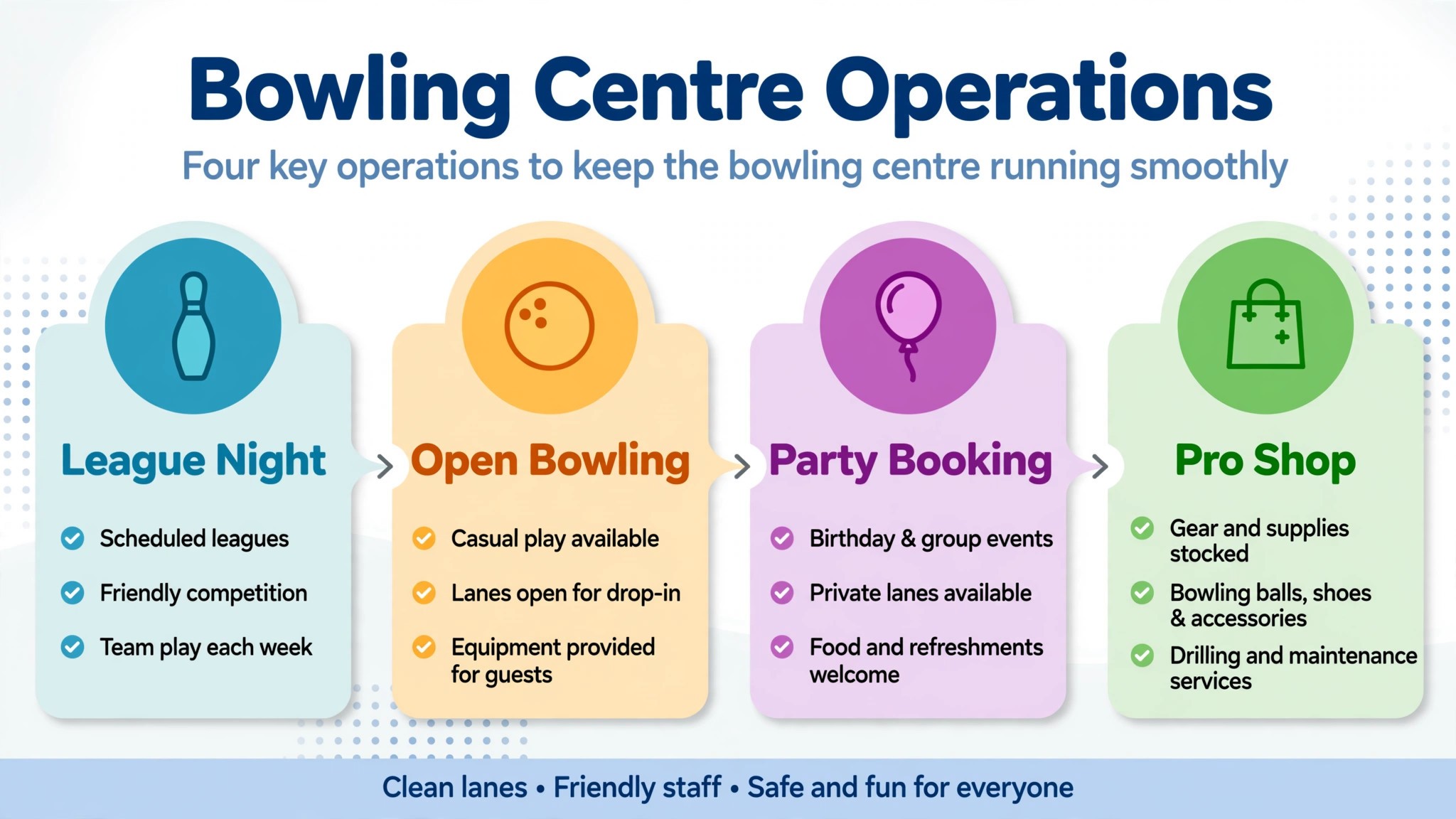
It is Friday night, the lanes are full, a league is arguing about a score, and a birthday party is waiting at the desk because nobody can see which lanes are free. The snack bar queue stretches past the arcade, the phone rings with a booking the front desk has no time to take, and one empty lane sits dark because its booking never arrived. The best software for bowling alleys is the system that keeps the lanes full, the leagues on time, and the parties booked without the front desk juggling paper, and the ten tools below are judged on that Friday night test.
This guide compares ten tools on published prices where they exist, the alley job each one does best and the catch that only shows up after the demo ends. Bowling software comes in three layers, which are scoring and lane management, bookings and point of sale, and the full centre platform, and the question that decides most purchases is whether the software connects to your scoring system. Start with the shortlist, then read the reviews that match the size of your centre.
The Quick Shortlist
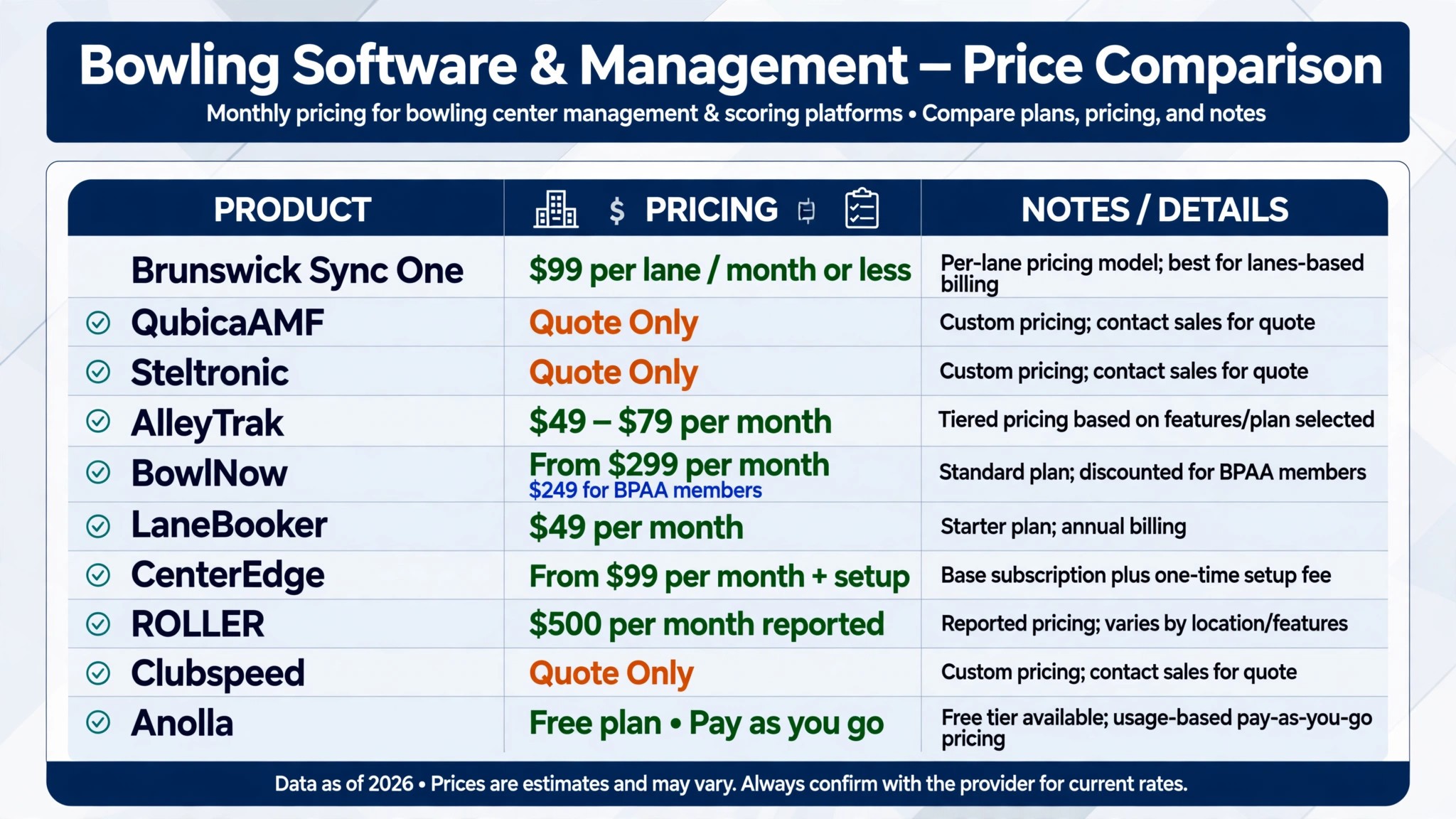
The table below matches each common alley job to the single tool that handles it best. Use it to narrow the best software for bowling alleys to two or three candidates before you read the full reviews. Prices are monthly list prices unless noted, and most vendors bill monthly with no long term contract.
| Job | Best tool | Why it wins |
|---|---|---|
| Full centre platform, scoring plus POS | Brunswick Sync | Sync One from 99 dollars per lane a month or less |
| Scoring and lane control at scale | QubicaAMF | Quote based, one of the big three scoring makers |
| Scoring for modern centres | Steltronic | Quote based, scoring plus lane management |
| Online lane reservations, low price | AlleyTrak | 49 to 79 dollars a month |
| Lane, event and party bookings | BowlNow | From 299 dollars a month, 249 for BPAA members |
| Simple bookings for small venues | LaneBooker | Starter at 49 dollars a month |
| Full centre management, attractions | CenterEdge | From 99 dollars a month plus setup reported |
| Large entertainment centres | ROLLER | From 500 dollars a month reported |
| Attractions plus bowling in one system | Clubspeed | Quote based, built for family entertainment |
| Free to start, pay as you grow | Anolla | Free plan, pay as you go add ons |
How We Judged the Best Software for Bowling Alleys
A tool earned a place here only if it does a real alley job in 2026, not if it added a bowling label to a general booking system. The best software for bowling alleys were judged on five things that decide whether a centre keeps paying after the first year.
First, the alley job it does, from scoring to lane bookings to leagues, because a tool that does one job well beats a platform that does five jobs poorly. Second, whether it connects to your scoring system, because a booking tool that cannot talk to the lanes will double book sooner or later, and a scoring system that cannot talk to the till will lose the snack bar sale.
Third, whether the price is published or hidden behind a sales call, including per lane charges that change the real bill as the centre grows. Fourth, leagues and parties, because a centre that lives on league nights and birthday parties needs software that handles both without a spreadsheet. Fifth, the catch, from hardware bundles that lock you into one vendor to per lane fees that multiply across a large centre.
| Check before you buy | What to ask | Why it matters |
|---|---|---|
| Scoring connection | Does it connect to your scoring system | A mismatch here is expensive to fix later |
| Price structure | Per lane, per month, or hardware bundle | Per lane bills multiply across a centre |
| League support | Standings, schedules and handicaps included | Leagues are the reliable weekly revenue |
| Party bookings | Packages, food and room hire in one order | Parties are the highest margin bookings |
| Food and drink | Order at lane, POS and snack bar in one system | A slow till loses the snack bar sale |
| Contract terms | Monthly or annual, and what year two costs | Annual billing locks the price but not the need |
The 10 Tools, Reviewed One by One
1. Brunswick Sync
Starting price Sync One from 99 dollars per lane a month or less. Best for Full centre platform, scoring plus POS. Watch out The per lane price multiplies across a large centre, so model the full fleet.
Brunswick Sync is described by Brunswick as one cloud based platform unifying scoring, POS, attractions, bookings, marketing and operations, and it earns the top spot for centres that want the whole operation in one system. It handles automatic reservations and seat assignments, real time lane status, order at lane, scoring and the screens above the lanes, plus marketing and the OpenLane app for bowlers. For a centre that wants one vendor for everything, that breadth is the point.
The strength is the bundle. Sync One brings the full Sync platform into a centre for a low monthly fee of 99 dollars per lane or less, instead of a major capital outlay, and the subscription bundles hardware with a lifetime warranty, perpetual software updates, the OpenLane app, 24 hour support and Crown Advantage Platinum, all in one predictable payment. A centre modernising without a large capital investment gets the full platform without buying the hardware outright.
The catch is the per lane maths. At 99 dollars per lane a month, a 24 lane centre pays about 2,400 dollars a month, so a buyer should model the full centre before comparing against a flat price tool. For a Brunswick centre that wants the full platform, Sync earns the top spot, and the traditional purchase route is there for a centre that prefers to own the hardware.
2. QubicaAMF
Starting price Quote based, not published. Best for Scoring and lane control at scale. Watch out Quote only pricing means the bill depends on the centre, so get it in writing.
QubicaAMF is one of the big three scoring makers, alongside Brunswick and Steltronic, and it earns its place for centres that need proven scoring and lane control at scale. Its systems handle automatic scoring, lane control and the screens above the lanes, with front desk and POS features built around the scoring core. For a centre that already runs QubicaAMF lanes, the matching software is the natural choice.
The strength is the installed base. QubicaAMF scoring is proven in centres around the world, and a centre that buys the matching software gets a system designed for its own lanes rather than a generic booking tool bolted onto someone else’s scoring. That fit matters on a busy league night, when scoring must work first time, every time.
The catch is price transparency. QubicaAMF does not publish prices on the pages checked, so a buyer must go through a sales conversation to learn the number. For a QubicaAMF centre that wants scoring and lane control from the maker, it earns its place, and a buyer should confirm what the quote includes before comparing it against Brunswick Sync.
3. Steltronic
Starting price Quote based, not published. Best for Scoring for modern centres. Watch out Quote only pricing means the bill depends on the centre, so get it in writing.
Steltronic is the third of the big three scoring makers, and it earns its place for modern centres that want scoring plus lane management without the full platform overhead of Brunswick Sync. Its systems handle automatic scoring, lane control and overhead screens, with the front desk features a centre needs to run a night. For a centre that wants strong scoring and a lighter software footprint, that focus is the selling point.
The strength is the scoring core. Steltronic is built around the lane, so the scoring, the lane control and the overhead display work as one system rather than as separate products that must be integrated. A centre that values scoring reliability above all will feel that difference on the first league night.
The catch is price transparency. Like QubicaAMF, Steltronic does not publish prices on the pages checked, so a buyer must get a quote in writing. For a centre that runs Steltronic lanes and wants the matching system, it earns its place, and a buyer should check which front desk and POS features the quote includes.
4. AlleyTrak
Starting price 49 to 79 dollars a month. Best for Online lane reservations, low price. Watch out It is a booking layer, not a scoring system, so check the scoring connection.
AlleyTrak is the low price booking pick, with plans from 49 dollars a month for Basic, 59 dollars for Premium and 79 dollars for Ultimate. It covers online lane reservations and payments, multi location scheduling, waivers, SMS and loyalty, with a free trial so a centre can test it on real lanes before paying. For a small alley that wants online bookings without a large monthly bill, that published price is the selling point.
The strength is the price and the shape. A small centre can take lane bookings online for less than the cost of a lane an hour, with reservations, payments and reminders working from day one. Premium adds three locations and three admin users plus analytics and an API, which is enough for a growing centre.
The catch is the layer. AlleyTrak is a booking layer rather than a scoring system, so a centre must check that it connects to its scoring before assuming the two will work together. For a small alley that wants low cost online reservations, AlleyTrak earns its place, and it is the cheapest credible booking tool on this list.
5. BowlNow
Starting price From 299 dollars a month, 249 dollars for BPAA members. Best for Lane, event and party bookings. Watch out The entry price is high for a small alley, so check what it includes.
BowlNow is the booking pick for centres that sell lanes, events and parties from one calendar, with marketing and SMS built in. From 299 dollars a month, or 249 dollars for BPAA members, it covers online lane, event and party bookings, and it says it works with existing POS and scoring systems. For a centre that lives on parties and events, that combination is the selling point.
The strength is the party workflow. A party can be booked online with a package, food and a room, without the front desk taking a phone call, and the marketing tools bring the centre’s quiet nights to the attention of customers who would otherwise forget it exists. That matters for a centre whose best margin comes from parties rather than open bowling.
The catch is the entry price. At 299 dollars a month, BowlNow costs six times AlleyTrak’s starting price, so a small centre should check what the extra money buys before committing. For a centre that sells many parties and events, BowlNow earns its place, and the BPAA member price is worth claiming if the centre is a member.
6. LaneBooker
Starting price Starter at 49 dollars a month, billed annually. Best for Simple bookings for small venues. Watch out It is built for small venues, so a large centre will outgrow it.
LaneBooker is the plug and play booking platform built for small venues, covering bowling alleys, laser tag and golf simulators. Starter costs 49 dollars a month billed annually, Pro 99 dollars and Scale 199 dollars, with smart per person or per lane pricing, brackets, day of week rules and peak hour pricing all configurable. For a small alley that wants honest published pricing, that transparency is the selling point.
The strength is the pricing flexibility. A centre can charge 20 dollars a head dropping to 15 for groups of four or more, or price by the lane at 35 dollars an hour with a bumper lane upcharge for kids parties, all without a spreadsheet. That flexibility matters for a small centre that changes prices by day, by group and by season.
The catch is scale. LaneBooker is built for small venues, so a large entertainment centre with many attractions will need a broader platform. For a small alley that wants simple, honest booking software, LaneBooker earns its place, and it is the best pick for a centre that values published pricing above all.
7. CenterEdge
Starting price From 99 dollars a month plus setup reported. Best for Full centre management, attractions. Watch out Setup is charged separately, so ask for the full first year cost.
CenterEdge is the full centre management pick for alleys that also run attractions, covering bookings, POS, attractions, parties and operations in one system. From 99 dollars a month plus setup reported, it gives a centre the tools to run bowling alongside laser tag, arcade games and food service without a separate system for each. For a family entertainment centre with bowling as one attraction among many, that breadth is the selling point.
The strength is the attraction model. A centre can sell a bowling lane, a laser tag session and a party package in one order, track the whole visit in one system, and see which attractions make money and which do not. That matters when bowling is one revenue line among several and the centre needs to see the whole picture.
The catch is the setup cost. The monthly price is fair, but setup is charged separately, so a buyer should ask for the full first year cost before comparing it against a tool with no setup fee. For a family entertainment centre, CenterEdge earns its place, and it is the best pick when bowling shares the building with other attractions.
8. ROLLER
Starting price From 500 dollars a month reported. Best for Large entertainment centres. Watch out The price is high for a small alley, so it suits large centres only.
ROLLER is the large centre pick, built for entertainment venues that need bookings, POS, memberships, parties and reporting at scale. From 500 dollars a month reported, it covers the whole operation for a centre with many attractions, many staff and many visitors a day. For a large entertainment centre, that scale is the selling point.
The strength is the platform. ROLLER handles the complexity of a large venue, from online bookings and waivers to memberships and gift cards, with reporting that shows a manager which attractions and which days make money. A large centre that runs on ROLLER gets one system for the whole building rather than a patchwork of tools.
The catch is the price. At 500 dollars a month reported, ROLLER is the most expensive tool on this list for a small alley, and a centre with a handful of lanes should not pay it. For a large entertainment centre, ROLLER earns its place, and it is the wrong pick for a small alley that needs simple booking software.
9. Clubspeed
Starting price Quote based, not published. Best for Attractions plus bowling in one system. Watch out Quote only pricing means the bill depends on the centre, so get it in writing.
Clubspeed is the attractions pick, built for family entertainment centres that run bowling alongside go karts, laser tag and arcade games. It covers bookings, POS, timing, memberships and reporting in one system, with the attraction management that a pure bowling tool does not offer. For a centre where bowling is one attraction among many, that breadth is the selling point.
The strength is the timing and racing model. Clubspeed handles the timed sessions, leaderboards and race results that attractions need, alongside the lane bookings and party packages that bowling needs, so the whole centre runs on one clock. That matters on a busy Saturday, when every attraction needs to turn over on time.
The catch is price transparency. Clubspeed offers a custom quote, so a buyer must go through a sales conversation to learn the number. For a family entertainment centre with many attractions, Clubspeed earns its place, and a buyer should compare its quote against CenterEdge and ROLLER before signing.
10. Anolla
Starting price Free plan, pay as you go add ons. Best for Free to start, pay as you grow. Watch out The Plus package price depends on lanes and blocks, so confirm it in writing.
Anolla closes the list as the free to start pick, with a free plan that lets a bowling alley test lane scheduling, online booking and automated confirmation emails without paying. Its pay as you go billing for add ons and transactions means costs rise only with actual lane usage, which suits a seasonal alley that does not want a high fixed fee in the quiet months. For a small centre that wants to test before it pays, that model is the selling point.
The strength is the flexibility. Lane blocks adjust by group size, game speed, league rounds and party packages, and dynamic pricing responds to demand, time of day, weekday, VIP lanes and promotions. A centre can start free, learn the system, and pay for the Plus package when the volume justifies it.
The catch is the Plus pricing. The monthly price for the Plus package is based on the current price list and the number of active lanes and lane blocks, so a buyer should confirm it in writing before budgeting. For a small or seasonal alley, Anolla earns its place as the best free start on this list, and it is the easiest way to test bowling software without a monthly bill.
Side by Side Comparison
The table below puts the best software for bowling alleys side by side on price, best job and free plan, so you can compare the published prices against the quote only tools at a glance.
| Tool | Starting price | Best for | Free plan |
|---|---|---|---|
| Brunswick Sync | 99 dollars per lane a month | Full centre platform, scoring plus POS | Trial only |
| QubicaAMF | Quote only | Scoring and lane control at scale | Trial only |
| Steltronic | Quote only | Scoring for modern centres | Trial only |
| AlleyTrak | 49 to 79 dollars a month | Online lane reservations, low price | Trial only |
| BowlNow | From 299 dollars a month | Lane, event and party bookings | Trial only |
| LaneBooker | 49 dollars a month | Simple bookings for small venues | Trial only |
| CenterEdge | From 99 dollars a month | Full centre management, attractions | Trial only |
| ROLLER | From 500 dollars a month reported | Large entertainment centres | Trial only |
| Clubspeed | Quote only | Attractions plus bowling in one system | Trial only |
| Anolla | Free plan | Free to start, pay as you grow | Yes |
How to Pick the Right Tool for Your Centre
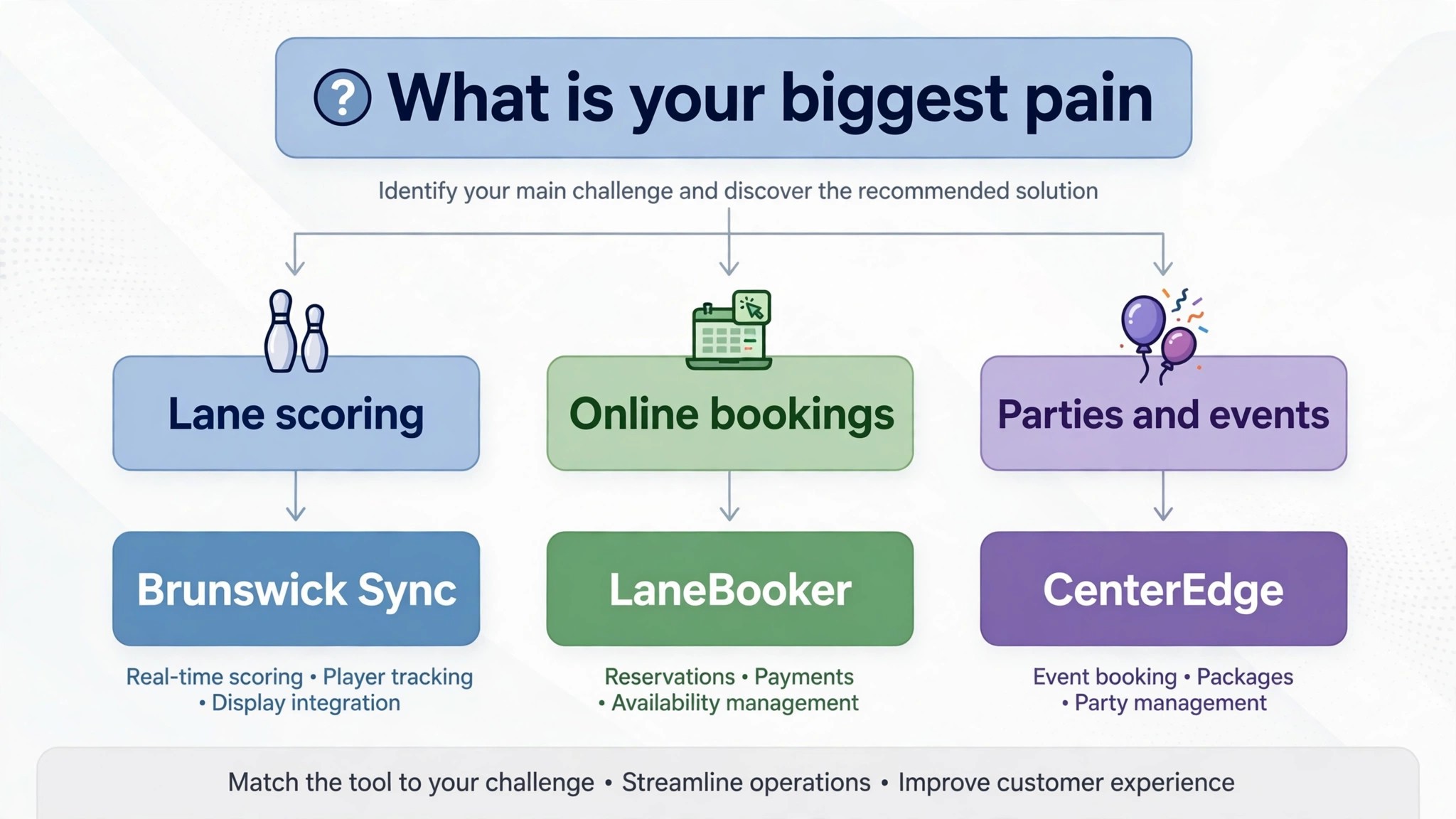
The best software for bowling alleys is not the one with the longest feature list. It is the one that fixes the leak in your centre. A centre losing bookings to a slow checkout should buy AlleyTrak or LaneBooker. A centre losing league nights to scoring arguments should buy Brunswick Sync or the scoring system that matches its lanes. A centre that lives on parties should buy BowlNow. A large entertainment centre should buy CenterEdge or ROLLER. Start from the leak, not from the vendor homepage.
Budget the full bill, not the headline price. The table below shows what a 12 lane centre actually pays in year one for the most common combinations, using published or reported starting prices. Per lane charges, hardware bundles and setup fees are the lines that surprise buyers, so ask for them in writing before you sign, and remember that Brunswick Sync One at 99 dollars per lane a month costs about 1,200 dollars a month for a 12 lane centre.
| Stack for a 12 lane centre | Monthly cost | What it covers |
|---|---|---|
| AlleyTrak Premium | 59 dollars | Online reservations and payments |
| LaneBooker Pro | 99 dollars | Simple bookings plus advanced ops |
| BowlNow | From 299 dollars | Lanes, events and parties |
| Brunswick Sync One, 12 lanes | About 1,188 dollars | Full platform, hardware included |
| CenterEdge | From 99 dollars plus setup | Full centre management |
| Anolla free plus pay as you go | Free to start | Lane scheduling, pay for usage |
Frequently Asked Questions
What is the cheapest good software for bowling alleys to start with
Anolla is the cheapest credible start, with a free plan covering lane scheduling, online booking and confirmation emails. AlleyTrak from 49 dollars a month and LaneBooker Starter at 49 dollars a month are the cheapest paid picks for online reservations, and both publish their prices. Start with the alley job that loses you the most money each month, and add a second tool only when the first one cannot do a job you are paid to do. That is the cheapest way to choose from the best software for bowling alleys without paying for features your centre never uses.
Do I need new scoring, or can I keep my current scoring system
You can usually keep it, and any vendor that says you must replace scoring to use their booking tool should be treated with caution. The best software for bowling alleys connects to the scoring system you already own, whether that is Brunswick, QubicaAMF or Steltronic, because the scoring is the most expensive part of the centre to replace. Check the connection before you sign, because a booking tool that cannot talk to your lanes will double book sooner or later, and a mismatch here is expensive to fix after the contract is signed.
Which tool is best for a small alley with a few lanes
AlleyTrak and LaneBooker are the strongest picks for a small alley, because both start at 49 dollars a month with published prices and cover online reservations without a large monthly bill. Anolla is the best free start, with a free plan and pay as you go pricing that suits a seasonal alley. Price the full year, not one month, and trial the booking flow as a bowler would see it before you commit.
How much should a small alley budget for bowling software
A realistic year one budget is 50 to 100 dollars a month for a booking tool such as AlleyTrak or LaneBooker, and 300 to 500 dollars a month once you add party bookings with BowlNow or a full centre platform. A 12 lane centre on Brunswick Sync One pays about 1,188 dollars a month, while the same centre on AlleyTrak Premium pays 59 dollars a month for bookings alone. Budget for the stack, not for one tool, and check the hardware, setup and per lane charges before you compare, because those lines change the real cost more than the monthly price does.
Our Verdict
If you buy one tool this quarter, buy AlleyTrak if you need bookings and Brunswick Sync if you need the full platform. AlleyTrak is the best value on this list for a small alley, with plans from 49 dollars a month, online reservations, payments and a free trial. Brunswick Sync is the industry standard for a centre that wants scoring, POS, bookings, marketing and operations in one platform, with Sync One from 99 dollars per lane a month or less including hardware. The best software for bowling alleys earns its keep by filling lanes and running league nights without arguments, and both of these do that from the first week.
Whatever you pick, start with the leak, trial with real bowlers, and check the scoring connection before you sign. The tools on this list all work. The difference is whether the tool matches the centre you actually run, and whether you measure the return in lanes filled and parties booked rather than in features used.