
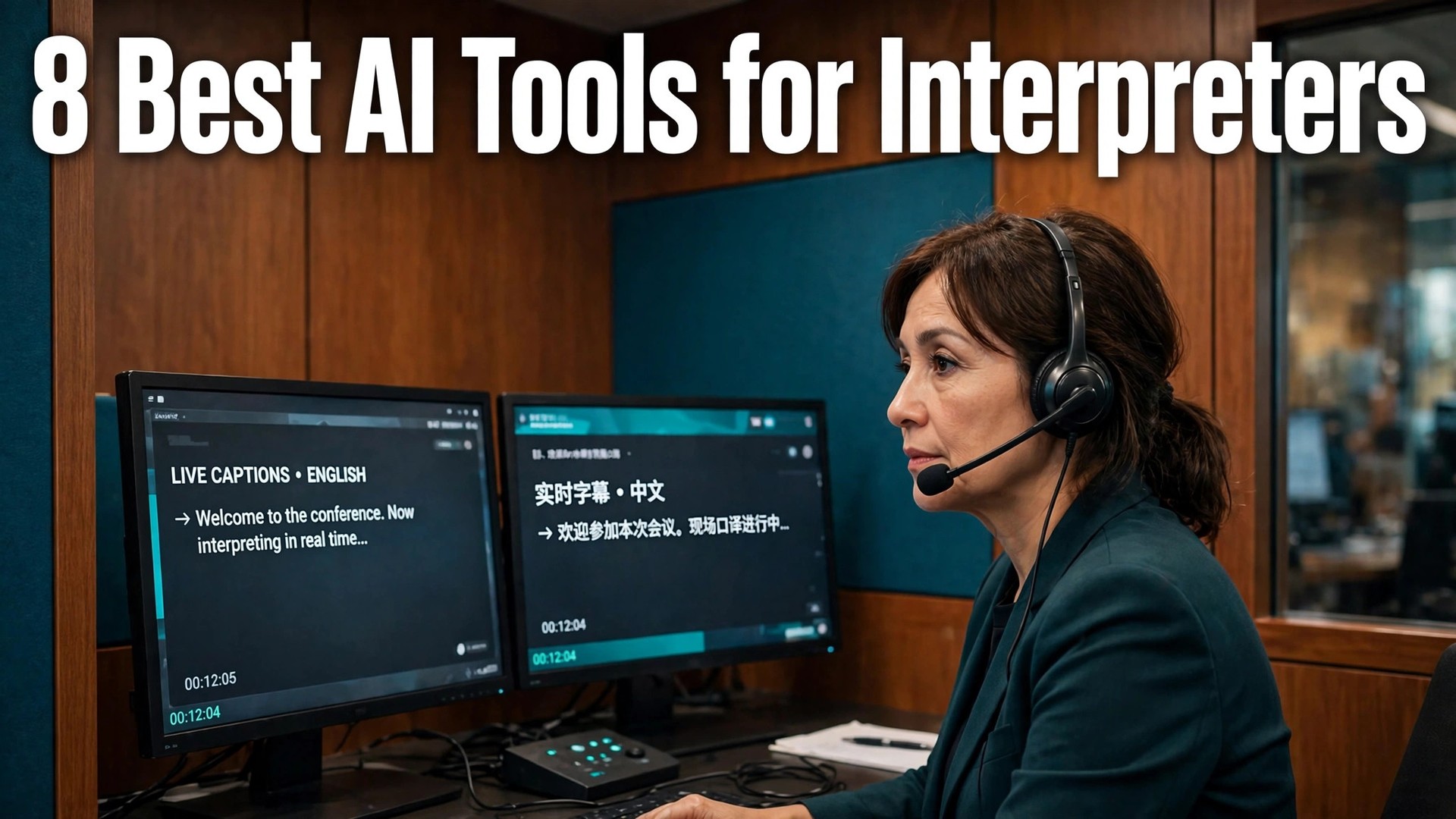
A doctor who cannot understand her patient cannot treat her properly, and a judge who cannot understand a witness cannot hear the case fairly. In both rooms, the interpreter is the bridge, and the bridge must be accurate, fast and invisible. The best ai tools for interpreters do not replace that bridge, they strengthen it, by transcribing the speech, suggesting the right term and catching the number that was spoken too fast to hear.
This guide compares eight tools on published prices, the interpreting job each one does best and the catch that only shows up after the trial ends. All interpreting work prices below are published starting prices as of late 2026, and annual billing is noted where it changes the number. Where a vendor publishes no price, this guide says so plainly instead of guessing, because professional interpreting platforms are sold on a quote and the number depends on minutes and languages.
An interpreter does not need eight tools. One live platform plus one translation aid covers most interpreting work, and a third tool only earns its place when it fixes a specific weekly pain, such as medical terminology or conference captions. Each review below names the daily interpreting job its tool does best, so pick two and stop shopping.
Every Tool, One Row Each
The table below matches each common interpreting task type to the single tool that handles it best. Use it to narrow the best ai tools for interpreters to two or three candidates before you read the full reviews. Monthly list prices apply unless noted, and annual billing usually beats monthly billing for interpreting teams.
| Job | Best tool | Why it wins |
|---|---|---|
| Conferences and live events | Interprefy | The strength is the event fit. An organizer can run a conference… |
| Large multilingual meetings | KUDO | The strength is scale. A meeting with a thousand attendees in ten… |
| Live captions without an interpreter | Wordly | The strength is the instant caption. An attendee who speaks another language… |
| On-demand interpreting for agencies | Boostlingo | The strength is the network. An agency can offer an interpreter in… |
| Medical and legal interpreting | LanguageLine | The strength is the coverage. A hospital that needs an interpreter at… |
| On-demand video interpreting | Jeenie | The strength is the video connection. A patient who can see the… |
| Accurate written translation | DeepL | The strength is the translation quality. A document translated in DeepL needs… |
| Everyday translation in many languages | Google Translate | The strength is the coverage and the price. A traveler or a… |
How We Chose the 8 Best AI Tools for Interpreters
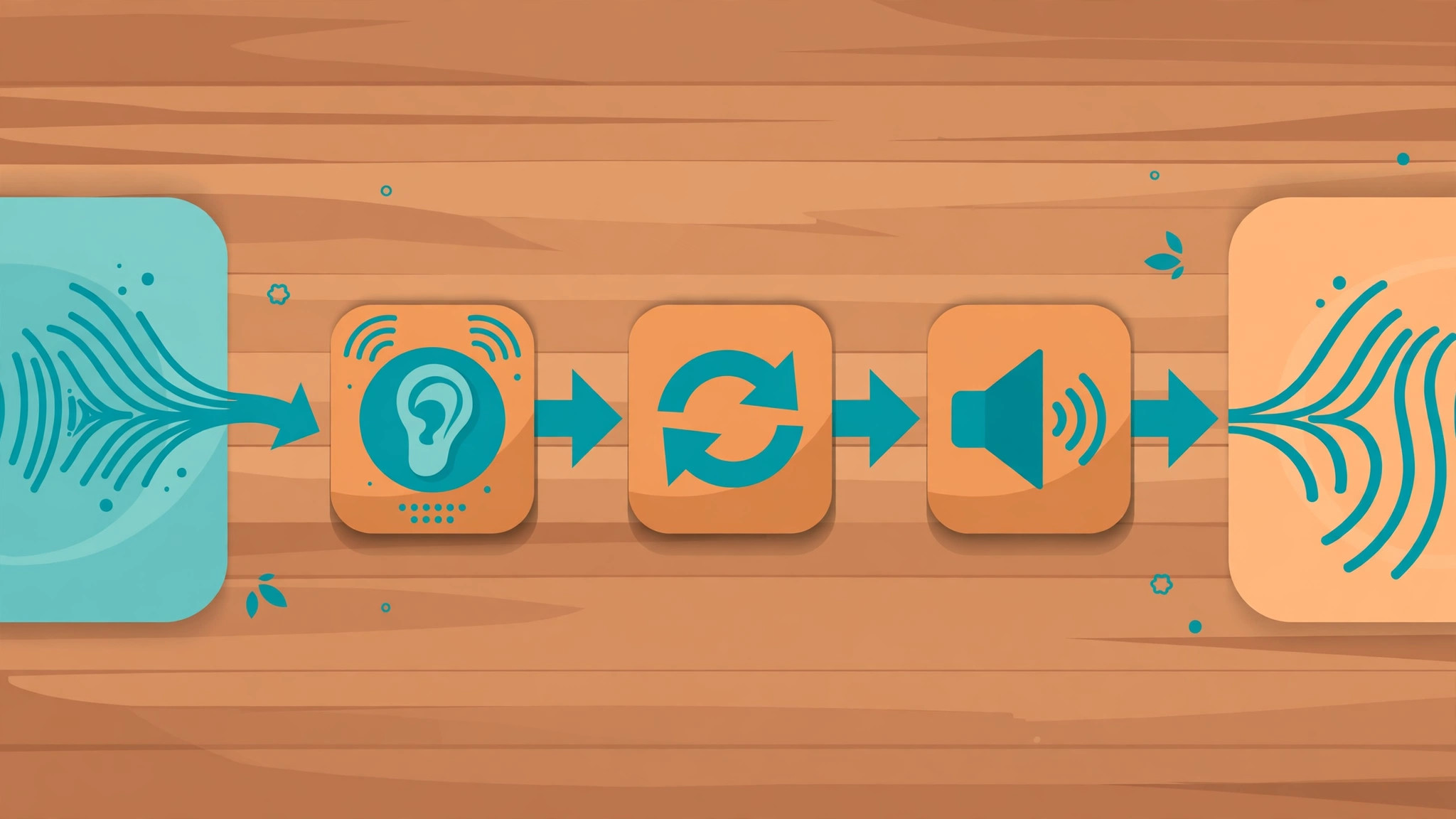
A tool earned a place here only if it does a real interpreting job in 2026, not if it added an AI label to an old phrasebook. The best ai tools for interpreters were judged on five things that decide whether an interpreter keeps paying after the first year.
First, the job it does, because interpreting teams get more from a tool that does one interpreting main task well than from a platform that does five poorly. Second, whether the price is published and how it scales, including per-seat charges that change the real bill as interpreters grow. Third, output quality, because a tool that gets the interpreting work detail wrong costs more in lost trust than the subscription saves.
Fourth came ease of use, since interpreters abandon an interpreting tool option that needs a week of training before its first result. Fifth came the catch, from free plans that limit the core feature to quote-only pricing that hides the real interpreting work cost until the sales call.
| Check before you buy | What to ask | Why it matters |
|---|---|---|
| Accuracy | Whether the transcription and translation match the speaker | One wrong number can change a diagnosis or a verdict |
| Latency | How fast the translation arrives after the speech | Slow translation breaks the conversation |
| Terminology | Whether it handles medical, legal and technical terms | Generic translation fails on the words that matter most |
| Language coverage | How many languages and accents it handles well | Rare pairs need a human, not a machine |
| Total cost | Published price plus per-minute charges | Quote-only tools need a budget call before a trial |
Each Tool, Reviewed
1. Interprefy
Starting price Pricing on request. Best for Conferences and live events. Watch out Quote-only pricing, so small events need a sales call. Interprefy is the conference interpreting platform, connecting live events with remote interpreters and delivering captions to the audience. It suits conferences, summits and corporate events, because the platform handles many languages at once and the audience listens in their own language. The AI features add live captions and transcription.
The strength is the event fit. An organizer can run a conference in five languages without five booths, because the interpreters work remotely and the audience listens on their phones. That remote model cuts the cost and the logistics of a traditional setup. Interprefy also includes AI captions, so the audience can read along as well as listen. That caption layer helps attendees who are deaf or who prefer to read, and it is the feature that makes the event accessible.
Pick Interprefy when the work is conferences and live events. Ask for a quote with your event size and language count, and trial it on a small event before a large one.
Before the first payment, check how long the interpreting trial run runs and how cancellation works, since a hard-to-cancel tool costs more than its monthly price.
2. KUDO
Starting price Pricing on request. Best for Large multilingual meetings. Watch out Quote-only pricing, so interpreters face an enterprise sales process. KUDO is the multilingual meeting platform, offering live interpretation and captions for large meetings and events. It suits organizations that run meetings in many languages, because the platform handles the interpreters, the audio and the captions in one place. The AI features add transcription and terminology support.
The strength is scale. A meeting with a thousand attendees in ten languages is routine in KUDO, while the same meeting would strain a simpler tool. That scale is the reason large organizations choose it for their global events. KUDO also supports on-demand interpreters, so a meeting can add a language without booking weeks ahead. That flexibility matters when the attendee list changes late, which it usually does.
Pick KUDO when the meetings are large and multilingual. Expect a quote and a proper onboarding, and bring the language list to the first demo.
Before the first payment, check how long the interpreting trial period runs and how cancellation works, since a hard-to-cancel tool costs more than its monthly price.
3. Wordly
Starting price Pricing on request. Best for Live captions without an interpreter. Watch out It captions, it does not replace a human interpreter. Wordly is the live captioning tool, translating speech into captions in many languages in real time. It suits meetings and events that need captions without booking an interpreter for every language, because the AI handles the translation instantly. The pricing is on request, and it follows the minutes used.
The strength is the instant caption. An attendee who speaks another language can read the meeting as it happens, without waiting for a human interpreter to be booked. That instant access is the reason teams choose Wordly for internal meetings. Wordly also supports many languages at once, so the same meeting can caption in ten languages simultaneously. That breadth is unusual, and it is the feature that makes the tool useful for global teams.
Pick Wordly when the job is captions for a meeting, not a full interpreting service. Trial it on a recorded meeting first, and check the accuracy on your language pair before going live.
Before the first payment, check how long the interpreting trial itself runs and how cancellation works, since a hard-to-cancel tool costs more than its monthly price.
4. Boostlingo
Starting price Pricing on request. Best for On-demand interpreting for agencies. Watch out Quote-only pricing, so small agencies serving interpreters need a sales call. Boostlingo is the on-demand interpreting platform for language service providers, connecting clients with interpreters by phone, video or in person. It suits agencies that manage many interpreters, because the platform handles scheduling, billing and quality in one place. The AI features help with matching and with transcription.
The strength is the network. An agency can offer an interpreter in minutes, at any hour, because the platform holds a large pool of qualified interpreters. That availability is the reason agencies choose Boostlingo over a phone list. Boostlingo also includes video remote interpreting, so a hospital or a court can connect to an interpreter without waiting for one to arrive. That speed matters in settings where the need is urgent.
Pick Boostlingo when the work is on-demand interpreting at scale. Ask for a quote with your volume stated, and trial the video connection on real calls.
Before the first payment, check how long the interpreting free trial runs and how cancellation works, since a hard-to-cancel tool costs more than its monthly price.
5. LanguageLine
Starting price Pricing on request. Best for Medical and legal interpreting. Watch out Quote-only pricing with an enterprise sales process for interpreters. LanguageLine is the large interpreting provider, offering phone, video and in-person interpreters in hundreds of languages. It suits hospitals, courts and government agencies, because the interpreters are qualified for the setting and available around the clock. The AI features add transcription and terminology support.
The strength is the coverage. A hospital that needs an interpreter at 3 a.m. in a rare language can get one, because the network is large and always on. That reliability is the reason institutions trust LanguageLine with the cases that matter most. LanguageLine also handles the compliance and quality checks, so the institution does not manage the interpreter pool itself. That management is the value for a hospital or a court with no time to vet interpreters.
Pick LanguageLine when the setting is medical or legal and the interpreter must be qualified. Expect a quote and a proper agreement, and check the language coverage for your region first.
Before the first payment, check how long the free interpreting trial runs and how cancellation works, since a hard-to-cancel tool costs more than its monthly price.
6. Jeenie
Starting price Pricing on request. Best for On-demand video interpreting. Watch out Pricing is quote-only, which slows down comparison. Jeenie is the on-demand video interpreting platform, connecting users with interpreters by video in minutes. It suits healthcare and social services, because the video connection shows the interpreter and the patient together. The AI features help with scheduling and with matching the right interpreter.
The strength is the video connection. A patient who can see the interpreter trusts the conversation more, and the interpreter can read the patient’s expression. That visual link is the reason video beats phone for sensitive conversations. Jeenie also offers a large language pool, with interpreters available around the clock. That availability matters in healthcare, where the need does not wait for office hours.
Pick Jeenie when the work needs video interpreting on demand. Ask for a quote with your volume stated, and trial the video quality on real calls before signing.
Before the first payment, check how long the hands-on interpreting trial runs and how cancellation works, since a hard-to-cancel tool costs more than its monthly price.
7. DeepL
Starting price From 8.74 dollars a month per user. Best for Accurate written translation. Watch out It translates text, it does not interpret live speech. DeepL is the written translation pick, with accuracy that professionals trust for documents, emails and websites. It suits interpreters and translators who need a reliable first draft, because the output reads naturally and the terminology is usually right. The Pro plan from 8.74 dollars a month per user adds the full features.
The strength is the translation quality. A document translated in DeepL needs less editing than one from a generic tool, and the tone stays professional. That quality is the reason translators use DeepL as the first step, not the last. DeepL also includes a glossary, so a team can fix the translation of key terms once and have it applied every time. That glossary is the feature that keeps a long document consistent.
Pick DeepL when the work is written translation that must be accurate. Trial the Pro plan on your real documents, because the quality shows up fastest on your own text.
Before the first payment, check how long the full interpreting trial runs and how cancellation works, since a hard-to-cancel tool costs more than its monthly price.
8. Google Translate
Starting price Free. Best for Everyday translation in many languages. Watch out Accuracy falls on rare pairs and technical terms. Google Translate is the free translation pick, covering more than a hundred languages for text, speech and images. It suits everyday conversation and quick checks, because it is free and always available. The AI handles the common pairs well, and the camera feature translates signs and documents on the spot.
The strength is the coverage and the price. A traveler or a worker who needs a quick translation can get one in seconds, in a language pair a paid tool may not cover. That breadth is the reason Google Translate is the first tool most people open. Google Translate also works offline with downloaded languages, which matters in places with no signal. That offline mode is the feature that saves the day on a trip or in a building with poor coverage.
Pick Google Translate as the free first check for any translation, and pair it with DeepL for work that must be accurate. No budget decision is needed, because this interpreting work start costs nothing.
Before the first payment, check how long the interpreting trial window runs and how cancellation works, since a hard-to-cancel tool costs more than its monthly price.
Side by Side on Price and Fit
The table below puts the best ai tools for interpreters side by side on price, best job and free plan, so you can compare the published prices against the per-seat tools at a glance.
The cheapest way to read the table for interpreting teams is by interpreting job type, not by price. A tool that costs 5 dollars a month and cannot do the job is more expensive than a tool that costs 20 dollars and does it well, because the rework eats an hour on every interpreting task daily. Read the best for column first, then check the price, and the right tool is usually obvious for interpreters in under a minute.
| Tool | Starting price | Best for | Free plan |
|---|---|---|---|
| Interprefy | Pricing on request | Conferences and live events | No |
| KUDO | Pricing on request | Large multilingual meetings | No |
| Wordly | Pricing on request | Live captions without an interpreter | No |
| Boostlingo | Pricing on request | On-demand interpreting for agencies | No |
| LanguageLine | Pricing on request | Medical and legal interpreting | No |
| Jeenie | Pricing on request | On-demand video interpreting | No |
| DeepL | From 8.74 dollars a month per user | Accurate written translation | No |
| Google Translate | Free | Everyday translation in many languages | Yes |
Best Pick by Job
The table below is the fastest way to use this interpreting work guide. Match the interpreting work job to its named tool and trial that one first, for interpreters. The best ai tools for interpreters are not ranked by price here, they are matched by fit, because the cheapest tool that cannot do your job is the most expensive mistake on this list.
| Job | Best tool | Why it wins |
|---|---|---|
| Conferences and live events | Interprefy | The strength is the event fit. An organizer can run a conference… |
| Large multilingual meetings | KUDO | The strength is scale. A meeting with a thousand attendees in ten… |
| Live captions without an interpreter | Wordly | The strength is the instant caption. An attendee who speaks another language… |
| On-demand interpreting for agencies | Boostlingo | The strength is the network. An agency can offer an interpreter in… |
| Medical and legal interpreting | LanguageLine | The strength is the coverage. A hospital that needs an interpreter at… |
| On-demand video interpreting | Jeenie | The strength is the video connection. A patient who can see the… |
| Accurate written translation | DeepL | The strength is the translation quality. A document translated in DeepL needs… |
| Everyday translation in many languages | Google Translate | The strength is the coverage and the price. A traveler or a… |
Checks Before the First Payment
Before the trial converts, interpreters should read the contract, since the pricing page rarely shows the whole interpreting work bill. Check per-user, per-seat or per-action billing for interpreting teams, and whether the annual price locks for one year or two. Ask what five more people do to the bill, because a per-seat tool cheap for three users can double before the year ends for interpreting teams. Vendors that answer in writing earn the interpreting work subscription.
Trial on real interpreting work for interpreters, never on vendor demo data. Load the team’s own files, clients and questions, and time the core interpreting daily task from start to finish. Fast on demo data and slow on real interpreting work means the fit is wrong. Note every error, slow step and call for help, because those notes are the real review for interpreting teams.
Before loading anything important, interpreters should ask how live interpreting data leaves the tool. A good tool exports the full interpreting work record in a standard format, free and without a support ticket. One that locks data in or charges to release it owns the team’s interpreting work after a month. Test the export on trial day one, while the core interpreting figures is small, so month twelve holds no surprises for interpreting teams.
Test the support before interpreting teams need it, because support quality only matters for interpreting work on the day something breaks. Send one real question during the trial and time the reply, then judge whether the answer actually solved the interpreting work problem. A vendor that replies in an hour with a fix is worth more to interpreting teams than a vendor that replies in a day with a link to a help page. Support is part of the price, even when it is not listed on the pricing page for interpreters.
Putting It Together: A First-Week Interpreting Workflow
A list of tools is only useful when it turns into a decision, so here is a four-week plan for testing the best ai tools for interpreters on real work before you pay for a year. The plan is deliberately slow, because a rushed interpreting free trial tells nothing and a careful one tells everything.
Week one is the assignment list, not the software. List the ten assignment types that come up most often, then check each tool against that list before you trial anything. A tool that cannot handle your most common language pair will fail in week two, and no feature list fixes that. Trial the tool on a recorded session, not a live one, so a mistake costs nothing.
Week two is the accuracy test. Run the tool on three recorded sessions, one clear, one fast and one with background noise, and count the errors in numbers, names and key terms. If the error rate is under 2 percent on the clear session, the tool works. If it is over 5 percent, the engine is too weak for professional use, and a second week of testing is cheaper than a second tool.
Week three is the terminology test. Load the glossary for one assignment type, medical or legal, and check whether the tool uses the right terms. A tool that translates a medical term correctly is a professional aid, and a tool that guesses is a risk. Record the terms it missed, because that list is the training the tool still needs.
Week four is the decision. Keep the tool only if the accuracy held, the terminology matched, and the latency stayed low enough to follow the conversation. If the tool only moved the work from listening to fixing AI errors, the language pair was too hard for the engine, and a human-only workflow is the honest answer for that pair. Roll it out to one more assignment type only after the first type is steady.
What Readers Ask
What is the cheapest good interpreting tool to start with
Google Translate is the cheapest credible start, because it is free and covers everyday conversation in many languages. DeepL Pro starts at 8.74 dollars a month per user for accurate written translation. Start with the interpreting job you do most each week, and add a specialist only when the general tool cannot do a job you are paid to do.
Can AI replace a human interpreter
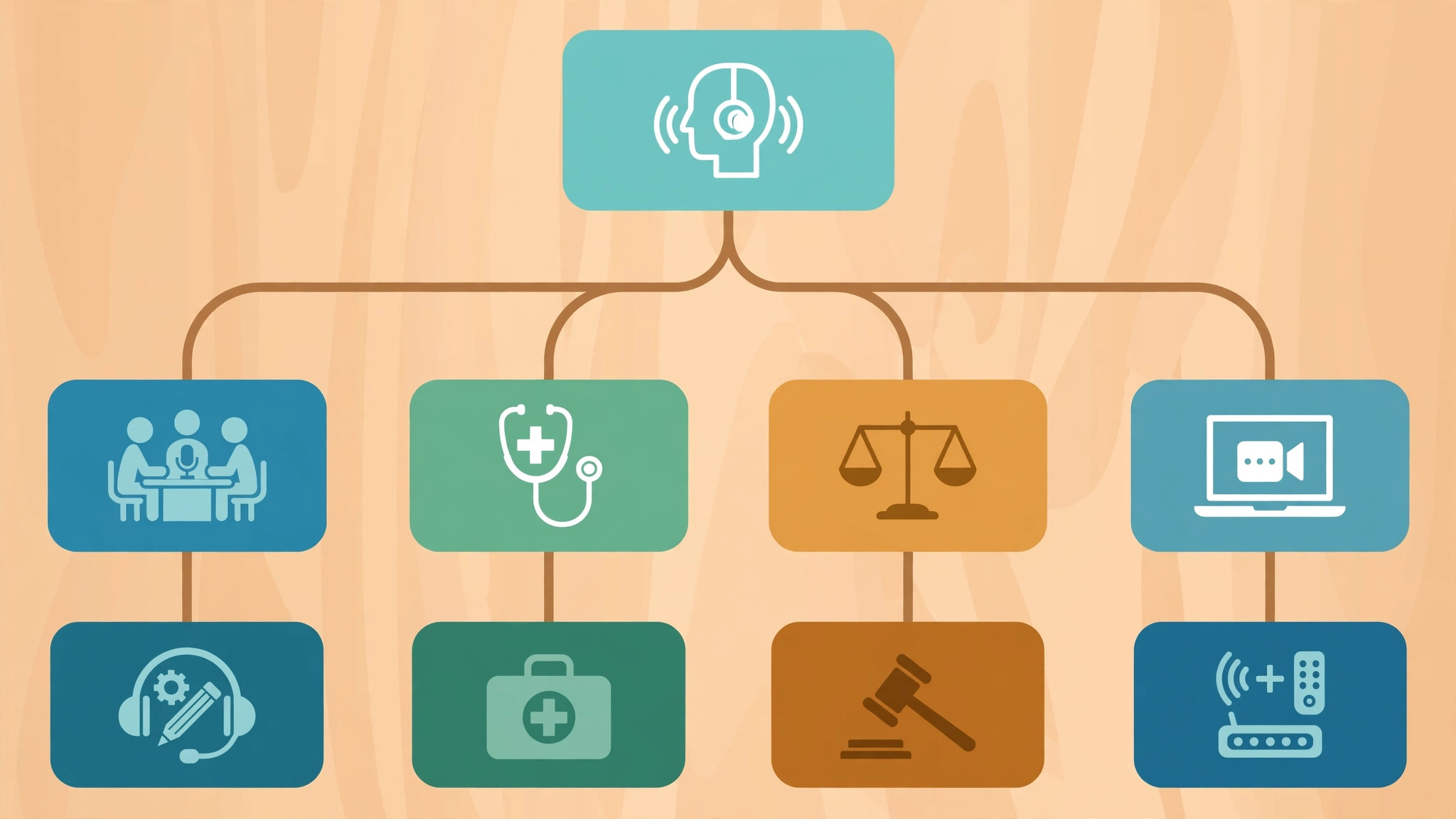
No — none of the tools on this list makes that claim. AI handles the transcription, the term suggestion and the first draft, while the person handles the meaning, the tone and the judgment. The best ai tools for interpreters are the ones that give the interpreter more time to listen, and a tool that promises to replace the interpreter is one to avoid in any setting where accuracy matters.
How accurate is AI live translation in 2026
AI live translation is accurate for clear speech in common language pairs, and it struggles with fast speech, accents, background noise and rare pairs. The error rate matters most on numbers, names and key terms, which is why professional interpreters check the AI output rather than trusting it. The accuracy improves every year, but the human check remains the standard in medical and legal settings.
Do interpreting tools work for sign language
Most tools on this list handle spoken language, not sign language, and sign language interpreting needs a human interpreter. Some research tools are beginning to recognize sign, but none on this list is ready for professional sign work. A client who needs sign language should book a qualified sign interpreter, not an AI tool.
What is the difference between translation and interpreting
Translation works with written text, while interpreting works with spoken language in real time. DeepL and Google Translate handle written translation well, and Interprefy, KUDO and Wordly handle live interpreting. An interpreter needs the live tool, and a translator needs the written one, and the two jobs use different skills even when the languages are the same.
Which tool is best for conference interpreting
Interprefy is the strongest choice for conferences, because it is built for live events with remote interpreters and audience captions. KUDO is the best option for large multilingual meetings, and Wordly suits teams that need captions without booking an interpreter. Price the combination, not one tool, and confirm the current plan limits before you sign, because per-minute charges sit on different tiers across these tools.
Our Recommendation
If you buy one tool this quarter, buy Interprefy if the work is conferences and live events, and buy DeepL Pro if the work is written translation that must be accurate. Interprefy is the best conference pick on this list, with live interpreting and captions built for events. DeepL Pro is the best value for written work at 8.74 dollars a month per user, with translation quality that professionals trust.
Whatever you pick, start with the assignment list, trial on recorded sessions, and keep a human ear on every AI translation before it reaches the listener. The tools on this list all work. The difference is whether the tool matches the language pair and the setting you actually work in, and whether you measure the return in accuracy gained rather than in minutes saved. The tools that are still in your stack a year from now are the ones that caught a term you would have missed, and that is the test every purchase on this list has to pass.
The best ai tools for interpreters that earn a permanent place are the ones that prove their value in the first month, not the ones with the longest feature list.
That first-month proof is what separates the best ai tools for interpreters worth keeping from the ones that look good in a demo and gather dust after.