

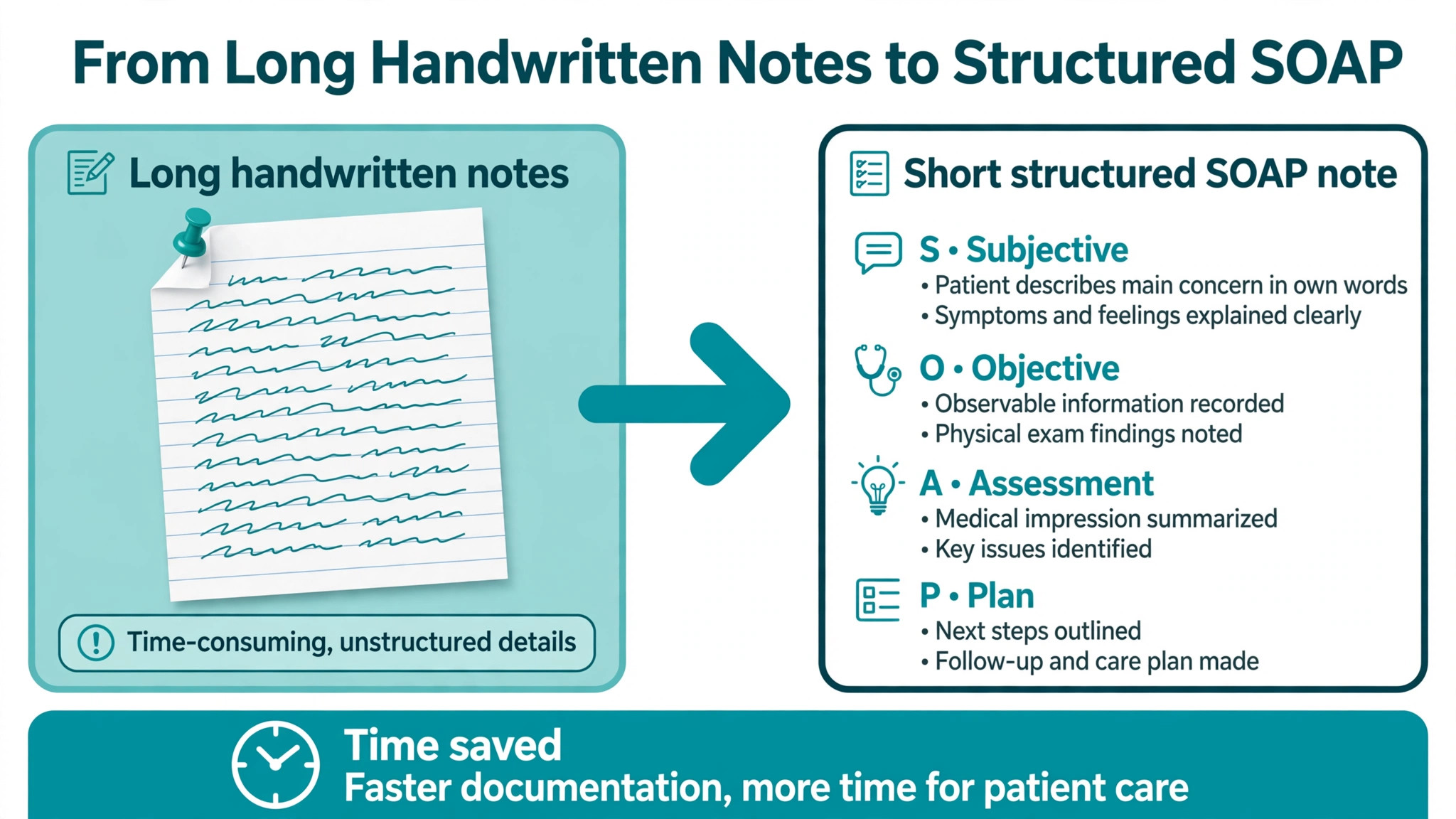
A forty patient day used to mean ninety minutes of notes after close. With an ambient scribe in the room, that same day now means fifteen. The best ai tools for chiropractors exist because documentation, not adjusting, is the work that steals the evening, and the clinic that fixes it treats more patients without hiring another doctor.
This guide compares five tools on published prices where they exist, the job each one does best and the catch that only shows up after the contract is signed. Most chiropractic platforms sell by quote or by provider, so where a price is reported by a third party roundup rather than published by the vendor, this guide says so. Start with the shortlist, then read the reviews that match the problem your clinic feels most.
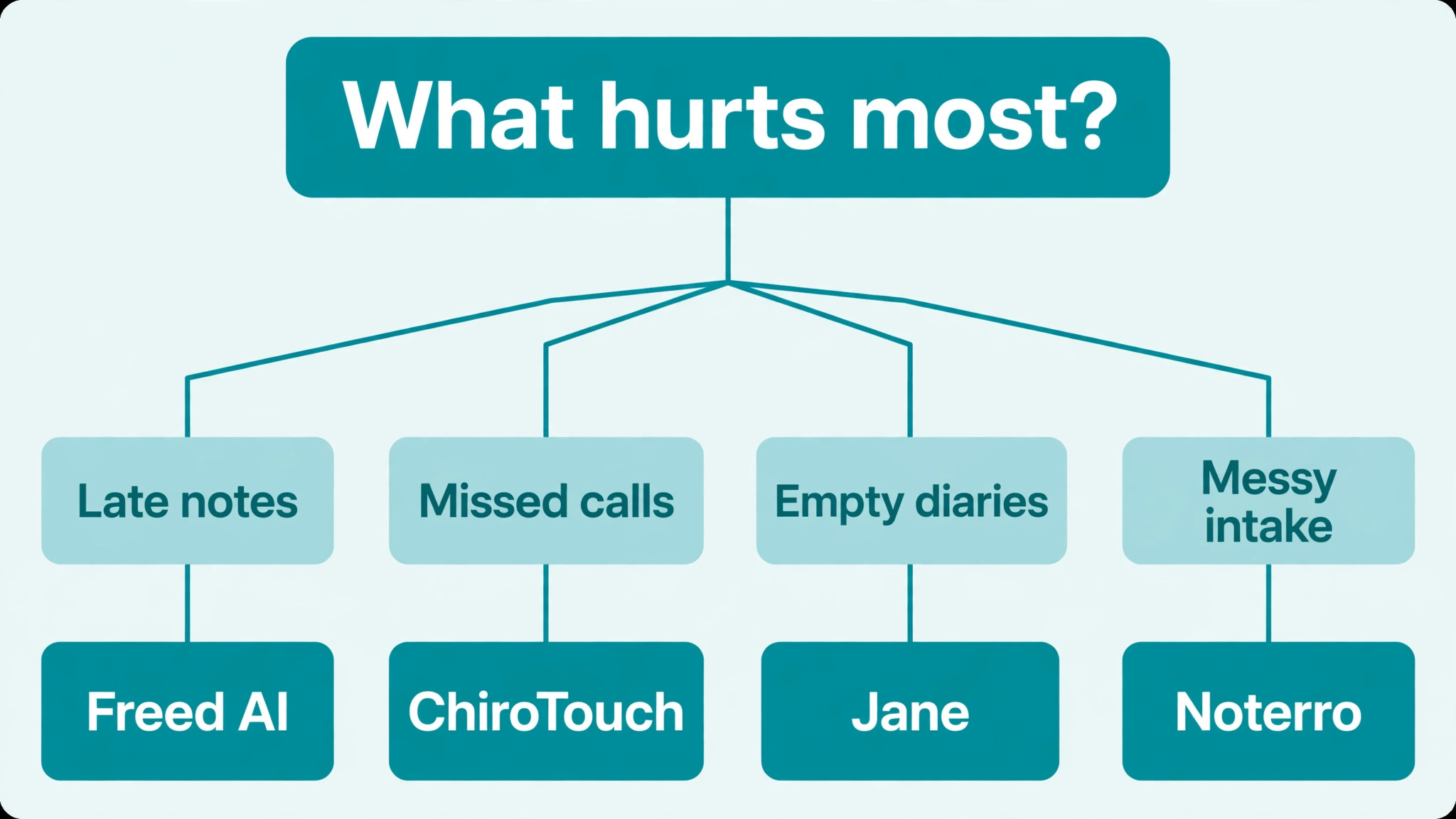
The pattern across all five is simple. The tools that win are the ones that turn a visit into a clean SOAP note in seconds, answer the phone after hours, and keep the diary full without the front desk chasing every patient. Everything else is a bonus, and a clinic that buys the bonus first usually keeps the leak.
The Quick Shortlist
The table below matches each common chiropractors job to the single tool that handles it best. Use it to narrow the best ai tools for chiropractors to two or three candidates before you read the full reviews. Prices are monthly list prices unless noted, and annual billing is usually cheaper than paying month to month.
| Need | Best tool | Why it wins |
|---|---|---|
| established practices that want the deepest chiropractic feature set | ChiroTouch | it serves more than 12,500 practices and pairs full practice management with |
| multi discipline clinics that also do physio or massage | Jane | it handles scheduling, charting, billing, payments and patient communication in one clean |
| small to mid sized clinics that want customisable notes at a fair price | Noterro | its customisable clinical note templates come with a built in AI scribe, |
| solo doctors and small practices that want fast SOAP notes | Freed AI | it listens to the visit and drafts a clean SOAP note in |
| solo and small practices that want full EHR features at a published price | ChiroFusion | it covers scheduling, reporting, billing and claims, payment processing and patient check |
How We Judged the best ai tools for chiropractors
A tool earned a place here only if it does a real chiropractic job in 2026, not if it added an AI label to an old product. The best ai tools for chiropractors were judged on five things that decide whether a clinic keeps paying after the first year.
First, the documentation job it does, from turning a conversation into a compliant SOAP note to flagging missing notes before a claim goes out. Second, whether the price is published or hidden behind a sales call, including per provider charges that multiply fast across a group. Third, how it fits the practice system, because a tool that writes back to the clinic software saves hours that a copy paste tool never will.
Fourth, privacy and compliance, because any vendor that touches patient health information must sign a business associate agreement, and a tool without one cannot be used on real patients. Fifth, the catch, from quote only pricing that hides the cost until the demo to enterprise plans that suit a group better than a solo doctor.
| Check before you buy | What to ask | Why it matters |
|---|---|---|
| Price transparency | Is the price published, or does it need a sales call | Hidden prices hide the real first year bill |
| Integration | Does it write back to the systems you already use | Write back saves double entry every day |
| Price structure | Per user, per seat, per location, or flat | Per user fees multiply across a team |
| Setup and renewal terms | Setup fee, and what year two costs | Renewal increases are common in this category |
| The catch | What does the cheapest plan leave out | The missing feature is usually the one you need |
| Trial on real work | Can you test it on real jobs before you pay | A trial on fake data proves nothing |
The 5 Tools, Reviewed One by One
Read the reviews that match the problem your chiropractic clinic feels most, then check the price at your real team size before you trial anything. Each review names the starting price, the job the tool does best and the catch to ask about.
1. ChiroTouch
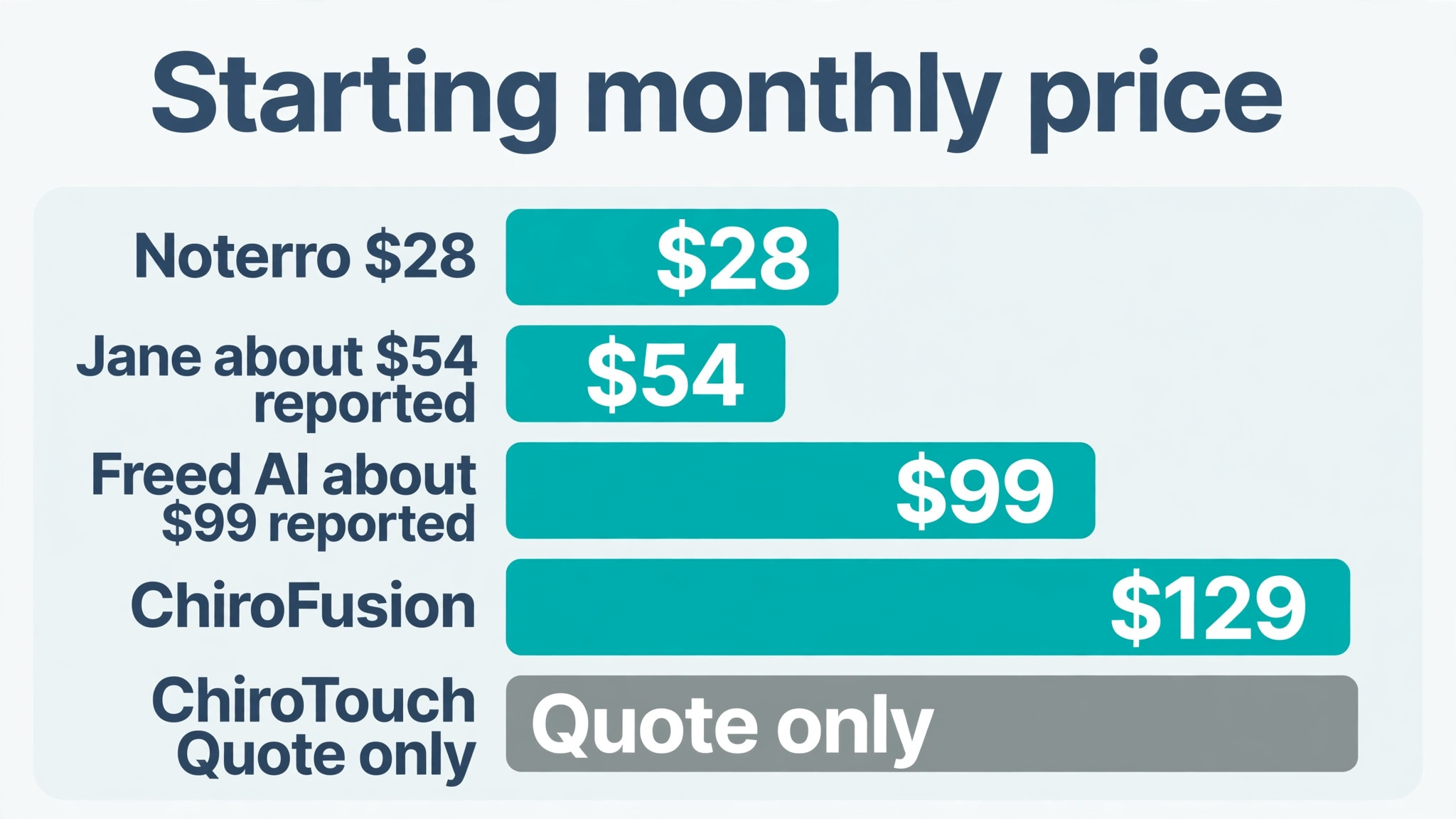
Starting price Quote only, with third party directories reporting about 159 dollars a month for the Core plan. Confirm the figure with the vendor. Best for established practices that want the deepest chiropractic feature set Watch out No published price means every deal goes through sales, so get the per provider figure in writing.
ChiroTouch is the pick for chiropractors who want established practices that want the deepest chiropractic feature set. it serves more than 12,500 practices and pairs full practice management with an AI scribe that turns conversation into SOAP notes. Smart macros and a compliance scan flag missing documentation before claims go out, which protects revenue as well as time. For a crew that want one system for the whole clinic, that combination covers the daily work without a second subscription.
Pricing is where buyers need care. Quote only, with third party directories reporting about 159 dollars a month for the Core plan. Confirm the figure with the vendor. No published price means every deal goes through sales, so get the per provider figure in writing. The right move is a trial on real jobs, priced at your real team size, so the monthly bill you compare is the bill you will actually pay.
2. Jane
Starting price Reported from 54 dollars a month per practitioner, with Practice plans reported at 79 dollars a month. Confirm the current figure on the vendor site. Best for multi discipline clinics that also do physio or massage Watch out It does not speak chiropractic billing natively the way ChiroTouch does, so insurance heavy practices should test the claims workflow carefully.
What sets Jane apart is it handles scheduling, charting, billing, payments and patient communication in one clean system that patients find easy to use. Online booking, digital intake forms and secure messaging cut the front desk work on every visit, while charting templates keep notes consistent. The result is a tool that carries the job from the first call to the final payment, and most teams learn it in days rather than weeks.
The catch is worth knowing before the trial. It does not speak chiropractic billing natively the way ChiroTouch does, so insurance heavy practices should test the claims workflow carefully. Reported from 54 dollars a month per practitioner, with Practice plans reported at 79 dollars a month. Confirm the current figure on the vendor site. If that trade off fits the way your chiropractors work, the tool earns its place, and if it does not, the next tool on this list probably fits better.
3. Noterro
Starting price From 28.05 dollars a month for Core, with Plus at 55 dollars and Max at 77 dollars a month. Best for small to mid sized clinics that want customisable notes at a fair price Watch out Additional users cost extra on the higher plans, so price the full team before you compare.
Noterro built its name on its customisable clinical note templates come with a built in AI scribe, so a small clinic gets modern documentation without an enterprise price., and the 2026 version adds Scheduling, billing, invoicing and secure patient documentation sit in one cloud system that a solo doctor can set up in a day. The price is the lowest published entry on this list for a full clinic platform, which makes the trial decision easy. That mix suits a chiropractors that wants the job done properly rather than the longest feature list.
The price is the honest part. From 28.05 dollars a month for Core, with Plus at 55 dollars and Max at 77 dollars a month. Additional users cost extra on the higher plans, so price the full team before you compare. Ask for the full first year cost in writing before you sign, including any setup fee, because the headline price rarely tells the whole story.
4. Freed AI
Starting price Reported at about 99 dollars a month per clinician, according to third party roundups. Best for solo doctors and small practices that want fast SOAP notes Watch out Integration is light compared with enterprise tools, so most clinics copy the note into their practice system.
Freed AI is the pick for chiropractors who want solo doctors and small practices that want fast SOAP notes. it listens to the visit and drafts a clean SOAP note in seconds, with chiropractic templates that fit the way an adjustment is documented. The output is fast and consistent, and a forty patient day that used to mean ninety minutes of notes now means fifteen. For a crew that cut after hours charting to minutes, that combination covers the daily work without a second subscription.
Pricing is where buyers need care. Reported at about 99 dollars a month per clinician, according to third party roundups. Integration is light compared with enterprise tools, so most clinics copy the note into their practice system. The right move is a trial on real jobs, priced at your real team size, so the monthly bill you compare is the bill you will actually pay.
5. ChiroFusion
Starting price From 129 dollars a month, according to the vendor FAQ. Best for solo and small practices that want full EHR features at a published price Watch out The platform is smaller than ChiroTouch, so a large group may want the deeper integrations of the market leader.
What sets ChiroFusion apart is it covers scheduling, reporting, billing and claims, payment processing and patient check in for one published price, with free unlimited e-claims. Compliant SOAP notes and claims can be created in about thirty seconds, which keeps a busy doctor moving between rooms. The result is a tool that carries the job from the first call to the final payment, and most teams learn it in days rather than weeks.
The catch is worth knowing before the trial. The platform is smaller than ChiroTouch, so a large group may want the deeper integrations of the market leader. From 129 dollars a month, according to the vendor FAQ. If that trade off fits the way your chiropractors work, the tool earns its place, and if it does not, the next tool on this list probably fits better.
Side by Side Comparison
The table below puts the best ai tools for chiropractors side by side on price, best job and free plan, so you can compare the published prices against the quote only tools at a glance. Use it after the reviews to narrow the list to two finalists, then trial both on real jobs before you sign anything.
| Tool | Starting price | Best for | Free plan |
|---|---|---|---|
| ChiroTouch | Quote only, with third party directories reporting about 159 dollars a month for the | established practices that want the deepest chiropractic feature set | No |
| Jane | Reported from 54 dollars a month per practitioner, with Practice plans reported at 79 | multi discipline clinics that also do physio or massage | No |
| Noterro | From 28 | small to mid sized clinics that want customisable notes at a fair price | No |
| Freed AI | Reported at about 99 dollars a month per clinician, according to third party roundups | solo doctors and small practices that want fast SOAP notes | No |
| ChiroFusion | From 129 dollars a month, according to the vendor FAQ | solo and small practices that want full EHR features at a published price | No |
Choosing the Right Tool for Your chiropractic clinic
The best ai tools for chiropractors are not the ones with the longest feature list. They are the ones that fix the leak your chiropractic clinic feels every week. Start from the leak, not from the vendor homepage, and budget the full bill rather than the headline price.
Budget the full bill, not the headline price. The table below shows what a single chiropractic clinic actually pays in year one for the most common combinations, using published or reported starting prices. Setup fees, per user charges and renewal increases are the lines that surprise buyers, so ask for them in writing before you sign.
| Stack for one business | Monthly cost | What it covers |
|---|---|---|
| ChiroTouch | Quote only, with third party directories reporting about 159 dollars a month | established practices that want the deepest chiropractic feature set |
| Jane | Reported from 54 dollars a month per practitioner, with Practice plans reported | multi discipline clinics that also do physio or massage |
| Noterro | From 28 | small to mid sized clinics that want customisable notes at a fair price |
| Freed AI | Reported at about 99 dollars a month per clinician, according to third | solo doctors and small practices that want fast SOAP notes |
| ChiroFusion | From 129 dollars a month, according to the vendor FAQ | solo and small practices that want full EHR features at a published price |
Start with one tool and one job, then add a second tool only when the first one runs without daily fixes. Two half working tools cost more time than one working tool and a spreadsheet, and the team will tell you quickly which one they open every day and which one they avoid.
## What to Test in the Free Trial
A free trial answers one question only, and that question is whether the tool fits the way your chiropractors actually work, not whether the demo looked good. Pick three real jobs from last week and run them end to end in the trial, from the first call or message through to the paid invoice or the finished booking. If the trial forces you to fake the data or skip a step your team does every day, that gap will still be there after you pay.
Time the jobs you test. Write down how long each one takes in ChiroTouch and in Jane, then compare both against the old way of doing it on paper or in a spreadsheet. A tool that saves ten minutes per job and handles twenty jobs a week gives back more than three hours, and that number is the only honest way to judge the monthly price. If the trial cannot show that saving on real work, the tool is not ready for your business yet.
Invite one sceptical member of the team into the trial and ask them to break it. The person who books the jobs or answers the phone will find the awkward screens in an afternoon, and their complaints are worth more than any sales call. If they finish the trial week asking to keep the tool, you have your answer, and if they ask to go back to the old way, believe them.
## The Mistakes That Waste the First Month
The most common mistake is buying the biggest plan on day one. Teams pick the top tier for features they may need in a year, then spend the first month paying for dashboards nobody opens while the basic job of booking and billing still runs on paper. Start on the smallest plan that covers the real work, and upgrade only when a specific job keeps hitting the plan limit. The upgrade takes a day, while the wasted spend takes a month to notice.
The second mistake is importing a messy client list without cleaning it first. Duplicate names, old phone numbers and dead email addresses turn into duplicate bookings and messages sent to the wrong person, and the team blames the tool for a problem the old spreadsheet caused. Spend one afternoon removing duplicates and checking the top fifty clients before the import, and the first week in ChiroTouch will run far more smoothly than a rushed start ever does.
The third mistake is training everyone at once in a single long session. People remember the first three screens and forget the rest, then fall back to old habits by Wednesday. Train one job at a time, starting with the job each person does most, and let them use it for real work the same day. Short sessions spread over a week beat one long session every time, and the team keeps the new habit because it never had a chance to fade.
## How to Train the Team Without Losing a Week
Training works best when it follows real work instead of a manual. Give each person one job to do in the new tool on the first day, using a real client and a real booking, and stand beside them while they do it. The questions they ask in that first hour tell you exactly which parts of the setup need fixing, and the fixes take minutes when the work is real instead of a training exercise nobody cares about.
Write down the five jobs your chiropractors repeat every week and turn each one into a short checklist inside ChiroTouch or Jane. A checklist beats a long guide because a busy person will follow five steps on a card and ignore a twenty page document. Keep the checklists where the work happens, on the phone or the van dashboard, and update them when the team finds a faster way to do a step.
Pick one person to own the tool for the first month. That person answers questions, fixes small setup problems and reports what is working and what is not at the end of each week. Without an owner, small problems pile up until someone declares the tool broken, and with an owner the same problems get fixed in minutes. The owner does not need to be the most technical person, just the one everyone already asks for help.
## Data, Privacy and the Fine Print
Every tool on this list holds client names, addresses, phone numbers and payment details, so the contract matters as much as the features. Ask each vendor whether your data stays in your account when you cancel, how long they keep backups after you leave, and whether they will sign a data processing agreement for your business. A vendor that answers plainly is a safer choice than one that hides the answers behind a sales call.
Check who can see what inside the tool before the whole team logs in. A junior member of staff rarely needs to see every client payment or the full price list, and a tool that cannot limit access by role will leak information the first time someone opens the wrong screen. Set the permissions on day one, when the team is small and the settings are easy to change, rather than after a mistake forces the conversation.
Read the renewal terms before the first payment, not at the end of year one. Some plans renew at a higher rate, some lock the price for the first year only, and some charge a fee to export your own data. Write the renewal date and the renewal price on the same page as the login details, and set a reminder for thirty days before it. That one note saves more money than any discount code, because it turns a surprise bill into a decision you make on purpose.
## A Simple 30 Day Rollout Plan
Week one is setup and cleanup. Import the client list, check the top fifty records by hand, connect the payment method and run three test jobs from start to finish. Do not invite the whole team yet, and do not promise clients anything new. The goal for week one is a tool that works for one person on real jobs, with no loose ends and no missing data.
Week two is the first real week. Move all new jobs into ChiroTouch and keep the old system running only for jobs already in progress. The team will find the awkward steps fast, and most of them are setup problems that take minutes to fix once you see them. Hold a short meeting at the end of the week and write down the three biggest complaints, then fix them before week three starts.
Weeks three and four are for the extras. Turn on the reminders, the review requests and the follow up messages one at a time, and watch whether clients respond the way you hoped. Add the second tool only when the first one runs without daily fixes, because two half working tools cost more time than one working tool and a spreadsheet. By day thirty you should know the real monthly cost, the real time saved and whether to keep going.
## When One Tool Is Not Enough
Most chiropractors end up with two tools, not one, because no single platform does every job well. The usual pair is a job platform like ChiroTouch for bookings and billing plus a specialist like Jane for the work only that specialist does well. The pair works when each tool owns a clear job and the data flows between them without retyping, and it fails when both tools try to own the same job and the team never knows which one is correct.
Before adding a second tool, write down the exact job it must do that the first tool cannot. If the answer is vague, the second tool will sit unused after the first month and the subscription will quietly renew. If the answer is specific, like answering after hours calls or turning a site visit into a finished note, the second tool earns its place in the first week and the team will defend it.
Watch the total bill as the stack grows. Two tools at fifty dollars a month cost twelve hundred dollars a year, and three tools at a hundred dollars cost thirty six hundred. That money is well spent when each tool saves hours every week, and wasted when a tool duplicates a job another one already does. Review the stack every quarter, cancel anything nobody opened in the last month, and keep the money for the tool the team actually misses when it is gone.
Questions Owners Ask Most
What is the cheapest good AI tool for a solo chiropractor to start with
Noterro Core at 28.05 dollars a month is the cheapest published full clinic platform on this list, with an AI scribe included. Freed AI at about 99 dollars a month per clinician is the cheapest dedicated scribe for fast SOAP notes. ChiroFusion at 129 dollars a month is the cheapest full EHR with free e-claims. Start with the job that loses you the most time, not with the cheapest tool overall.
Do AI scribes replace the doctor in writing SOAP notes
No, and any vendor that implies otherwise should be treated with caution. An ambient scribe drafts the note from the visit, and the licensed doctor reviews every line before it becomes part of the record. Codes need the same care, because a hallucinated code is the most common failure in this category. Keep a doctor review step in the workflow for every AI note, and treat the AI as a draft writer rather than a decision maker.
Which tool is best for a multi location chiropractic group
ChiroTouch is the strongest pick for a group, because its platform covers the full practice across locations with the deepest billing and compliance tools. Jane suits a multi discipline group that also runs physio or massage. Price both by quote and compare the per provider figure rather than the headline, because per provider fees multiply fast across a group.
How much should a small chiropractic clinic budget for this software
A realistic budget for the best ai tools for chiropractors is 28 to 129 dollars a month for one platform on a small clinic, and 200 to 500 dollars a month once the clinic adds a dedicated scribe and a front desk system. Per provider pricing is the line that surprises buyers, so multiply the price by the real number of doctors before you compare.
Final Word
If you buy one tool this quarter, buy Noterro. It covers the jobs a small clinic feels every week, notes, scheduling and billing, at the lowest published price on this list, with an AI scribe built in rather than bolted on. The best ai tools for chiropractors earn their keep by giving the doctor the evening back, and Noterro does that from the first week.
Whatever you pick, start with the leak, trial with real patients, and keep a doctor in the loop on every AI note for the first month. The best ai tools for chiropractors on this list all work. The difference is whether the tool matches the job your clinic actually needs done, and whether the notes it writes are ones you would sign without a second thought.