
Ask ten authors what AI is for and you will get ten different answers. A novelist wants a drafting partner that keeps track of a plot. A nonfiction writer wants a research assistant that reads a hundred pages and returns the three that matter. A self published author wants an editor, a blurb and a launch plan. The best ai tools for authors cover all three jobs, and the trick is buying the one that matches the book you are actually writing, not the one with the loudest marketing.
This guide compares the best ai tools for authors on real prices, the job each one does best and the catch that only shows up after the trial. Prices come from vendor pricing pages and independent roundups checked in November 2026, and where a vendor sells by quote only, this guide says so instead of guessing. Start with the shortlist table, then read the reviews that match the stage your book is at.
The Quick Shortlist
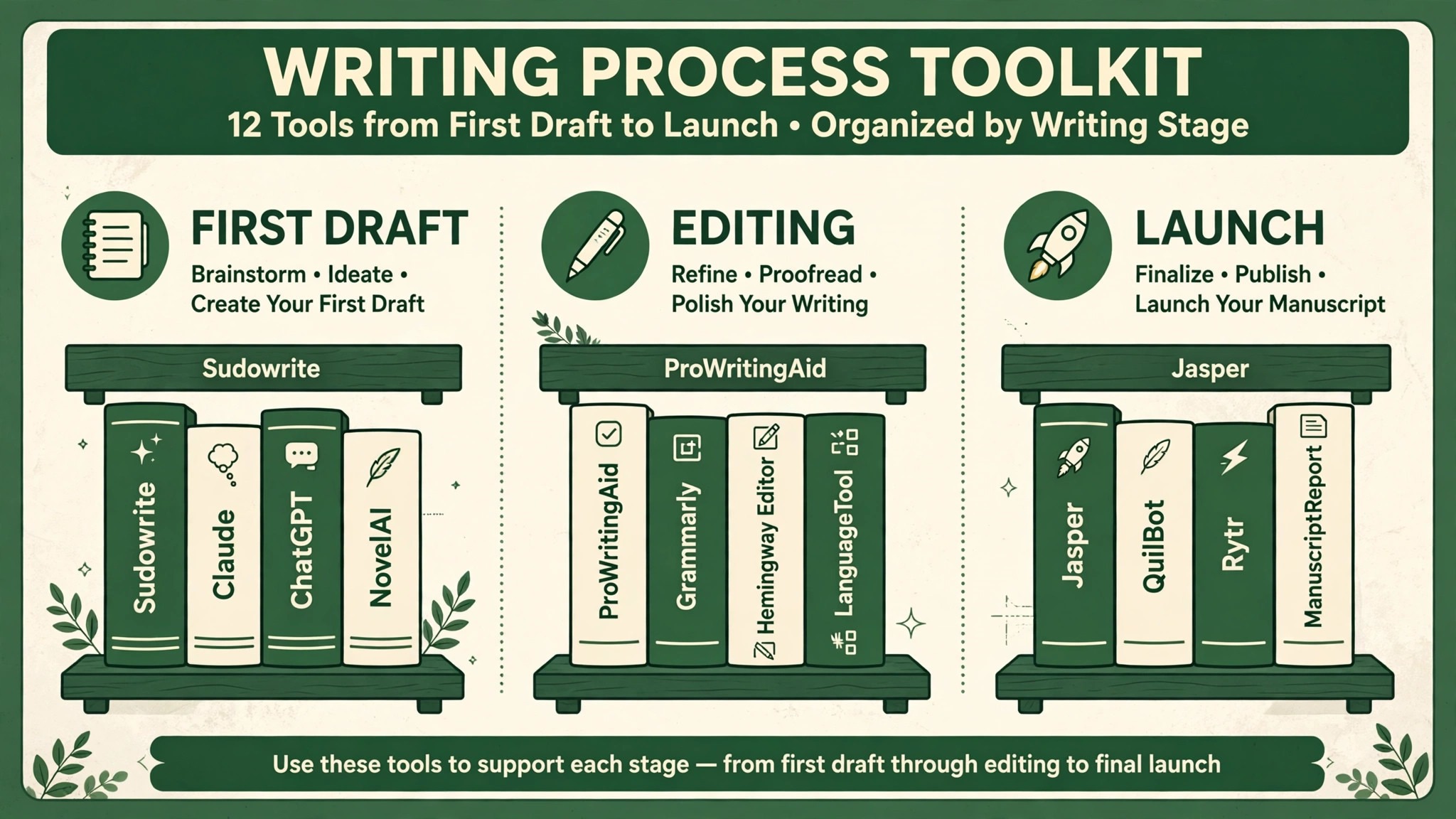
The table below matches each common author job to the single tool that handles it best. Use it to narrow the best ai tools for authors to two or three candidates before you read the full reviews. Prices are monthly list prices unless noted, and annual billing is usually cheaper than paying month to month.
| Job | Best tool | Why it wins |
|---|---|---|
| Drafting fiction | Sudowrite | Built for novels, with a Story Bible that tracks your plot, from 10 dollars a month billed annually |
| Drafting nonfiction | Claude | Long form prose that sounds human, Pro from 17 dollars a month billed annually |
| Everyday drafting and research | ChatGPT | The general assistant for every writing job, Plus 20 dollars a month |
| Deep manuscript editing | ProWritingAid | Chapter level reports no other editor matches, 120 dollars a year |
| Final grammar and clarity pass | Grammarly | Catches what a tired eye misses, Pro from 12 dollars a month billed annually |
| Readability check | Hemingway Editor | Shows where sentences get heavy, free on the web |
| Private fiction drafting | NovelAI | Your words stay yours, from 10 dollars a month |
| Free grammar pass | LanguageTool | Solid corrections with a self hosted option, free to 24.90 dollars a month |
| Brand governed marketing content | Jasper | Voice controls for an author with a platform, Pro from 59 dollars a month billed annually |
| Paraphrasing and rewriting | QuillBot | Fast rewrites and summaries, from 8.33 dollars a month billed annually |
| Budget short form writing | Rytr | Unlimited generation in one language for 9 dollars a month |
| Launch marketing for a finished book | ManuscriptReport | Blurbs, keywords and comparable titles from one upload, 39 to 149 dollars one time |
How We Ranked the Best AI Tools for Authors
A tool earned a place here only if it does a real author job in 2026, not if it added an AI button to an old product. The best ai tools for authors prove their value in a real chapter, not in a demo. We judged each one on five things that decide whether an author keeps paying after the trial.
First, the job it does, from drafting a chapter to editing a manuscript to launching a finished book, because a tool that does one job well beats a platform that does five jobs poorly. Second, the starting price a working author can actually buy, including whether a free plan exists and what the paid plan really includes.
Third, where it fits in the writing process, because a tool that lives inside your drafting workflow saves more time than one that needs a new tab and a new login. Fourth, the quality of its AI output, from prose that sounds like you to edits that respect your voice. Fifth, the catch, from credit limits that quietly double the bill to free plans that cap the words you can check.
| Check before you buy | What to ask | Why it matters |
|---|---|---|
| Word and credit limits | How many words or credits before you pay more | Stops a 10 dollar plan becoming a 40 dollar plan |
| Voice preservation | Does it flatten your style or keep it | An editor that rewrites your voice is a cost, not a tool |
| Privacy and training | Does the vendor train on your manuscript | Your unpublished book is not training data |
| Manuscript length | Can it hold a full chapter, or only a page | A tool that forgets chapter one cannot edit chapter ten |
| Free plan limits | How many words, checks or generations before you pay | Tells you if the trial is a real test |
| Export and ownership | Can you take your manuscript and your edits with you | Lock in hurts when you outgrow a tool |
The 12 Tools, Reviewed One by One
1. Sudowrite
Starting price Hobby and Student 10 dollars a month billed annually, or 19 dollars a month monthly. Professional 22 dollars a month billed annually, or 29 monthly. Max 44 dollars a month billed annually, or 59 monthly. Best for Drafting fiction. Watch out It is built for fiction, so a nonfiction writer will find the templates miss the mark.
Sudowrite is the best AI for writing a book of fiction in 2026, because it was built for novels rather than adapted from a general chatbot. Its Story Bible tracks characters, plot threads and world details across a whole manuscript, so the AI remembers that your protagonist lost her brother in chapter three when it drafts chapter twenty. The brainstorm tools help when the plot stalls, and the Muse creative model writes in a voice that sounds closer to a novelist than a marketing bot.
The strength is the memory. A general chatbot forgets your story after a few thousand words, and a novel is a hundred thousand. Sudowrite’s structure is what lets an author draft a long book with AI help instead of in spite of it. The Hobby plan at 10 dollars a month on annual billing, with 225,000 credits, is enough for a working novelist to test it on a real draft.
2. Claude
Starting price Pro 20 dollars a month, or 17 dollars a month billed annually. Free plan available. Best for Drafting nonfiction. Watch out Pro usage limits apply on heavy days, so check the plan before a big writing sprint.
Claude is the best AI for drafting nonfiction in 2026, because it writes long form prose that sounds like a person wrote it, and it follows a detailed style guide better than any other general model. Its long context window holds a whole chapter, or a stack of research notes, in one pass, so an author can ask it to draft from the research instead of from memory. A nonfiction writer working from interviews and sources will feel the difference immediately.
The strength is the voice matching. Give Claude three chapters of your own writing and ask it to draft the fourth, and the result will sound closer to you than any other model manages. It also edits well, catching the structural problems in a draft rather than only the typos. Pro at 20 dollars a month, or 17 on annual billing, is the plan most authors buy.
The catch is the usage limits on Pro, which can bite during a deadline sprint when the whole book seems to need drafting at once. Claude also has no image generation in chat, so it will not make your cover. For the drafting and editing half of authorship, it is the best general model here, and it pairs naturally with ProWritingAid for the deep edit.
3. ChatGPT
Starting price Plus 20 dollars a month. Go 8 dollars a month. Free tier available. Best for Everyday drafting and research. Watch out It will invent facts and quotes if you let it, so never publish its research without checking the source.
ChatGPT is the general assistant every author already knows, and in a writing life it earns its keep on the jobs around the book. It brainstorms chapter structures, summarizes research, drafts query letters and author bios, and turns a rough set of notes into a clean outline. An author who writes a newsletter, a blog and a book at the same time can run all three through one tool.
The strength is flexibility. No specialist tool can match a general model for the odd jobs, from naming a character to explaining a complex idea in plain language for a general reader. The paid Plus plan at 20 dollars a month brings the better model and longer context, and the Go plan at 8 dollars a month is the cheapest serious general assistant available.
The catch is the generic tone. Without clear instructions, ChatGPT writes like everyone else, and an author’s voice is the one thing that cannot sound generic. It also invents facts with total confidence, which is dangerous for a nonfiction writer. Build a small library of your best writing to paste in as examples, and verify every fact it gives you. Used with those guardrails, it is the cheapest thinking partner on this list.
4. ProWritingAid
Starting price 120 dollars a year, or 399 dollars lifetime. Best for Deep manuscript editing. Watch out It is a deep edit, not a quick grammar check, so budget real time for the reports it produces.
ProWritingAid is the best AI book editor for the deep pass, because its chapter level reports go further than any other editor. It analyzes style, pacing, dialogue, readability, repeated words and sentence variety across a whole manuscript, and it shows an author the patterns a single read through never catches. A novelist who has read her own draft five times will still learn something from the report.
The strength is the depth. Grammarly catches the typos. ProWritingAid catches the fact that every chapter opens with the same sentence structure, or that one character speaks twice as much as the others. That is the level of editing that separates a good manuscript from a publishable one. At 120 dollars a year, or 399 dollars for a lifetime license, it is a fair price for a tool an author uses on every book.
5. Grammarly
Starting price Pro 12 dollars a month billed annually, or 30 dollars a month monthly. Free plan available. Best for Final grammar and clarity pass. Watch out Grammarly alone is not enough for a manuscript edit, so do not skip the deep pass.
Grammarly is the final grammar pass every author needs, because it catches what a tired eye misses. It works across everything an author writes, from the manuscript to the query letter to the newsletter, with full sentence rewrites, tone detection and clarity suggestions. The 2026 plan lineup is simple, Free, Pro and Enterprise, after the old Premium and Business plans were consolidated.
The strength is the ubiquity. Grammarly sits in the browser, the word processor and the email client, so it checks the writing wherever it happens. An author does not have to remember to open it. Pro at 12 dollars a month on annual billing is a fair price for a tool that runs all day.
The catch is the limit. Grammarly is a grammar and clarity tool, not a manuscript editor, and an author who relies on it alone will miss the structural problems that ProWritingAid catches. It also rewrites sentences toward a safe middle, which can flatten a distinctive voice if the author accepts every suggestion. Use it as the final pass, not the only pass.
6. Hemingway Editor
Starting price Free on the web. Desktop 19.99 dollars one time. Plus 10 dollars a month. Best for Readability check. Watch out It only measures readability, so it will not catch a plot hole or a factual error.
Hemingway Editor is the readability check every author should run, because it shows where sentences get heavy. It highlights long sentences, passive voice, adverbs and complex words, and it gives the manuscript a reading grade. An author who wants prose a general reader can follow will find the highlights honest, even when they sting.
The strength is the simplicity. The free web version does the core job without an account, and the desktop app at 19.99 dollars one time is a permanent tool, not another subscription. Plus at 10 dollars a month adds the AI features for authors who want more. For a novelist or a nonfiction writer, a readability pass is the cheapest way to improve a draft.
7. NovelAI
Starting price Free tier available. Paid plans 10, 15 and 25 dollars a month. Best for Private fiction drafting. Watch out It is less capable than the biggest models, so the prose needs more of your own hand.
NovelAI is the privacy focused fiction drafting tool, and for an author who does not want her unpublished manuscript anywhere near a training set, that is the whole point. It drafts fiction with a model tuned for storytelling, and it keeps the work private by design. An author writing a novel she has not yet published can draft with AI help without wondering where the words go.
The strength is the privacy. Most general models have terms that make authors nervous, and NovelAI removes that worry. The paid plans from 10 to 25 dollars a month are also straightforward, with no credit maze to navigate. For an author who values ownership of her words above raw capability, it is the right trade.
8. LanguageTool
Starting price Free plan available. Paid plans from 4.99 to 24.90 dollars a month. Best for Free grammar pass. Watch out It does not produce manuscript level reports, so it will not replace a deep editor.
LanguageTool is the free grammar pass with a self hosted option, and for an author on a tight budget it covers the basics well. It checks grammar, spelling and style across more than 30 languages, and the free plan is genuinely usable for short pieces. The paid plans from 4.99 to 24.90 dollars a month add the deeper checks and the higher limits.
The strength is the openness. The self hosted option means an author who is serious about privacy can run the checker on her own machine, and the multilingual support matters for authors who write in more than one language. For a nonfiction writer working in a second language, it is the best budget option here.
9. Jasper
Starting price Pro 69 dollars a month, or 59 dollars a month billed annually. Business custom. Best for Brand governed marketing content. Watch out The price is per seat, and the agents and GEO hub run on credits, so the bill grows with the team.
Jasper is the marketing platform for an author with a platform to run, and it suits the author who also sells courses, newsletters and speaking. Its brand voice controls keep every piece of marketing content sounding like the author, and its templates cover the launch emails, social posts and landing pages that surround a book. For an author treating the book as a business, Jasper runs the marketing side.
The strength is the governance. A team writing under one author’s name needs consistency, and Jasper enforces it. The Pro plan at 69 dollars a month, or 59 on annual billing, is the entry point, and the 7 day trial lets an author test the voice controls before paying.
The catch is the price and the credit model. At 69 dollars a month per seat, Jasper is the most expensive writing tool here, and the agents and GEO hub run on credits on top of that. An author who only needs help drafting the book should buy Claude instead. Jasper earns its place for authors running a real marketing operation around their books.
10. QuillBot
Starting price From 8.33 dollars a month billed annually. Free plan available. Best for Paraphrasing and rewriting. Watch out It rewrites sentences, it does not write books, so do not expect it to draft a chapter.
QuillBot is the paraphrasing and rewriting tool, and for an author it fixes the sentence that will not sit right. It offers rewrite suggestions with tone controls, summaries of long passages, and a plagiarism checker for the cautious. An author revising a draft can run a clumsy paragraph through QuillBot and get three cleaner versions to choose from.
The strength is the speed. A single sentence rewrite takes seconds, and for an author doing a line edit, that adds up across a whole manuscript. At 8.33 dollars a month on annual billing, it is one of the cheapest paid tools here, and the free plan covers light use.
11. Rytr
Starting price Free plan covers 10,000 characters a month. Paid plan 9 dollars a month. Best for Budget short form writing. Watch out The free plan cap is small, so a working author will need the paid plan quickly.
Rytr is the budget pick, and its free plan is the reason. You get 10,000 characters a month, 40 writing use cases and more than 30 languages without paying anything, and the paid plan at 9 dollars a month removes the character cap, which makes it the cheapest unlimited writing plan on this list. For an author who needs short form copy, from social posts to author bios to newsletter intros, Rytr covers the job.
The strength is the price. At 9 dollars a month, Rytr is the cheapest paid writing tool here, and the free plan lets an author test it properly before paying. The 40 use cases also mean it can handle most of the short writing jobs around a book without a second tool.
The catch is the depth. Rytr is a short form tool, and it will not draft a chapter or edit a manuscript. An author who needs long form help should look at Sudowrite or Claude. Rytr earns its place for authors who need fast, cheap short form writing, and for the marketing copy that surrounds every book launch.
12. ManuscriptReport
Starting price 39 to 149 dollars one time. Best for Launch marketing for a finished book. Watch out It is not a drafting tool, so it only starts once the manuscript exists.
ManuscriptReport is the launch tool for a finished book, and it is the only tool on this list that reads your manuscript to understand what the book is about, then measures the Amazon market for exactly that. From one upload it generates the full launch toolkit, a blurb, keywords with Amazon search volumes, ten comparable titles with their sales estimates, the lowest competition categories the book belongs in, and ad copy, 21 assets in total.
The strength is the market data. Most launch advice is generic, and ManuscriptReport is specific, because it measures the actual Amazon market for the author’s exact book. The one time price from 39 to 149 dollars, depending on the package, is also easy to justify, because it replaces a consultant’s fee and a week of research.
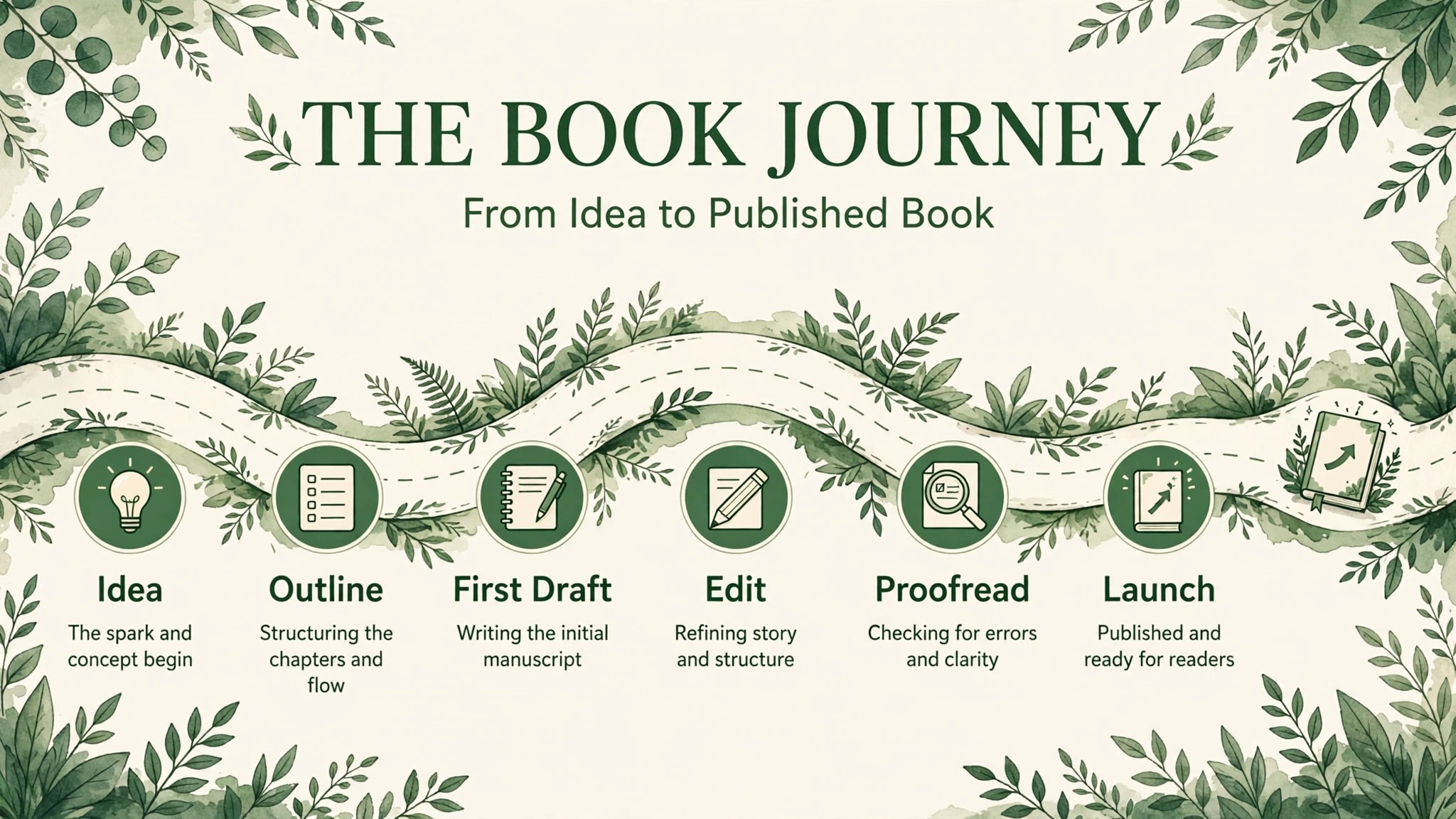
The catch is the timing. ManuscriptReport starts once the manuscript exists, so an author still drafting has no use for it yet. It is also a launch tool, not a writing tool, so it will not help with the book itself. For a self published author about to launch, it is the best money on this list, and it closes the journey from first draft to published book.
Side by Side Comparison
| Tool | Starting price | Best for | Free plan |
|---|---|---|---|
| Sudowrite | Hobby 10 dollars a month, annual | Drafting fiction | No |
| Claude | Pro 17 dollars a month, annual | Drafting nonfiction | Yes |
| ChatGPT | Plus 20 dollars a month | Everyday drafting and research | Yes |
| ProWritingAid | 120 dollars a year | Deep manuscript editing | No |
| Grammarly | Pro 12 dollars a month, annual | Final grammar and clarity pass | Yes |
| Hemingway Editor | Free on the web | Readability check | Yes |
| NovelAI | From 10 dollars a month | Private fiction drafting | Yes |
| LanguageTool | From 4.99 dollars a month | Free grammar pass | Yes |
| Jasper | Pro 59 dollars a month, annual | Brand governed marketing content | Trial only |
| QuillBot | From 8.33 dollars a month, annual | Paraphrasing and rewriting | Yes |
| Rytr | 9 dollars a month | Budget short form writing | Yes |
| ManuscriptReport | 39 to 149 dollars one time | Launch marketing for a finished book | No |
How to Pick the Right Tool for Your Book
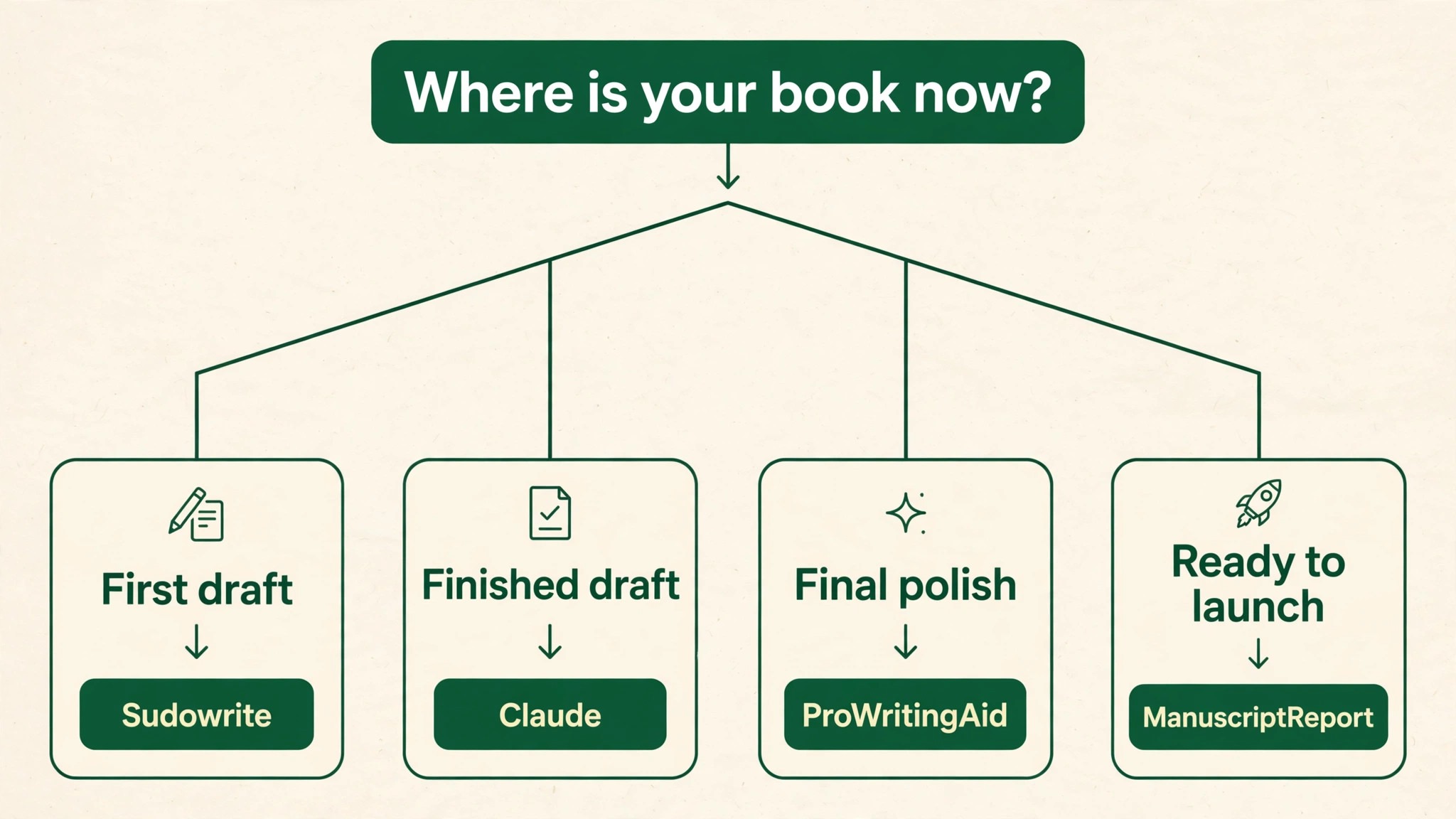
The best ai tools for authors are not the ones with the longest feature list. They are the ones that fix the bottleneck your book feels right now. An author stuck on a first draft should buy Sudowrite or Claude. An author with a finished draft should buy ProWritingAid. An author about to publish should buy ManuscriptReport. An author who writes marketing all day should buy Jasper or Rytr. Start from the stage your book is at, not from the vendor homepage. The best ai tools for authors are the ones that disappear into your process, leaving only the finished pages.
Budget the full stack, not the headline price. The table below shows what a working author actually pays in year one for the most common combinations, using starting annual prices. Credit limits and per seat costs are the lines that surprise buyers, so ask for them in writing before you sign.
| Stack for a working author | Monthly cost, annual billing | What it covers |
|---|---|---|
| Claude Pro plus Grammarly Pro | 29 dollars | Drafting plus the final grammar pass |
| Sudowrite Hobby plus ProWritingAid | 20 dollars | Fiction drafting plus the deep edit |
| ChatGPT Plus plus Hemingway Plus | 30 dollars | Everyday writing plus readability |
| Claude Pro plus ProWritingAid | 27 dollars | Nonfiction drafting plus the deep edit |
| Rytr plus LanguageTool | 14 dollars | Budget short form plus grammar |
| Sudowrite Professional plus ManuscriptReport | 22 dollars plus a one time launch fee | Fiction drafting plus the launch toolkit |
Frequently Asked Questions
What is the cheapest good AI tool for an author
Hemingway Editor is free on the web and covers the readability check, and Rytr at 9 dollars a month is the cheapest unlimited writing plan with a real free tier behind it. Sudowrite Hobby at 10 dollars a month billed annually is the cheapest serious fiction drafting plan. The cheapest stack that actually works is usually Claude Pro for the drafting plus Hemingway free for the readability check, which costs less than 20 dollars a month.
Will AI tools write my book for me
No, and the authors who treat them as replacements get the worst results. AI replaces the outlining, first pass drafting, logging and research work that sits around writing, which is roughly a third of an author’s week. The story, the argument and the voice still belong to a person. Buy AI to move a book from idea to finished draft faster, not to skip the writing, and measure the return in chapters finished rather than in words generated.
Which tool is best for writing a novel
Sudowrite is the best single tool for most novelists, because its Story Bible tracks characters and plot across a whole manuscript, which no general chatbot does. Claude is better when the book is nonfiction, or when the author wants the most human sounding prose. NovelAI is better when privacy matters more than raw capability. Pick Sudowrite if you write fiction, Claude if you write nonfiction, and NovelAI if you want your manuscript kept private.
How much should a working author budget for AI tools
A realistic year one budget for the best ai tools for authors is 20 to 40 dollars a month for a working author using self serve tools, and 70 dollars a month or more once you add Jasper for marketing. Credit based tools can push the bill higher in heavy drafting months, so set a monthly cap and review usage in the first 90 days. One time tools like ProWritingAid lifetime and ManuscriptReport are easy to justify, because they replace a consultant’s fee and a week of work.
Does using AI hurt my chances with a publisher
Not on its own, but honesty matters. Publishers and agents increasingly ask how AI was used, and the safe answer is to use AI as a drafting and editing assistant while keeping the creative decisions yours. Do not submit AI generated text as your own unedited work, and keep records of your drafts. The risk is not the AI being used. It is the AI being used without disclosure, or the manuscript reading like it was written by a machine.
Final Word
If you buy one tool this quarter, buy Claude Pro. It covers the most of the author job at a price a working writer can afford, and it is the fastest way to find out whether AI drafting works for your voice. The best ai tools for authors earn their keep by moving a book from idea to finished draft, and Claude does that from the first chapter, without an enterprise contract or a platform switch.
Whatever you pick, start with the stage your book is at, trial with a real chapter, and keep a human in the loop on anything a reader will see for the first month. The best ai tools for authors on this list all work. The difference is whether the tool matches the book you are actually writing, and whether you measure the return in chapters finished and books published rather than in features used.