
A talent agent loses a booking in the gap between the call and the follow-up, not in the audition room. The right software closes that gap, and the best ai tools for talent agents do it by keeping every client, casting and conversation in one place where nothing slips. This guide compares eight tools on published prices, the agent job each one does best and the catch that only shows up after the trial ends.
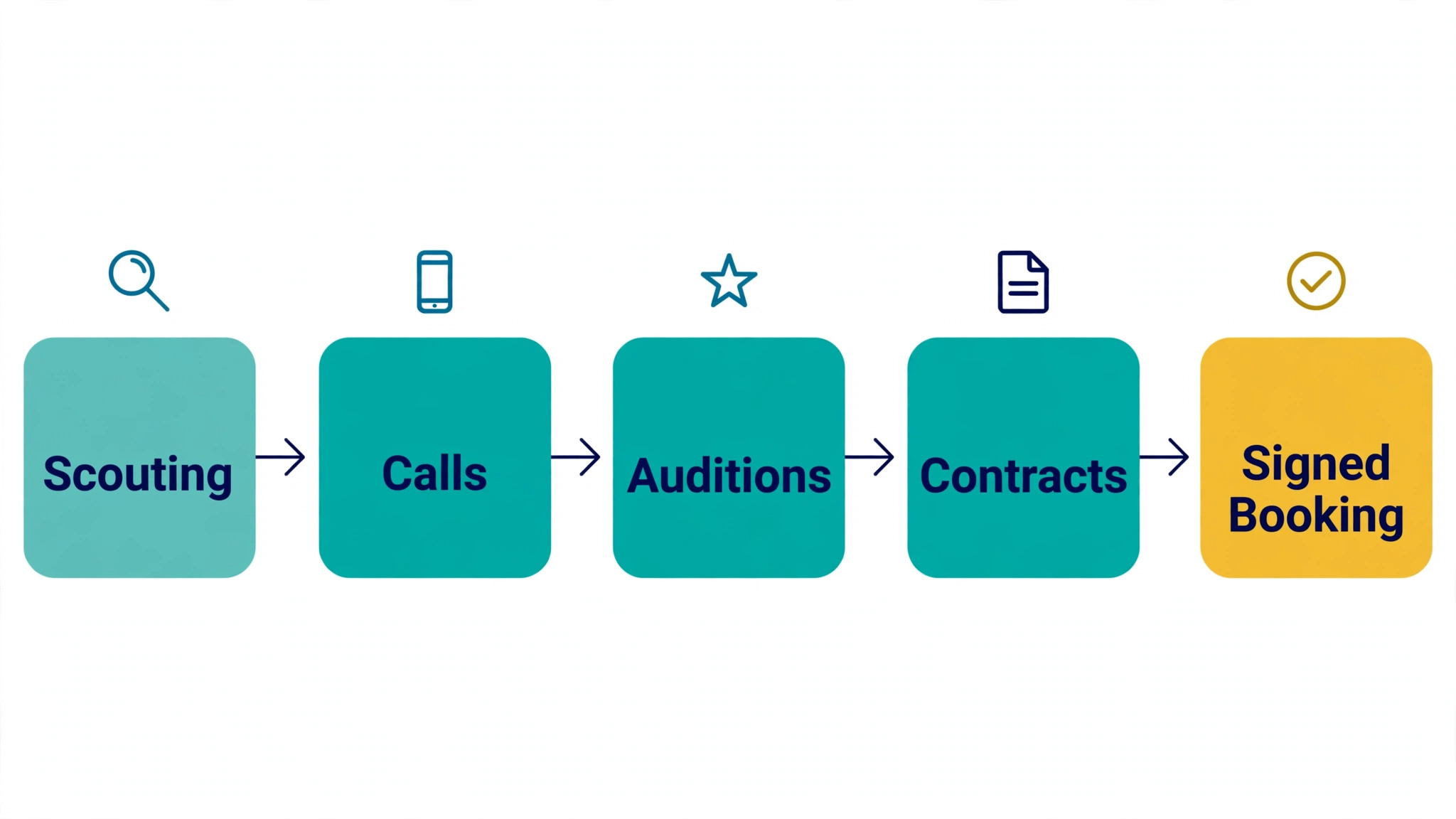
Agents work across scouting, submissions, auditions, negotiations and contracts, and no single product covers all five well. A CRM holds the roster, a scheduler books the room, a note tool remembers what was said, and a writing tool drafts the pitch. Start with the one tool that unblocks the slowest part of an agent week, and only buy a second when the first hits a limit you can name.
All prices quoted below are the published starting rates as of late 2026, and pricing on request is noted wherever a vendor keeps its rates private. Start with the shortlist, then read the reviews that match the agent work you do most, and trial two tools side by side before you pay for either.
The Shortlist at a Glance
Use this table to narrow the best ai tools for talent agents to two or three candidates before you read the full reviews. Monthly list prices apply unless noted, and annual billing usually beats monthly billing for a small agency.
| Job | Best tool | Why it wins |
|---|---|---|
| Keeping a whole talent roster in one pipeline | HubSpot CRM | The roster, the pipeline and the inbox in one login |
| Tracking auditions and offers through a visual pipeline | Pipedrive | A pipeline a busy agent can read in ten seconds |
| Booking auditions and callbacks without the email round trip | Calendly | Auditions booked while you sleep |
| Turning meetings and calls into searchable notes | Otter.ai | Every call searchable word for word |
| Recording calls and pulling out action items | Fireflies.ai | Action items captured before the call ends |
| Drafting outreach, bios and pitch notes fast | ChatGPT | First drafts in minutes, not hours |
| Planning shoots and sharing breakdowns with a cast | StudioBinder | Breakdowns and call sheets in one place |
| Running submissions and follow-ups as a shared board | Monday.com | The whole agency sees the same board |
How We Chose the Best AI Tools For Talent Agents
The best ai tools for talent agents were judged on five things that decide whether an agency keeps paying after the first year. The job each tool does came first, since a tool built for one agent task usually beats a platform stretched across five of them. Next came published pricing and how it scales, since per-seat charges decide the real bill as a roster grows.
Output quality came third, because an error in a contract note or a submission costs more to fix than a month of subscription. Fourth, fit with the systems an agency already runs, because a tool that cannot reach the calendar or the inbox forces double entry on every booking. Fifth, the catch, from free plans that cap usage to enterprise tools that need a sales call before any trial at all.
| Check before you buy | What to ask | Why it matters |
|---|---|---|
| Published price | Is the rate on the pricing page | A hidden price is a hidden bill |
| Free plan limits | Usage caps, watermarks or seats | A capped free plan cannot run the real job |
| Integration | Does it connect to your calendar and inbox | Double entry eats the time it saves |
| Data ownership | Can you export clients and notes | A locked roster costs more to leave than to join |
| Trial access | Can you test it on real bookings | A demo is not a trial |
| Contract terms | Monthly or annual, and what year two costs | Annual billing locks the price but not the need |
The Tools, One by One
1. HubSpot CRM
Starting price From $20 a month. Best for Keeping a whole talent roster in one pipeline. Watch out The price climbs fast once seats and add-ons pile up.
HubSpot holds every client, casting director and deal on one board, with emails, calls and notes attached to the contact instead of scattered across inboxes. An agent can see at a glance which clients are waiting on a callback, which auditions are confirmed and which offers are still open, then move a deal forward without digging through old threads.
The free CRM tier covers contacts, deals and basic email tracking, which is enough for a solo agent to test the pipeline on a real roster. Paid Sales Hub plans add sequences, forecasting and custom reporting, and the bill grows with each seat, so count the team before choosing a tier. HubSpot earns its place as the roster hub in the best ai tools for talent agents when the agency outgrows spreadsheets.
2. Pipedrive
Starting price From $14 a month. Best for Tracking auditions and offers through a visual pipeline. Watch out The AI features sit on the higher tiers.
Pipedrive turns the booking process into stages an agent can drag a deal through, from first submission to signed contract. Each stage shows the next action and the date it is due, so a follow-up never waits on memory. The visual board suits agents who think in deals rather than in lists, and the mobile app keeps the pipeline current between meetings.
The Essential plan covers the pipeline, activities and integrations at a low monthly rate, while the AI sales assistant and deeper automation sit on the Professional tier. An agency that lives on volume will want the higher tier, while a solo agent can run the whole roster on the entry plan and still see every open deal.
3. Calendly
Starting price Free tier, then from $10 a month. Best for Booking auditions and callbacks without the email round trip. Watch out Routing rules need a paid plan.
Calendly lets casting directors and clients pick a slot that already fits the agent calendar, with buffers, limits and time-zone handling built in. The back-and-forth that used to take six emails disappears, and the agent spends that time on submissions instead. Confirmation and reminder messages cut no-shows, which matters when an audition slot cannot be recovered.
The free plan covers one event type and basic integrations, which suits a solo agent with a single booking link. Paid plans add round-robin routing, group events and workflows, so a team that shares bookings across several agents should price the Standard tier. Calendly is the cheapest way to stop losing hours to scheduling.
4. Otter.ai
Starting price Free tier, then from $8.33 a month. Best for Turning meetings and calls into searchable notes. Watch out Accuracy drops on overlapping voices.
Otter.ai records a meeting or a call and produces a transcript with speaker labels, highlights and a short summary within minutes. An agent can search for a client name or a fee figure across months of calls instead of trusting memory, and the summary gives the action items without replaying the whole recording.
The free tier covers a limited number of transcription minutes a month, which is enough to test accuracy on real calls. The Pro plan raises the cap and adds team folders and custom vocabulary, which helps when client names and project titles are unusual. Otter pays for itself the first time a disputed fee is settled from the transcript.
5. Fireflies.ai
Starting price Free tier, then from $10 a month. Best for Recording calls and pulling out action items. Watch out The free tier caps storage and transcripts.
Fireflies.ai joins video calls, records the audio and turns it into a transcript with notes, action items and soundbites an agent can share. A casting debrief becomes a written record the whole team can read, and the search finds the moment a director asked for a different look. The integration with the main meeting tools means it starts without changing how the team meets.
The free tier gives limited storage and a set number of transcripts, while the Pro plan adds unlimited storage, AI summaries and CRM sync. An agency that records every client call will need the paid tier within weeks, while a solo agent can run the free plan for months. Fireflies is the pick when the notes themselves are the work product.
6. ChatGPT
Starting price A free tier, then from $20 a month. Best for Drafting outreach, bios and pitch notes fast. Watch out Drafts need a human check before they go out.
ChatGPT drafts outreach emails, client bios, pitch notes and social posts from a short brief, then rewrites them in a different tone on request. An agent can send ten personalised submissions in the time one used to take, and the tool also summarises long threads and pulls out the dates and figures that matter.
The free tier runs the standard model with limits, while the Plus plan adds the stronger models, file uploads and longer context. The drafts still need an agent to check names, fees and dates, because a confident-sounding error in a submission is worse than a slow one. Used as a drafting tool, it is the fastest writing help on this list.
7. StudioBinder
Starting price From $29 a month. Best for Planning shoots and sharing breakdowns with a cast. Watch out The learning curve is real for a small team.
StudioBinder covers breakdowns, call sheets, shooting schedules and contact lists for productions an agent works with. An agent who places clients on shoots can see the schedule, the sides and the contacts in one project, and share a call sheet without building it from scratch in a spreadsheet.
The Starter plan covers the core production tools for a small team, while higher tiers add more projects, storage and collaborators. The interface rewards a team that uses it daily and punishes a team that opens it once a month, so trial it on a live production before paying. For agents close to production, it replaces three separate documents.
8. Monday.com
Starting price From $9 a user a month. Best for Running submissions and follow-ups as a shared board. Watch out Costs grow with every seat you add.
Monday.com turns submissions, follow-ups and client tasks into boards with owners, dates and status columns the whole agency can see. An agent can filter the board to their own clients, while a manager sees the full pipeline at a glance. Automations move a task when a status changes, so the board stays current without manual updates.
The Basic plan covers boards, docs and the mobile app, while Standard adds automations, integrations and timelines. The per-user price looks small until five agents and two assistants are on it, so price the whole team before signing. Monday fits agencies that want one shared board instead of five private lists.
Side by Side on Price and Fit
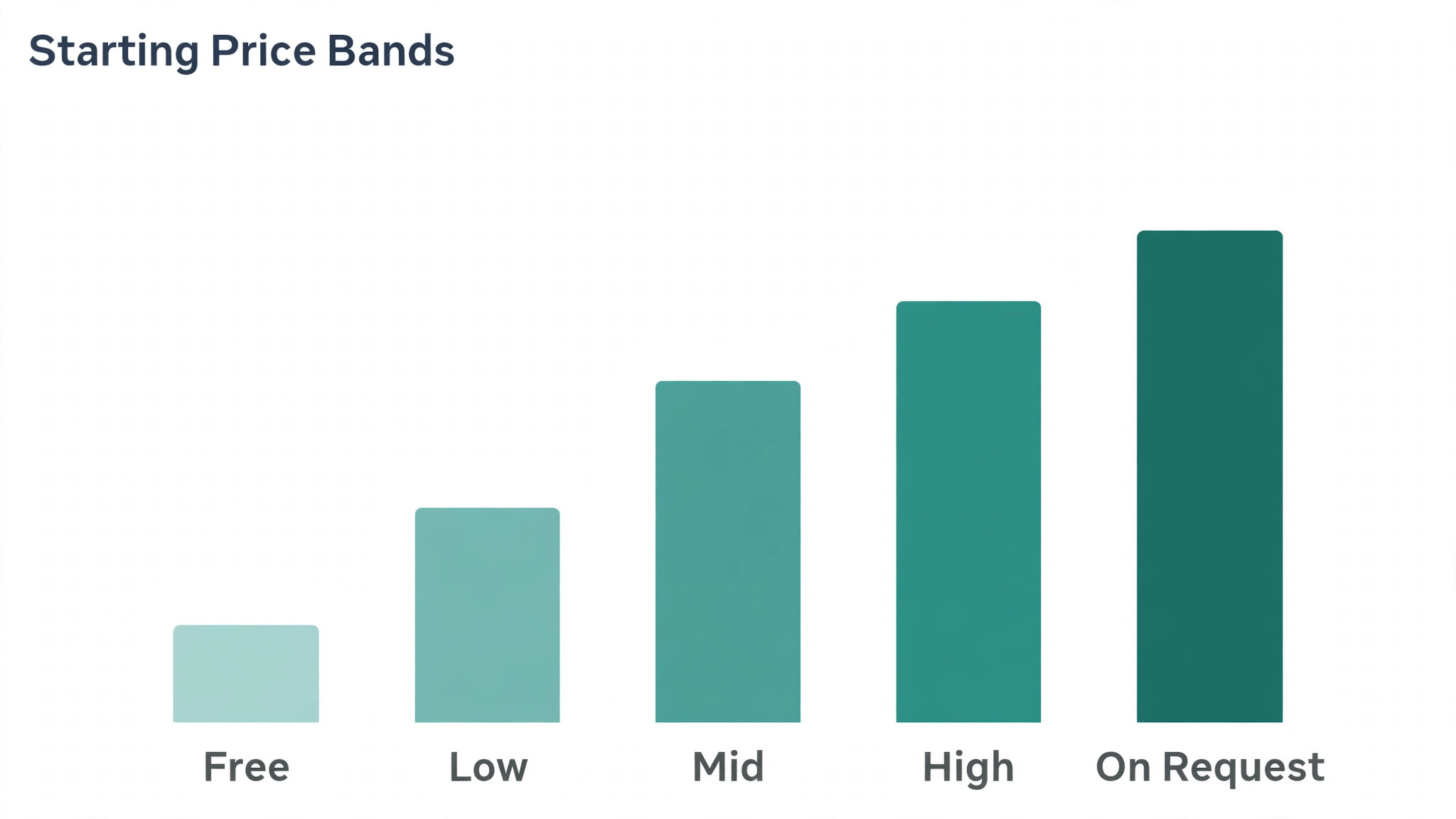
The table below puts the best ai tools for talent agents side by side on price, best job and free plan, so you can compare the published prices against the quote-only tools at a glance. Read it by job first, since an agent pays more for a bargain tool that fails than for a pricier one that does the work first time.
Read the table by finding the slowest part of an agent week first, then check what that row costs before reading anything else. A tool that fails on the first booking costs another hour of rework, and one that needs constant correction never pays for itself, however cheap the headline looks.
| Tool | Starting price | Best for | Free plan |
|---|---|---|---|
| HubSpot CRM | From $20 a month | Keeping a whole talent roster in one pipeline | Yes |
| Pipedrive | From $14 a month | Tracking auditions and offers through a visual pipeline | Trial |
| Calendly | Free tier, then from $10 a month | Booking auditions and callbacks without the email round trip | Yes |
| Otter.ai | Free tier, then from $8.33 a month | Turning meetings and calls into searchable notes | Yes |
| Fireflies.ai | Free tier, then from $10 a month | Recording calls and pulling out action items | Yes |
| ChatGPT | Free tier, then from $20 a month | Drafting outreach, bios and pitch notes fast | Yes |
| StudioBinder | From $29 a month | Planning shoots and sharing breakdowns with a cast | Trial |
| Monday.com | From $9 a user a month | Running submissions and follow-ups as a shared board | Trial |
Picking Without Overbuying
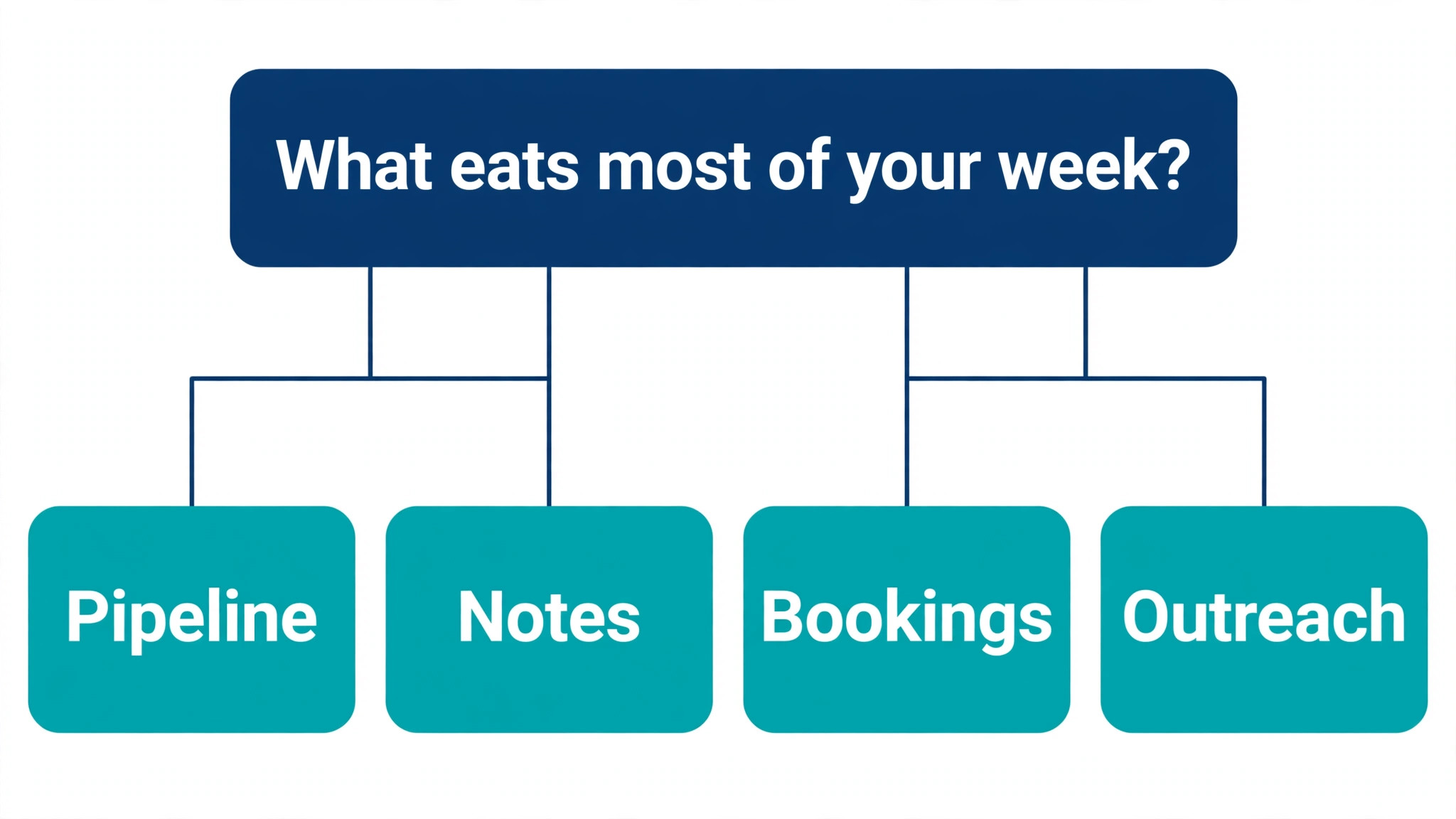
Start from the slowest part of the agency week, not from the vendor homepage. The best ai tools for talent agents are the ones that clear the pile that actually slows you down, whether that pile is follow-ups, notes or bookings. Whatever fixes the slowest bottleneck in an agent week pays for itself first, and the rest can wait.
Work out what the full stack costs, not what the headline number says. The table below prices year one for a solo agent and for a small team on the common combinations, at published starting prices. Ask for per-seat charges in writing before signing, since those lines surprise small agencies, and annual billing usually cuts about twenty percent off the monthly rate.
| Stack | Monthly cost | What it covers |
|---|---|---|
| HubSpot CRM plus Calendly | Lowest starting price | Roster plus bookings for one agent |
| Pipedrive plus Otter.ai | Mid-range | Pipeline plus searchable call notes |
| HubSpot CRM plus Fireflies.ai | Mid-range | Roster plus recorded call records |
| Monday.com plus ChatGPT | Mid-range | Shared boards plus fast drafting |
Reading the Pricing Page Like a Buyer
Per-seat pricing is where an agency budget quietly doubles, so read the pricing page for the seat count before you read anything else. A tool that lists $20 a month per user costs $100 a month for a team of five, and the add-ons for sequences, reporting or extra storage sit on top of that. Get the full quote in writing, including the price of the second year, because the first-year discount hides the real rate on the page.
A free tier is a real test only when it covers the agent job you do most. A free CRM that caps contacts at a hundred names cannot hold a working roster, and a free transcription plan that caps minutes at three hundred cannot cover a week of calls. Trial the free tier on a live week and count what it actually lets you do, then compare that count with the paid tier that removes the limit.
Annual billing usually cuts about twenty percent off the monthly rate, but it also locks the agency into a tool the team may outgrow. Pay monthly for the first quarter, even at the higher rate, and switch to annual only when the tool has survived a real month of bookings. The saving is real, but only when the tool is still in the agent stack a year later.
Best Pick by Job
Pick from the table below by the agent job you do most each week. The best ai tools for talent agents are not ranked by features alone; they are ranked by which job each one actually finishes, so the pick that matches your week is the pick that will still be in your stack a year from now.
| Your job | Best pick | Why it wins |
|---|---|---|
| Keeping a whole talent roster in one pipeline | HubSpot CRM | The roster, the pipeline and the inbox in one login |
| Tracking auditions and offers through a visual pipeline | Pipedrive | A pipeline a busy agent can read in ten seconds |
| Booking auditions and callbacks without the email round trip | Calendly | Auditions booked while you sleep |
| Turning meetings and calls into searchable notes | Otter.ai | Every call searchable word for word |
| Recording calls and pulling out action items | Fireflies.ai | Action items captured before the call ends |
| Drafting outreach, bios and pitch notes fast | ChatGPT | First drafts in minutes, not hours |
| Planning shoots and sharing breakdowns with a cast | StudioBinder | Breakdowns and call sheets in one place |
| Running submissions and follow-ups as a shared board | Monday.com | The whole agency sees the same board |
A Five-Day Trial That Tells the Truth
A trial tells an agency more in five working days than a month of reading reviews, but only when the trial runs on real bookings. Pick the two tools that look closest after the shortlist, run them side by side on the same core jobs, and score them on time saved, edits needed and how the output reads to an agent.
Never trial on a demo file, because a demo hides the rough edges that real agent work exposes. Run the trial on live submissions, live calls and live bookings, and keep a simple log of minutes saved and errors found. When the week ends, the log of real bookings is what decides, not the sales call.
| Day | What to test | What good looks like |
|---|---|---|
| Day 1 | Setup and first real booking | Working in under an hour, no IT ticket |
| Day 2 | The hardest job you do | Output needs light edits, not a rewrite |
| Day 3 | Integration with your calendar | Data flows without double entry |
| Day 4 | A colleague tries it cold | They finish a job without asking for help |
| Day 5 | Count the time and the cost | Hours saved beat the monthly price |
Setting Up in Week One
Week one should start with the roster, not with the settings page. Import the clients, the casting directors and the open deals first, then connect the calendar and the inbox so the pipeline fills itself. A tool that starts empty stays empty, because nobody opens software that holds nothing an agent needs.
Pick one person to own the setup and one real booking to run through it end to end. That person books the audition, sends the follow-up, records the note and closes the deal in the new tool, then writes down every step that felt slow. That list of slow steps becomes the setup checklist for the rest of the agency.
By the end of the week the whole agency should be working from the same pipeline, with the old spreadsheets retired rather than kept alongside. Running two systems side by side means entering everything twice, and the new tool takes the blame for the old habit. Retire the spreadsheet on Friday, and the agency will use the tool on Monday.
Mistakes Agents Keep Making
Mistake one is the cheapest plan, when the feature the agency needs sits two tiers up. Read every tier on the pricing page, and pay for the tier that covers the daily agent job, not the tier that looks cheap. Mistake two is rolling the tool out to the whole agency before one agent has tried it for a week, since a favourite of one and a burden to five is a cost, not a system.
The third mistake is skipping the check on data and ownership. Ask for the export formats, read the retention policy and check who owns the client data before the first real booking goes through the tool, because fixing ownership after the fact costs far more than checking it first. The fourth mistake is judging the tool on its best day, so trial it on the hardest booking itself and let the hard job decide.
Questions Worth Asking Before You Pay
Ask the vendor how many clients the entry plan actually holds, because a roster cap is the limit an agency hits first. A plan that looks cheap at twenty dollars a month turns expensive when the roster grows past the cap and the next tier doubles the bill. Get the cap in writing, with the price of the tier above it, before the trial begins.
Ask who answers support and how quickly, because the first problem usually arrives in the first week. A tool with live chat and a same-day answer gets adopted by the agency, while one with email-only support and a two-day wait gets abandoned, and the subscription keeps billing either way. Ask for support hours in your own time zone, not the hours of the vendor home office.
Ask how the data leaves the tool, because a roster that cannot be exported is a roster held hostage. Check the export format, the fields included and whether notes and deal history come out with the contacts. A clean export is what separates a tool you can leave freely from a tool you are stuck with.
Questions Agents Ask First
Which tool gives a solo agent the cheapest good start
Calendly is the cheapest credible start on this list at free tier, then from $10 a month, with Otter.ai close behind at free tier, then from $8.33 a month. Start with the job you do most each week, trial the free tier on real bookings, and add a specialist only when the general tool cannot do a job you are paid to do. That is the cheapest route to a working agent stack, with no payment for features never used.
Can an agent keep AI drafts from sounding generic
It will sound generic when an agent sends the template unchanged. These tools draft a usable first version, but the facts, the wording and the judgement still come from the agent doing the work. An output that goes out unedited reads generic, and casting directors notice generic outreach fast. Use the tool to beat the blank page, then change the details, the names and the tone, so the result sounds like you and not the software.
For a small agency, which option wins
HubSpot CRM is the pick for a small agency, starting at from $20 a month with a free tier to test first, while Pipedrive at from $14 a month is the strongest pipeline-only option. The best ai tools for talent agents were ranked by the job each one finishes, not by the size of the feature list, so a small agency should buy the tool that fixes its slowest weekly job first and add a second tool only when a specific limit starts costing time.
How much will a small agency spend in year one
Plan on 20 to 50 dollars a month in year one for a general tool such as HubSpot CRM, rising to 100 to 200 dollars a month with a specialist such as Fireflies.ai added. Multiply the headline price by headcount when the agency pays per seat, since those charges surprise buyers. Price the whole stack and trial each tool on real bookings before signing an annual contract.
Does an agent need a specialist tool as well as a general one
Not always. Most agents get by with one general tool for months, and a separate specialist only earns its place when a specific daily task runs every week and the general tool cannot do it well. Log the roster admin hours across the past week first. If a task eats hours and a specialist shrinks it to minutes, the purchase pays, but if the task already takes minutes, the specialist is just a cost.
Do these tools offer a trial before payment
Most tools on this list offer a free plan or a free trial, and HubSpot CRM, Calendly, Otter.ai and Fireflies.ai all let an agent test on real work before paying. Use the trial on the job itself the agency does most, not on a demo, and count the time saved and the edits each output needs. A trial that covers a real week tells an agent more than a sales call, and a tool that will not trial is one to be careful about.
The Short Answer
If you buy one tool this quarter, pick HubSpot CRM for the roster and Pipedrive when the pipeline is the whole job. HubSpot is the strongest all-round hub at $20 a month, and Pipedrive is the clearest pipeline at $14 a month. The best ai tools for talent agents earn their keep by giving you back the hour between calls, and both of these do that from the first week.
Whatever you pick, trial it on a real week of bookings, count the follow-ups it catches and the notes it saves, and keep a human eye on every AI draft before it goes out. Every tool here can keep a roster moving. The difference is whether the tool matches the bookings you actually run, and whether you measure the return in hours saved and deals closed rather than in features used.