
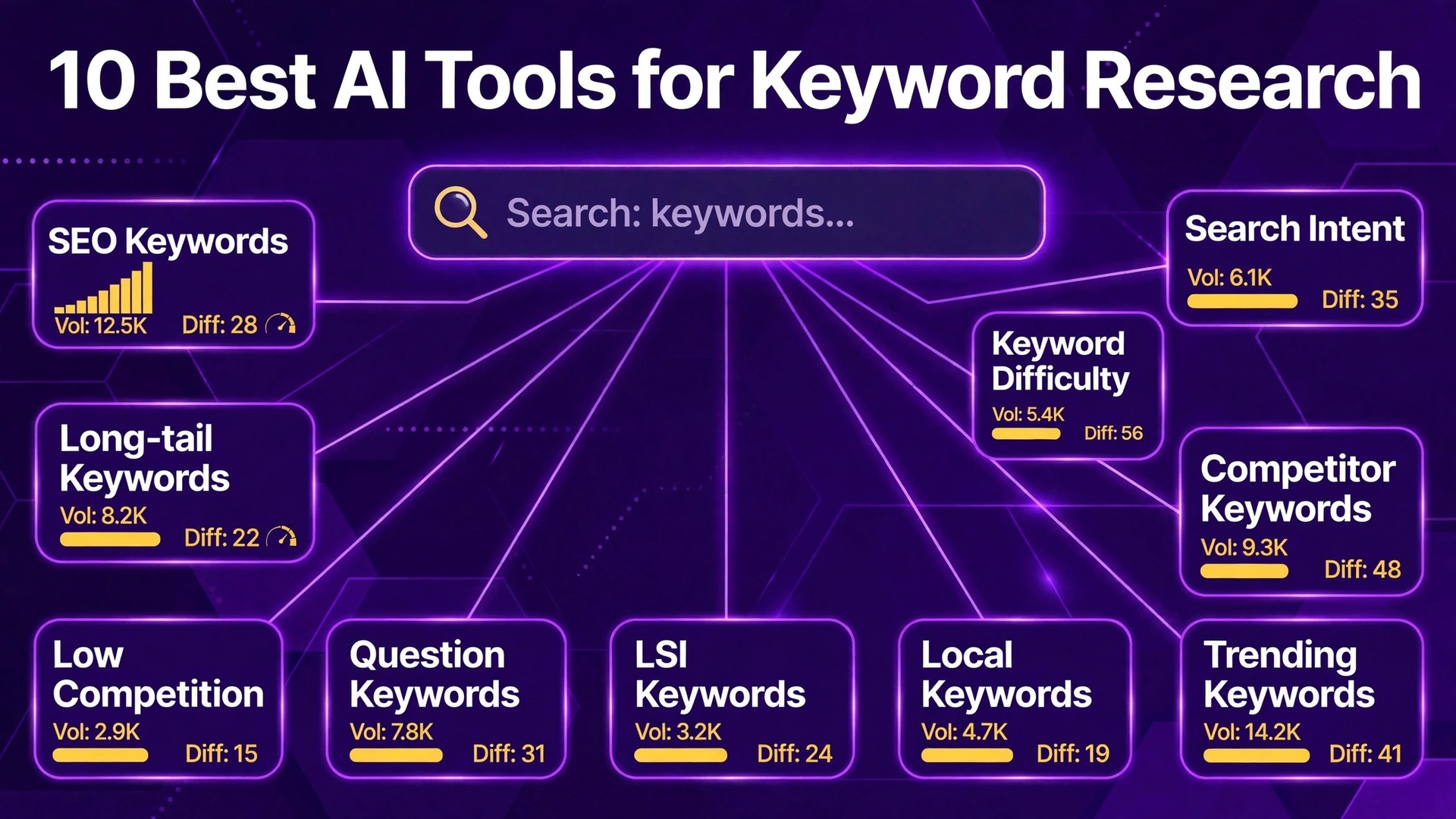
Keyword research changed in 2026, and the change is not the size of the database. It is the question the tool has to answer. A keyword that ranks in Google but never appears in an AI answer is worth less than it was two years ago, and a keyword with modest volume but a clear buying intent is worth more than a high-volume term that brings readers who never convert. The top 10 ai tools for keyword research in this guide are judged on both jobs.
Ten tools are compared here on published prices, the research job each does best for keyword research and the catch that appears only after the trial. Every price below is the published starting price as of late 2026, with annual billing noted where it changes the current keyword price. Use the shortlist first, then read the reviews that match the keyword jobs teams do most.
A site does not need ten keyword tools. One database plus one clustering tool covers most research, and a third tool only earns its place when it fixes a specific weekly pain, such as tracking AI visibility or grouping thousands of keywords into a content plan. The reviews below say plainly which keyword task type each tool does, so you can pick two and stop shopping. The top 10 ai tools for keyword research reward buyers who match the tool to the decision, not buyers who buy the biggest database.
The Tools at a Glance
Each common research job below has one tool matched to it for keyword research. Use it to narrow the top 10 ai tools for keyword research to two or three candidates before you read the full reviews.
| Job | Best tool | Why it wins |
|---|---|---|
| All-in-one research suite | Semrush | Largest database plus AI visibility tracking |
| Backlinks plus keywords | Ahrefs | Best link data, cheap way in at 29 dollars |
| Rank tracking for agencies | SE Ranking | Core from 129 dollars a month |
| Classic keyword metrics | Moz Pro | Domain authority and trusted difficulty scores |
| Cheapest serious research | Mangools | KWFinder from 29.90 dollars a month |
| Budget keyword ideas | Ubersuggest | From 29 dollars a month |
| Broad suite on a budget | Serpstat | From 59 dollars a month |
| Competitor keyword gaps | SpyFu | From 39 dollars a month |
| Keyword clustering | Keyword Insights | Groups thousands of keywords automatically |
| Question keywords | AnswerThePublic | From 9 dollars a month |

How We Chose the Top 10 AI Tools for Keyword Research
A tool earned a place here only if it does a real research job in 2026, not if it added an AI label to an old keyword list. The tools were judged on five things that decide whether a site keeps paying after the first year. First, the research job it does, from finding keywords to tracking AI visibility, because a tool that does one job well beats a suite that does five jobs poorly.
Second, data quality, because a volume figure that is wrong by half sends a content plan in the wrong direction. Third, whether the price is published and how it scales, including credit limits that quietly cap the research. Fourth, clustering and intent, because a list of ten thousand keywords is useless until it is grouped into topics a writer can use. Fifth, the catch, from add-ons that double the bill to free plans that hide the data you need.
The top 10 ai tools for keyword research were also checked for AI search tracking. In 2026 a research tool has to tell you whether ChatGPT, Gemini and Google AI answers mention your brand, and the suites have bolted that on at prices from 99 dollars a month extra to a higher tier. If AI visibility matters to your site, check whether the tracking is included in the price you are quoted or sold as an add-on after you sign.
| Check before you buy | What to ask | Why it matters |
|---|---|---|
| Database size | Keywords and pages indexed | A small index misses the long tail |
| Volume accuracy | How the figure is modelled | Wrong volume sends the content plan astray |
| Difficulty score | What the score actually measures | A score built on backlinks alone misleads new sites |
| Clustering | Groups keywords into topics | Ungrouped lists cannot become a content plan |
| AI visibility | Tracks mentions in AI answers | Ranking in Google is only half the job now |
| Credit limits | Reports and exports per month | A capped plan stops research mid-month |
The 10 Tools, Up Close

1. Semrush
Starting price The SEO plan starts at 139 dollars a month. Best for All-in-one research suite. Watch out AI visibility and extra seats are add-ons that raise the bill.
Semrush is the broadest research platform on this list, with a very large keyword database, site audits, rank tracking, backlink analysis and PPC data under one login. Its Keyword Magic Tool turns one seed into thousands of grouped ideas, and its AI visibility layer now monitors brand mentions in ChatGPT, Perplexity and Gemini. For a team that wants one subscription for research, tracking and competitor analysis, that breadth is the whole value.
The strength is the database. Semrush indexes 28.8 billion keywords, and its competitor gap tools show exactly which terms a rival ranks for that you do not. The catch is the price: the SEO plan starts at 139 dollars a month, and the AI visibility toolkit is a separate 99 dollars a month per domain, so the full picture costs more than the headline. It is the best suite here, and it prices like one.
2. Ahrefs
Starting price Starter from 29 dollars a month. Best for Backlinks plus keywords. Watch out The full AI tracking is an add-on from 199 dollars a month.
Ahrefs is the research tool most SEOs rate highest for backlinks and SERP analysis, and its Keywords Explorer gives volume, difficulty and search intent with a clean, fast interface. Starter costs 29 dollars a month, which is the cheapest way into serious keyword research, and Lite at 129 dollars a month adds 750 tracked keywords and 100,000 crawl credits. For a site that judges keywords by the traffic the top page actually gets, that data is the whole value.
The strength is the backlink index and the Traffic Potential metric, which shows what a ranking page really earns instead of what the keyword volume suggests. The catch is the add-on structure: Brand Radar, the AI visibility product, starts at 199 dollars a month on top, so research plus AI tracking costs far more than the headline. For keyword and link research alone, Ahrefs is the best value on this list.
3. SE Ranking
Starting price Core from 129 dollars a month. Best for Rank tracking for agencies. Watch out The keyword database is smaller than Semrush or Ahrefs.
SE Ranking is the agency-friendly suite, with rank tracking, keyword research, site audits and backlink checks at a price that undercuts the two big suites for teams managing many clients. Its keyword research covers volume, difficulty and competitor gaps, and its rank tracking updates daily on every plan, which Ahrefs does not offer below its top tiers. For an agency that tracks hundreds of keywords across client sites, that daily tracking is the whole value.
The strength is the value per seat. White-label reports, client seats and a clean interface come standard, so a small agency can look professional without an enterprise contract. The catch is the database: it is smaller than Semrush or Ahrefs, so the long tail is thinner and the volume figures are less certain on niche terms. For mainstream keywords and agency workflows, it is a strong buy.
4. Moz Pro
Starting price From 99 dollars a month. Best for Classic keyword metrics. Watch out The interface and database have aged beside newer rivals.
Moz Pro is the classic keyword tool, and its Domain Authority and Keyword Difficulty scores are still the numbers many marketers quote in meetings. Its Keyword Explorer finds suggestions, groups them by intent and shows the SERP features competing for each term, while its rank tracking and site crawl cover the basics well. For a team that learned SEO on Moz metrics and reports to clients in those terms, that familiarity is the whole value.
The strength is trust. Domain Authority is quoted everywhere, and the difficulty scores are transparent about what they measure. The catch is age: the database and the interface have not kept pace with Semrush and Ahrefs, and the AI features are thinner. At 99 dollars a month it is fairly priced for what it does, but a buyer choosing on data depth alone will pick a rival.
5. Mangools
Starting price KWFinder from 29.90 dollars a month. Best for Cheapest serious research. Watch out Weekly rank updates below the top tier, and a smaller database.
Mangools is the budget suite built around KWFinder, and it is the cheapest credible way to research keywords properly. KWFinder shows volume, difficulty, trend and the SERP for each term in a clean interface, while the suite adds SERPWatcher for rank tracking, LinkMiner for backlinks and SiteProfiler for competitor checks. For a freelancer or small site that needs real data without a three-figure subscription, that price is the whole value.
The strength is simplicity. A new user finds usable keywords in the first session, and the difficulty score is honest about how hard each term is. The catch is the database size and the weekly rank updates below the top tier, which matter for agencies tracking fast-moving terms. For a small site doing its own research, Mangools is the best value here after Ahrefs Starter.
6. Ubersuggest
Starting price From 29 dollars a month. Best for Budget keyword ideas. Watch out Data depth is thinner than the big suites, and limits are tight.
Ubersuggest is the entry-level keyword tool from Neil Patel, and it does the basics well at a low price. It suggests keywords from a seed term, shows volume, difficulty and seasonal trends, and adds content ideas and a basic site audit. For a blogger or small business owner who needs keyword ideas without learning a complex suite, that simplicity is the whole value.
The strength is the price and the free plan, which gives a taste of the data before any payment. The catch is depth: the database is smaller than the big suites, the difficulty scores are less reliable on competitive terms, and the report limits are tight on the entry plan. Use it to find ideas and validate a topic, then confirm the numbers in a deeper tool before you build a content plan on them.
7. Serpstat
Starting price From 59 dollars a month. Best for Broad suite on a budget. Watch out The interface is dense, and the database trails the leaders.
Serpstat is the broad suite for buyers who want keyword research, rank tracking, site audits and backlink analysis without paying suite prices. Its keyword database covers the major markets, its competitor analysis shows which terms rivals rank for, and its clustering groups keywords into topics a content plan can use. For a small team that needs a bit of everything, that breadth at 59 dollars a month is the whole value.
The strength is the price per feature. No other tool on this list gives a full suite at this level, and the clustering and text analytics are genuinely useful. The catch is the interface, which is denser than its rivals, and a database that trails Semrush and Ahrefs on long-tail terms. A patient user gets a lot for the money. An impatient one will pay more for a cleaner tool.
8. SpyFu
Starting price From 39 dollars a month. Best for Competitor keyword gaps. Watch out Narrow focus, so it pairs with a research database rather than replacing one.
SpyFu is the competitor intelligence specialist, and it answers one question better than any suite: what keywords does your rival rank for, and what are they paying for in ads. It shows a competitor’s organic keywords, its ad history and its most profitable terms, so a site can target the gaps instead of guessing. For a business in a crowded niche, that gap analysis is the whole value.
The strength is focus. SpyFu does competitor research deeply, and its ad history goes back years, which no general suite matches. The catch is scope: it is not a full research database, so a buyer still needs a keyword tool for volume and difficulty on new terms. Pair it with Ahrefs Starter or Mangools, and the combination costs less than one big suite while covering both jobs.
9. Keyword Insights
Starting price Pricing on request. Best for Keyword clustering. Watch out Quote-based pricing, and it needs a keyword list to work on.
Keyword Insights is the clustering specialist, built to turn a raw export of thousands of keywords into grouped topics with search intent attached. It analyses the SERP overlap between terms, groups the ones that belong on one page, and generates a brief for each cluster, so a content team can plan a hundred pages from one export. When a site has a big keyword list and no plan for it, that grouping alone justifies the tool.
The strength is the time saved. Manual clustering of ten thousand keywords takes days; Keyword Insights does it in minutes, and the intent labels stop a team writing the wrong page for a term. The catch is that it needs a keyword list to work on, so it pairs with a database tool, and pricing is quoted. It earns its place when the keyword list is the bottleneck, not the database.
10. AnswerThePublic
Starting price From 9 dollars a month. Best for Question keywords. Watch out A narrow job, and the data is thinner than a full suite.
AnswerThePublic is the question finder, visualising the questions, prepositions and comparisons people search around any seed term. It is the fastest way to find the questions a FAQ section should answer and the long-tail phrases a blog post should cover, and its visual maps make the research easy to share with a writer. For a content team that plans by questions, that map is the whole value.
The strength is the price. From 9 dollars a month it is the cheapest tool on this list, and the free plan covers occasional use. The catch is the narrow job: it finds questions, not volumes or difficulty scores, so it pairs with a database tool for the numbers. Use it at the start of every brief, and the content will answer the questions readers actually ask.
Comparing Price, Fit and Free Plans
The table below puts the top 10 ai tools for keyword research side by side on price, best job and free plan, so you can compare the published prices against the quote-only clustering tool at a glance.
| Tool | Starting price | Best for | Free plan |
|---|---|---|---|
| Semrush | 139 dollars a month | All-in-one research suite. | Yes |
| Ahrefs | 29 dollars a month | Backlinks plus keywords. | Yes |
| SE Ranking | 129 dollars a month | Rank tracking for agencies. | Trial only |
| Moz Pro | 99 dollars a month | Classic keyword metrics. | Trial only |
| Mangools | 29.90 dollars a month | Cheapest serious research. | Trial only |
| Ubersuggest | 29 dollars a month | Budget keyword ideas. | Yes |
| Serpstat | 59 dollars a month | Broad suite on a budget. | Trial only |
| SpyFu | 39 dollars a month | Competitor keyword gaps. | Trial only |
| Keyword Insights | Pricing on request | Keyword clustering. | Trial only |
| AnswerThePublic | 9 dollars a month | Question keywords. | Yes |
The cheapest way to read the table for keyword research is by job, not by price. A 29 dollar tool that finds the keywords your buyers actually search is worth more than a 139 dollar suite whose database you never open, because the research is only worth what the content earns. A site that publishes four posts a month needs the keywords that bring buyers, not the largest index. Start with the best-for column, then the price, and the right tool for keyword research is usually clear in under a minute.
Best Pick by Job
The top 10 ai tools for keyword research split cleanly by the job. Match your research to the row below and the choice makes itself.
| Job | Pick | Why |
|---|---|---|
| One suite for everything | Semrush | Largest database plus AI visibility in one login |
| Backlinks and keywords, cheap | Ahrefs | Starter at 29 dollars a month, best link data |
| Agency rank tracking | SE Ranking | Daily tracking and white-label reports from 129 dollars |
| Tightest budget | Mangools | Real keyword data from 29.90 dollars a month |
| Competitor gaps | SpyFu | Shows exactly what rivals rank and pay for |
| Planning by questions | AnswerThePublic | Question maps from 9 dollars a month |
If you buy one tool this quarter, buy the one that matches the research you do most often, not the one with the largest database. A database plus a clustering tool covers nearly every site, and the third tool only earns its place when it fixes a pain the first two cannot touch.
Turning Keyword Research into a Content Plan
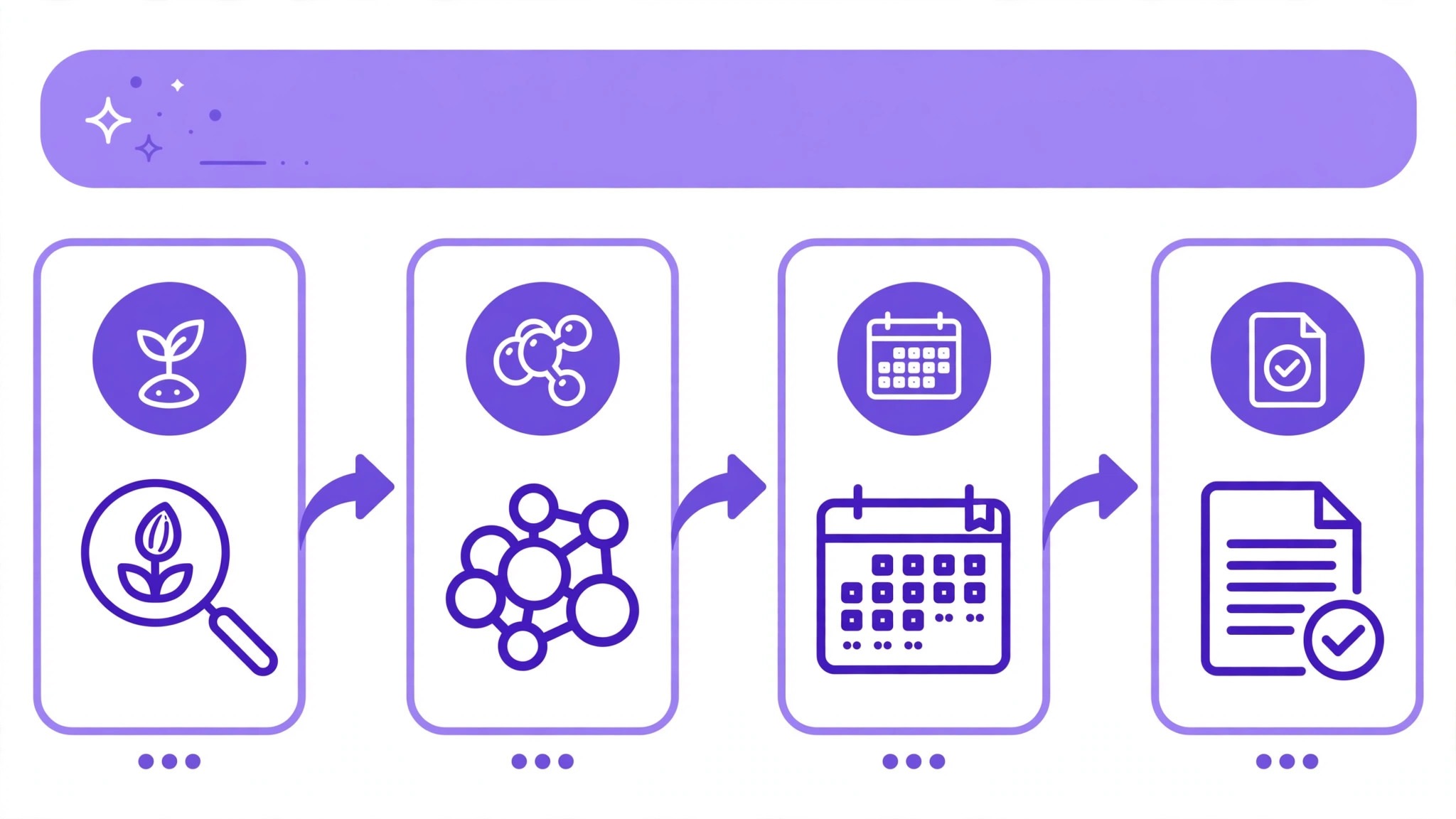
Keyword research only earns its keep when it becomes a content plan, and the step most teams skip is the grouping. Export the keyword list, cluster it by SERP overlap so terms that share the same top results sit on one page, then label each cluster with its search intent. One cluster equals one page, and the brief for that page should cover the questions inside the cluster. A list of ten thousand ungrouped keywords is not a plan, and a team that publishes from an ungrouped list writes the wrong page for half its terms.
Prioritise the clusters by a simple rule: buying intent first, volume second, difficulty third. A cluster with clear buying intent and modest volume will earn more than a high-volume cluster of readers who never convert, and a cluster with low difficulty is where a new site wins first. Rank the clusters, take the top twenty, and that is the next quarter’s content calendar. The rest of the list waits, and most of it will still be there when the site is strong enough to win it.
Assign each cluster a page type before anyone writes. An informational cluster gets a guide, a comparison cluster gets a versus page, a transactional cluster gets a product or landing page, and a question cluster gets a FAQ section inside the guide it belongs to. The page type decides the brief, the brief decides the draft, and the draft that follows a clear brief needs half the editing of one written from a keyword alone.
Track the plan, not the list. Each month, check which clusters now rank, which pages need a refresh, and which keywords moved into AI answers. A cluster that ranks but never appears in an AI answer needs the questions added to the page, and a cluster that appears in AI answers but never ranks needs the authority built around it. The research tool that tracks both is the one worth keeping, because ranking in Google is only half the job in 2026.
Re-run the research every quarter, because a keyword list goes stale faster than most teams expect. Search volumes shift, new competitors appear, and AI answers change which pages get cited, so the list that was right in January can mislead by June. Take the twenty clusters in the plan, refresh their volumes and difficulty scores, and re-rank them. The clusters that rose get more content, the clusters that fell get a refresh or a pause, and the plan stays honest. A team that re-runs its research quarterly never builds a content calendar on last year’s numbers.
| Plan step | What to do | Output |
|---|---|---|
| Cluster the keywords | Group by SERP overlap and intent | Topic clusters |
| Prioritise by intent | Buying intent first, volume second | Ranked list |
| Assign a page type | Guide, comparison, landing or FAQ | Content calendar |
| Brief each cluster | Outline, questions and word count | Writer briefs |
| Track monthly | Rankings plus AI answer mentions | Refresh list |
Frequently Asked Questions
What is the best AI tool for keyword research
Semrush is the broadest suite, with the largest database and AI visibility tracking, while Ahrefs is the best pick for backlink and keyword research together, with the cheapest serious entry at 29 dollars a month. A small site on a tight budget should start with Mangools or Ahrefs Starter, and an agency that tracks many clients should look at SE Ranking. The right answer depends on whether you need one suite or one job done well.
How much does keyword research software cost
Entry prices run from 9 dollars a month for AnswerThePublic to 139 dollars a month for Semrush, with Ahrefs Starter at 29 dollars a month the cheapest way into a full database. The top 10 ai tools for keyword research all charge more for AI visibility tracking, which is often an add-on, so check whether the price you are quoted includes it. Annual billing saves SEO teams about fifteen to twenty percent against monthly billing.
Can AI keyword tools track mentions in AI answers
Yes, and in 2026 that is half the job. Semrush tracks brand mentions in ChatGPT, Perplexity and Gemini, Ahrefs sells Brand Radar from 199 dollars a month, and the other suites have added their own AI tracking, usually on a higher tier or as an add-on. Check whether the tracking covers the AI engines your customers actually use, and whether the prompts it monitors match the questions buyers ask.
What is keyword difficulty and can I trust it
Keyword difficulty is a score, usually 0 to 100, that estimates how hard a term is to rank for, and each vendor calculates it differently. Ahrefs bases it on the backlinks of the top pages, Moz on domain authority and page authority, and Semrush on a mix of factors. Treat the score as a relative guide, not a fact, and always look at the actual top ten results for a term before you commit to writing about it.
Do I need a paid tool or is free enough
Free plans cover occasional research: Semrush gives ten reports a day, Ahrefs gives data on your own verified sites, and AnswerThePublic has a free tier. A site publishing weekly will hit those limits within days, so a paid plan is needed for regular work. Start free, track how often you hit the limit, and buy the cheapest paid plan that covers your actual usage rather than the biggest suite.
How do I group keywords into a content plan
Export your keyword list, cluster it by SERP overlap so terms that share the same top results sit on one page, then label each cluster with its search intent. Keyword Insights automates the clustering, and Semrush and Ahrefs both group ideas by topic. One cluster equals one page, and the brief for that page should cover the questions inside the cluster. A list of ten thousand ungrouped keywords is not a plan.
How many keywords should a content plan start with
Start with twenty clusters, not two thousand keywords. The top 10 ai tools for keyword research will happily export ten thousand terms, but a team that publishes four posts a month can only cover twenty clusters in a quarter. Rank the clusters by buying intent, take the top twenty, and build the calendar from those. The rest of the list is a backlog, not a plan, and it will still be there when the site is strong enough to win it.
Wrapping Up
If you buy one tool this quarter, buy Ahrefs Starter if you want the cheapest way into real keyword data, and Semrush if you want one suite for research, tracking and AI visibility. Ahrefs costs 29 dollars a month and gives the best backlink data in the business, while Semrush at 139 dollars a month covers the whole job in one login. The top 10 ai tools for keyword research earn their keep by pointing your content at the terms buyers actually search, and both of these do that from the first week.
Whatever you pick, start with the keywords your buyers search when they are ready to buy, trial on real research, and check the AI visibility tracking before you commit to annual billing. The tools on this list all work. The difference is whether the tool matches the research you actually do, and whether you measure the return in traffic and sales rather than in features used. A year from now, the keyword work tools still in use will be the ones that passed that test.