
If you buy one tool from this list, buy Pearl Second Opinion. That is the short answer, and the rest of this guide explains why, with published prices and an honest catch for every option. The best ai tools for dental hygienists below cover the full range, from free plans that do the job to enterprise platforms that cost thousands a year.
All dental hygiene work prices below are published starting prices as of late 2026, and annual billing is noted where it changes the number. Start with the shortlist, then read the reviews that match the dental hygiene work you do most. No team needs every one of the 12 tools. A general tool plus a specialist covers most dental hygiene work, and a third tool earns its place only by fixing one specific weekly pain.
Each review below names the daily dental hygiene job its tool does best, so pick two and stop shopping. The best ai tools for dental hygienists are not ranked by price alone, because the cheapest tool that cannot do your job is the most expensive mistake on this list.
The Shortlist in Brief
The table below matches each common hygiene appointment to the single tool that handles it best. Use it to narrow the best ai tools for dental hygienists to two or three candidates before you read the full reviews. Monthly list prices apply unless noted, and annual billing usually beats monthly billing for dental hygiene teams.
| Job | Best tool | Why it wins |
|---|---|---|
| Practices that want FDA-cleared AI across 2D and 3D imaging. | Pearl Second Opinion | Pricing on request, with third-party reports near 300 dollars a month for radiograph AI. |
| DSOs and insurers that need the broadest clinical intelligence platform. | Overjet | Pricing on request, with published reports near 400 dollars a month. |
| Independent practices that want a low, published price. | Denti.AI | Detect at 49 dollars a month per location, plus 10 dollars a user a month for Voice Perio. |
| Practices running CBCT that want detailed 3D reporting. | Diagnocat | From about 140 dollars a month for 2D, and about 270 dollars a month for 3D. |
| Groups that want detection plus analytics across locations. | VideaHealth | Pricing on request. |
| Hygienists who want voice charting built for perio. | Bola AI | Pricing on request. |
| Practices that want KPI dashboards and recall analytics. | Dental Intelligence | Pricing on request. |
| Practices that want reminders, recalls and reputation in one system. | Weave | Pricing on request. |
| Smaller practices that want lightweight reminders and feedback. | Yapi | Pricing on request. |
| Practices that want recall campaigns tied to production. | RevenueWell | Pricing on request. |
| Multi-location groups that want scheduling, billing and AI in one platform. | Tab32 | Pricing on request. |
| Growing practices that want cloud practice management with AI features. | CareStack | Pricing on request. |
How We Chose the Best AI Tools for Dental Hygienists
A tool earned a place here only if it does a real hygiene appointment in 2026, not if it added an AI label to an old product. The best ai tools for dental hygienists were judged on five things that decide whether a team keeps paying after the first year.
First, the job, because dental hygiene teams get more from a tool that does one dental hygiene output format well than from a platform that does five poorly. Second, published pricing and scaling, including per-seat charges that change the real bill as dental hygienists grow. Third, output quality, because errors cost dental hygiene teams more in lost trust than the subscription saves.
Fourth came workflow fit, since dental hygienists need the tool inside their existing dental hygiene work process, not a rebuild of it. Fifth came the catch, from free plans that watermark exports to template libraries that repeat the same ten dental hygiene work designs. Those five checks become the questions in the table below, for dental hygiene teams to ask before buying.
| Check before you buy | What to ask | Why it matters |
|---|---|---|
| Real job fit | Does it do my weekly job well | A poor fit wastes the subscription |
| Published price | What does year two cost | Hidden rises break the budget |
| Output quality | Is the result good enough to ship | Errors cost trust with clients |
| Workflow fit | Does it connect to my other tools | A disconnected tool adds manual work |
| Free plan limits | What is locked behind the paywall | A locked export cannot be used |
| Contract terms | Monthly or annual, and what changes | Annual billing locks the price, not the need |
Each Tool, Reviewed
1. Pearl Second Opinion
Starting price Pricing on request, with third-party reports near 300 dollars a month for radiograph AI. Best for Practices that want FDA-cleared AI across 2D and 3D imaging. Watch out Quote-only pricing means the real bill depends on negotiation.
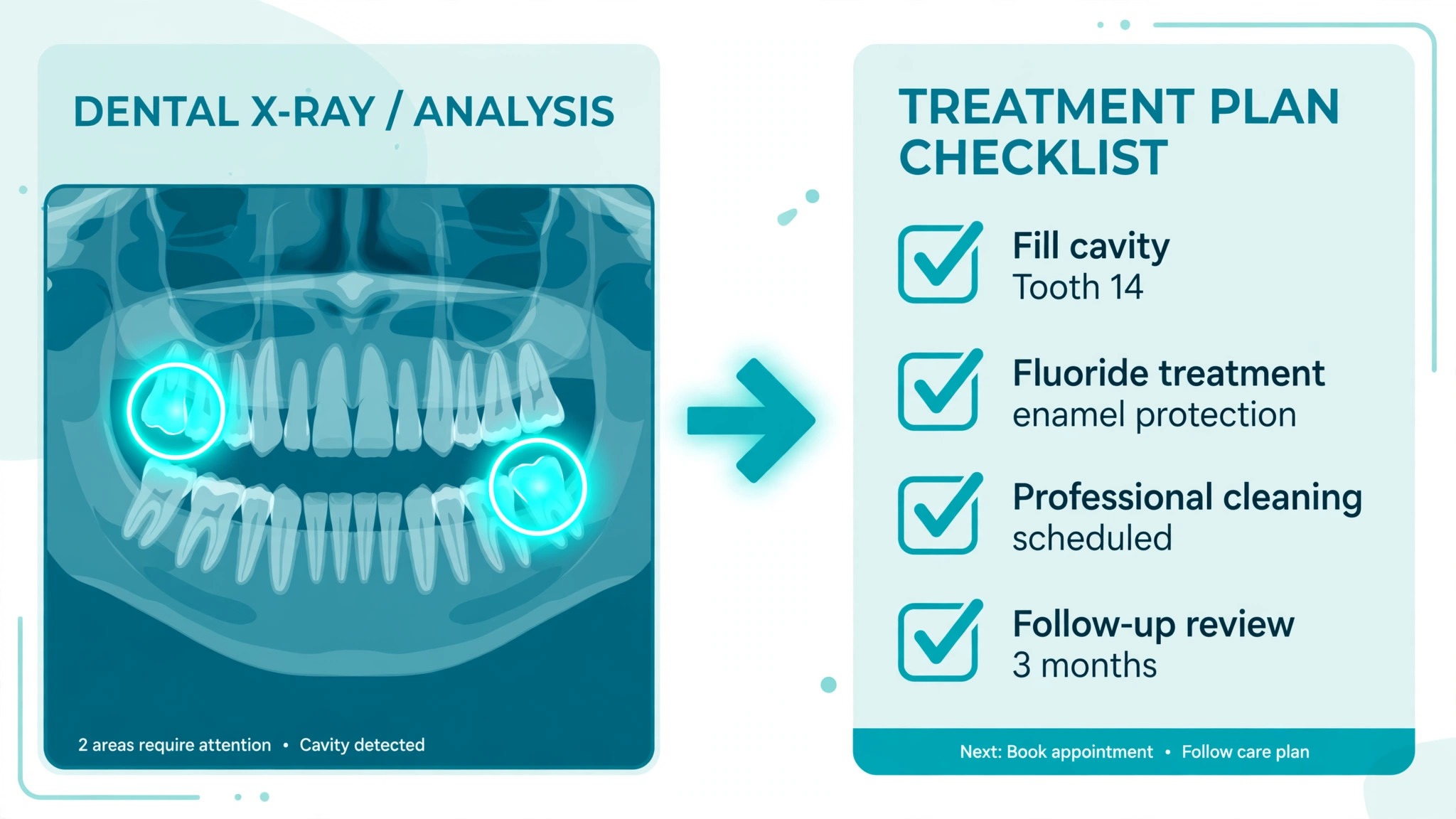
Pearl Second Opinion reads bitewing, periapical and panoramic radiographs and flags caries, bone loss, periapical lesions and calculus with confidence scores, right inside the imaging software a hygienist already uses. It was the first dental AI cleared by the FDA for both 2D and 3D imaging, and it works across more than 30 imaging brands, so most practices do not need new hardware.
The strength is clinical trust. Pearl reports catching more disease earlier and lifting treatment acceptance by about 30 percent, and the findings appear chairside where the hygienist can show the patient what the X-ray shows. The catch is price opacity: expect a sales conversation and a per-provider bill. For practices that want one AI across all imaging, Pearl earns its place.
2. Overjet
Starting price Pricing on request, with published reports near 400 dollars a month. Best for DSOs and insurers that need the broadest clinical intelligence platform. Watch out Built for scale, so a single-location practice pays enterprise overhead.
Overjet holds more than ten FDA clearances covering caries, bone loss and charting, and it pairs radiograph analysis with insurance verification and claim support. Its IRIS platform turns imaging findings into structured clinical data, and its voice AI suite drafts clinical notes from the appointment. For a group practice, the same findings feed analytics across every location.
The strength is breadth. No other tool here covers detection, charting, voice notes and payer workflows in one platform, and the insurer relationships help claims go through with evidence attached. The catch is fit: Overjet is priced and sold for groups, so a solo practice will find the contract heavy. For DSOs, Overjet earns its place.
3. Denti.AI
Starting price Detect at 49 dollars a month per location, plus 10 dollars a user a month for Voice Perio. Best for Independent practices that want a low, published price. Watch out The flat price covers detection; advanced charting costs extra per user.
Denti.AI cut its radiograph AI to a flat 49 dollars a month per location, the lowest published price for FDA-cleared detection on this list. It flags disease on panoramic and intraoral images, and its Auto-Chart 2 voice tool turns spoken findings into chart entries during the appointment. A hygienist can chart hands-free while the patient is still in the chair.
The strength is the price tag. A solo practice gets cleared detection for less than a single filling, and the voice charting saves minutes on every appointment. The catch is that the 49-dollar tier is detection only, with voice perio billed per user. For independent practices watching every dollar, Denti.AI earns its place.
4. Diagnocat
Starting price From about 140 dollars a month for 2D, and about 270 dollars a month for 3D. Best for Practices running CBCT that want detailed 3D reporting. Watch out 3D pricing is nearly double the 2D tier, so CBCT-heavy practices pay more.
Diagnocat detects more than 65 conditions on CBCT scans and produces structured 3D reports a dentist can review before the patient leaves. Its 2D tier covers standard radiographs at about 140 dollars a month, while the 3D tier adds segmentation and reporting for implant and ortho planning. The reports are detailed enough to attach to a referral or a treatment plan.
The strength is CBCT depth. Few tools on this list go beyond 2D, and Diagnocat turns a scan into a written report instead of a set of flags. The catch is the step up in price for 3D, and the workflow suits practices that already scan regularly. For CBCT practices, Diagnocat earns its place.
5. VideaHealth
Starting price Pricing on request. Best for Groups that want detection plus analytics across locations. Watch out No published price, so budgeting needs a sales call.
VideaHealth pairs radiograph detection with practice analytics, showing which findings get presented, which get accepted and where a location lags. Its AI reads the same bitewings and periapicals a hygienist takes every day, and the dashboard turns those findings into coaching for the clinical team. Integration covers the major practice management systems.
The strength is the feedback loop. Detection alone does not change behaviour, but a dashboard that shows acceptance rates by provider does. The catch is the same as most enterprise dental AI: pricing on request and a sales-led process. For groups that manage by numbers, VideaHealth earns its place.
6. Bola AI
Starting price Pricing on request. Best for Hygienists who want voice charting built for perio. Watch out A narrow tool, so it needs a detection partner beside it.
Bola AI listens during a perio exam and writes the chart as the hygienist calls out pocket depths and bleeding points. It is built for the perio workflow specifically, with voice commands tuned to dental vocabulary, so it catches numbers a general dictation tool would miss. The chart lands in the practice software without retyping.
The strength is focus. Perio charting is the slowest part of a hygiene appointment, and a tool that does only that job does it well. The catch is scope: Bola AI charts, it does not read radiographs, so a practice still needs a detection tool. For perio-heavy hygiene schedules, Bola AI earns its place.
7. Dental Intelligence
Starting price Pricing on request. Best for Practices that want KPI dashboards and recall analytics. Watch out It analyses the practice, it does not read X-rays.
Dental Intelligence turns practice data into dashboards: production per provider, hygiene reappointment rates, unscheduled treatment and recall gaps. It flags patients who are overdue and shows the money sitting in unscheduled treatment plans. For a hygienist, the morning huddle view shows exactly which patients need a recall call that day.
The strength is visibility. A practice that cannot see its recall gap cannot fix it, and Dental Intelligence makes the gap a number on a screen. The catch is that it is analytics, not clinical AI, so it pairs with a detection tool rather than replacing one. For practices run on numbers, Dental Intelligence earns its place.
8. Weave
Starting price Pricing on request. Best for Practices that want reminders, recalls and reputation in one system. Watch out Enterprise-style pricing for a front-office tool.
Weave combines appointment reminders, recall campaigns, two-way texting, online scheduling and review requests in one phone and messaging system. A hygienist’s recall list becomes a text campaign instead of a phone queue, and patients can confirm or reschedule by reply. The system also collects reviews after the visit, which feeds the practice’s online reputation.
The strength is the front office in one place. Reminders, recalls and reviews usually live in three tools, and Weave joins them, so fewer patients slip through. The catch is cost: Weave is priced for practices, not solo hygienists, and the bill needs a quote. For busy front offices, Weave earns its place.
9. Yapi
Starting price Pricing on request. Best for Smaller practices that want lightweight reminders and feedback. Watch out Fewer features than the full engagement platforms.
Yapi covers the essentials of patient engagement: automated reminders, recall messages, intra-office messaging and post-visit feedback forms. It is lighter than Weave and built for practices that want the recall job done without a full communications suite. Setup is quick, and the team learns it in a day.
The strength is simplicity. A small practice gets reminders and recalls working without a long implementation or a big contract. The catch is depth: Yapi does less than the larger platforms, so a growing practice may outgrow it. For small practices that want the basics done well, Yapi earns its place.
10. RevenueWell
Starting price Pricing on request. Best for Practices that want recall campaigns tied to production. Watch out Quote-only pricing and a sales-led setup.
RevenueWell automates recall and reactivation campaigns and ties them to production numbers, so a practice sees which campaigns bring patients back and what they are worth. It sends reminders by text and email, fills open chairs from a waitlist and tracks the revenue each campaign recovers. The reporting shows the return on the recall effort directly.
The strength is the revenue link. Most reminder tools report messages sent, while RevenueWell reports dollars recovered, which is the number an owner actually wants. The catch is access: pricing on request and a setup process that suits larger practices. For practices that measure recall in revenue, RevenueWell earns its place.
11. Tab32
Starting price Pricing on request. Best for Multi-location groups that want scheduling, billing and AI in one platform. Watch out Built for groups, with group-sized pricing.
Tab32 is a cloud practice management platform with scheduling, billing, imaging and AI features in one system. It suits multi-location groups that want one record, one schedule and one bill across every chair. Its AI tools help with charting and workflow, and the cloud base means a hygienist can see the same record at any location.
The strength is consolidation. A group running five locations on five systems pays in duplicated work, and Tab32 removes that duplication. The catch is scale: it is sold to groups, and a single practice will find it more platform than it needs. For multi-location groups, Tab32 earns its place.
12. CareStack
Starting price Pricing on request. Best for Growing practices that want cloud practice management with AI features. Watch out Migration from a legacy system takes planning.
CareStack is a cloud-based practice management system covering scheduling, charting, billing and patient engagement, with AI features layered across the workflow. It is built for practices outgrowing a desktop system and wanting one cloud record. The interface is modern, and the reporting covers production, collections and hygiene performance.
The strength is the cloud foundation. A practice that moves to CareStack gets the record, the schedule and the billing in one place, accessible from any chair. The catch is migration: moving years of charts takes planning and a careful cutover. For practices ready to leave desktop software behind, CareStack earns its place.
The Best AI Tools for Dental Hygienists Side by Side
The table below puts the best ai tools for dental hygienists side by side on price, best job and free plan, so you can compare the published prices at a glance. Check the best-for column before the price, since a five-dollar tool that fails the main dental hygiene task costs dental hygienists more than a dearer tool that does it well.
| Tool | Starting price | Best for | Free plan |
|---|---|---|---|
| Pearl Second Opinion | Pricing on request, with third-party reports near 300 dollars a month for radiograph AI. | Practices that want FDA-cleared AI across 2D and 3D imaging. | No |
| Overjet | Pricing on request, with published reports near 400 dollars a month. | DSOs and insurers that need the broadest clinical intelligence platform. | No |
| Denti.AI | Detect at 49 dollars a month per location, plus 10 dollars a user a month for Voice Perio. | Independent practices that want a low, published price. | No |
| Diagnocat | From about 140 dollars a month for 2D, and about 270 dollars a month for 3D. | Practices running CBCT that want detailed 3D reporting. | No |
| VideaHealth | Pricing on request. | Groups that want detection plus analytics across locations. | No |
| Bola AI | Pricing on request. | Hygienists who want voice charting built for perio. | No |
| Dental Intelligence | Pricing on request. | Practices that want KPI dashboards and recall analytics. | No |
| Weave | Pricing on request. | Practices that want reminders, recalls and reputation in one system. | No |
| Yapi | Pricing on request. | Smaller practices that want lightweight reminders and feedback. | No |
| RevenueWell | Pricing on request. | Practices that want recall campaigns tied to production. | No |
| Tab32 | Pricing on request. | Multi-location groups that want scheduling, billing and AI in one platform. | No |
| CareStack | Pricing on request. | Growing practices that want cloud practice management with AI features. | No |
Best Pick by Job
The best ai tools for dental hygienists are not the ones with the longest feature list. Those fix the slowest part of the dental hygiene work week for dental hygiene teams. Begin with the slowest dental hygiene work job, not the vendor homepage, and price the full bill, not the headline.
Check the export second, for dental hygienists. A flawless editor result that exports with a watermark is unusable, and a single-format export covers one dental hygiene work channel only. Read the export formats on the pricing page before paying, since the format decides where each dental hygiene work result can travel.
| Stack for one person | Monthly cost | What it covers |
|---|---|---|
| Pearl Second Opinion plus Overjet | See prices above | General tool plus specialist |
| Pearl Second Opinion alone | See price above | The strongest single pick |
| Denti.AI plus a free plan | Low cost | Budget start with room to grow |
A Fortnight to Decide
Use the checklist below on the dental hygiene trial run, and keep score for dental hygiene teams. A dental hygiene software tool that passes five of the six checks is worth paying for, and a tool that fails the first two is not worth a second week.
| Trial check | Pass means | Fail means |
|---|---|---|
| Real work test | It handles your actual weekly job | It only works on sample data |
| Export test | The result exports cleanly | Watermarks or locked formats |
| Speed test | The job finishes faster than before | It adds steps instead of removing them |
| Team test | A colleague learns it in a day | Only the buyer can use it |
| Price test | Year-two cost is clear in writing | The renewal price is a surprise |
| Support test | Help answers within a day | No answer before the trial ends |
Run the trial on a real hygiene appointment, not on sample data, because sample data hides the problems that real data exposes. Check the export before paying, because a tool that cannot export dental hygiene work cleanly owns the work. Get the per-seat price in writing, with year two included, since the headline price rarely covers the full dental hygiene work bill. Clock the slowest dental hygiene pain point before and after the trial, since the gap is the only return that matters for dental hygienists.
Let the daily user test the dental hygiene tool option, not just the person signing the contract, for dental hygiene teams. Agree the data rules before importing, since a cleanup done twice costs more than one done once. One general tool plus one specialist is enough, because five dental hygiene work tools become a second job. Read the cancellation terms first, so a bad fit ends with a click, not a negotiation.
Run the trial on a real hygiene appointment, not on sample data, because sample data hides the problems that real data exposes. Check the export before paying, because a tool that cannot export dental hygiene work cleanly owns the work. Get the per-seat price in writing, with year two included, since the headline price rarely covers the full dental hygiene work bill. Clock the slowest dental hygiene bottleneck task before and after the trial, since the gap is the only return that matters for dental hygienists.
Let the daily user test the dental hygiene software tool, not just the person signing the contract, for dental hygiene teams. Agree the data rules before importing for dental hygiene teams, since a cleanup done twice costs more than one done once. One general tool plus one specialist is enough, because five dental hygiene work tools become a second job. Read the cancellation terms first, so a bad fit ends with a click, not a negotiation, for dental hygienists.
Run the trial on a real hygiene appointment, not on sample data, because sample data hides the problems that real data exposes. Check the export before paying, because a tool that cannot export dental hygiene work cleanly owns the work. Get the per-seat price in writing, with year two included, since the headline price rarely covers the full dental hygiene work bill. Clock the slowest dental hygiene job itself before and after the trial, since the gap is the only return that matters for dental hygienists.
Let the daily user trial the dental hygiene app tool, not just the buyer who signs for dental hygienists.
What Readers Ask
Where should dental hygiene teams start on a tight budget
Denti.AI is the cheapest credible start, at 49 dollars a month per location, and it covers the core job without a long setup. A free plan is worth testing first when one exists, because the trial shows whether the dental hygiene workflow fits before any money moves. Begin with the most common weekly dental hygiene job type, and add a specialist only when the general tool fails a job dental hygienists are paid to do. That is the cheapest route to a dental hygiene work stack, with no payment for features never used.
Is the free plan for dental hygienists good enough to use
Several tools here offer a free plan or tier that is genuinely usable for dental hygiene work, not just a demo. Limits on volume, exports or seats are the usual catch, so a free plan suiting one person may fail dental hygiene teams. When you compare the best ai tools for dental hygienists, check what the free tier actually includes, because a free plan that covers your weekly volume is worth more than a cheap paid plan that does not.
For a small team, which dental hygiene tool option wins
Pearl Second Opinion is the strongest pick for most small teams, because it covers the core job well and the price scales fairly as the team grows. Buy one general tool first, and add a specialist only when a weekly dental hygiene work pain appears that the general tool cannot handle, for dental hygienists. Two tools keep the dental hygiene work stack simple and the bill defensible for dental hygienists.
How quickly can dental hygienists set these tools up
Most tools on this list take about a week of training to set up properly, including importing existing data and connecting the tools you already use. The work that takes longer is the habit change: getting the team to use the new workflow every day for dental hygiene work instead of falling back to the old spreadsheet. Trial on real dental hygiene work, not on sample data, because only real work shows the true setup cost for dental hygienists.
What is the costliest mistake when buying dental hygiene work tools
The biggest mistake is buying for the feature list instead of the slowest hour of the week, and the second is ignoring an AI finding that nobody reviews before acting on it. Fifty features mean nothing for dental hygienists when the slow part of the dental hygiene working week stays slow, and five features that fix it win. Name the costliest dental hygiene daily task before paying, and buy the tool that does that job best for dental hygienists.
Is it easy to switch dental hygiene work tools later without losing anything
Yes, in most cases, because the tools on this list export data in standard formats, and the best ai tools for dental hygienists all support common export options. Templates, automations and saved settings rarely move cleanly, so the dental hygiene workflow is the harder part, and a few days of rebuilding is normal. Before the dental hygiene trial period ends, export the data and keep a copy outside the tool, so switching stays a choice, not a rescue.
The Verdict, in Brief
If you buy one tool this quarter, buy Pearl Second Opinion. It is the strongest all-round pick on this list, with the best balance of price, quality and workflow fit for most dental hygienists. The best ai tools for dental hygienists all work, and the difference is whether the tool matches the hygiene appointment you actually do, and whether you measure the return in hours saved rather than in features used.
Start with the slowest dental hygiene daily task of the week, trial on real work, and check every result by eye before it ships, for dental hygiene teams. These tools earn their place by returning the hours manual dental hygiene work used to eat, and that return is the test each purchase must pass.