
If you buy one tool this quarter, buy Jobber Core. It turns a quote into a booked job and an invoice in one flow, and for a carpenter who quotes five jobs to win two, that flow is worth more than any writing helper. The best ai tools for carpenters are judged here on the same test, which is whether the tool wins work, prices it right and gets it paid, and Jobber is the one that does all three from the first week.
This guide compares eight tools on published prices, the workshop job each one does best and the catch that only shows up after the trial ends. Every price below is the published starting price as of late 2026, with annual billing noted where it changes the number. Start with the shortlist, then read the reviews that match the jobs your workshop does most.
A carpenter does not need eight tools. One job management tool plus one writing helper covers most small workshops, and a third tool only earns its place when it fixes a specific weekly pain, such as quotes that sit unanswered or invoices that go out a month late. The reviews below say plainly which job each tool does, so you can pick two and stop shopping.
The Shortlist for the Workshop
The table below matches each common carpentry job to the single tool that handles it best. Use it to narrow the best ai tools for carpenters to two or three candidates before you read the full reviews. Prices are monthly list prices unless noted, and annual billing is usually cheaper than paying month to month.
| Job | Best tool | Why it wins |
|---|---|---|
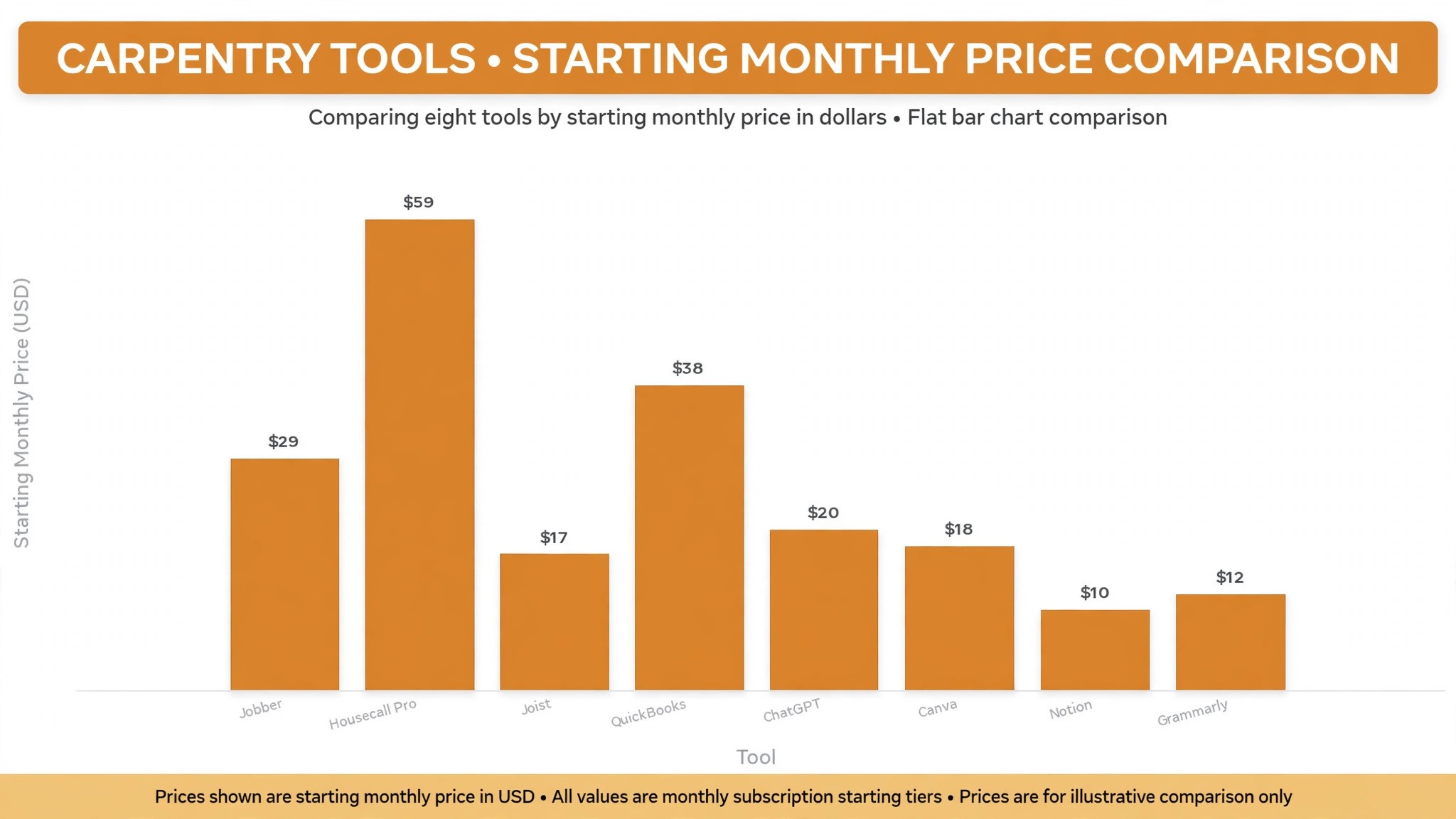
| Quotes, scheduling and invoicing | Jobber | Core from 29 dollars a month billed annually |
| Sales proposals and financing | Housecall Pro | Basic from 59 dollars a month billed annually |
| Budget estimates and invoices | Joist | Pro at 17 dollars a month, unlimited documents |
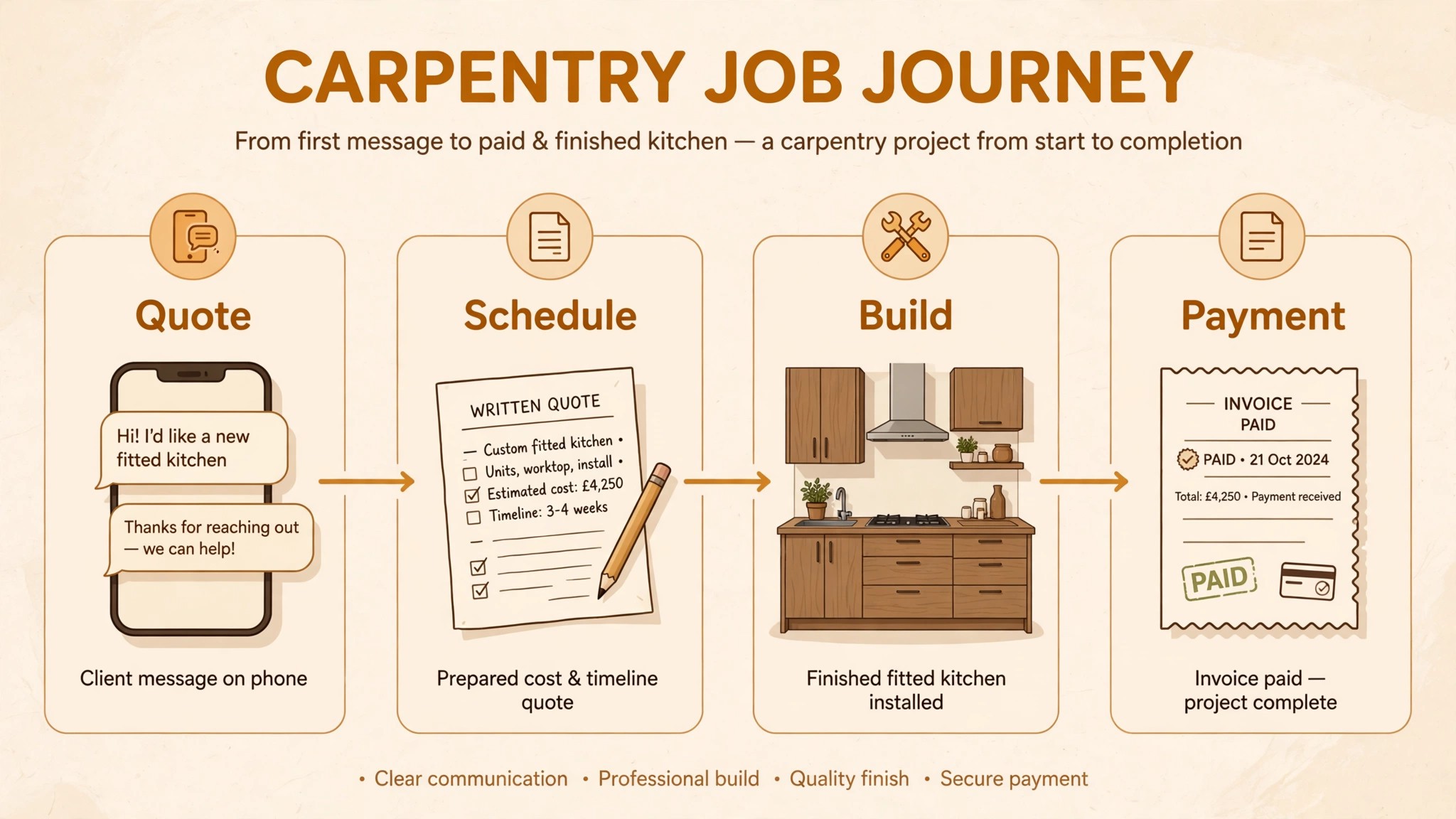
| Costing and bookkeeping | QuickBooks | Simple Start from 38 dollars a month |
| Client messages and quotes wording | ChatGPT | 20 dollars a month for Plus, free plan included |
| Job photos and portfolios | Canva | Pro from 18 dollars a month, or 144 dollars a year |
| Job costing sheets and timber lists | Notion | Plus from 10 dollars a month per user |
| Professional emails and replies | Grammarly | Premium from 12 dollars a month billed annually |
How We Judged the Best AI Tools for Carpenters
A tool earned a place here only if it does a real workshop job in 2026, not if it added an AI label to an old app. The best ai tools for carpenters were judged on five things that decide whether a carpenter keeps paying after the first year.
First, the workshop job it does, from writing a quote to chasing an invoice, because a tool that does one job well beats a platform that does five jobs poorly. Second, whether the price is published and how it scales, including per user charges that change the real bill as a crew grows. Third, output quality, because a quote that needs rewriting costs more time than writing from scratch.
Fourth, how it handles the money, because a workshop lives on thin margins and a tool that miscounts timber or hides a fee will cost more than its subscription. Fifth, the catch, from free plans that cap documents to scheduling tools that only work for one trade.
| Check before you buy | What to ask | Why it matters |
|---|---|---|
| Document caps | Monthly limit and what happens at the cap | A cap that stops quotes stops the work |
| Per user charges | Price per extra crew member | Crew bills multiply across a team |
| Payment collection | Deposit and card options | Deposits protect the timber order |
| Quote follow ups | Automatic reminders or manual chasing | Follow ups win the jobs you already quoted |
| Photo and portfolio tools | Templates and client galleries | Photos sell the next job |
| Contract terms | Monthly or annual, and what year two costs | Annual billing locks the price but not the need |
The 8 Tools, Reviewed One by One
1. Jobber
Starting price Core 49 dollars a month for one user, or 29 dollars a month billed annually. Best for Quotes, scheduling and invoicing. Watch out Follow ups and client options sit on higher plans.
Jobber is the best all round pick for a carpenter who quotes, schedules and invoices from one place. Core connects the quote, the job record and the invoice into a single flow, so a client who approves a quote online can pay the deposit in the same step, and the job appears on the schedule without retyping. For a workshop that quotes five jobs to win two, that flow is the whole value.
The strength is the follow through. A quote sent by email or text gets a viewed notice, the client signs online, and the deposit lands through Jobber Payments, so the timber order goes in the same day instead of waiting for a phone call. Batch invoicing and automatic payment collection come standard, which means the end of month invoice run takes an hour instead of a day.
The catch is the plan ladder. Core at 29 dollars a month billed annually covers the basics, but quote follow ups come in on Connect at 99 dollars a month billed annually, and client picked options sit on Grow at 149 dollars. A solo carpenter should price the plan it will need in a year, not the one it needs today. For quotes to payment in one flow, Jobber earns its place, and the 14 day trial needs no card.
2. Housecall Pro
Starting price Basic 79 dollars a month, or 59 dollars a month billed annually, for one user. Best for Sales proposals and financing. Watch out The bill climbs fast as you add users and features.
Housecall Pro is the sales pick, built for trades that want to present three prices instead of one. Its good, better, best proposal format lets a client choose a higher spec kitchen instead of haggling over a single number, and consumer financing on bigger jobs turns a no into a yes. For a carpenter selling fitted work, that proposal format is the whole value.
The strength is the sales toolkit. Estimates, scheduling, invoicing, payments and marketing sit in one app, with online booking and onsite card collection, so a client can book a measure up, approve the work and pay the deposit without a phone call. The review management and community of pros are useful extras for a workshop building a reputation.
The catch is the price. Basic at 59 dollars a month billed annually is the entry point, Essentials runs 149 dollars and Max runs 299 dollars, with added users at 35 dollars a month each on Max. A solo carpenter will find Jobber cheaper for the same core jobs. For sales proposals and financing, Housecall Pro earns its place, and the two week free trial needs no card.
3. Joist
Starting price Basics 10 dollars a month, Pro 17 dollars, Elite 32 dollars. Best for Budget estimates and invoices. Watch out Basics caps you at five documents a month.
Joist is the budget pick, built for solo carpenters who mainly need estimates, invoices and payments. Pro at 17 dollars a month makes documents unlimited, adds photos, client tracking and deposit collection, and syncs with QuickBooks Online, so a quote written from the truck becomes an invoice without retyping. For a one person workshop, that simple flow is the whole value.
The strength is focus. Joist does estimates, invoices and payments and little else, which means there is nothing to learn beyond the job itself. A carpenter can build an estimate with labour and material line items, markups and a photo of the site, send it by text, and get a signature back on a phone. Deposit collection and payment scheduling are built in, so the timber gets ordered on time.
The catch is the cap. Basics at 10 dollars a month stops at five documents, so most carpenters need Pro at 17 dollars, and the Run plan that adds scheduling costs 70 dollars a month as an introductory price. For low cost estimates and invoices, Joist earns its place, and the 14 day trial needs no card.
4. QuickBooks
Starting price Simple Start from 38 dollars a month. Best for Costing and bookkeeping. Watch out The price rises steeply as you add users and features.
QuickBooks is the bookkeeping pick, and it does the job that decides whether a workshop makes money, which is knowing what each job really costs. Simple Start tracks income and expenses, sends invoices and shows a profit and loss report, so a carpenter can see whether the kitchen line pays for the timber or just keeps the workshop busy. For a workshop that prices by feel, that report is the whole value.
The strength is the numbers. A carpenter can log timber purchases, set up recurring invoices for regular trade customers, and check the tax position before the year end rush, instead of finding it in a folder in January. The receipt capture by photo means the timber invoice goes into the books on the day it arrives, not at the end of the month.
The catch is the price ladder. Simple Start at 38 dollars a month is the entry point, and the bill climbs as you add users, payroll and inventory features, so a growing workshop should price the plan it will need in a year, not the one it needs today. For costing and tax, QuickBooks earns its place, and the 30 day trial is enough to test it on real jobs.
5. ChatGPT
Starting price Free plan, then 20 dollars a month for Plus. Best for Client messages and quotes wording. Watch out It invents measurements, so every figure needs a human check.
ChatGPT is the best all round helper per dollar on this list, and it is the tool most carpenters already use every day. Plus at 20 dollars a month buys the stronger models, more capacity and file uploads, and the free plan is enough to test whether AI help fits a workshop. It drafts quote cover notes, writes client replies, turns a rough timber list into a clean estimate, and drafts a polite chase for an unpaid invoice.
The strength is flexibility. A carpenter can paste a quote and ask for a shorter version, ask for ten ways to word a price increase, then ask for a reply to a client who wants the job done cheaper, and the back and forth is faster than typing each one by hand. For a small workshop that writes many kinds of text, that flexibility is worth more than a specialist feature set.
The catch is accuracy. ChatGPT will invent a measurement or a price with total confidence, so no figure goes to a client without a human check. It also has no job book, no costing sheet and no payment link, so a carpenter must supply the structure on every job. For writing help at 20 dollars a month, ChatGPT is the best value on this list, and it belongs in every workshop.
6. Canva
Starting price Free plan, then Pro at 18 dollars a month, or 144 dollars a year. Best for Job photos and portfolios. Watch out Pro prices have risen twice since 2024, so check the current number.
Canva is the default choice for workshop visuals, with the largest template library and the easiest editor for a non designer. Pro buys brand kits that keep colours and fonts consistent across a quote cover, a portfolio page and a social post, so the workshop looks like one business instead of three. For a carpenter who photographs every job, that consistency is the whole value.
The strength is speed. A carpenter can turn phone photos of a fitted kitchen into a portfolio page, a quote cover and a social post in one sitting, using templates built for trades. The AI tools remove backgrounds, resize a design for every channel and write a first draft of the caption, which saves the hour a workshop used to spend on each finished job.
The catch is the price trend. Canva Pro has risen twice since 2024, and the free plan keeps getting tighter, so a carpenter should check the price inside the account rather than trusting an old article. For job photos and portfolios, Canva earns its place, and the free plan is enough to test whether the templates fit your workshop.
7. Notion
Starting price Free plan, then Plus from 10 dollars a month per user. Best for Job costing sheets and timber lists. Watch out It is a blank page until you build the system.
Notion is the organization pick, and it does the job every growing workshop needs, which is keeping jobs, costs and timber lists in one searchable place. Plus at 10 dollars a month per user buys unlimited blocks, file uploads and the AI helper that can summarize a job file or draft a costing note. For a workshop with a hundred jobs in notebooks and phone photos, that single file is the whole value.
The strength is structure. A carpenter can build a job database with timber lists, labour hours and costs per job, then link each job to the quote and the invoice that paid for it, so the margin on a kitchen is a lookup instead of a guess. The AI helper drafts supplier emails and turns site notes into a task list, which saves the hour a workshop used to spend on admin after the tools go down.
The catch is the setup. Notion ships as a blank page, and a carpenter who never builds the job database gets nothing from it, so the first week is setup, not building. For a workshop ready to organize its jobs, Notion earns its place, and the free plan is enough to test whether the system fits your way of working.
8. Grammarly
Starting price Free plan, then Premium from 12 dollars a month billed annually. Best for Professional emails and replies. Watch out It polishes wording, it does not write the reply for you.
Grammarly is the writing quality pick, and it does one job that matters when a client is choosing between two carpenters, which is making every message read as professional. Premium checks tone, clarity and correctness as you type, so a quote cover note, a delay update and an apology for a late delivery all sound like they came from the same careful business. For a workshop that wins fitted work by email, that polish is the whole value.
The strength is the live check. A carpenter typing a reply at night gets a warning about a confusing sentence before it is sent, and the tone detector flags a message that sounds abrupt when the carpenter meant to sound friendly. That small check prevents the lost job that a rushed message causes.
The catch is scope. Grammarly rewrites and tightens, it does not plan, research or draft long pieces, so it is a second tool rather than a primary one. A carpenter who buys it expecting a full writing assistant will be disappointed. For polished client messages, Grammarly earns its place as the cheapest quality check on this list.
Side by Side Comparison
The table below puts the best ai tools for carpenters side by side on price, best job and free plan, so you can compare the published prices against the per user tools at a glance.
| Tool | Starting price | Best for | Free plan |
|---|---|---|---|
| Jobber | 29 dollars a month | Quotes, scheduling and invoicing | Trial only |
| Housecall Pro | 59 dollars a month | Sales proposals and financing | Trial only |
| Joist | 17 dollars a month | Budget estimates and invoices | Trial only |
| QuickBooks | 38 dollars a month | Costing and bookkeeping | Trial only |
| ChatGPT | 20 dollars a month | Client messages and quotes wording | Yes |
| Canva | 18 dollars a month | Job photos and portfolios | Yes |
| Notion | 10 dollars a month | Job costing sheets and timber lists | Yes |
| Grammarly | 12 dollars a month | Professional emails and replies | Yes |
How to Pick the Right Tool for Your Workshop
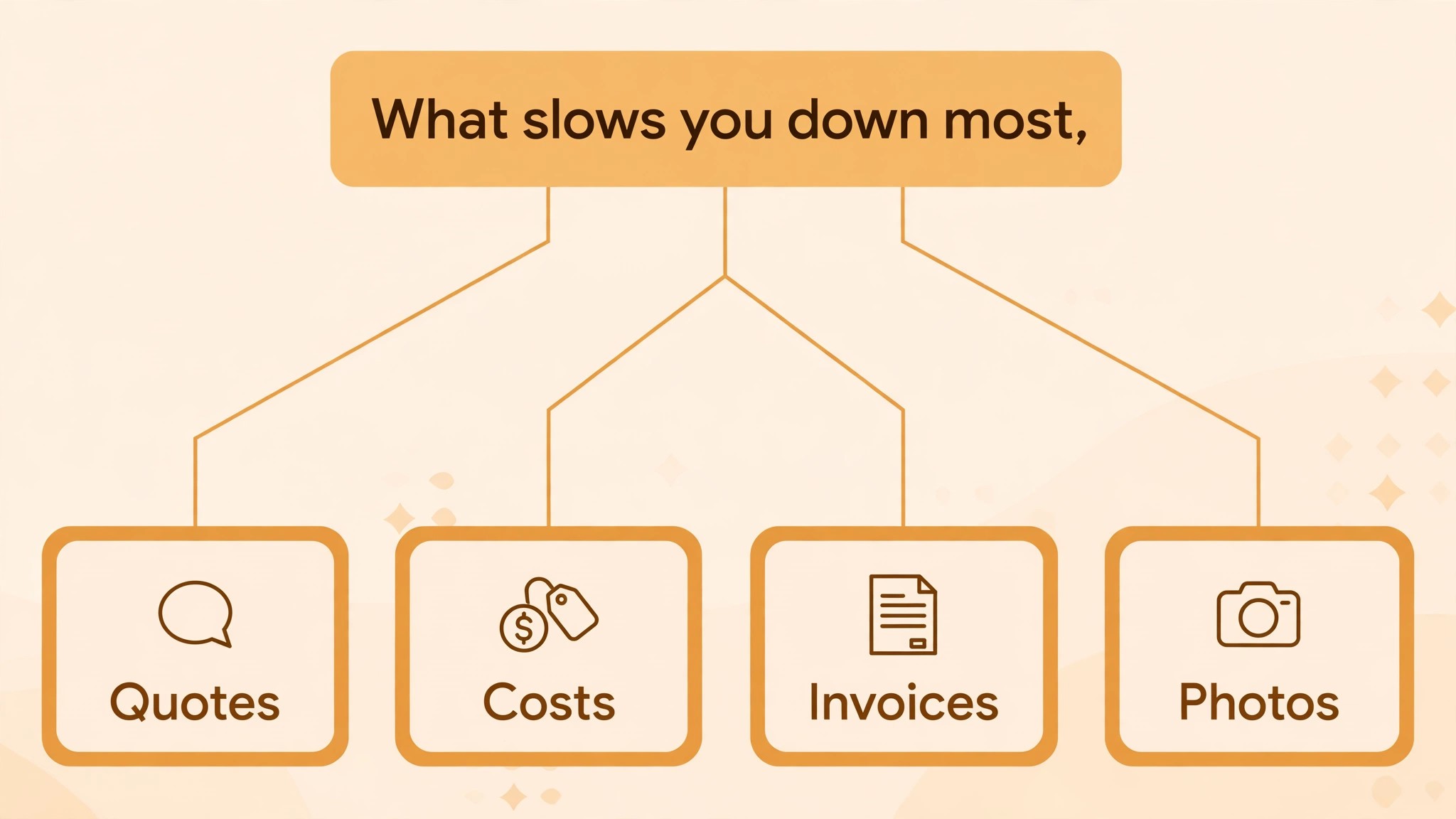
The best ai tools for carpenters are not the ones with the longest feature list. They are the ones that fix the slowest part of your week. A carpenter drowning in quotes should buy Jobber. A carpenter whose costs are a mystery should buy QuickBooks. A carpenter whose invoices go out late should buy Joist. Start from the slow part, not from the vendor homepage.
Budget the full bill, not the headline price. The table below shows what a solo carpenter and a small crew actually pay in year one for the most common combinations, using published starting prices. Per user charges are the lines that surprise workshops, so ask for them in writing before you sign, and remember that annual billing usually saves about twenty percent against monthly billing.
| Stack for one carpenter | Monthly cost | What it covers |
|---|---|---|
| Jobber Core plus ChatGPT | About 49 dollars | Jobs plus writing help |
| Joist Pro plus QuickBooks | About 55 dollars | Estimates plus bookkeeping |
| Housecall Pro Basic | 59 dollars | Sales proposals and jobs |
| Jobber Core, three users | About 99 dollars | Jobs for a small crew |
| Notion Plus plus Grammarly | About 22 dollars | Job files plus polished messages |
| Canva Pro plus ChatGPT | About 38 dollars | Photos plus writing help |
What a Year in the Workshop Costs
A realistic year one budget is 30 to 50 dollars a month for one job management tool such as Jobber Core, and 70 to 110 dollars a month once you add bookkeeping or a second seat, plus the card fees on every payment taken. A workshop taking 40 card payments a month at an average of 500 dollars pays about 550 dollars a month in processing fees alone, which is more than any subscription on this list. Budget for the fees, not just for the tools, and trial each one on real jobs before you commit to annual billing.
Timber prices move every season, and a quote built in January will be wrong by June, so the tool that holds the costs has to be easy to update, or it will be ignored. A carpenter who updates timber and hardware prices once a month keeps every quote honest, and a carpenter who never updates them slowly loses margin on every job. The fix is a ten minute monthly habit, not a new tool, and the best costing tool is the one a carpenter actually opens. Trial each candidate for a month, update the prices twice, and keep the one that still feels quick on the second update.
The hidden cost is the job a tool loses. A slow quote loses a kitchen, a wrong cost loses the margin on a fitted bedroom, and a late invoice loses a month of cash flow. Measure the return in jobs won and hours saved, not in features used, and drop any tool that has not earned its subscription after a month of real use.
Frequently Asked Questions
What is the cheapest good AI tool for carpenters to start with
Joist is the cheapest credible start for the core job, with Pro at 17 dollars a month for unlimited estimates and invoices. ChatGPT has a free plan and Plus at 20 dollars a month, and Notion is free for a small job file. Start with the workshop job you do most each week, and add a specialist only when the general tool cannot do a job you are paid to do. That is the cheapest way to build a stack from the best ai tools for carpenters without paying for features you never open.
Will AI write a quote I can send to a client
It can draft one, but no AI quote goes to a client without a human check. AI tools will invent a measurement or a price with total confidence, and the only fix is a carpenter checking every figure against the site measure and the timber list. Use the AI for the wording and the layout, then check the numbers yourself. The quote that matters is the one with your measurements on it.
Which tool is best for costing a carpentry job
Jobber is the strongest choice for the whole flow, because it links the quote, the job and the invoice, so the margin is visible at the end. QuickBooks is the best pure bookkeeping choice, because it tracks timber purchases and shows whether each job type makes money. Notion is the best low cost option, because a job database with timber lists and labour hours turns costing into a lookup instead of a guess. Price the combination, not one tool, and confirm the current plan limits before you sign. That costing habit is what separates the best ai tools for carpenters from a notebook full of guesses.
How much should a small workshop budget for AI tools
A realistic year one budget is 30 to 50 dollars a month for one job management tool such as Jobber Core, and 70 to 110 dollars a month once you add bookkeeping or a second seat, plus card fees on every payment taken. A workshop taking 40 card payments a month at an average of 500 dollars pays about 550 dollars a month in processing fees alone. Budget for the fees, not just for the tools, and trial each one on real jobs before you commit to annual billing.
Do I need a separate tool for job photos
Not at first. A phone camera plus Canva covers portfolios, quote covers and social posts, and most workshops get by with that pair for months. A separate photo tool only earns its place when photos are the main reason jobs get won or lost, which you can check by asking your last ten clients what sold them. If photos are the bottleneck, a proper portfolio page is the fix, not another subscription.
Can AI tools chase unpaid invoices for me
Partly. Jobber sends automatic payment reminders and Housecall Pro collects cards onsite, and ChatGPT can draft the chase message, but no tool on this list makes a client pay. A polite reminder at seven days and a firm one at thirty days still needs a human to decide when to send it, because the client relationship is worth more than the invoice. Use the tools for the reminders and the wording, and keep the decision human.
Our Verdict
If you buy one tool this quarter, buy Jobber Core if you quote a lot and QuickBooks if your costs are a mystery. Jobber is the best job flow value on this list at 29 dollars a month billed annually, with quotes that turn into booked jobs and invoices without retyping. QuickBooks is the tool that tells you whether the workshop makes money, and that answer is worth 38 dollars a month to any carpenter pricing by feel. The best ai tools for carpenters earn their keep by giving you back the hours that admin used to eat, and both of these do that from the first week.
Whatever you pick, start with the slowest part of your week, trial with real jobs, and keep a human check on every AI quote and every client message for the first month. The tools on this list all work. The difference is whether the tool matches the workshop you actually run, and whether you measure the return in jobs won and hours saved rather than in features used. The best ai tools for carpenters are the ones still in your workshop a year from now, and that is the test every purchase on this list has to pass.