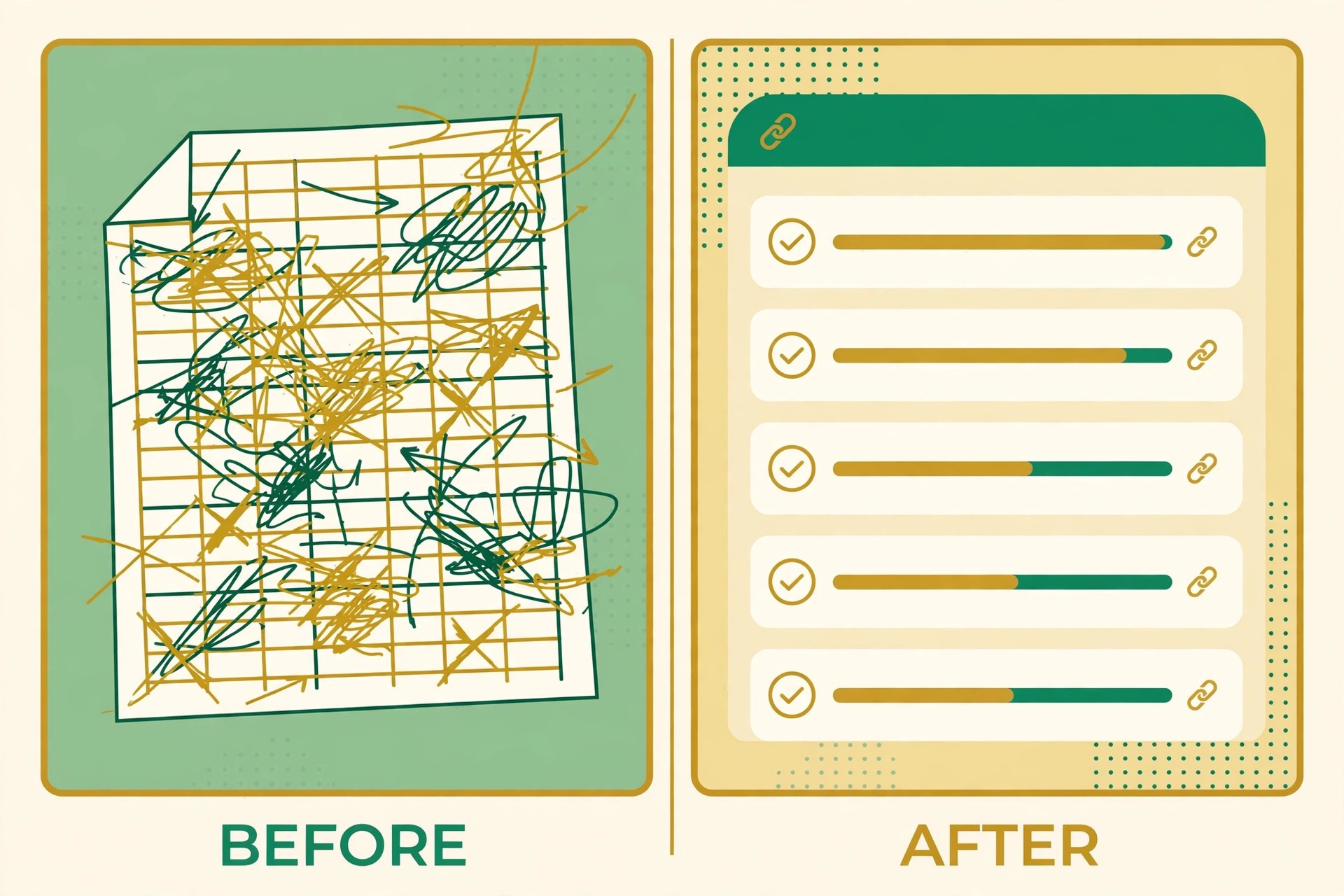
Affiliates drive a real share of revenue for small stores that run them well, and industry research regularly puts that share at 10 to 20 percent of online sales for businesses with an active program. Yet most small stores still track affiliate sales in a spreadsheet, or they pay for a tool whose fees grow faster than the sales it tracks. The best affiliate tracking tools for small stores solve both problems. They record every click and sale accurately, pay affiliates on time, and charge a price that stays fair as the program grows. We compared ten real tools on tracking accuracy, commission flexibility, payout handling, fraud controls, limits and the true monthly cost.
This guide shows what each tool actually costs, what it does well, and where the hidden fees sit, so you can launch a program that pays for itself.
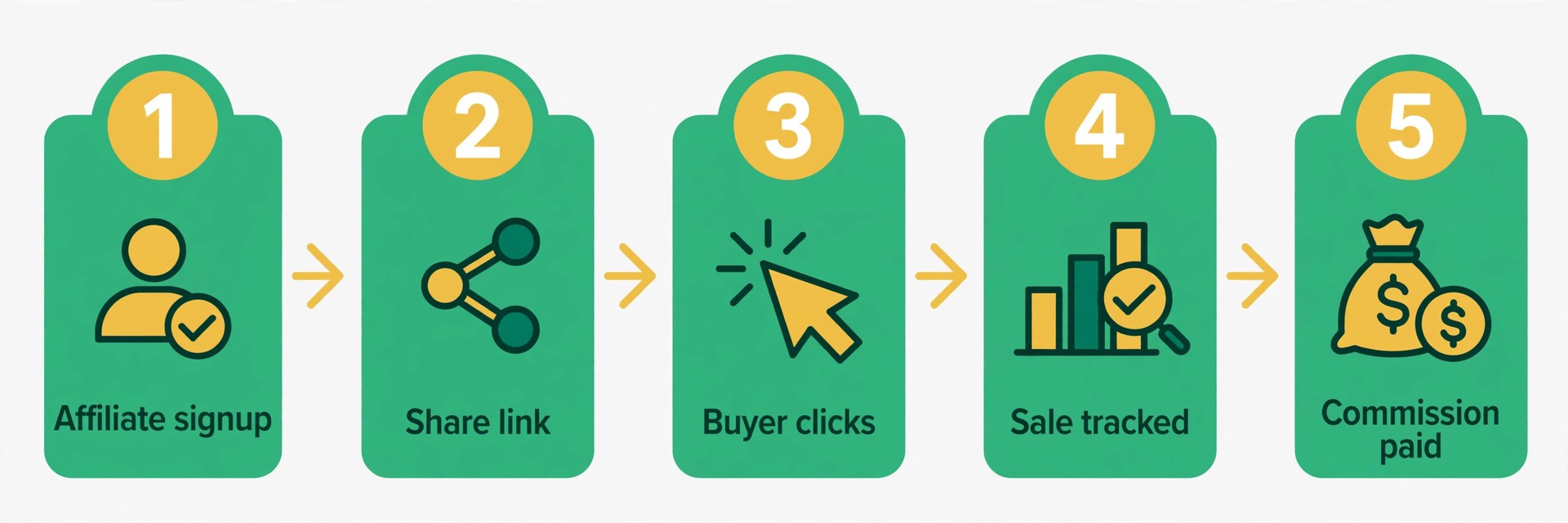
An affiliate program is a simple deal. Someone else sends you a buyer, and you pay them a share of the sale. The software makes that deal trustworthy. The affiliate needs to believe every sale is counted. You need to believe no sale is counted twice, and no fake click earns a commission. When the tracking breaks, the program breaks with it, because affiliates leave the moment they suspect a sale went missing.
The pricing model matters as much as the features. Some tools charge a flat monthly fee, which stays predictable as sales grow. Some charge a percentage of affiliate sales on top of the subscription, which means the software gets more expensive exactly when you succeed. Some charge nothing per month and take a cut of every commission instead. There is no single right model, but there is a wrong one for your volume, and this guide works out the maths for each tool so you can see it before you sign up.
How We Compared 10 Tools for Small Stores
We judged each tool the way a small store owner would, with a small team, a tight budget and no developer on staff. The tool had to install on Shopify, WooCommerce or a similar store without custom code, it had to give affiliates a simple dashboard and a working referral link, and it had to handle payouts without a weekly spreadsheet session. A tool that needs a developer to set up tracking fails a small store, however good its reporting looks.
We scored the best affiliate tracking tools for small stores on six points. Tracking accuracy covered first party tracking, coupon code tracking and server side options that survive blocked cookies. Commission flexibility covered recurring commissions, tiered rates, lifetime commissions and product level rules. Payout handling covered PayPal, bank transfer and automatic payouts. Fraud controls covered duplicate click detection, self referral blocks and suspicious activity flags. Limits covered affiliate caps, click caps and conversion caps on the entry plan. Price covered the real monthly cost, including percentage fees, overage charges and the cost at 10,000 dollars a month in affiliate sales.
Prices in this guide were checked against vendor pricing pages and current 2026 roundups in November 2026. Affiliate software prices moved a lot during 2026, and several vendors show different prices in different places, so we flag the conflicts honestly where they appear, and you should confirm the price on the checkout page before you pay.
The Best Pick for Each Job
| Job | Pick | Why it wins |
|---|---|---|
| Start free today | GoAffPro | Free plan with unlimited affiliates and sales |
| A marketplace that recruits for you | Refersion | Affiliates find your offer and apply |
| Flat predictable pricing | Tapfiliate | No percentage of sales on any plan |
| Stripe based SaaS and subscriptions | Rewardful | Deep Stripe and Paddle tracking |
| The simplest paid start | FirstPromoter | Clean setup from 49 dollars a month |
| No monthly bill at all | PartnerStack | Free Spark plan takes 10 percent of commissions |
| Custom commission rules | Post Affiliate Pro | Multi tier rules with 200 plus integrations |
| A quick cheap launch | LeadDyno | 49 dollars a month with unlimited clicks |
| WordPress and WooCommerce | AffiliateWP | Flat yearly license with no per sale fees |
| One tool for affiliates and referrals | Partnero | Unlimited partners from 49 dollars a month |
Use this table as a shortcut to the best affiliate tracking tools for small stores, then read the full section for the tool you are leaning toward. The cheapest headline price is not the best value when a percentage fee takes hundreds of dollars a month at volume, and the most expensive tool is not the best choice when your program has ten affiliates.
The Best Affiliate Tracking Tools for Small Stores in 2026, Ranked
The ten tools below fall into three groups. The first group is ecommerce first tools, built for Shopify and WooCommerce stores that sell physical products. The second group is subscription first tools, built for stores and SaaS products that bill customers every month. The third group is flexible and self hosted tools, built for stores that want custom rules or full control over their data.
1. GoAffPro
GoAffPro is the best place to start an affiliate program for a small store, because the free plan is genuinely usable rather than a short trial. The Hobby plan costs nothing and includes unlimited affiliates, unlimited sales and unlimited revenue, with no trial clock. That is the most generous free tier in affiliate software, and it means a small store can launch a program, recruit its first affiliates and make its first sales before spending anything on software.
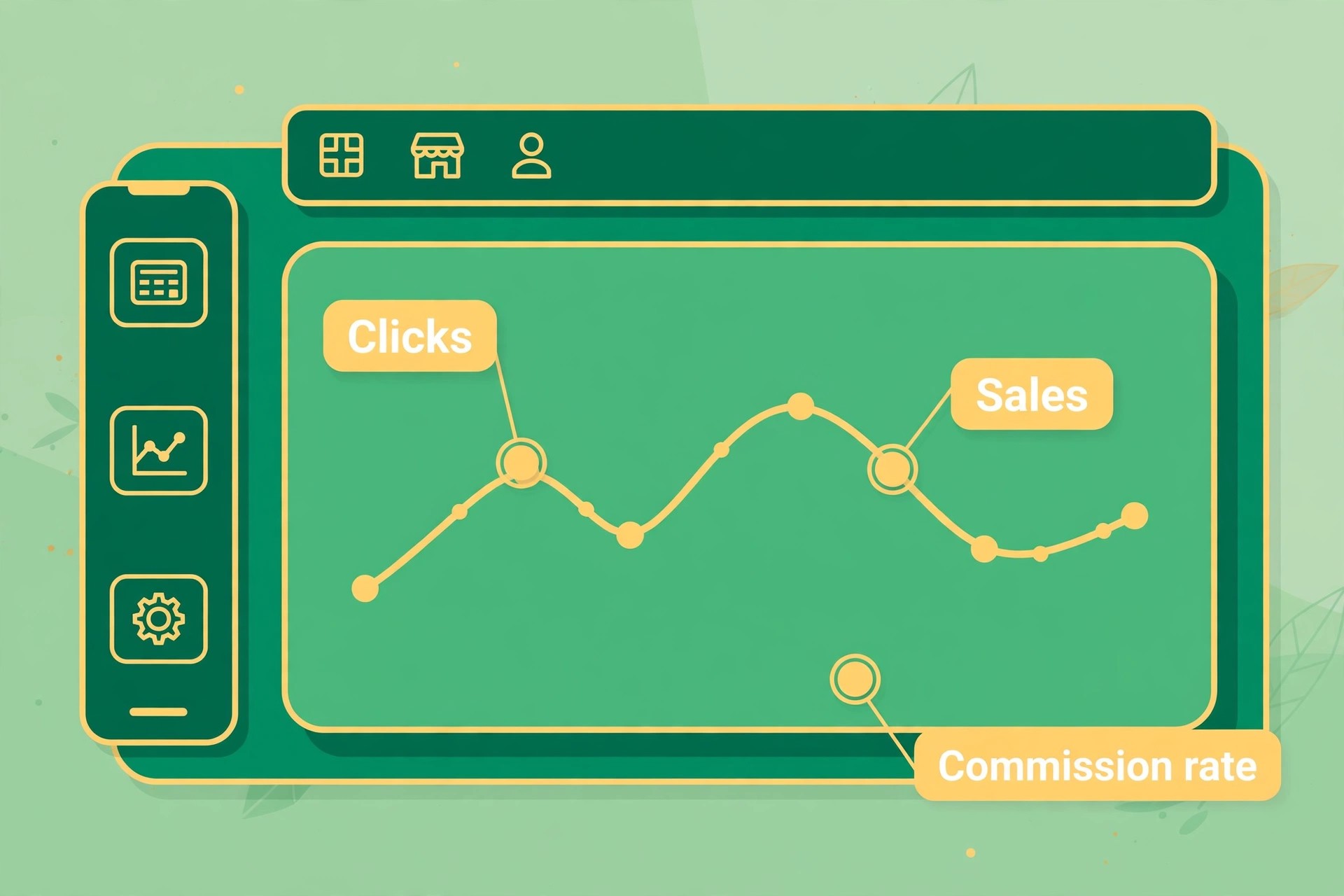
The tool covers the basics well. Affiliates get referral links, coupon codes, a dashboard and automated payouts through PayPal, while the owner gets tracking and reporting that show which affiliate drove each sale. The Premium plan costs 49 dollars a month and adds advanced features, customisation and priority support. The trade off is polish. The interface is simpler than Tapfiliate or Refersion, and the reporting is less deep than the subscription first tools.
For a small store testing whether affiliates work at all, GoAffPro is the right first step. Launch on the free plan, learn which affiliates actually sell, and upgrade to Premium when the program earns enough to justify 49 dollars a month. If the program never takes off, you have lost nothing but time.
2. Refersion
Refersion is the pick when recruiting affiliates is the hard part. It pairs tracking software with a marketplace, so you publish your offer and affiliates can find it and apply, which solves the cold start problem that kills most new programs. The tracking itself is built for a world without third party cookies, using first party tracking links that the vendor says capture 95 to 99 percent of conversions without redirects.
Pricing needs a careful read. Launch costs 39 dollars a month plus 3 percent of affiliate driven sales, and Growth costs 199 dollars a month plus 2 percent. Some guides list Launch at 29 dollars a month billed annually, which conflicts with the 39 dollars monthly figure, so treat the percentage as the real cost driver and confirm the subscription price before you commit. The maths is stark. A program doing 50,000 dollars a month in affiliate sales pays 1,539 dollars a month on Launch, which is 39 dollars plus 1,500 dollars in fees, or more than thirty times the flat 49 dollars a month GoAffPro Premium costs.
That does not make Refersion a bad tool. The marketplace, the SKU level commission control and the cart native tracking for Shopify, BigCommerce and WooCommerce are genuinely useful. It makes Refersion the wrong tool for a high volume store that already has affiliates, and the right tool for a store that needs the marketplace to find them.
3. Tapfiliate
Tapfiliate is the flat fee answer to Refersion percentage pricing, and it is the safest pick for most small stores that want predictable costs. Essential costs 89 dollars a month, or about 74 dollars a month billed annually, and it covers tracking through links and coupon codes, server to server postback tracking, first party cookie fallback and lifetime commissions, with native integrations for Shopify, WooCommerce, Stripe, PayPal and Recurly. Pro costs 149 dollars a month, or 124 dollars billed annually, and raises the limits. Scale costs 179 dollars a month and adds white labelling and multi tier structures.
The honest catch is the caps. Essential covers 50 affiliates, 5,000 clicks and 500 conversions a month, and overage fees apply beyond those limits, at 1 dollar and 50 cents per 1,000 extra clicks and 15 dollars per 1,000 extra conversions. A starting program fits comfortably inside those caps, but a growing program will hit them, so model your real traffic before you choose the tier. There are no revenue percentages anywhere, which means the bill stays flat while your sales grow.
Pick Tapfiliate when you want one of the best affiliate tracking tools for small stores, with one platform for affiliates and referrals, a wide integration list, and a bill you can predict in January and in December. It is the best all rounder on this list for a store that has outgrown a free plan but does not need an enterprise network.
4. Rewardful
Rewardful is built for stores and SaaS products that bill through Stripe or Paddle, and it is the cleanest tool in that niche. It connects to Stripe in minutes, tracks recurring commissions automatically, and handles the subscription logic that ecommerce tools treat as an afterthought. Affiliates earn a share of every monthly payment for as long as the customer stays, not just the first sale, which is exactly how a subscription affiliate program should work.
Pricing starts at 49 dollars a month for the Starter plan, which covers up to 7,500 dollars a month in affiliate revenue. Every plan includes a 14 day free trial, unlimited affiliates and a zero percent transaction fee on affiliate attributed revenue, which is a meaningful promise in a category full of percentage fees. The trade off is scope. Rewardful is not an ecommerce tool, and a store selling one off products will find its features pointed at the wrong problem.
Pick Rewardful when your revenue is recurring, your billing runs through Stripe or Paddle, and you want affiliates paid fairly on every renewal without manual work. Research from Rewardful itself found that affiliates typically contribute 10 to 20 percent of monthly recurring revenue for B2B SaaS programs, which is the scale of return this tool is built to capture.
5. FirstPromoter
FirstPromoter is the simplest paid start for a small subscription business. It connects to Stripe, Recurly, Chargebee, Braintree and PayPal, tracks recurring commissions, and gives affiliates a clean dashboard without a long setup process. The interface is modern, the onboarding is short, and a store owner can launch a program in an afternoon rather than a week.
Pricing starts at 49 dollars a month, with a free trial to test the tracking before you commit. That puts it at the same entry price as Rewardful, and the choice between them comes down to your billing stack. FirstPromoter covers five billing integrations where Rewardful is strongest on Stripe and Paddle, so a business billing through Recurly or Chargebee will find FirstPromoter the better fit. The trade off is depth. FirstPromoter is a focused tracker, not a full partner platform, so it lacks the marketplace and the enterprise partner features of Refersion and PartnerStack.
Pick FirstPromoter when you want a fast, clean launch on a subscription product, you bill through a tool other than Stripe, and you do not need a marketplace to recruit affiliates. It is the quiet, reliable option that does one job well.
6. PartnerStack
PartnerStack is the pick for a B2B SaaS program, and its pricing model is the most founder friendly on this list. The Spark tier costs zero dollars a month, with no monthly subscription at all, and instead takes 10 percent of the commissions you pay. A small program can start without a fixed bill, and the cost only appears when affiliates actually earn money, which aligns the software cost with real revenue.
The platform covers affiliates, referral partners and resellers in one place, with partner onboarding, tracking, payouts and a marketplace where partners can discover your program. The trade off is the percentage. At low volume the Spark deal is generous, but at high volume 10 percent of commissions becomes a large bill, and the paid tiers that reduce the percentage start at a much higher price. The tool is also built for B2B SaaS, so an ecommerce store selling physical products will find its features pointed at the wrong audience.
Pick PartnerStack Spark when you run a B2B SaaS product, you have no budget for a monthly subscription, and you want to prove the program works before you pay a fixed fee. Move to a paid tier when the 10 percent cut costs more than a flat plan would.
7. Post Affiliate Pro
Post Affiliate Pro is the veteran of this list, with two decades of affiliate features and the deepest commission rules of any tool here. It handles multi tier commissions, recurring commissions, lifetime commissions, product based commissions and custom rules that pay different rates for different products, different affiliates and different campaigns. It connects to more than 200 systems, from carts to payment processors, so it fits into a store that already has a complicated stack.
Pricing starts at 79 dollars a month billed annually, or 89 dollars month to month, for the Starter plan, which includes 10,000 tracking requests a month, one campaign and no coupons. Pro costs 129 dollars a month billed annually, or 139 dollars month to month. Recurring commissions are listed only on the Ultimate plan at 249 dollars a month billed annually and the Network plan at 599 dollars a month, which is a serious limitation for a subscription store that needs that feature on a lower tier. Extra tracking requests cost 5 dollars per 10,000 on Starter, so a busy store should model its click volume before choosing.
Pick Post Affiliate Pro when your commission structure is genuinely complicated, with tiers, product rules and multiple campaigns, and you need a tool that can express those rules without workarounds. For a simple program, the cheaper tools on this list do the same job with less setup.
8. LeadDyno
LeadDyno is the quick, cheap launch for a small program that wants unlimited clicks without worrying about overage fees. Lite costs 49 dollars a month for up to 50 active affiliates, Essential costs 129 dollars a month for 150, Advanced costs 349 dollars a month for 500, and Unlimited costs 749 dollars a month. Every plan includes unlimited clicks and conversions, and the vendor promises one easy monthly rate with no added fees even during high demand periods, which is a refreshing promise in this category.
The tool is simple by design. Affiliates get links, coupon codes and a dashboard, the store owner gets tracking and basic reporting, and the setup takes hours rather than days. The trade off is the interface, which looks older than Tapfiliate or Rewardful, and the feature depth, which is lighter on automation and fraud controls than the more expensive tools. Multi level commissions start on the 129 dollars a month Essential plan, not on Lite.
Pick LeadDyno when you want the cheapest honest launch, you have fewer than 50 active affiliates, and you would rather spend your budget on affiliate commissions than on software. It is the right tool for a first program that needs to prove itself before the owner invests more.
9. AffiliateWP
AffiliateWP is the WordPress answer, and it is the only tool on this list that keeps all your data in your own WordPress database. It is a plugin, not a hosted service, so there are no per sale fees, no affiliate caps imposed by a vendor, and no monthly bill that grows with your sales. You pay a flat yearly license and the software runs on your own site.
Pricing is the one conflict to flag honestly. Several guides list the Personal license at 149 dollars a year for one site, while the vendor own pricing has also been reported at 299 dollars, 399 dollars and 599 dollars a year, with the first year at half price and renewals at full price. Recurring referrals, lifetime commissions and multi tier commissions sit on the Pro tier at 599 dollars a year. Check the current license page before you budget, because the entry price has moved more than once.
The trade off is the platform. AffiliateWP only works on WordPress and WooCommerce, and you are responsible for hosting, updates and backups, which a hosted tool handles for you. In return you get full data ownership, no transaction fees and a plugin that integrates deeply with WooCommerce. Pick AffiliateWP when your store already runs on WordPress, you want to own your affiliate data, and you would rather pay once a year than every month.
10. Partnero
Partnero is the newest tool on this list, and it covers affiliate, referral and newsletter referral programs in one platform, with unlimited partners, unlimited transactions and unlimited revenue on every plan. That combination suits a small store that wants one tool for every kind of partner, rather than a separate affiliate tool and a separate referral tool.
Pricing starts at 49 dollars a month billed annually, or 59 dollars month to month, with an AI assistant included to help manage partner communications. The tool includes unlimited partners from the entry plan, which is generous compared with the affiliate caps on Tapfiliate and LeadDyno. The trade off is track record. Partnero is newer than the established names here, its integration list is shorter, and there are fewer long term user reviews to lean on.
Pick Partnero when you want affiliates and referrals in one place, you like the unlimited partner model, and you are comfortable betting on a newer tool in exchange for a lower price and a simpler stack. For a store that only needs affiliates, GoAffPro or Tapfiliate remain the safer first choice.
How to Choose the Right Tool for Your Store
Start with your platform, because it removes half the list in one step. A WooCommerce store should shortlist AffiliateWP, GoAffPro and Tapfiliate. A Shopify store should shortlist GoAffPro, Refersion and Tapfiliate. A Stripe billed subscription product should shortlist Rewardful, FirstPromoter and Partnero. A B2B SaaS product should shortlist PartnerStack first. Choosing against your platform means paying for integrations and workarounds that a native tool includes for free.
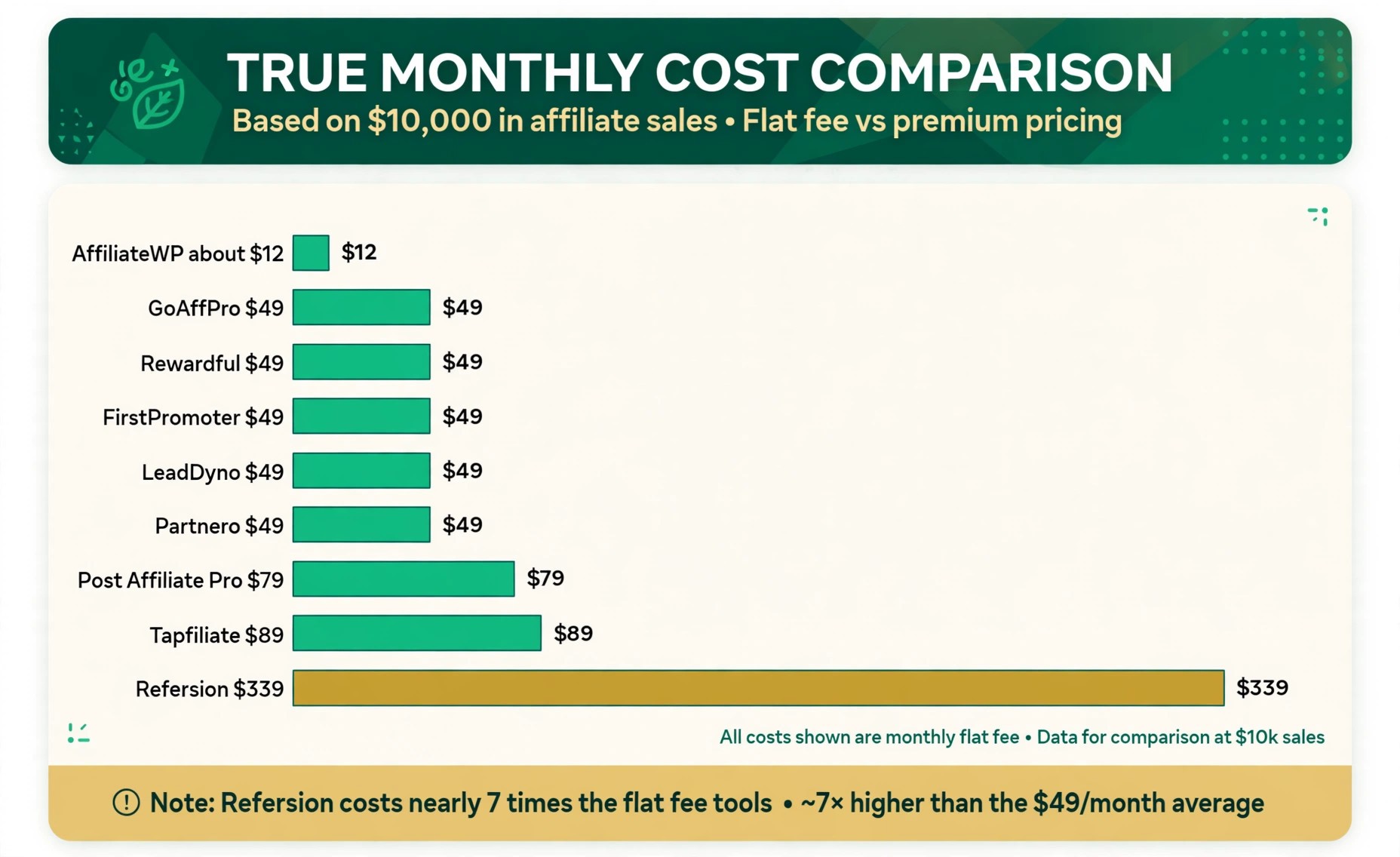
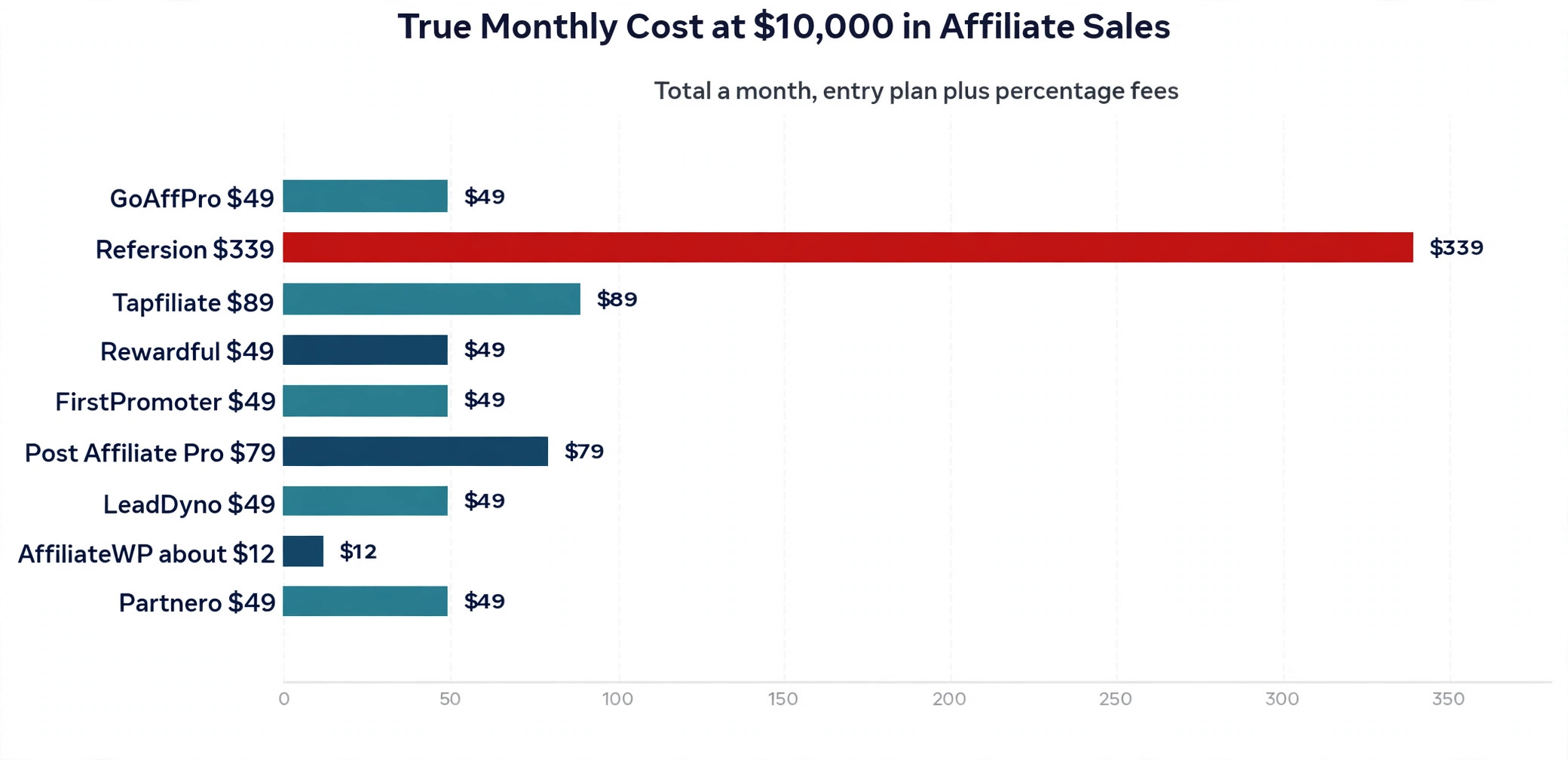
Next, work out the true cost at your real volume, not at zero sales. Take your expected monthly affiliate sales, apply the percentage fee, add the subscription, and add the overage charges for your click volume. A tool that costs 39 dollars a month plus 3 percent of sales costs 339 dollars a month at 10,000 dollars in affiliate sales, while a flat 89 dollars a month tool costs 89 dollars at the same volume. Do this maths for every tool before you compare features, because the fee model is the real decision.
Then check the caps on the entry plan. Count your affiliates, count your monthly clicks, and count your monthly conversions. If the entry plan covers 50 affiliates and you already have 60, you are buying the next tier, not the entry tier. If the entry plan covers 5,000 clicks and your site gets 20,000, the overage fees will surprise you. A tool with generous caps and a flat price is worth more than a tool with a low headline price and tight limits.
Finally, test the affiliate experience before you commit. Sign up as an affiliate yourself, use the referral link, make a test purchase, and check that the sale appears in the dashboard. If the affiliate dashboard is confusing, your affiliates will email you instead of selling, and the program will cost you time instead of saving it. The best affiliate tracking tools for small stores make the affiliate side as simple as the owner side, and that is the test to run before you pay.
The True Cost at 10,000 Dollars a Month in Affiliate Sales
This table shows what each tool costs when the program does 10,000 dollars a month in affiliate sales, using the entry plan and the published fee model. It is the clearest way to see how percentage fees change the ranking.
| Tool | Monthly subscription | Percentage fee | Total a month |
|---|---|---|---|
| GoAffPro Premium | 49 dollars | None | 49 dollars |
| Refersion Launch | 39 dollars | 300 dollars | 339 dollars |
| Tapfiliate Essential | 89 dollars | None | 89 dollars |
| Rewardful Starter | 49 dollars | None | 49 dollars |
| FirstPromoter | 49 dollars | None | 49 dollars |
| PartnerStack Spark | Zero dollars | 10 percent of commissions paid | Varies with commission rate |
| Post Affiliate Pro Starter | 79 dollars | None | 79 dollars |
| LeadDyno Lite | 49 dollars | None | 49 dollars |
| AffiliateWP Personal | About 12 dollars | None | About 12 dollars |
| Partnero | 49 dollars | None | 49 dollars |
The lesson is plain. At 10,000 dollars a month in affiliate sales, Refersion costs nearly seven times as much as the flat fee tools, and the gap only grows as sales rise. Refersion earns that premium only when its marketplace recruits affiliates you could not find yourself. For every other store, a flat fee tool keeps more of the revenue the program generates.
Mistakes That Kill Small Affiliate Programs
The most common mistake is choosing a tool before recruiting a single affiliate. A store owner buys the most expensive platform, sets up complex commission tiers, and then discovers that no affiliate wants to promote an unknown store. Start with the affiliates, not the software. Email your best customers, offer them a referral link, and see who actually sells. Then buy the tool that fits the affiliates you have, not the program you imagine.
The second mistake is ignoring the cookie problem. Third party cookies are dying, and a tracker that depends on them will miss sales. Choose a tool with first party tracking, coupon code tracking or server side tracking, and test it with a real purchase before you launch. A tool that misses 10 percent of sales will lose affiliates faster than any feature can win them back.
The third mistake is switching tools too late, or too casually. Switching affiliate software later is painful, because links break, affiliates complain, and commissions get disputed. Choose carefully now, with a two year horizon rather than a trial month mindset, and pick a tool whose caps and fees still work when the program is three times its current size.
Our Verdict
GoAffPro is the pick for most small stores, because the free Hobby plan lets you launch with unlimited affiliates and unlimited sales, and Premium at 49 dollars a month stays flat as you grow. It is the lowest risk way to find out whether affiliates work for your shop.
Tapfiliate is the pick when you want the best all rounder, because Essential at 89 dollars a month gives you flat pricing, wide integrations and lifetime commissions with no percentage of sales. Rewardful is the pick for Stripe billed subscriptions, and FirstPromoter is the pick when your billing runs through Recurly or Chargebee. PartnerStack Spark is the pick when you have no budget at all and you run a B2B SaaS product.
Refersion is the pick only when recruiting is your bottleneck, because the marketplace is its real product and the 3 percent fee is the price of that recruitment. AffiliateWP is the pick for WordPress stores that want to own their data and pay once a year. Post Affiliate Pro is the pick when your commission rules are too complex for a simpler tool. Start free, recruit your first ten affiliates, and upgrade only when the sales justify it.
Frequently Asked Questions
What is the cheapest of the best affiliate tracking tools for small stores?
GoAffPro is the cheapest way to start, because the Hobby plan is free with unlimited affiliates, unlimited sales and unlimited revenue. Among paid plans, AffiliateWP Personal at about 12 dollars a month equivalent is the cheapest flat rate, followed by the 49 dollars a month plans from GoAffPro Premium, Rewardful, FirstPromoter, LeadDyno and Partnero. PartnerStack Spark costs zero dollars a month but takes 10 percent of commissions paid, so it is cheapest at low volume and expensive at high volume.
Do affiliate tracking tools work without cookies?
Yes, if you choose the right one. First party tracking links, coupon code tracking and server side postback tracking all work without third party cookies, and the best tools on this list offer at least one of them. Refersion uses first party tracking links, Tapfiliate offers server to server postback tracking with a first party cookie fallback, and GoAffPro, Rewardful and the others support coupon code tracking. Test the tracking with a real purchase before you launch.
How much should a small store pay for affiliate software?
A small store with under 50 affiliates should pay between zero and 89 dollars a month, depending on the tool. GoAffPro is free to start, most flat fee tools sit at 49 to 89 dollars a month, and the percentage fee tools cost far more at volume. A program doing 10,000 dollars a month in affiliate sales pays 339 dollars a month on Refersion Launch, against 49 to 89 dollars on the flat fee tools. Budget for the tool that fits your volume, not the one with the lowest headline price.
Can I run an affiliate program on Shopify with these tools?
Yes. GoAffPro, Refersion, Tapfiliate, LeadDyno and Partnero all integrate natively with Shopify, and most of them also cover WooCommerce, BigCommerce and Stripe. Install the app from the Shopify store, connect your store, set your commission rate, and create your first affiliate link. The setup takes an afternoon on the simpler tools and a day on the more complex ones.
What happens if I switch affiliate software later?
Switching is painful, so choose carefully now. Old referral links can break, affiliates need new links and new logins, and commission history can be hard to move. Some tools offer migration help, but the affiliate communication alone takes weeks. Pick a tool whose caps, fees and features still work when your program is three times its current size, so you do not have to switch in a year.
Should I pay affiliates a percentage or a flat fee per sale?
A percentage of the sale is the standard choice for most stores, because it scales with order value and it is easy for affiliates to understand. A flat fee per sale works better for low value products, where a percentage would be too small to motivate anyone. Lifetime commissions, where the affiliate earns on repeat purchases, work best for subscription products. Whichever model you choose, state it clearly on the affiliate signup page, because unclear commissions are the fastest way to lose good affiliates.