

A loan officer closes one file and three more land on the desk. The application, the documents, the follow-up calls and the status updates all need doing before the next borrower walks in. The best ai tools for loan officers cut the admin around the loan, so the officer spends the day with borrowers instead of chasing paperwork.
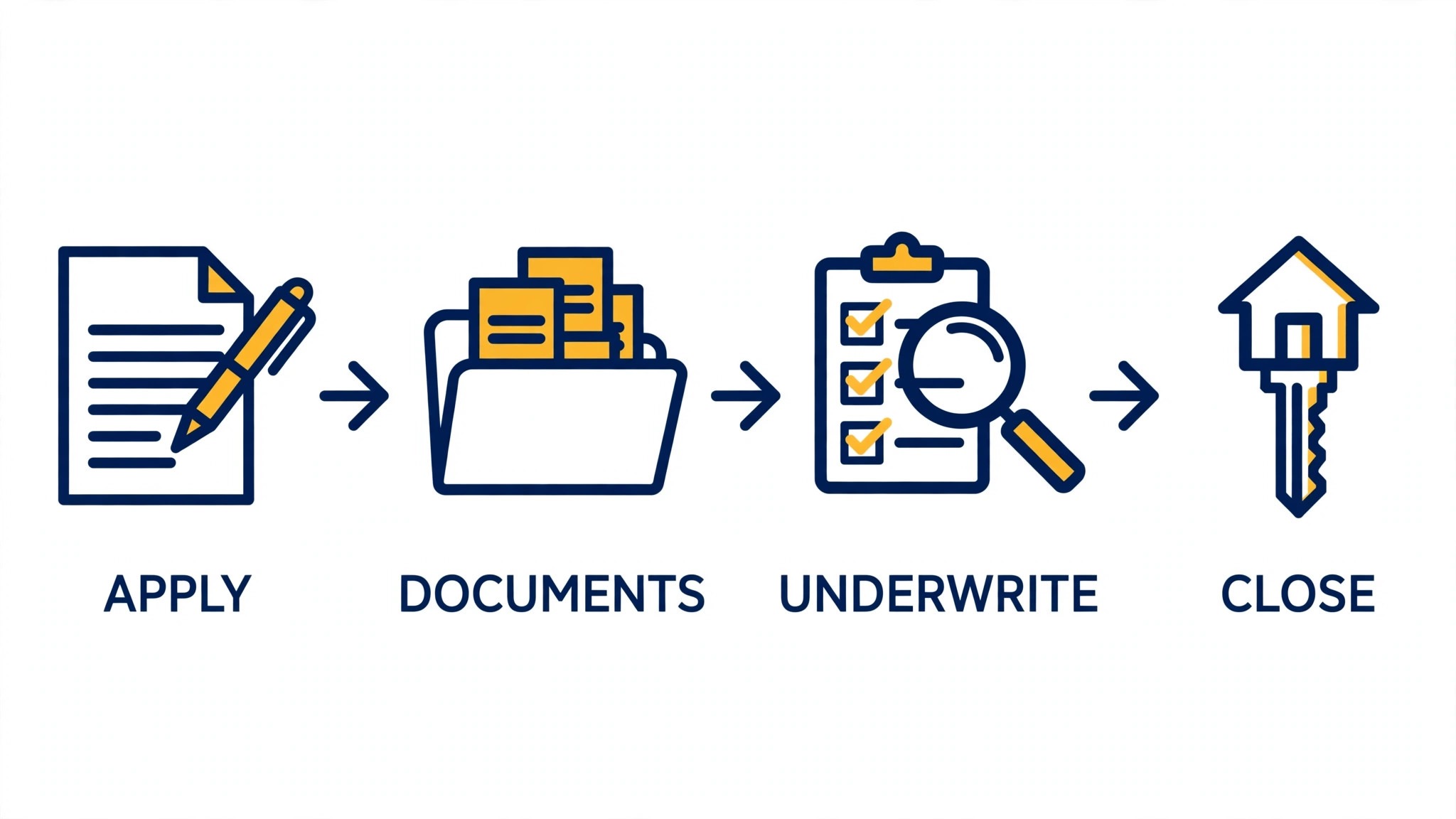
Lending runs on a mix of applications, documents, calls and compliance checks, and no single tool covers all four well. A point-of-sale system handles the application, a CRM handles the follow-up, and a document tool handles the file. This guide shows which job each tool does, so a loan officer can buy the piece that fits the work they actually do most.
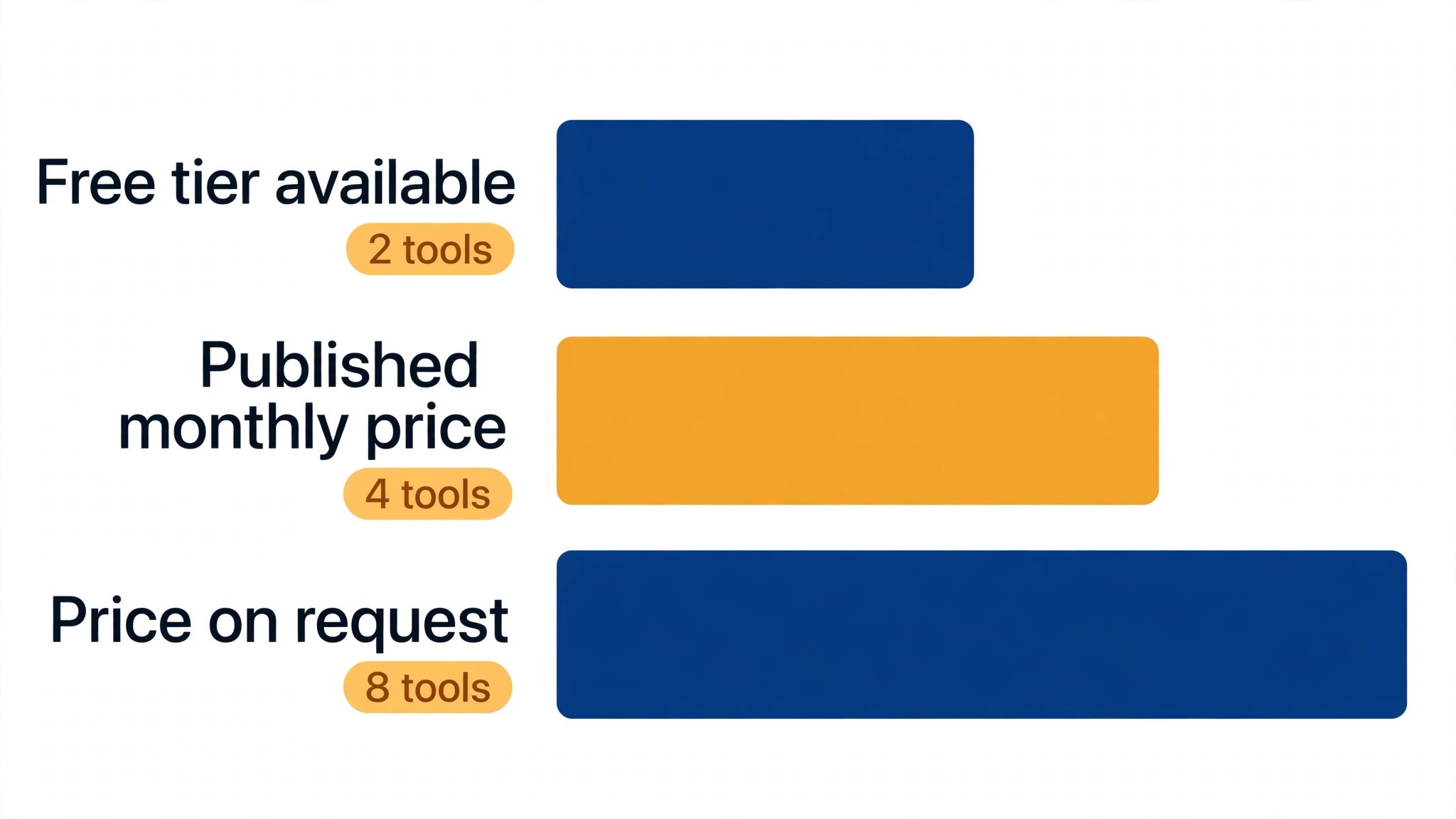
This guide compares twelve tools on published prices, the lending job each one does best and the catch that only shows up after the trial ends. All prices in this guide are the vendors’ published starting rates from late 2026, and any loan file tool without a published rate is marked pricing on request. Start with the shortlist, then read the reviews that match the lending work you do most.
The Full Shortlist in One Place
Use it to narrow the best ai tools for loan officers to two or three candidates before you read the full reviews. Monthly list prices apply unless noted, and annual billing usually beats monthly billing for lending teams.
| Job | Best tool | Why it wins |
|---|---|---|
| Drafting and borrower replies | ChatGPT | Fast drafts, summaries and client messages in one place |
| Long documents and analysis | Claude | Reads long files and returns clean summaries |
| Digital mortgage applications | Blend | Borrowers apply online and the file moves faster |
| End-to-end loan origination | Encompass | The full origination system most lenders already run |
| Simple online applications | Floify | A light point-of-sale that sets up in days |
| Mortgage CRM and follow-up | Jungo | Keeps every borrower and referral partner in one place |
| Sales CRM for loan teams | Shape | Pipeline, calls and follow-up built for lending |
| Borrower portal and mobile app | SimpleNexus | Borrowers check status from their phone |
| Presenting loan options | Mortgage Coach | Side-by-side options borrowers actually understand |
| Automated borrower marketing | Surefire | Follow-up that runs while you work new files |
| AI answers for the team | Capacity | Instant answers from your own lending knowledge |
| Document verification | Ocrolus | Reads pay stubs and bank statements in seconds |
How We Picked the Best AI Tools for Loan Officers
A tool earned a place here only when it does a real lending job well in 2026, not when it added an AI label to an old product. The best ai tools for loan officers were judged on five things that decide whether a lending team keeps paying after the first year.
Compliance came first, because a tool that mishandles borrower data costs more than any subscription. Next came speed on the jobs officers do daily, from applications to follow-up calls. Published pricing came third, since per-seat charges decide the real bill for a lending team as it grows. Fourth, fit with the origination system the team already runs, because a tool that cannot reach the loan file forces double entry. Fifth came the catch, from free plans that cap loan work usage to enterprise tools that need a sales call before the first trial.
| Check before you buy | What to ask | Why it matters |
|---|---|---|
| Published price | Is the rate on the pricing page | A hidden price is a hidden bill |
| Free plan limits | Usage caps, watermarks or seats | A capped free plan cannot run the real job |
| Compliance | BAA, retention and consent | A fast output that breaks the rules is a risk |
| LOS integration | Does it connect to your origination system | Double entry eats the time it saves |
| Trial access | Can you test it on real work | A demo is not a trial |
| Borrower experience | Is the borrower side simple | A confusing portal loses applications |
Tool by Tool
1. ChatGPT
Starting price From 20 dollars a month. Best for Drafting and borrower replies. Watch out Can invent facts, so every figure needs checking
ChatGPT is the all-rounder most loan officers reach for first. It drafts borrower emails, summarizes long guideline documents, turns a messy call note into a clean file summary and writes follow-up sequences in minutes. The twenty-dollar Plus plan adds the stronger model, and the free tier is enough to test whether the drafting style fits your team doing loan work.
The catch is accuracy. ChatGPT can produce confident-sounding figures that are wrong, so nothing it writes should reach a borrower unchecked. Treat it as a fast first draft, verify every rate and figure against the loan file, and it will save hours a week without risking a compliance problem.
2. Claude
Starting price From 20 dollars a month. Best for Long documents and analysis. Watch out No live web search on the basic plan
Claude is the strongest tool here for long lending documents. It reads a hundred-page guideline update and returns a clean summary, tightens a borrower letter without flattening the tone, and handles careful edits better than most rivals. Officers working on complex files get the most from it, especially when the documentation is dense and the closing date is close.
The Pro plan at twenty dollars a month is the sensible starting point for loan work, and the free tier covers short tasks. The limit is live research: the basic plan does not browse the web the way some rivals do, so pair it with a search tool when the job needs fresh rate or guideline facts.
3. Blend
Starting price Pricing on request. Best for Digital mortgage applications. Watch out Enterprise pricing, no self-serve trial
Blend is the digital mortgage platform behind many large lenders, letting borrowers apply online, upload documents and track progress without a branch visit. The application flow is clean, the document collection is automated, and the integrations reach the major origination systems. For a lender moving volume, that speed is the point.
The trade-off is the buying process. With no published price and no self-serve trial, a lender needs a sales conversation and an implementation plan before the first application. For a large team that already runs a modern origination system, that effort pays off. For a solo officer, a lighter point-of-sale tool is the better start.
4. Encompass
Starting price Pricing on request. Best for End-to-end loan origination. Watch out Heavy system, needs training and setup
Encompass by ICE Mortgage Technology is the origination system most American lenders already run, covering the loan from application through closing with compliance checks built in. Its AI features help with document handling, task automation and pipeline insight, and the depth of the system is unmatched for a team that closes volume every month.
The price is quoted per lender, and the rollout is a real project with training and configuration. A small team doing loan work should weigh that effort against the mess it replaces. For a growing lending operation, the single system pays for itself in fewer missed conditions and fewer stalled files.
5. Floify
Starting price Pricing on request. Best for Simple online applications. Watch out Fewer advanced features than the big platforms
Floify is the light point-of-sale option for loan officers who want borrowers applying online this week, not next quarter. The setup is fast, the borrower flow is simple, and the document collection and milestone updates run automatically. It connects with the major origination systems, so the file still lands where underwriting expects it.
The price is quoted rather than published for this loan file tool, so a buyer needs a call to get the number. The feature set is narrower than Blend or Encompass, which is the point for a small team: fewer settings to learn, fewer things to break. If your volume is modest and your priority is speed, Floify is the practical pick.
6. Jungo
Starting price From 69 dollars a month. Best for Mortgage CRM and follow-up. Watch out Built on Salesforce, so the learning curve is real
Jungo is a mortgage CRM built on Salesforce, designed around the loan officer’s day: borrowers, referral partners, tasks and follow-up in one place. It tracks every conversation, prompts the next call and keeps past clients warm for the next refinance. The sixty-nine-dollar starting price covers a single user, and the mortgage-specific workflows are what set it apart from a generic CRM.
The Salesforce foundation is both the strength and the catch. It is powerful and flexible, but it takes longer to learn than a simple CRM, and customization can need help. For an officer who lives on referrals and repeat business, the follow-up discipline it enforces is worth the learning curve.
7. Shape
Starting price From 59 dollars a month. Best for Sales CRM for loan teams. Watch out Fewer marketing tools than the bigger CRMs
Shape is a CRM built specifically for mortgage teams, with pipeline views, call tracking and automated follow-up that match how loans actually move. It is simpler than Jungo and cheaper to start, at fifty-nine dollars a user a month, and the setup is measured in days rather than weeks. A small lending team can be running on it quickly.
The trade-off is marketing depth. Shape covers the pipeline well but offers less built-in borrower marketing than the larger platforms, so a team that leans on automated campaigns may need a second tool. For officers who want a clean pipeline and reliable follow-up, it is a strong fit.
8. SimpleNexus
Starting price Pricing on request. Best for Borrower portal and mobile app. Watch out Pricing comes from a sales conversation
SimpleNexus gives borrowers a mobile app to apply, upload documents, sign disclosures and check loan status, which cuts the status-update calls that eat an officer’s afternoon. The borrower experience is the product here: a clear app means fewer confused calls and faster document returns. It integrates with the major origination systems, so the file stays in sync.
The price is quoted per lender, and the value depends on volume. A team closing a handful of loans a month will see less return than a team closing dozens. If borrower calls are your biggest time sink, ask for a demo on your own loan flow before deciding.
9. Mortgage Coach
Starting price Pricing on request. Best for Presenting loan options. Watch out Works best when the whole team uses it
Mortgage Coach turns loan options into a clear side-by-side presentation a borrower can actually understand, with total cost comparisons that make the trade-offs visible. Officers use it to show why one option beats another, and borrowers share it with family before deciding. That clarity closes loans that a plain rate quote would lose.
The price is quoted, and the tool works best when the whole team adopts it, since a single officer using it alone gets only part of the value. If your team struggles with borrowers choosing on rate alone, Mortgage Coach is the tool that changes the conversation.
10. Surefire
Starting price Pricing on request. Best for Automated borrower marketing. Watch out Needs clean CRM data to work well
Surefire by Top of Mind automates borrower marketing, sending the right message at the right moment in the loan journey and keeping past clients warm for the next transaction. The campaigns are built for mortgage, so the content fits the business without heavy editing, and the automation runs while the officer works new files.
The catch is data quality. Surefire is only as good as the CRM behind it, so a team with messy contact records will get messy campaigns. Clean the data first, then the automation pays off. Pricing is quoted, so ask for a number based on your database size.
11. Capacity
Starting price Pricing on request. Best for AI answers for the team. Watch out Needs your knowledge base built first
Capacity is an AI assistant that answers lending questions from your own knowledge base, so a new officer can ask how a guideline works and get an answer with a source instead of interrupting a senior colleague. It learns from your documents and improves as the team uses it, which makes it a fit for growing teams with high turnover.
The value depends on the knowledge base. A team with thin documentation will get thin answers, so the first month is about building the content. Pricing is quoted, and the return shows up in fewer interruptions and faster onboarding for new hires.
12. Ocrolus
Starting price Pricing on request. Best for Document verification. Watch out Enterprise tool, priced for volume
Ocrolus reads pay stubs, bank statements and tax documents and returns verified data in seconds, catching altered documents and flagging inconsistencies a tired eye would miss. For a lender processing volume, it cuts document review time sharply and reduces fraud risk at the same time. The accuracy on standard documents is the reason large lenders use it.
The price is quoted and aimed at volume, so a small team will find it hard to justify on a handful of files a month. If document review is your bottleneck and your volume is real, Ocrolus is the specialist that earns its place.
The Comparison Table, Explained
The table below puts the best ai tools for loan officers side by side on price, best job and free plan, so you can compare the published prices against the quote-only tools at a glance.
| Tool | Starting price | Best for | Free plan |
|---|---|---|---|
| ChatGPT | From 20 dollars a month | Drafting and borrower replies | No |
| Claude | From 20 dollars a month | Long documents and analysis | No |
| Blend | Pricing on request | Digital mortgage applications | No |
| Encompass | Pricing on request | End-to-end loan origination | No |
| Floify | Pricing on request | Simple online applications | No |
| Jungo | From 69 dollars a month | Mortgage CRM and follow-up | No |
| Shape | From 59 dollars a month | Sales CRM for loan teams | No |
| SimpleNexus | Pricing on request | Borrower portal and mobile app | No |
| Mortgage Coach | Pricing on request | Presenting loan options | No |
| Surefire | Pricing on request | Automated borrower marketing | No |
| Capacity | Pricing on request | AI answers for the team | No |
| Ocrolus | Pricing on request | Document verification | No |
How to Choose Without Overbuying
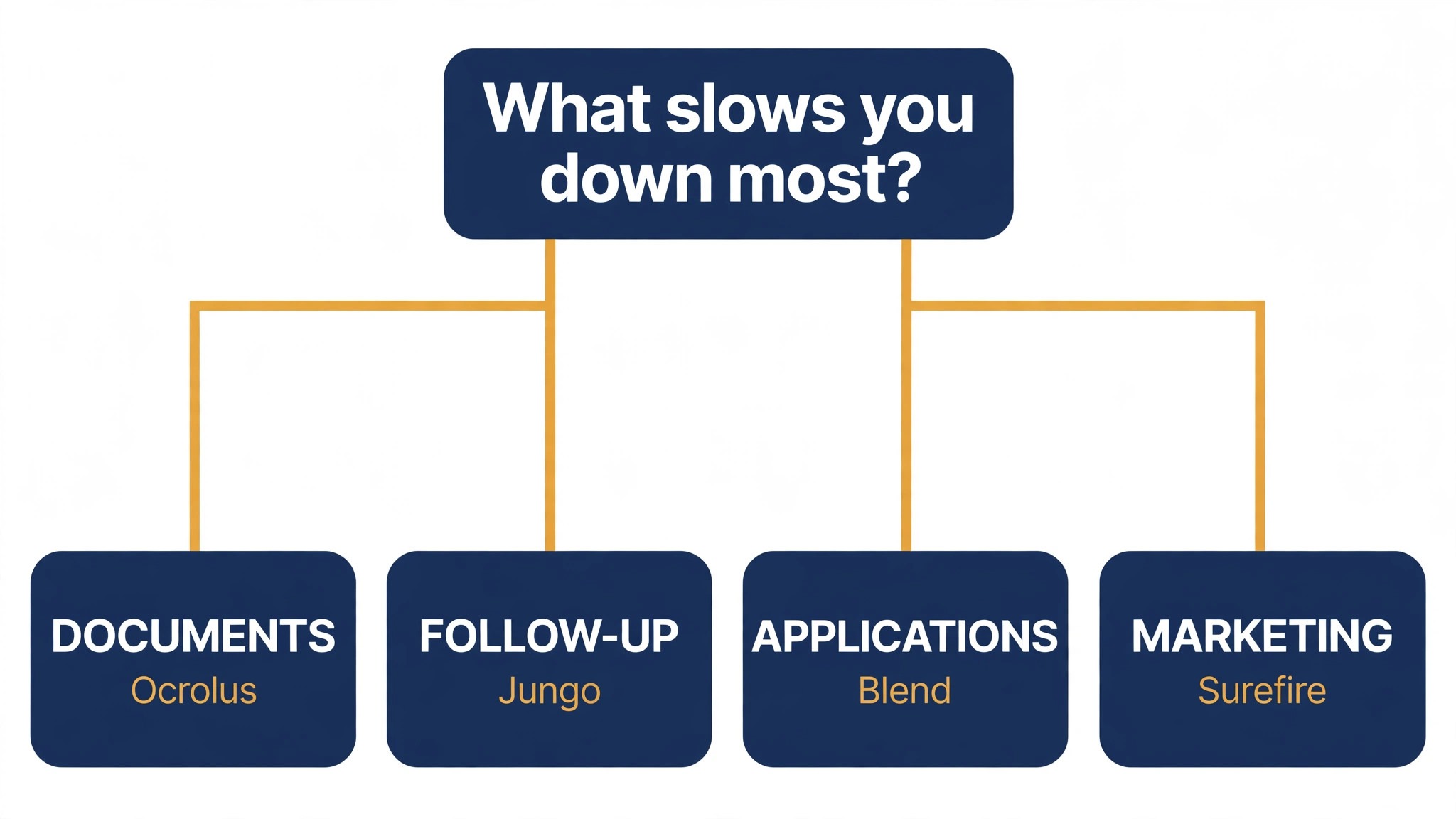
Start from the slowest part of the lending week, not from the vendor homepage. Officers buried in documents should buy the tool that clears that pile first. Officers losing hours to follow-up should buy a CRM before a marketing tool. The tool that fixes the slowest loan file bottleneck task pays for itself first, and the rest can wait.
Price the whole lending stack, not the headline number. The table below prices year one for a solo buyer and for a small team on the common lending combinations, at published starting prices. Ask for per-seat charges in writing before signing, since those lines surprise lending teams, and annual billing usually cuts about twenty percent off the monthly rate.
| Stack | Monthly cost | What it covers |
|---|---|---|
| ChatGPT plus Jungo | Check the pricing page | Core tool plus a second specialist |
| Floify alone | Lowest starting price | One tool for the main job |
| Claude plus Shape | Mid-range | Core tool plus a workflow specialist |
| Jungo plus Mortgage Coach | Mid-range | Specialist pair for a busy week |
If borrower calls are eating your afternoons, start with SimpleNexus and ChatGPT; if follow-up is the leak, start with Jungo instead. The best ai tools for loan officers pay for themselves by closing the gap that costs files, so find the gap first, buy the tool that closes it, and leave the rest of the stack for later.
Best Pick by Job
Pick from the table below by the lending job you do most each week. The best ai tools for loan officers are not ranked by features alone; they are ranked by which job each one actually finishes, so the pick that matches your week is the pick that will still be in your stack a year from now.
| Your job | Best pick | Why it wins |
|---|---|---|
| Drafting and borrower replies | ChatGPT | Fast drafts, summaries and client messages in one place |
| Long documents and analysis | Claude | Reads long files and returns clean summaries |
| Digital mortgage applications | Blend | Borrowers apply online and the file moves faster |
| End-to-end loan origination | Encompass | The full origination system most lenders already run |
| Simple online applications | Floify | A light point-of-sale that sets up in days |
| Mortgage CRM and follow-up | Jungo | Keeps every borrower and referral partner in one place |
| Sales CRM for loan teams | Shape | Pipeline, calls and follow-up built for lending |
| Borrower portal and mobile app | SimpleNexus | Borrowers check status from their phone |
| Presenting loan options | Mortgage Coach | Side-by-side options borrowers actually understand |
| Automated borrower marketing | Surefire | Follow-up that runs while you work new files |
| AI answers for the team | Capacity | Instant answers from your own lending knowledge |
| Document verification | Ocrolus | Reads pay stubs and bank statements in seconds |
Getting the First Files Through
Run the first file end to end before you buy anything else. Pick a straightforward refinance, put it through the new tool from application to closing checklist, and watch where the file stalls. If the stall is a missing document, the tool is not the problem. If the stall is the tool itself, you have found the limit before spending a dollar.
Week two is about the borrower side. Send the application link or the portal to two real borrowers and ask them how it felt. A borrower who finishes the application without calling you is the best review a lending tool can get, and a borrower who gives up halfway is a warning worth more than any sales deck.
| Step | What to do | Done when |
|---|---|---|
| Day 1 | Run one file end to end | File moves without double entry |
| Day 3 | Two borrowers test the portal | Both finish without calling |
| Day 7 | Check the compliance trail | Audit log is complete |
| Day 14 | Compare two files side by side | Time per file is down |
| Day 30 | Count files closed | Closings beat the monthly price |
Testing Before You Pay
A trial tells lending teams more in five working days than a month of reading reviews, but only when the trial runs on real lending work. Pick the two tools that look closest after the shortlist, run them side by side on the same core lending jobs, and score them on time saved, edits needed and how the output reads to a borrower. Never trial on a demo file, because a demo hides the rough edges real lending work exposes. The best ai tools for loan officers prove themselves on a real file, not on a demo application, so run the trial on the loans you are actually closing this month.
| Day | What to test | What good looks like |
|---|---|---|
| Day 1 | Setup and first real job | Working in under an hour, no IT ticket |
| Day 2 | The hardest job you do | Output needs light edits, not a rewrite |
| Day 3 | A live borrower file | The file moves without double entry |
| Day 4 | A colleague tries it cold | They finish a job without asking for help |
| Day 5 | Count the time and the cost | Hours saved beat the monthly price |
Keep a simple log through the trial week, noting the daily lending task, the minutes it took, the edits made and whether the output could go to a borrower unchecked. At the end of the week the log is the decision for lending teams. The tool with the best log wins, even when it was not the expected favourite, because the log measures the team’s own lending work, not the vendor demo.
Buying Mistakes to Skip
Mistake one is the cheapest plan, when the feature lending teams need sits two tiers up. Read every tier on the pricing page and pay for the tier that does the daily lending job, not the tier that looks cheap. Mistake two is rolling out to the whole team before one person has tried the tool for a week, since a favourite of one and a burden to five is a cost for lending teams, not a system.
The third mistake is skipping the data and compliance check for lending teams. Ask for the data agreement, read the retention policy and check the consent wording before the first real borrower file goes through the tool, because fixing compliance after the fact costs far more than checking it first. The fourth mistake is judging the tool on its best day, so trial it on the hardest lending job itself and let the hard job decide.
Your Questions, Answered
Which tool gives loan officers the cheapest good start
ChatGPT is the cheapest credible start on this list at from 20 dollars a month, with Claude at from 20 dollars a month close behind. The best ai tools for loan officers include free tiers and free plans, so start with the job you do most each week, trial the free tier on real work, and add a specialist only when the general tool cannot do a job you are paid to do. That is the cheapest route to a lending stack, with no payment for features never used.
Can loan officers keep AI output from looking generic
It will when loan officers publish the template unchanged. AI tools draft a usable first version, but the facts, the wording and the judgement still come from the professional doing the lending work. An output that goes out unedited reads generic, and borrowers notice generic lending work fast. Use the AI to beat the blank page, then change the details, the wording and the checks, so the result sounds like loan officers and not the tool.
For a small team, which lending tool option wins
Jungo is the pick for a small team, starting at from 69 dollars a month with mortgage-specific follow-up, while ChatGPT at from 20 dollars a month is the strongest all-round option as the team grows. The tools were ranked by the loan file each one finishes, not by the size of the feature list, so a small team should buy the tool that fixes its slowest weekly job first and add a second only when a specific limit starts costing time.
How much will a small team spend on lending tools in year one
Plan on 20 to 50 dollars a month in year one for a general lending tool option such as ChatGPT, rising to 100 to 200 dollars a month with a specialist such as Jungo added. Multiply the headline price by headcount when lending teams pay per seat, since those charges surprise buyers. Price the whole stack and trial each tool on real lending work before signing an annual contract.
Do loan officers need a specialist tool as well as a general one
Not always. Most loan officers get by with one general tool for months, and a separate specialist only earns its place when a specific lending daily task runs every week and the general tool cannot do it well. Measure the loan paperwork hours across the past week first. When the job takes hours and the specialist cuts it to minutes for loan officers, buy it, and when the job already takes minutes, the specialist is a cost.
Do these lending tools offer a trial before payment
Most tools on this list offer a free plan or a free trial, and ChatGPT and Claude both let loan officers test on real lending work before paying. Use the trial on the lending job itself the team does most, not on a demo, and count the time saved and the edits each output needs. A trial that covers a real week tells loan officers more than a sales call, and a tool that will not trial is one to be careful about.
The Verdict, in Brief
If you buy one tool this quarter, pick ChatGPT for all-round lending help or a small team, and Jungo when you need mortgage-specific follow-up and referral tracking. ChatGPT is the easiest place to start at 20 dollars a month, and Jungo is the strongest all-round CRM at 69 dollars a month. The best ai tools for loan officers earn their keep by giving you back the afternoon after the application, and both of these do that from the first week.
Whatever you pick, trial it on a real week of lending days, count the files it speeds up and the edits each one needs, and keep a human eye on every AI draft before it reaches a borrower. Every tool here can handle daily lending work. The difference is whether the tool matches the loans you actually close, and whether you measure the return in hours saved and files closed rather than in features used.