A Facebook page with 500 followers can sell more than a page with 5,000 followers, because the smaller page talks to customers who live nearby and the larger page talks to strangers who will never visit. That gap between followers and buyers is the reason a small business facebook marketing strategy matters in 2026, because Facebook rewards a page that brings sales, not a page that collects likes.
The mistake most small businesses make is to post like a noticeboard, with a flyer every day and nothing a customer would share. Facebook shows a post to a fraction of the followers, and it shows it to more people only when those followers react, comment, or share. A post that nobody reacts to will die in the feed, and a post that starts a conversation will travel. The work is not posting more. The work is posting something a customer wants to answer.
The second mistake is to treat Facebook as a free noticeboard and never spend a dollar. Organic reach for a business page is low, and a post that is boosted for 5 dollars to people within 10 miles will reach more local buyers than a week of free posts. This guide builds a small business facebook marketing strategy around that simple fact, with a weekly plan, post types, and numbers to track.
The Quick Shortlist
The table below matches each common small business goal to the single post type that handles it best. Use it to narrow a small business facebook marketing strategy to two or three post types before you write anything.
| Goal | Best post type | Why it wins |
|---|---|---|
| Get found by locals | Local offer post with a map pin | Reaches people within 10 miles who can visit |
| Turn followers into buyers | Product post with a price and a link | Price and link remove the friction to buy |
| Start a conversation | Question post, one clear question | Comments push the post to more feeds |
| Build trust before a sale | Behind the scenes photo or video | Shows the people behind the business |
| Fill a slow day | Same day offer, limited hours | Urgency brings people in today |
| Win a repeat customer | Customer story with a photo | A real customer is the best advert |
| Grow the page | Shareable tip or local guide | Shares bring followers who live nearby |
| Sell a service | Before and after photos | Proof beats a promise every time |
How We Judged a Good Facebook Strategy
A strategy earned a place here only if it works for a small business with one person and one phone, not if it needs an agency and a budget. A small business facebook marketing strategy was judged on five things that decide whether a page keeps selling after the first month.
First, whether the post reaches people who can buy, because a post that reaches strangers in another country earns nothing. Second, whether the post starts a conversation, because Facebook shows a post to more people when followers react and comment. Third, whether the post leads somewhere, because a post without a link or an offer is a post wasted. Fourth, whether the pace can be kept for a year, because a page that posts daily for a month and then goes quiet will lose its audience. Fifth, whether the numbers are honest, because a page that chases likes without sales will grow a following that never buys.
| Check before you post | What to ask | Why it matters |
|---|---|---|
| Local reach | Can the viewer visit or order today | Local buyers are the only buyers that count |
| Conversation | Will a customer want to answer this | Comments push the post to more feeds |
| Next step | What should the viewer do after reading | A post without a next step earns nothing |
| Time cost | How many minutes does one post take | Time is the real budget for a small business |
| Boost value | Would 5 dollars on this post reach buyers | A small boost beats a week of free posts |
| Measurement | Which number proves this post worked | Likes alone do not prove a sale |
The Playbook, Step by Step
1. Fix the Page Before You Post Anything Else
A page needs a clear name, a clear promise, and a clear next step, and none of those needs a designer. The page name should be the business name plus the trade and the town, so a search for the trade in that town finds the page. The cover photo should show the shop, the product, or the team, not a stock image, because a customer decides in three seconds whether the page is real. The About section should state what the business sells, where it is, when it is open, and how to book, with a phone number that works and a link to the booking page.
The call to action button matters more than the follower count. Set it to Book Now, Call Now, or Send Message, and test it yourself, because a button that leads nowhere will lose the customer who clicked it. A page with 500 followers and a working booking button will earn more than a page with 5,000 followers and a broken link, because the button turns a visitor into a customer. A small business facebook marketing strategy that has no working next step is a noticeboard, not a strategy.
Fill in the hours, the address, and the services, because Facebook shows those details in search and a customer who cannot find the hours will not visit. Add a pinned post that states the offer of the month, so a new visitor sees the best reason to buy before they scroll. Set up the page once and leave it alone, because a page that is finished will sell while the owner is busy.
2. Post Three Times a Week, at Times Customers Are Free
Three posts a week is a pace a small business can keep for a year, and it is the pace this guide recommends. A page that posts daily for a month and then goes quiet will lose its audience, and a page that posts once a month will be forgotten. Three posts a week, on the same days each week, will build a habit for the followers and for the owner, and a habit is what keeps a page alive.
Post when customers are free, not when the owner is free. Early morning before work, lunchtime, and evening after dinner are the times most local customers scroll, and a post that goes out at 10 in the morning on a Tuesday will be missed by a customer who works. Test two times for a month, keep the time that brings more comments, and drop the time that brings none. The best time is the time your customers are online, and only your page numbers can tell you when that is.
Batch the writing. Write three posts in one hour on a Sunday evening, schedule them for the week ahead, and reply to comments each morning, because a business that writes every day will miss a day when work gets busy, and a missed day breaks the rhythm. Facebook scheduling is built in, so a post can be written, scheduled, and forgotten until it goes live. A page that is scheduled a month ahead never goes quiet when the owner is busy.
3. Make One Post a Question, One Post Proof, and One Post an Offer
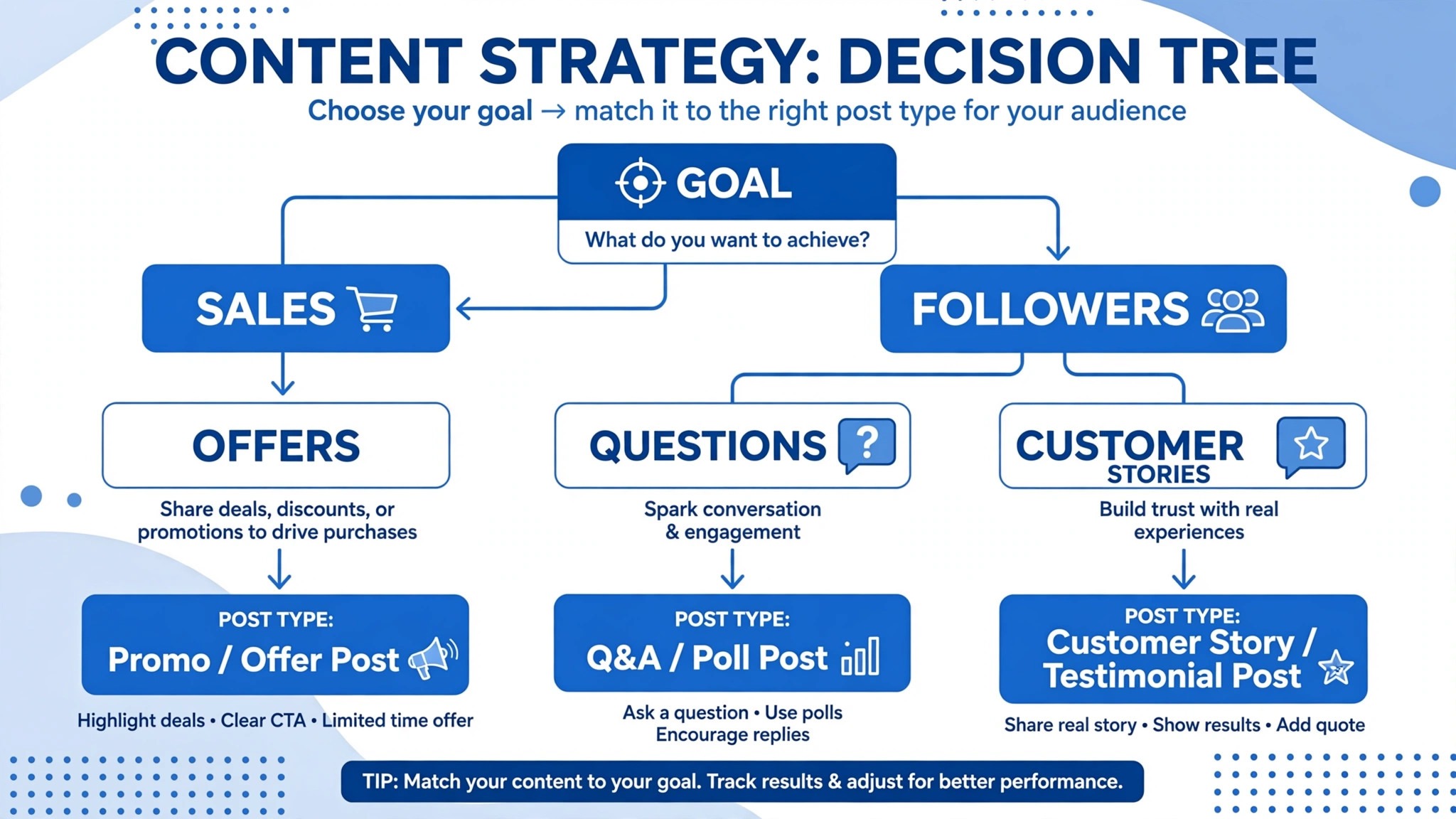
A week of Facebook for a small business fits on one page, and it starts with three post types. One post a week should be a question, because a question starts a conversation and a conversation pushes the post to more feeds. Ask which flavour customers prefer, ask what time they want the shop to open on Saturday, or ask for a photo of the product in use, and reply to every answer within a day. A question with no reply is a conversation that died, and a question with a reply is a customer who feels heard.
One post a week should be proof, because proof beats a promise every time. A before and after photo, a customer story with a real name and a real photo, or a short video of the work being done will sell more than any flyer. A customer who sees the work will trust the business, and a customer who trusts the business will buy. Keep the proof honest, because a fake review will be found out and a real story will be shared.
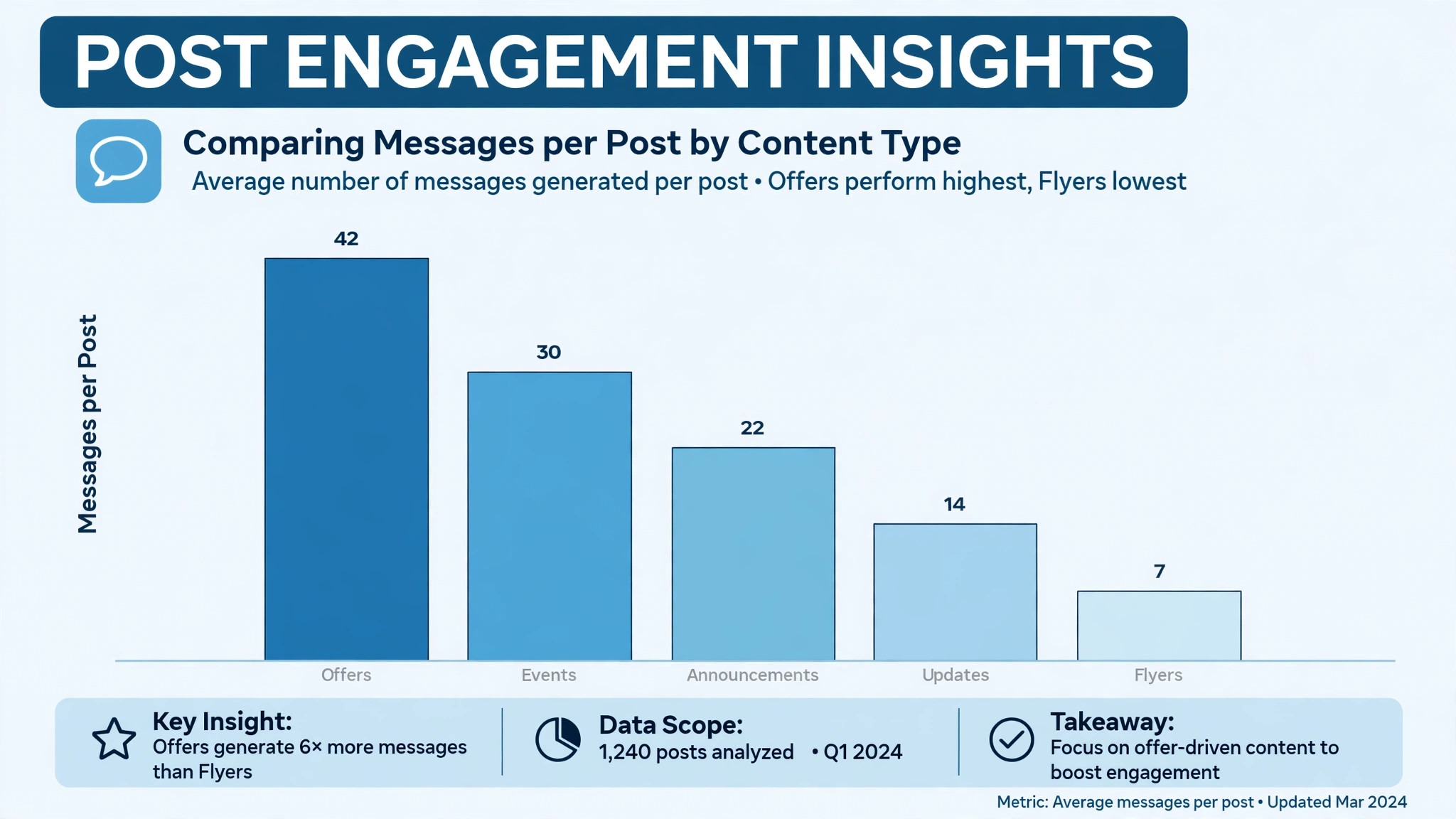
One post a week should be an offer, because a page that never asks for a sale will never make one. State the price, state the deadline, and state the link or the phone number, because a customer who has to ask for the price will often not ask at all. A same day offer with limited hours will fill a slow day, and a weekly offer with a clear end date will bring customers in before the deadline. A small business facebook marketing strategy that has no offer is a hobby, not a strategy.
4. Use Photos and Short Video, Not Flyers
A photo of the real shop, the real product, or the real team will outperform a designed flyer every time, because Facebook users scroll past graphics and stop for people. A short video of 30 to 60 seconds that shows the product working will outperform a photo, because video holds attention longer and Facebook shows video to more people. Film on a phone, in daylight, with the product in use, and keep the first three seconds on the result, not on the logo.
Keep the text short. A post with two sentences and a link will be read, and a post with a paragraph will be skipped. Put the offer in the first line, because only the first two lines show before the viewer clicks More, and a customer who has to click to find the price will often not click at all. Add a location tag to every post, because a tag puts the post in front of people nearby, and a local customer is worth ten followers elsewhere.
Use the same image style every week, so followers recognise the page in the feed, but vary the subject, so the page does not look like a template. A photo of a new product, a photo of a customer, and a photo of the team are three different posts that share one style, and that variety will keep the page fresh without a designer.
5. Boost the Best Post With 5 Dollars, Not Every Post
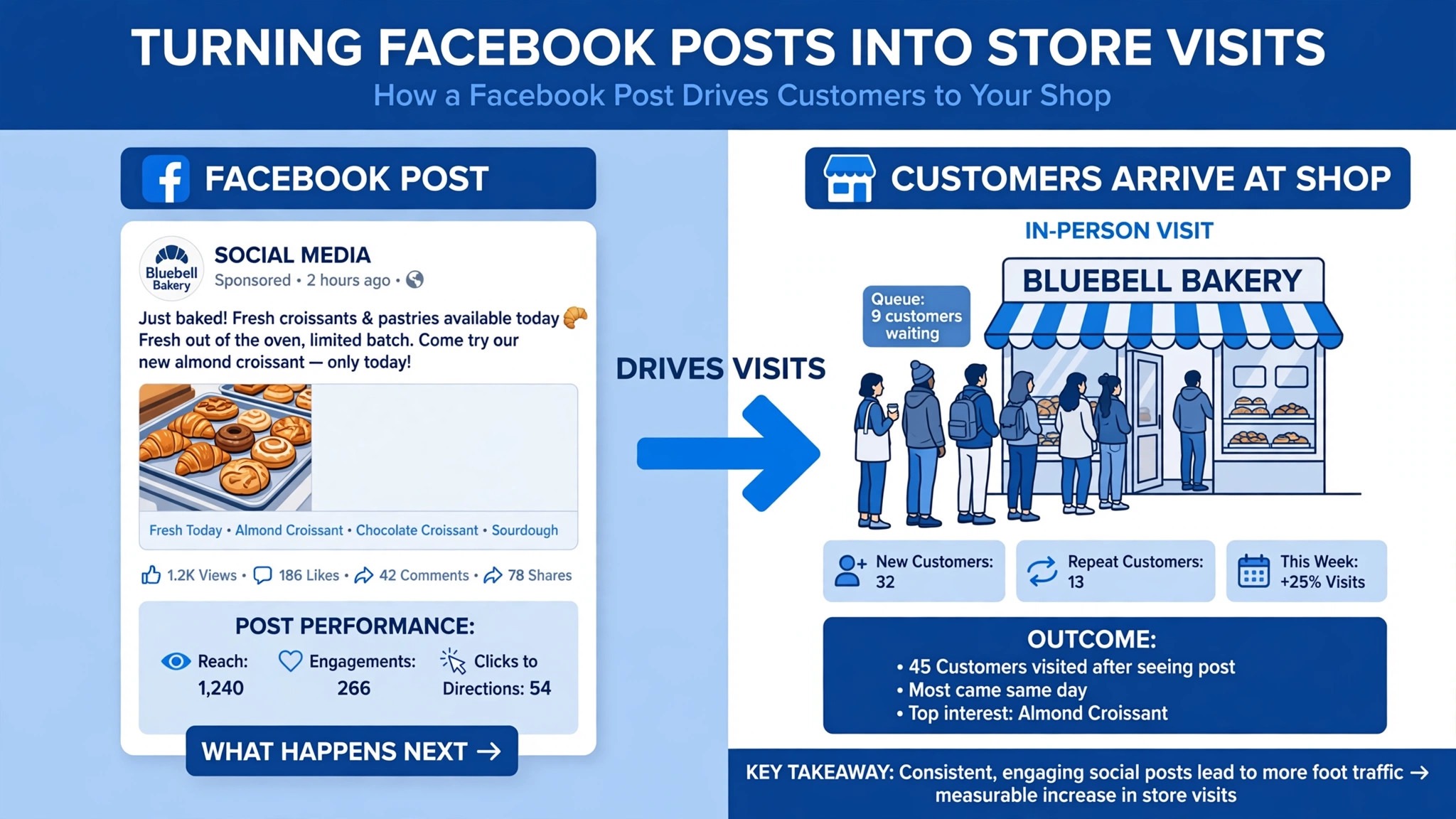
Organic reach for a business page is low, and a post that is boosted for 5 dollars to people within 10 miles will reach more local buyers than a week of free posts. Do not boost every post, because a boost on a weak post is money wasted. Boost the post that already got the most comments organically, because that post has proven it can start a conversation, and a boost will put that conversation in front of more local buyers.
Set the boost to people within 10 miles, in the age range that buys, and run it for three days, because a boost that runs for a week will spend money on people who have already seen it. Set a clear goal for the boost, such as messages or bookings, and check whether the boost brought any, because a boost that brings likes and no sales is a boost that should not be repeated. A small business facebook marketing strategy spends a little money on the post that works, and no money on the post that does not.
Start with 5 dollars a week, or 20 dollars a month, and raise the budget only when the boost brings sales. A business that spends 20 dollars a month and gains 5 customers has spent 4 dollars per customer, and that is a good trade. A business that spends 200 dollars a month and gains no customers has a problem with the offer, not with the budget, and the offer should be fixed before the budget is raised.
6. Answer Every Comment and Message Within a Day
A comment that gets a reply within a day will bring the commenter back, and a message that gets a reply within an hour will close more sales than a message that waits a week. Facebook shows a page response time, and a page that answers fast will be trusted more than a page that answers slowly. Set aside 15 minutes each morning to reply to comments and messages, because that 15 minutes is the cheapest marketing a small business can buy.
Reply in the voice of a person, not a brand, because a customer who writes to a page wants to talk to a person. Thank the customer by name, answer the question directly, and offer the next step, such as a booking link or a phone number. A reply that answers the question and offers the next step will turn a commenter into a customer, and a reply that says Thanks will not. A small business facebook marketing strategy is measured in replies, not in posts, because a post starts the conversation and a reply closes the sale.
Turn off the automatic reply if it sounds robotic, and write a short human reply instead. A customer who receives a real answer will trust the business, and a customer who receives a robot will look elsewhere. Keep a short list of answers to the questions customers ask most, so a reply takes a minute, not an hour.
7. Measure Four Numbers and Ignore the Rest
A page needs four numbers, and the rest are noise. The first is reach, which is how many people saw the post, and a reach below 10 percent of followers means the post did not start a conversation. The second is comments, which is how many people answered, and a post with comments will travel further than a post with likes alone. The third is messages and bookings, which is the sales that came from the page, and that number decides whether the post type is worth repeating. The fourth is cost per customer from boosted posts, which is the boost spend divided by the customers it brought, and that number decides whether the boost is worth repeating.
Check the numbers once a week, not once a day, because daily numbers are noise and weekly numbers are a trend. A post that looks weak on day one can grow for a week as comments arrive, and a post that looks strong on day one can fade in a day. Judge each post after a week, by reach, comments, messages, and bookings, and judge each change after about four weeks as well, because a change that is judged after one day will be abandoned before it has a chance to work.
Kill the post type that brings likes and no sales, and double the post type that brings sales and few likes, because sales pay the bills and likes do not. A page that makes more of what sells will grow a business, and a page that makes more of what gets likes will grow a following that never buys.
Side by Side Comparison
The table below puts the post types side by side on time cost, reach, and sales value, so you can compare a question post against an offer post at a glance.
| Post type | Time to make | Reach | Sales value |
|---|---|---|---|
| Question post | 5 minutes | High, comments push it | Medium, starts a conversation |
| Offer post with price | 10 minutes | Medium, buyers click | High, buyer is ready now |
| Before and after photos | 10 minutes | Medium, proof travels | High, proof sells |
| Behind the scenes video | 20 minutes | Medium, loyal viewers | Medium, builds trust |
| Customer story | 15 minutes | High, shares travel | High, a real customer sells |
| Shareable tip or guide | 20 minutes | High, shares bring followers | Low, reader is browsing |
| Same day offer | 5 minutes | Low, urgent only | High, fills a slow day |
| Flyer or graphic | 30 minutes | Low, users scroll past | Low, no conversation |
The Weekly Plan for Your small business facebook marketing strategy
A week of Facebook for a small business fits on one page, and it starts with one writing hour. Write three posts on Sunday evening, schedule the question for Tuesday, the proof for Thursday, and the offer for Saturday, and reply to comments each morning. Boost the best post on Monday with 5 dollars to people within 10 miles, and check the numbers on Friday. Pick next week topics from the questions customers asked that week, because a question a customer asked is a post a customer will answer.
The monthly version is the same plan repeated four times, with one week a month spent on a customer story instead of a question, because a real customer story will bring more shares than any other post type. A business that follows that plan for three months will have 36 posts, a page that a customer can browse like a catalogue, and a habit that brings sales every week. A business that follows it for a year will have 144 posts, and that catalogue will bring customers every week without new ideas, because the questions customers ask never run out.
The First 30 Days on Facebook
The first 30 days are the hardest, because the page is quiet, the numbers are small, and the temptation is to quit after week two. A small business facebook marketing strategy survives those 30 days by keeping the work small and the wins visible. Post three times a week for four weeks, one question, one proof, and one offer each week, because 12 posts are enough to learn what works without burning out.
In week one, post a question your customers will want to answer, because that post will start the first real conversation on the page. In week two, post a before and after photo, because that post will show the work and it will bring the first real trust. In week three, post an offer with a clear price and a deadline, because that post will bring the first real sale from the page. In week four, post a customer story with a real name and a real photo, because that post will bring the first real share.
At the end of the month, check the four numbers and keep only what worked. A post type that brought messages stays, a post type that brought likes and no sales goes, and a post type that brought neither is replaced by a new idea from the questions customers asked that month.
Boost the best post from the month with 5 dollars, because a post that already worked organically will work even better with a small boost. A page that learns in the first 30 days will sell in the next 90, and a page that repeats the same weak post for a year will not. That first month is the test, and the test is worth more than any single post.
Keep a notebook of the questions customers ask in the shop, on the phone, and in messages, because that notebook is the content plan for the next three months. A question that came up three times in a week is a post that will be answered three times a week, and a post that answers a real question will always outperform a post that was invented in a brainstorm. A page that listens to its customers will never run out of ideas, and a page that guesses will run out in a month.
Write the next month posts from that notebook, and keep the same three post rhythm, because a rhythm that works in month one will work in month six. Change one thing at a time, such as the posting time or the photo style, and judge the change after four weeks, because a change that is judged after one day will be abandoned before it has a chance to work.
Frequently Asked Questions
How often should a small business post on Facebook?
Three times a week is a pace a small business can keep for a year, and it is the pace this guide recommends. A page that posts daily for a month and then goes quiet will lose its audience, and a page that posts once a month will be forgotten. Three posts a week, on the same days each week, will build a habit for the followers and for the owner, and a habit is what keeps a page alive.
What should a small business post on Facebook?
Post one question, one proof, and one offer each week. A question starts a conversation, proof builds trust, and an offer makes the sale. A photo of the real shop, the real product, or the real team will outperform a designed flyer, and a short video of the product working will outperform a photo. Keep the text short, put the price in the first line, and add a location tag to every post.
How much should a small business spend on Facebook ads?
Start with 5 dollars a week, or 20 dollars a month, boosted on the post that already got the most comments organically. Raise the budget only when the boost brings sales, and check the cost per customer, because a boost that brings likes and no sales should not be repeated. A business that spends 20 dollars a month and gains 5 customers has spent 4 dollars per customer, and that is a good trade.
How do I get more followers on Facebook?
Make posts that customers want to share, because shares bring followers who live nearby. A shareable tip, a local guide, and a customer story are the three post types that travel furthest, and each one should carry a location tag. Reply to every comment, because a reply brings the commenter back and a return visitor is more likely to follow. A page that answers fast will grow faster than a page that posts more.
Why is my Facebook page not getting sales?
A page that does not get sales usually has no offer, no working link, or no reply to messages. Check the call to action button, check that the booking link works, and check the response time, because a customer who clicks a broken link or waits a week for a reply will buy elsewhere. This strategy is measured in messages and bookings, not in likes, so the offer and the reply matter more than the post count.
Our Verdict
If you post one thing this week, post a question your customers will want to answer, because that post will start a conversation, and a conversation will push the post to more local feeds than any flyer. A small business facebook marketing strategy that starts with the customer will grow a page that sells, and a strategy that starts with the business will grow a page that nobody reads.
Whatever you pick, post three times a week, make one post a question, one post proof, and one post an offer, boost the best post with 5 dollars, and answer every comment within a day. A small business facebook marketing strategy is a habit, not a campaign, and the business that keeps the habit for a year will have a page that brings customers every week. Start with one post, keep the pace, and let the conversation do the rest.