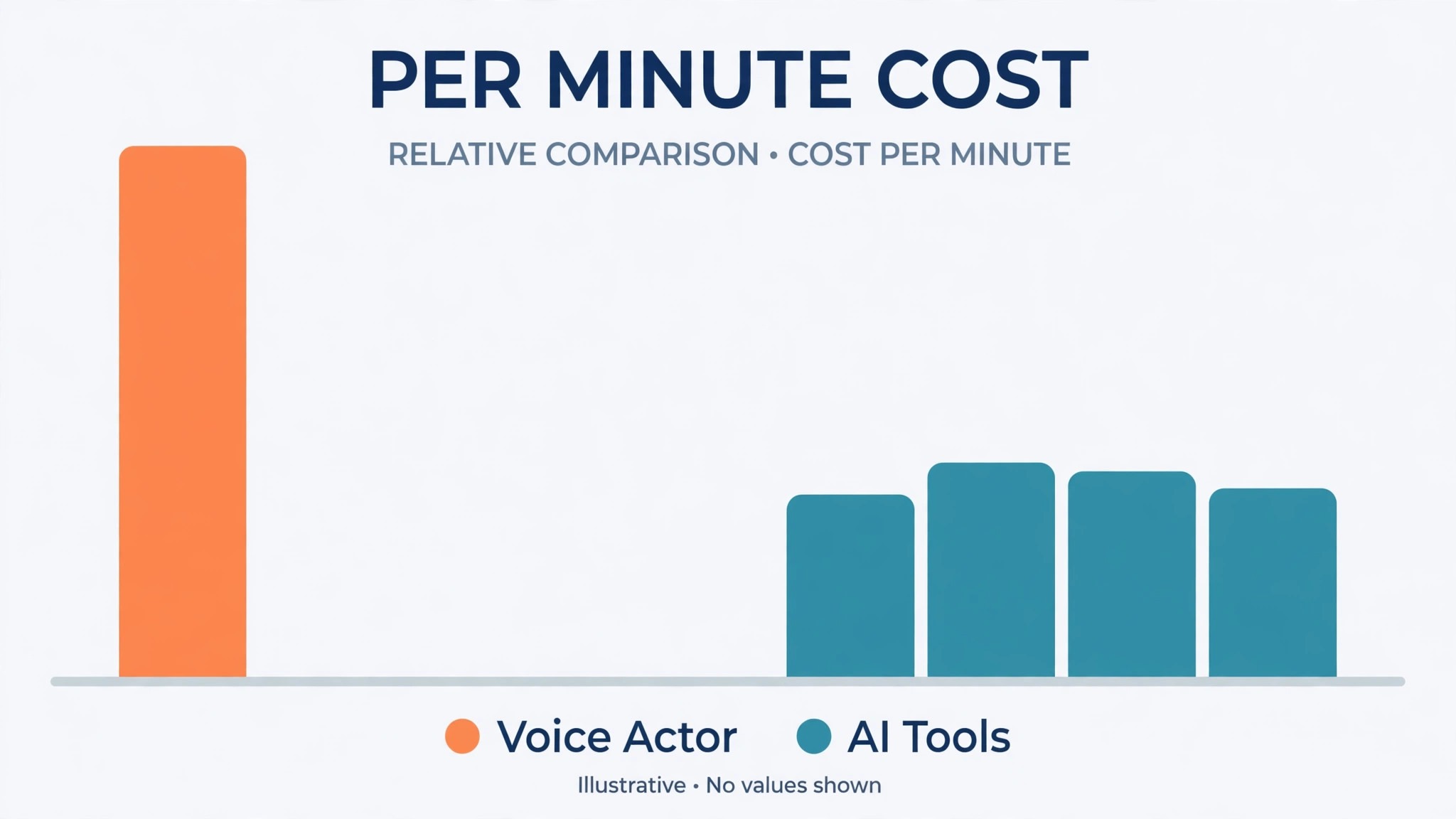
A professional voice actor charges 200 dollars or more per finished minute, with a studio, a session fee, and a round of revisions. An AI voiceover tool charges 6 dollars a month for about 30 minutes of speech, and that gap is the reason most creators never hire a voice actor again. The gap also hides the real question, which is not whether AI is cheaper, because it is, but what the plan actually meters. That question is the heart of ai voiceover pricing, and it is the number this guide works out for every tool.
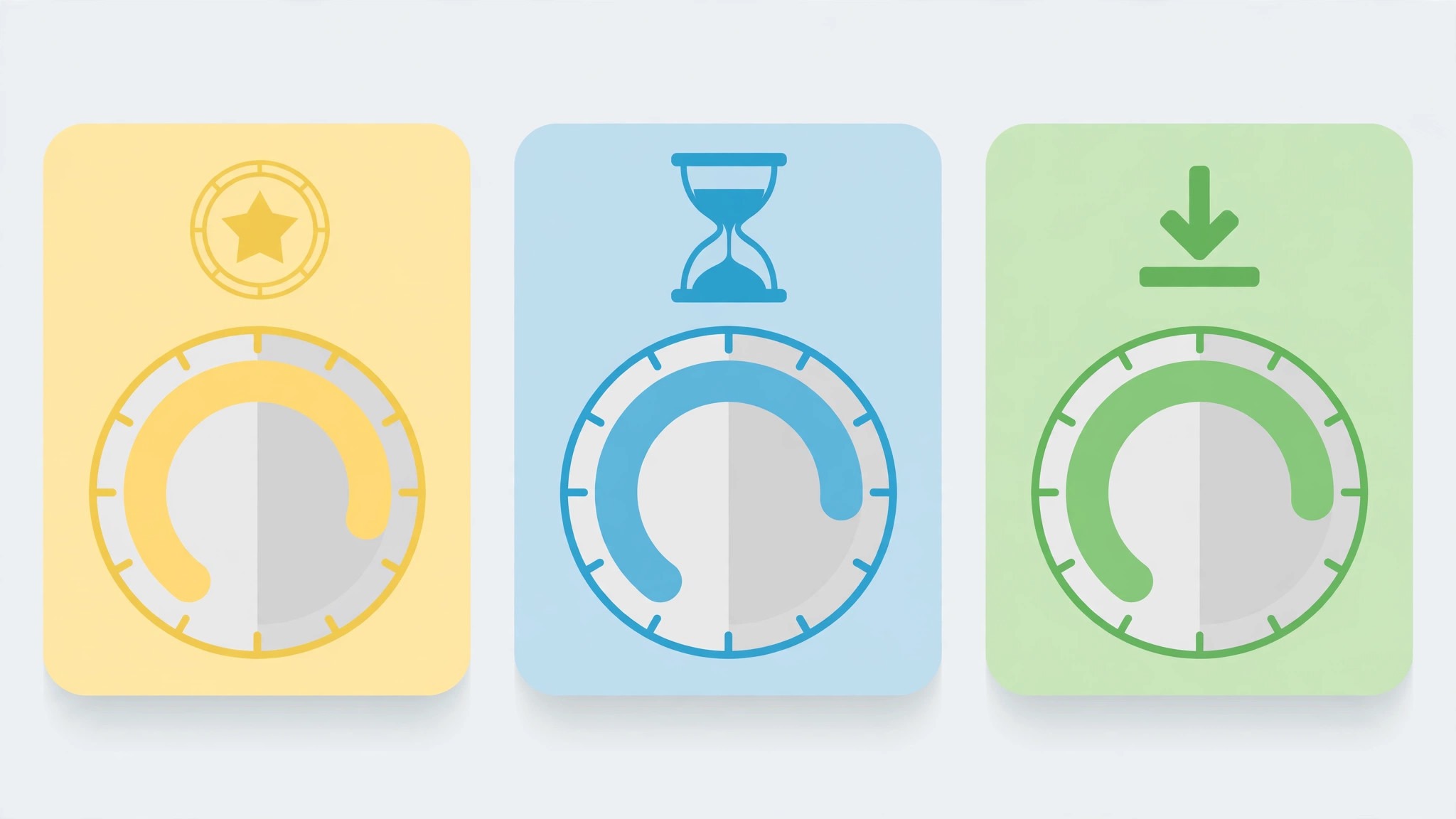
A tool that sells credits, a tool that sells hours, and a tool that sells download minutes are not selling the same thing. Credits burn at different rates for different voices, hours count generation time including retakes, and download minutes count only the finished audio the buyer keeps. A creator who records 60 minutes a month pays less on a tool that meters downloads, and a creator who regenerates every line three times pays less on a tool that meters finished audio. The meter decides the bill more than the headline price does.
The third thing to check is the license. No free tier from any major voice tool grants commercial rights, so a creator who publishes a monetized video, a course, or an ad on a free plan is publishing without a license. The cheapest paid plan with commercial rights is the real entry price, and the free plan is a test, not a plan. Knowing ai voiceover pricing means knowing which plan allows publishing, not just which plan allows generating.
Prices in this guide are US list prices checked in November 2026, before tax. Monthly prices are per month, with the annual billing rate beside the monthly rate where the vendor publishes one. Cost per minute is the plan price divided by the finished minutes included, using the whole allowance once, with no retakes. Where a vendor hides its prices or its site could not be reached, this guide says so instead of guessing.
At a Glance. ai voiceover pricing in One Table
The table below is the short answer. Prices are in US dollars, before tax. Minutes are finished minutes of speech on the entry paid plan.
| Tool | Free plan | Entry paid price | Minutes included | Cost per finished minute |
|---|---|---|---|---|
| ElevenLabs | About 10 minutes a month | Starter 6 dollars a month | About 30 minutes a month | About 0.20 dollars |
| Murf | 10 minutes, no downloads | Creator 19 dollars a month annual | 2 hours a month | About 0.16 dollars |
| WellSaid | 3 download minutes a month | Starter 10 dollars a month annual | 20 download minutes a month | About 0.50 dollars |
| Fish Audio | About 7 minutes a month | Plus 11 dollars a month annual | About 200 minutes a month | About 0.06 dollars |
| Speechify Studio | 600 credits a month | Starter 8.33 dollars a month annual | About 24 hours a year | About 0.07 dollars |
| Descript | 60 media minutes a month | Hobbyist 16 dollars a month annual | 10 media hours a month | About 0.03 dollars |
| Amazon Polly | Pay as you go, no free tier | 4 dollars per 1 million characters | About 1,000 minutes per 1 million | About 0.004 dollars |
| Lovo | Could not verify | Could not verify | Could not verify | Could not verify |
Read the per minute column first, because a plan that looks expensive can be cheap per minute, and a plan that looks cheap can be expensive per minute. WellSaid Starter at 10 dollars a month on annual billing gives 20 download minutes, which is 0.50 dollars per minute, the most expensive entry price in this guide. Fish Audio Plus at 11 dollars a month on annual billing gives about 200 minutes, which is about 0.06 dollars per minute.
Amazon Polly at 4 dollars per 1 million characters is about 0.004 dollars per minute, the cheapest in this guide, and it is a developer tool, not a studio. That range is the whole story of ai voiceover pricing, and the worked costs below show what each tool costs at 60 minutes a month.
Read the meter column second, because the meter changes what a minute costs in practice. ElevenLabs sells credits at one credit per character, with about 1,000 characters per minute of speech, so a long script with many retakes burns credits faster than the plan suggests. Murf sells hours of generation time, so text edits count again when the audio is regenerated. WellSaid sells download minutes, so generation is unlimited and only the finished downloads count, which makes forecasting easy. Descript sells media minutes, so everything imported or recorded counts against the allowance, not just the voiceover.
ElevenLabs
ElevenLabs is the realism pick in this guide, and its pricing is a credit meter with a commercial license from the cheapest paid plan. The free tier gives 10,000 credits a month, or about 10 minutes of speech, with no commercial license. Starter costs 6 dollars a month, or 5 dollars a month on annual billing, for 30,000 credits a month, or about 30 minutes. Creator costs 22 dollars a month for 121,000 credits, or about 121 minutes. Pro costs 99 dollars a month for 600,000 credits, or about 600 minutes. Unused credits roll over for up to two months on paid plans, which is the only rollover in this guide.
Worked cost for 60 minutes a month. Starter at 6 dollars a month gives about 30 minutes, so a creator who needs 60 minutes a month needs Creator at 22 dollars a month, which gives about 121 minutes. That is about 0.18 dollars per finished minute, or 264 dollars a year. A creator who needs exactly 30 minutes a month should pay 6 dollars for Starter and stop there, because 6 dollars for 30 minutes is the cheapest real entry price with commercial rights in this guide.
ElevenLabs earns its price with voice quality and cloning. The voices are the most convincing in this guide, the instant cloning holds up across long scripts, and the professional cloning on Creator sounds closer to the original than any rival. A creator who needs a voice that listeners cannot tell from a human should test ElevenLabs first, because the realism is the reason to pay 0.20 dollars a minute instead of 0.06 elsewhere. The weakness is the credit meter, because a script with many retakes burns credits on every regeneration.
Murf
Murf is the e-learning pick in this guide, and its pricing is an hours meter with a timeline editor. The free tier gives 10 minutes with no downloads, which is a test, not a plan. Creator costs 19 dollars a month on annual billing, or 29 dollars on monthly billing, for 2 hours of generation a month, or 24 hours a year. Business costs 66 dollars a month on annual billing, or 99 dollars on monthly billing, for 8 hours a month, or 96 hours a year. Murf no longer publishes its Studio subscription prices clearly on its pricing page, so check the current page before committing, because the figures here come from October 2026 comparisons.
Worked cost for 60 minutes a month. Creator at 19 dollars a month on annual billing gives 2 hours a month, so 60 minutes costs 19 dollars, or about 0.16 dollars per finished minute, or 228 dollars a year. That is cheaper per minute than ElevenLabs Creator at 22 dollars a month, and the timeline editor adds slide sync that ElevenLabs does not offer. A creator who narrates slides, courses, or explainers should test Murf first, because the Canva, PowerPoint, and Google Slides plugins keep the voice and the visuals in one workflow.
Murf earns its place with the editor. The timeline lets a creator sync voice blocks to slides, adjust emphasis per phrase, and add pauses where a sentence needs air, which is the workflow a course creator lives in. A corporate trainer or an explainer creator should test Murf first, because the editor saves more time than the voice quality costs. The weakness is the meter, because generation time counts every regeneration, so a creator who edits text often will burn hours faster than the plan suggests.
WellSaid
WellSaid is the enterprise pick in this guide, and its pricing is a download meter with the clearest forecasting. The free trial gives 3 download minutes a month, with no commercial rights. Starter costs 10 dollars a month on annual billing, or 19 dollars on monthly billing, for 20 download minutes a month, or 240 minutes a year. Pro costs 33 dollars a month on annual billing, or 49 dollars on monthly billing, for 180 download minutes a month, or 2,160 minutes a year. Business costs 160 dollars a month per user, for 2,880 download minutes a year per user, and it buys seats and collaboration rather than audio.
Worked cost for 60 minutes a month. Starter at 10 dollars a month on annual billing gives 20 download minutes, so a creator who needs 60 minutes a month needs Pro at 33 dollars a month, which gives 180 minutes. That is about 0.18 dollars per finished minute, or 396 dollars a year. The Pro plan is the value in this range, because the Starter plan at 0.50 dollars per minute is the most expensive entry price in this guide, and Pro cuts that to a third. A regulated team that needs paperwork should test WellSaid first, because the vendor never trains on customer data and holds SOC 2 Type 2 certification.
WellSaid earns its place with trust and forecasting. The download meter means generation is unlimited, so a creator can regenerate a line as often as needed without burning the allowance, and only the finished downloads count. A team in a regulated industry, or a team that needs to budget audio by the finished minute, should test WellSaid first. The weakness is the entry price, because 10 dollars a month for 20 minutes is a sampler, and the real price of the tool is the Pro plan at 33 dollars a month.
Fish Audio
Fish Audio is the volume pick in this guide, and its pricing is a credit meter with the cheapest per minute rate among the studios. The free tier gives 8,000 credits a month, or about 7 minutes of generation, for personal use only. Plus costs 11 dollars a month on annual billing, or 15 dollars on monthly billing, for 250,000 credits a month, or about 200 minutes. Pro costs 75 dollars a month on annual billing, or 100 dollars on monthly billing, for 2,000,000 credits a month, or about 1,620 minutes. Each minute of generation costs roughly 600 to 625 credits, and unused minutes do not roll over.
Worked cost for 60 minutes a month. Plus at 11 dollars a month on annual billing gives about 200 minutes, so 60 minutes costs 11 dollars, or about 0.06 dollars per finished minute, or 132 dollars a year. That is the cheapest studio price in ai voiceover pricing for 60 minutes a month, by a wide margin, and it includes commercial usage rights. A creator who records every week should test Fish Audio first, because 11 dollars a month for 200 minutes beats every other studio in this guide on volume.
Fish Audio earns its place with cost and emotion tags. The voices accept emotion tags inline in the script, which lets a creator mark a line as excited, calm, or serious without a separate tool, and the voice cloning is strong for the price. A volume creator who watches cost per minute should test Fish Audio first, because the per minute rate falls further at the Pro tier, to about 0.06 dollars. The weakness is the credit conversion, because the 600 credit per minute figure is an estimate, and a script with long words or many pauses can burn more.
Speechify Studio
Speechify Studio is the bundle pick in this guide, and its pricing is a credit meter with voiceover, dubbing, and avatar video in one subscription. The free tier gives 600 credits a month with no downloads. Starter costs 8.33 dollars a month on annual billing, or 100 dollars a year, for 86,400 credits, or about 24 hours of voiceover a year. Creator costs 25 dollars a month on annual billing, or 300 dollars a year, for 345,600 credits, or about 96 hours a year. Voiceover burns one credit per second, while avatar video burns 30 credits per second, so the credit total does not translate to a fixed number of minutes across features.
Worked cost for 60 minutes a month. Starter at 8.33 dollars a month on annual billing gives about 24 hours of voiceover a year, or about 2 hours a month, so 60 minutes costs 8.33 dollars, or about 0.07 dollars per finished minute, or 100 dollars a year. That is the second cheapest studio price in this guide for 60 minutes a month, and it includes dubbing and avatar video in the same plan. A creator who needs voiceover plus dubbing should test Speechify Studio first, because the bundle costs less than buying the two tools separately.
Speechify Studio earns its place with the bundle and the voice library. The library holds more than 1,000 voices across 60 plus languages, and commercial rights and a 20 to 30 second voice clone sample come included on the cheapest paid tier. A creator who publishes in several languages should test Speechify Studio first. The weakness is the billing history, because the parent company carries an F rating from the Better Business Bureau, built mostly on trial to paid billing complaints, so a buyer should read the cancellation terms before paying and should never start a trial with a card that cannot be cancelled easily.
Descript
Descript is the editor pick in this guide, and its pricing is a media minute meter with voiceover inside a full audio and video editor. The free tier gives 60 media minutes a month, with 720p export and 5 GB of storage. Hobbyist costs 16 dollars a month on annual billing, or 24 dollars on monthly billing, for 10 media hours a month, 400 AI credits, and 1080p export without a watermark. Creator costs 24 dollars a month on annual billing, or 35 dollars on monthly billing, for 30 hours of media and 4K export. Business costs 50 dollars a month on monthly billing, for more hours and team features.
Worked cost for 60 minutes a month. Hobbyist at 16 dollars a month on annual billing gives 10 media hours a month, so 60 minutes of voiceover costs 16 dollars, or about 0.03 dollars per media minute, or 192 dollars a year. That is cheap per minute, and the meter counts media minutes, which means everything imported or recorded counts, not just the voiceover. A creator who edits a podcast or a video by editing text should test Descript first, because the voiceover is a feature inside an editor the creator already needs.
Descript earns its place with the text editor. The creator edits audio and video by editing the transcript, which turns a two hour edit into a 20 minute edit, and the voiceover tools sit inside the same window. A podcaster or a video creator who already edits in Descript should use its voiceover and pay nothing extra. A creator who needs only a voiceover, without editing, should not pay Descript prices, because the editing features are the reason for the meter and the price.
Amazon Polly
Amazon Polly is the developer pick in this guide, and its pricing is pay as you go with no subscription and no free tier for voice work. Standard voices cost 4 dollars per 1 million characters, which is about 1,000 minutes of speech, or about 0.004 dollars per finished minute. Neural voices cost 16 dollars per 1 million characters, which is about 0.016 dollars per minute. There is no monthly fee, no plan to cancel, and no rollover to track, because the buyer pays only for the characters converted.
Worked cost for 60 minutes a month. Sixty minutes of speech is about 60,000 characters, which costs about 0.24 dollars a month on Standard voices, or about 0.96 dollars a month on Neural voices. That is the cheapest price in this guide by a factor of ten, and it is the reason a developer with a large catalog should test Polly first. The catch is the tooling, because Polly is an API, not a studio, so the buyer needs a developer to call it, store the audio, and build the player. A creator without a developer should not choose Polly, because the saving disappears into the build cost.
Amazon Polly earns its place with scale and price. A business that generates thousands of minutes a month, such as a news reader or a language app, pays a fraction of the studio price, and the bill scales linearly with use. A business that generates 60 minutes a month pays less than a dollar. The weakness is the workflow, because there is no editor, no cloning, and no timeline, so a creator who needs to hear a line and fix it by ear should test ElevenLabs or Murf instead.
Lovo
Lovo is the tool this guide could not verify, and its pricing is the warning in this guide. Lovo sold AI voice generation with a studio and cloning, and its pricing page was listed in many 2026 roundups. When checked in October 2026, the site returned an error and the pricing page could not be read, so no price in this guide comes from Lovo. A buyer who finds a Lovo price in an old roundup should treat it as stale, because the vendor may have changed its plans, its prices, or its availability since that roundup was written.
Worked cost for 60 minutes a month. There is no worked cost for Lovo, because there is no verified price to work from. A buyer who needs 60 minutes a month should use the verified tools in this guide, starting with Fish Audio Plus at 11 dollars a month or Speechify Studio Starter at 8.33 dollars a month on annual billing, and should only return to Lovo after checking its live pricing page. That is the honest position, and it is better than publishing a price that may not exist.
Lovo earns its place in this guide as a reminder, not as a recommendation. The voice market moves fast, and a tool that was easy to buy last year can be hard to reach this year. PlayHT is the same story, because Meta acquired its parent company in July 2025 and the service shut down by January 2026, yet old roundups still recommend it. A buyer should check the live pricing page of any voice tool before paying, and should never pay from a roundup price alone. That check takes a minute, and it is the cheapest insurance in this guide.
Total Cost of Ownership
The sticker price is not the total cost, and a buyer that budgets on the sticker price will be surprised in month two. The total cost includes the plan, the overage, the retakes, and the time spent regenerating lines that did not sound right. ElevenLabs Starter at 6 dollars a month gives about 30 minutes, so a creator who needs 60 minutes pays 22 dollars for Creator, not 6 dollars for Starter. WellSaid Starter at 10 dollars a month gives 20 download minutes, so a creator who needs 60 minutes pays 33 dollars for Pro, not 10 dollars for Starter. The allowance decides the bill more than the headline price does.
Add the hidden costs to every tool. A voiceover that needs regenerating three times costs three times the credits on a credit meter, and a media minute meter counts every import, not just the finished audio. A free tier without commercial rights costs a re-record when the creator publishes, because the free audio cannot be used in a monetized video. A trial that converts to a full annual charge costs the year, not the month, and the Speechify billing complaints in this guide are a warning about that exact trap.
The rule is simple. Take the published price, work out the cost per finished minute at the real volume, add the retakes, and that is the real monthly cost. That per minute figure is the heart of ai voiceover pricing, and it is the number that decides the value.
Cheapest by Situation
| Situation | Best value | Why it wins |
|---|---|---|
| Most realistic voice | ElevenLabs Starter | 6 dollars a month, 30 minutes, commercial rights |
| 60 minutes a month, cheapest studio | Fish Audio Plus | 11 dollars a month annual, 200 minutes |
| 60 minutes, voice plus dubbing | Speechify Studio Starter | 8.33 dollars a month annual, 24 hours a year |
| E-learning, slide narration | Murf Creator | 19 dollars a month annual, 2 hours a month |
| Regulated team, clear budget | WellSaid Pro | 33 dollars a month annual, 180 download minutes |
| Podcast and video editing | Descript Hobbyist | 16 dollars a month annual, 10 media hours |
| Developer, high volume | Amazon Polly Standard | 4 dollars per 1 million characters |
| Cannot verify price | Lovo | Check the live page before paying |
Read the table by situation, not by price alone. The cheapest tool for narration is not the cheapest tool for a course, because the editor and the meter change the math. A buyer that chooses the cheapest tool and then discovers it lacks commercial rights will pay twice, once for the cheap plan and once for the replacement. That situation test is the core of ai voiceover pricing. A creator that buys the plan matching the volume, the meter, and the license the work requires, will not pay twice.
Frequently Asked Questions
Is there a truly free AI voiceover tool?
No, not for published work. ElevenLabs free gives about 10 minutes a month, Fish Audio free gives about 7 minutes, and Descript free gives 60 media minutes, and none of them grant commercial rights on the free tier. WellSaid gives a 3 minute trial, and Murf free gives 10 minutes with no downloads. Those free tiers are for auditioning voices, not for publishing. A creator who publishes a monetized video on a free plan is publishing without a license, and the cheapest paid plan with commercial rights is ElevenLabs Starter at 6 dollars a month.
How accurate is the cost per minute on a credit meter?
It is an estimate, and it varies with the script. ElevenLabs charges one credit per character, with about 1,000 characters per minute of speech, so a script with long words costs more per minute than a script with short words. Fish Audio charges roughly 600 to 625 credits per minute, and the FAQ rate can differ from the plan rate. Speechify Studio charges one credit per second for voiceover, which is the clearest conversion in this guide. A creator who wants a firm number should generate a test script on the free tier and measure the burn before paying.
What is the cheapest AI voiceover per minute?
Amazon Polly Standard at about 0.004 dollars per finished minute is the cheapest in ai voiceover pricing, because it charges 4 dollars per 1 million characters with no subscription. Among the studios, Fish Audio Plus at about 0.06 dollars per minute is the cheapest, because it gives about 200 minutes for 11 dollars a month on annual billing. Speechify Studio Starter at about 0.07 dollars per minute is close, because it gives about 24 hours of voiceover a year for 100 dollars. WellSaid Starter at 0.50 dollars per minute is the most expensive entry price in this guide.
Do unused minutes roll over?
Mostly no. Fish Audio minutes reset each month, and unused minutes are lost. Murf hours reset each year on the annual plan, and unused hours are lost at renewal. Descript media minutes reset each month. ElevenLabs is the exception, because unused credits roll over for up to two months on paid plans. A creator that buys a plan for a busy month and then has a quiet month will lose the unused allowance on most tools, so the plan should match the average month, not the busiest month.
Which AI voiceover tool is best for a small business?
It depends on the job. ElevenLabs is best for the most realistic voice, Fish Audio is best for volume on a budget, Murf is best for e-learning and slide narration, WellSaid is best for regulated teams that need paperwork, Speechify Studio is best for voiceover plus dubbing, and Descript is best for creators who edit audio and video by editing text. A small business that narrates a course should choose Murf. A small business that narrates ads should choose ElevenLabs or Fish Audio.
Verdict
For most creators, the best value is ElevenLabs Starter at 6 dollars a month for about 30 minutes of speech, because it is the cheapest real entry price with commercial rights and the most realistic voice in this guide. A creator who needs 60 minutes a month should pay 22 dollars for Creator, or 11 dollars for Fish Audio Plus if the volume matters more than the last degree of realism. For a creator who needs voiceover plus dubbing, Speechify Studio Starter at 8.33 dollars a month on annual billing is the best pick, because the bundle covers both jobs for 100 dollars a year.
For high volume, Fish Audio Plus at 11 dollars a month on annual billing is the best pick, because about 200 minutes for 11 dollars is the cheapest studio rate in this guide. For a developer, Amazon Polly Standard at 4 dollars per 1 million characters is the best pick, because the pay as you go price beats every subscription at scale. The right tool is the one that fits the volume, the meter, and the license at the tier the creator will use in six months, not at the entry price, because the entry price buys an allowance that may not cover a real month of recording. That is the honest read on ai voiceover pricing in 2026.