
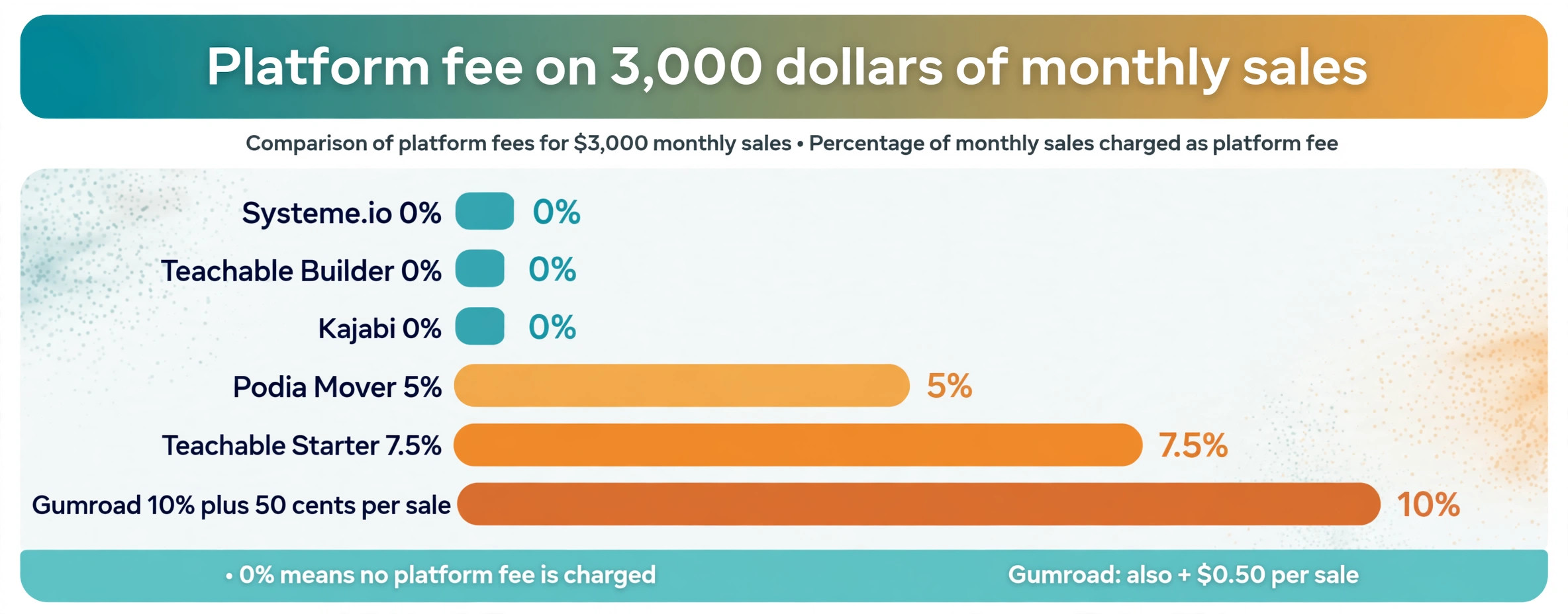
A creator who sells 3,000 dollars of courses in a month keeps about 3,816 dollars of 3,960 dollars in revenue on Systeme.io, and about 3,417 dollars on Gumroad, a gap of almost 400 dollars a month for the same courses and the same students. That gap is the whole story of choosing the best online course platforms for solo creators, because the subscription price on the pricing page is only half the cost.
Platform fees, card processing, currency charges and student limits decide what you actually keep, and the cheapest subscription often takes the biggest cut. We compared 10 platforms on published pricing, fees, student limits, tax handling and how fast a solo creator can launch, so you can keep more of every sale.
Solo creators need something different from a school or a company. One person records the lessons, writes the sales page, answers student questions and runs the marketing, so the platform must handle checkout, payments, student access and email without a team to manage it. It must also scale gently, because a plan that caps you at 100 students will force an upgrade the month your course takes off. The tools below were judged on that solo reality first, and on advanced learning features second.
Price is the part most comparisons get wrong, because a low subscription with a percentage fee beats a high subscription with no fee only until sales pass a break even point. Teachable Starter at 29 dollars a month plus 7.5 percent of sales costs more than Builder at 69 dollars a month once monthly sales pass about 533 dollars. Every price in this guide was checked against vendor pricing pages and current 2026 roundups in November 2026. Confirm the figure on the vendor site before you pay, because plan names, fees and student limits change often.
How We Tested the Best Online Course Platforms for Solo Creators
We started from the vendor pricing pages, plan tables and feature documentation for each platform, then checked those claims against recent third party roundups that priced the same platforms on a shared sales scenario. We did not run a paid course on all 10 platforms, and this guide says so plainly where a claim comes from a vendor page rather than hands on use. Where a vendor hides a fee behind a help page, we say so instead of guessing a number.
We scored each tool on five points that match how a solo creator actually sells. True cost covered the subscription plus the platform fee plus card processing on 3,000 dollars of monthly sales, because that is the number that decides what you keep. Launch speed covered how fast a creator can record, upload, price and publish a first course without help. Student experience covered video lessons, quizzes, certificates, discussion and mobile access, because students who finish buy again. Limits covered products, students, contacts and video storage, because a cap that looks generous today can block growth tomorrow. Tax covered VAT and GST handling, because a solo creator selling worldwide cannot file tax in 45 countries by hand.
Creator shape changes the answer, so the ranking keeps three shapes in mind throughout. A creator launching a first course with no audience needs a free or cheap start with no fee trap. A creator selling steadily needs a zero fee plan and room for more students. A creator building a whole business needs email, funnels, community and affiliates in one account. The best pick table below gives a shortcut for each shape, and the full reviews explain the trade offs.
The Best Pick for Each Job
| Job | Pick | Why it wins |
|---|---|---|
| The best all rounder | Teachable | Fast launch, tax handled, Builder at 69 dollars a month with 0 percent fee |
| The best course experience | Thinkific | Unlimited courses and strong learning tools from 40 dollars a month |
| The simplest all in one | Podia | Courses, downloads, community and email from 42 dollars a month |
| The cheapest way to start | Systeme.io | Free plan with 0 percent fees on every plan |
| The full business in one | Kajabi | Courses, email, funnels and CRM from 143 dollars a month |
Use this table as a shortcut, then read the full review of the tool you are leaning toward. The cheapest option is not the best value when its fee takes 10 percent of every sale, and the most expensive option is not the best choice when you only sell one course a month.
The 10 Best Online Course Platforms for Solo Creators in 2026, Ranked
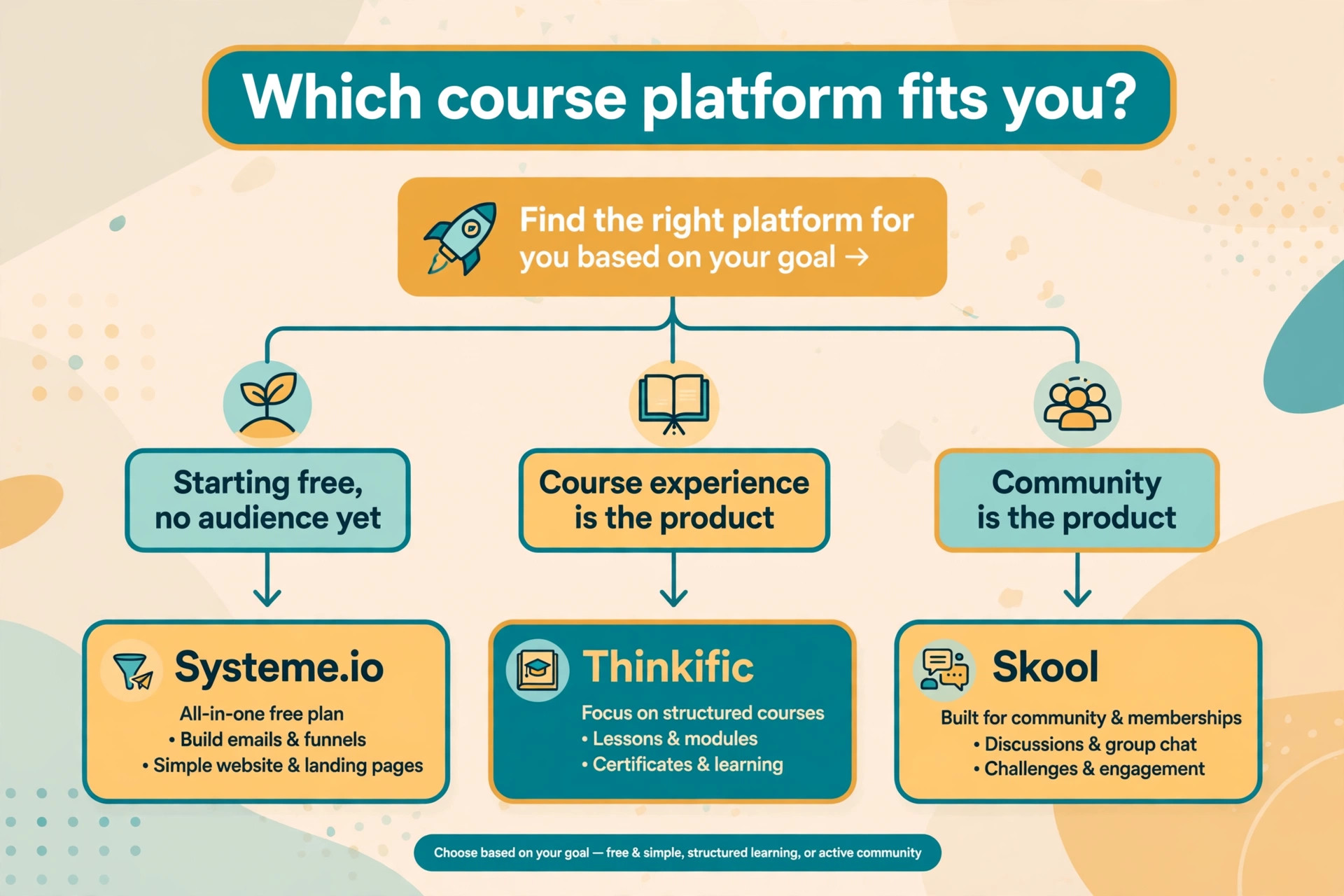
The 10 tools below fall into three groups, and the best online course platforms for solo creators are the ones that match how you sell rather than the ones with the longest feature list. The first group is the classic course platforms, and these suit a course first business. The second group is the all in one platforms, and these suit a creator building a whole business. The third group is the low cost and community led tools, and these suit a first launch or a community first course.
1. Teachable
Teachable is the best all rounder for a solo creator who wants to launch fast and sell globally without managing a tax filing calendar. The Builder plan at 69 dollars a month billed annually delivers 0 percent platform fees, automated VAT and GST remittance across more than 45 countries through teachable pay, and native iOS and Android apps on every plan. The course builder is quick, the checkout is clean, and coupons, order bumps, upsells, memberships and quizzes are included on the entry plans.
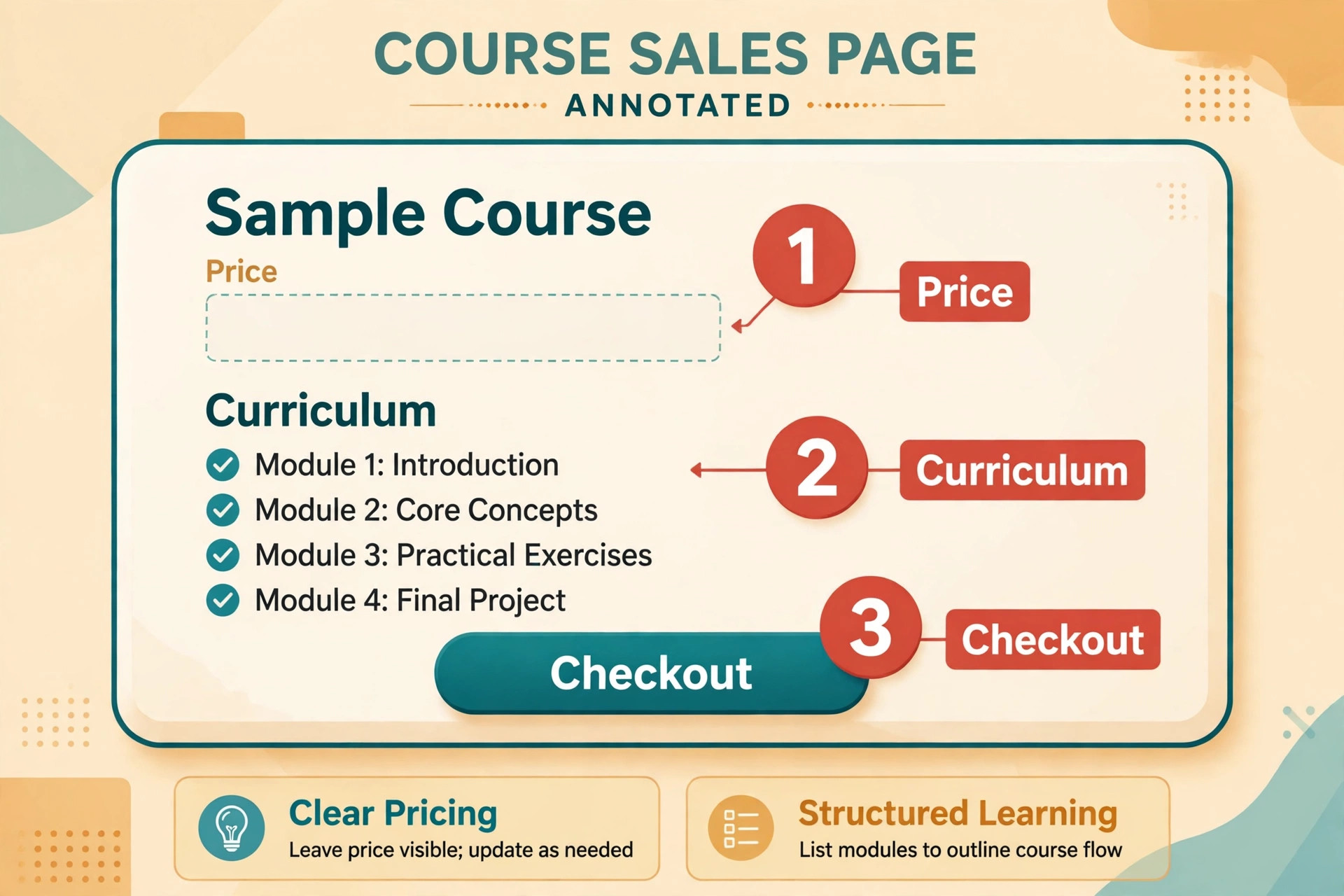
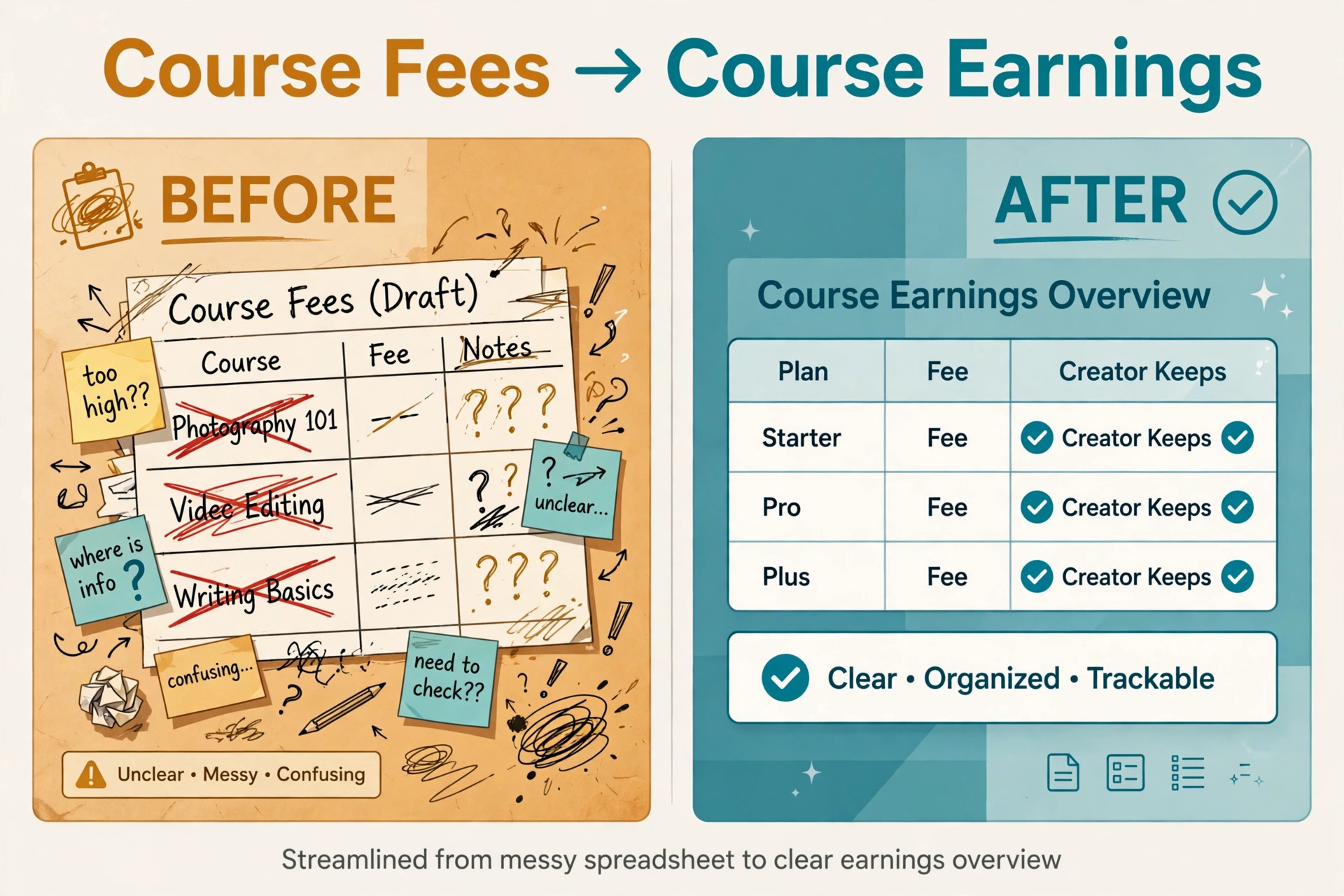
Pricing starts with Starter at 29 dollars a month billed annually, which allows five products and 100 students and charges a 7.5 percent platform fee. Builder at 69 dollars a month billed annually drops the fee to 0 percent, adds affiliate tools and email integrations, and raises the caps to 10 products and 1,000 students. The break even point is about 533 dollars of monthly sales, above which Builder costs less overall than Starter. For a solo creator selling to an international audience, the automated tax handling alone justifies Builder. For a creator testing a first course with low sales, Starter is the cheapest honest start.
2. Thinkific
Thinkific is the strongest fit when the learning experience is the product. The platform supports unlimited published courses, and the plan ladder adds live cohorts, coaching, assignments, certificates, memberships, group orders, API access and more advanced reporting as the business grows. The course player is clean, the community tools are solid, and the AI assistant helps with course structure. A creator who expects to add memberships, communities and business to business sales will find room to grow here without moving platforms.
Pricing has shifted during 2026, so read the current page before you budget. Earlier 2026 listings put Basic at 40 dollars a month billed annually with 0 percent platform fees through Thinkific Payments, while the current public pricing page starts at Start, which costs 109 dollars a month or 82 dollars a month billed annually, with Grow at 219 dollars or 164 dollars a month billed annually. Thinkific does not remit VAT to foreign tax authorities on your behalf, though it calculates EU and UK VAT at checkout. For a course first business that will keep expanding, Thinkific is the most capable platform here. For a creator who wants tax handled automatically, Teachable fits better.
3. Podia
Podia is the simplest all in one for a solo creator who sells courses alongside downloads, coaching and memberships. The plans combine a website, a store, courses, downloads, coaching, community, events and email allowances in one account, with a clean setup and minimal configuration. The interface is calm, the storefront looks good without design work, and a creator can be selling in a day. Podia suits a creator whose courses are one part of a simple storefront rather than the whole business.
Pricing starts with Mover at 42 dollars a month billed annually, or 49 dollars month to month, with a 5 percent Podia transaction fee. Shaker costs about 84 dollars a month billed annually and removes the fee, while adding affiliate marketing, PayPal, upsells and Zapier. The break even point is about 840 dollars of monthly sales, above which Shaker costs less overall than Mover. There is no native mobile app, which is the main gap next to Teachable. For a creator who wants one simple account for courses, downloads and email, Podia is the easiest choice in this guide.
4. Kajabi
Kajabi is the all in one for an established creator who wants courses, email funnels and a CRM under one brand without connecting third party tools. The course builder is polished, the website and landing page builder is strong, and the email sequences, pipelines and community tools cover the whole business from first visit to repeat sale. A creator with revenue to absorb the premium gets a single dashboard instead of five subscriptions and five logins.
Pricing is the highest in this guide. Basic costs 143 dollars a month billed annually, or 179 dollars month to month, with 0 percent platform fee through Kajabi Payments and a 2 percent fee when you use a third party payment provider. A cheaper Kickstarter plan at 71 dollars a month billed annually exists but is hidden from the public pricing table, with one product and 250 contacts.
Kajabi raised prices by 20 to 25 percent in January 2026 and cut Basic contact limits from 10,000 to 2,500. Kajabi does not automatically remit international VAT or GST. For a creator earning enough to justify the premium, Kajabi replaces the most tools. For a solo creator starting out, it is far more than needed.
5. LearnWorlds
LearnWorlds is the pick for interactive video, assessments and SCORM compliant training, and it suits creators and training teams whose courses need more than video and a quiz. The interactive video editor lets students answer questions inside the lesson, the assessment builder covers exams and certificates, and the platform handles corporate training requirements that the simpler tools cannot. The course player looks professional, and the white label options are strong for a creator selling to companies.
Pricing starts with Starter at 24 dollars a month billed annually, or 29 dollars month to month, plus 5 dollars per paid enrollment. Pro Trainer costs 79 dollars a month billed annually with no enrollment fee and adds more advanced features. The 5 dollar per enrollment fee on Starter adds up fast, so a course with 100 paid students a month costs 500 dollars in fees alone on top of the subscription. LearnWorlds offers Stripe Tax integration, but the creator handles remittance. For a creator selling interactive or corporate training, LearnWorlds is the strongest learning platform here. For a simple video course, Thinkific or Teachable costs less.
6. Systeme.io
Systeme.io is the cheapest serious way to start a course business, because the free plan never expires and every plan charges 0 percent platform fees. The Startup plan costs 17 dollars a month and covers funnels, email, courses and affiliates in one account, which replaces a course platform, an email tool and a funnel builder for less than the cost of one of them elsewhere. The free plan caps at one course and 2,000 contacts, which is enough to launch and test a first course before paying anything.
The trade off is depth. The course player is simpler than Thinkific or LearnWorlds, the community tools are basic, and there are no client records, habits or check ins for coaching businesses. The interface is plain and the templates are functional rather than beautiful. For a creator starting with one to five courses who also wants funnels and email in one tool, Systeme.io is the best value in this guide. A creator who sells 3,000 dollars a month keeps about 3,816 dollars after card processing on the Startup plan, the most of any tool here. For a creator who needs advanced learning features, Thinkific is the better home once sales grow.
7. Skool
Skool is the pick when the community is the product and the course is attached to a paid group. The platform is simple by design, with a group feed, a classroom for course lessons, a calendar for live calls and a leaderboard that keeps members active. Creators who run cohorts, challenges and membership groups love it, because the community keeps students engaged and finishing in a way that a lonely video course rarely does. The interface is clean and the setup takes an afternoon.
Pricing starts with Hobby at 9 dollars a month plus a 10 percent transaction fee, and Pro costs 99 dollars a month plus 2.9 percent. The fee is the detail to check, because the 9 dollar plan takes 10 percent of every sale, so at 2,000 dollars a month it costs 221 dollars all in, against 169 dollars on the 99 dollar plan. Skool handles VAT as merchant of record for the EU and UK, which helps a creator selling to Europe. There is no real sales page builder, so most creators pair Skool with a separate landing page. For a community first course, Skool is the best fit. For a course first business, Teachable or Thinkific fits better.
8. Gumroad
Gumroad is the simplest way to sell a course file or a digital product without a monthly subscription. Upload the course, set a price, share the link, and Gumroad handles checkout and delivery. There is no course player with quizzes and certificates, no email funnel and no community, which is fine when the product is a video file, a workbook or a recorded workshop rather than a structured course. Creators who sell on social media like it because the link works everywhere and the setup takes minutes.
Pricing is 0 dollars a month, with a fee of 10 percent plus 50 cents per transaction on your own sales, and 30 percent on sales through the Discover marketplace. On 3,000 dollars of monthly sales that fee is about 416 dollars including card processing, which makes Gumroad the most expensive tool here at volume despite the free subscription. For a creator testing a first product with no monthly commitment, Gumroad is the lowest risk start. For a creator selling steadily, a subscription platform with a lower fee keeps far more of every sale.
9. Teachery
Teachery is the flat price alternative for a solo creator who hates plan tiers. One price covers unlimited courses, unlimited students and unlimited customers, with no per sale fee from Teachery itself and no upgrade ladder to climb as the business grows. The course player is clean, the sales pages are simple, and the setup is fast, because there is nothing to configure beyond the course itself. A creator who wants one predictable bill and no surprises will find Teachery restful after the tiered platforms.
Pricing is 49 dollars a month or 470 dollars a year, which works out to about 39 dollars a month on the annual plan. Card processing still applies on every sale, and there is no built in email marketing, community or affiliate system, so a creator who needs those will add another tool. The review base is smaller than the larger platforms, and the feature set is narrower by design. For a solo creator who wants unlimited everything for one flat price and no fee per sale, Teachery is the simplest deal in this guide. For a creator who wants email and community built in, Podia or Kajabi fits better.
10. Payhip
Payhip is the budget storefront for a creator who sells courses alongside digital downloads, memberships and coaching. The free plan charges a 5 percent cut with no monthly fee, the Plus plan costs 29 dollars a month with a 2 percent cut, and the Pro plan costs 99 dollars a month with no cut at all. The storefront is quick to set up, the checkout is clean, and the platform handles EU VAT for digital products. A creator who sells a mix of products from one link will find Payhip covers the lot without a course platform subscription.
The course features are lighter than Teachable or Thinkific, with a simpler player, no cohorts and no advanced assessments. The platform is a store first and a course platform second, so a creator whose course is the whole business will feel the gap as the catalogue grows. For a creator selling courses, downloads and coaching from one storefront on a tight budget, Payhip is the most flexible low cost choice. For a structured course business with cohorts and certificates, Thinkific is the stronger home.
How to Choose the Best Online Course Platforms for Solo Creators
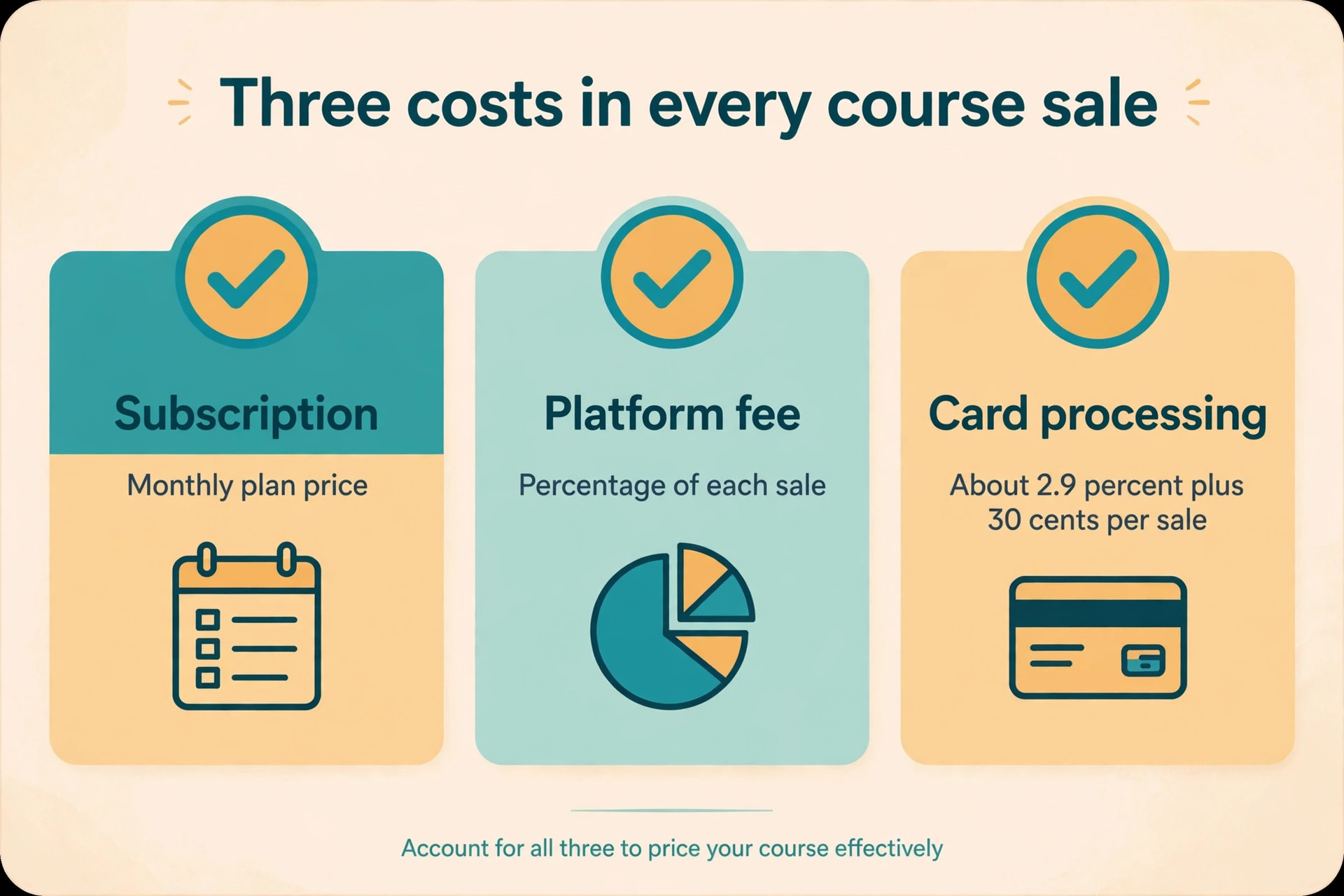
Start with the true cost at your real sales level, because the subscription price alone will mislead you. Take your monthly sales, add the platform fee, add card processing at about 2.9 percent plus 30 cents per sale, and compare the total across tools. A creator selling 500 dollars a month pays less on Teachable Starter than on Builder, while a creator selling 3,000 dollars a month pays far less on Builder. Work out the break even point for every tool you shortlist, and pick the plan that is cheapest at the sales level you expect in six months, not the sales level you have today.
Next, check the student and product limits on the plan you would actually buy. Teachable Starter caps at five products and 100 students, Podia Mover caps at 50 products, and Skool Hobby takes 10 percent of every sale. A limit that looks generous today can force an upgrade the month your course takes off, and an upgrade mid launch is the worst time to move platforms. Read the limits table on the pricing page, and pick the plan that gives you room for twice your current student count.
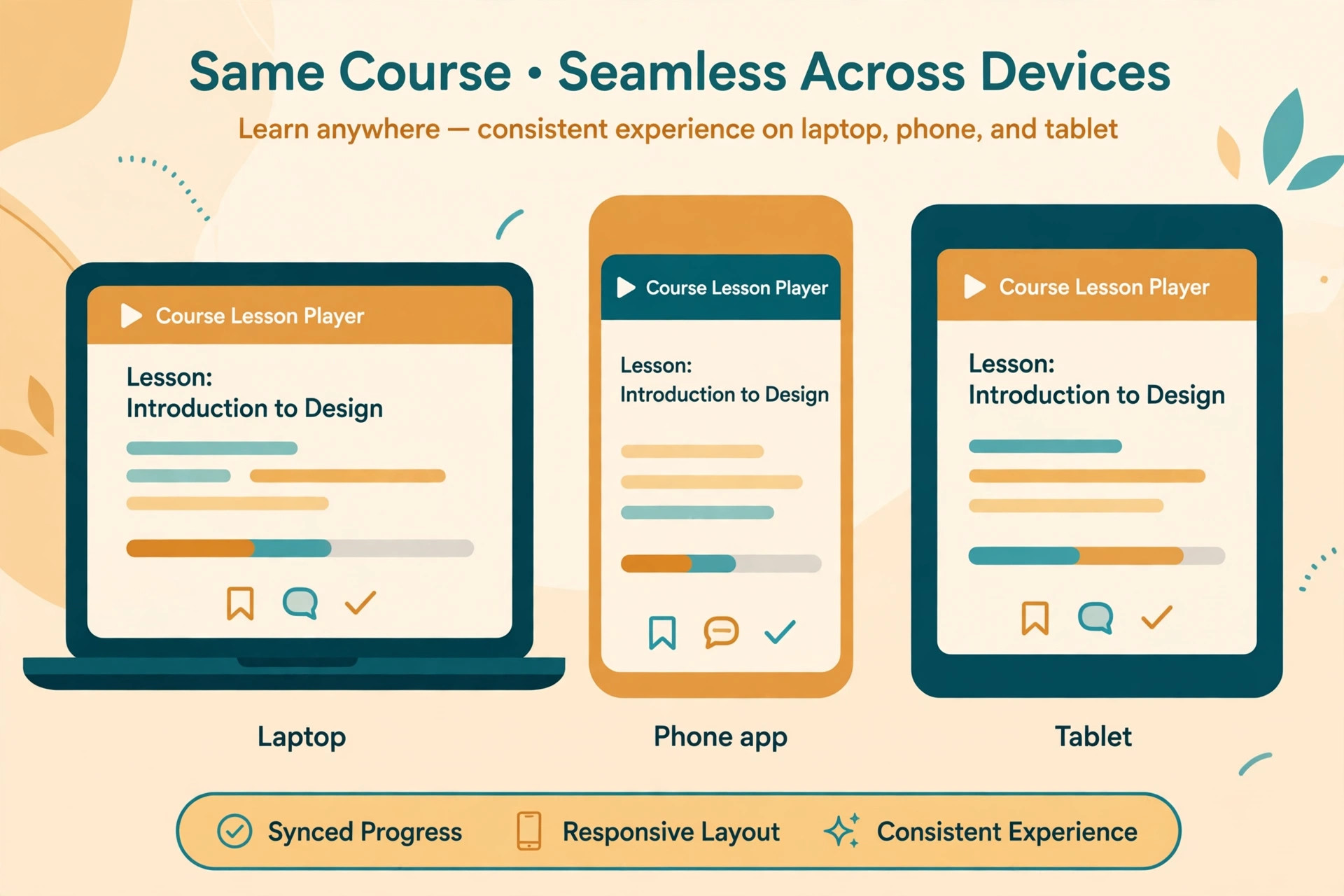
Then test the student experience on a phone, because that is where most students watch. Enrol as a test student, watch a lesson, take a quiz, download a worksheet and check the certificate, and time how long each step takes. A course player that is slow, confusing or ugly on a phone will lose students who would have finished on a cleaner platform. The best platform here is the one your least technical student can use without emailing you for help, and that test takes an afternoon on a free trial.
Finally, check the tax handling before you sell internationally. Teachable remits VAT and GST across more than 45 countries on your behalf, Skool handles VAT as merchant of record for the EU and UK, and Kajabi and Thinkific leave international VAT filing to you. A solo creator cannot file tax in 45 countries by hand, so the tax feature is not a nice extra, it is a real cost in time or in accountant fees. When your audience is global, pick the platform that handles tax for you.
Mistakes That Waste Money
The most common mistake is choosing on the subscription and ignoring the fee. A creator picks Gumroad because it costs 0 dollars a month, then loses 10 percent of every sale, which is 300 dollars on 3,000 dollars of sales. A creator picks Skool Hobby because it costs 9 dollars a month, then loses 10 percent of every sale on top. Work out the true cost at your real monthly sales before you compare, because the fee often decides which plan is really cheapest, and the cheapest subscription is rarely the cheapest platform.
The second mistake is buying an all in one before the business needs one. A creator with one course and 50 students pays 143 dollars a month for Kajabi, then uses only the course player and a landing page, which Teachable Builder covers for 69 dollars. Buy the tool that fits the business you have, not the business you hope to have in two years, and upgrade when the revenue justifies it. Most platforms let you move up a tier in a day, so there is no penalty for starting small and growing into the bigger plan.
The third mistake is ignoring the student limit until launch week. A creator launches a course on Teachable Starter, sells 120 places in the first week, and discovers the plan caps at 100 students. The fix is either an upgrade mid launch or a manual workaround that confuses students. Check the student cap before you launch, pick the plan that covers twice your expected enrolments, and set a reminder to review the cap every quarter. A limit that blocks a sale is the most expensive limit in this guide.
Our Verdict
Teachable is the pick for most readers, because Builder at 69 dollars a month billed annually gives 0 percent platform fees, automated tax remittance across more than 45 countries, and native mobile apps, which is the combination a solo creator selling globally needs most. The launch is fast, the checkout is clean, and the break even point against Starter is only about 533 dollars of monthly sales. For a creator starting out, Starter at 29 dollars a month is the cheapest honest start in the classic course platforms.
Thinkific is the pick when the course experience is the product, because unlimited courses and the strongest learning tools suit a course business that will keep expanding. Systeme.io is the pick when the budget is zero, because the free plan with 0 percent fees lets a creator launch and test without spending anything. Among the best online course platforms for solo creators, the right choice is the one that keeps the most of your sales at your real volume, with room for twice as many students as you have today.
Frequently Asked Questions
Which of the best online course platforms for solo creators is the cheapest?
Systeme.io is the cheapest starting point, because the free plan never expires and charges 0 percent platform fees on every plan, and Startup costs 17 dollars a month. Gumroad is also free per month, but its 10 percent fee makes it the most expensive tool here once sales pass a few hundred dollars a month. Among subscription course platforms, LearnWorlds Starter at 24 dollars a month billed annually is the cheapest, though its 5 dollar per enrollment fee adds up fast. Always compare the true cost at your real sales level, not the subscription price alone.
How much of each sale do course platforms keep?
It depends on the plan, and the range is wide. Systeme.io keeps 0 percent on every plan, Teachable Builder and Kajabi keep 0 percent with their own payment services, and Podia Shaker keeps 0 percent. Teachable Starter keeps 7.5 percent, Podia Mover keeps 5 percent, Skool Hobby keeps 10 percent, and Gumroad keeps 10 percent plus 50 cents per sale. Card processing at about 2.9 percent plus 30 cents applies on top of most platform fees. Work out the total on your real monthly sales before you choose, because the fee decides what you keep.
Do I need a platform that handles VAT and GST for me?
Yes, when you sell to an international audience. Teachable remits VAT and GST across more than 45 countries on your behalf, and Skool handles VAT as merchant of record for the EU and UK. Kajabi and Thinkific leave international VAT filing to you, which means either learning the rules for each country or paying an accountant. A solo creator cannot file tax in 45 countries by hand, so the tax feature is a real cost in time or money, not a nice extra. When your audience is mostly in one country, the tax question matters less.
Can I sell a course without a monthly subscription?
Yes, on Gumroad and Payhip, which charge no monthly fee and take a percentage of each sale instead. Gumroad takes 10 percent plus 50 cents per sale, and Payhip free plan takes 5 percent. Systeme.io also offers a free plan with 0 percent fees, though it caps at one course and 2,000 contacts. A no subscription start is the lowest risk way to test a first course, and you can move to a subscription platform once sales justify it. The fee based tools cost more per sale, so switch when monthly sales pass a few hundred dollars.
Is Kajabi worth the price for a solo creator?
Kajabi is worth the price when the creator earns enough to use the whole bundle, because courses, email, funnels and a CRM in one account replace several subscriptions. Basic at 143 dollars a month billed annually is the entry price, and the contact limit is 2,500. It is not worth the price for a creator with one course and low sales, because Teachable Builder at 69 dollars a month covers the course, checkout and tax for less than half the price. Buy Kajabi when the email and funnel tools save you a separate subscription, not before.
How many students can I have on the cheapest plan?
It varies widely, so read the limits table before you buy. Teachable Starter allows 100 students and five products, Podia Mover allows 50 products, and Systeme.io free plan allows 2,000 contacts with one course. Thinkific allows unlimited courses, though the student and contact limits rise by tier. Teachery allows unlimited courses and unlimited students on its flat price plan. Pick the plan that covers twice your current student count, because a cap that blocks a sale during a launch is the most expensive limit in this guide.