The wrong booking platform costs a yoga studio students before the first class. A new student finds a class, starts checkout on a phone, hits a fee that was never mentioned, or a pass that does not cover the class they picked, and gives up halfway through. The studio never hears about it. The booking never appears, the payment never arrives, and the student books with the studio down the road instead. The best yoga studio software removes that friction, with class bookings, memberships, payments and reminders in one place, and a checkout a new student can finish on a phone without calling the front desk.
We compared 10 real platforms on published pricing, booking features, membership tools, payment fees and the quality of the student app, so you can shortlist with confidence.
A yoga studio is not a gym, and software built for gyms often misses what a studio needs. Yoga classes run on passes, memberships and drop in visits, teachers change week to week, and many studios sell workshops, retreats and on demand video alongside the regular timetable. A platform that cannot sell a 10 class pass, manage a waitlist when a popular class fills, or let a teacher see who is coming to their 7am class will slow the studio down every single day. The tools below were judged on those yoga specific jobs first, and on general business features second.
Price is the part most comparisons get wrong, because the headline monthly figure is rarely the full cost. Payment processing fees, branded app charges, text message credits and marketplace commissions all sit on top of the subscription, and some platforms raise the price when you add a second teacher or pass a member limit. Every price in this guide was checked against vendor pricing pages and current 2026 roundups in November 2026. Confirm the figure on the vendor site before you pay, because plans change and some vendors show different prices by region.
How We Tested the Best Yoga Studio Software
We started from the vendor pricing pages, plan tables and feature documentation for each platform, then checked those claims against recent third party roundups and public review scores on sites such as Capterra and G2. We did not run a live studio on all 10 tools, and this guide says so plainly where a claim comes from a vendor page rather than hands on use. Where a vendor hides pricing behind a sales call, we say the price is by quote instead of guessing a number.
We scored each tool on five points that match how a studio actually runs. Booking covered online class booking, waitlists, cancellations, class passes and recurring memberships. Payments covered card processing rates, extra platform fees and how clearly the total cost is published. Student experience covered the booking site, the member app and how easy it is for a new student to buy a first class. Teacher tools covered rosters, payroll exports and cover teacher changes. Growth covered marketing tools, on demand video, workshops and a branded app.
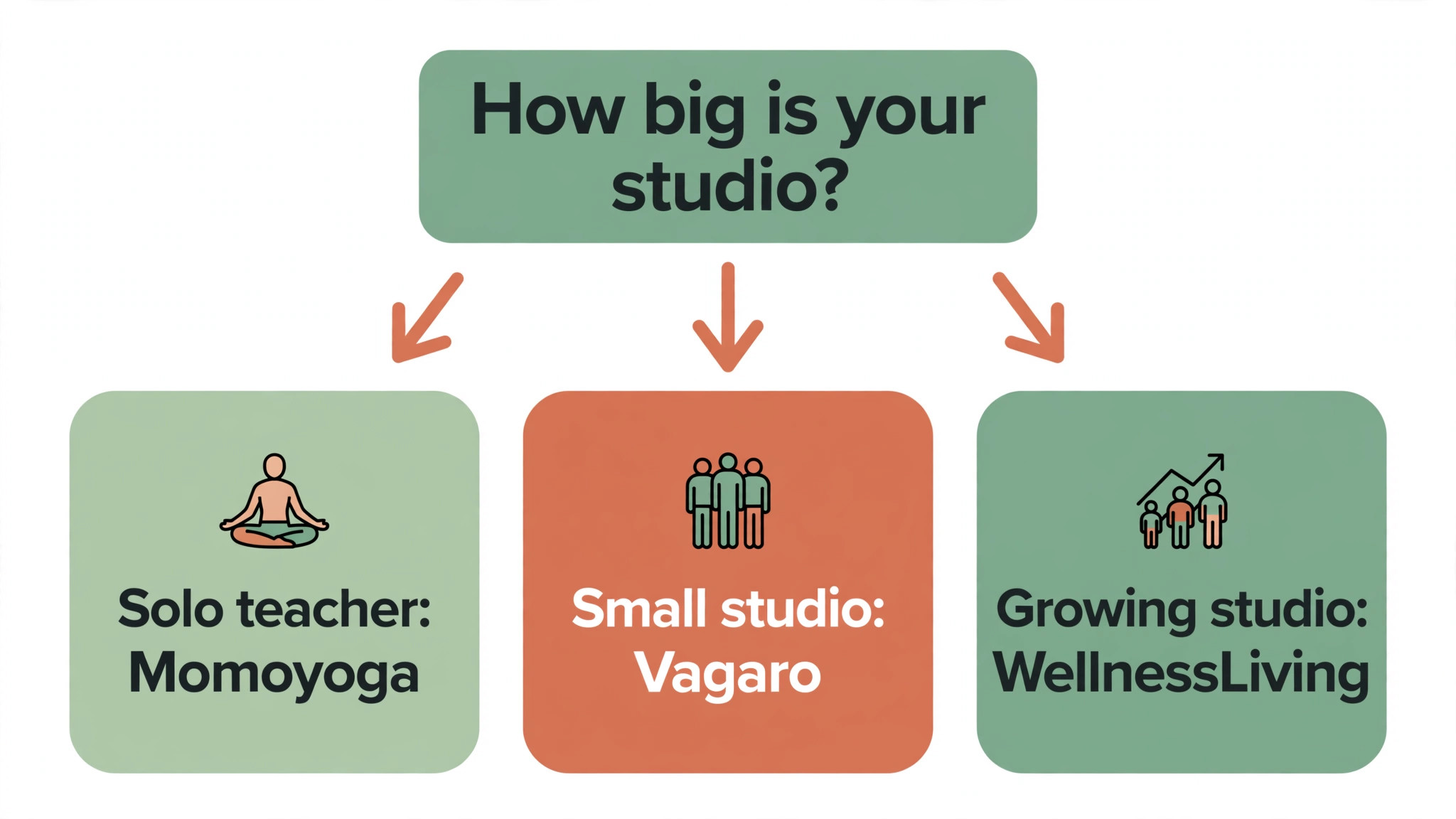
Studio size changes the answer, so the ranking keeps three sizes in mind throughout. A solo teacher with 40 regular students needs something cheap, simple and quick to set up. A small studio with two or three teachers and 200 members needs memberships, waitlists and a decent app. A larger studio with several rooms or locations needs reporting, staff permissions and a platform that does not charge again every time a teacher joins. The best pick table below gives a shortcut for each size, and the full reviews explain the trade offs.
The Best Pick for Each Job
| Job | Pick | Why it wins |
|---|---|---|
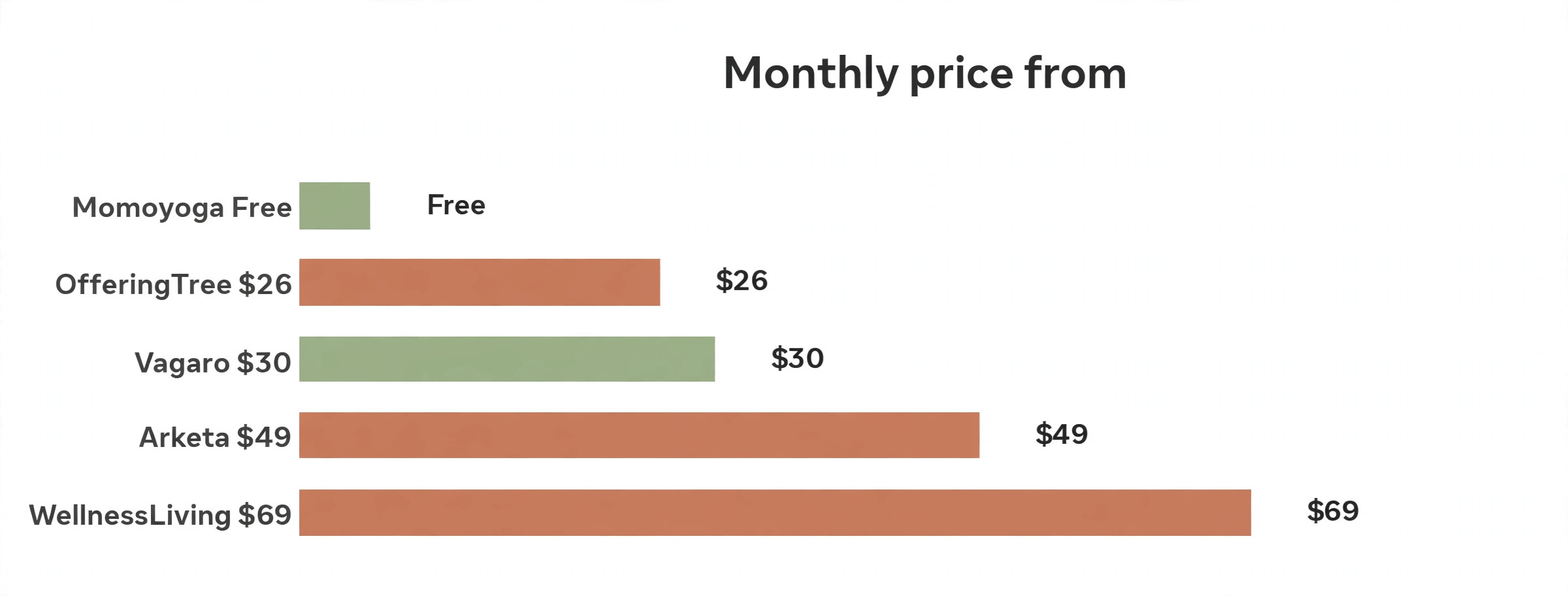
| A solo teacher starting out | Momoyoga | Free plan with unlimited classes and a 5 percent payment fee |
| The most new students | Mindbody | Marketplace discovery plus the deepest feature set |
| The cheapest full stack | Vagaro | Full booking, payments and marketing from 30 dollars a month |
| Booking plus a website in one | OfferingTree | Website, scheduling and email from 26 dollars a month |
| A mid priced all rounder | WellnessLiving | Broad features with open pricing from 69 dollars a month |
Use this table as a shortcut, then read the full review of the tool you are leaning toward. The cheapest option is not the best value when it cannot sell the membership your students actually buy, and the most expensive option is not the best choice when you only run four classes a week.
The 10 Best Yoga Studio Platforms in 2026, Ranked
The 10 tools below fall into three groups, and the best yoga studio software for a given studio depends on size, budget and how students pay. The first group is built for yoga and wellness specifically, and these are the strongest picks for most studios. The second group is general fitness and wellness software that handles yoga well. The third group is the premium and specialist end, where you pay more for a polished member experience or a particular strength such as on demand video or simple passes. Prices are monthly unless the text says otherwise.
1. Momoyoga
Momoyoga is the rare platform built for yoga teachers rather than adapted from salon or gym software. Class scheduling, class passes, memberships and invoicing run in one simple tool, with unlimited teachers and unlimited classes on every plan. The interface is plain and the learning curve is short, which suits a teacher who wants to set up a timetable in an afternoon and spend the rest of the week teaching rather than configuring software.
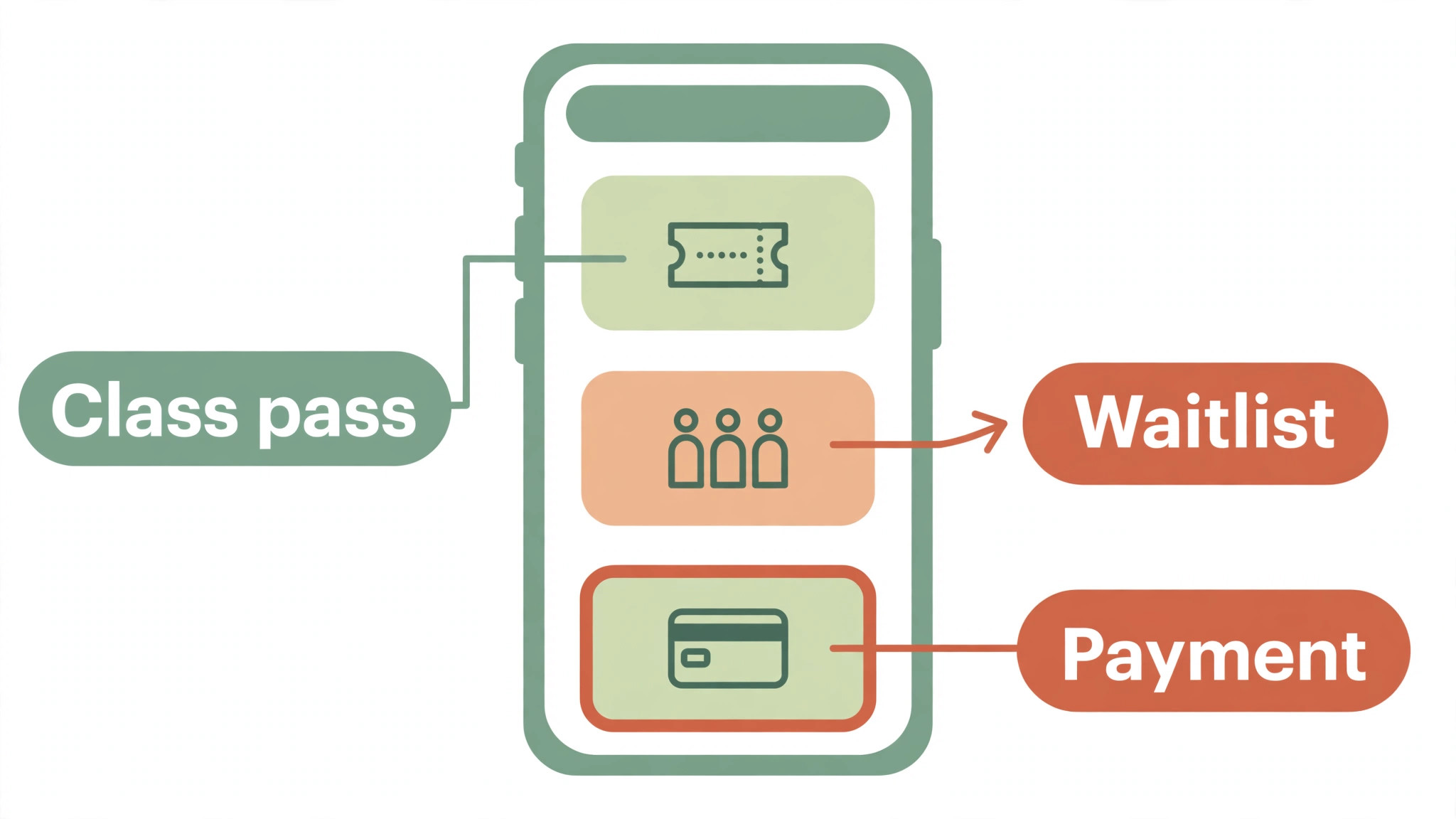
Pricing starts with a genuine free plan that charges no monthly fee and takes a 5 percent fee on payments instead. The Standard plan costs 29 euros a month billed annually, or 39 euros month to month, and removes the platform fee while adding unlimited memberships, waitlists and longer booking windows. The Plus plan costs 59 euros a month billed annually and adds branding, recurring memberships, promo codes and a Mailchimp connection. A Custom plan at 179 euros a month covers larger operations.
There is no retail point of sale and no marketplace to bring new students, so growth depends on your own marketing. For a solo teacher or a small studio that wants low cost and zero fuss, Momoyoga is the pick.
2. Mindbody
Mindbody is the largest name in this category, and its advantage is the consumer app on your students phones. The marketplace brings new clients that no other platform delivers, with millions of active users browsing classes, and the feature set covers scheduling, memberships, point of sale, marketing and reporting in more depth than any rival. Multi location studios and established brands get the most from it, because the platform scales from one room to a chain without changing systems.
Pricing starts at 79 dollars a month per location for the Starter plan in the United States, with higher tiers priced by quote. Price the total rather than the headline, because payment processing runs from about 2.75 to 3.5 percent, a branded app costs extra, and marketplace bookings carry a commission reported at around 20 percent. The setup is heavier than the yoga specific tools, and the contract terms need reading before you sign. When discovery and depth matter more than the monthly bill, Mindbody earns its price. When you already fill classes through your own channels, much of that price buys reach you do not need.
3. Vagaro
Vagaro started in salons and spas and now serves fitness and yoga studios with one of the cheapest full stacks in this guide. Booking, payments, memberships, marketing and a client app come in a single account, and the pricing is published openly with a cap that protects growing studios. The interface is busy in places, and the yoga specific touches are thinner than Momoyoga, but the value per dollar is hard to beat for a small studio that wants everything in one place.
Pricing starts at 30 dollars a month for the standard plan, with a limited time rate of 23.99 dollars reported in recent roundups, and the monthly bill is capped at 83.99 dollars as you add bookable staff. That cap is the key detail, because most rivals raise the price with every teacher you add. Payment processing is charged on top of the subscription, and some advanced marketing features cost extra. For a studio with up to seven bookable staff that wants a complete system without a large monthly bill, Vagaro is the cheapest serious option here.
4. OfferingTree
OfferingTree replaces a whole stack of tools for wellness teachers. Booking, a website builder with hosting, payments, email marketing and on demand video come in one purchase at a flat published price, which suits a solo teacher or boutique studio that does not want to pay for a separate website, email tool and video host. The design tools are simple rather than flashy, and the branded app is a paid add on, but the breadth at this price is unusual.
Pricing starts at 26 dollars a month for Individual Essentials billed annually, with individual plans running to 83 dollars a month. Studio plans start at 100 dollars a month billed annually and run to 225 dollars, with staff limits that rise by tier. The 100 dollar tier caps at three staff and the 150 dollar tier at six, so a studio with more than six staff needs the 250 dollar unlimited plan. Payment processing runs at about 3.4 percent online. For a teacher who wants a website and a booking system in one bill, OfferingTree is the most complete low cost choice.
5. WellnessLiving
WellnessLiving is the mid priced all rounder for studios that want Mindbody breadth without Mindbody pricing. Scheduling, memberships, payments, marketing, livestream and on demand video are all included, and the pricing is published openly, which makes it easy to compare honestly. The interface can feel clunky next to the newer tools, and some features such as the white label app sit on the higher tiers, but the feature list at the entry price is strong.
Pricing starts at 69 dollars a month for the Starter plan with one staff member, then Business at 199 dollars a month and BusinessPro at 349 dollars. The jump at the second staff member is the detail to check, because the 69 dollar plan covers one staff member only. A website costs extra, at 199 dollars a month plus a setup fee, and gateway and compliance fees add about 34 dollars a month. For a multi instructor studio that wants livestream and on demand built in and does not need a marketplace, WellnessLiving is a solid middle ground.
6. Momence
Momence suits hybrid studios that mix in person classes with on demand video and livestream, and it wraps booking, memberships, payments and marketing into a modern interface that staff learn quickly. The client experience is clean, the marketing tools are built in rather than bolted on, and the platform handles workshops, courses and video libraries alongside the regular timetable. It is a strong fit for a boutique studio that sells more than drop in classes.
Pricing is the weak point, because Momence does not publish a full price list and quotes per business after a sales call. Roundups report a free individual plan with high payment fees, studio plans from about 199 dollars a month, and higher tiers up to 799 dollars a month. Payment processing on paid tiers runs at about 3.9 percent plus 30 cents, which is higher than the card rate most rivals charge.
Ask for the full quote in writing, including the processing rate and the contract length, before you compare Momence with a platform that publishes its price. When the hybrid model and the modern interface matter most, it is worth the call. When you want a price you can compare today, pick a tool that prints one.
7. TeamUp
TeamUp is built for independent gyms, CrossFit boxes and studios that bill many members, and it prices by active customers rather than by features or staff. That model suits a studio with a large member base and a simple class timetable, because the price climbs as the studio fills classes rather than when it adds a teacher. Booking, memberships, payments, waitlists and a member app are all covered, and the setup is straightforward.
Pricing starts at 119 dollars a month for up to 100 active customers, rising to 189 dollars for 101 to 200 active customers and up to 379 dollars a month for more than 500 members. The branded app is a paid add on, so add that to the budget when your students expect your own app rather than the TeamUp app. There is no free plan, though a 30 day trial is reported by third parties. For a studio whose member count is the real measure of size, TeamUp pricing matches the business. For a small studio with few members, the entry price is high next to Momoyoga or Vagaro.
8. Glofox
Glofox, now sold as ABC Glofox, targets boutique studios that want a polished branded member experience. Memberships, payments, class booking and retention tools are strong, and the member app looks and feels like the studio brand rather than a generic booking tool. Fitness oriented studios get the most from it, because the feature set leans toward gyms and boutique fitness as much as toward yoga, and the reporting covers retention and revenue in useful depth.
Pricing starts at 99 dollars a month according to the plans page, but the full tiers are quote based, with roundups reporting Essential at 275 dollars, Boost at 375 dollars and Elite at 625 dollars a month. That gap between the starting figure and the real tiers is the problem, because a studio cannot compare the true cost until after a sales conversation. Transaction fees of about 3.9 percent sit on top. Owners also report yearly contracts that are hard to end, so read the term before signing. When a branded app and retention reporting are the priority and the budget covers the higher tiers, Glofox delivers. When you need a clear price today, shortlist a rival first.
9. Punchpass
Punchpass is the simplest tool on this list, and that simplicity is its selling point. It handles class passes, memberships and booking without the extra layers of marketing, retail and video that make larger platforms feel heavy. A small studio that sells passes and runs a weekly timetable can be live in a day, and the interface is calm enough for a teacher to run from a phone between classes. The trade off is breadth, because there is no built in website builder, no livestream and no marketplace.
Pricing starts at 59 dollars a month for the Grow plan, which covers class passes, and Flow at 99 dollars a month adds memberships. Stripe handles payments, so card fees apply on top. A 14 day free trial lets you test the booking flow with real students before paying. For a studio that wants passes done well and nothing else, Punchpass is the cleanest choice in this guide. For a studio that also needs a website, email marketing or on demand video, pair it with other tools or pick a broader platform instead.
10. Arketa
Arketa is a newer platform for fitness and wellness studios that want modern booking with live video and on demand classes built in. The individual plan is affordable, the interface is clean, and the platform covers scheduling, memberships, payments and video without the legacy clutter of the older tools. It suits a solo teacher or a small studio that runs hybrid classes and wants the video side to feel native rather than added on.
Pricing starts at 49 dollars a month for the Individual plan billed annually, with studio plans priced by quote. Arketa takes an extra 3 percent on the Individual plan on top of Stripe card fees, which is a real cost to factor in. There is no long term commitment on the published terms, which makes it easy to try. The platform is younger than Mindbody or WellnessLiving, so the third party integration list is shorter and the review base is smaller. When a modern hybrid setup at a low entry price is the goal, Arketa is worth a trial. When you need deep integrations and a decade of reviews, choose an established rival.
How to Choose the Best Yoga Studio Software
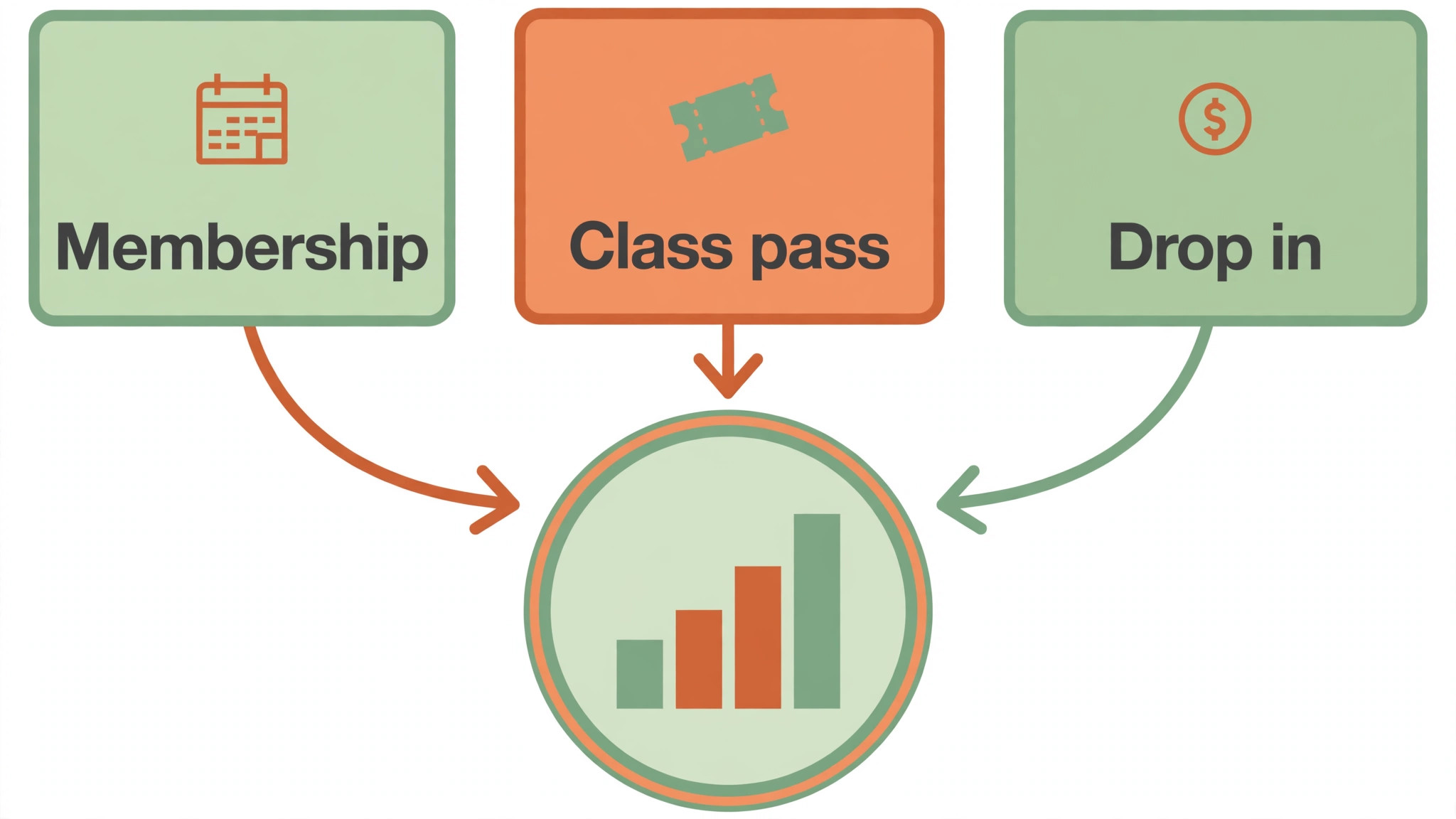
Start with the way your students actually pay, because that decides which of the best yoga studio software fits. A studio that sells mostly drop in classes needs fast checkout and a simple booking page. A studio that sells memberships needs recurring billing, pause and freeze options, and clear reporting on churn. A studio that sells class passes needs pass tracking, expiry rules and a waitlist that fills empty spots. Ask each vendor to show you the exact purchase flow for your most common sale, and buy the tool that makes that flow shortest.
Next, add up the real monthly cost for your studio size, not the headline price. Take the subscription, add card processing on your monthly revenue, add the branded app when you need one, and add text credits and marketplace commission when they apply. A 30 dollar plan with a 5 percent payment fee can cost more than a 69 dollar plan with a lower fee once monthly sales pass a few thousand dollars. Run the numbers for your own revenue before you compare prices, because the cheapest headline often loses on fees.
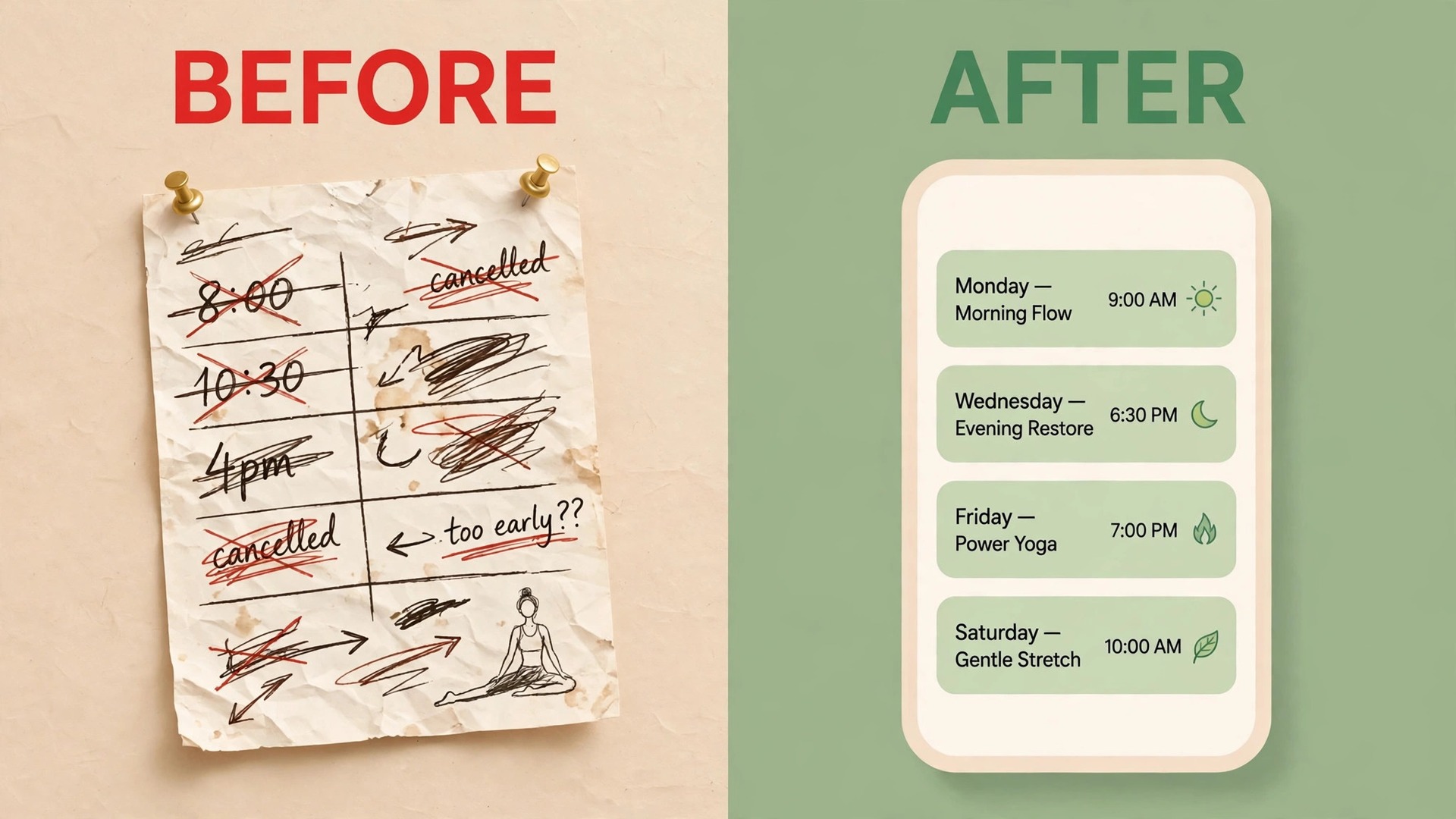
Then test the student experience on a phone, because that is where most bookings happen. Book a class as a new student, buy a pass, cancel a booking and join a waitlist, and time how long each step takes. A flow that needs an account, an email confirmation and three screens will lose students who would have booked in one tap elsewhere. The best platform here is the one your least technical student can use without calling the studio, and that test takes an afternoon on a free trial.
Finally, check the exit terms before you sign. Ask how you export your member list, class history and payment records, how long the contract runs, and what happens to your booking page when you leave. A platform that locks your member data inside its own system will cost you far more later than a slightly higher monthly price today. The vendors that publish prices openly usually publish export options openly too, and that transparency is a useful signal.
Mistakes That Waste Money
The most common mistake is paying for a marketplace you do not need. A studio that already fills classes through Instagram, word of mouth and a local following pays Mindbody prices for discovery it never uses, while a cheaper platform would handle the same bookings for a third of the cost. Check where your last 50 new students actually came from before you buy discovery. When the answer is your own channels, spend the saving on a better app or a better website instead.
The second mistake is choosing on the subscription and ignoring the payment fee. A free plan that takes 5 percent of every payment costs 50 dollars on 1,000 dollars of monthly sales and 250 dollars on 5,000 dollars, which soon passes the cost of a paid plan with no platform fee. Work out the fee at your real monthly revenue, not at the revenue you hope to reach next year, and switch plans when the numbers cross. Most platforms let you change plan monthly, so revisit the maths every quarter.
The third mistake is buying a branded app before the studio needs one. A branded app costs extra every month and needs students to download it, while the platform member app already handles booking and payments for most studios. Launch with the standard app, and pay for a branded app only when students ask for it by name or when the studio brand is strong enough that an app on the home screen brings repeat bookings. That delay saves hundreds of dollars a year in the early months.
Our Verdict
Momoyoga is the pick for most readers, because the free plan lets a solo teacher start with no monthly bill and the 29 euro Standard plan removes the payment fee at a price any small studio can carry. The tool is built for yoga, the setup is fast, and the booking flow covers the passes and memberships a studio actually sells. It is not the right choice for a studio that needs a marketplace or a retail shop, but for a teacher or a small studio it is the best balance of price and fit.
Vagaro is the pick when you want a full stack at the lowest honest price, because the capped monthly bill and the broad feature set cover booking, payments and marketing for up to seven staff. Mindbody is the pick when new student discovery is the priority, because no rival brings in new clients the same way, and the 79 dollar starting price is fair for a studio that fills classes from the marketplace. The best yoga studio software for your studio is the one that matches how your students pay, how many teachers you run, and where your next 50 students will come from.

Frequently Asked Questions
Which of the best yoga studio software is the cheapest for a solo teacher?
Momoyoga is the cheapest starting point, because the free plan charges no monthly fee and only takes a 5 percent fee on payments, and the Standard plan costs 29 euros a month billed annually. OfferingTree at 26 dollars a month is the cheapest paid plan that also includes a website. Arketa at 49 dollars a month is the next step up for a teacher who wants live video built in. Work out the payment fee at your real monthly sales before you compare, because a free plan with a percentage fee can cost more than a paid plan once sales grow.
Does a small studio need a branded app?
Most small studios do not need one in the first year. The member app that comes with the platform already handles booking, payments and class reminders, and students are more likely to book through a link than to download a new app. A branded app makes sense when the studio has a strong local brand, runs several locations, or sells on demand video that students watch daily. Until then, spend the app budget on better photos, a faster booking page and a clearer timetable.
What payment fees should I expect on top of the subscription?
Card processing usually runs from about 2.75 to 3.5 percent plus a small fixed fee per transaction, and some platforms add a platform fee on top. Momoyoga takes 5 percent on its free plan and nothing extra on paid plans. Momence charges about 3.9 percent plus 30 cents on paid tiers. Mindbody marketplace bookings carry a commission reported at around 20 percent. Always add the fee to your monthly revenue before you compare two subscriptions, because the fee often decides which plan is really cheaper.
Can I switch yoga studio software later without losing my members?
Yes, when you plan the move. Export your member list, active memberships, class passes and payment records before you cancel, and check that the new platform can import them. Most platforms offer an import tool or a guided move, and the cleanest time to switch is at the end of a membership cycle so no one loses a pass mid month. Tell students in advance, keep the old booking link live until the move is done, and run both systems for a week so no booking is lost.
Is Mindbody worth the price for a small studio?
Mindbody is worth the price when new student discovery matters more than the monthly bill, and among the best yoga studio software it brings in students a small studio would not reach on its own. The feature set covers multi location reporting, marketing and point of sale in one system. It is not worth the price when classes already fill through your own channels, because the subscription, processing fees and add ons add up fast. A studio with two teachers and a full timetable will usually save money on Vagaro or WellnessLiving and lose nothing it uses.
How long does it take to set up yoga studio software?
A simple platform such as Momoyoga or Punchpass can be live in a day, with the timetable, passes and payment connection set up in an afternoon. A broader platform such as WellnessLiving or Vagaro usually takes a few days, because there are more settings for memberships, marketing and staff permissions. Mindbody and Glofox take longer, often a week or more with onboarding calls, because the feature set is deeper and the setup is guided. Whatever you choose, test the full student booking flow before you announce the launch, and keep the old booking method live for the first week.