Text messages get opened. Vendors report open rates above 90 percent for SMS, and Klaviyo says about 98 percent of texts are read within minutes, though carriers do not report opens, so treat those as vendor figures rather than measurements. Email open rates keep sliding, and that gap is why a small business that texts its customers well can earn more from 500 subscribers than a rival earns from 5,000 email addresses. The best sms marketing tools for small business turn that attention into revenue without turning the business into a spam operation, and the difference between the tools on this list is rarely the send button.
It is the price per message, the compliance help, and the automation that runs while you serve customers.
A small business does not need an enterprise SMS platform with quarterly minimums and a managed services team. It needs a tool that collects phone numbers legally, sends a campaign in minutes, answers a reply from a shared inbox, and automates the three messages that make money, which are the welcome text, the abandoned cart reminder and the back in stock alert.
The trap in this category is the price that hides the real cost. Most platforms charge a monthly fee plus a per message cost, plus carrier fees, plus a fee for the phone number, and the advertised starting price covers only the first of those four. This guide shows the full cost for every tool, so you can compare at your real send volume instead of the advertised starting price.
Prices in this guide were checked against vendor pricing pages and current 2026 roundups in November 2026. SMS pricing changes often, and several vendors changed their billing in 2026, so confirm the per message rate and the carrier fees on the pricing page before you budget.
How a Small Business Should Judge an SMS Tool
Start with compliance, because a text message is not an email. In the United States, you need express written consent before you send a marketing text, your business number must be registered for 10DLC messaging, and every message must include a way to opt out. A tool that handles registration, collects consent with a proper keyword and form, and adds the opt out automatically is worth more than a cheaper tool that leaves the legal work to you.
Next comes the true cost per message. SMS is usually billed by the segment, which is roughly 160 characters, and a longer message costs two or three segments. MMS, which carries a photo, costs about three times an SMS on most platforms. Ask for the price at your volume, not the starting price, and add the carrier fee, which runs about 0.004 dollars per message on some platforms.
Then check the automation. A campaign tool sends one message to many people. A marketing tool sends the right message to the right person without you touching it. Welcome flows, abandoned cart reminders and post purchase follow ups should be built in, and they should trigger from your store or your booking system without manual exports.
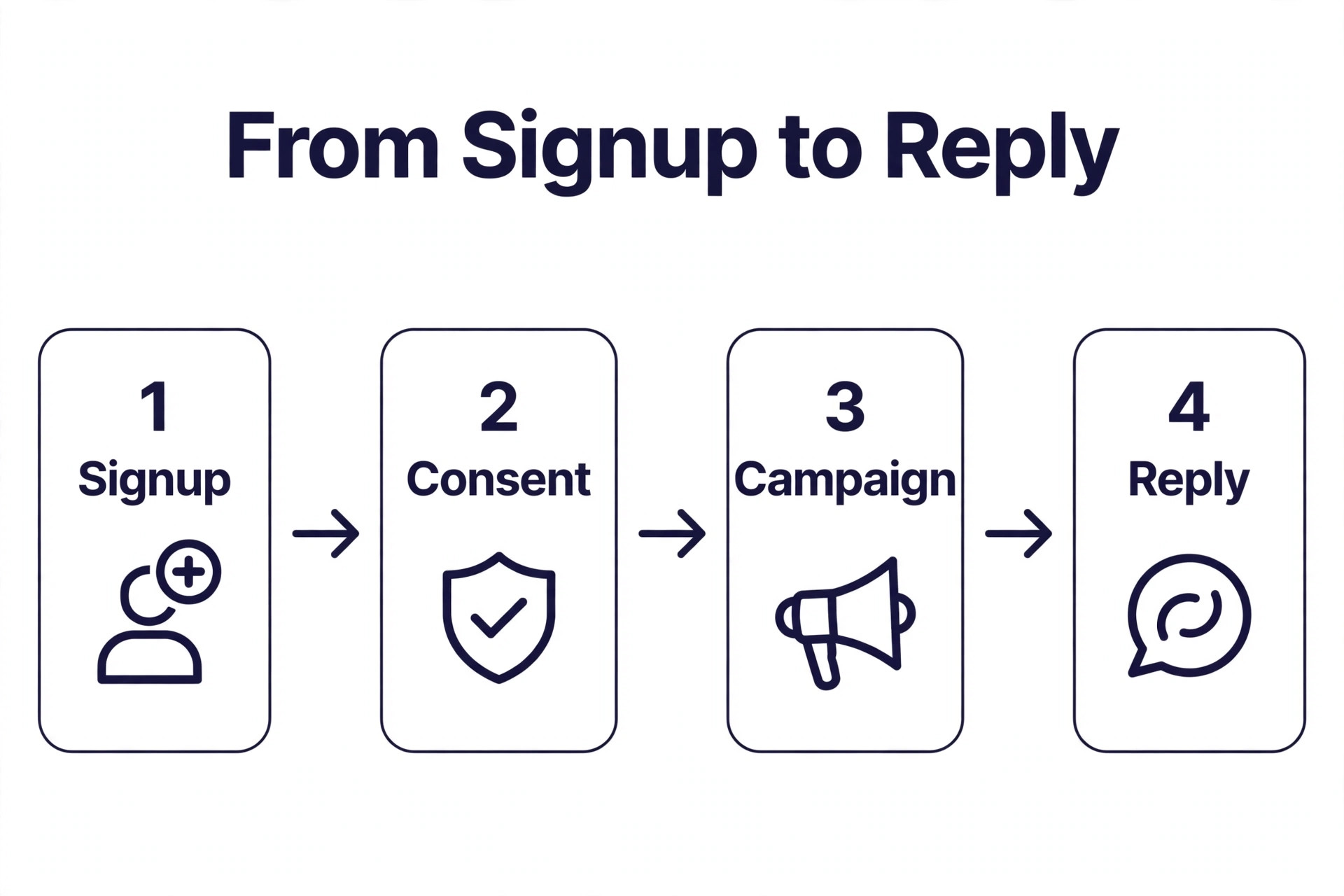
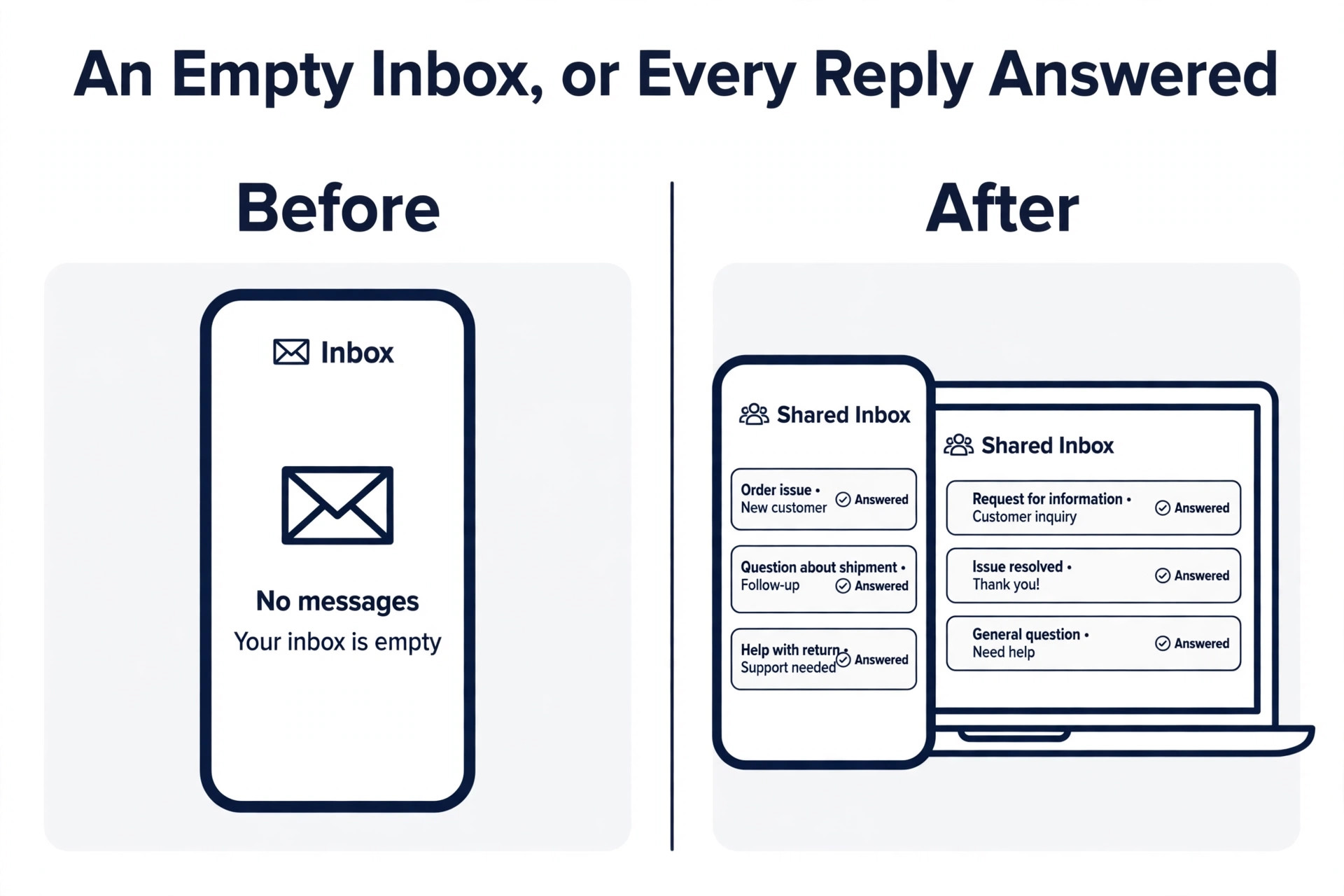
Finally, check the reply handling. Customers answer texts, and a tool with no shared inbox means those replies land on one phone, or nowhere at all. A shared inbox lets two staff members see the same conversation, assign it and answer it. For a local business, the inbox is often more valuable than the campaign builder, because the sale happens in the reply.
The Decision Table for a Small Business
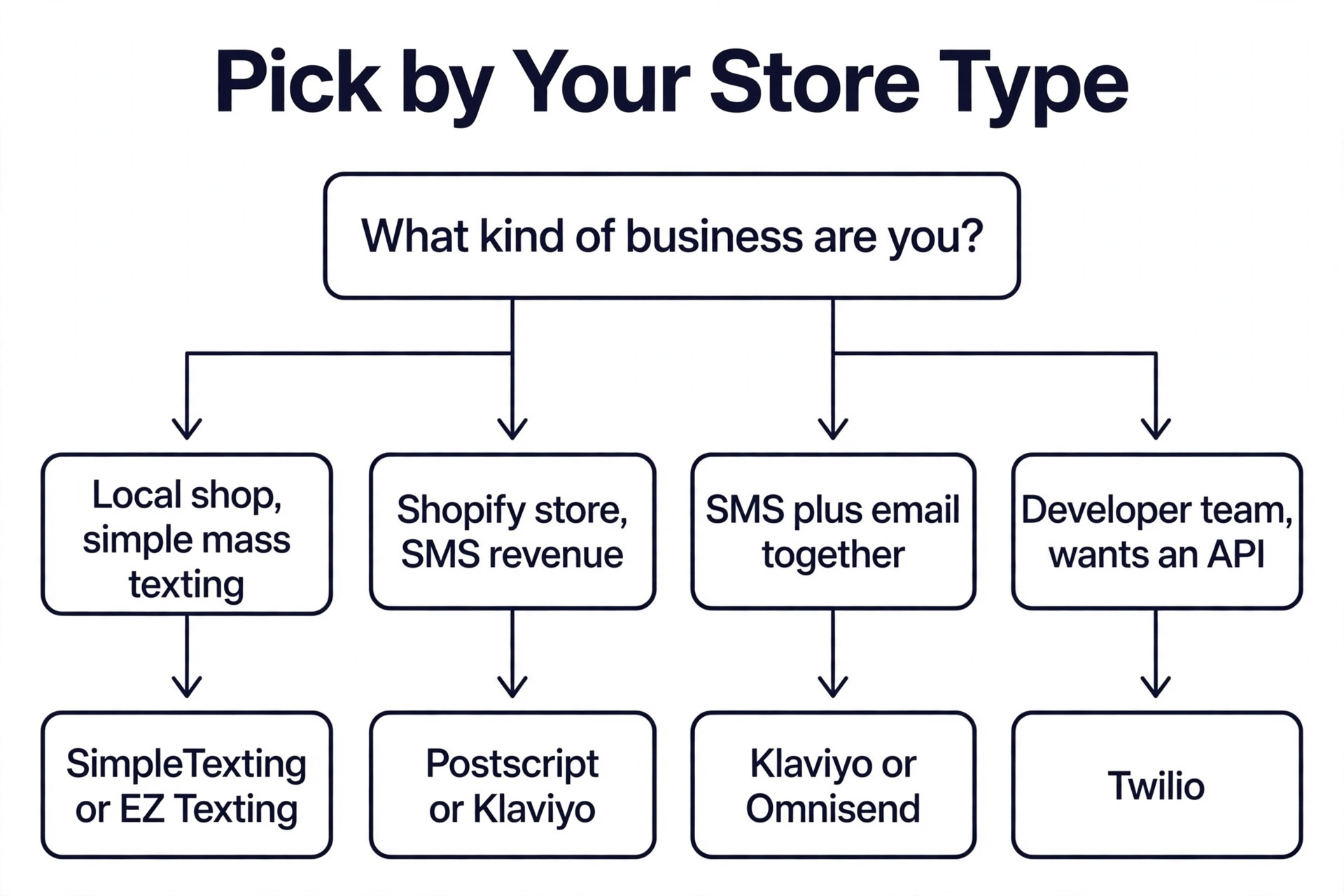
| Your situation | Start with | Why |
|---|---|---|
| A local shop that wants simple mass texting | SimpleTexting or EZ Texting | Published prices from 25 to 29 dollars a month |
| A Shopify store that lives on SMS revenue | Postscript or Klaviyo | Deep store data and abandoned cart flows |
| An ecommerce brand that wants SMS plus email | Klaviyo or Omnisend | One customer profile for both channels |
| A business that already uses Constant Contact | Constant Contact SMS | SMS added to the email plan for 10 dollars a month |
| A team that needs CRM triggered texts | Sakari | Deep HubSpot and Pipedrive integration |
| A developer led team that wants an API | Twilio | Pay as you go from 0.0083 dollars per message |
| A business that wants email, SMS and CRM together | SendPulse or Brevo | Multi channel plans with a free starting tier |
Use this table to cut the list to two or three tools, then read the sections for those tools and run the free trial. That shortlist is how you compare the best sms marketing tools for small business without reading thirteen sales pages. The best sms marketing tools for small business are the ones that fit your store, your list size and your staff, not the ones with the longest feature page or the biggest enterprise logo on the homepage.
The Best Pick for Each Job
| Job | Pick | Why it wins |
|---|---|---|
| Best overall for a small business | SimpleTexting | Every feature on every plan from 29 dollars a month |
| Cheapest simple start | EZ Texting | 25 dollars a month for 500 credits |
| Best for Shopify stores | Postscript | Shopify native SMS from a 49 dollar monthly minimum |
| Best SMS plus email in one place | Klaviyo | Shared profiles and segments for both channels |
| Best enterprise grade SMS | Attentive | AI personalization for high volume brands |
| Best shared inbox and support | Textla | US based support and a clean team inbox from 25 dollars a month |
| Best rollover credits | SlickText | Unused credits roll over from 29 dollars a month |
| Best pay as you go API | Twilio | 0.0083 dollars per message with no monthly fee |
The cheapest pick among the best sms marketing tools for small business is not always the best value, because a 25 dollar plan that charges extra for every feature can cost more than a 29 dollar plan that includes them all. Read the fee notes in each section before you decide, and model the cost at the number of messages you will actually send.
The Best SMS Marketing Tools for Small Business, Ranked
The 13 tools below fall into three groups. The first group is built for small businesses that want simple, honest mass texting with a shared inbox. The second group is built for ecommerce stores, where SMS plugs into the store data and earns its fee from abandoned carts. The third group is built for teams that need SMS inside a bigger system, whether that is a CRM, an API or a multi channel platform.
1. SimpleTexting
SimpleTexting is our top pick for small businesses, because it puts every feature on every plan and charges a straightforward credit price. Plans run from 29 dollars a month billed monthly for 500 credits to 899 dollars a month for 50,000 credits, with 20 percent less billed yearly, and one SMS costs one credit while one MMS costs three. Three users are included, and the platform includes a shared inbox, automations, API access and AI assisted replies on all tiers.
The platform is owned by Sinch and serves thousands of businesses across retail, healthcare, education and nonprofits. It works in the United States and Canada only. For a local shop, a clinic or a restaurant it is the right shape, and the price does not punish you for growing.
2. EZ Texting
EZ Texting is the simplest way to start, and the cheapest simple start on this list. The Launch plan costs 25 dollars a month billed monthly for 500 credits, or 20 dollars a month billed annually, with Boost at 75 dollars and Scale at 125 dollars a month. One SMS costs one credit and one MMS costs three, and a 5 dollar monthly telecom fee applies, so the real starting cost is 30 dollars a month rather than 25.
The platform includes AI assisted campaign creation and a shared inbox, and it offers a 14 day free trial. It suits a small business that wants to send a weekly offer or a reminder and hear back from customers. It does not match Klaviyo or Postscript for ecommerce automation. For a local business that texts a list under 2,000 people, that depth is not needed.
3. Klaviyo
Klaviyo is the best pick for an ecommerce brand that already runs Klaviyo for email, because SMS runs on the same customer profiles, segments and automation flows. A single welcome or abandonment flow can branch across both channels using one dataset. Email plans start at 20 dollars a month for 251 to 500 active profiles, and SMS is billed separately, with plans from around 15 dollars a month for 1,250 credits and US segments at roughly 0.01 to 0.012 dollars each.
Klaviyo changed its SMS billing in July 2026, moving from credits to a prepaid monthly plan charged per message, with unused dollars not rolling over, and SMS is available in 23 countries. The real price is two numbers added together, the email plan plus the SMS plan, not one. For a Shopify store that already lives in Klaviyo, adding SMS is the obvious move.
4. Attentive
Attentive is the enterprise end of this list, and it earns its place because it built its name as the SMS platform for high growth direct to consumer brands. It now covers SMS, MMS, RCS, email and push in one platform, with AI in tiers, including AI Essentials in every plan and AI Pro, AI Grow and AI Journeys above it.
Pricing is custom quoted based on list size, message volume, channel mix and AI products, with entry around 300 dollars a month plus roughly 0.01 dollars per SMS and quarterly minimums that typically run 1,500 to 5,000 dollars a month. If your list is under 10,000 subscribers, the tools above will earn you more for less. If your list is over 50,000 and SMS is a core revenue channel, Attentive is the platform to test.
5. Postscript
Postscript was built specifically for Shopify merchants, and that focus shows in every feature. It is Shopify native, with SMS and RCS and automations that trigger from store data. The Starter plan costs 0 dollars a month with a 49 dollar monthly minimum spend, Growth costs 100 dollars a month and Professional costs 500 dollars a month, with SMS at roughly 0.007 to 0.015 dollars per message plus a carrier fee of about 0.004 dollars.
Postscript suits a Shopify brand that outgrew a generic tool and wants SMS to react to what customers actually do in the store. It is Shopify only, including headless Shopify stores, so a business on another platform cannot use it at all. For a Shopify store doing real SMS volume, Postscript is the most honest priced tool in the category.
6. Constant Contact
Constant Contact is the best pick for a small business that already uses it for email, because SMS is an add on rather than a second platform. The SMS add on costs 10 dollars a month for 500 messages, on top of an email plan from 12 dollars a month. The platform covers campaigns, automations and list growth, and it is one of the simplest tools on this list to learn.
The weakness is that SMS is not the main product here. The automation depth does not match Klaviyo or Postscript, and the per message value falls behind SimpleTexting once you pass a few thousand messages a month. It is the right pick when you already run Constant Contact and you want to add texting without learning a new system.
7. SlickText
SlickText starts at 29 dollars a month for 500 credits, with a 14 day free trial, and its best feature is one that no other tool on this list offers as clearly. Unused credits roll over. A business that sends 300 texts in a quiet month and 700 in a busy one does not lose the unused 200. The platform includes a shared inbox, API access and personalization.
The trade off is a steeper learning curve than SimpleTexting or EZ Texting. It suits a small business with a small list that wants heavy personalization, like a boutique that texts regulars by name about new arrivals. It does not suit a business that wants to set up an abandoned cart flow in an afternoon.
8. Textla
Textla starts at 25 dollars a month with a 14 day free trial, and it wins on support rather than on features. The platform offers a shared inbox, US based support, real time insights and compliance friendly tools, and it is built for small businesses that want a human to answer when something goes wrong. That matters more than it sounds, because SMS compliance questions, like a blocked number or a failed registration, are the moments when a support ticket that takes two days costs real money.
The feature set is solid rather than leading. It covers campaigns, automations and two way texting, but it does not match Klaviyo for ecommerce depth. It is the right pick for a business that values a phone call with support over a feature list.
9. SendPulse
SendPulse is the multi channel pick, with SMS, email, CRM, chatbots and web push in one platform, and SMS priced from 0.024 dollars per message on a pay as you go basis. The platform suits a small team that wants to start with texting and grow into email and chat without changing vendors.
The weakness is the per message price, which is higher than Twilio, Postscript or Klaviyo at volume. SendPulse is the best pick for a small business that wants one platform for several channels and sends a modest number of texts. It is the wrong pick for a business that sends 10,000 texts a month.
10. Brevo
Brevo, formerly Sendinblue, sells SMS credits on a pay as you go basis alongside its email marketing plans, and that model suits a business that already uses Brevo for email. You buy credits, you spend them on SMS, and you do not pay a monthly SMS subscription when you send nothing. The platform covers campaigns, automations and contact management, and the SMS feature set is adequate for a business that texts occasionally rather than daily.
The weakness is that SMS is a secondary channel here, and the automation depth does not match the SMS first tools. Brevo is the right pick when you already run Brevo email and you want to add a text campaign to a launch without a second subscription. It is the wrong pick when SMS is a weekly revenue channel.
11. Omnisend
Omnisend is the ecommerce omnichannel platform that pairs email, SMS and web push, and SMS runs on its Pro plan, which starts at 59 dollars a month, with US SMS from 0.009 dollars per message. A free plan exists, but SMS sits on the paid tier. The platform offers lifecycle segmentation and frequency caps, and its revenue tracking shows what each message earned.
The weakness is the entry price. At 59 dollars a month plus per message costs, Omnisend is the most expensive way to send your first 500 texts, and the free plan does not include SMS at all. It is the right pick for an ecommerce brand that already pays for Omnisend email and wants SMS on the same customer profiles.
12. Twilio
Twilio is the API first pick, and it is the cheapest per message rate on this list. Outbound and inbound SMS start at 0.0083 dollars per message segment plus carrier fees, phone numbers start at 1.15 dollars a month, and there is no monthly platform fee. A business that sends 1,000 texts a month pays roughly 8 dollars plus carrier fees.
The catch is that Twilio is a developer platform, not a marketing tool. There is no campaign builder, no shared inbox and no automation flow in the box. That makes it the right pick for a team with a developer who wants to build SMS into an app or a booking system, and the wrong pick for a shop owner who wants to send a campaign before lunch.
13. Sakari
Sakari is the CRM triggered SMS pick, and it is the original certified HubSpot SMS partner. Monthly plans start at around 25 dollars a month and include one free dedicated number, with unlimited users and contacts on all plans. It integrates deeply with HubSpot, Pipedrive and ActiveCampaign, so a text can trigger from a deal stage change or a form fill without manual work.
The weakness is the per message rate, which runs higher than Twilio or Postscript. Sakari is the right pick for a sales or marketing team that lives in a CRM and wants SMS to follow the pipeline, not a separate campaign calendar. It is the wrong pick for a shop that wants simple mass texting.
Compliance First, Campaigns Second
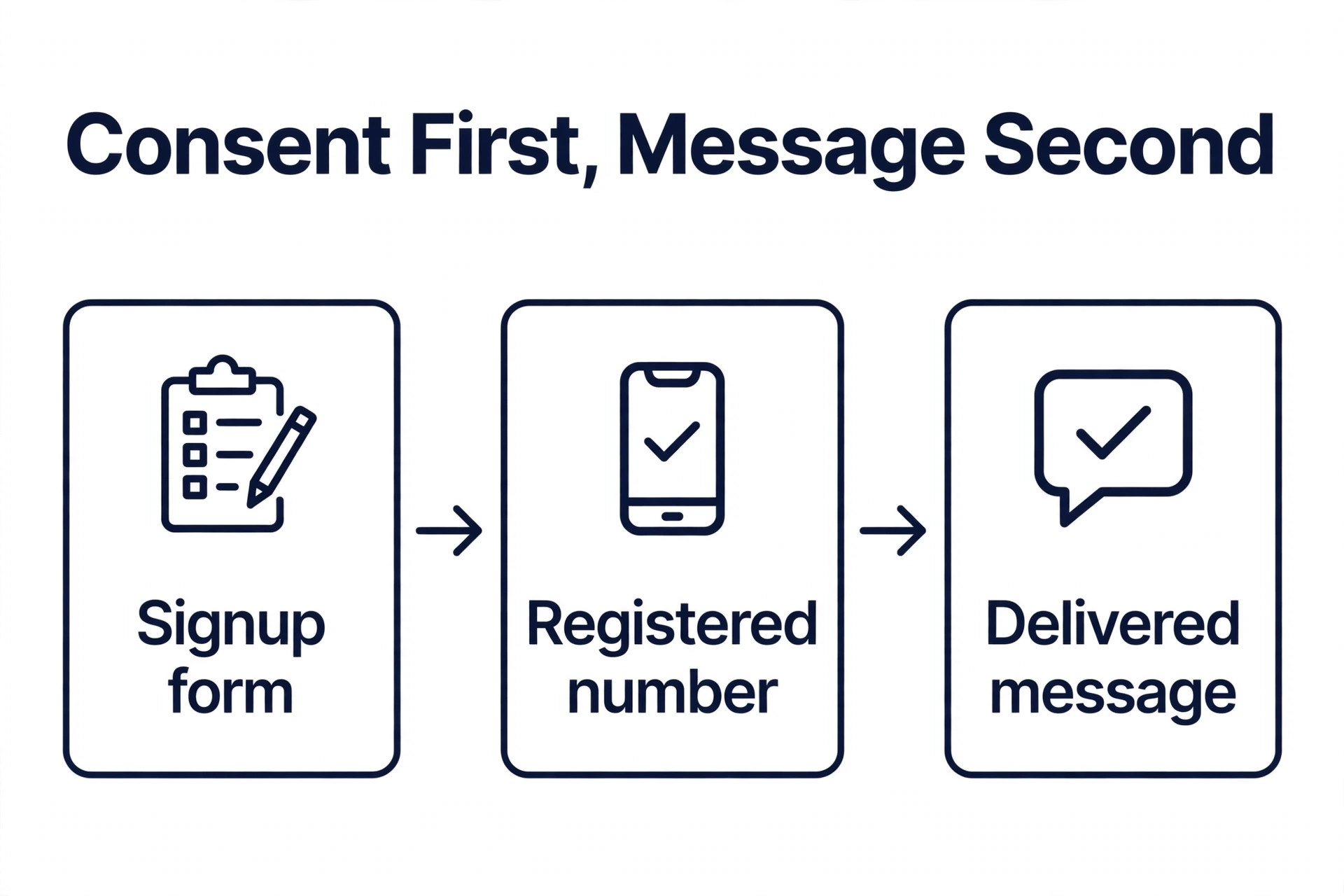
SMS marketing has a rule that email marketing does not, and it is not optional. You need express written consent before you send a marketing text, and that consent must be tied to a specific keyword, form or checkout checkbox. A bought list is not consent, a phone number from an invoice is not consent, and a customer who gave you their number for delivery updates has not agreed to marketing texts. The tool you choose should collect consent properly and store the record, because the record is what protects you when a recipient complains.
Your number must also be registered. In the United States, business texting runs on 10DLC, which is the system carriers use to verify that a business is real and that its messages are wanted. Registration takes days, not minutes, and an unregistered number gets filtered or blocked. Start registration the day you choose a tool, not the day you want to send your first campaign.
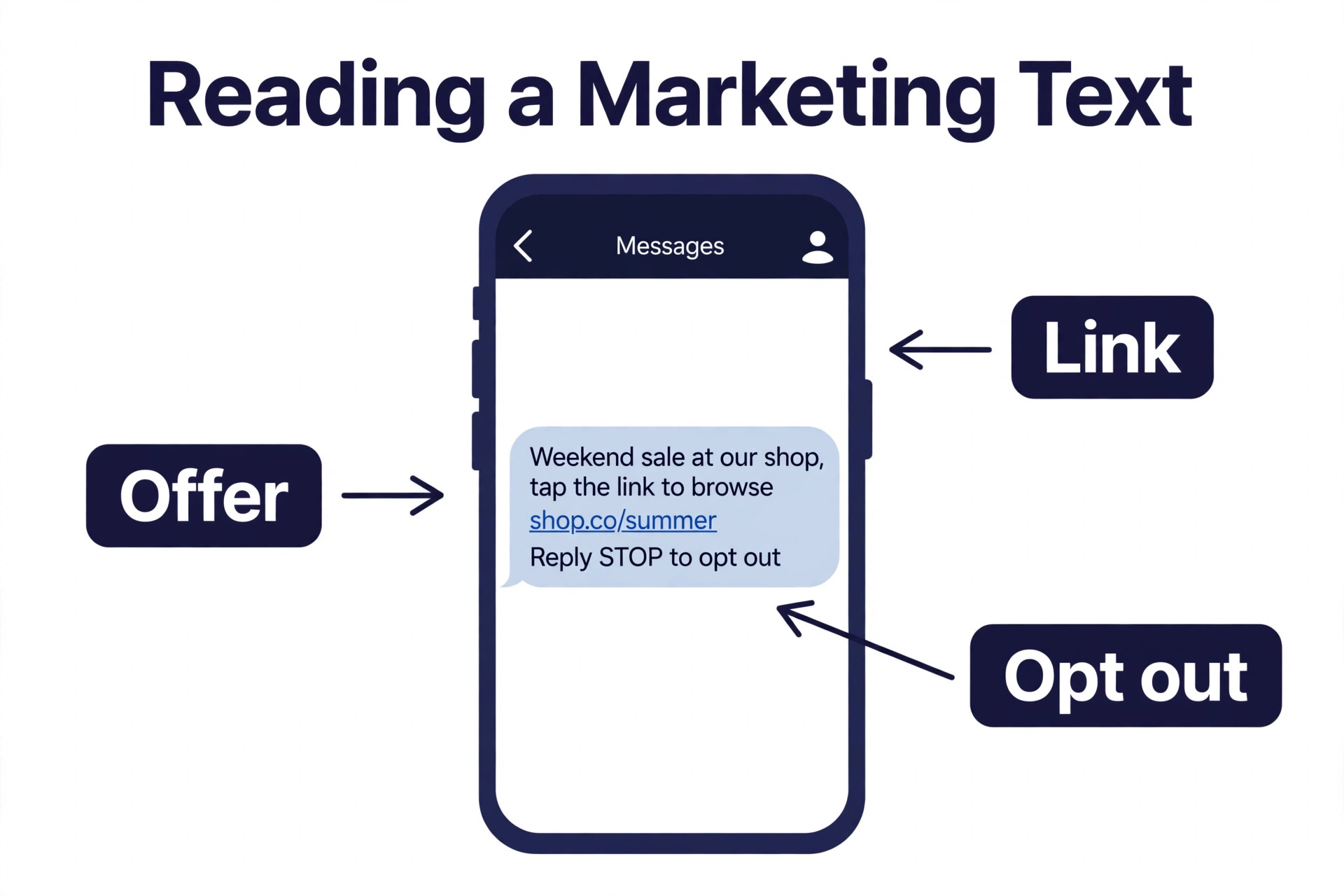
Every marketing message must include a way to opt out, and the standard is a line like Reply STOP to opt out. The tool should add it automatically and process the opt out instantly. Keep your send frequency honest too. A weekly text is a reminder. A daily text is an annoyance, and an annoyed subscriber opts out and never comes back.
What 1,000 Texts a Month Really Costs
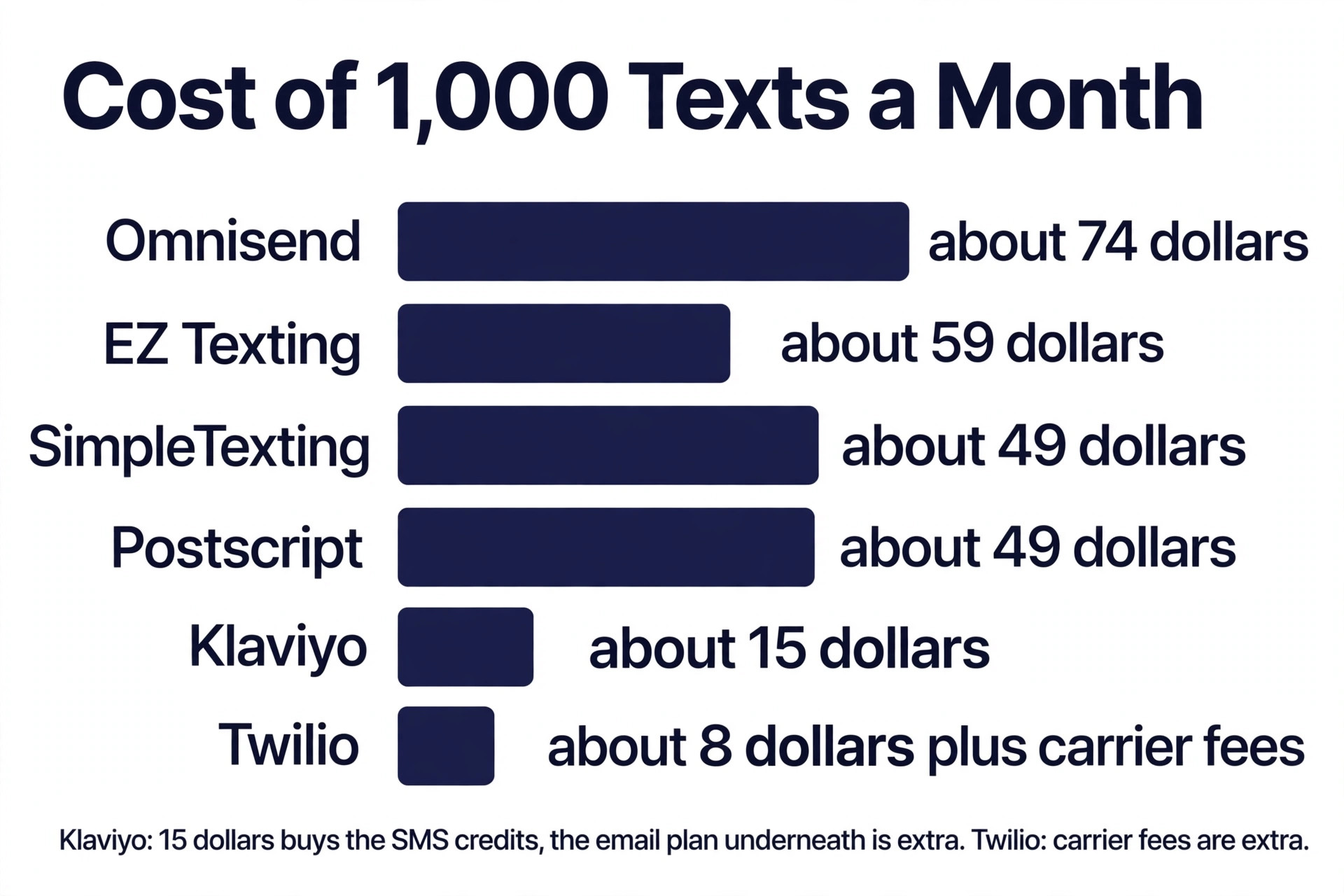
The starting price tells you almost nothing, so model the cost at a real volume. A business sending 1,000 texts a month pays about 49 dollars on SimpleTexting at the 500 credit tier plus overages, about 59 dollars on EZ Texting at the higher tier, and about 15 dollars on Omnisend at 0.009 dollars per message plus the 59 dollar Pro plan, which totals 74 dollars. Twilio costs about 8 dollars plus carrier fees for the same 1,000 messages, with no platform fee at all. Postscript costs about 49 dollars at its monthly minimum, and Klaviyo costs about 15 dollars for the SMS credits plus the email plan underneath it.
Those numbers show why the cheapest plan is rarely the cheapest bill. A subscription plan makes sense when you want the campaign builder, the inbox and the automations included. A pay as you go plan makes sense when you send irregular volume or you have a developer who can build the workflow. Run the same math at 5,000 texts before you choose, because the ranking changes.
The other cost is the phone number. A toll free number is usually included or cheap, a local number adds about 10 dollars a month on SimpleTexting, and a short code costs hundreds of dollars a month and is not worth it for a small business. A dedicated long code number is the right pick for most small businesses.
Mistakes That Burn a List
The most common mistake is texting too often. A business that sends a daily offer trains its subscribers to ignore the messages, and then the one message that matters, like a back in stock alert, gets ignored too. Send weekly at most for promotions, and save the extra messages for things the customer asked for, like an order update or an appointment reminder.
The second mistake is buying a list or texting customers who never opted in. A list of 500 people who asked to hear from you will earn more than a list of 5,000 people who did not, because the first list opens the message and the second list reports it. Grow the list with a keyword on a receipt, a signup form at checkout and a QR code at the counter.
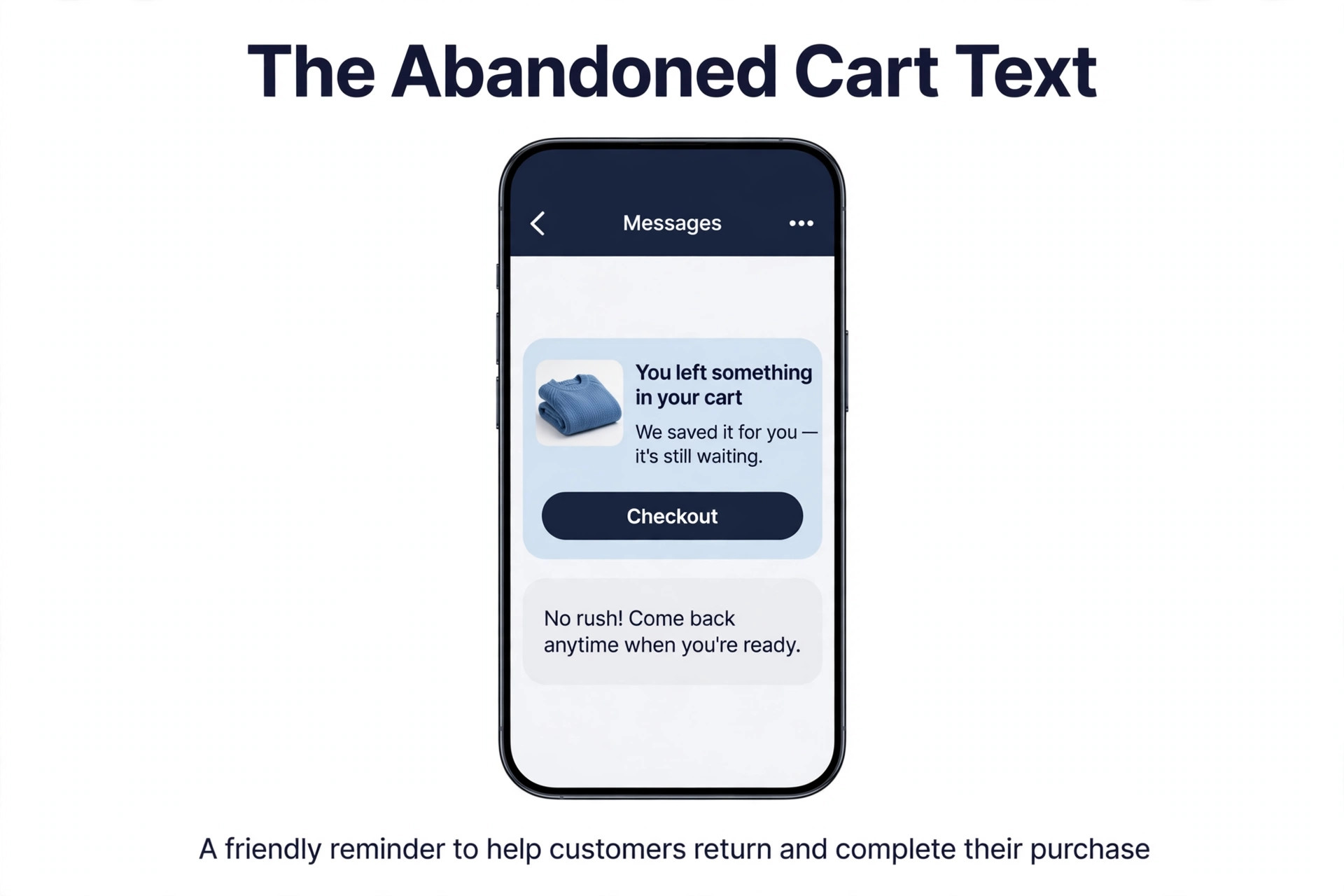
The third mistake is sending a text with no clear next step. A message that says you have a sale and links to a homepage is a wasted send. A message that says the blue sweater is back in stock in your size and links to that product earns the click. Every text should carry one offer, one link and one reason to act now.
The fourth mistake is ignoring replies. Customers answer texts with questions, and a business that never answers trains them to stop replying. Staff the inbox, even if that means one person checks it twice a day, and answer within a few hours.
- Confirm the per message rate and the carrier fees at your real volume.
- Confirm registration and consent collection are handled by the tool.
- Confirm the shared inbox is included on the plan you choose.
- Confirm unused credits roll over or expire on your plan.
- Confirm you can export your subscriber list if you leave.
Our Verdict
SimpleTexting is the pick for most small businesses among the best sms marketing tools for small business, because every feature is included on every plan from 29 dollars a month, the shared inbox works well, and the price does not punish you for growing. EZ Texting is the pick when you want the simplest start and the lowest headline price, and SlickText is the pick when your volume is seasonal and rollover credits save you money. Postscript is the pick for a Shopify store that treats SMS as a revenue channel, and Klaviyo is the pick when SMS and email should share one customer profile.
Attentive is not a pick for a small business, because its custom pricing and quarterly minimums are built for brands with lists over 50,000 subscribers, and a small business will earn more from SimpleTexting for a tenth of the cost. Twilio is the pick when you have a developer and you want the lowest per message cost in the category, and Sakari is the pick when your CRM should trigger the text. Start with a trial, register your number on day one, and send your first campaign to the people who asked for it. That is how a small list becomes a revenue channel instead of a compliance problem.
Frequently Asked Questions
What is the best SMS marketing tool for a small business just starting out?
SimpleTexting is the best starting point for most small businesses, because it includes every feature on every plan from 29 dollars a month, with a shared inbox, automations and AI assisted replies included. EZ Texting is the cheapest simple start at 25 dollars a month for 500 credits. Both offer a 14 day free trial, and both handle registration and consent collection, which are the two jobs that trip up a first time sender. Pick SimpleTexting when you want the full feature set on day one, and EZ Texting when you want the simplest possible start.
How much does SMS marketing cost per month for a small business?
A small business sending 1,000 texts a month pays roughly 30 to 60 dollars on a subscription plan like SimpleTexting or EZ Texting, about 8 dollars plus carrier fees on Twilio pay as you go, and about 49 dollars at the Postscript monthly minimum. Add the phone number, which is usually included or about 10 dollars a month for a local number. The real cost depends on volume, MMS use and whether you need the campaign builder and inbox that a subscription includes.
Is SMS marketing legal for a small business?
Yes, when you have express written consent from each recipient, your number is registered for 10DLC messaging, and every message includes a way to opt out. Consent must be tied to a specific keyword, form or checkout checkbox, and a bought list or a number taken from an invoice does not count as consent. Every tool on this list except Twilio helps with registration, and the best sms marketing tools for small business include consent collection and automatic opt out handling. Keep the consent records, because they are what protect you if a recipient complains.
What is the difference between SMS and MMS marketing?
SMS is a text only message of roughly 160 characters per segment, and a longer message costs two or three segments. MMS carries a photo, a video or a longer message, and it costs about three times an SMS on most platforms. MMS earns its higher cost when the image sells the product, like a photo of a new dish. For a plain offer or a reminder, SMS is cheaper and just as effective.
Can I use SMS marketing without a monthly subscription?
Yes, with a pay as you go platform. Twilio charges from 0.0083 dollars per message with no monthly platform fee, and Brevo and SendPulse sell SMS credits without a monthly SMS subscription. The trade off is that pay as you go platforms do not include a campaign builder, a shared inbox or automations, so you either build those yourself or pay for a tool that sits on top. For a business that sends irregular volume or has a developer, pay as you go is the cheapest path. For a business that wants to send campaigns from a dashboard, a subscription is cheaper in time.
Which SMS tool is best for a Shopify store?
Postscript is the best SMS tool for a Shopify store, because it is Shopify native, with automations that trigger from store data and transparent pricing from a 49 dollar monthly minimum. Klaviyo is the best alternative when the store also wants SMS and email on one customer profile, with SMS billed as an add on to the email plan. Both beat the generic tools for ecommerce, because the abandoned cart flow and the post purchase follow up are the messages that earn the fee, and both tools run those flows from store data without manual exports.
The best sms marketing tools for small business are the ones that respect the list, charge a fair price per message and answer the replies. Start with a trial, register your number on day one, and send your first campaign to the people who asked for it. A list of 500 people who want your texts will earn more than a list of 5,000 who did not ask, and the tool that helps you keep that list healthy is the tool worth paying for.