Squire is the best overall pick among the best barbershop software we compared, because it was built only for barbershops and charges one flat monthly price per shop with no per barber fee. Booksy is the better choice when new clients matter most, since its marketplace puts your shop in front of people already looking for a cut. Fresha is the cheapest way to start. We compared 10 tools on real shop needs, booking, deposits, no show protection, payments, tips, chair rent and commission tracking, and priced each one for a solo barber and for a five chair shop.
This guide shows what each tool costs in practice, where the extra fees hide, and which one fits the way your shop actually runs.
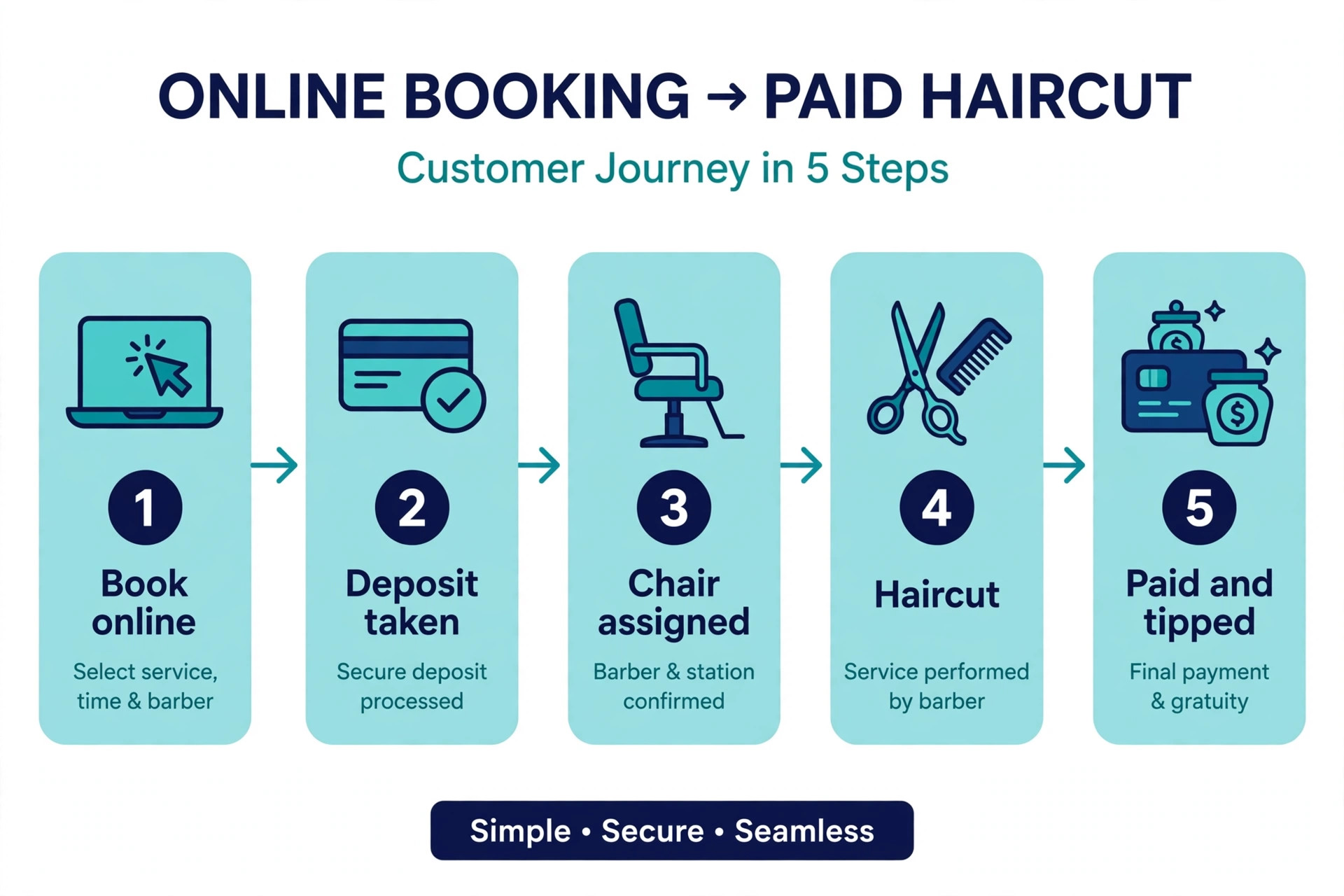
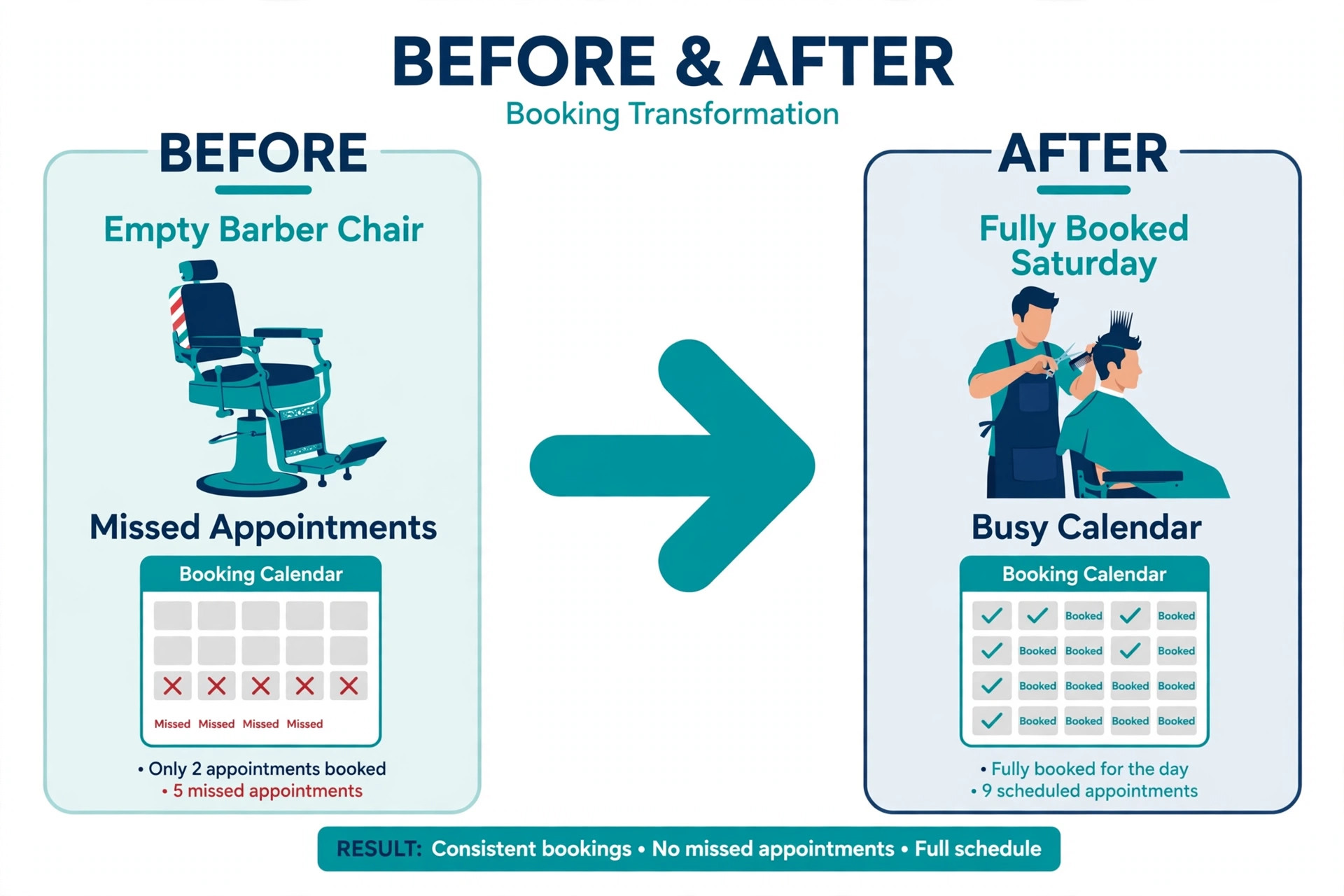
A barbershop loses money in small gaps. A missed appointment leaves a chair empty for 30 minutes. A client who books and never shows costs the cut plus the walk in who could have taken the slot. A barber who cannot take a card at the chair loses the tip as well as the payment. The right software closes those gaps. It takes a deposit at booking, sends a reminder the client actually reads, holds a card on file, and splits the payment between the shop and the barber without a spreadsheet at the end of the week.
The wrong software costs money in a different way. A marketplace fee of 20 percent on a new client sounds small until ten new clients a month each pay 35 dollars for a cut. A per barber price of 20 dollars a month sounds small until a five chair shop pays 130 dollars a month before a single card fee.
How We Compared 10 Barbershop Tools
We scored each tool on the five jobs a shop needs done every day. Booking covers online booking, a walk in queue, repeat bookings and a booking page clients can use without creating an account. Payments cover card readers, tap to pay, tips at the chair, deposits and split payments. No show protection covers deposits, cancellation fees, cards on file and reminders. Shop management covers chair rent, commissions, payroll, inventory and reporting by barber. Marketing covers rebooking reminders, text campaigns, a marketplace listing and review requests.
We priced each tool twice. The first price is for a solo barber who cuts about 160 heads a month at an average of 35 dollars, which is 5,600 dollars a month through the till. The second price is for a five barber shop with the same average cut, which is 28,000 dollars a month. Card processing is included in both prices, because a subscription price without processing is only half the bill. Prices in this guide were checked against vendor pricing pages and current 2026 roundups in November 2026. Confirm the price on the vendor pricing page before you pay, because marketplace fees and processing rates change.
The Best Pick for Each Job
| Job | Pick | Why it wins |
|---|---|---|
| A real shop with several chairs | Squire | Flat price per shop, chair rent and commissions built in |
| New clients from a marketplace | Booksy | Largest barber marketplace, every feature in one price |
| The lowest monthly bill | Fresha | Cheapest subscription for a loyal book |
| A solo barber on a zero budget | Square Appointments | Free plan with booking and payments |
| The lowest card processing rate | GlossGenius | 2.4 percent plus 15 cents in person |
| A barber building a personal brand | theCut | Free plan, portfolio showcase, client reviews |
Use this table as a shortcut, then read the full section for the tool you are leaning toward. The cheapest subscription is not the cheapest month when card fees and marketplace commissions are added, and the most expensive subscription can be the cheapest month for a busy shop.
The Best Barbershop Software in 2026, Ranked
The 10 tools below fall into three groups. The first group was built for barbershops or for salons and barbershops together, and these are the strongest picks for most shops. The second group is marketplace first, which suits barbers who need new clients more than they need deep shop management. The third group is general booking and point of sale software that many barbers use well, and these suit shops that already run on that system or want the lowest possible start.
1. Squire
Squire is the only tool on this list built exclusively for barbershops, and that focus shows in the details. It handles a digital walk in queue, chair and booth rent tracking, commission splits, barber payroll, split payments and a front desk kiosk. General salon software treats a barbershop like a hair salon with shorter appointments, and the gaps show up at the end of the month when rent and commissions need reconciling. Squire was designed around the way a shop actually pays its barbers.
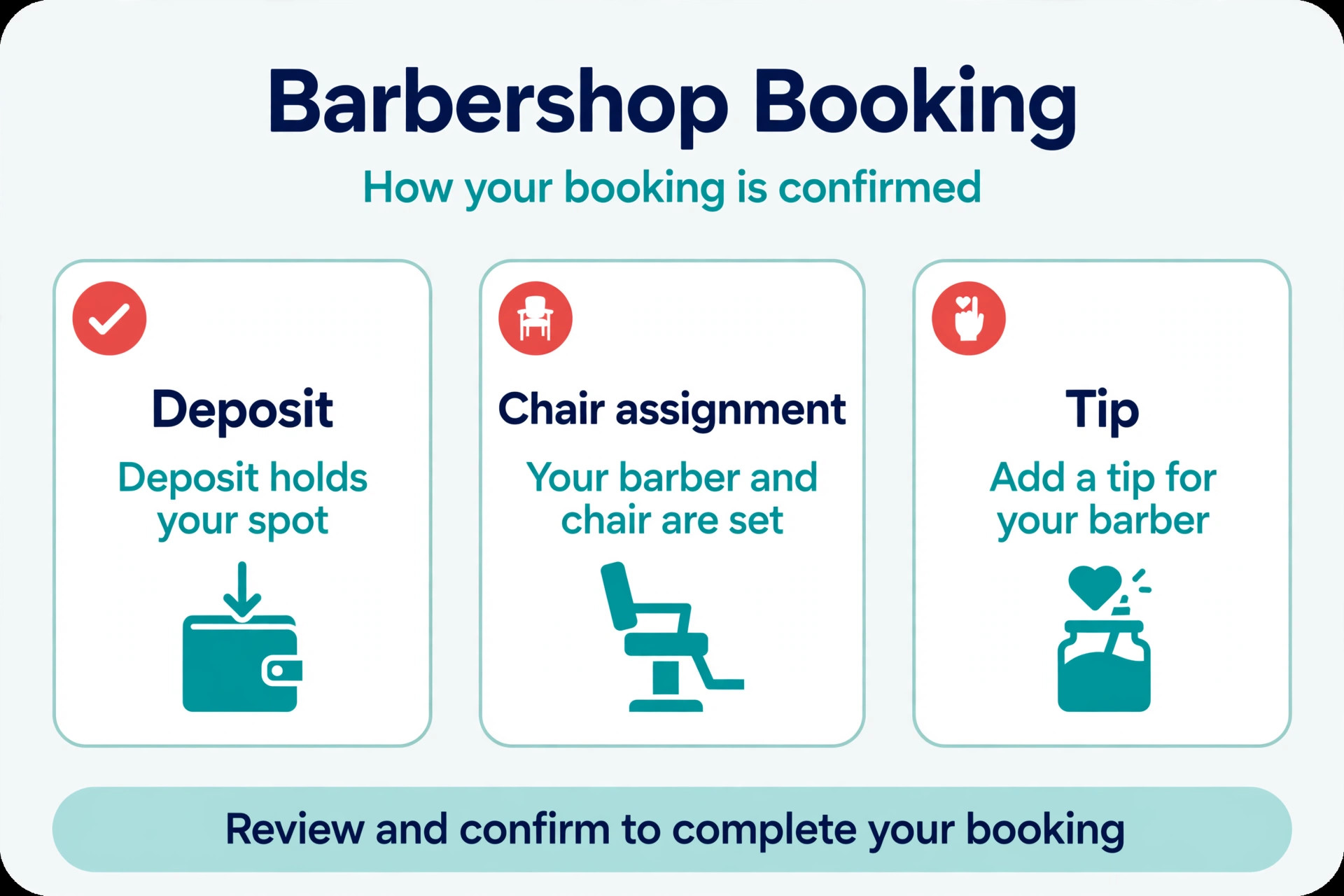
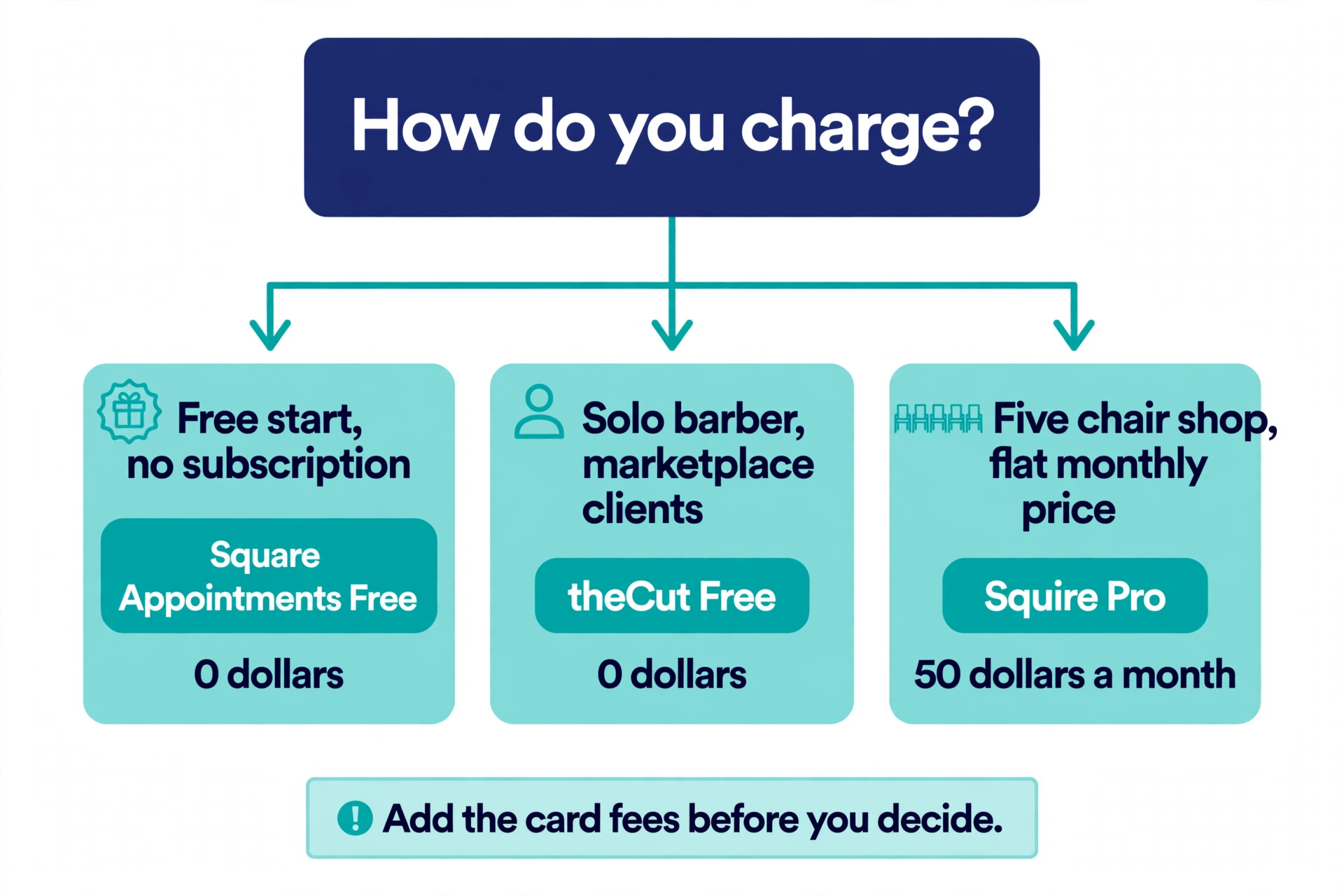
Pricing is a flat monthly fee per shop with no per barber charge. The Independent plan costs 30 dollars a month for a solo barber. The Pro plan costs 50 dollars a month for a single shop. The Executive plan costs 150 dollars a month and the Titan plan costs 250 dollars a month for larger shops and multi location groups. Card payments cost 2.5 percent plus 20 cents in person and 2.9 percent plus 30 cents online. A five barber shop on Pro pays 50 dollars plus about 700 dollars in card fees on 28,000 dollars of cuts, which is one of the lowest totals on this list.
No show protection is built in, with a card at booking and prepayment options. The shop gets its own branded app on higher tiers, rebooking campaigns and a reporting assistant that flags barbers with falling rebooking rates. The trade off is that marketing, inventory and the full reporting dashboard sit behind the higher tiers, so a small shop on Pro gets the core booking and payment tools but not the full management suite. Confirm the current tier prices on the Squire pricing page before you commit, because some roundups could not verify the tier prices on the vendor site in October 2026.
2. Booksy
Booksy is the barbershop industry default app, and its pitch is discovery. Millions of consumers open the Booksy app to find a barber, read reviews, see prices and book a slot. A shop that lists on Booksy gets new clients without running ads, and clients rebook in the same app without calling the shop. For a barber building a book from scratch, or a shop in a busy area with heavy foot traffic from search, that marketplace is worth real money.
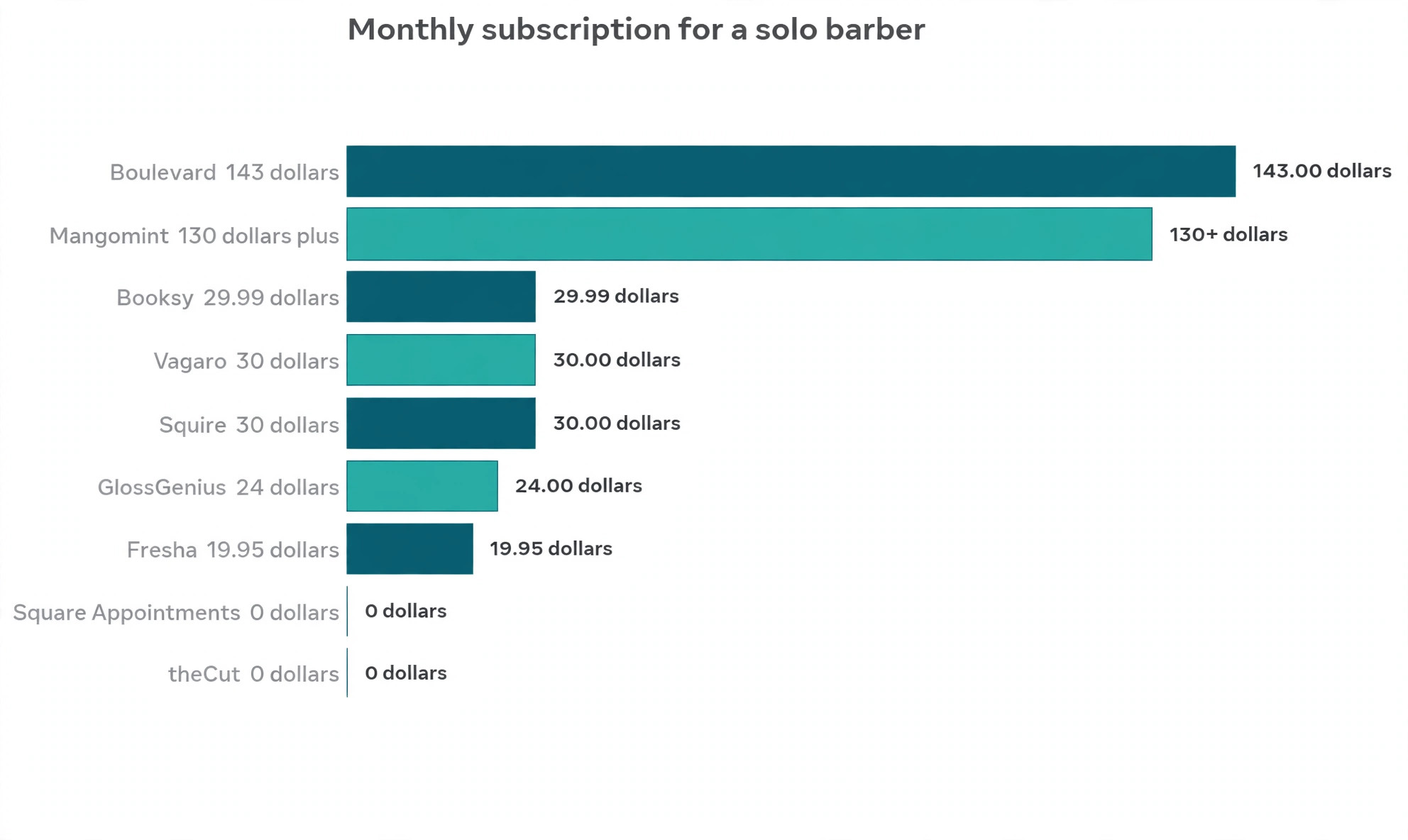
Pricing is 29.99 dollars a month plus 20 dollars for each additional team member, with every feature included and no commitment. A solo barber pays 29.99 dollars a month. A five barber shop pays 109.99 dollars a month. Card payments through the Booksy reader cost 2.49 percent plus 10 cents, and deposits and card on file charges cost 2.69 percent plus 30 cents. The Boost feature costs 30 percent of a new client first visit, capped at 100 dollars, which is the fee to watch. Ten new marketplace clients at 35 dollars each add 105 dollars to the month.
Booksy includes marketing tools, waitlists, gift cards, memberships, no show protection and custom forms in the base price, plus 2,000 free SMS marketing messages a month. That breadth is why many shops stay even as the per barber price grows. The catch is the scaling. Past five chairs, Booksy becomes one of the priciest options on this list, and the marketplace fee means the clients Booksy sends cost more than the clients you find yourself.
3. Fresha
Fresha is the budget play, and it stays the cheapest subscription for a shop whose clients already know where to find it. The Independent plan costs 19.95 dollars a month for one bookable team member. The Team plan costs 14.95 dollars a month per bookable team member. A solo barber pays 19.95 dollars. A five barber shop pays 74.75 dollars a month on Team. Card payments cost 2.29 percent plus 20 cents in person and 2.79 percent plus 20 cents online, which is competitive with the rest of the list.
The fee to watch is the marketplace fee. New clients who find the shop through the Fresha marketplace carry a one time fee of 20 percent, with a 6 dollar minimum. Ten new marketplace clients at 35 dollars each add 70 dollars to the month. Returning clients and clients who book direct pay no marketplace fee, so the cost depends entirely on where new clients come from. A shop with a loyal book that rebooks direct will find Fresha very cheap. A shop relying on the marketplace for growth will find the fee eats the saving on the subscription.
Fresha covers professional booking, point of sale, reminders, client records, deposits, cancellation fees and no show fees. The free history still confuses owners, because Fresha used to be free and now charges a subscription, but the current price is still low for what it includes. The trade off is a thinner management layer than Squire, with no chair rent tracking and less depth on commissions. Use Fresha when the book is loyal and the budget is tight.
4. GlossGenius
GlossGenius is the all in one pick for a shop that wants booking, payments, marketing and client management in one account with a low card processing rate. The Standard plan starts at 24 dollars a month billed annually, or 28 dollars month to month. The Gold plan costs 48 dollars a month billed annually for teams up to nine staff, and the Platinum plan costs 148 dollars a month for teams of ten or more. In person card payments cost 2.4 percent plus 15 cents, which is the lowest in person rate on this list.
A solo barber on Standard pays 24 dollars plus about 143 dollars in card fees on 5,600 dollars of cuts, for a monthly total near 167 dollars before tips and add ons. A five barber shop on Gold pays 48 dollars plus about 700 dollars in card fees on 28,000 dollars, which is competitive with Squire once the shop grows. Booking needs no client login, deposits protect against no shows, and marketing tools, including text and email campaigns, are built in rather than bolted on.
The trade off is that GlossGenius was built for beauty, wellness and health businesses as a group, not only for barbershops. It has no chair rent tracking and no booth rent management, and the waitlist and staff management tools sit on the Gold plan rather than Standard. A shop that rents chairs or pays commissions by chair will do that maths outside the software. A shop that employs its barbers and wants one clean system will find GlossGenius hard to beat on price and polish.
5. Square Appointments
Square Appointments is the best free starting point, and the best pick for a shop already running Square for payments. The Free plan costs nothing per location and covers online booking, a booking site, reminders, staff calendars and client profiles. The Plus plan costs 49 dollars a month per location and adds no show protection, prepayment, deposit collection and commission tracking. The Premium plan costs 149 dollars a month per location. In person card payments cost 2.6 percent plus 15 cents on Free, falling to 2.4 percent plus 15 cents on Premium.
A solo barber on the free plan pays nothing in subscription and about 154 dollars in card fees on 5,600 dollars of cuts. That is the lowest total on this list for a solo barber who does not need no show protection. The moment no shows become a problem, the Plus plan at 49 dollars is the honest price, because deposits and cancellation fees sit behind it. Square hardware is widely available, the register is familiar to most staff, and tips work at the chair without extra setup.
The trade off is that Square Appointments is general software, not barber software. It has no walk in queue built for a barbershop, no chair rent tracking, and no marketplace to send new clients. A shop that lives on walk ins will manage the queue on paper or on a separate tool. A shop that already takes Square payments, has a loyal book and wants the simplest possible setup will find the free plan hard to argue with.
6. Vagaro
Vagaro is the long feature list pick, a salon, spa and fitness platform that many barbershops run well. It packs booking, point of sale, marketing, memberships, classes and reporting into the base plan, and its marketplace listing in the United States carries no fee on new clients. The base price is 30 dollars a month for one bookable calendar, or 23.99 dollars a month for the first six months on a limited time rate, plus 10 dollars for each additional calendar up to seven.
A solo barber pays 30 dollars a month. A five barber shop pays 70 dollars a month, which is 30 dollars plus four extra calendars at 10 dollars each. Card payments depend on monthly volume. Smaller merchants pay 2.6 percent plus 10 cents in person, and larger merchants pay lower rates through Vagaro Merchant Services. Deposits and no show fees protect the book, and the Vera AI assistant helps with rebooking and client messages.
The trade off is weight. Vagaro is a big platform with classes, memberships and fitness features a barbershop will never use, and the setup takes longer than the simpler tools. Clients must create an account to book, which adds friction compared with the login free booking on GlossGenius and Square.
7. theCut
theCut is the barber community pick, built for barbers who build a personal brand on social media. It combines booking with a portfolio showcase, client reviews, appointment analysis and a marketplace where clients discover barbers by style and by cut. A barber who posts fresh fades on Instagram and wants those followers to book in two taps will find theCut fits the way clients already find them.
Pricing is simple. The free plan costs nothing and covers booking and the portfolio. The Pro plan costs 25 dollars a month and unlocks the marketplace listing for new clients, advanced analytics and extra booking tools. Card payments cost 2.75 percent through tap to pay, which is higher than GlossGenius or Fresha but simple to understand. Tips work at booking and at the chair, and the barber can set card preauthorization and cancellation fees.
The trade off is depth. theCut has no chair rent tracking, no payroll and no multi location management, so it suits a solo barber or a small group of independent barbers far better than a shop with employed staff. The free plan is genuinely usable, which makes it the best way to test online booking without paying. A barber who outgrows it will move to Squire or Booksy, but many solo barbers never need to.
8. Boulevard
Boulevard is the premium pick for a high volume shop that wants the client experience to feel expensive. It was built for salons and barbershops that charge premium prices and want booking, checkout and messaging to match. The booking flow is clean, the client profiles carry notes and preferences in detail, and the checkout supports deposits, memberships and gift cards without friction. Shops that sell an experience rather than a quick cut will feel the difference.
Pricing is custom quoted by location, and published roundups list 143 dollars a month for up to five bookable calendars at one location, and 234 dollars a month for unlimited professionals per location. Card payments cost 2.65 percent, or as low as 1 percent with Boulevard Offset, where the client covers part of the processing cost.
The trade off is price and fit. A shop charging 25 dollars a cut cannot justify 143 dollars a month for booking software, and a solo barber should not try. A premium shop with five chairs, an average ticket above 50 dollars and a full book will find the cost is a small share of revenue.
9. Mangomint
Mangomint is the modern salon platform pick, and it suits a barbershop that wants clean software, strong reporting and a client experience that feels current. It covers online booking, point of sale, client records, memberships, inventory and detailed reporting by barber, with a design that staff learn fast.
Pricing is custom quoted, and published roundups place it above 130 dollars a month per location for a small shop. No show protection, deposits and cancellation fees are included, and the reporting shows rebooking rates, average ticket and retail sales by barber without extra tools.
The trade off is the same as Boulevard, price and sales process. A shop must talk to sales to get a quote, and the price will be higher than Fresha, GlossGenius or Square. A shop with a strong brand, a busy book and staff who value clean software will find the premium worth paying.
10. Zenoti
Zenoti is the enterprise pick for a barbershop group with several locations, a franchise, or a large team that needs central control. It covers booking, point of sale, memberships, marketing automation, inventory across locations, payroll, commission rules and reporting that rolls up to the group level. A single shop does not need most of this. A group with five locations and fifty barbers cannot run without it.
Pricing is custom quoted, and published roundups place it at the top of the category, above Boulevard and Mangomint. The value is in the central control, one client record across locations, one membership that works anywhere, and one set of reports for the owner.
The trade off is that Zenoti is too much software for a single shop. Setup takes weeks, staff training takes time, and the monthly cost only makes sense when the group revenue is large. A growing group that plans a second and third location should shortlist Zenoti early, because migrating five shops later costs more than choosing the right platform now.
How to Choose the Best Barbershop Software for Your Shop
Start with how your barbers get paid. A shop that rents chairs needs chair rent tracking and split payments, which points to Squire. A shop that employs barbers and pays commission needs commission tracking by barber, which Squire, Square Plus and Vagaro all handle. A solo barber who keeps everything needs none of this, and should pick on booking and card fees alone. Write down the pay model before you compare features, because it removes half the list in one step.
Next, count where new clients come from. A shop that gets most new clients from Instagram or walk ins should avoid marketplace fees and pick Fresha, GlossGenius or Square. A shop that needs new clients and has empty chairs should pay the marketplace fee gladly, because an empty chair earns nothing and a 20 percent fee on a first visit still leaves 80 percent of a client who may rebook for years. Booksy is the strongest marketplace, Fresha is the cheaper one, and theCut suits a barber building a personal following.
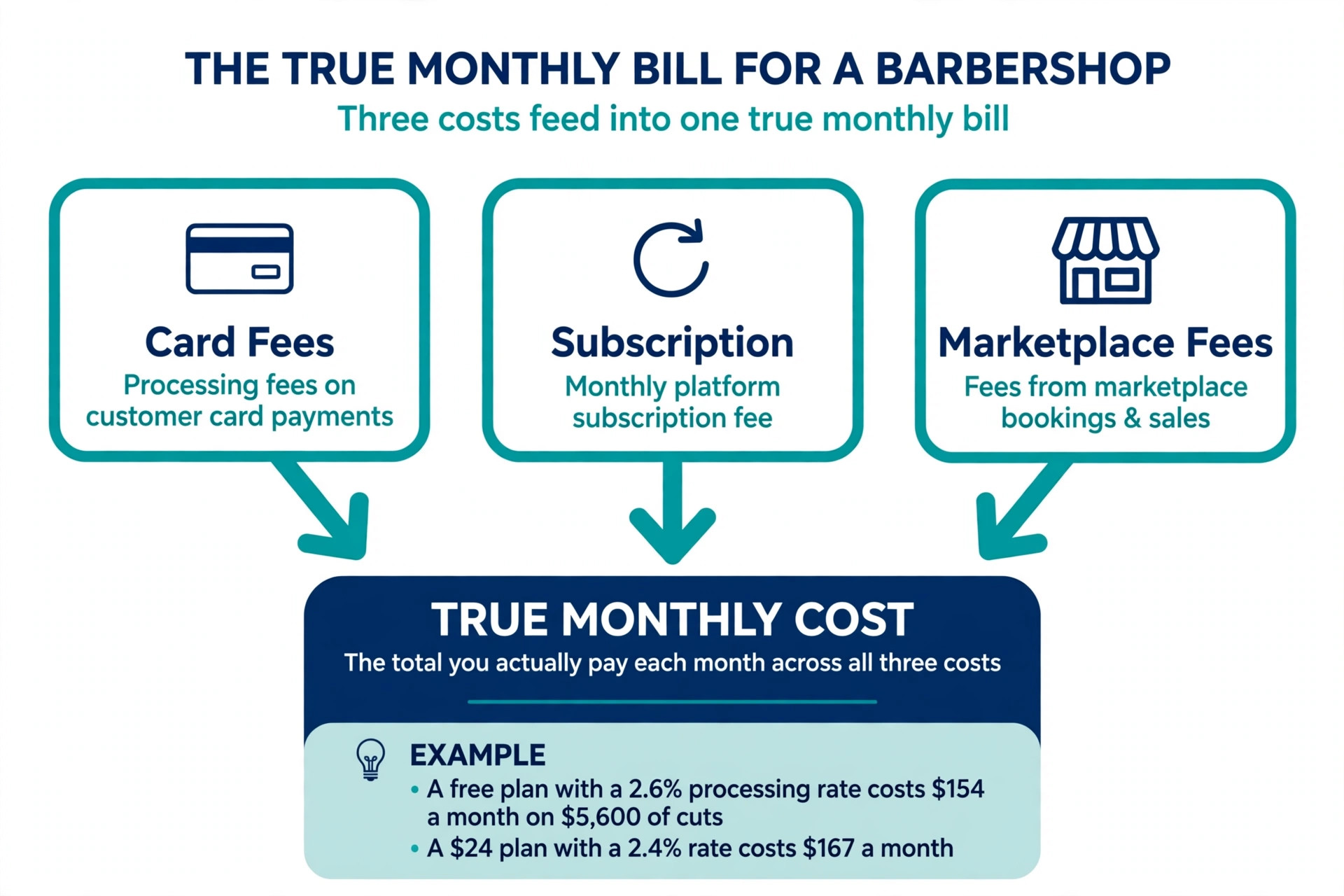
Then price the real month, not the subscription. Add the subscription, the card fees on your monthly revenue, and the marketplace fees on your new clients. A solo barber on 5,600 dollars a month pays about 167 dollars all in on GlossGenius Standard, about 170 dollars on Fresha Independent, about 154 dollars on Square Free, and about 185 dollars on Booksy. A five barber shop on 28,000 dollars a month pays about 750 dollars all in on Squire Pro, about 810 dollars on Booksy, about 775 dollars on Fresha Team, and about 748 dollars on GlossGenius Gold. The gap between the cheapest and the most expensive is smaller than the subscription prices suggest, because card fees dominate the bill.
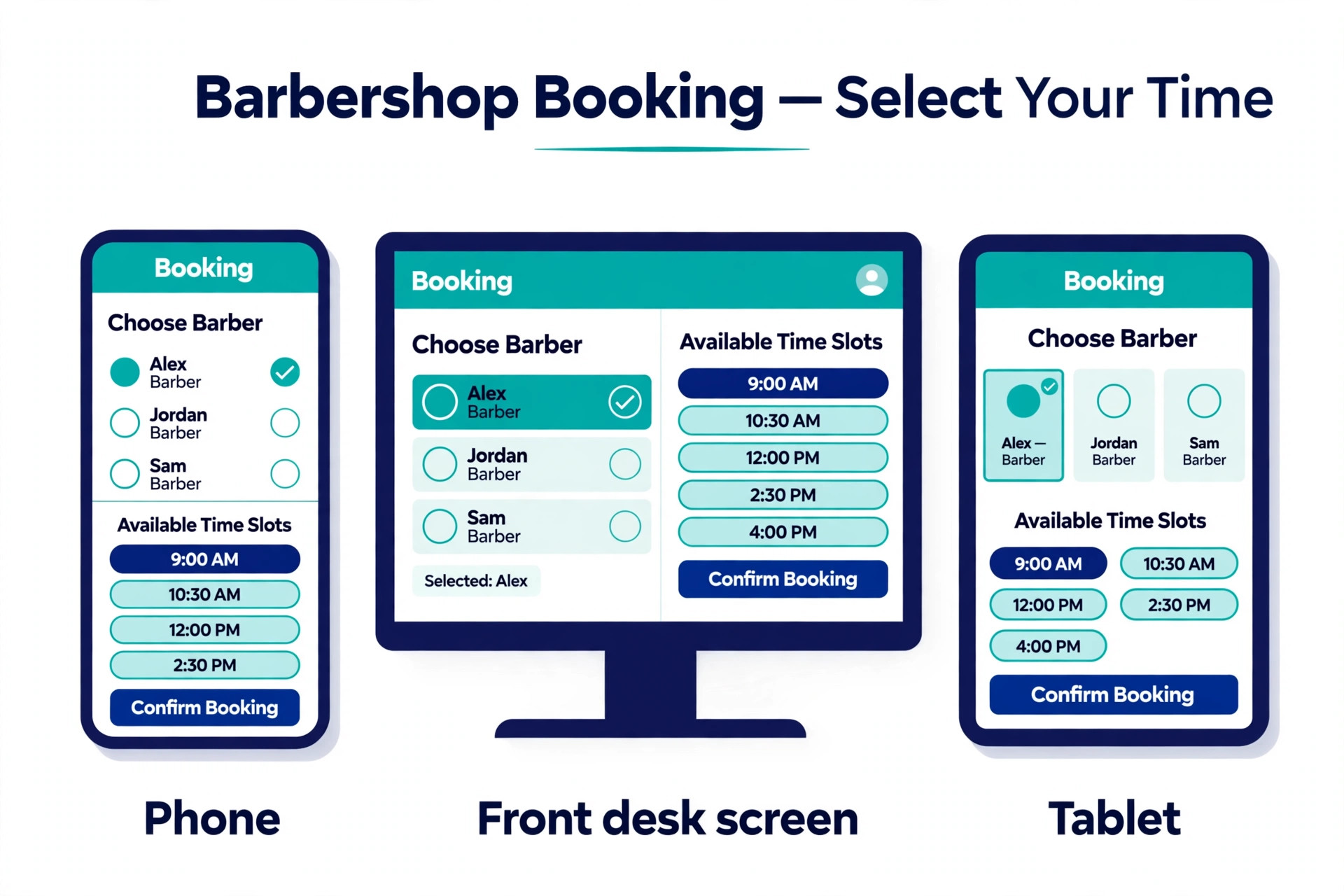
Finally, test the booking flow as a client. Book a cut on your own phone, without an account, and see how many taps it takes. GlossGenius, Square and Booksy all book without a client login. Vagaro needs an account.
Mistakes That Waste Money
The most common mistake is comparing subscription prices and ignoring card fees. A free plan with a 2.6 percent processing rate costs 154 dollars a month on 5,600 dollars of cuts, while a 24 dollar plan with a 2.4 percent rate costs 167 dollars. The gap is 13 dollars, not 24 dollars. A shop that moves to a cheaper subscription with a higher processing rate can end up paying more. Always add the card fees before you decide.
The second mistake is paying a marketplace fee for clients you already had. A shop that lists on Booksy or Fresha and sends its existing clients to book through the marketplace pays 20 or 30 percent on clients who would have booked direct for free. Keep existing clients on a direct booking link, and use the marketplace only for genuinely new clients. The software lets you do this, but only if you set the links up that way.
The third mistake is buying software for a shop you do not have yet. A solo barber who buys Zenoti or Boulevard pays enterprise prices for features built for a group. A five chair shop that buys theCut pays for a solo tool and then rebuilds its payroll in a spreadsheet. Match the software to the shop you run today, and move up when the chairs fill, not before.
- Write down the pay model first, chair rent, commission or employed staff.
- Count new clients by source for one month before choosing a marketplace tool.
- Price the real month with subscription plus card fees plus marketplace fees.
- Test the booking flow on your own phone as a client.
- Confirm no show protection is included at your tier before you pay.
Our Verdict
Squire is the pick for most shops among the best barbershop software, because the flat price per shop, the chair rent tracking and the commission tools match the way a real barbershop runs, and a five chair shop on Pro pays about 750 dollars all in for a full month. Booksy is the pick when new clients are the problem, because the marketplace fills empty chairs and every feature comes in one price. Fresha is the pick when the budget is tight and the book is loyal, because the subscription is the cheapest on this list and direct bookings carry no marketplace fee.
A solo barber should start with Square Appointments Free or theCut Free, pay nothing in subscription, and move to GlossGenius Standard when no show protection and marketing matter. A premium shop should look at Boulevard or Mangomint and judge the software on the client experience, not on the subscription price. A group planning a second location should talk to Zenoti before the second shop opens, because migrating later costs more than choosing well now. The best barbershop software is the one whose pricing model matches your pay model, whose booking flow your clients actually finish, and whose monthly total you worked out before you paid.
Frequently Asked Questions
Which of the best barbershop software tools is cheapest for a solo barber?
Square Appointments Free is the cheapest for a solo barber, because the subscription costs nothing and the only cost is card processing at 2.6 percent plus 15 cents in person, which is about 154 dollars on 5,600 dollars of cuts a month. theCut Free is also free, with card processing at 2.75 percent. Fresha Independent at 19.95 dollars a month is the cheapest paid plan, and GlossGenius Standard at 24 dollars a month has the lowest card rate, so the all in totals are close. Compare the all in month, not the subscription alone.
Does Booksy or Fresha charge a fee on every client?
No, neither charges a marketplace fee on every client. Booksy charges 30 percent of a new client first visit only when the Boost feature is on, capped at 100 dollars, and returning clients pay no marketplace fee. Fresha charges a one time fee of 20 percent, with a 6 dollar minimum, only on new clients who find the shop through the Fresha marketplace. Clients who book through your own link or rebook direct pay no marketplace fee on either tool.
What is the best barbershop software for chair rent shops?
Squire is the best choice for a chair rent shop, because it was built for barbershops and tracks chair rent, booth rent, commissions, split payments and barber payroll in one place. The flat price per shop means adding a barber does not raise the subscription, which matters when chairs turn over. No other tool on this list handles the chair rent model as directly, and a shop that rents chairs will otherwise reconcile rent and commissions in a spreadsheet every week.
Do I need no show protection, and which tools include it?
Yes, no show protection pays for itself in most shops, because one missed cut costs more than a month of the feature. Squire includes card on file and prepayment. Booksy includes deposits and cancellation fees. Fresha includes deposits, cancellation fees and no show fees. GlossGenius includes deposits on every plan. Square Appointments includes no show protection only on the Plus plan at 49 dollars a month, so a shop on the free plan has no deposit protection. Confirm the feature is included at your tier before you pay.
Can clients book without creating an account?
Yes, on most tools on this list. GlossGenius, Square Appointments, Booksy, Fresha and Squire all let clients book without creating an account. Vagaro needs a client account to book, which adds friction and can lose clients who would have booked in two taps. Test the booking flow on your own phone before you commit, and count the taps from the booking link to the confirmation screen.
Should a single shop buy Zenoti or Boulevard?
No, a single shop should not buy Zenoti, because it is enterprise software built for multi location groups and franchises, with custom pricing to match. Boulevard can fit a single premium shop with a high average ticket and a full book, because the client experience protects the price, but a shop charging 25 dollars a cut cannot justify the subscription. A single shop should start with Squire, Booksy, Fresha, GlossGenius or Square, and look at the premium tools only when the book is full and the average ticket is high.
A good booking system earns its price in the gaps it closes, the empty chair it fills, the no show it prevents, and the tip it captures at the chair.