
One tool charges a monthly subscription for a live score inside the editor. Another does the on page job for free inside WordPress. A third sells the same content scoring for a fraction of the price, with a rougher interface and thinner keyword data. All three call themselves AI SEO tools, and all three are honest about what they do, but they charge for completely different work. The best ai seo tools for small sites are not ranked by how many features they list.
They are ranked by the work a small site actually does each week, and the price it pays for work it never uses. We compared eight tools on price, the work each one actually does, the limits that catch small teams by surprise, and the point at which each tool stops being worth its monthly bill. This guide gives you the numbers and the trade offs, so you can choose once and get back to publishing.
A small site cannot afford to buy three overlapping tools and hope one of them works. Most small sites publish between two and eight articles a month, track a few hundred keywords at most, and have one person doing the writing, the editing and the publishing. That workload shapes the whole decision. A tool built for an agency with fifty clients will charge you for seats, projects and reports you will never open. A tool built for a single writer will save you money and time, because every screen matches a job you actually do each week.
Prices in this guide were checked against vendor pricing pages and current 2026 roundups in November 2026. SEO tool pricing changes often, and several vendors show different prices by region or run short promotions, so confirm the price on the checkout page before you pay. All prices below are in US dollars unless a vendor prices in euros, and annual billing is noted where it changes the monthly figure.
How We Compared Eight Tools
We set the same test for every tool before we looked at a single price. The test site was a small WordPress blog with about 120 published articles, traffic under 10,000 visits a month, and a single writer. That profile matches most readers of this guide, and it keeps the comparison honest, because a tool that only shines on a site with a team of ten writers will not shine here.
We scored each tool on five points. Research depth covered keyword data, competitor gaps and search intent, because a small site must pick topics it can actually win. Content scoring covered how clearly the tool tells a writer what to add, cut or rewrite before publishing. Technical help covered audits, crawl faults and the fixes a non technical owner can follow. Price honesty covered what the entry plan really includes, and what sits behind the next tier. Ease of use covered setup time, the learning curve, and whether the tool fits into a weekly publishing routine without a training course.
One more point matters before the list. Free tools still belong in a small site stack. Google Search Console costs nothing and tells you which queries already bring impressions, which pages are losing clicks, and which pages Google cannot crawl. Pair it with one paid tool from this list and you have research, scoring and measurement covered for less than most single subscriptions. The best ai seo tools for small sites work best when they sit on top of that free measurement, not instead of it.
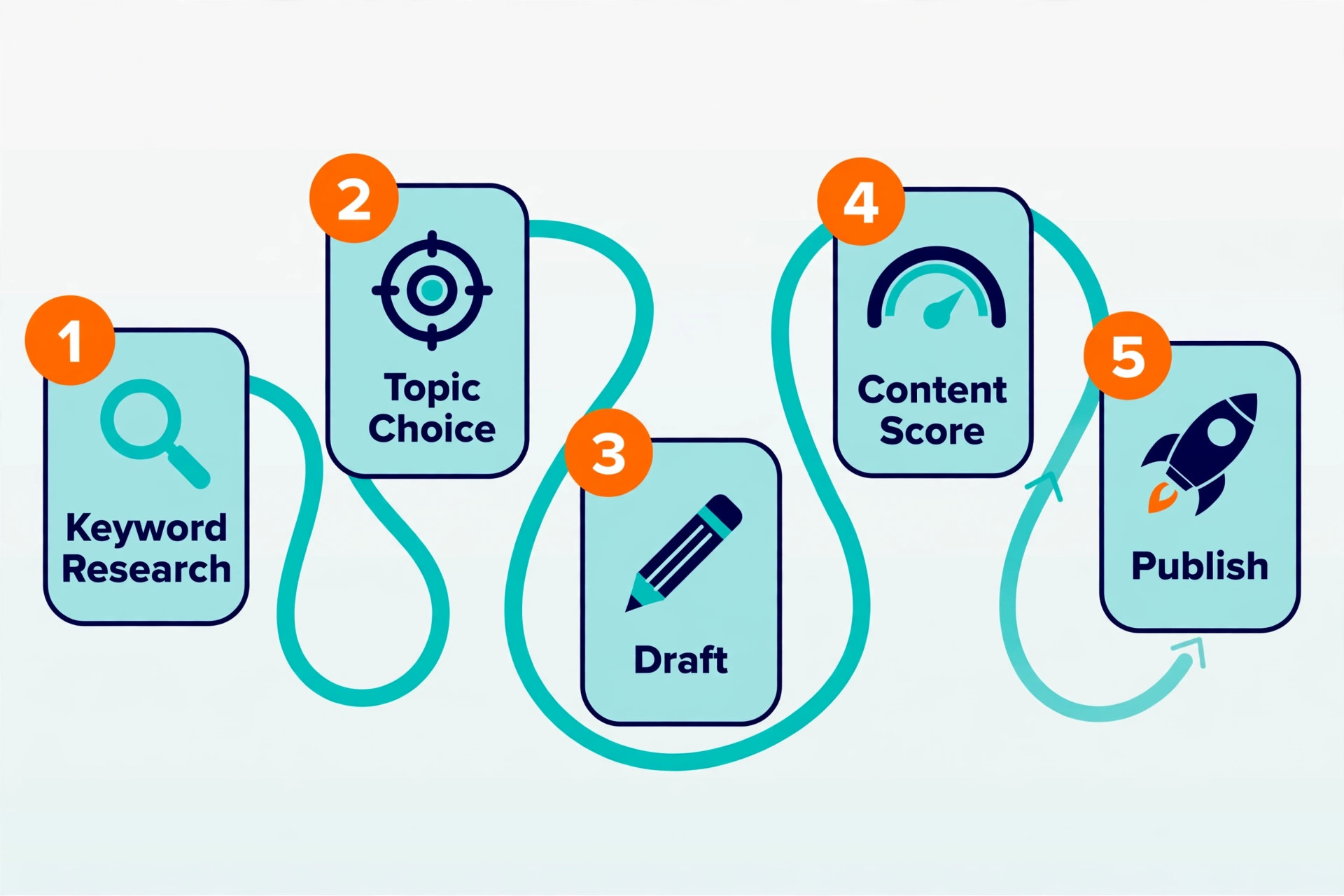
The Best Pick for Each Job
| Job | Pick | Why it wins |
|---|---|---|
| Live scoring while you write | Surfer | Real time content score and term guidance |
| A WordPress site on a tiny budget | Rank Math | Free plugin plus cheap AI credits |
| Research, tracking and audits in one place | SE Ranking | Full toolkit at about half the price of the big two |
| Briefs and drafts on a budget | Frase | Fast briefs plus AI visibility tracking |
| The lowest priced serious optimizer | NeuronWriter | NLP scoring from 23 dollars a month |
| Deep backlink and competitor data | Ahrefs | The largest live link index in this list |
| All in one marketing and SEO data | Semrush | Keyword, ads and social data in one account |
| Editorial scoring for a writing team | Clearscope | Clear letter grades writers understand fast |
Use this table as a shortcut for the best ai seo tools for small sites, then read the full section for the tool you are leaning toward. The cheapest option is not the best value when it caps the exact work you do every week, and the most expensive option is not the best choice when you only need one job done well.
The Best AI SEO Tools for Small Sites in 2026, Ranked
The eight tools below fall into three groups. The first group optimizes content you write yourself, and these are the strongest picks for most small sites. The second group covers research and tracking, and these suit sites that need to choose topics and watch rankings. The third group is the premium tier, and these suit sites that already earn revenue and need deeper data to grow further.
1. Surfer
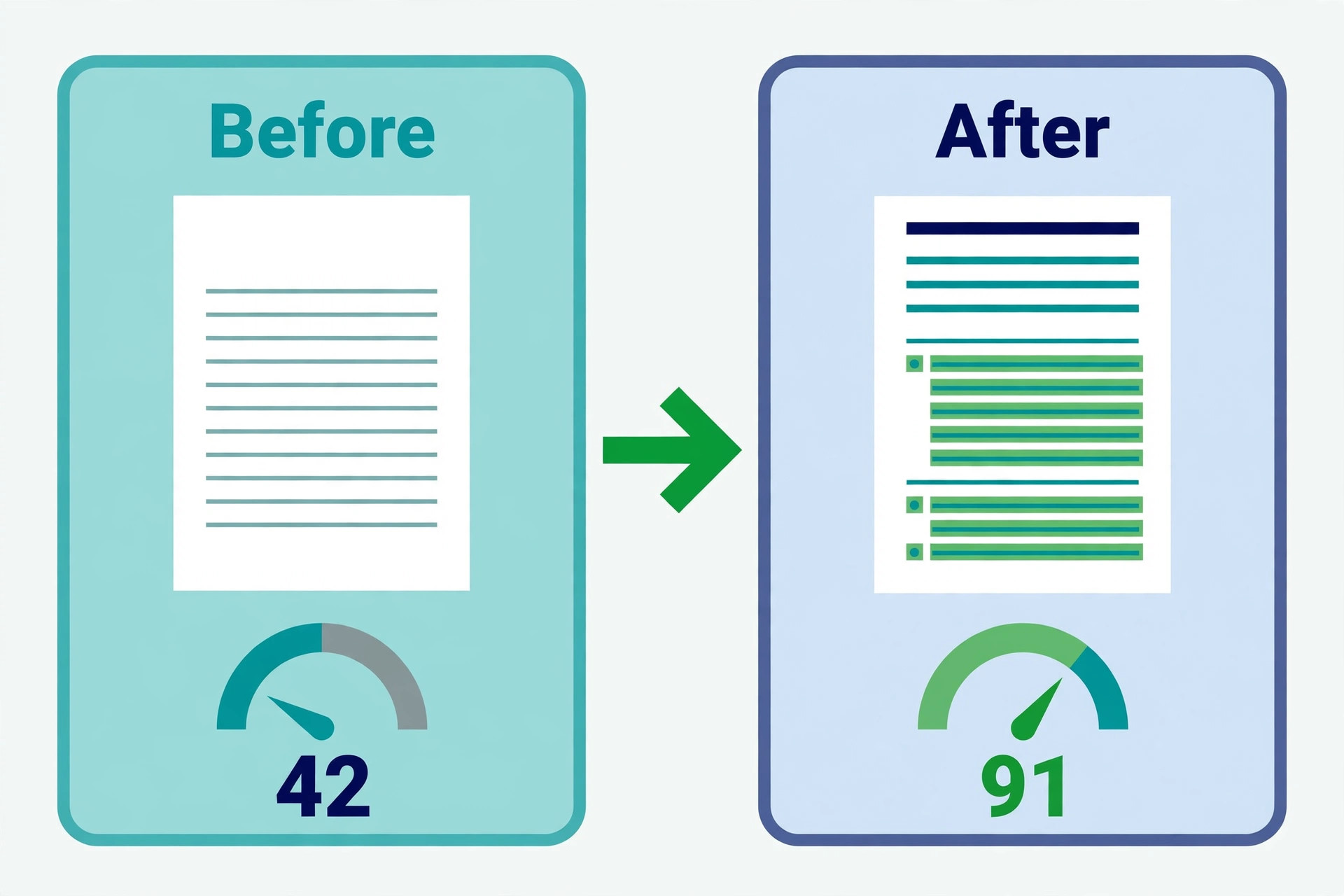
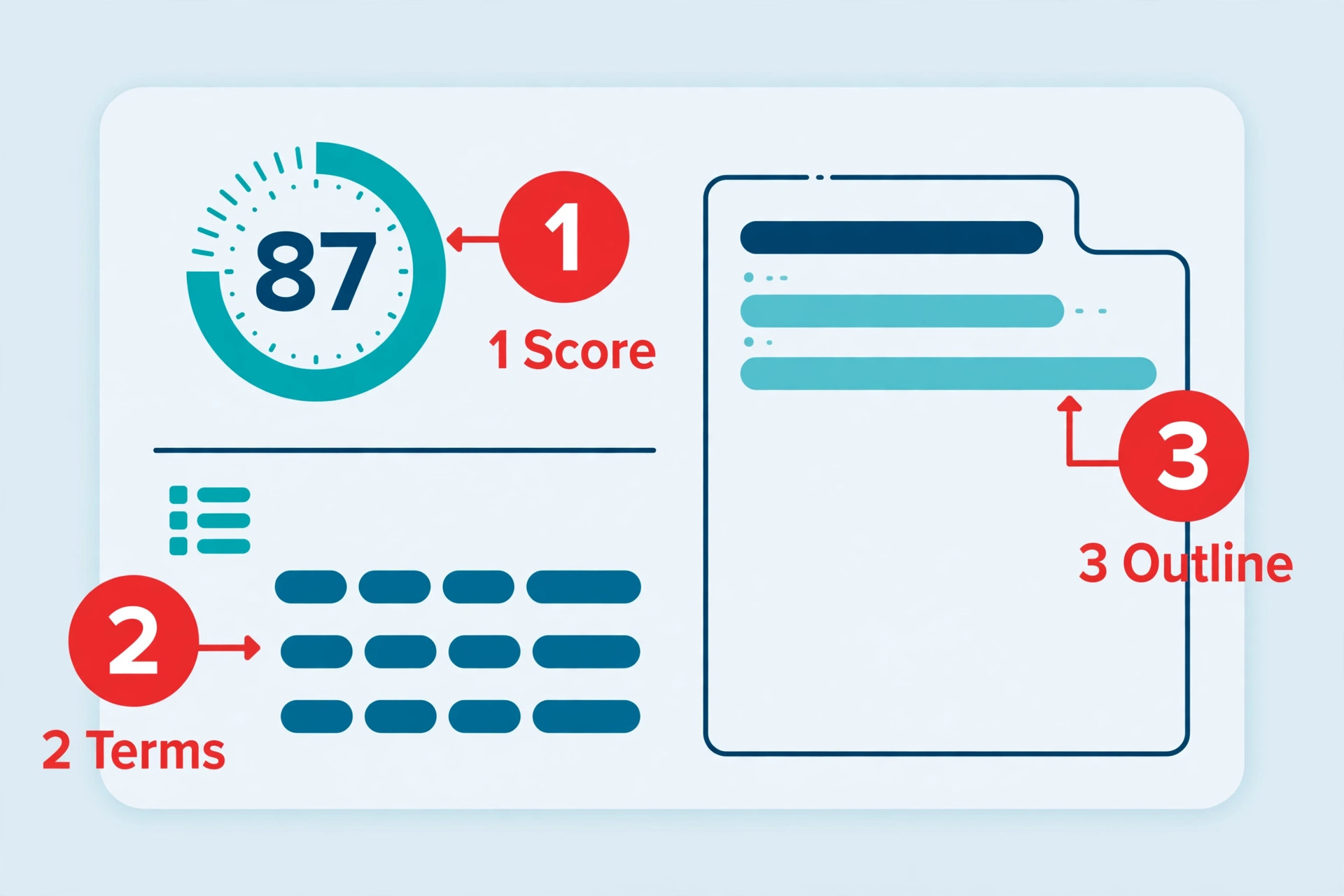
Surfer is a content optimization tool. You draft in its editor, with or without its AI help, and it gives you a live content score from zero to 100 based on word count, heading structure, relevant terms, entities and the questions top ranking pages answer. That score updates as you write, so you can see whether a new section helps or hurts before you publish. For a small site that publishes a few articles a month, that feedback loop is the single most useful feature in this whole list.
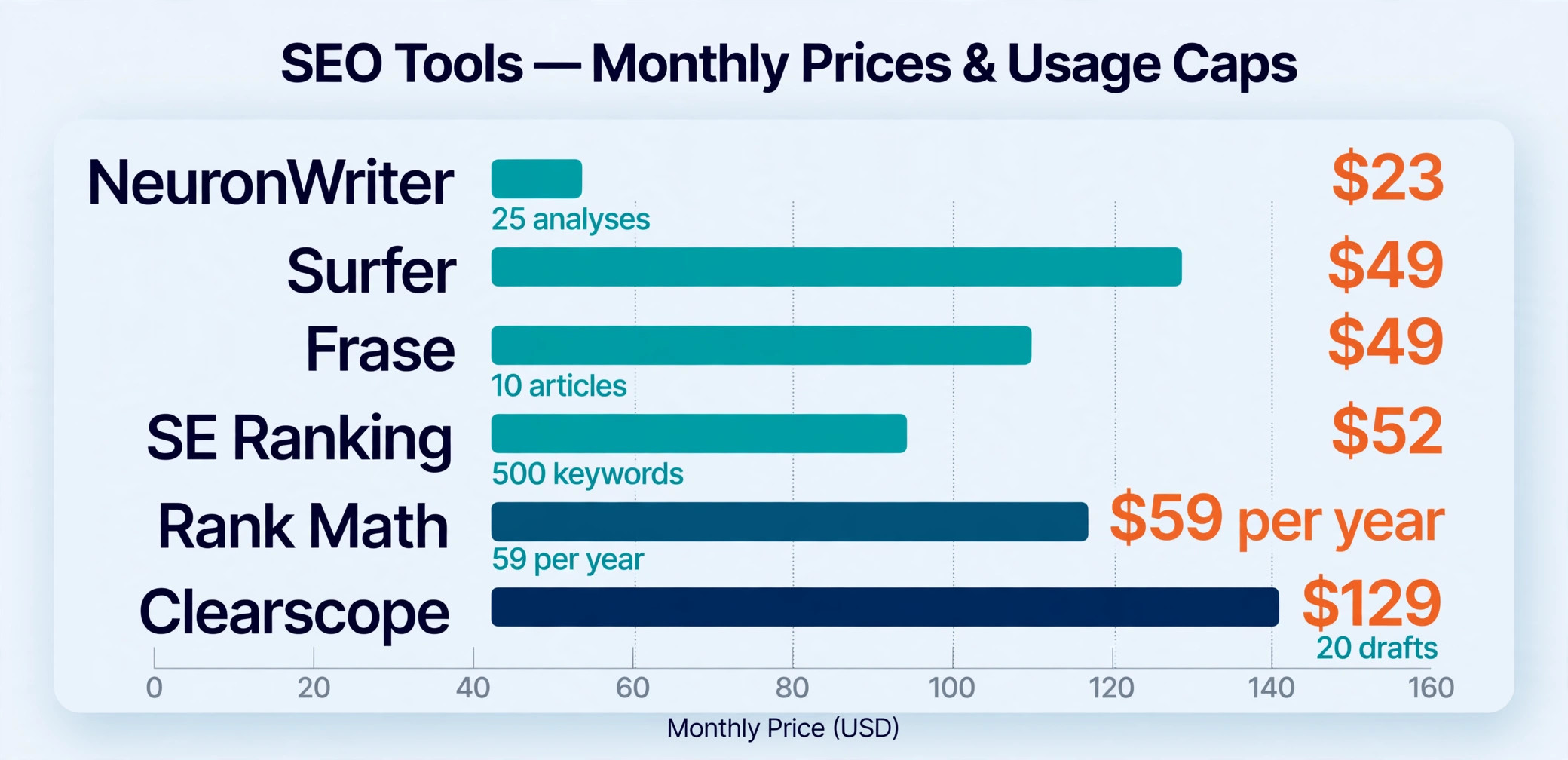
Pricing starts at 49 dollars a month billed yearly for Discovery, and Standard costs 99 dollars a month billed yearly. Annual billing saves up to 17 percent against monthly billing. There is no free plan. Discovery covers a small number of articles a month, so check the article limit against your publishing volume before you commit, because a heavy month can push you to Standard faster than the headline price suggests.
Surfer fits best when you write the content yourself and want a clear score to aim at. It fits worst when you need deep keyword research, backlink data or rank tracking as the main job, because those features are thinner here than in the research tools below. If you publish two articles a month and want each one to be as strong as possible, start here.
2. Rank Math
Rank Math is an SEO plugin for WordPress, and it is the lowest cost way to get AI help inside the editor you already use. The free plugin covers the core on page checks, schema, sitemaps and redirects, and Rank Math Content AI adds suggestions, briefs and AI writing help inside WordPress. For a small WordPress site, that placement matters, because you never leave the editor to check a score or add a term.
The free plugin gives you five free Content AI credits to test. Rank Math Pro costs 59 dollars a year and adds 7,500 AI credits, tracking for 500 keywords, and use on unlimited personal sites. Extra credit packs cost 19 dollars for 50 credits, 49 dollars for 150 credits, and 99 dollars for 450 credits, and the credits stay valid for a year. That credit model suits a small site, because you pay for the AI help you actually use instead of a monthly fee that runs whether you publish or not.
3. SE Ranking
SE Ranking is the best all round value in this list for a small site that wants one account to cover research, rank tracking, audits and content work. It tracks keywords daily, runs site audits, monitors competitors, and now includes AI search visibility tracking, so you can see whether your pages appear in AI answers as well as in classic results. The interface is cleaner than the two big research platforms, and the learning curve is shorter.
Pricing is where SE Ranking wins. The Essential plan starts at 44 dollars a month on some listings and 52 dollars a month on others, depending on the billing view and the keyword volume you choose, for 10 projects and 500 tracked keywords. That is about half the price of Semrush Pro and Ahrefs Lite for a comparable tracking job. Higher plans add more keywords, more projects and deeper data, but most small sites will not need them in year one.
4. Frase
Frase builds a content brief from a live search results crawl, pulling competitor headings, questions and statistics, then gives you an editor with a real time content score. That brief first workflow suits a small site, because the hardest part of a new article is deciding what it must cover, and Frase answers that question in minutes instead of hours. It also includes AI visibility tracking on every tier and an AI agent that can run multi step research and writing workflows from a plain language prompt.
Pricing starts at 49 dollars a month, or 39 dollars a month billed yearly, for the Starter plan with 10 articles, 50 audits and 25 AI prompts a month. Professional costs 129 dollars a month, or 103 dollars billed yearly, for 40 articles and 250 audits. Scale costs 299 dollars a month for 100 articles. The entry plan is the honest one for a small site, because 10 articles a month covers most publishing schedules, and the cost per article works out at about 4.90 dollars.
5. NeuronWriter
NeuronWriter covers the core content optimization job, NLP term recommendations, competitor analysis and content scoring, for a fraction of the price of Surfer or Clearscope. The Bronze plan costs 23 dollars a month, or 19 dollars billed yearly, and includes 25 content analyses and 15,000 AI credits. Silver costs 45 dollars a month for 50 analyses, Gold costs 69 dollars for 75, Platinum costs 93 dollars for 100, and Diamond costs 117 dollars for 150. That ladder lets a small site pay for exactly the volume it publishes.
The interface is denser and rougher than Surfer or Frase, and the keyword data is thinner, because NeuronWriter works from search results analysis rather than a large keyword database of its own. Integrations with Search Console, WordPress and Shopify, plus the plagiarism checker and the Content Designer, sit behind the Gold plan at 69 dollars a month, so budget for that tier if those features matter to you. There is no free plan, but a seven day trial lets you test the scoring on a real draft.
NeuronWriter is the pick when budget is the binding constraint and the writer is comfortable with a denser interface. It is not the pick when you want a polished editor, deep keyword data, or a tool your whole team can learn in an afternoon. For a solo owner who publishes four to eight articles a month and wants serious scoring for under 25 dollars, it is the best value in this category.
6. Semrush
Semrush is the all in one research platform that most agencies use, and for a small site it is the most complete single source of keyword, competitor, ads and social data. You can find keyword gaps against competitors, audit a site, track rankings, check backlinks, and research the ads rivals run, all in one account. That breadth is useful when you are choosing a niche, planning a content calendar, or trying to understand why a competitor outranks you on a whole topic cluster rather than a single page.
Semrush fits a small site that already earns revenue and needs deep data to decide where to invest next. It does not fit a new site with no revenue, because the monthly bill will outrun the traffic it helps you win in the first months. If you can afford one premium tool and you need research depth more than content scoring, Semrush is the safer choice than Ahrefs, because it covers ads and social data that Ahrefs does not.
7. Ahrefs
Ahrefs has the largest live backlink index in this list, and that is the reason to buy it. When you need to know who links to a competitor, which pages earn the most links, which broken links you can replace, and which keywords a rival ranks for that you do not, Ahrefs gives you the cleanest answer. Its Site Explorer and Keywords Explorer are the reference tools for link research, and its rank tracker and site audit are strong enough to run a small site without a second research tool.
Pricing starts at 29 dollars a month for the Starter plan on some listings, and Lite costs 129 dollars a month. The Starter tier covers basic research and a small number of tracked keywords, while Lite adds deeper data and more capacity. Brand Radar, the AI citation monitoring add on, starts at 199 dollars a month. The free Ahrefs Webmaster Tools account covers site audits and basic backlink data for sites you verify, which is a useful free layer for a small owner.
8. Clearscope
Clearscope grades drafts and tracks AI mentions, and it is built for editorial teams that brief writers and need a shared standard for quality. The content report shows the terms a draft should cover, the readability level, and a letter grade that any writer can understand in seconds. That clarity is why larger content teams keep paying for it, even though cheaper tools cover the same ground on paper.
Pricing starts at 129 dollars a month for Essentials, with 20 drafts, 50 tracked prompts and 50 pages a month, plus AI mention tracking for ChatGPT and Gemini. Business costs 399 dollars a month with higher allowances and a dedicated account manager. There is no self serve free trial, and the sales process starts with a demo, which is a real friction point for a small site that wants to test a tool this week.
How to Choose the Right Tool for a Small Site
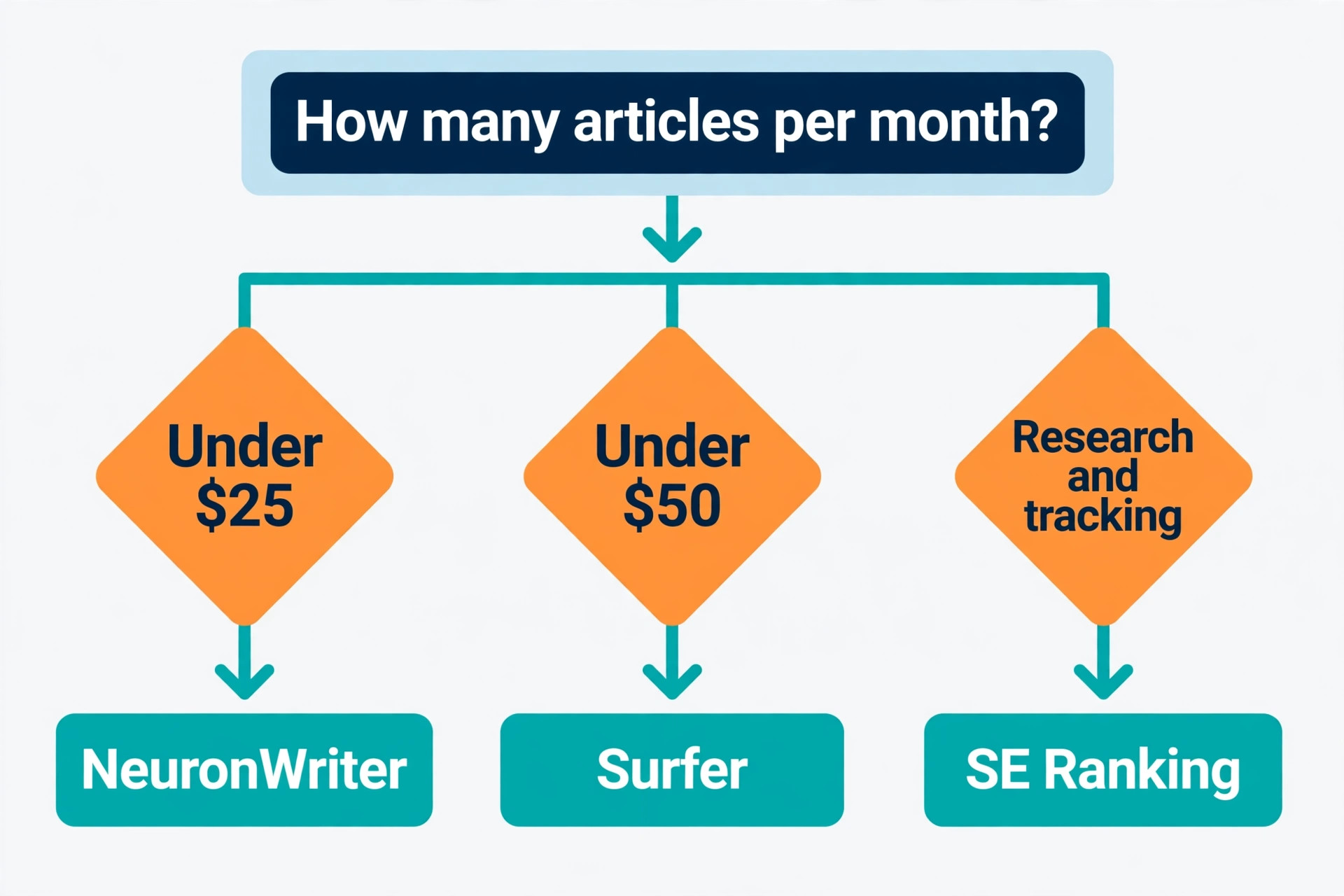
Start with the job, not the brand. Write down the one task you do every week that costs you the most time. When the answer is writing and optimizing articles, buy a content optimizer first, and Surfer or NeuronWriter will cover it. When the answer is choosing topics and watching rankings, buy a research and tracking tool first, and SE Ranking will cover it. When the answer is understanding competitors and links, buy Ahrefs. A tool that does your weekly job well beats a tool that does five jobs averagely.
Next, count your real volume. Count the articles you published in the last three months, divide by three, and use that monthly number against every article cap in this guide. Count the keywords you actually track, not the keywords you wish you tracked, and use that number against every tracking cap. A plan that covers 25 documents a month is generous when you publish four articles, and it is a hard stop when you publish thirty. The caps decide the real price more than the headline monthly figure.
Then add up the full year. Multiply the monthly price by twelve, add any onboarding fee, add the cost of a second seat if you need one, and add the cost of the next tier if your volume grows by half. A 49 dollar plan that jumps to 99 dollars when you publish more is a 99 dollar plan in practice, and you should judge it on that number. A 23 dollar plan with a 69 dollar tier behind the features you need is a 69 dollar plan in practice too. Do that arithmetic before you enter card details, and the cheapest tool on the page will often change.
Finally, test on a real draft. Every tool here except Clearscope offers a free plan, a free trial or a low cost entry tier, so run the same article through two tools and compare the advice. A score that tells you to add a section you already planned is useful. A score that tells you to stuff in terms your reader does not need is noise. The best ai seo tools for small sites earn their price in that test, not on the sales page, so spend an hour testing before you spend a year paying.
What to Check Before You Pay
Check the article or document cap first, because it is the limit small sites hit most often. Surfer Discovery, Frase Starter and NeuronWriter Bronze all cap the number of articles or analyses per month, and the next tier costs roughly double. Work out your publishing volume for the next six months, add a margin for a busy month, and pick the tier that covers it without forcing an upgrade in month two.
Check the keyword tracking cap second. SE Ranking Essential covers 500 tracked keywords, Rank Math Pro covers 500 keywords, and Ahrefs Starter covers far fewer. A small site that tracks 200 keywords is comfortable on any of these plans, but a site that tracks 800 keywords will pay for a higher tier on every platform. Count the keywords you track today, and count the ones you plan to add as you publish, before you choose.
Check the renewal price third, because several vendors show a low first year price and a higher renewal price. Rank Math Pro renews at a higher monthly equivalent than its first year price, and several other tools run short promotions that do not repeat. Read the renewal terms on the checkout page, and set a calendar reminder for the renewal date so a price rise does not catch you by surprise.
- Confirm the article cap covers your monthly publishing volume with room to spare.
- Confirm the tracked keyword cap covers the keywords you watch today plus the ones you will add.
- Confirm the renewal price, not just the first month or first year price.
- Confirm whether AI features sit in the entry plan or behind a higher tier.
- Confirm whether a second seat costs extra before you invite a writer or an editor.
Mistakes That Waste Money
The most common mistake is buying the biggest research platform before the site earns anything. A new site pays 139 dollars a month for Semrush, uses ten reports a month, and learns nothing it could not have learned from Search Console plus a 23 dollar optimizer. That is more than 1,600 dollars a year spent on depth the site is not ready to use. Start with the cheapest tool that does your weekly job, and upgrade when your traffic and revenue justify the deeper data.
The second mistake is paying for two tools that do the same job. Surfer plus Frase plus Clearscope is three content scorers, and you will use one of them. SE Ranking plus Semrush plus Ahrefs is three research platforms, and you will use one of them. Pick one tool per lane, research, optimization and measurement, and spend the saved money on better content or a faster host. The overlap is where small site budgets leak fastest.
The third mistake is ignoring the caps until they bite. A writer publishes a strong month, hits the article cap in week three, and either stops publishing or pays for an upgrade mid month. Plan your volume, pick the tier that covers it, and review the caps every quarter as the site grows. The best ai seo tools for small sites are the ones whose caps match your publishing rhythm, not the ones with the longest feature list.
Our Verdict
Surfer is the pick for most readers among the best ai seo tools for small sites, because the live score, the term guidance and the clear editor help a small site publish stronger articles every week, and the 49 dollar Discovery plan covers a realistic publishing volume. Pair it with free Search Console for measurement, and you have a complete workflow for under 50 dollars a month. When the budget is tighter, NeuronWriter at 23 dollars a month gives you most of the scoring for less than half the price, and Rank Math gives you the cheapest WordPress layer of all.
SE Ranking is the pick when you want one account to cover research, tracking and audits, because it does that job for about half the price of the big two research platforms. Ahrefs is the pick when links are the bottleneck, and Semrush is the pick when you need the deepest all round data and the site already earns enough to justify it. Clearscope is the pick only when you run a small writing team and need a shared grading standard that every writer understands at a glance.
Start with the free layer, test two tools on a real draft, and buy the one whose advice you actually follow. A tool you open every week is worth ten times a tool you pay for and ignore, and the right choice for a small site is almost always the tool that fits the work you already do.

Frequently Asked Questions
Which of the best ai seo tools for small sites is the cheapest?
NeuronWriter Bronze at 23 dollars a month, or 19 dollars billed yearly, is the cheapest serious optimizer in this list, and Rank Math is cheaper still for WordPress sites, because the free plugin covers the core checks and Pro costs 59 dollars a year. The cheapest tool is not always the best value, because NeuronWriter caps you at 25 analyses a month and Rank Math needs a separate research tool for keyword data. Count your monthly articles and your keyword needs before you judge a price, because a cheap plan that caps your work costs more per article than a dearer plan that covers it.
Do small sites need Semrush or Ahrefs?
Most small sites do not need either one in year one. Search Console plus SE Ranking or a content optimizer covers topic choice, tracking and scoring for a fraction of the price. Semrush and Ahrefs earn their price when the site already earns revenue, when you need deep competitor and link data to plan growth, or when you run outreach and need the largest link index available. Until then, the money is better spent on publishing more strong articles and improving site speed.
Is Surfer worth 49 dollars a month for a small site?
Surfer is worth 49 dollars a month when you publish at least two articles a month and you write the content yourself, because the live score and term guidance improve every draft you publish. It is not worth the price when you publish less than one article a month, when someone else writes for you and you do not edit the drafts, or when you need keyword research and backlink data more than content scoring. In those cases, NeuronWriter at 23 dollars or SE Ranking at about 50 dollars will cover the job for less money.
Can I use Rank Math alone for SEO?
Rank Math alone covers on page checks, schema, sitemaps and redirects, and its Content AI helps with briefs and suggestions inside WordPress. It does not cover deep keyword research, competitor gaps or backlink analysis, so most sites pair it with Search Console for measurement and a research tool when they need to choose new topics. For a WordPress site with a small budget, Rank Math plus Search Console is a strong free and low cost starting point, and you can add a paid research tool later when the site grows.
What is AI visibility tracking, and does a small site need it?
AI visibility tracking shows how often your brand or your pages appear in answers from AI search tools such as ChatGPT and Gemini, instead of only in classic search results. Surfer, Frase, SE Ranking and Clearscope now include some form of it, and it matters more each year as more searches get an AI answer first. A small site does not need to pay extra for it yet, because classic rankings still drive most traffic, but it is worth having included in a plan you already buy, so you can watch the trend without paying for a separate tool.
How many keywords should a small site track?
Most small sites should track between 100 and 300 keywords, covering the main topics they publish on, the pages that already earn traffic, and the competitor terms they want to win. Tracking 1,000 keywords sounds impressive, but it creates noise, because most of those terms will never bring a visit. Start with the keywords tied to pages you already rank on page two or three, add the keywords for each new article you publish, and review the list every quarter to drop terms that no longer matter to the business.
A small site wins by publishing fewer, stronger articles, measuring what happens, and fixing what does not work. Choose one tool per job, test it on a real draft, watch the caps, and let the results decide whether the subscription earns its place in your monthly budget.