

An investor decides in ninety seconds whether to read the rest of your deck. The top 10 ai tools for pitch decks make those ninety seconds count by turning a rough outline into a clean, investor-ready story, so the meeting is about the business instead of about fixing slides.
A pitch deck is three jobs in one. The story has to hold together, the design has to look credible, and the numbers have to be right. This guide compares ten tools on published prices, the job each one does best and the limit that only shows up after the deck is sent to a real investor.
All Ten Tools at a Glance
Use this table to narrow the top 10 ai tools for pitch decks to two or three candidates before you read the full reviews. Monthly list prices apply unless noted, and several tools here have free tiers that cover a first deck.
| Job | Best tool | Why it wins |
|---|---|---|
| AI-designed decks from a brief | Beautiful.ai | Slides that design themselves |
| Fast decks from a prompt | Gamma | A deck in minutes from one paragraph |
| Team decks with live data | Pitch | Collaboration plus analytics on opens |
| Designing a deck fast | Canva | Templates plus AI design in minutes |
| Story-first narrative decks | Tome | AI storytelling with live embeds |
| Investor-ready financial slides | Slidebean | Built for fundraising rounds |
| Quick decks from an outline | Decktopus | A deck from a few bullet points |
| Zooming story decks | Prezi | A canvas that moves through the story |
| Classic decks in Office | Microsoft PowerPoint | The standard every investor can open |
| Free decks in the browser | Google Slides | Free, simple and shareable anywhere |
How We Tested the top 10 ai tools for pitch decks
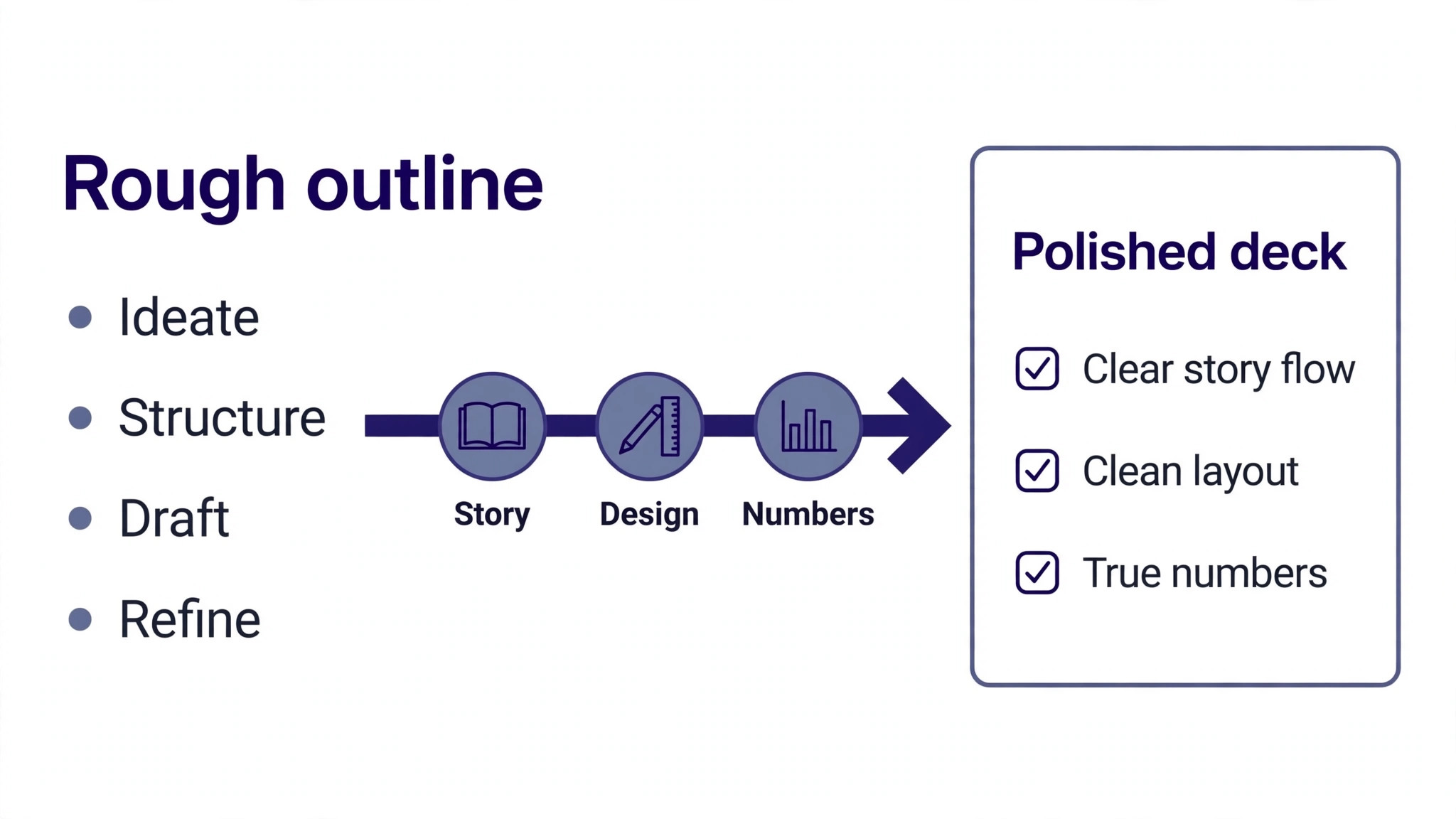
A tool earned a place here only when it does a real fundraising job well in 2026, not when it added an AI label to a template gallery. The top 10 ai tools for pitch decks were judged on five things that decide whether a founder keeps using a tool after the first raise: story quality, design, how fast a deck can be built, sharing and tracking, and the true cost once seats and exports are counted.
Story quality came first, because a beautiful deck with a weak story still fails. Design came second, since a deck that looks amateur undermines the numbers it carries. Build speed came third, because a deck that takes a week to make is a deck that misses the meeting. Fourth was sharing and tracking, and fifth was the catch, from watermarks on free plans to export limits that only appear at download time.
| Check before you buy | What to ask | Why it matters |
|---|---|---|
| Published price | Is the rate on the pricing page | A hidden price is a hidden bill |
| Free plan limits | Watermarks, exports or slide caps | A capped free plan cannot ship a real deck |
| Templates | Does it have investor deck layouts | A blank page costs a day of design |
| Sharing | Link, PDF or tracked page | A deck nobody can open is not a deck |
| Trial access | Can you test it on your real story | A demo is not a trial |
| Contract terms | Monthly or annual, and what year two costs | Annual billing locks the price but not the need |
Tool by Tool
1. Beautiful.ai
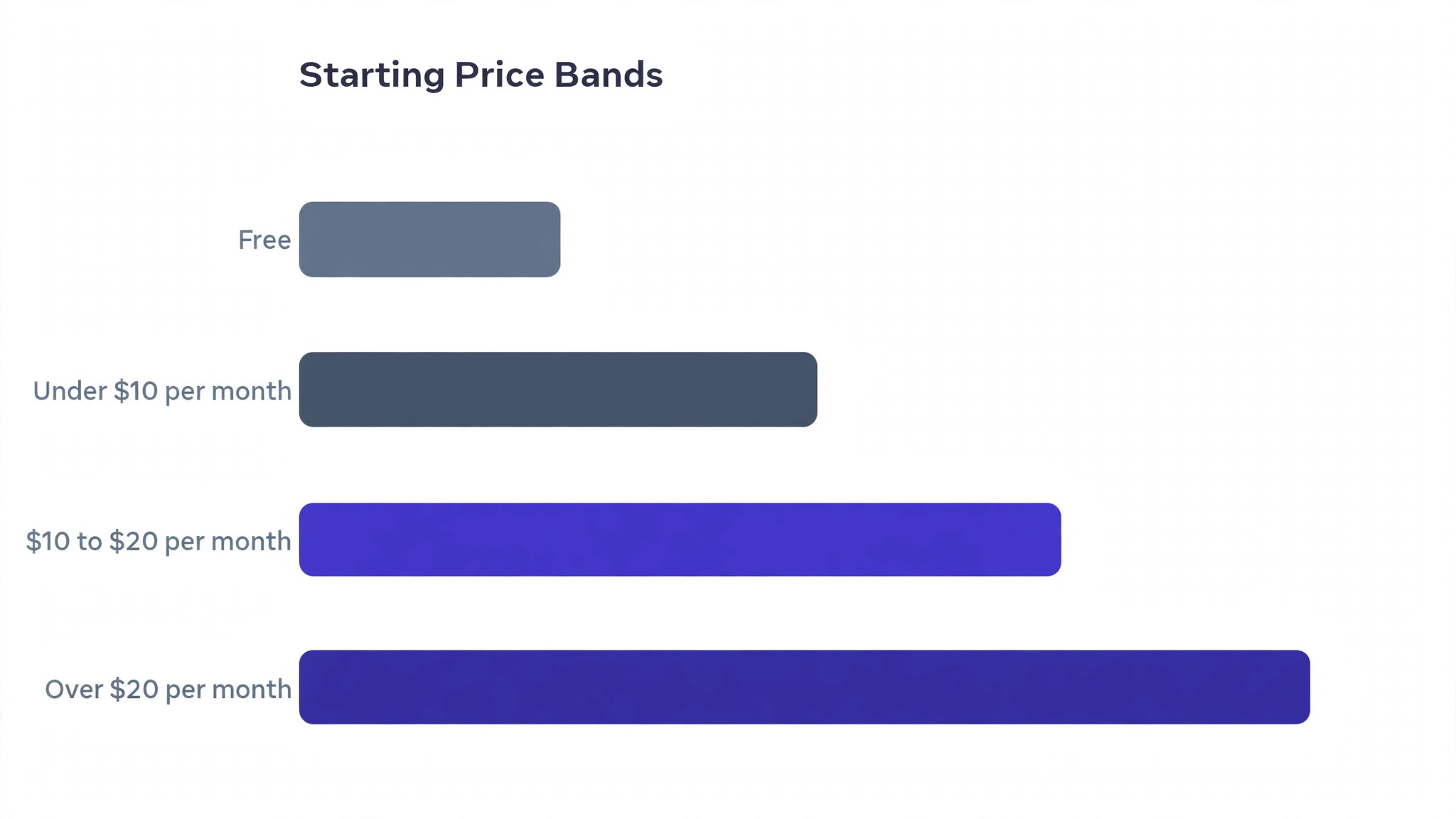
Starting price From 12 dollars a month. Best for AI-designed decks from a brief. Watch out Less control over fine layout details.
Beautiful.ai designs the deck for you: write the points, and its AI picks the layout, the colours and the charts, keeping every slide on-brand automatically. The DesignerBot builds a first version from a short brief, and the team can edit the story while the design updates itself around the text.
Pricing starts at 12 dollars a month for the Pro plan, with team plans higher. It is the best pick here for a founder who wants a good-looking deck without hiring a designer. The trade-off is control: fine layout tweaks are harder than in PowerPoint, so a founder who wants pixel control should look elsewhere.
The first week with Beautiful.ai is the real test. Find out how long setup takes, who steps in when the first pitch deck output needs fixing, and what the team does while the tool learns its settings. Weeks of setup on a pitch deck tool cost more in lost time than the subscription itself, so ask for the week-one plan in writing first.
2. Gamma
Starting price Free tier available, then Plus from 8 dollars per user a month. Best for Fast decks from a prompt. Watch out AI output needs editing for investor-grade polish.
Gamma turns one paragraph into a full deck: type the idea, and it generates the outline, the slides and the images in minutes. The cards-based format reflows content automatically, so a founder can paste a plan and get a presentable deck before the meeting, then refine the story slide by slide.
The free tier covers a limited number of AI generations, and Plus starts at 8 dollars per user a month. It is the fastest tool on this list, and the best for a first draft. For an investor-ready deck, the AI output still needs a careful edit, especially on the financial slides.
Most pitch deck buyers underrate support, yet the first problem usually lands in week one. Check whether Gamma offers live help, how fast it answers, and whether the help covers your actual workflow. Strong support drives adoption of a pitch deck tool; slow support leads to abandonment while the billing continues.
3. Pitch
Starting price Paid plans start at 20 dollars per user each month. Best for Team decks with live data. Watch out Priced per seat, costs rise with the team.
Pitch is built for teams that build decks together: real-time collaboration, shared templates, live data from integrations, and analytics that show who opened the deck and which slide they read. Its AI drafts slide content and suggests layouts, while the team edits in the same file without version chaos.
Pricing starts at 20 dollars per user a month for the Pro plan. It is the strongest collaboration tool here, and the analytics are the edge for a founder tracking investor interest. A solo founder will get the same design quality cheaper from Beautiful.ai or Gamma.
Before you commit to Pitch, check the export and the exit. Check what happens to your pitch deck work, data and templates if you leave, and which format they come out in. When a pitch deck tool traps your work inside its own system, leaving costs far more than joining, and that price deserves a note.
4. Canva
Starting price A free tier is offered, then Pro starts at 15 dollars a month. Best for Designing a deck fast. Watch out The AI features sit behind the Pro plan.
Canva is the fastest way to a good-looking pitch deck for a founder with no design skill. Its template library covers investor decks, one-pagers and pitch outlines, and its AI tools write the copy, remove backgrounds and resize the deck for every format. A founder can go from a blank page to a shareable deck in an afternoon.
The free tier covers basic templates, while Pro at 15 dollars a month unlocks the brand kit, the AI features and the full template library. For a small business or a solo founder, it is the cheapest credible start here, and the deck exports as a PDF or a shareable link.
For a team weighing Canva against the next tool on this list, the test is a real week of work. Test it on your most common pitch-deck work, tally the minutes saved and the fixes each result needs, then set that against the price. Save an hour a week on pitch deck jobs and the tool pays for itself at almost any price, but constant correction never pays.
5. Tome
Starting price Free tier available, then from 16 dollars per user a month. Best for Story-first narrative decks. Watch out Narrative format, not classic slides.
Tome builds narrative decks where the story leads and the slides follow. Its AI writes the storyline from a prompt, adds live embeds from the web, and generates images to match the narrative. For a founder pitching a vision rather than a spreadsheet, the story-first format reads more like a conversation than a lecture.
The free tier covers a few AI generations, and paid plans start at 16 dollars per user a month. The format is not classic slides, so a traditional investor who expects a standard deck may find it unfamiliar. For a seed-stage story pitch, the narrative style is a real advantage.
The fit with the systems you already run decides whether Tome earns its place. Look over the integrations before the trial, then test the single pitch deck connection you actually need on day one. If the pitch deck tool cannot talk to your core system, every job needs double entry, and that eats the time it was meant to save.
6. Slidebean
Starting price From 60 dollars a month. Best for Investor-ready financial slides. Watch out The highest starting price among the design tools.
Slidebean is built for fundraising: it designs the deck, models the financials and even offers pitch coaching from its team. Its AI builds the deck from a short questionnaire, and the financial slides follow the format investors expect, with the metrics and the charts in the right places.
Pricing starts at 60 dollars a month, which is more than the other design tools here. It earns that price for a founder in an active raise who needs the financial slides right. A founder at the idea stage should start with Gamma or Canva and move to Slidebean when the round begins.
Read every tier on the pricing page before you pick Slidebean, because the feature you need often sits one tier above the cheapest plan. Choose the tier that handles the daily pitch deck, rather than the one with the lowest price. Missing a single core pitch deck feature costs more in workarounds than the upgrade itself.
7. Decktopus
Starting price Paid plans start from 10 dollars a month. Best for Quick decks from an outline. Watch out Templates are simpler than Canva or Beautiful.ai.
Decktopus turns a few bullet points into a finished deck: pick a template, write the outline, and its AI fills in the slides, the images and the layout. The whole process takes minutes, and the result is clean enough to send to an early-stage investor or to use in a team meeting.
The free tier covers a basic deck, and paid plans start at 10 dollars a month. The templates are simpler than Canva or Beautiful.ai, so a founder who needs a distinctive design should look elsewhere. For speed and simplicity, it is one of the best tools on this list.
The first week with Decktopus is the real test. Find out how long setup takes, who steps in when the first pitch deck output needs fixing, and what the team does while the tool learns its settings. Weeks of setup on a pitch deck tool cost more in lost time than the subscription itself, so ask for the week-one plan in writing first.
8. Prezi
Starting price From 7 dollars a month. Best for Zooming story decks. Watch out The zooming style does not suit every investor.
Prezi presents on a single canvas that zooms from one idea to the next, so the pitch feels like a journey rather than a stack of slides. Its AI helps build the canvas from an outline, and the video feature lets a founder record the pitch alongside the deck for remote investors.
Pricing starts at 7 dollars a month for the Standard plan. The zooming style is memorable, but it does not suit every investor, and some prefer a classic deck they can skim. For a founder pitching in person, the movement keeps the room’s attention in a way static slides do not.
Most pitch deck buyers underrate support, yet the first problem usually lands in week one. Check whether Prezi offers live help, how fast it answers, and whether the help covers your actual workflow. Strong support drives adoption of a pitch deck tool; slow support leads to abandonment while the billing continues.
9. Microsoft PowerPoint
Starting price From 6.99 dollars a month. Best for Classic decks in Office. Watch out AI Copilot costs extra on top of the subscription.
Microsoft PowerPoint is the standard every investor can open, and its Designer feature suggests layouts while Copilot drafts slide content from a prompt. A founder who builds the deck in PowerPoint knows it will open cleanly on any machine, in any meeting room, without a compatibility worry.
Microsoft 365 Personal starts at 6.99 dollars a month, with Copilot charged on top for the AI features. It is the safest format choice on this list, and the one most investors expect. For a founder who wants AI design without leaving Office, it is the natural pick.
Before you commit to Microsoft PowerPoint, check the export and the exit. Check what happens to your pitch deck work, data and templates if you leave, and which format they come out in. When a pitch deck tool traps your work inside its own system, leaving costs far more than joining, and that price deserves a note.
10. Google Slides
Starting price Free with a Google account. Best for Free decks in the browser. Watch out No built-in AI deck generation.
Google Slides is free, runs in the browser and lets a team edit the same deck at once without sending files around. Its AI help is thinner than the dedicated tools here, but the sharing is the simplest on the list: one link, and the investor always sees the latest version.
There is no price, which makes it the baseline every other tool must beat. It does not generate a deck from a prompt, so a founder must build the story slide by slide. For a team on a zero budget, or a deck that changes daily, it is the most practical pick here.
For a team weighing Google Slides against the next tool on this list, the test is a real week of work. Test it on your most common pitch-deck work, tally the minutes saved and the fixes each result needs, then set that against the price. Save an hour a week on pitch deck jobs and the tool pays for itself at almost any price, but constant correction never pays.
The Comparison Table, Explained
The table below puts the top 10 ai tools for pitch decks side by side on price, best job and free plan, so you can compare the AI-first tools against the classic ones at a glance. Read it by job first, because a cheap tool that cannot tell your story costs more in lost meetings than a pricier one that can.
The fastest way through the table is by stage. Idea-stage founders should look at the fast AI tools, and founders in an active raise should look at Slidebean and Pitch. Start with what each tool is best at for pitch-deck work, then weigh the price, and the decision normally takes under a minute.
| Tool | Starting price | Best for | Free plan |
|---|---|---|---|
| Beautiful.ai | From 12 dollars a month | AI-designed decks from a brief | Trial |
| Gamma | Free tier, then Plus from 8 dollars per user a month | Fast decks from a prompt | Yes |
| Pitch | From 20 dollars per user a month | Team decks with live data | Trial |
| Canva | Free tier, then Pro from 15 dollars a month | Designing a deck fast | Yes |
| Tome | Free tier, then from 16 dollars per user a month | Story-first narrative decks | Yes |
| Slidebean | From 60 dollars a month | Investor-ready financial slides | Trial |
| Decktopus | Free tier, then from 10 dollars a month | Quick decks from an outline | Yes |
| Prezi | From 7 dollars a month | Zooming story decks | Trial |
| Microsoft PowerPoint | From 6.99 dollars a month | Classic decks in Office | Trial |
| Google Slides | Free with a Google account | Free decks in the browser | Yes |
How to Choose Without Overbuying
Start from the reader of the pitch deck, not from the vendor homepage. Founders pitching investors should buy the tool that makes the financial slides right first. Founders pitching a vision should buy story first. The tool that gets the deck read pays for itself first, and the rest can wait until the next round.
Add up the full pitch-deck work stack instead of the headline price. Below, the table prices year one for a solo founder and a small team on the usual pitch deck combinations, at published starting prices. Ask for per-seat charges in writing before signing a pitch deck tool, since those lines surprise teams, and annual billing usually cuts about twenty percent off the monthly rate.
| Stack | Monthly cost | What it covers |
|---|---|---|
| Google Slides alone | Lowest starting price | Free decks plus free sharing |
| Gamma plus Canva | Mid-range | Fast AI draft plus polished design |
| Beautiful.ai plus Pitch | Mid-range | AI design plus team collaboration |
| Slidebean plus Pitch | Check the pricing page | Fundraising deck plus investor tracking |
Best Pick by Job
Pick from the table below by the fundraising job you do most each week. The top 10 ai tools for pitch decks are not ranked by features alone; they are ranked by which job each one actually finishes, so the pick that matches your week is the pick that will still be in your stack a year from now.
| Your job | Best pick | Why it wins |
|---|---|---|
| AI-designed decks from a brief | Beautiful.ai | Slides that design themselves |
| Fast decks from a prompt | Gamma | A deck in minutes from one paragraph |
| Team decks with live data | Pitch | Collaboration plus analytics on opens |
| Designing a deck fast | Canva | Templates plus AI design in minutes |
| Story-first narrative decks | Tome | AI storytelling with live embeds |
| Investor-ready financial slides | Slidebean | Built for fundraising rounds |
| Quick decks from an outline | Decktopus | A deck from a few bullet points |
| Zooming story decks | Prezi | A canvas that moves through the story |
| Classic decks in Office | Microsoft PowerPoint | The standard every investor can open |
| Free decks in the browser | Google Slides | Free, simple and shareable anywhere |
Testing Before You Pay
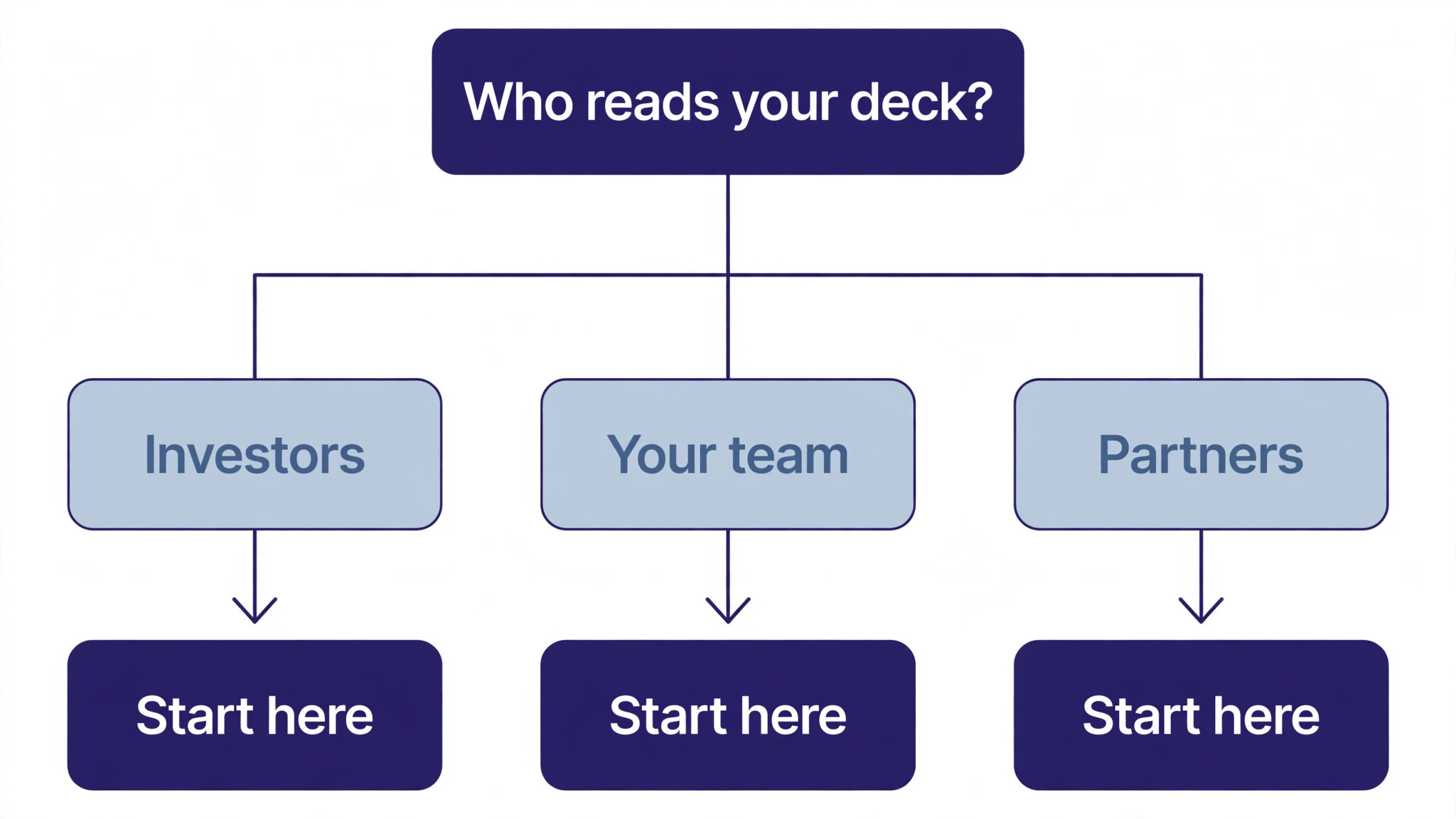
A trial tells a founder more in five working days than a month of reading reviews, but only when the trial runs on a real story. Pick the two tools that look closest after the shortlist, build the same deck in both, and score them on build time, how the story reads to a colleague and whether an investor can follow the numbers. Never trial on a demo story, because a demo hides the rough edges real numbers expose.
| Day | What to test | What good looks like |
|---|---|---|
| Day 1 | Setup and first real deck | Working in under an hour, no IT ticket |
| Day 2 | The hardest slide you build | Output needs light edits, not a rebuild |
| Day 3 | Share it with a colleague | They follow the story without asking for help |
| Day 4 | An investor tries it cold | They read it without asking for the PDF |
| Day 5 | Count the time and the cost | Hours saved beat the monthly price |
Keep a simple log through the trial week, noting the daily task, the minutes it took, the edits made and whether the deck could go out unchecked. When the week ends, the pitch-deck work log is the decision. Your own pitch-deck work numbers decide the winner, even if it was not the favourite, because the log tracks your work and not the demo.
Buying Mistakes to Skip
Mistake one is a deck with stale numbers. An investor who spots a wrong revenue figure will doubt every other slide, and the correction costs more than the deck did. Keep the numbers in one place and update them the day they change. Mistake two is rolling out to the whole team before one person has built the deck for a week, since a favourite of one and a burden to five is a cost, not a system.
The third mistake is skipping the share test on the finished deck. Ask whether the deck opens cleanly on a phone and in an email before the first real send, because a deck that needs a download to read gets skipped. The fourth mistake is judging the tool on its best day, so trial it on the hardest slide itself and let the hard slide decide.
Your Questions, Answered
Which tool gives a founder the cheapest good start
Google Slides is free and is the cheapest credible start on this list, with Gamma close behind thanks to its free tier and Plus at 8 dollars per user a month. Start with the job you do most each week, trial the free tier on your real story, and add a paid tool only when the free one cannot do a job you are paid to do. That is the cheapest route to a deck that gets read.
How long should a pitch deck be
Ten to twelve slides is the standard: problem, solution, market, product, traction, business model, competition, team, financials and the ask. A deck longer than fifteen slides rarely gets read to the end, so cut ruthlessly and put the detail in the appendix. Use the AI to draft the outline, then check every number yourself, because a wrong number in a deck gets remembered.
For a seed-stage founder, which pitch deck tool wins
Gamma is the pick for a seed-stage founder, with a free tier and Plus at 8 dollars per user a month, while Beautiful.ai at 12 dollars a month is the strongest option for a polished design. The top 10 ai tools for pitch decks were ranked by the job each one finishes, not by the size of the feature list, so buy the tool that fixes your slowest weekly job first.
How much will a small team spend on deck tools in year one
Plan on zero to 25 dollars a month in year one for a tool such as Gamma, rising to 60 to 100 dollars a month with a fundraising tool such as Slidebean added. Per-seat pricing means multiplying the headline price by headcount, and those pitch-deck work charges surprise buyers. Price the whole stack and trial each tool on your real story before signing an annual contract.
Do these tools offer a trial before payment
Most tools on this list offer a free plan or a free trial, and Gamma, Canva and Beautiful.ai all let founders test on a real story before paying. Use the trial on your own deck, not on a demo, and count the build time and the edits each slide needs. A trial that covers a real week tells a founder more than a sales call, and a tool that will not trial is one to be careful about.
The Verdict, in Brief
If you buy one tool this quarter, pick Gamma for speed or Beautiful.ai for polish, and add Slidebean when the raise begins. Gamma is the easiest place to start with a free tier and Plus at 8 dollars per user a month, and Beautiful.ai is the strongest design buy at 12 dollars a month. The top 10 ai tools for pitch decks earn their keep by turning ninety seconds of an investor’s attention into a meeting.
Whatever you pick, trial it on your real story, count the hours the deck takes and the edits each slide needs, and keep a human eye on every number before it goes out. Every deck tool here can carry a pitch to investors. The difference is whether the tool matches the reader you actually pitch, and whether you measure the return in meetings booked rather than in features used.