A food truck that takes 200,000 dollars in card payments in a year hands roughly 5,200 dollars to its payment processor on a 2.6 percent rate, before any monthly software fee or hardware cost. Move that same truck to a 2.1 percent rate and the yearly processing bill drops to about 4,200 dollars, a difference of 1,000 dollars for selling the same food to the same customers. That gap is why food truck pos pricing deserves a closer look than the headline rate on a provider homepage.
The cheapest plan is rarely the cheapest year, because monthly fees, per transaction charges, hardware, offline mode and contract terms all pull the total in different directions. This guide breaks down every cost a food truck owner pays, compares five providers on real 2026 numbers, and shows the monthly total at three sales levels, so you can pick the setup that costs least for your volume.
What Food Truck POS Pricing Actually Includes
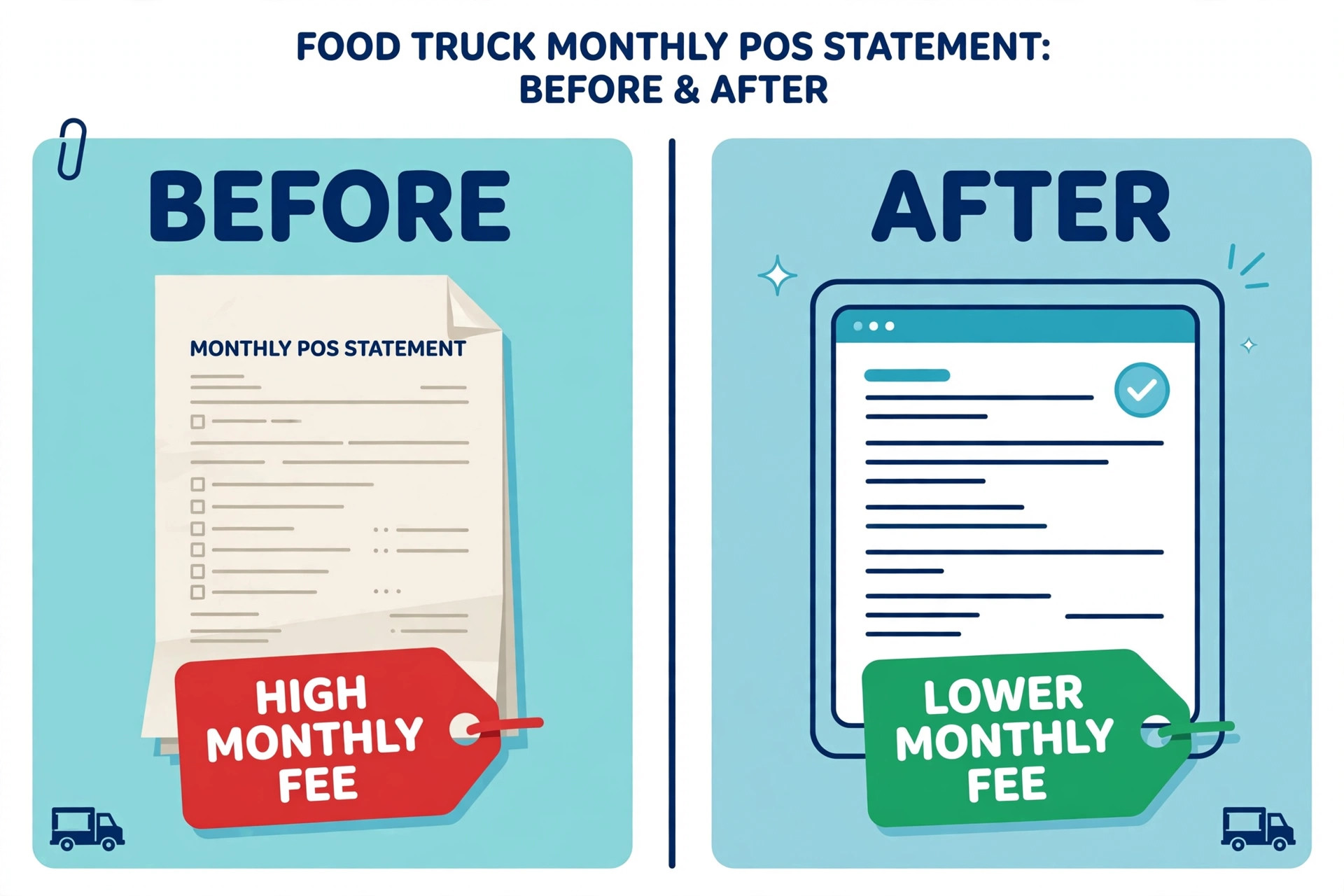
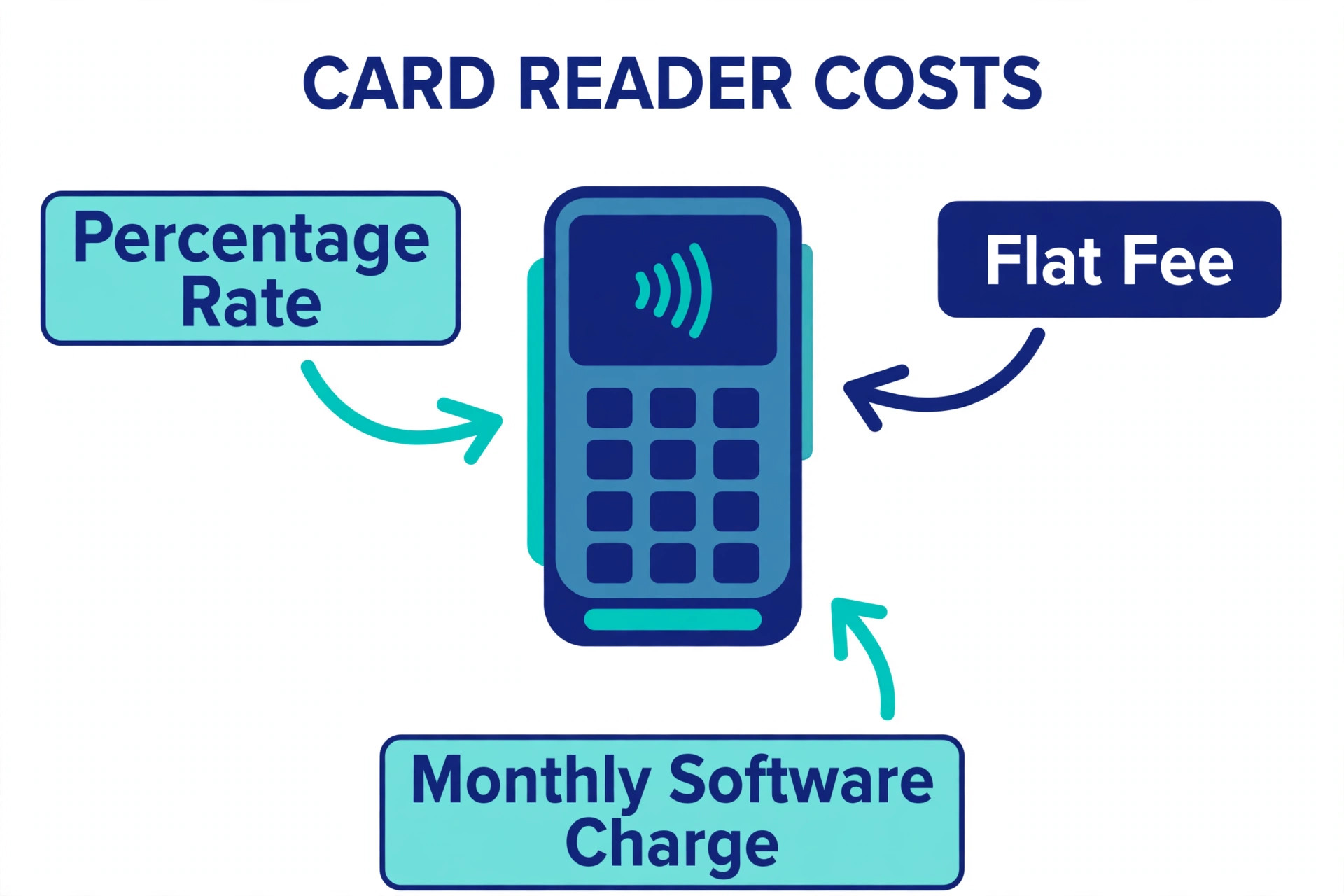
A point of sale bill has four parts, and most owners only watch one of them. The first part is the monthly software fee, which runs from zero on a free plan to about 150 dollars a month on a full restaurant plan. The second part is the processing fee on every card sale, a percentage plus a small flat charge per transaction, and this is the largest cost for almost every truck. The third part is hardware, the card reader, tablet or terminal you buy once or finance monthly. The fourth part is the add ons, online ordering, kitchen display screens, loyalty tools and accounting connections, which are often priced separately.
Processing is where providers differ most, and the model matters as much as the number. Flat rate pricing charges the same percentage on every card, whether the customer pays with a basic debit card or a premium travel rewards card. Interchange plus pricing charges the real cost set by the card networks plus a fixed markup, so cheap debit cards cost less and expensive rewards cards cost more. A truck with a low average ticket feels the per transaction flat charge more, because 10 cents on a 6 dollar coffee is a bigger share than 10 cents on a 22 dollar lunch combo.
The monthly fee is a trade, not a penalty. Paying 60 dollars a month usually buys a lower processing rate, and the trade pays off once monthly card sales pass a certain point. A truck doing 8,000 dollars a month in card sales saves about 32 dollars a month moving from 2.6 percent to 2.2 percent, which does not cover a 60 dollar fee. The same move on 30,000 dollars a month saves about 120 dollars, which covers the fee twice over. That break even point is the single most useful number in this guide, and the tables below let you find yours.
Food Truck POS Pricing Compared
The table below puts the five providers side by side on the numbers that decide the yearly bill. Rates are in person card present rates from published 2026 pricing pages and independent 2026 reviews, and they move, so confirm the current rate on the provider page before you sign anything.
| Provider | Monthly software | In person rate | Hardware from |
|---|---|---|---|
| Square | 0 dollars free plan, 60 dollars Plus | 2.6 percent plus 10 cents | 59 dollars reader |
| Toast | 0 dollars Starter, about 69 dollars Core | 2.99 percent plus 15 cents Starter, 2.49 percent plus 15 cents paid | 799 dollars terminal |
| Clover | From 14.95 dollars | 2.3 percent plus 10 cents | 49 dollars Go reader |
| SpotOn | 0 dollars free plan | 2.79 percent plus 15 cents free, 1.99 percent plus 25 cents paid | Quote based |
| Avocado | 0 dollars base, 29 dollars premium | 2.1 percent plus 10 cents | 149 dollars reader |
Read the table from right to left if your truck works festivals and dead zones. Offline mode decides whether a sale completes when the signal drops, and every provider here handles it differently. Square queues magstripe payments offline with a 24 hour reprocessing window. Clover and Avocado queue and sync automatically with no staff toggle. Toast queues orders and payments and syncs on reconnect. A provider with a slightly higher rate can still be the cheaper choice if its offline mode saves two lost sales at every event.
Five Food Truck POS Providers, Compared in Detail
The five providers below cover the realistic choices for a truck in 2026. Each one suits a different volume and style of service, and the right pick depends on how much you sell, where you sell it, and how much kitchen complexity sits behind the window.
1. Square
Square is the simplest start in food truck pos pricing, and the free plan is genuinely usable rather than a demo. The software costs nothing each month, the card reader costs 59 dollars, and in person payments cost 2.6 percent plus 10 cents on the free plan.
Online orders cost more, with the rate rising to 2.9 percent plus 30 cents, and early 2026 reports put the free plan online rate at 3.3 percent plus 30 cents, so preorders deserve a careful look at the checkout page before you enable them. Paid plans run 60 dollars a month for Plus and 153 dollars a month for Premium, and they trim the in person rate to 2.5 percent and 2.4 percent plus 15 cents.
What Square does best for a truck is remove friction. There is no contract, no monthly fee to pay in a slow winter month, and the hardware works on a phone or tablet over a cellular connection. The free plan includes unlimited devices, basic reporting and online ordering, which covers a new truck completely. The trade off is the rate itself. At 2.6 percent plus 10 cents, Square costs more per sale than Clover or Avocado, and that gap grows with volume, so a busy truck should run the monthly math in the section below before settling.
2. Toast
Toast is the restaurant specialist of the group, and it shows in the feature list. The Starter plan costs nothing a month and charges 2.99 percent plus 15 cents per in person transaction, which is the highest starter rate here, and the free hardware that comes with it is paid for through that higher rate. The Core plan costs about 69 dollars a month and drops processing to about 2.49 percent plus 15 cents, with custom rates available for high volume operators. Toast also asks for a longer commitment than the others, with the Starter plan tied to a two year term in several 2026 reviews.
A truck benefits from Toast when the kitchen is the bottleneck. Kitchen display screens, coursing, auto 86ing of sold out items and detailed reporting are built in rather than bolted on, and the platform scales cleanly if the truck grows into a second unit or a fixed location. The cost is real, though. Terminals run from about 799 dollars to more than 1,500 dollars, and online ordering adds about 75 dollars a month unless it is included in the plan. Toast fits a high volume truck with a full menu, and it is the wrong pick for a part time truck that sells at one weekly market.
3. Clover
Clover posts the lowest baseline in person rate of the three big names, at 2.3 percent plus 10 cents through Fiserv, and that rate is the main reason trucks choose it. The software plans run from 14.95 dollars a month for the Starter plan to 54.95 dollars for Counter Service and 84.95 dollars for the full Dining plan, so a truck can buy exactly the level it needs. Hardware spans the 49 dollar Clover Go reader up to the 599 to 749 dollar Clover Flex handheld, with the Flex also available on a monthly finance plan of about 40 dollars.
The complication with Clover is that it is sold through banks and resellers as well as directly, and the rate and contract terms vary by reseller. Two trucks can buy the same Clover hardware and pay different processing rates, which is why a written quote matters more here than with Square or Toast. On the truck itself, Clover earns its keep with automatic offline queuing and reprocessing, no staff toggle needed, which is exactly what you want when the truck parks somewhere the signal is weak. For a truck in a weak signal area that values the lowest rate, Clover is hard to beat.
4. SpotOn
SpotOn runs two very different plans, and the gap between them is the widest in this guide. The free plan charges 2.79 percent plus 15 cents per in person transaction with no monthly fee, which is expensive for a busy truck. The paid plan drops the rate to 1.99 percent plus 25 cents, the lowest percentage rate here, but raises the flat charge to 25 cents, which hurts trucks with small average tickets. Hardware pricing is quote based, so you will talk to sales before you know the full cost.
The paid plan makes sense for one specific truck, the one with a high average ticket and steady volume. A truck selling 18 dollar meals at a busy lunch spot gains more from the 1.99 percent rate than it loses on the 25 cent flat charge, and the saving grows with every sale. A truck selling 7 dollar snacks loses the advantage, because 25 cents on a 7 dollar sale adds more than 3.5 percent before the percentage even applies. Ask SpotOn for the paid plan price in writing, then run your own average ticket through the math before you commit.
5. Avocado
Avocado is the newest name here and the most transparent on price. The base plan costs nothing a month, premium features cost 29 dollars a month, and the in person rate is 2.1 percent plus 10 cents with no reseller variance, which is the lowest published rate in this guide. The Avocado Reader costs 149 dollars and the Hub runs 399 to 599 dollars. There is no contract and no reseller layer, so the number on the pricing page is the number you pay.
Offline mode is Avocado’s other selling point, with automatic sync on reconnect and strong reliability reports from 2026 operator reviews. The trade off is ecosystem depth. Avocado does not match Square or Toast on third party integrations, add ons and marketplace apps, so a truck that wants a specific loyalty tool or accounting connection should check compatibility first. For an independent truck that wants transparent pricing and strong offline mode above all else, Avocado is the best value in this guide.
Hardware Costs a Food Truck Owner Should Budget
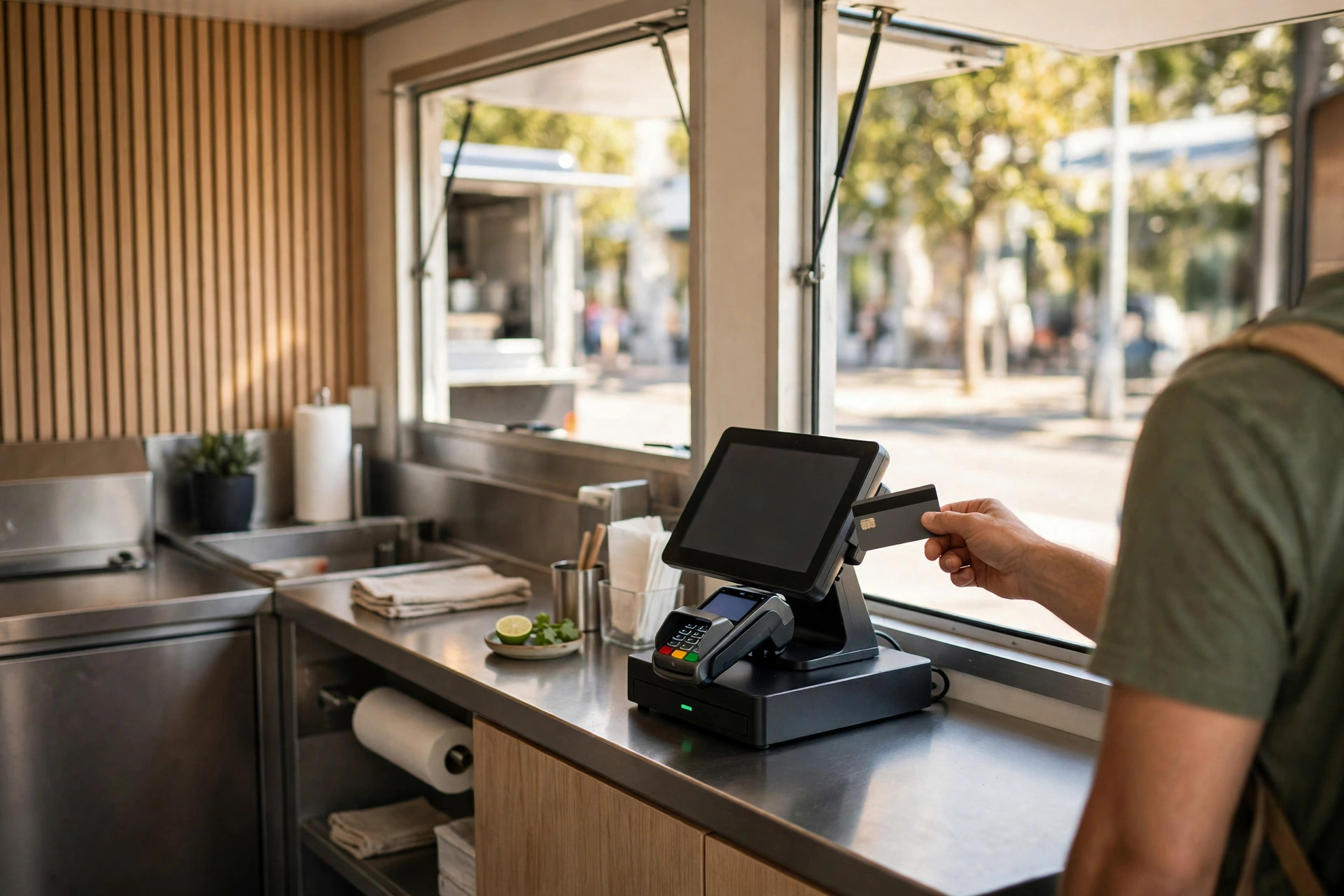
Hardware is the one time cost that surprises new owners, because the range runs from 49 dollars to more than 1,500 dollars. A reader that plugs into a phone is enough for a truck starting out, and Square’s 59 dollar reader or Clover Go at 49 dollars both cover the first season. A dedicated terminal with a built in printer and a kitchen display screen is a different purchase, and Toast terminals start near 799 dollars before add ons. Finance plans spread the cost, with Clover Flex at about 40 dollars a month, but financing a terminal for two years costs more than buying it outright.
Plan for more than the terminal itself. A truck needs a cash drawer, a receipt printer, a tablet stand that survives vibration and heat, and a spare reader for the day the first one fails or walks away. Budget 150 to 300 dollars for those extras on top of the main device. Also check the cellular plan, because a POS that depends on a phone hotspot still needs data, and a dedicated tablet line costs about 10 to 20 dollars a month on most carriers. Hardware bought once and used for three years costs little per month, but hardware bought twice because the first device could not survive the truck costs double.
What a Food Truck Pays Each Month at Three Sales Levels
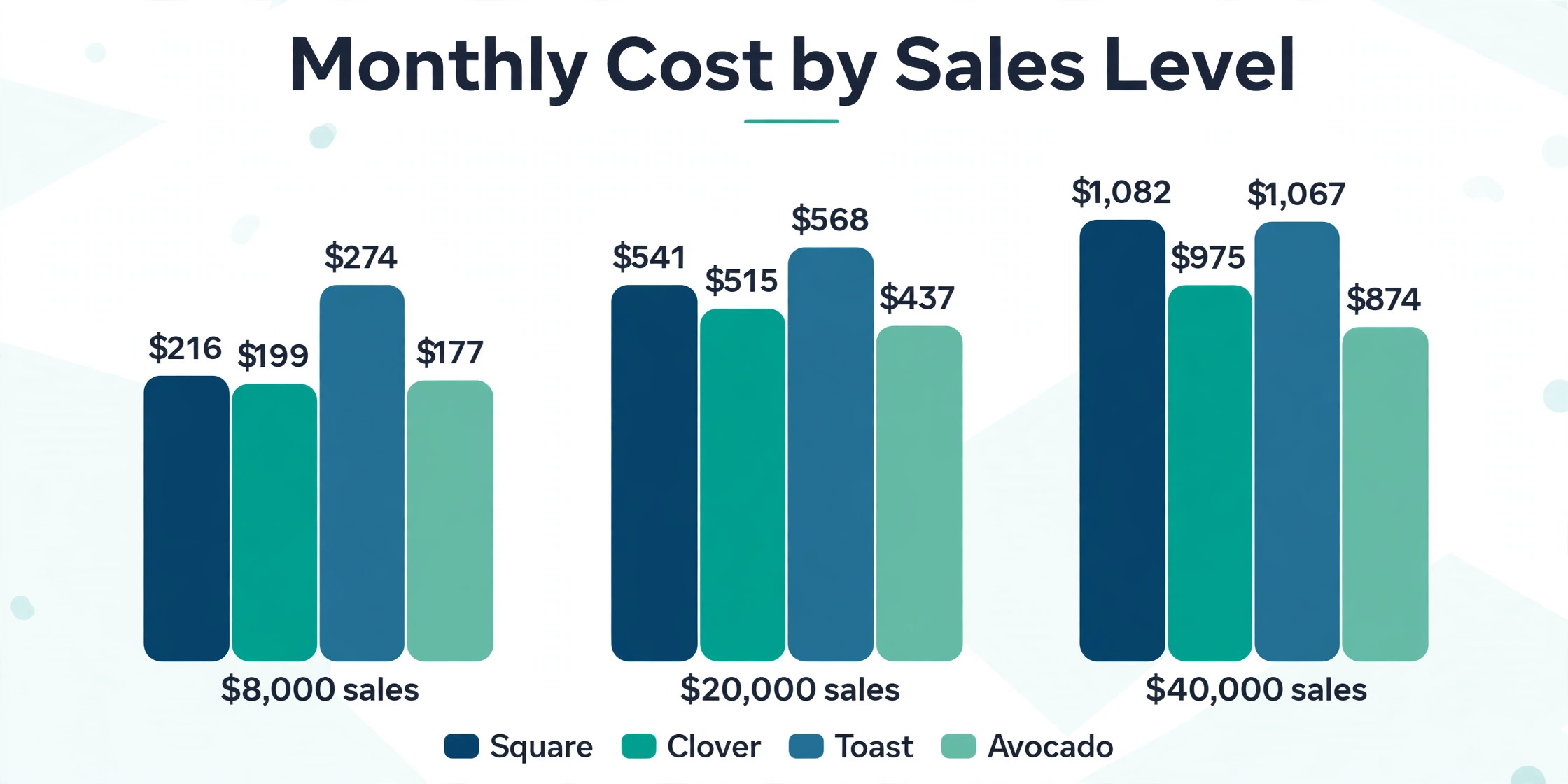
The table below shows the monthly cost for a truck at three card sales levels, using a 12 dollar average ticket and the headline in person rate for each provider, with the cheapest monthly plan that fits a truck. Hardware is excluded because it is a one time cost, and online orders are excluded because they carry a higher rate on every platform.
| Monthly card sales | Square free | Clover Counter | Toast Core | Avocado base |
|---|---|---|---|---|
| 8,000 dollars | 216 dollars | 199 dollars | 274 dollars | 177 dollars |
| 20,000 dollars | 541 dollars | 515 dollars | 568 dollars | 437 dollars |
| 40,000 dollars | 1,082 dollars | 975 dollars | 1,067 dollars | 874 dollars |
The pattern is consistent at every level. Avocado costs least because its 2.1 percent rate beats every rival by at least 0.2 points and it charges no monthly fee on the base plan. Clover runs second, helped by the low 2.3 percent rate even after the 54.95 dollar Counter Service plan. Square sits in the middle, and Toast Core costs most at low volume because the 69 dollar monthly fee outweighs the rate saving until sales rise.
At 40,000 dollars a month, the gap between Avocado and Square is about 208 dollars a month, or nearly 2,500 dollars a year. This monthly total is the part of food truck pos pricing most owners skip, and it is the part that decides the yearly bill, because a small rate gap turns into thousands of dollars once a full season of sales is counted.
Your own numbers will differ if your average ticket is far from 12 dollars. A truck with a 7 dollar average ticket pays proportionally more in flat per transaction charges, so the 10 cent providers beat the 15 and 25 cent providers by a wider margin. A truck with a 25 dollar average ticket feels the flat charge less, so the percentage rate decides almost everything. Run the table again with your real average ticket and your real monthly card sales before you choose, because a provider that wins at one ticket size can lose at another.
Hidden Fees That Change the Math
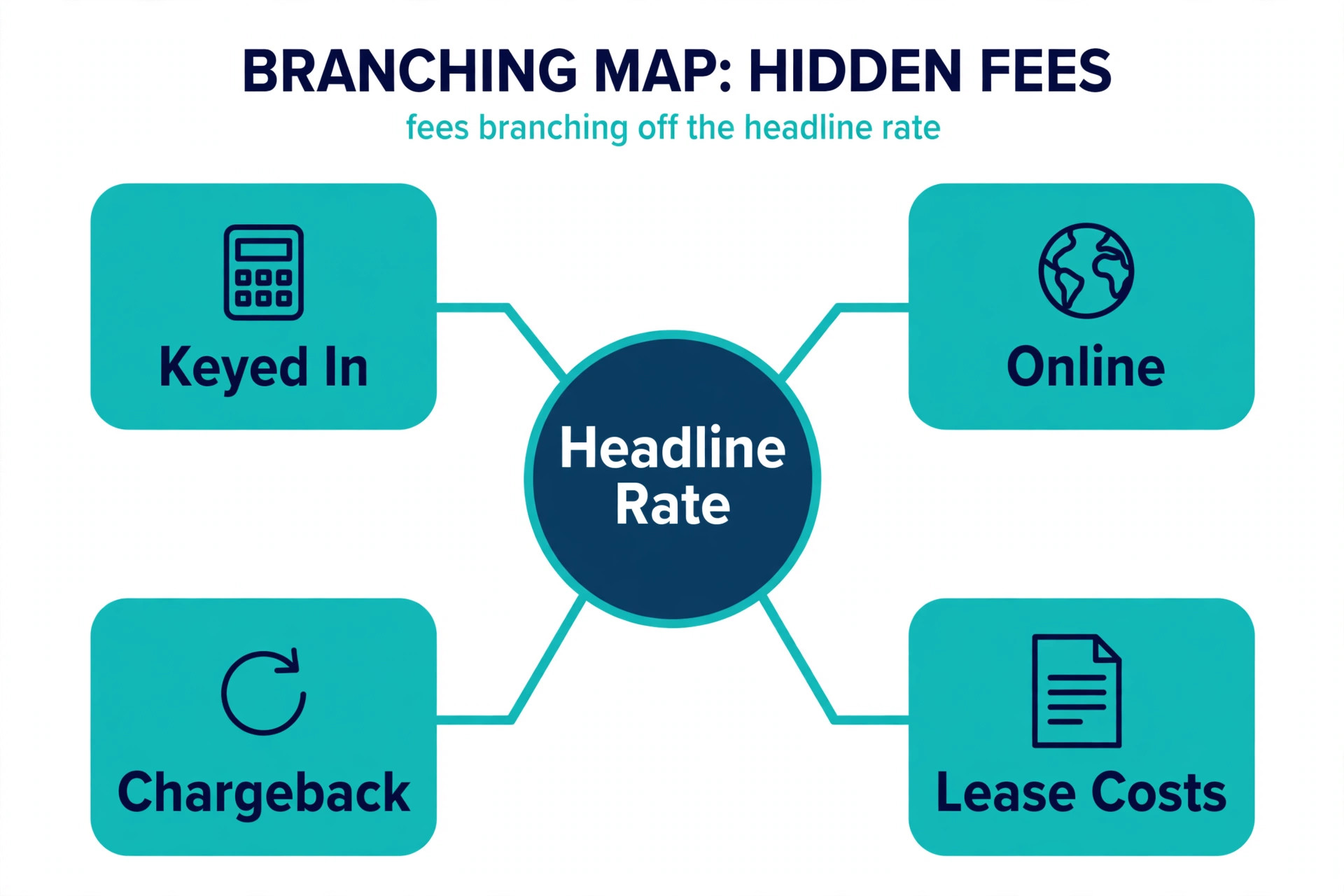
The headline rate is only the start, and the fees that follow are where trucks lose money quietly. Keyed in transactions, where you type a card number because the chip failed or the customer phoned in an order, cost far more than a tapped card, and online orders carry a higher rate on every provider in this guide. Chargebacks add a fee of 15 to 25 dollars each on top of the refunded sale, and a truck with a disputed catering deposit can lose a week of margin in one dispute. Ask each provider for the keyed in rate, the online rate and the chargeback fee in writing before you sign.
Contracts and cancellation terms are the second hidden cost. Toast Starter ties the free hardware to a two year term, and early cancellation can trigger a fee that wipes out a year of rate savings. Clover hardware bought through a reseller sometimes carries a lease rather than a purchase, and a lease that runs 48 months at 40 dollars a month costs 1,920 dollars for a device that sells for 699 dollars.
PCI compliance fees, monthly minimums and statement fees appear on some reseller contracts and never on a direct Square or Avocado signup. Read the contract for the words lease, minimum, early termination and compliance fee, and walk away from any quote that will not put the full fee list in writing.
A simple way to compare food truck pos pricing without missing these extras is to ask every provider for one number, the total you would pay in a month at your real sales level, with every fee included. Give each provider the same inputs, your monthly card sales, your average ticket, your share of online orders and your expected chargebacks, and ask for the monthly total in writing.
Providers that quote only the headline rate are hiding the rest of the bill, while providers that answer with a full monthly figure are showing you the real cost. Keep the written quotes side by side for a week before you decide, because the cheapest headline rate rarely survives a full comparison, and the provider with the clearest quote is usually the one you can trust with your money.
How to Choose the Right Food Truck POS
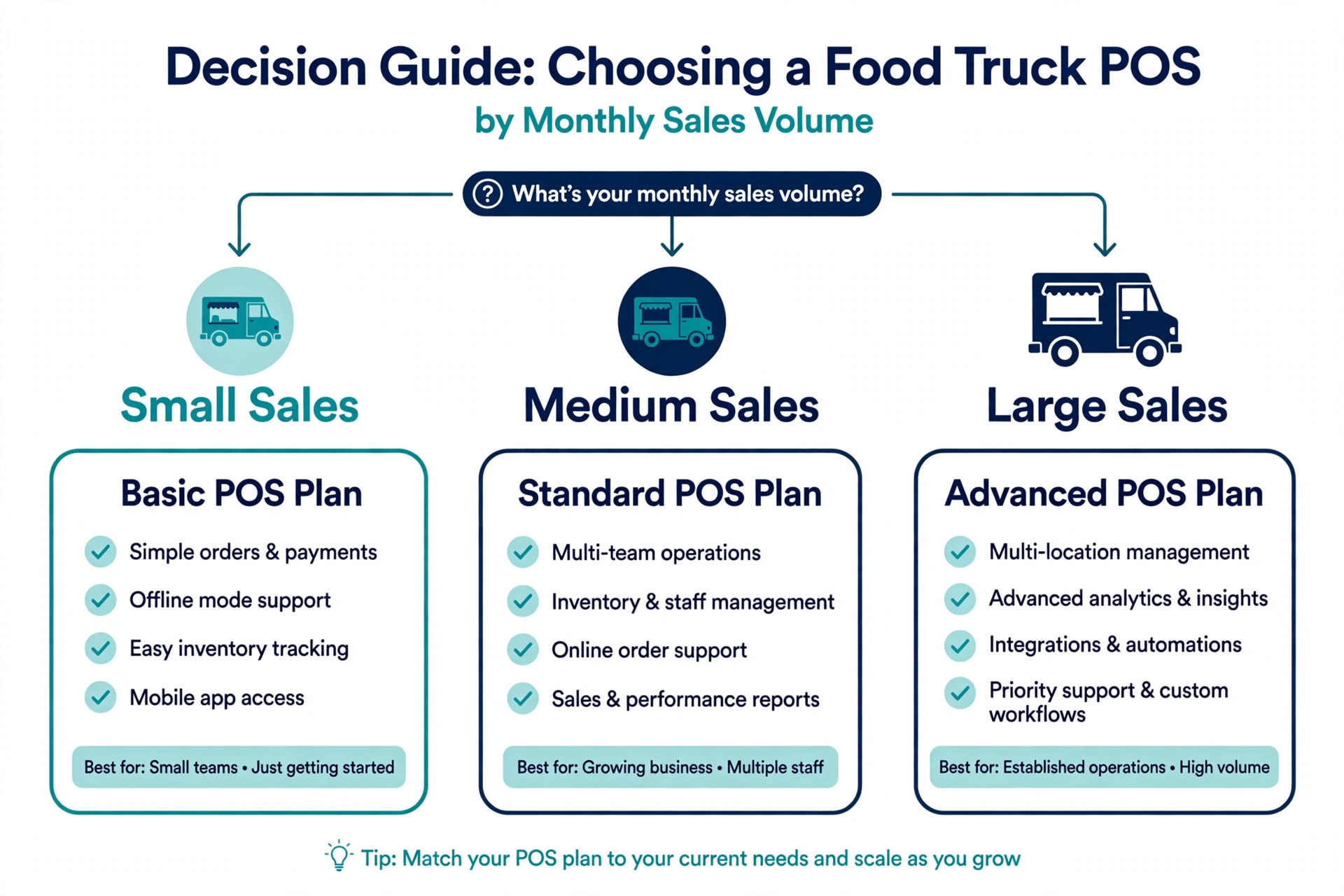
Start with your monthly card sales, because volume decides whether a monthly fee pays for itself. Below about 10,000 dollars a month in card sales, a free plan usually wins, and Square or Avocado base cover a new truck with no monthly commitment. Between 10,000 and 30,000 dollars, compare Clover Counter Service with Avocado premium, because both cut the rate enough to justify their cost. Above 30,000 dollars, negotiate, because Toast and Clover both offer custom rates at volume, and a half point cut on 40,000 dollars a month is worth 200 dollars a month.
Next, test offline mode where you actually sell. Take the reader to your worst location, a festival field or a basement market, switch the phone to airplane mode, and run a test sale. Watch whether the payment queues, whether the customer sees a confirmation, and how long the sync takes when the signal returns. A provider that fails this test will cost you real sales on your busiest days, and no rate saving compensates for a queue of customers who walk away. Then check the menu tools. A truck that changes its menu daily needs fast edits, sold out buttons and modifiers for extras, and Toast and Square handle daily menu changes better than the simpler providers.
Finally, count the integrations you truly need. A truck that only needs payments, a menu and basic reporting can run on any provider here. A truck that wants online ordering, loyalty, catering invoices and accounting sync needs to check each integration exists before buying hardware, because switching providers later means buying hardware again. Make a list of five tools the truck cannot run without, confirm each one connects, and only then compare the rates. The last step of food truck pos pricing is the simplest, which is to revisit the numbers every year, because rates change, volume grows, and the provider that was cheapest last season may not be cheapest this season.
Mistakes That Cost Food Truck Owners Money
- Choosing on the monthly fee alone and ignoring the processing rate. A free plan at 2.99 percent costs more than a 69 dollar plan at 2.49 percent once card sales pass about 14,000 dollars a month, so the free plan is the expensive choice for a busy truck.
- Signing a hardware lease without reading the total. A 40 dollar monthly lease over four years costs 1,920 dollars for a device that retails under 700 dollars, and the lease usually cannot be cancelled early without paying the remaining balance.
- Forgetting the online ordering rate. Preorders and delivery orders carry a higher rate on every provider, and a truck that moves half its sales online can pay hundreds extra a month without noticing, because the online rate hides in the statement.
- Skipping the offline test before the first festival. The first time a truck discovers its POS needs a signal is in front of a lunch queue at a field with no coverage, and every lost sale that day is a sale that never comes back.
- Buying a terminal built for a fixed restaurant. A counter terminal with a wired printer and a heavy stand does not survive heat, vibration and a small truck window, so buy hardware made for mobile use and keep a spare reader in the cab.
Our Verdict
Avocado is the best value for most food trucks in 2026, because the 2.1 percent plus 10 cent rate is the lowest published rate here, the base plan costs nothing a month, and offline mode works automatically. A truck doing 20,000 dollars a month in card sales saves about 104 dollars a month against Square and about 78 dollars against Clover, which adds up to more than 1,200 dollars a year. Clover is the pick when you want the lowest rate from an established brand with deep hardware choice, and its 2.3 percent rate plus automatic offline queuing is a strong combination for trucks in weak signal areas.
Square is the pick when you are starting out and want zero commitment, because the free plan, the 59 dollar reader and the absence of a contract let you open the window this weekend and change your mind next month. Toast is the pick when the kitchen is complex and the truck is really a restaurant on wheels, because the kitchen display, coursing and reporting justify the higher cost once volume is high. Whatever you choose, run your own numbers with your real average ticket first, because food truck pos pricing rewards the owner who does the math and punishes the one who trusts the homepage.
Frequently Asked Questions
How much does a food truck POS cost per month?
A food truck POS costs between zero and about 150 dollars a month for software, plus processing of roughly 2.1 to 3.0 percent on every card sale. A truck doing 20,000 dollars a month in card sales pays about 437 dollars a month on Avocado base, 515 dollars on Clover Counter Service, 541 dollars on Square free and 568 dollars on Toast Core, before hardware. The software fee is the small part of the bill, and the processing rate decides most of the total, so compare the full monthly cost at your own sales level rather than the headline plan price.
Is there a free POS system for food trucks?
Yes, Square, Toast Starter, SpotOn free and Avocado base all cost nothing a month for software, and you pay only the processing fee on each sale. The free plan is genuinely workable for a new or part time truck, with Square the most flexible because it charges no monthly fee and asks for no contract. The catch is the rate, because free plans charge a higher percentage, usually 2.6 to 2.99 percent, so a busy truck pays more in processing than it saves on the monthly fee.
What is the cheapest POS for a food truck?
Avocado is the cheapest on published 2026 rates, at 2.1 percent plus 10 cents with no monthly fee on the base plan. Clover is the cheapest of the established brands at 2.3 percent plus 10 cents, and its Counter Service plan at 54.95 dollars a month still beats Square and Toast on total monthly cost at most sales levels. When you compare food truck pos pricing for your own truck, the cheapest provider depends on your average ticket, because a high flat charge hurts a truck selling 7 dollar snacks more than a truck selling 22 dollar meals, and only your own numbers settle it.
Does a food truck POS work without internet?
Yes, the providers in this guide all offer offline mode, but they handle it differently. Clover and Avocado queue payments automatically and sync when the signal returns, with no staff action needed. Toast queues orders and payments and syncs on reconnect. Square queues magstripe payments offline with a 24 hour window to reprocess. Test offline mode at your actual selling location before a festival, because a failed offline sale in front of a queue costs more than any rate difference.
Do I need a contract for a food truck POS?
No, Square and Avocado need no contract, and Clover bought directly can be month to month, so you can start and stop without penalty. Toast Starter ties free hardware to a two year term, and Clover hardware bought through a reseller sometimes carries a lease or a contract with an early termination fee. Always ask whether the quote includes a contract, a lease or a minimum term, and get the answer in writing before you accept free hardware.
What hardware does a food truck need for a POS?
A food truck needs a card reader, a tablet or phone to run the software, and a receipt printer, with a cash drawer for cash sales. A basic setup costs 49 to 150 dollars for the reader plus a tablet you may already own, while a full setup with a terminal, kitchen display screen and printer runs 800 to 1,500 dollars. Budget another 150 to 300 dollars for a stand, a spare reader and cables, and keep the spare reader in the cab, because a dead reader on a festival day stops every card sale.
A food truck POS is a monthly cost that never sleeps, so the right choice is the one that costs least at your volume, works where you sell, and survives the truck. Compare the full monthly total at your real sales level, test offline mode at your worst location, and read the contract before you accept free hardware. The saving from the right rate is real money every month, and it stays in your pocket instead of going to a processor.