OpenTable charges up to 1.50 dollars for every diner it sends you, while Resy and Tock charge a flat monthly rate with no per cover fee at all. That single difference can cost a busy small restaurant thousands of dollars a year, which is why the best restaurant reservation software for small restaurants is not the biggest name on the list, but the one whose pricing fits the way your dining room actually fills up. We compared nine platforms on the numbers that decide the bill, entry price, per cover fees, guest data ownership, free plans and no show tools, so you can pick the system that fills tables without eating the margin on every cover.
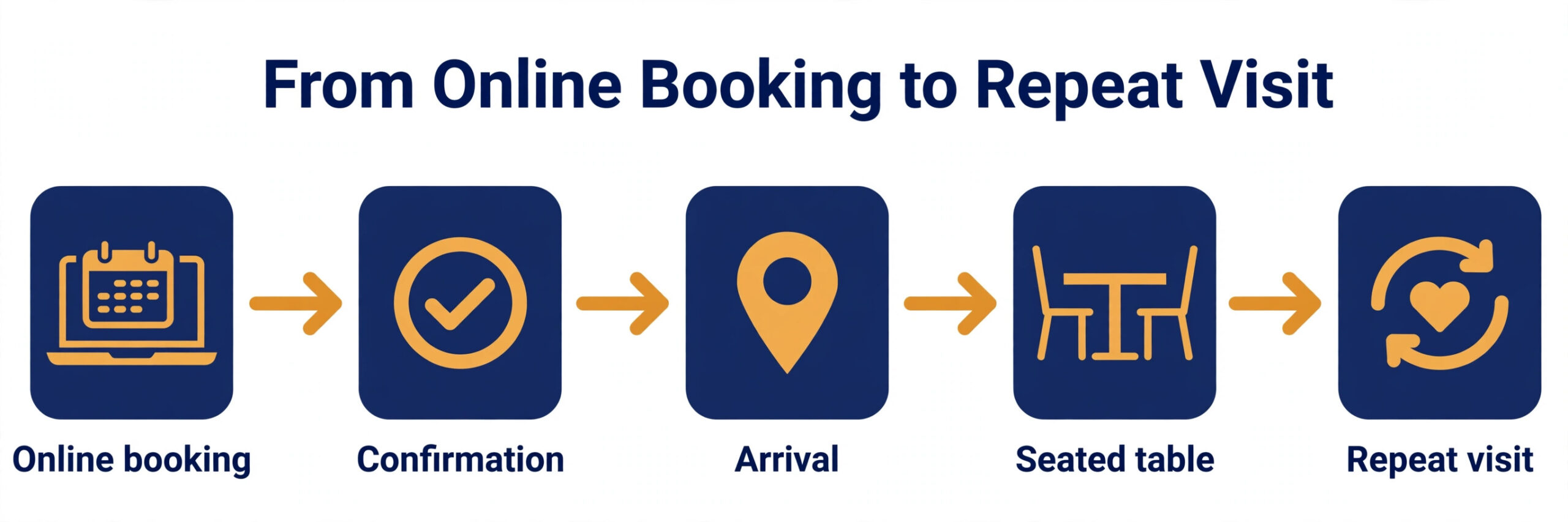
A reservation system does three jobs at once, and a small restaurant needs all three. It takes bookings from the website and from Google without a phone call. It manages the floor, so the host knows which tables are free, which are turning over and which party is waiting. It remembers the guests, so a regular who always asks for the corner table gets it without asking, and a no show gets a reminder before the table sits empty. A system that does only the first job is a booking form, not reservation software.
The trap is the marketplace model. OpenTable brings diners from its network, and that discovery is real, but every network diner costs a per cover fee on top of the monthly plan, so the bill grows with success. A flat rate platform costs the same in a quiet month and a busy month, and the guest data stays with the restaurant. For a small restaurant with 40 seats, the difference between those two models is often the difference between a tool that pays for itself and a tool that costs more than the covers it brings.
How We Compared 9 Reservation Systems
We checked each vendor pricing page and current 2026 comparisons in November 2026, and we scored every system on five points that decide the purchase for a small restaurant. The best restaurant reservation software for small restaurants wins on real monthly cost and guest data ownership, not on the size of the feature list, so those two points carried the most weight in our scoring. Real monthly cost covered the entry plan plus the per cover fees at a realistic volume of 1,000 covers a month, because the sticker price hides the true bill on per cover platforms.
Guest data ownership covered whether the restaurant keeps the guest list and can market to it, or whether the platform keeps the diner relationship. Free plan value covered whether a small restaurant can run on the free tier at all. No show tools covered reminders, deposits and card holds, because an empty table on a Friday night is the most expensive problem in the business. Ease of use covered how fast a host can learn the floor plan and the waitlist on a busy service.
Prices in this guide were checked against vendor pricing pages and current 2026 comparisons in November 2026. Reservation pricing changes often, and some vendors hide prices behind a demo, so confirm the price in writing before you sign. Where a vendor does not publish a price, we say so, and we use reported operator figures rather than guessing.
The Best Pick for Each Job
| Job | Pick | Why it wins |
|---|---|---|
| The best value for a small dining room | Resos | Free tier plus paid plans from 47 dollars a month |
| The most diners from one network | OpenTable | Largest diner network in the United States |
| Upscale dining with no per cover fee | Resy | Flat monthly rate plus American Express perks |
| Prepaid and ticketed dining | Tock | Deposits and prepaid bookings built in |
| A free plan that actually works | Eat App | Free up to 100 covers a month with table management |
| Discovery through reviews | Yelp Guest Manager | Bookings start on the Yelp listing |
Use this table as a shortcut, then read the full section for the system you are leaning toward. The best restaurant reservation software for small restaurants in this table covers different jobs, so the right pick depends on whether you need discovery, a flat fee or a free start. The cheapest monthly plan is not the best value when the per cover fees add hundreds of dollars a month, and the biggest network is not the best choice when your dining room already fills from regulars and walk ins.
The 9 Best Restaurant Reservation Software for Small Restaurants, Ranked
The nine systems below fall into three groups. The first group is the marketplace platforms, and these are the strongest picks when discovery matters and the dining room needs new diners. The second group is the flat rate platforms, and these suit restaurants that want predictable costs and full ownership of the guest list. The third group is the budget platforms, and these suit small restaurants that want a free or low cost start with no per cover fees at all.
1. Resos
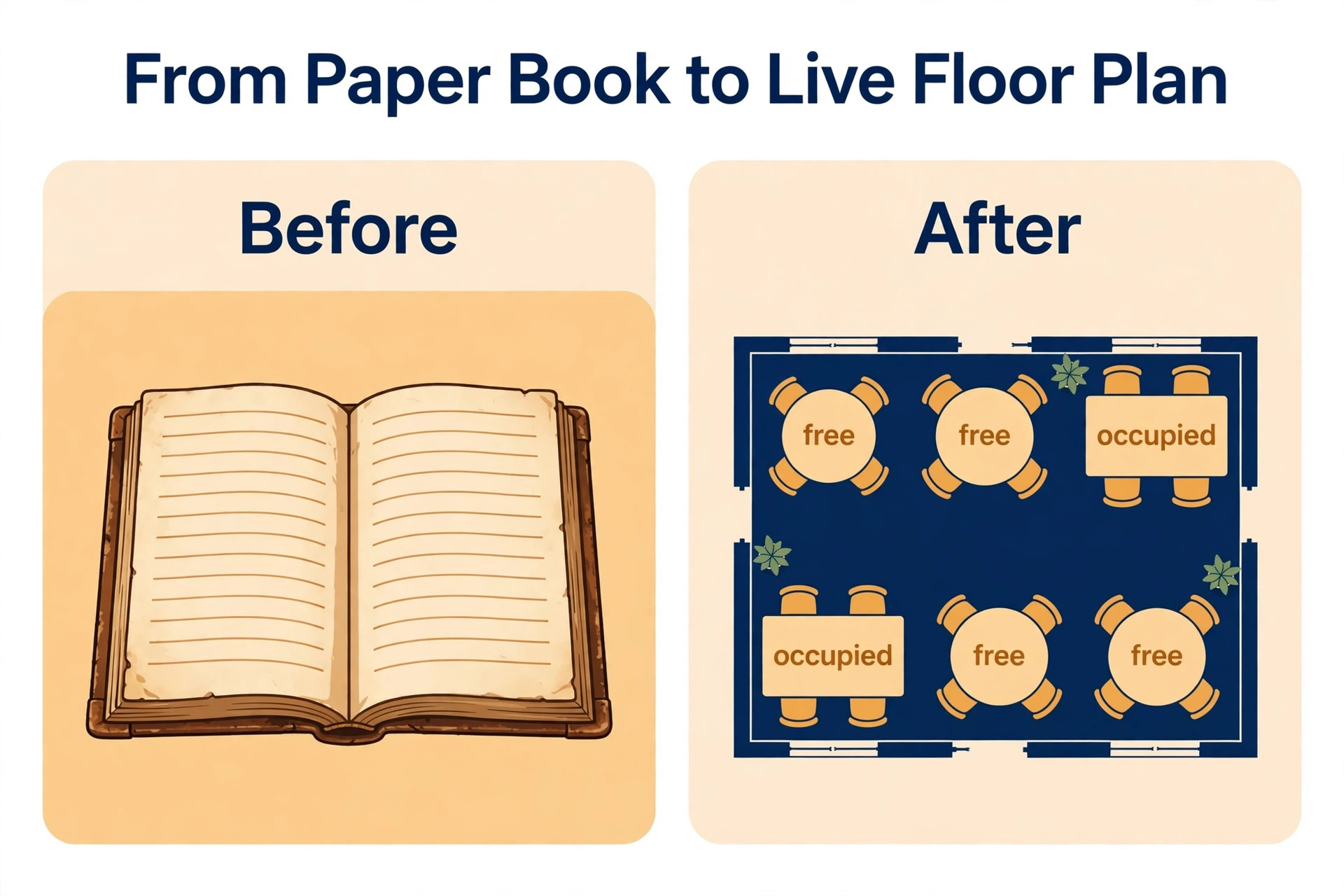
Resos is the best value pick for a small restaurant, because it offers a genuine free tier and paid plans from 47 dollars a month with no per cover fees and no annual contract. The free tier covers 25 bookings a month with online booking, table management and text reminders, which is enough for a very small dining room to run without paying anything. The paid plans scale cleanly, with Basic at 47 dollars a month for 350 bookings, Plus at 98 dollars a month for 750 bookings, and Unlimited at 149 dollars a month.
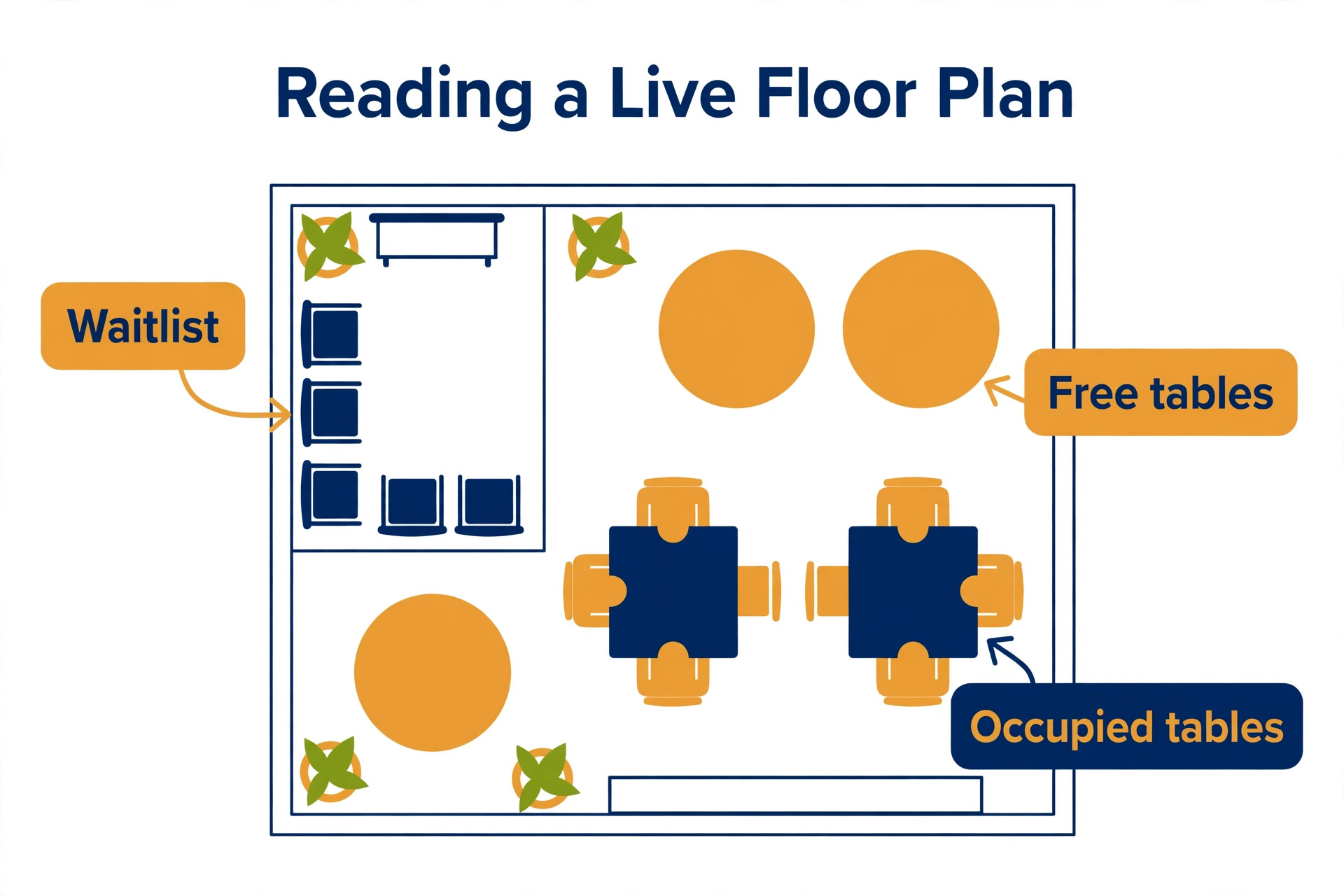
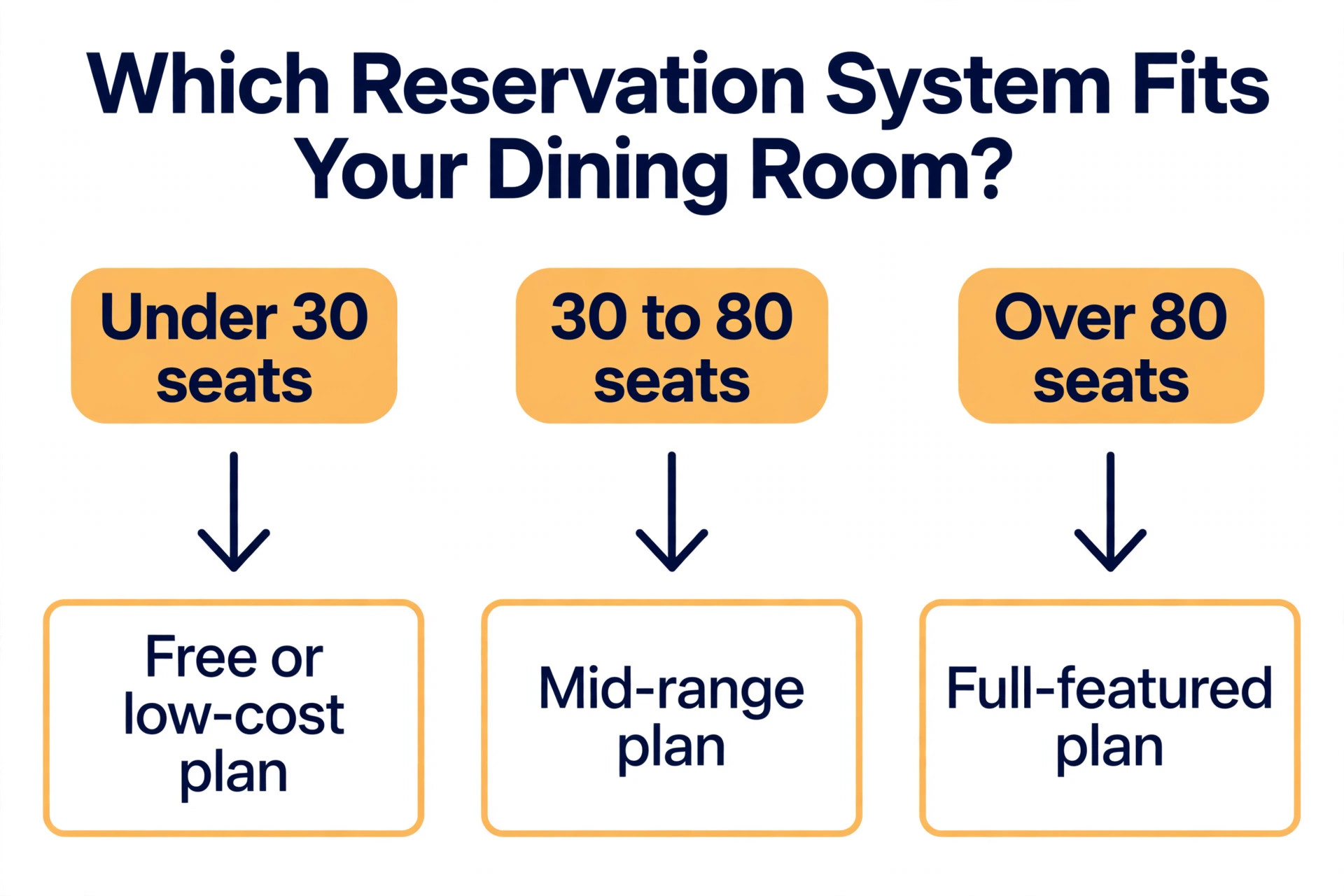
The platform keeps the model simple, and that is the point. There is no marketplace taking a cut, no per cover fee growing with success, and the guest data stays with the restaurant. The trade off is discovery, because Resos brings no diners of its own, so the restaurant must fill the room from its own website, Google listing and regulars. Resos fits a neighbourhood bistro or cafe with under 50 seats that wants professional booking software without a monthly bill that grows every time the room fills.
2. OpenTable
OpenTable is the largest reservation network in the United States, with about 31 million seated diners a month, and it is the pick when discovery matters more than cost. A restaurant on OpenTable appears in front of diners who are already looking for a table tonight, and that demand is real, especially in cities where OpenTable is the default way people book. The system includes table management, guest notes, reporting and a booking widget for the restaurant website.
Pricing is where the decision gets hard. The Basic plan costs 149 dollars a month, Core costs 299 dollars a month and Pro costs 499 dollars a month, and on top of that OpenTable charges about 1.50 dollars per network cover on Basic and about 1.00 dollar per network cover on Core and Pro, plus about 25 cents per cover booked through the restaurant own website on Basic. At 1,000 network covers a month, the cheapest plan runs about 19,800 dollars a year, which is several times the cost of a flat rate rival. OpenTable fits restaurants that need the network to fill seats and can afford the per cover fee as a marketing cost.
3. Resy
Resy is the best pick for upscale and fine dining restaurants that want a flat monthly rate and a premium brand. The platform is owned by American Express, and the integration brings cardholder perks and a diner base that books high end tables. Resy charges no per cover fee, and the restaurant keeps the guest data on direct bookings, which makes it a strong fit for restaurants that care about the regulars as much as the new diners.
Pricing runs 289 dollars a month for the Platform tier and 459 dollars a month for Platform 360, with no per cover fees. The Essential and Premium tiers, which carry over from the Tock side of the business, add a small percentage fee of 2 to 3 percent only on prepaid reservations. Resy fits a fine dining room or a popular neighbourhood restaurant that wants marketplace reach without a bill that grows with every cover. The trade off is price, because 289 dollars a month is more than a small cafe needs to spend when a free tool would do the job.
4. Tock
Tock is the best pick for prepaid and ticketed dining, and it now sits inside the Resy family after American Express merged the two in 2026. The platform was built for restaurants that sell the experience before the guest arrives, with prepaid reservations, ticketed events, deposits and tasting menu bookings. A prepaid booking changes guest behaviour, because a diner who has already paid is far less likely to no show than one who only made a phone booking.
Pricing runs 289 dollars a month for the Essential plan and 459 dollars a month for the Premium plan, with no per cover fee. The Essential plan charges a 3 percent fee on prepaid reservations, and the Premium plan lowers that to 2 percent. The standalone Tock app is being phased out as part of the merger, so new buyers should confirm the current product name and plan details with Resy before signing. Tock fits tasting menu restaurants, supper clubs and special event dining, where the prepayment is part of the concept rather than an add on.
5. Eat App
Eat App is the best overall pick for most independent restaurants, because it pairs a real free plan with flat monthly pricing and a full guest customer relationship system. The free plan covers up to 100 covers a month with table management, a booking widget and a guest database, which is enough for a small restaurant to run properly without paying. Paid plans start at 99 dollars a month for the Lite tier, or 69 dollars a month billed annually, with no cover cap on any paid plan.
The platform includes WhatsApp messaging, table management, guest notes and reporting, and a point of sale integration costs an extra 39 dollars a month on Lite and Core, or is included on Pro. The trade off is the network, because Eat App brings no diners of its own, so the restaurant fills the room from its own channels. Eat App fits a casual dining restaurant with 50 to 150 seats that wants a free start, flat pricing and a proper guest database in one tool.
6. SevenRooms
SevenRooms is the pick for restaurants that treat guest data as the main asset, because the platform is built around the customer relationship rather than the booking alone. It covers reservations, waitlist, table management and guest profiles, and it is used by restaurant groups that want one guest database across several locations. The platform is now owned by DoorDash, which adds delivery and discovery reach for restaurants that also sell takeaway.
Pricing is the problem, because SevenRooms does not publish a price and sells through a demo. Operator reports cluster around 300 to 700 dollars a month per location, often with a setup fee reported between 5,000 and 25,000 dollars. That puts it out of reach for most single location small restaurants, and the sales process alone takes longer than buying any other tool on this list. SevenRooms fits a small restaurant group with several locations and a marketing team that will actually use the guest data. A single location bistro should look at Resos or Eat App first.
7. Tablein
Tablein is the best pick for small European restaurants that want simple online booking at a low price. The platform covers online reservations, table management and guest notifications, and it is designed for the way small European dining rooms work, with lunch and dinner services and a modest number of tables. The interface is clean, the setup is fast, and the support team is used to working with independent owners rather than chains.
Pricing starts at about 67 euros a month for the Starter plan, or about 79 dollars, covering 50 bookings, with a per booking fee of about 67 cents on Starter and 37 cents on Growth for bookings over the limit. That per booking fee is small, but it is a fee, so a busy restaurant should work out the total at its real volume rather than comparing the sticker price. Tablein fits a small European restaurant that wants a straightforward booking widget without paying for a marketplace or a guest marketing suite it will never use.
8. Yelp Guest Manager
Yelp Guest Manager is the pick when most new guests find the restaurant through Yelp, because the waitlist and the bookings start on the Yelp listing itself. Guests can join the waitlist from Yelp, from Google Search and from Apple Maps, and the system includes two way texting, table management and guest notes. That matters for restaurants in neighbourhoods where Yelp is the first place people check reviews before choosing a table.
Pricing runs about 129 dollars a month billed annually for the Basic plan, or 159 dollars a month billed monthly, with up to 500 booked covers a month and no per cover fee. The Plus plan runs about 279 dollars a month billed annually for unlimited covers. There is no free plan, and an annual plan can include an early termination fee, so read the contract before signing. Yelp Guest Manager fits a restaurant whose discovery already happens on Yelp, and it is a poor fit for a restaurant whose guests find it through Google or Instagram instead.
9. Toast Tables
Toast Tables is the pick for restaurants that already run Toast point of sale, because the reservation book sits inside the same system as the till, the kitchen and the payments. The entry tier is nearly free for Toast customers, which makes it the cheapest real option on this list for a restaurant already paying for Toast. The reservation book, the waitlist and the table map all share the same guest data as the point of sale, so the host and the server see the same information.
The limit is the lock in, because Toast Tables only works with Toast point of sale, and the higher Plus tier is quote only, so the price is not public. A restaurant that does not run Toast cannot use it at all, and a restaurant that switches point of sale later loses the reservation system with it. Toast Tables fits a Toast restaurant that wants reservations without a second subscription. A restaurant on another point of sale should compare Resos, Eat App and OpenTable instead.
How to Choose the Right Reservation System
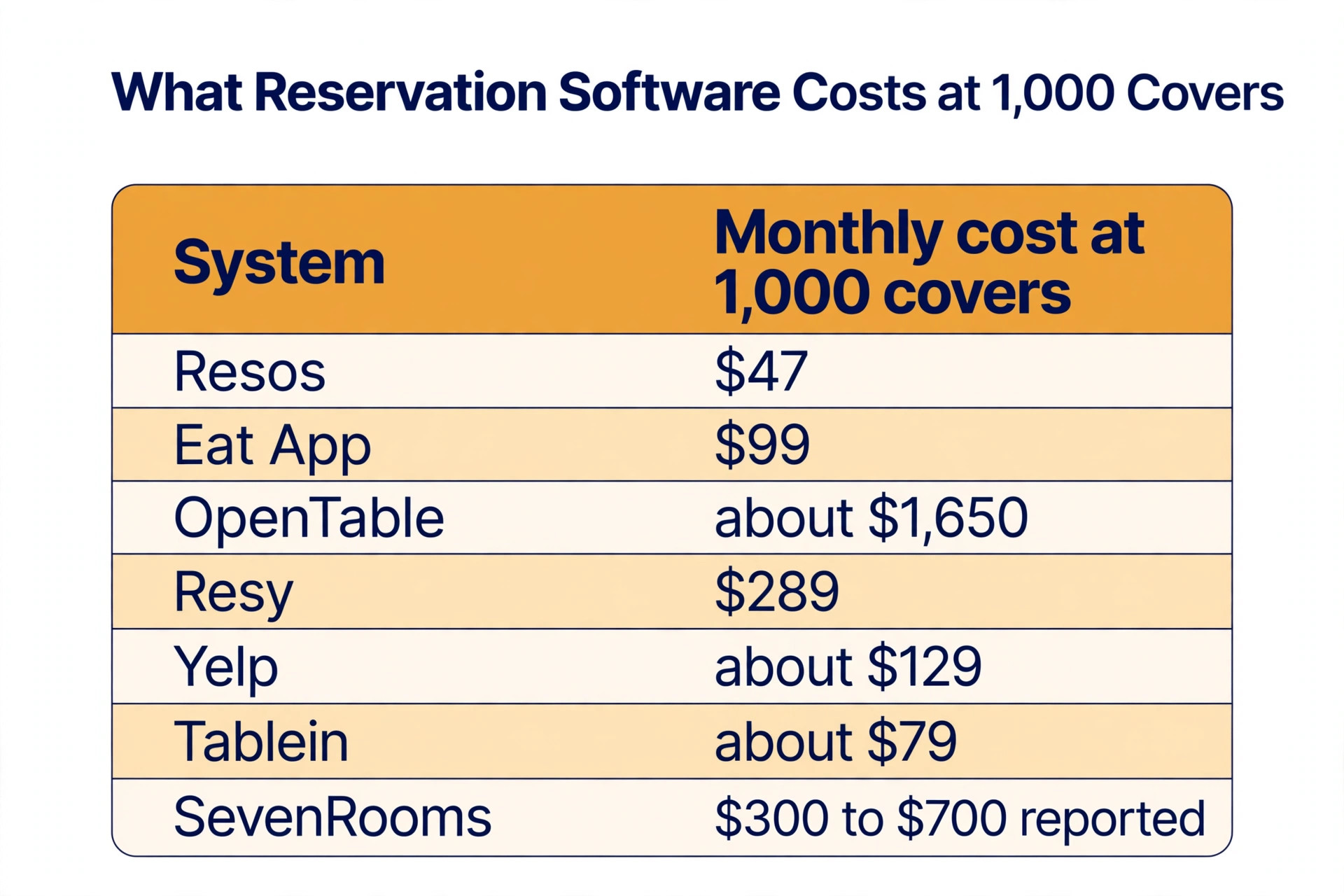
Start with the real monthly cost at your volume, because the sticker price hides the true bill. Work out your covers per month, split them into covers from the platform network and covers from your own website, and apply the per cover fee to the network covers. At 1,000 network covers a month, OpenTable Basic costs about 1,650 dollars a month once the per cover fees are added, while Resy costs 289 dollars and Resos costs 47 dollars. That gap is the whole decision for most small restaurants, and it is why flat rate platforms usually win on cost.
Next, decide how much discovery you actually need. When the dining room already fills from regulars, walk ins and Google, a marketplace adds cost without adding covers, and a flat rate tool like Resos or Eat App is the better buy. When the restaurant is new, or in a city where diners book through a network, OpenTable or Resy can bring covers the restaurant would not get on its own. Be honest about the split, because many owners overestimate how many covers the network brings and underestimate how many come from their own channels.
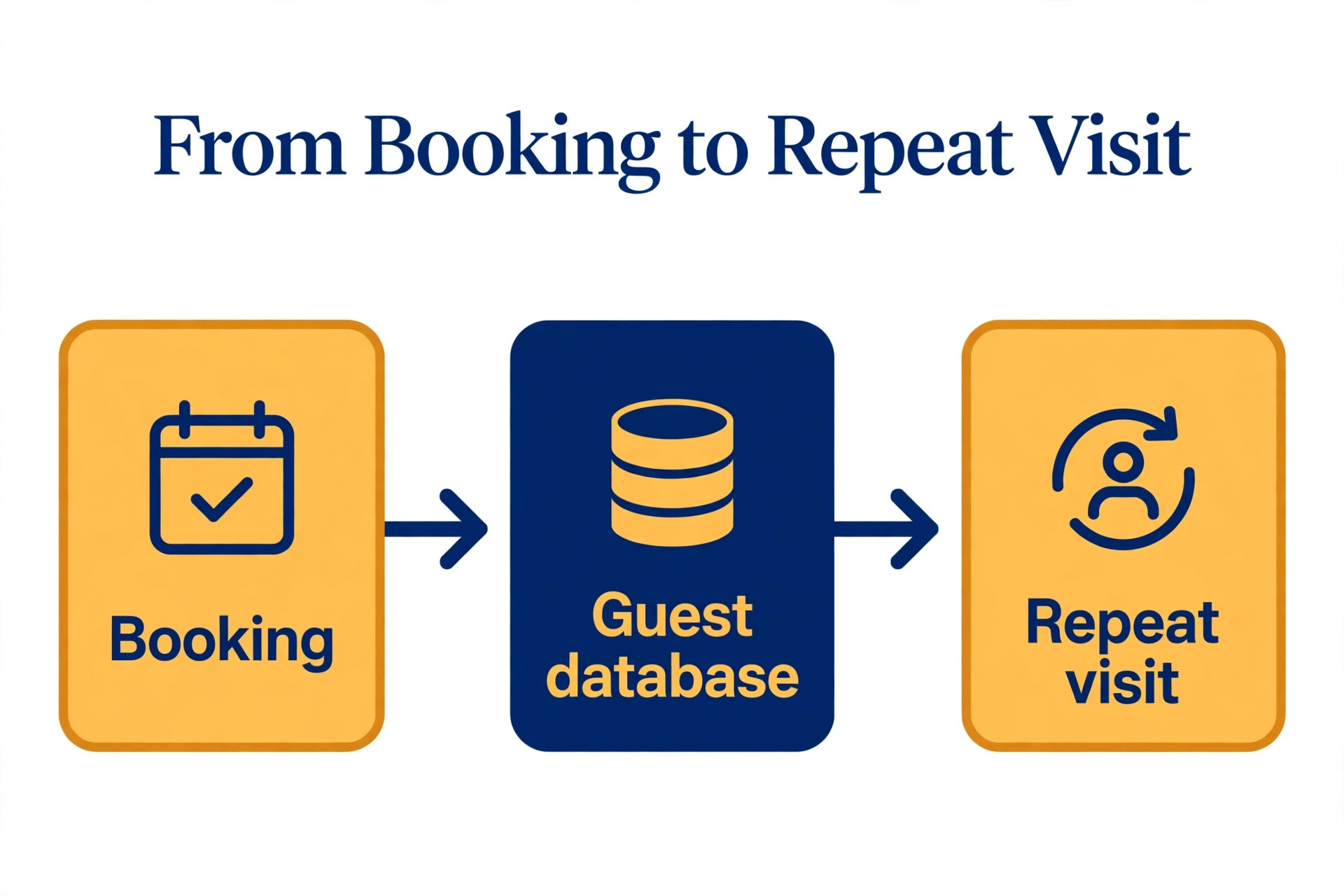
Then check who owns the guest data, because the guest list is the most valuable asset a small restaurant has. Resos, Eat App, Resy and Tock let the restaurant keep the guest data on direct bookings and market to those guests again. OpenTable keeps the network diners in its own system, which means the restaurant pays again to reach the same diner next time. The best restaurant reservation software for small restaurants treats the guest list as the restaurant property, not as the platform property. Finally, check the no show tools, because a reminder text, a deposit or a card hold is worth more than any feature list when a table sits empty on a Friday night.
What a Small Restaurant Actually Pays
The cost spread in this category is wider than in almost any other software a restaurant buys, and it runs from free to about 1,650 dollars a month at 1,000 covers. Resos is free for 25 bookings a month and 47 dollars a month for 350 bookings. Eat App is free for 100 covers a month and 99 dollars a month for the Lite plan.
Tablein starts at about 79 dollars a month for 50 bookings. Yelp Guest Manager starts at about 129 dollars a month billed annually. OpenTable starts at 149 dollars a month before per cover fees, Resy starts at 289 dollars a month, and SevenRooms is reported at 300 to 700 dollars a month with a setup fee on top.
The per cover fee is the number to watch, because it scales with success. OpenTable charges about 1.50 dollars per network cover on Basic and about 1.00 dollar on Core and Pro, plus about 25 cents per website cover on Basic. At 300 network covers a month, that adds 300 to 450 dollars to the bill, and at 1,000 covers it adds 1,000 to 1,500 dollars.
A flat rate platform charges the same in a quiet month and a busy month, which makes budgeting simple and keeps the margin on every cover. Before you sign, ask for the total cost in writing at your real volume, including every per cover fee, every add on and every setup charge, because the best restaurant reservation software for small restaurants is the one whose total bill you can predict before the month starts.
Mistakes That Waste Money
The most common mistake is signing a long contract before testing the system on a real service. A reservation platform that looks good in a demo can be slow on a Friday night, when the host needs to seat a walk in, move a party and check the waitlist in the same minute. Run a free trial or a free plan through at least two busy services before you commit, and ask the staff who will use it every day whether it helps or slows them down.
The second mistake is ignoring the per cover fee until the first bill arrives. Owners compare the monthly plans, pick the cheapest one, and discover that the network covers cost an extra 1.50 dollars each. At 1,000 covers a month, that mistake costs more than 10,000 dollars a year. Work out the total cost at your real volume before you sign, and get it in writing.
The third mistake is giving away the guest list. A platform that keeps the diner relationship owns the most valuable asset in the business, and the restaurant pays again every time it wants to reach the same guest. Choose a system that lets you export the guest list and market to it directly, because a regular who books direct is worth more than a new diner from a network, and the restaurant should own that relationship.
- Confirm the total monthly cost at your real cover volume, including every per cover fee.
- Confirm the guest data stays with the restaurant and can be exported.
- Confirm the free plan or trial covers a real busy service before you sign.
- Confirm the no show tools include reminders, deposits or card holds.
- Confirm the contract length, the setup fee and the cancellation terms in writing.
Our Verdict
Resos is the pick for most small restaurants, because the free tier covers 25 bookings a month, the Basic plan costs 47 dollars a month for 350 bookings, and there are no per cover fees at all. A small dining room gets professional booking software, table management and reminders without a bill that grows every time the room fills. Eat App is the runner up, because the free plan covers 100 covers a month and the paid plans are flat, with a full guest database included.
OpenTable is the pick when discovery is the priority and the restaurant can afford the per cover fee as a marketing cost, because no other network brings as many diners. Resy is the pick for upscale dining on a flat rate, because 289 dollars a month buys marketplace reach without a bill that grows with every cover. The best restaurant reservation software for small restaurants earns its price in the guest list and the no show rate, not on the homepage, so test two systems on real services and keep the one your host team actually likes using.
Frequently Asked Questions
How much does restaurant reservation software cost for a small restaurant?
A small restaurant pays between zero and about 1,650 dollars a month depending on the system and the volume. Resos is free for 25 bookings a month and 47 dollars a month for 350 bookings. Eat App is free for 100 covers a month and 99 dollars a month for the Lite plan. Yelp Guest Manager starts at about 129 dollars a month billed annually. OpenTable starts at 149 dollars a month plus about 1.50 dollars per network cover on Basic, which works out to about 1,650 dollars a month at 1,000 network covers. Resy starts at 289 dollars a month with no per cover fee.
Which reservation system has no per cover fees?
Resos, Eat App, Resy, Tock and Yelp Guest Manager all charge no per cover fee, and they make their money from a flat monthly rate instead. Resos starts at 47 dollars a month, Eat App starts at 99 dollars a month, Resy starts at 289 dollars a month, and Yelp Guest Manager starts at about 129 dollars a month billed annually. OpenTable is the major system that still charges per cover, at about 1.50 dollars per network cover on Basic and about 1.00 dollar on Core and Pro. Tablein charges a small per booking fee over the plan limit, so check the total at your real volume.
Is OpenTable worth it for a small restaurant?
OpenTable is worth it when the restaurant needs the network to fill seats and the per cover fee works as a marketing cost. The network brings about 31 million seated diners a month, and in cities where OpenTable is the default booking tool, that discovery is hard to replace. It is not worth it when the dining room already fills from regulars, walk ins and Google, because the restaurant then pays a per cover fee for diners it would have seated anyway. Work out how many covers the network actually brings, multiply by the per cover fee, and compare that with the cost of a flat rate platform.
Can a small restaurant use free reservation software?
Yes, a small restaurant can run on free reservation software, and two tools on this list make it practical. Resos is free for 25 bookings a month with online booking, table management and text reminders. Eat App is free for 100 covers a month with table management, a booking widget and a guest database. Both free plans cover a very small dining room properly, and the paid plans start at 47 dollars a month for Resos and 99 dollars a month for Eat App when the volume grows past the free tier.
What is the best reservation system for a restaurant with under 50 seats?
Resos is the best pick for a restaurant with under 50 seats, because the free tier covers 25 bookings a month and the Basic plan at 47 dollars a month covers 350 bookings, with no per cover fees and no annual contract. Eat App is the runner up, because the free plan covers 100 covers a month and includes a guest database. Both tools give a small dining room professional booking software without the monthly bill of a marketplace platform, and both let the restaurant keep the guest list.
How do I stop no shows with reservation software?
The best no show tools are automatic reminders, deposits and card holds, and the strongest systems offer all three. Automatic text reminders go out before the booking and cut no shows on their own, because most no shows are forgotten bookings rather than deliberate ones. Deposits and card holds work better, because a guest who has paid or left a card is far more likely to arrive. Tock is built around prepaid bookings, and most other systems on this list offer reminders and deposits as standard features. Set the reminder to go out the day before and again a few hours before the booking for the best result.
A reservation system should fill tables, protect the guest list and cost the same in a busy month as in a quiet one. Pick the system that fits the way your dining room actually fills up, test it on two busy services, and keep the one that your host team reaches for without thinking. The best restaurant reservation software for small restaurants is the one that disappears into the service, so the host spends the evening seating guests instead of fighting the software.