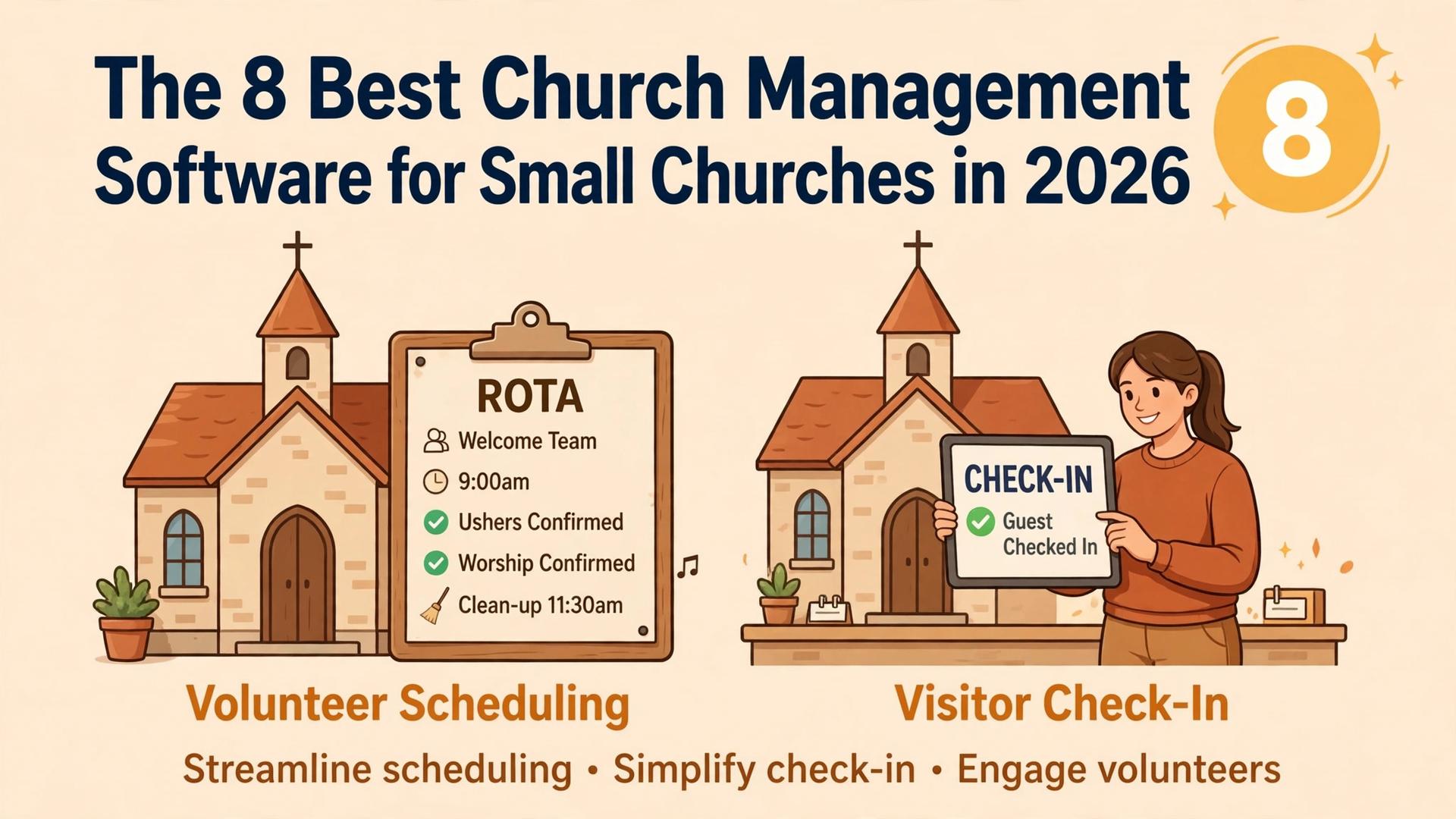
Two churches with 80 members each can buy the same software and get opposite results. One picks a system its volunteers learn in an afternoon, and Sunday check in runs itself. The other picks a system built for a multi site church, and the same volunteers spend a year fighting menus they never needed. The best church management software for small churches is therefore not the system with the most features, it is the system that fits a small team, a small budget and a volunteer rota. Planning Center is the best overall pick, because the People module is free and the modules can be added one at a time.
Breeze is the better choice when simplicity matters most, and ChurchTrac is the better choice when the budget is tight. We compared 8 systems on price, giving fees, check in, volunteer tools and ease of use, so you can pick by the size and the shape of your church.
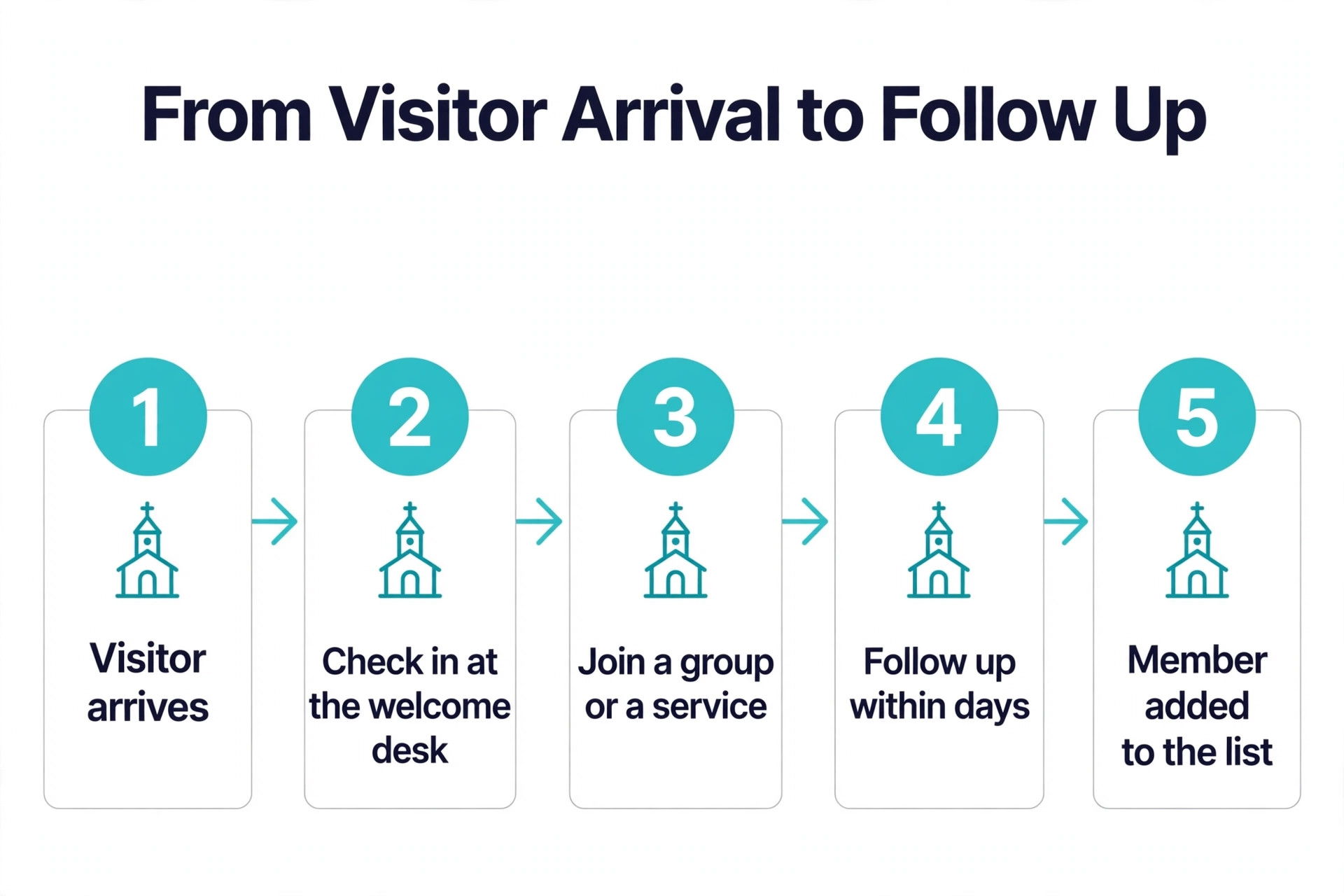
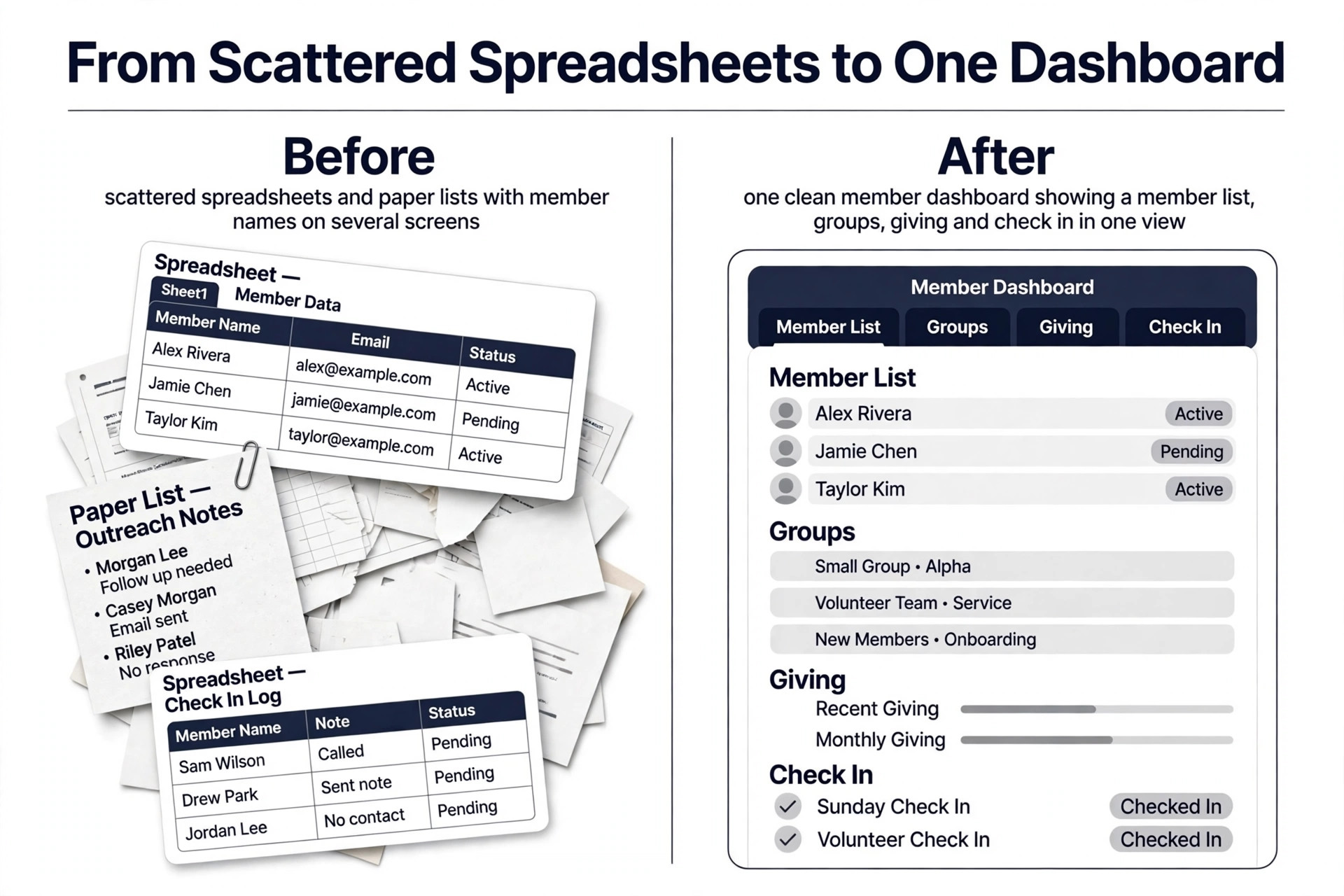
A church management system, often called ChMS, holds the member list, the giving records, the groups, the volunteer rota, the check in list and the events in one place. When it works well, a visitor is followed up within days, a volunteer knows where to stand on Sunday, and the treasurer can produce the year end giving statements in an afternoon. When it works badly, the member list lives in three spreadsheets, the giving records live in a fourth, and nobody knows who visited last month. That gap is why the choice matters, and why a small church should pick a system it will actually use, not the system a large church uses.
Prices in this guide were checked against vendor pricing pages and current 2026 roundups in November 2026. Several vendors price by quote or by module, and giving fees matter as much as the subscription, so confirm the total, including processing, before you commit. Where sources disagree on a price, this guide says so in the tool section.
How We Tested the Best Church Management Software for Small Churches
We scored each system on five points, because a good system for a small church wins on ease of use and total cost, not on the length of its feature list. Price covered the monthly subscription at a church of 100 people, plus the card giving fee on typical monthly giving. Ease of use covered how fast a volunteer administrator can learn the system and how quickly a new member can be added. Giving covered online, text and kiosk giving, recurring gifts and year end statements. Check in and volunteers covered child check in, volunteer scheduling and service planning.
Fit for a small church covered whether the pricing and the features match a congregation under 300 people, or whether the system is built for a larger church and sold down.
We also looked at what each system leaves out of the headline price, because the best church management software for small churches must be judged on the total bill, not the headline fee. Giving processing fees, add on modules, a custom app and a website are often billed separately, and a system that looks cheap at zero dollars a month can cost hundreds a month in processing once giving grows. Each tool section below names the fee that matters, so the price you see here is closer to the price you will pay.
The Best Pick for Each Job
| Job | Pick | Why it wins |
|---|---|---|
| The best overall system | Planning Center | Free People module and pay per module |
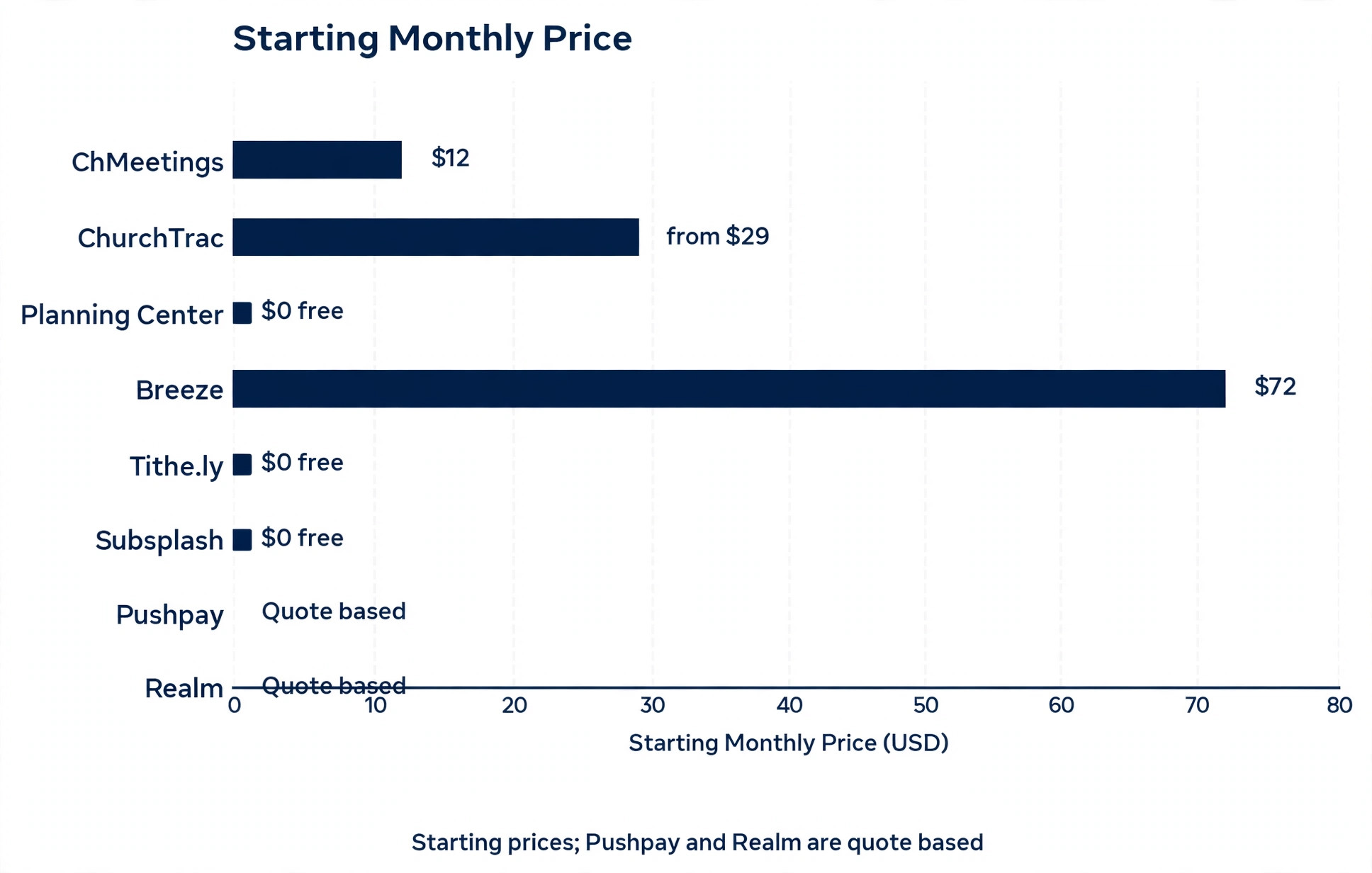
| The simplest system to learn | Breeze | Flat 72 dollars a month, all features included |
| The tightest budget | ChurchTrac | Full features from 29 dollars a month |
| Giving first, management second | Tithe.ly | Free giving, full bundle at 119 dollars a month |
| The smallest free start | ChMeetings | Free for up to 50 people |
| Built in fund accounting | Realm | Real accounting for churches that need it |
Use this table as a shortcut, then read the full section for the system you are leaning toward. The cheapest subscription is not the best value when the giving fee is high, and the most complete system is not the best choice when your volunteers will not learn it.
The Best Church Management Software for Small Churches in 2026, Ranked
The 8 tools below fall into three groups. The first group suits most small churches, with a free or low cost start and a gentle learning curve. The second group suits a church that leads with giving or with a tight budget. The third group suits a larger small church that needs an app, media tools or fund accounting, and these systems cost more or price by quote.
1. Planning Center
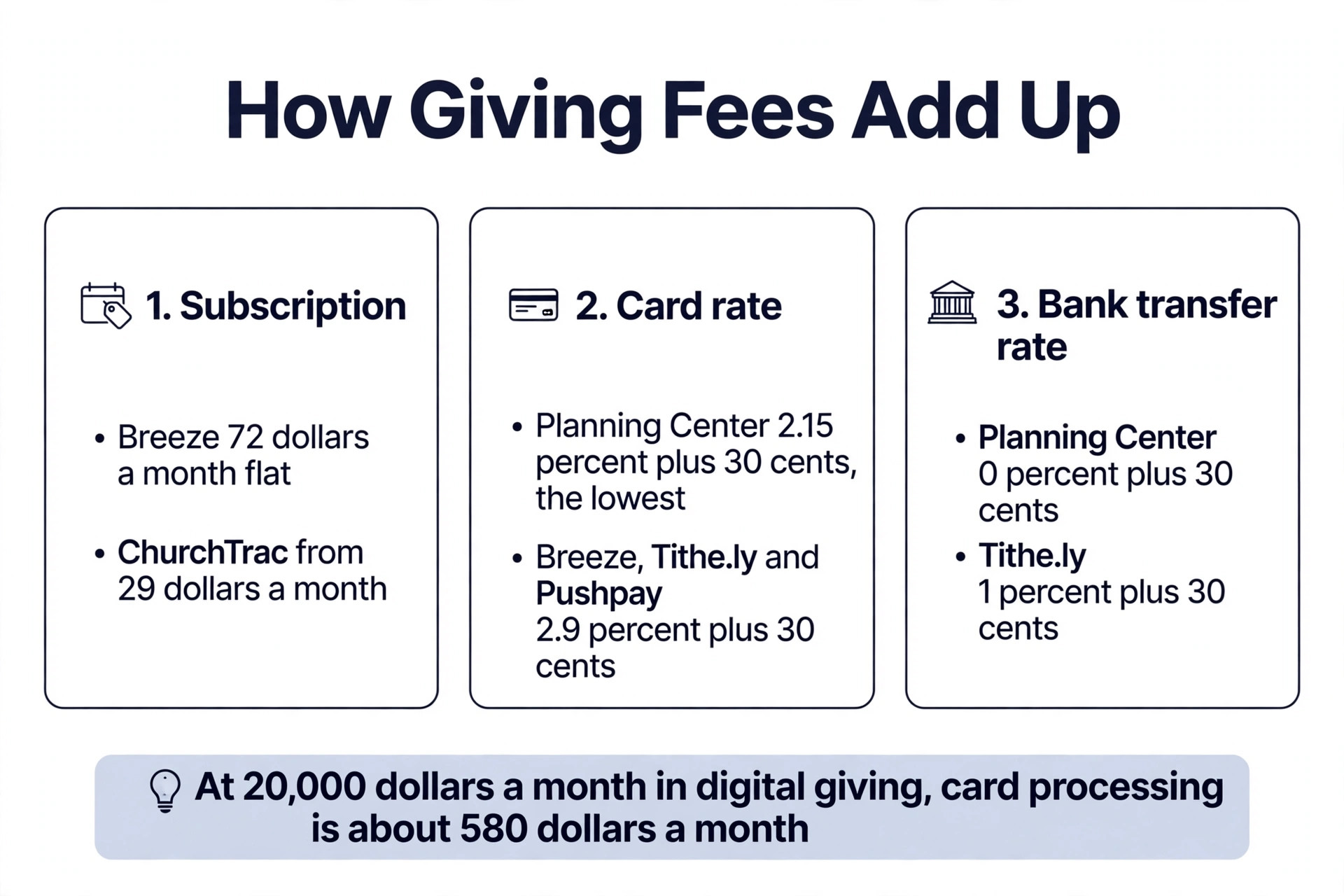
Planning Center is the most widely used church management system in North America, and it is the best overall pick for a small church because you only pay for the features you use. The People module, the member database and reporting, is free forever for unlimited people. Giving is free for up to 10 monthly donations and scales by volume, with card fees at 2.15 percent plus 30 cents, the lowest card rate on this list, and bank transfer fees at zero percent plus 30 cents.
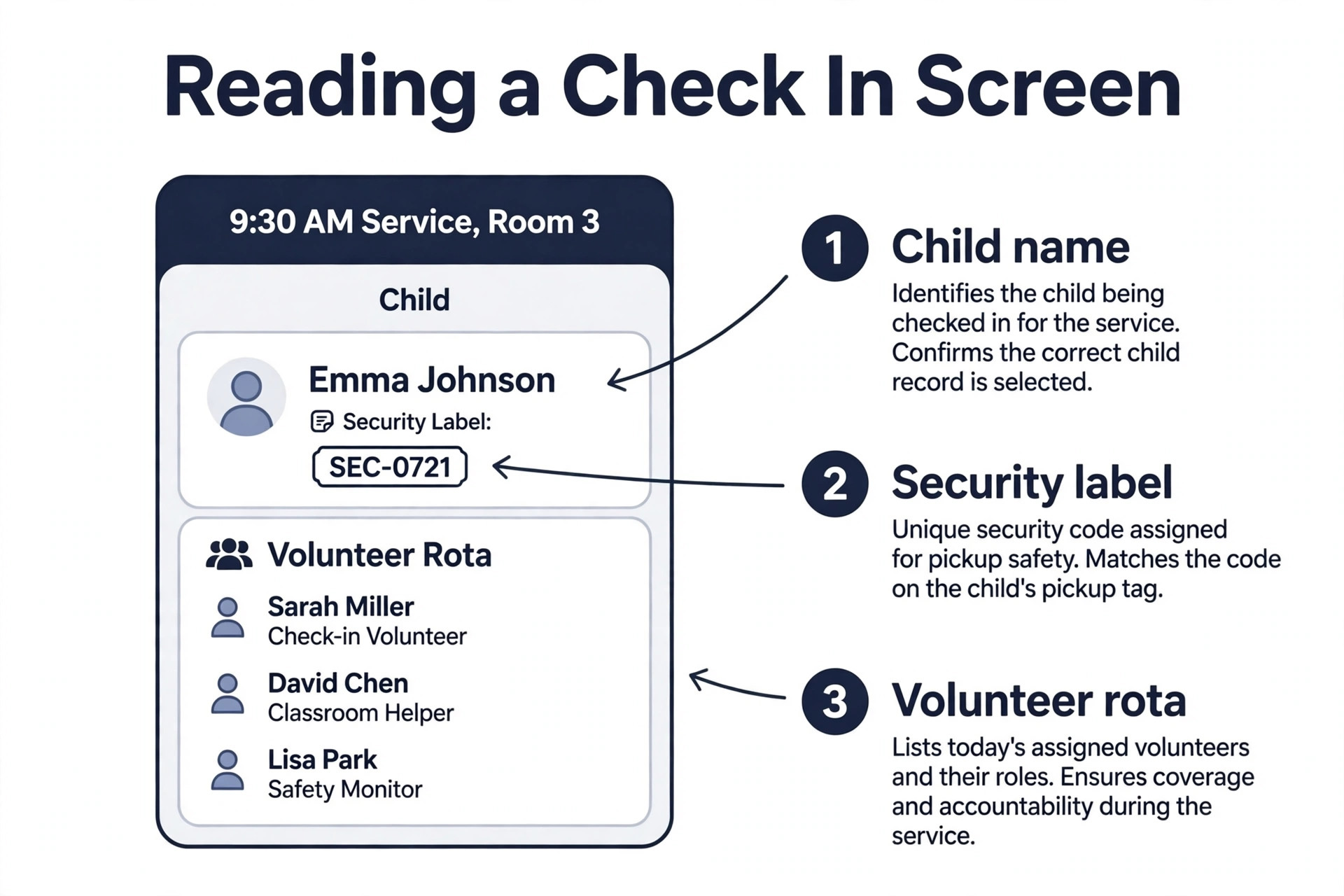
Services, for worship planning and volunteer scheduling, is free for up to 5 team members, then starts at about 14 to 15 dollars a month depending on the source, and other modules such as Check Ins, Groups, Calendar and Registrations cost about 15 dollars a month each.
That modular pricing is both the strength and the catch. A church of 30 people can use Planning Center meaningfully at zero dollars a month, with the free People module and free giving, and a church of 150 people can add Services, Check Ins and Groups as it grows. A fuller stack for a mid size church typically runs 100 to 200 dollars a month, and some comparisons place a full stack at 200 to 500 dollars a month for a larger church, so the total climbs with the headcount and the modules you switch on.
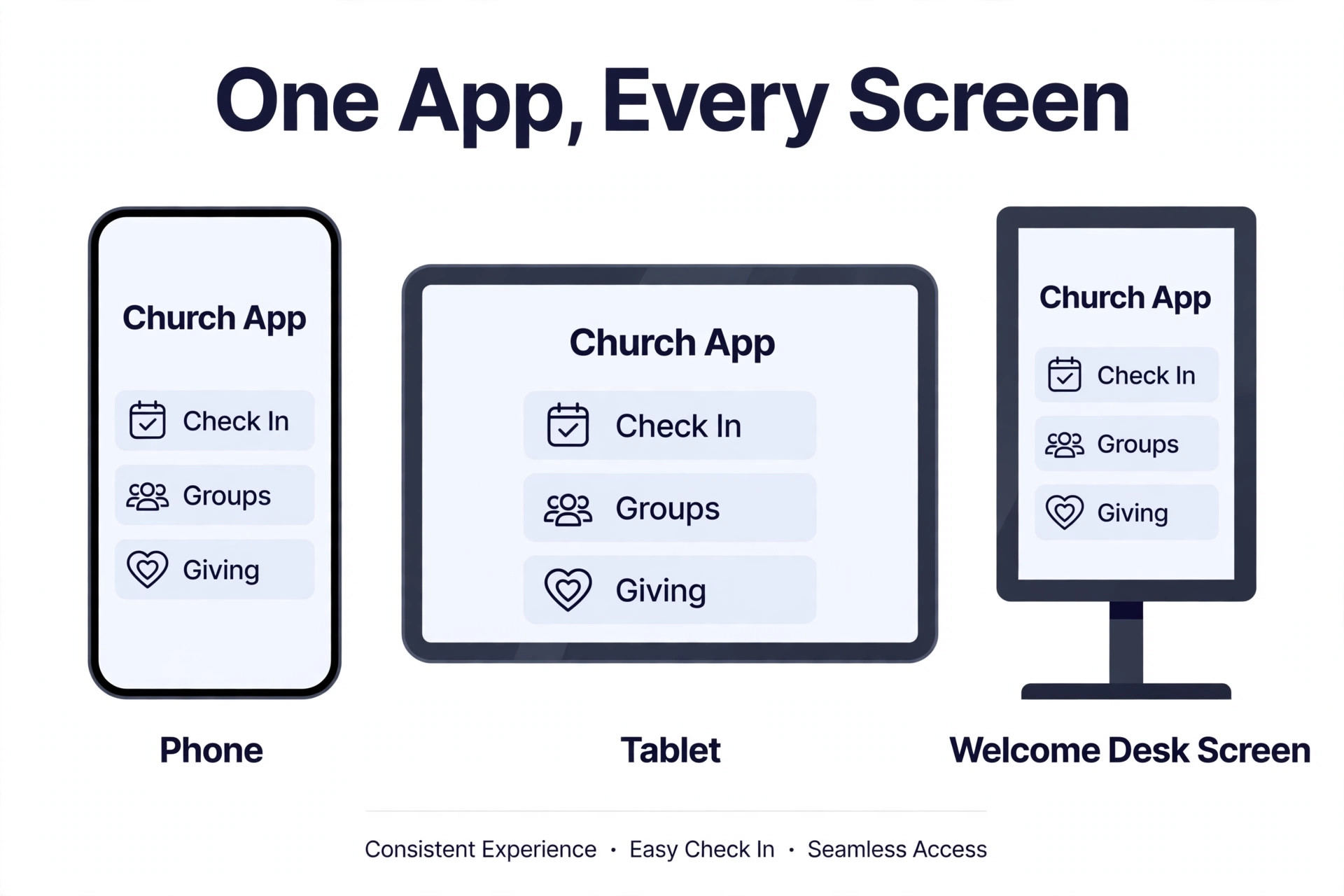
The system is genuinely excellent at service planning, volunteer scheduling and event management, and the Church Center app gives members a free app for giving, groups and check in.
Pick Planning Center when you want to start free and add features as the church grows, and when worship and volunteer scheduling matter. Skip it when you want one flat price and no decisions about modules, because Breeze gives you that simplicity for a fixed monthly fee.
2. Breeze
Breeze is the simplest system on this list, and the best pick when volunteers, not tech staff, will run it. The price is one flat rate, 72 dollars a month for unlimited people, unlimited users and all features, with no tiers, no add ons and no contract. The interface is clean, the onboarding is fast, and the people database is easy to learn, so a volunteer administrator can add a member, record a gift and run a report in an afternoon without training. Breeze will migrate your existing data for free, and there is no setup fee.
Giving runs through an integration, with card fees at 2.9 percent plus 30 cents, which is higher than Planning Center. A website costs 19 dollars a month extra, a branded app costs 89 dollars a month, and the Breeze Bundle, which folds in the website, the app and worship tools, costs 119 dollars a month. Note a price conflict in the sources, one roundup lists Breeze at 72 to 112 dollars a month, with 112 dollars for churches over 250 people, while the vendor and most recent comparisons list a flat 72 dollars a month, so confirm the current flat rate on the pricing page before you budget.
The limits are visitor follow up and depth. Breeze does not have strong newcomer journey tools, and it starts to struggle with multiple campuses, complex pledge campaigns or deep reporting. For a church under 500 people that wants a database any volunteer can use, Breeze is the clearest choice, and the flat price makes the budget easy to approve.
3. Tithe.ly
Tithe.ly leads with giving, and it is the best pick for a small church whose first priority is getting online and text giving live without a sales call. The Giving plan costs nothing a month, with online, mobile, text and kiosk giving, recurring gifts, pledge campaigns and year end tax statements, and you pay only processing, 2.9 percent plus 30 cents per card gift and 1 percent plus 30 cents for bank transfers. More than 53,000 churches use Tithe.ly giving, which makes it the most popular free starting point for church giving.
The full bundle, Tithe.ly All Access, costs 119 dollars a month and adds church management, a custom church app, a website builder and messaging, while standalone church management costs 72 dollars a month. That bundle undercuts buying the same tools separately, and it suits a church that wants one vendor for giving, management, an app and a website. The management tools are solid for member records, groups and events, though they are less deep than Planning Center for worship planning.
Pick Tithe.ly when giving comes first and you want the bundle to grow into, and pick Planning Center when worship planning and volunteer scheduling matter more than the giving platform. Note that Tithe.ly now owns Breeze, so the two systems sit in one family, with Breeze as the simple management option and Tithe.ly as the giving led bundle.
4. ChurchTrac
ChurchTrac is the value pick, with the broadest feature set at the lowest price on this list. Every feature ships on every plan, with pricing that scales only on the number of people tracked, starting at 29 dollars a month for up to 75 names, then 39 dollars a month for 125 names, 59 dollars a month for 250 names, and up to 119 dollars a month for unlimited names, with 10 percent off when paid yearly. That one price covers people, giving, accounting, worship planning, check in, events, messaging and a website, which is more than any rival gives at this price.
Note a price conflict in the sources, older comparisons list ChurchTrac paid plans from 5 dollars a month, while current pricing pages and 2026 roundups list 29 dollars a month as the starting price for 75 names. The 29 dollar figure is the one to budget on, and the older figure should be treated as out of date. Annual costs for a small church run to 259 dollars or less on some comparisons, against 1,428 dollars or more for Breeze or Tithe.ly at the same size, which shows how far the value stretches.
The limits are polish and support depth. ChurchTrac has served churches since 2002, and the interface feels more practical than modern, though the feature list is complete. Pick ChurchTrac when the budget is the deciding factor and you want every feature for one low price, and pick Breeze when a cleaner interface and phone support matter more than the saving.
5. ChMeetings
ChMeetings is the smallest free start on this list, and the best pick for a church plant or a very small congregation. The free plan covers up to 50 people, and paid plans start at 12 dollars a month for 100 people, which is the lowest paid entry on this list. The system covers member records, groups, events, giving tracking, a member portal and a church app, with messaging and third party payment processing as add ons.
The free tier has feature limits, and a custom branded app, messaging and payment processing can add costs, so the total rises as the church grows past 50 people. The interface is straightforward, and the member portal lets members update their own details, sign up for events and see their giving history without asking the office. For a church of 30 people with no budget, ChMeetings lets you start properly at zero dollars, and the paid step at 12 dollars a month is small enough to approve without a committee debate.
Pick ChMeetings when the church is under 50 people and the budget is near zero, and move to Planning Center or Breeze when the church grows past 100 people and needs stronger volunteer scheduling or check in. The free start is genuine, and the upgrade path is gentle.
6. Pushpay
Pushpay, sold as ChurchStaq, suits a growing or multi site church that wants giving, management and an app on one unified platform. Pricing is quote based, so there is no published starting price, and card fees run at 2.9 percent plus 30 cents. The platform covers giving, member management, groups, events, a custom app and reporting in one account, with a focus on donor engagement and recurring giving.
The strength is the unified design. Giving, membership and engagement share one record, so a donor who gives online, joins a group and volunteers on Sunday appears once, not three times, and the reports show giving trends, attendance and engagement together. That matters when a church passes 300 people and the treasurer, the pastor and the volunteer coordinator all need the same picture. The app is polished, and the giving flow is built to lift recurring gifts, which is the revenue a growing church depends on.
The limits are price and fit. Quote based pricing usually means variable pricing by size, negotiated rates and multi year contracts, and a small church will pay more than it needs to for features built for a larger church. Pushpay suits a church that is growing fast and can justify a sales conversation, and a church under 200 people will get the same jobs done cheaper on Planning Center, Breeze or Tithe.ly.
7. Subsplash
Subsplash comes at church software from the app and media side, and it is the best pick when a custom app, sermon hosting and live streaming are the priority. Subsplash Giving is available at zero dollars a month plus processing at 2.99 percent plus 30 cents, which makes it an easy add for a church already in the Subsplash world. The full platform, Subsplash One, is quote based, and the price depends on size, features and usage, so ask for a written quote and do not estimate from other churches.
The app and media tools are the draw. A polished custom app for iOS and Android, sermon hosting, media libraries, live streaming and TV apps sit in one platform, and the engagement tools help members watch, give and sign up from the same place. A church with a strong online audience, a sermon podcast or a live stream ministry will get more from Subsplash than from a database first system, because the media is the ministry, not an add on.
The limits are the quote and the management depth. Subsplash is app and media first, so member management and fund accounting are thinner than Realm or Planning Center, and the quote based pricing can rise quickly as features are added. Pick Subsplash when the app and the media matter most, and pick a management first system when the member list, the giving records and the volunteer rota are the daily work.
8. Realm
Realm, by ACS, is the pick for a church that needs real fund accounting built into the management system. Pricing is quote based, with no published starting price, and the card fee varies by processor. The system covers member records, groups, events, check in, giving and communications, and the accounting is the reason it earns its place, because fund accounting tracks restricted gifts, budgets by fund and financial reporting in a way that general systems cannot match.
That accounting depth suits a mid to large church with a finance team, a treasurer who reports to a board, and a budget that spans several funds. The member tools are solid, the giving records tie to the accounting, and the reporting gives the board a clear picture of income, spending and fund balances. A church that runs a school, a food bank or a building fund alongside Sunday services will feel the difference, because the money and the membership live in one system.
The limits are price, complexity and fit. Quote based pricing and a full suite design make Realm heavy for a church under 200 people, and the learning curve is steeper than Breeze or ChurchTrac. A small church with a simple budget should not pay for fund accounting it will not use. Pick Realm when the accounting is the hard part, and pick Planning Center or Breeze when the member list and the Sunday rota are the hard part.
How to Choose the Right System for a Small Church
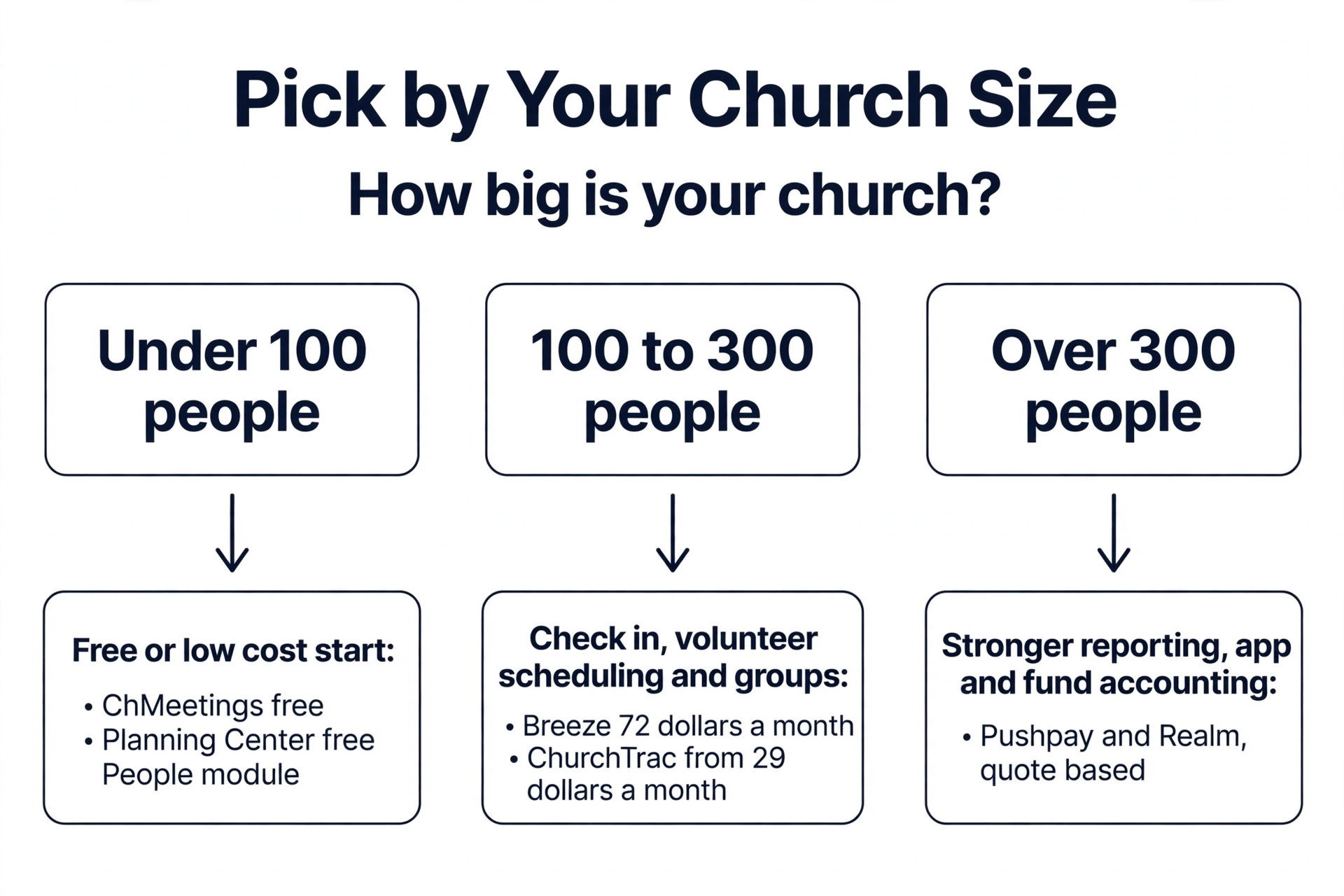
Start with the size of the church and the size of the team, because the best church management software for small churches follows the congregation, not the other way round. A church under 100 people needs a free or low cost start, a simple interface and a volunteer who can learn it in an afternoon. A church of 100 to 300 people needs check in, volunteer scheduling and group management, and a church over 300 people needs stronger reporting and a system that can grow. Write down the headcount, the number of volunteers who will use the system, and the one job that hurts most today, then check each system against those three facts before you look at the price.
Next, work out the total monthly cost, including giving fees. Take your monthly digital giving, multiply by the card rate, and add the subscription. A church receiving 20,000 dollars a month in digital gifts pays about 580 dollars a month in card processing at typical rates, which can dwarf the software subscription itself, so the card rate matters more than the monthly fee. Planning Center at 2.15 percent plus 30 cents saves real money against 2.9 percent plus 30 cents at that volume, and the saving grows with giving.
Then test the system with real volunteers. Most systems offer a free tier or a trial, so add 20 members, run a Sunday check in, schedule a volunteer rota and produce a giving statement. A system that feels fast in the demo and slow on Sunday morning will cost you volunteers, and volunteers are harder to replace than software. The right system is the one your least technical volunteer can use without calling the pastor for help.
What to Check Before You Commit
A church software contract is a giving contract as much as a software contract, and the best church management software for small churches still needs its terms read in full, because the terms differ more than the prices. Read the subscription, the card rate, the contract length and the data export terms together, and ask for the total in writing for your giving volume. When a vendor will not publish a price and will only quote, treat that as a sign to compare carefully, because quote based pricing usually means the price depends on your size and your negotiating power.
Check the data export at the same time. A system that holds your member list and your giving history should let you export both in a standard format, so a move to another system is possible without retyping years of records. Ask who owns the data, how to export it, and what happens to it when the contract ends. A system that locks your data in is a risk, whatever its features promise.
Check the add ons too. A custom app, a website, messaging and worship tools are often billed separately, and the headline price rarely includes them. List every add on you need, price each one, and add the total to the monthly subscription before you compare systems. A system that looks cheap at zero dollars a month and costs 119 dollars a month with the bundle is not the cheap option for a church that needs the bundle.
- Confirm the monthly subscription for a church of your size in writing.
- Confirm the card giving rate and the bank transfer rate for your volume.
- Confirm you can export members and giving records in a standard format.
- Confirm the price of every add on you need, including the app and the website.
- Confirm the contract length, the renewal clause and the exit terms.
Mistakes That Waste Money
The most common mistake when picking the best church management software for small churches is choosing a system built for a large church. A small congregation buys an enterprise platform, pays for features it never uses, and the volunteers stop using it because the menus are too deep. The fix is simple, pick the system that fits the church you have today, not the church you hope to have in 5 years, and move to a bigger system only when the small one clearly limits you.
The second mistake is ignoring the giving fee. A church picks a free giving platform, processes 20,000 dollars a month, and pays 580 dollars a month in processing when a system with a lower card rate would have saved more than 100 dollars a month. The subscription is visible, the processing bill is larger, and the comparison that matters is the total. Run the giving sum before you sign, not after the first month.
The third mistake is launching with no data migration plan. A church buys a new system, leaves the old spreadsheets in place, and runs two member lists for a year, so nobody trusts either one. The fix is to migrate before launch, clean the list, remove duplicates, and train one volunteer to own the list. Breeze offers free migration, and most vendors will help, so ask for the migration help in writing before you pay.
Our Verdict
Planning Center is the pick for most readers among the best church management software for small churches, because the free People module, the low card rate of 2.15 percent plus 30 cents, and the pay per module design let a small church start at zero dollars and add features as it grows. The service planning and volunteer scheduling are the best on this list, and the Church Center app gives members a free way to give, join groups and check in.
Breeze is the pick when simplicity matters most, because the flat 72 dollars a month, the clean interface and the free migration make it the easiest system for volunteers to run. ChurchTrac is the pick when the budget is tight, because the full feature set from 29 dollars a month is unmatched value, and ChMeetings is the pick for a church under 50 people, because the free plan covers the whole congregation.
When giving comes first, start with Tithe.ly, because the free giving plan and the 119 dollar a month bundle cover giving, management, an app and a website in one account. When the app and the media matter most, look at Subsplash, and when fund accounting is the hard part, look at Realm. The best system is the one your volunteers will use every Sunday, at a total cost your treasurer can defend.
Frequently Asked Questions
What is the best church management software for a small church?
Planning Center is the best overall pick for most small churches, because the People module is free for unlimited people, the card rate is the lowest on this list at 2.15 percent plus 30 cents, and you add modules only as you need them. Breeze is the best pick when simplicity matters most, at a flat 72 dollars a month, and ChurchTrac is the best pick when the budget is tight, from 29 dollars a month with every feature included.
How much does church management software cost per month?
Most churches pay between 29 and 160 dollars a month for software, with free tiers available for giving and, in Planning Center case, for the member database. Published 2026 prices run from zero dollars a month for Tithe.ly Giving and ChMeetings for up to 50 people, to 239 dollars a month for a full Planning Center stack at high volume. Quote based systems such as Pushpay, Subsplash and Realm publish no price, so ask for a written quote.
Is there free church management software for small churches?
Yes, with limits. Planning Center People is free forever as a member database, Tithe.ly Giving is free with no monthly fee, and ChMeetings is free for up to 50 people. A genuinely free tier is usually funded by processing fees, which is a real cost, just a variable one, so check the card rate before you call the system free. ChurchTrac and most others offer a 30 day trial rather than a permanent free plan.
What is the cheapest church management software?
ChurchTrac is the cheapest full system, starting at 29 dollars a month for up to 75 names with every feature included, and ChMeetings is cheaper still for a very small church, free for up to 50 people and 12 dollars a month for 100 people. Planning Center can cost zero dollars a month for a church that only needs the free People module and free giving, though the total rises as modules are added. Compare the total, including giving fees, not only the subscription.
Does Breeze or Planning Center handle child check in?
Yes, both handle it. Planning Center Check Ins is a paid module at about 15 dollars a month, with strong child check in, security labels and volunteer scheduling. Breeze includes check in in the flat 72 dollars a month, with a simpler setup that suits a small church. Both let parents check children in on Sunday, print security labels and track attendance, so the choice is between the modular depth of Planning Center and the flat simplicity of Breeze.
Should a small church pay for a custom church app?
Only when members will use it. A custom app costs 89 dollars a month from Breeze or Tithe.ly, or is included in the 119 dollar a month bundles, and it is worth paying for when the church has an active online audience, regular events and a giving base that uses phones. A church under 100 people with a simple website and a free Church Center app from Planning Center will get the same jobs done for less, so test the free app first and pay for a custom app only when members ask for it.