The verdict is simple. Namelix is the best starting point for most founders, and Instant Domain Search is the best checker once you have a shortlist. That combination costs nothing, produces names you can actually register, and avoids the trap that ruins most naming sessions, which is falling in love with a name that is taken, trademarked, or priced at a premium you never saw coming. The best ai domain name generators earn their place by doing two jobs at once. They invent names you had not thought of, and they check whether those names are available before you get attached to them.
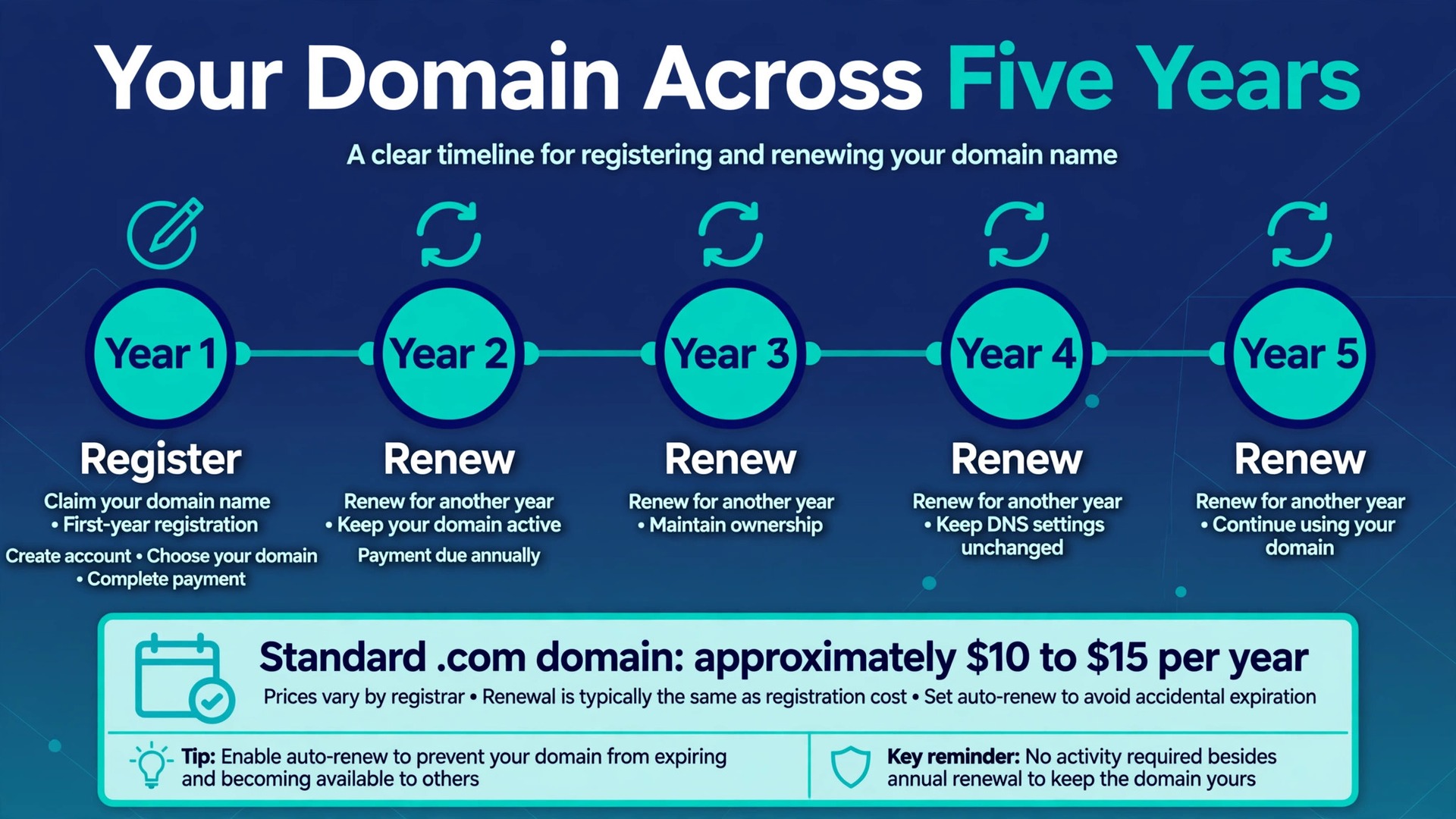
A domain name is the cheapest decision a new business makes and one of the hardest to undo. Change it later and you lose links, email history, and the recognition you spent months building. This guide ran the same kind of test through ten tools, compared what each one actually returns, and recorded the free limits and the real costs. Every tool below is free to search. You only pay when you register a name, usually around 10 to 15 dollars a year for a standard dot com.
How We Tested the Best AI Domain Name Generators
We judged each tool on four questions that matter to a founder with a blank page. First, does it invent new names, or does it only shuffle the words you type. Second, does it check availability in real time, so you see which names you can buy. Third, does it help beyond the name itself, with social handle checks, trademark signals, or a logo preview. Fourth, what does the free tier actually allow before it asks for money.
The test used one seed idea, a neighbourhood bakery, because a concrete business exposes the difference between tools fast. Invented brandable names, real word combinations, and available dot com results were counted separately, since a tool that returns 30 names with only 12 available dot coms is less useful than a tool that returns 8 names you can all buy. Prices in this guide come from vendor pages and 2026 comparisons that rechecked those pages in September and October 2026, and registration prices change often, so confirm the renewal price on the registrar page before you buy.
One more rule shaped the testing. A tool that only works when you already know the name is a checker, not a generator, and it was judged as a checker. A tool that invents names but never shows availability was judged as an idea machine, and its score depended on the quality of the ideas rather than the size of the list.
That is the standard the best ai domain name generators in this guide were judged against, and it is why the top two tools do different jobs instead of competing on the same one. A founder who understands that split wastes less time, because the brainstorming tool and the checking tool are used in sequence rather than compared as if they were the same thing.
The Best AI Domain Name Generators at a Glance
The first table covers the five strongest tools for inventing names. Namelix leads for brandable ideas, while Instant Domain Search leads for checking them.
| Tool | Best for | Free search | Availability check |
|---|---|---|---|
| Namelix | Brandable invented names | Yes, generous | Yes |
| Instant Domain Search | Fast available dot com ideas | Yes | Yes, as you type |
| Namecheap AI | Registrar native search | Free with account | Yes |
| Squarespace Domains | AI ideas from a description | Yes | Yes |
| Hostinger AI | Short AI shortlist | Yes | Yes |
The second table covers five more tools that are better for brainstorming volume and word combinations than for inventing a brand from nothing.
| Tool | Best for | Free search | Availability check |
|---|---|---|---|
| DomainWheel | Brainstorming volume | Yes, unlimited | Yes |
| Nameboy | Word combinations | Yes | Yes |
| Panabee | Creative word merges | Yes | Yes |
| Lean Domain Search | Available dot com pairs | Yes | Yes |
| Dynadot AI | Filtered suggestions | Yes | Yes |
Best Pick by Job
The right tool depends on where you are in the naming process, so the table below matches the pick to the job instead of naming one winner for every founder.
| Your situation | Best pick | Why it fits |
|---|---|---|
| You have no name at all | Namelix | Invented brandable names with style filters |
| You have a shortlist to check | Instant Domain Search | Availability appears as you type |
| You want a name and a logo | Namelix | Logo previews sit next to each name |
| You want social handles too | DomainWheel | Social availability is part of the result |
| You are registering today | Namecheap AI | Search and registration live in one place |
| You want short available dot coms | Lean Domain Search | Pairs your word with common prefixes |
The 10 Best AI Domain Name Generators in Detail
1. Namelix
Namelix is the tool most people mean when they say AI name generator, and it earns that position. You describe the business, pick a style such as invented words, compound words, or real words, set a length, and it returns short brandable names with a rough logo mockup next to each one. The logo preview matters more than it sounds, because it shows whether a name looks like a brand or only reads like a word.
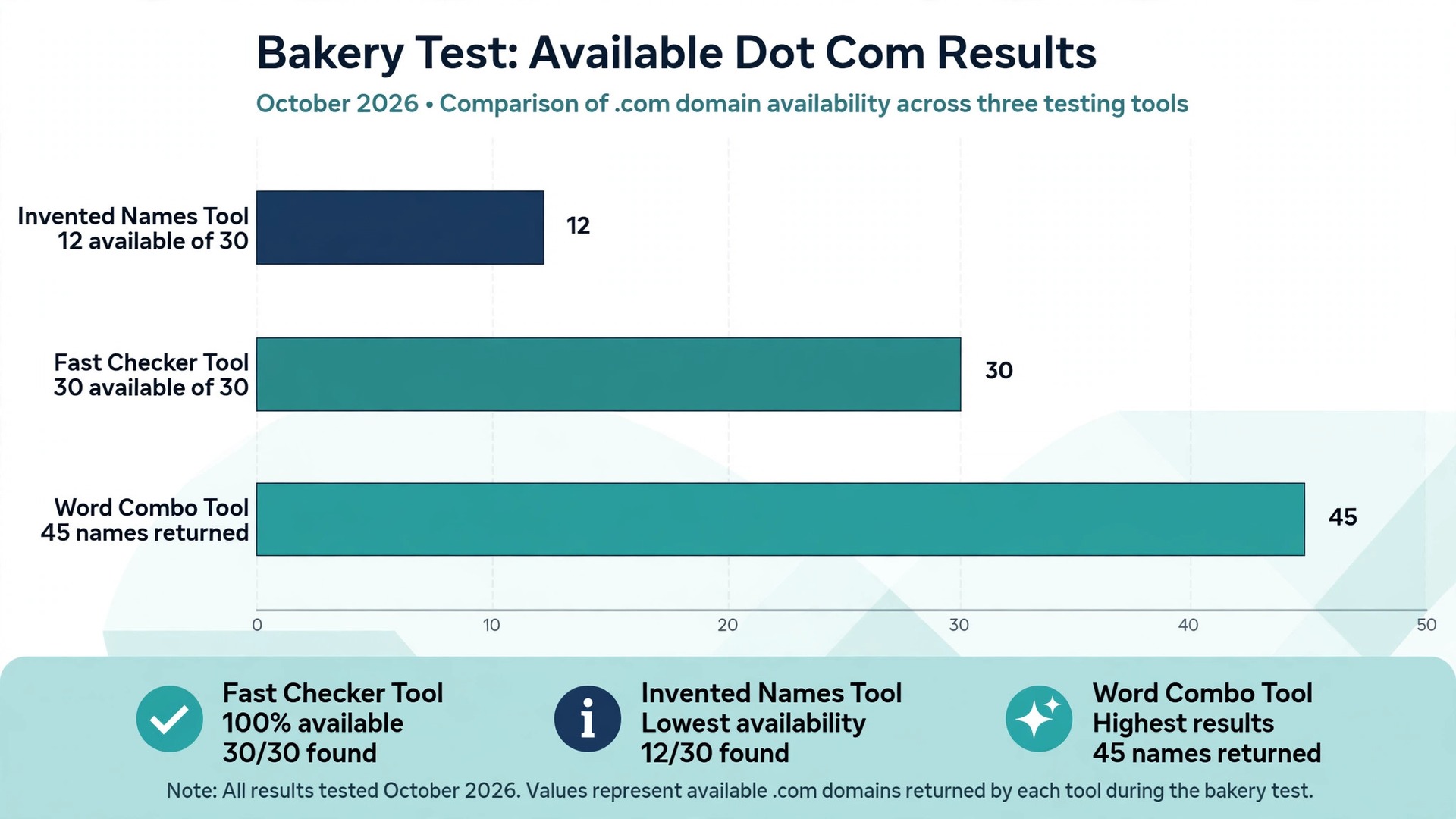
Namelix is free to use, with paid plans that unlock more logo customisation and brand kit features. In an October 2026 test on a bakery seed, its first batch of 30 names included 12 available dot coms, which is a realistic hit rate for invented names. The rest were taken or premium priced, and Namelix shows that clearly instead of hiding it.
Use Namelix first, when the page is blank and you need ideas you would not reach on your own. Then take the best three names to a checker before you commit, and run a trademark search before you pay for anything, because availability does not mean the name is legally safe.
2. Instant Domain Search
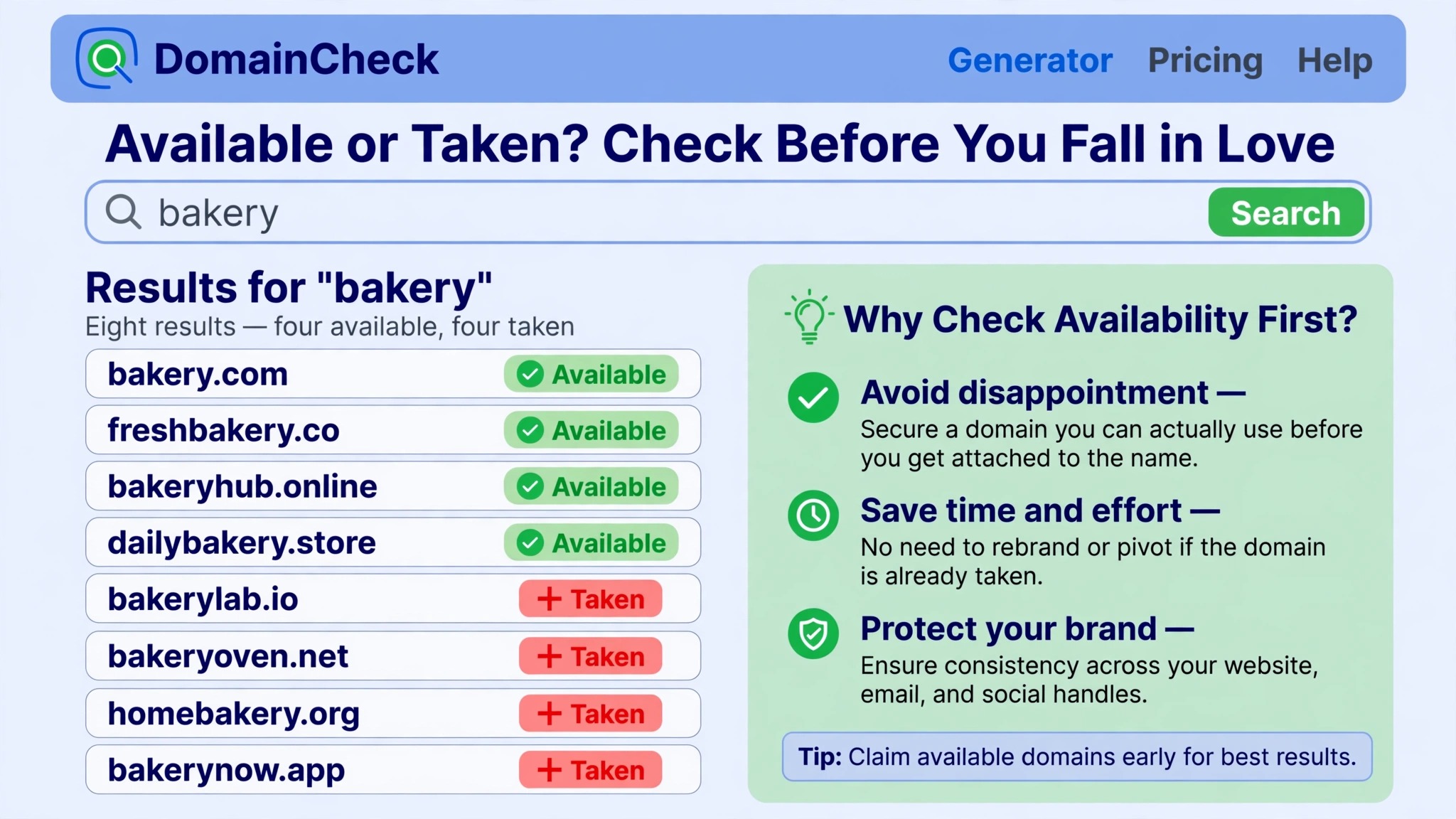
Instant Domain Search is less of a generator and more of a very fast checker, and that is exactly what you need once you have ideas. You type, and availability appears across extensions as you go, with a handful of suggested variations underneath. In the October 2026 bakery test it returned 30 available dot com alternatives in seconds, the most useful list in the whole comparison.
The tool is free to search, and you only pay when you register through a registrar. It will not invent a brand for you, so it cannot replace Namelix at the start of the process. It is the second step, the one that turns a list of favourites into a list of names you can actually buy.
Keep Instant Domain Search open in a second tab during every naming session. Every time a generator suggests a name you like, check it here immediately, before you discuss it with a partner or design a logo around it.
3. Namecheap AI
Namecheap AI sits inside a registrar, which gives it one advantage the standalone tools cannot match. The path from idea to registration is a single flow, with no copy and paste between sites and no surprise about whether the name is still available when you reach the checkout. The AI generator produces suggestions from a keyword or a short description, and the availability check is part of the same page.
The tool is free with a Namecheap account, and registration prices for a standard dot com sit in the usual 10 to 15 dollar a year range, with renewal prices that deserve a second look before you buy. Namecheap also offers Beast Mode, a batch checker for people who arrive with a list of names and want to test them all at once.
Choose Namecheap AI when you are ready to register today and you want the shortest route from idea to ownership. It is a checker with ideas attached, rather than an idea machine, so pair it with Namelix if you are still brainstorming.
4. Squarespace Domains
Squarespace Domains takes a different input from most generators. Instead of a keyword, you describe the business in a sentence or two, and the AI returns a short list of names with matching domains. In the October 2026 test it produced 5 ideas with 10 domains, a small list, but a tidy one, and the names read like real business names rather than word salads.
The generator is free to search, and registration runs through Squarespace, which suits founders who plan to build the website there anyway. The shortlist approach is the point. Squarespace gives you fewer names to consider, which is a relief after a generator has handed you 200 options and no way to choose between them.
Use Squarespace Domains when you want a curated answer rather than a flood of options. It is also a good second opinion after Namelix, because the two tools approach the same business from different angles and rarely return the same names.
5. Hostinger AI
Hostinger AI produces a short AI shortlist from a description of your business, and it does so inside a hosting company where the next step is obvious. In the October 2026 test it returned 8 names, which is a small set, but each one came with availability and a clear route to registration and hosting in the same account.
The generator is free to search, and Hostinger sells domains and hosting together, which keeps the setup simple for a first website. The trade off is volume. Eight names will not cover a long brainstorming session, and the suggestions lean toward descriptive names rather than invented brandable ones.
Hostinger AI fits a founder who wants a name, a domain, and hosting sorted in one afternoon. Start with Namelix for ideas, then use Hostinger when you are ready to buy and build.
6. DomainWheel
DomainWheel is a brainstorming tool with an AI layer, and it is at its best when you have a keyword and you want volume. Type a word, and it returns variations, synonyms, and combinations, while also checking social media handle availability, which few tools in this guide do well. The social check is the feature that saves real embarrassment later, when the domain is yours and the matching handle belongs to someone else.
The tool is free with unlimited searches, and registration runs through partner registrars. Its suggestions are medium on inventiveness, because it builds from your words rather than inventing new ones, so the names feel familiar rather than surprising.
Use DomainWheel in the middle of a session, when you have a direction but not a name. It is also the best tool here for validating a finalist across platforms before you buy.
7. Nameboy
Nameboy is one of the oldest tools in this category, and its approach has barely changed, because it still works. Enter one or two keywords, and it combines them with common prefixes and suffixes to generate available domains. In the October 2026 test it returned 45 names from a single seed, which is a large list to work through.
Nameboy is free, and its strength is available dot com pairs built from real words. The weakness is brandability, since combined words rarely sound like a modern brand, and the list needs manual filtering. It is a volume tool, and it rewards patience.
Nameboy suits bloggers, local businesses, and side projects where a clear descriptive name beats a clever invented one. For a startup that needs a brandable identity, start with Namelix instead.
8. Panabee
Panabee generates names by combining your keywords in creative ways, including portmanteaus and word merges that read like real brand names. It also checks domain availability and social handle availability, so a promising result comes with the two checks that matter most attached.
The tool is free, and its results sit between Nameboy and Namelix. The combinations are more creative than simple prefix lists, and less invented than a pure AI brand generator. That middle ground is useful when you want a name that hints at what the business does without spelling it out.
Use Panabee when you have two good words and you want to see what happens when they merge. It is a fast way to test whether a descriptive name or an invented name feels right for your business.
9. Lean Domain Search
Lean Domain Search takes a keyword based approach and does one thing well. It pairs your keyword with common prefixes and suffixes and shows you only the names that are available as dot coms. There is no clutter, no premium upsell in the results, and no waiting.
The tool is free, and it is the fastest route to a short available dot com when you already know the core word. The names are descriptive rather than brandable, which limits it for startups, but for a blog, a local service, or a niche site, a clear available name is exactly the goal.
Choose Lean Domain Search when availability is the only filter that matters and you want the answer in seconds. It is a checker disguised as a generator, and it is honest about that.
10. Dynadot AI
Dynadot AI is the registrar tool for people who want control over the shape of the result. It generates domain name and extension suggestions from a keyword or a phrase, then lets you filter by character count, prefixes, suffixes, and extensions. That filtering matters when you have strict requirements, such as a name under 10 characters or a specific extension.
The tool is free to search inside a Dynadot account, and registration runs through the same registrar. It is less famous than Namelix and less fast than Instant Domain Search, but the filters make it the best tool here for a founder with a precise brief.
Use Dynadot AI when you know the constraints and you want the generator to respect them. It is the most practical tool in this guide for turning a specification into a shortlist.
What the Test Results Mean for Your Shortlist
The bakery test exposed a pattern that matters more than any single ranking. Tools that invent names return fewer available dot coms, and tools that check availability return fewer new ideas. Namelix produced 30 names with 12 available dot coms, while Instant Domain Search produced 30 available dot com alternatives from the same seed. Neither result is better in isolation. The first tells you what a brand could sound like, and the second tells you what you can buy today. The best ai domain name generators are the ones that make both steps fast, and the winning workflow uses two tools instead of searching for one tool that does everything.
The second pattern is about volume. Nameboy returned 45 names and GoDaddy style registrar searches returned even more in the same test, yet the extra names did not produce a better shortlist. After the first 20 results, the suggestions repeat the same word combinations with different endings, and the founder spends more time filtering than deciding. A short curated list from Squarespace or Hostinger, with 5 to 8 names, is often more useful than a list of 79, because it forces a decision instead of delaying one.
The third pattern is about descriptive names against invented names. Descriptive names built from real words are easier to understand and harder to remember, while invented names are harder to explain and easier to own. A local bakery benefits from a descriptive name that tells a passer by what it sells. A software startup benefits from an invented name that can grow beyond its first product. The right choice depends on the business, not on the tool, so run both kinds of generator before you decide which direction fits.
The practical lesson is to treat every generator result as a candidate, not as a confirmed brand. A name that looks available in one tool can be taken in another, a premium price can hide behind a normal looking result, and a social handle can belong to an inactive account that still blocks your use of the name. Check the shortlist three times, in three different places, before you pay. The extra ten minutes cost nothing, and they prevent the most common regret in naming, which is building a brand on a name you do not fully own.
There is also a cost lesson hidden in the results. Every generator in this guide is free to search, and the only money that changes hands is the registration fee, so the difference between tools is time, not price. A tool that returns 30 usable names in one minute beats a tool that returns 200 names in ten minutes, because the founder still has to read every name on the longer list. Speed of decision matters more than size of list, and the tools that respect that are the ones that rank highest here.
How to Choose a Domain Name That Lasts
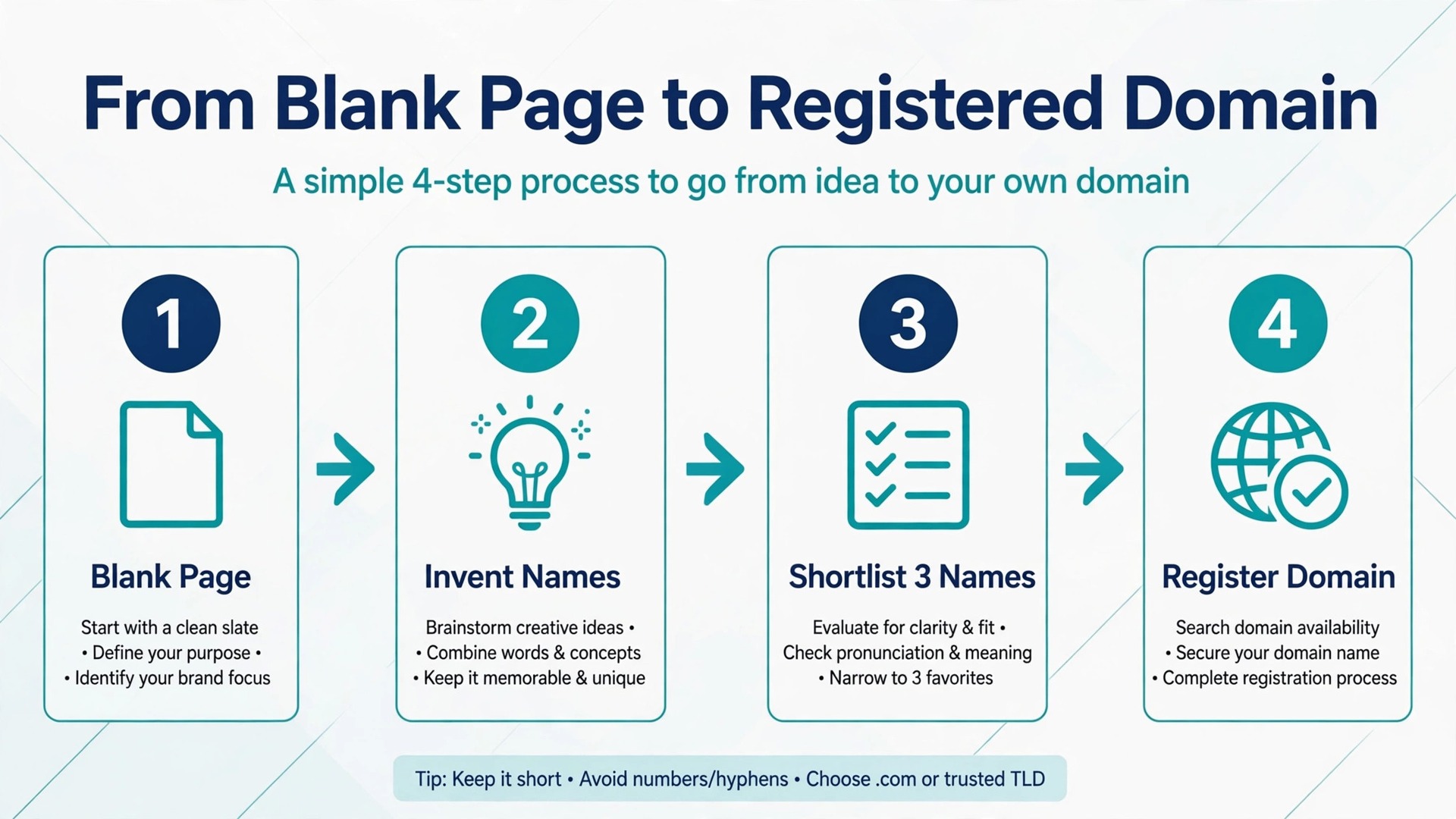
A good domain survives the business growing beyond its first product, so choose with five years in mind rather than five minutes. Work through the steps below before you pay for anything.
- Shortlist three names, not one. A single favourite creates pressure to buy a bad name at a premium price, while three options keep the negotiation honest and the decision calm.
- Say each name out loud, then spell it over the phone. If a stranger cannot spell it after hearing it once, the name will cost you customers every time you say it in conversation.
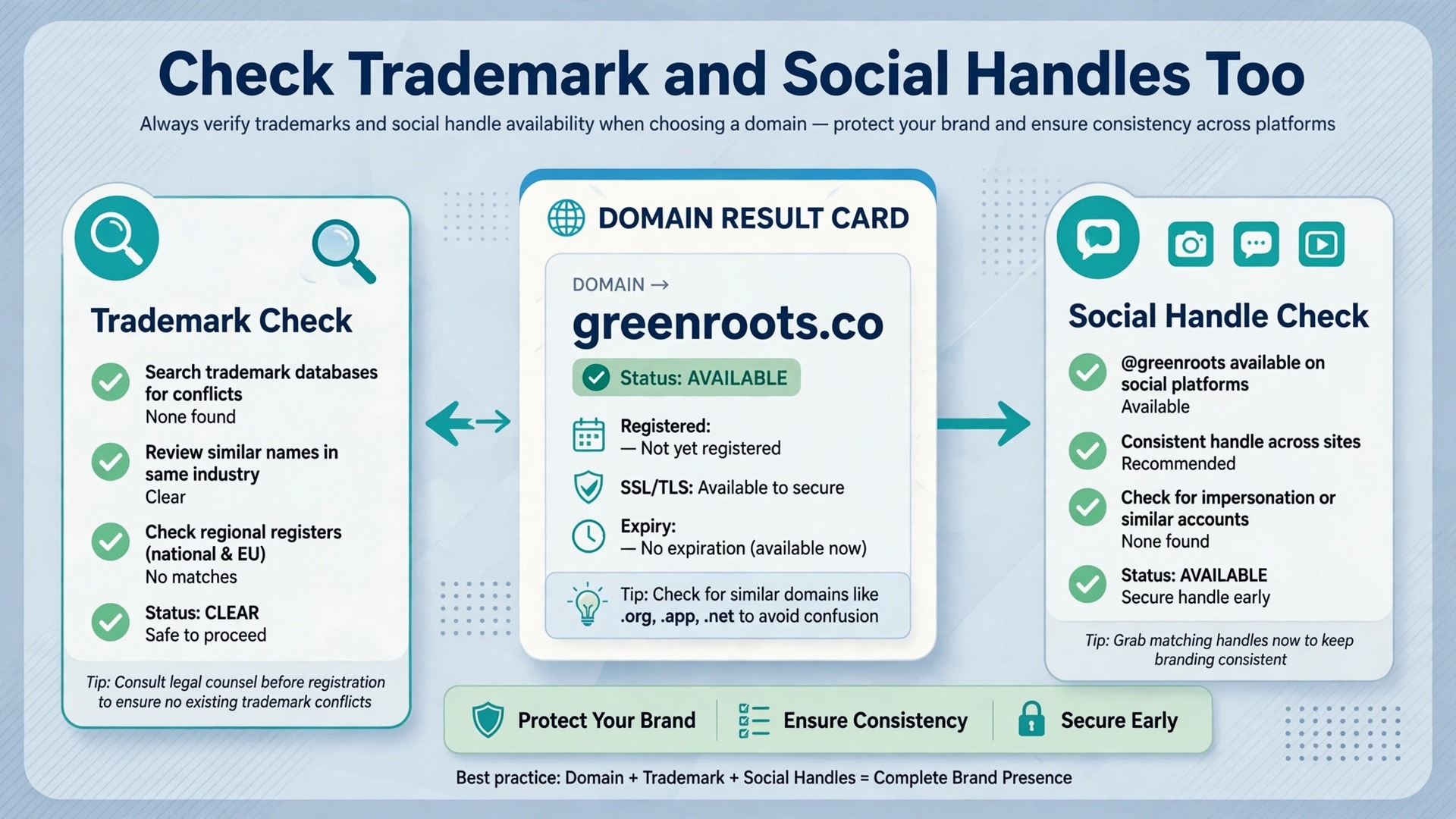
- Check the dot com first, then the social handles, then the trademark register. A name that passes the first check and fails the third is the most expensive kind of available, because you discover the problem after you have built on it.
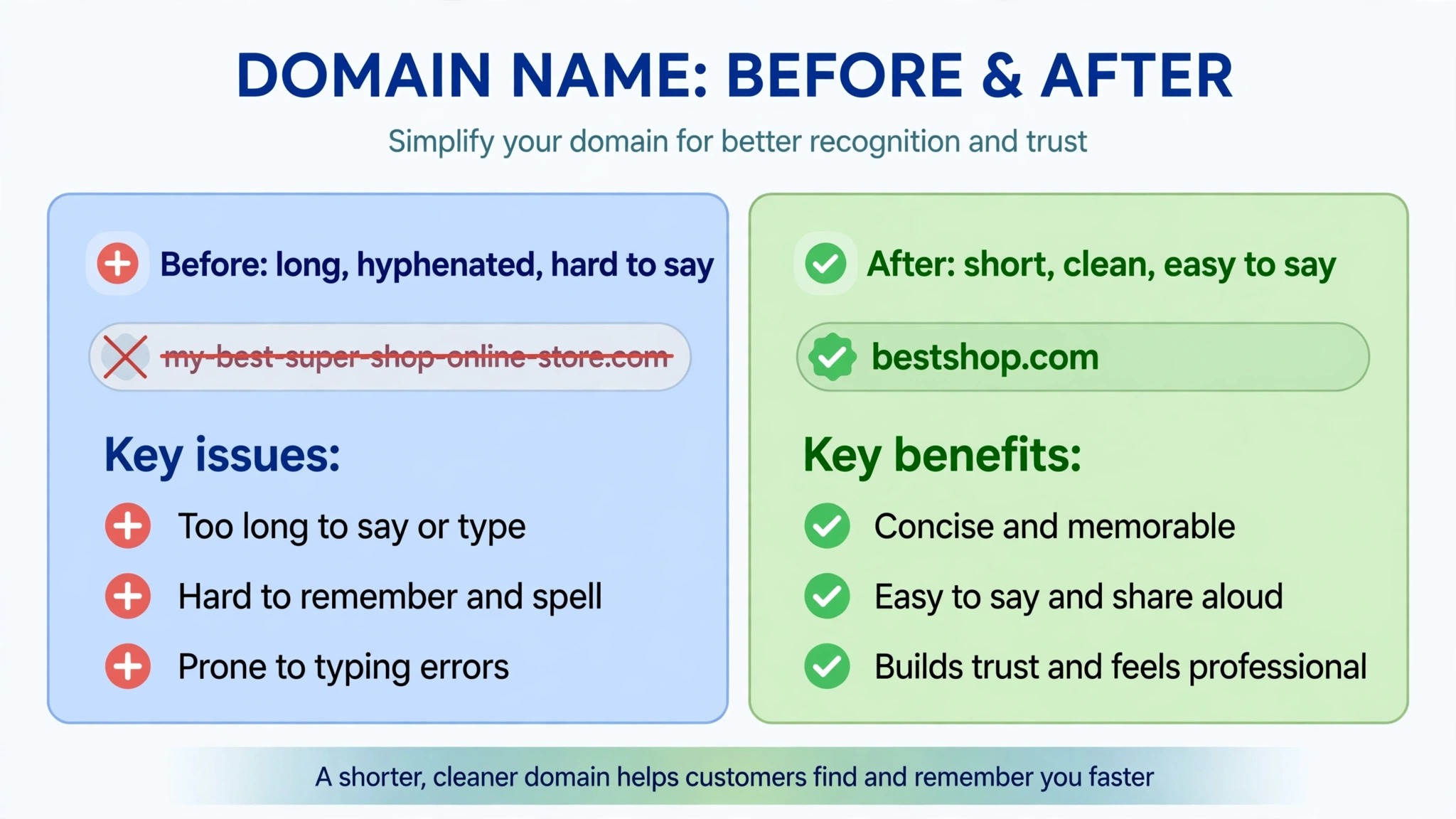
- Avoid hyphens, numbers, and unusual spellings. They make the name harder to say, harder to type, and harder to trust, and they add nothing that a clean name cannot do better.
- Check the renewal price, not only the first year price. Registrars discount the first year and charge the full rate after that, so a cheap first year can hide an expensive second one.
- Register the name yourself, in your own account, with your own email. Never let an agency or a freelancer own the domain for your business, because recovering it later is slow, expensive, and sometimes impossible.
Mistakes That Cost Founders Real Money
The most expensive mistake is buying a premium domain before testing the business idea. Premium names cost hundreds or thousands of dollars, and a new business does not need one. A clean available name at the standard registration price does the same job in the first year, and the money saved pays for the website, the first ads, or the first product run.
The second mistake is trusting a generator result without a trademark check. A domain being available does not mean the name is legally safe, and any tool that implies otherwise is selling false confidence. Search the trademark register in your country before you commit, and be careful with names that resemble existing brands in the same industry.
The third mistake is choosing a name that locks the business into one product. A bakery that becomes a cafe, a consultancy that becomes a software company, and a blog that becomes a store all outgrow a narrow name. Pick a name that fits the business you want in five years, not only the product you sell today.
The fourth mistake is ignoring the social handles. A domain with no matching handle on the platform where your customers live creates confusion and hands traffic to someone else. Check the handles before you register, and accept a different name if the handle you need is taken by an active account.
The fifth mistake is registering with the wrong email or letting the domain auto renew on a dead card. Domains expire silently, and an expired domain can be bought by someone else within weeks. Use an email you check, turn on auto renewal with a working payment method, and set a calendar reminder a month before the renewal date.
The sixth mistake is announcing the name before you own it. Founders post a new brand on social media, tell a room full of people, or print it on a flyer, and then discover that the domain is taken or premium priced. Register first, then announce. The registration costs about the price of lunch, and it is the only step that turns a favourite name into your name.
Frequently Asked Questions
Are the best ai domain name generators really free?
Yes, searching is free on every tool in this guide. You only pay when you register a domain, usually around 10 to 15 dollars a year for a standard dot com. Some tools charge for brand kits, logo customisation, or deeper trademark checks, but the name generation and availability check cost nothing on all ten tools listed here.
What is the best AI domain name generator for a brandable name?
Namelix is the best starting point for a brandable name, because it invents short names with style filters and shows a logo preview next to each result. In an October 2026 test, its first batch of 30 names included 12 available dot coms. Take the best three results to Instant Domain Search to confirm availability, and run a trademark search before you register. That is why it leads this list of the best ai domain name generators for founders who need a brandable name rather than a descriptive one.
How do I know if a domain name is really available?
Use a live checker such as Instant Domain Search or a registrar search, and confirm the result on the registrar checkout page before you pay. A generator result can go stale, and a name can be registered by someone else between the search and the purchase. Availability also does not guarantee trademark safety, so check the trademark register separately.
Should I buy a dot com or a newer extension?
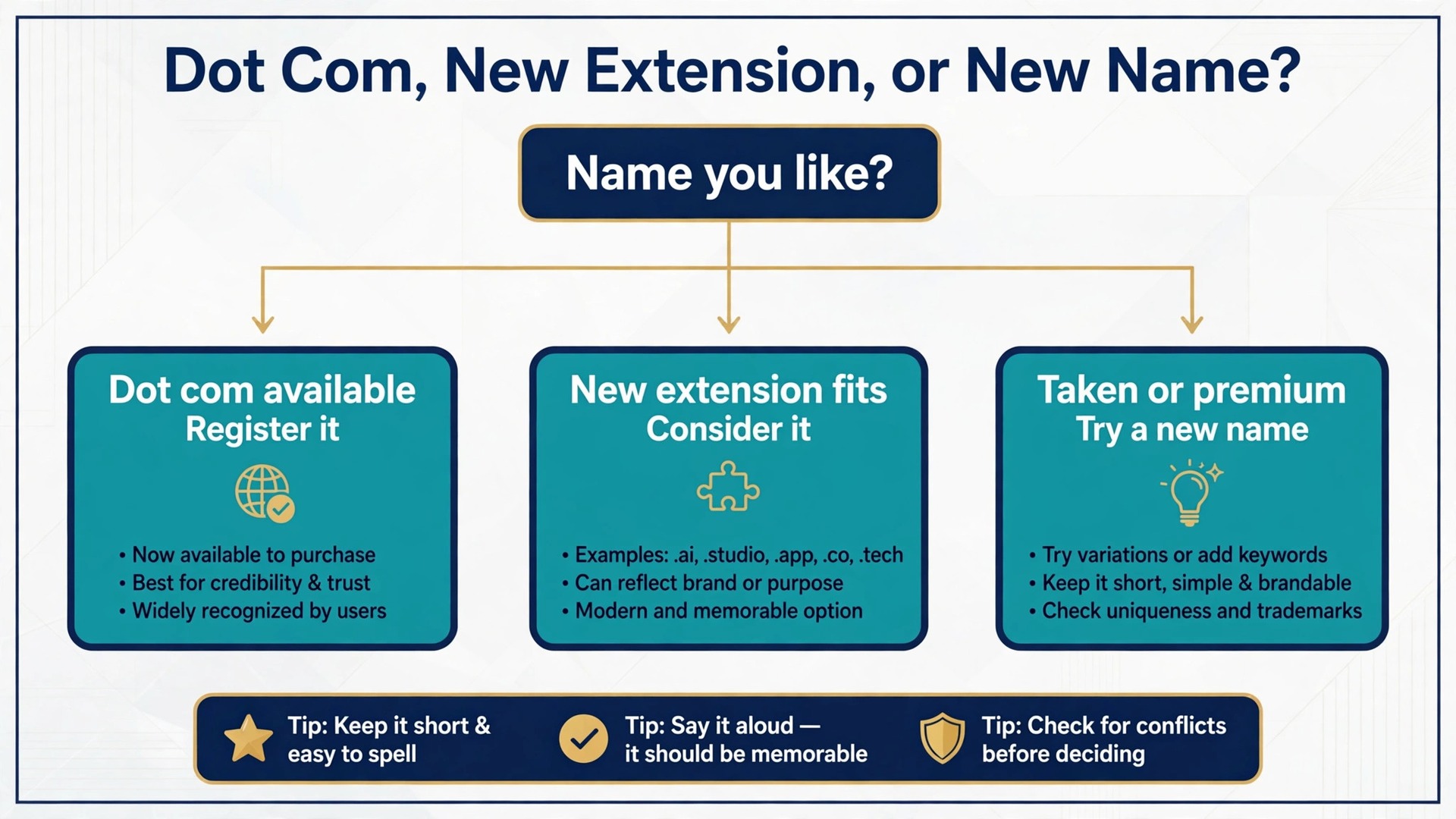
Buy the dot com when it is available at the standard price, because customers still trust it and type it by default. Newer extensions work when the dot com is taken and the extension fits the business, such as a country code for a local business or a tech extension for a software product. Avoid an expensive premium dot com when a clean alternative exists at the standard price.
What happens if my favourite name is taken?
Do not buy it at a premium price on your first day. Try a variation, a different extension, or a new invented name from Namelix, and keep the taken name on a list to revisit later. Many taken domains are unused and become available again, and a new business rarely needs a specific name badly enough to justify a premium purchase.
Can an AI generator check trademarks for me?
Some tools offer a basic trademark signal, but none of them replaces a real trademark search. A generator can flag an obvious conflict, and it cannot confirm that a name is legally safe in your country and your industry. Search the official trademark register before you register a domain you plan to build a brand on, and talk to a lawyer when the stakes are high.
The Bottom Line
The best ai domain name generators do two jobs, and the tools in this guide split neatly between them. Namelix invents the names, Instant Domain Search checks them, and the rest fill the gaps in between. Start with a blank page and Namelix, shortlist three names you can say out loud, check availability and social handles and trademarks in that order, and register the winner yourself at the standard price. A good name is short, spellable, and free to grow with the business, and it costs about the price of lunch for a year. Spend the evening on the shortlist, not on the search, and let the checks do the hard work before you pay.