The verdict first. Status works for a small business when it is treated as a daily shop window for people who already know you, not as a broadcast channel for strangers. A whatsapp status marketing strategy for small business succeeds on three things only. People save your number, you post something worth a reply nearly every day, and you answer every reply within minutes. Get those three right and Status becomes the cheapest sales channel most small businesses own. Miss any one of them and the posts sit unseen, no matter how good the photos look.
That verdict matters because Status has a hard ceiling that no amount of posting can lift. A Status update disappears after 24 hours, and it is seen mainly by contacts who have saved your number. WhatsApp has more than 2 billion users worldwide, and the free WhatsApp Business app puts your shop in the pockets of the customers who already buy from you. But it cannot find new customers by itself. Nobody discovers your Status through search or through a feed of strangers. Your audience is the list of people who know you well enough to save your number, and your job is to grow that list one sale at a time.
This guide is built for a shop, a salon, a food vendor, a tutor or a service provider with a small team and no advertising budget. It covers how Status actually works, how to build the audience that can see it, what to post and when, how to turn views into replies and replies into orders, and how to measure the whole thing in ten minutes a week. Prices quoted are for the free WhatsApp Business app, since Status posting itself costs nothing. The only paid pieces mentioned are optional ads that click to WhatsApp, and those are flagged as paid wherever they appear.
How WhatsApp Status Actually Works
Status is a feed of photo, video and text updates that sits at the top of the Updates tab in WhatsApp. Each update disappears after 24 hours. Contacts can view it, like it, and reply to it, and a reply starts a private one to one chat with you. You can also set who sees each update, using the privacy options for all contacts, selected contacts, or everyone except selected contacts. A Status post can be a photo, a short video of up to 90 seconds, a text update on a coloured background, a voice note, or a link preview.
The visibility rule is the part most sellers misunderstand. Practitioner guides report that Status is shown to contacts who have saved your number, and that the saving needs to run both ways before a customer reliably sees your posts. WhatsApp own help pages do not spell out that rule in the same words, so treat it as widely reported rather than platform documented, and test it on your own phone with a friend.
What is certain is that a customer who never saved your number will probably never see your Status. That single fact shapes the whole strategy in this guide. Audience building comes before content, because content without an audience is a notice pinned to a board nobody walks past.
Status also differs from the other tools inside WhatsApp in one useful way. A broadcast message lands in a customer inbox and can feel intrusive if it arrives too often. A group message reaches many people at once but quickly becomes noisy, and members can mute it or leave. A Status post is passive. It waits in the Updates tab until a customer chooses to look, which means you can post several times a day without interrupting anyone. That low pressure quality is why customers tolerate daily Status posts from a shop they like, while the same shop sending daily broadcast messages would be blocked within a week.
The WhatsApp Business app adds the tools that make Status part of a real sales process. A business profile shows your address, hours and website. A catalog lets customers browse products with photos and prices without leaving WhatsApp. Quick replies save your most common answers as shortcuts, and labels tag chats by stage, such as new customer or pending payment. Every one of these tools is free inside the app, and together they turn a Status view into an order without a second app.
WhatsApp Status Marketing Strategy for Small Business: The 30 Day Plan
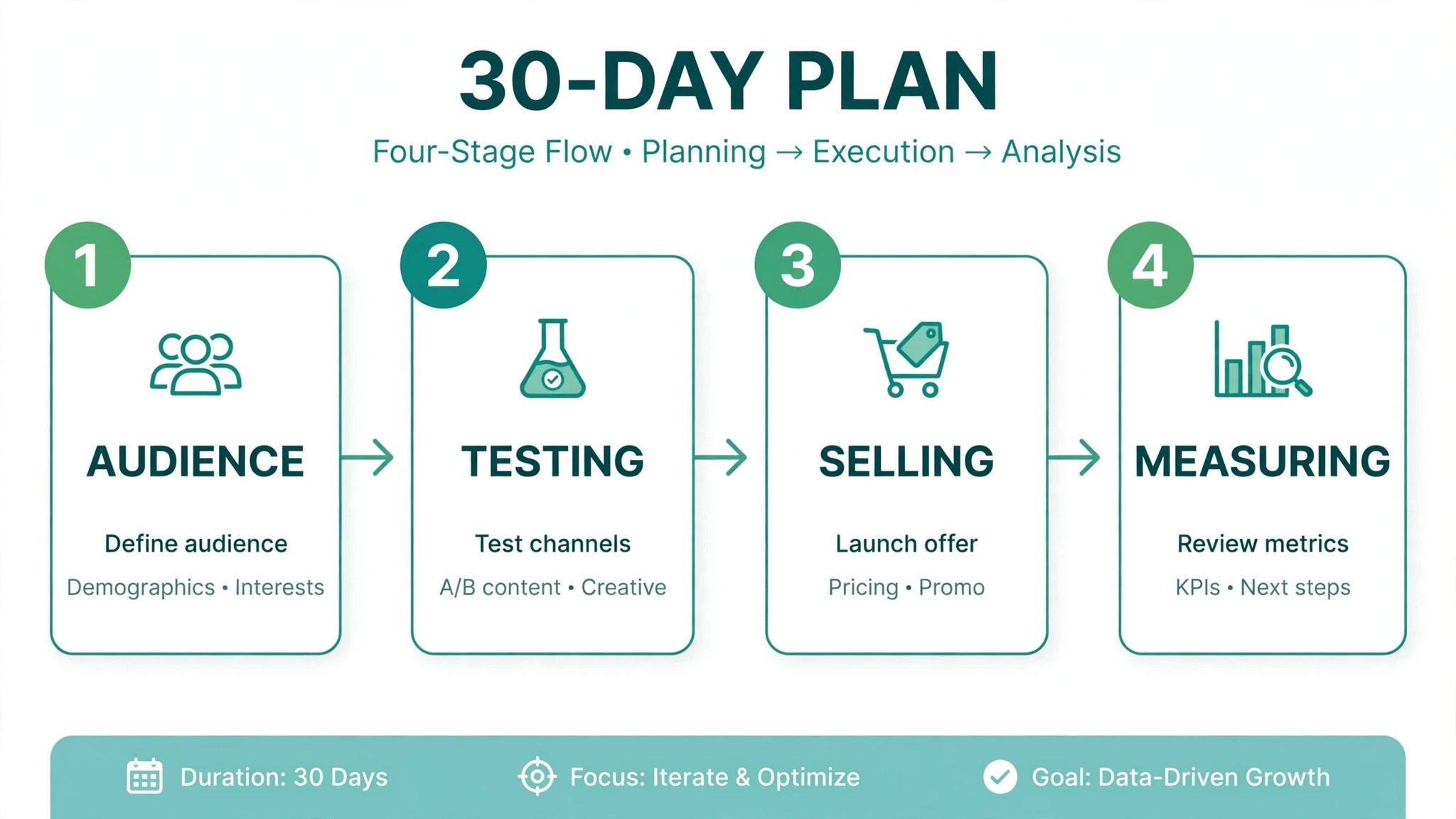
A strategy is a plan you can repeat, not a single good post. The plan below runs for 30 days and is built to be repeated every month with fresh products and fresh proof. It has four phases, each one week long, and each phase has one job. Week one builds the audience. Week two tests content. Week three sells. Week four measures and repeats what worked. Follow the phases in order, because selling in week one to an audience of twelve people wastes the offer.
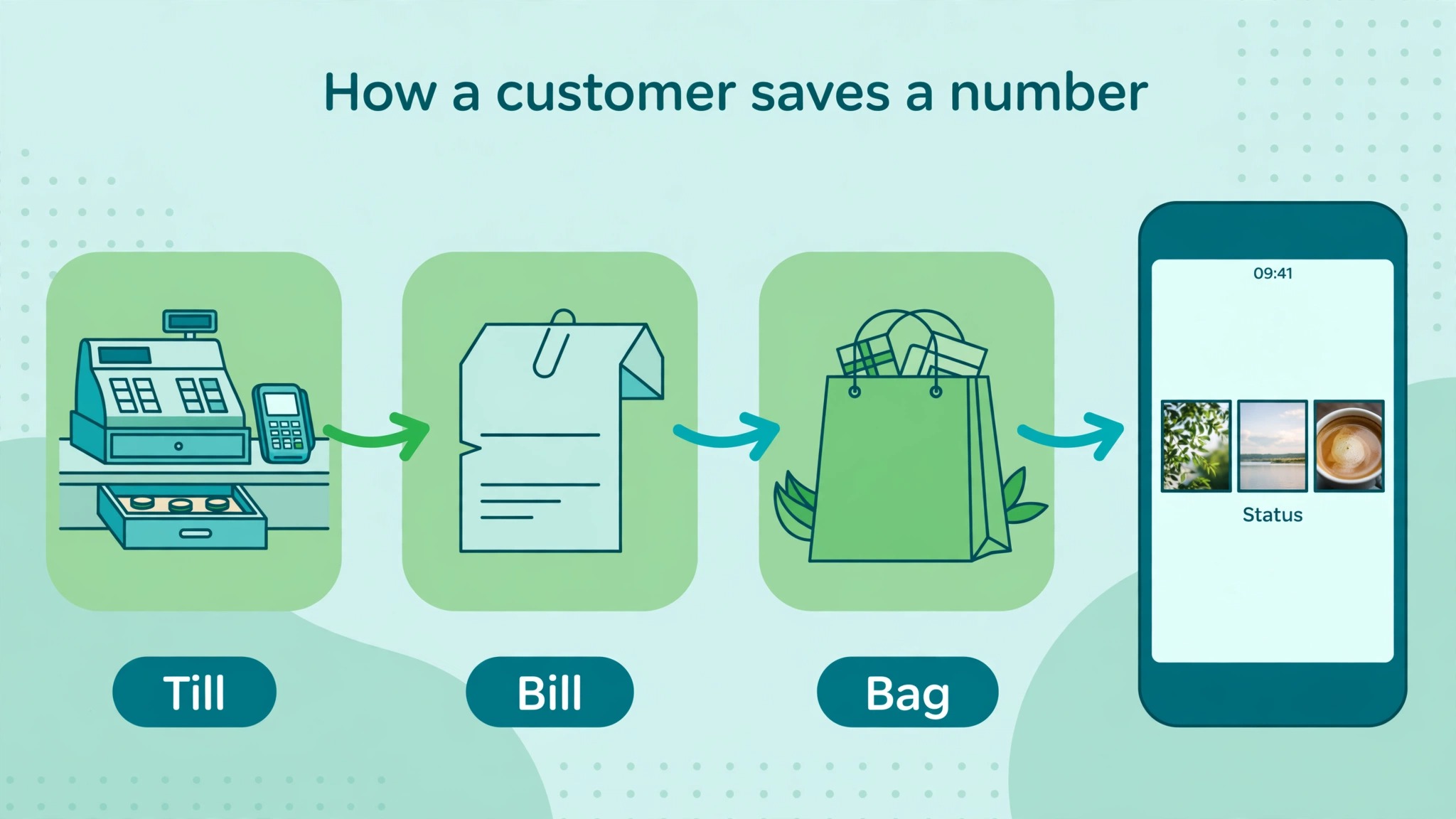
Week one is audience week. Your only goal is to get more customers to save your number. Ask every customer at the till, print the number on bills and bags, add it to your shop board, and put a short line on every receipt. The line that works best is simple and specific. Save this number for daily offers on Status. Say it out loud at every sale, because a printed number nobody notices is the same as no number at all. Aim to add at least five saved contacts a day. By the end of the week you should have 30 or more new people who can actually see your posts.
Week two is content testing week. Post three times a day at three different times, morning, midday and evening, and vary the format. One day post a product photo with a price. The next day post a short video of the product in use. The next day post a customer message of thanks, shared with permission. Watch which posts get replies, not which ones get views, because a reply is a person raising a hand and a view is only a glance. Keep a simple note of the top three posts of the week. Those three formats become your core content for the month.
Week three is selling week. Now that you know which formats earn replies, run one clear offer with a deadline. One product, one price, one last date. Post the offer in the morning, post proof in the afternoon, such as a photo of orders being packed, and post a reminder in the evening that the offer ends tonight. Answer every reply within minutes, and use a quick reply for the price, the delivery cost and the payment details so nobody waits. One focused offer a week beats five vague offers a day.
Week four is measurement week. Count the numbers that matter, which are covered in full later in this guide. How many new contacts saved your number, how many replies each post type earned, how many orders came from Status replies, and how much revenue those orders brought. Drop the weakest format, keep the strongest two, and start the next month with the audience you built. A whatsapp status marketing strategy for small business is not a campaign with an end date. It is a weekly rhythm, and the rhythm is what compounds.
Building the Audience That Can See Your Posts
Audience building is unglamorous work, and it is the step most sellers skip. They post for a month, see ten views, and conclude that Status does not work. The posts were fine. The audience was not there. Every customer interaction is a chance to earn a save, and the businesses that win at Status treat the save as the real conversion, long before any sale happens.
Start at the point of sale, because that is when a customer is happiest with you. After payment, say one sentence. Save our number and you will see tomorrow offer on Status before anyone else. Then hand over the bill with the number printed large on it. A small card at the counter works too, with the number and the same line. Customers save numbers that promise something specific. They ignore numbers that only say contact us. The promise must be concrete, such as daily offers, new stock first, or the menu every morning. Pick the promise your customers actually want and repeat it everywhere.
One caution matters here. Never add people to a broadcast list or a group without their agreement, and never buy contact lists. WhatsApp business messaging policy requires opt in before a business messages people, and the person must have agreed to hear from your business by name. Build the list honestly, one customer at a time, and the audience you build will actually buy.
What to Post: The 3 to 1 Content Mix
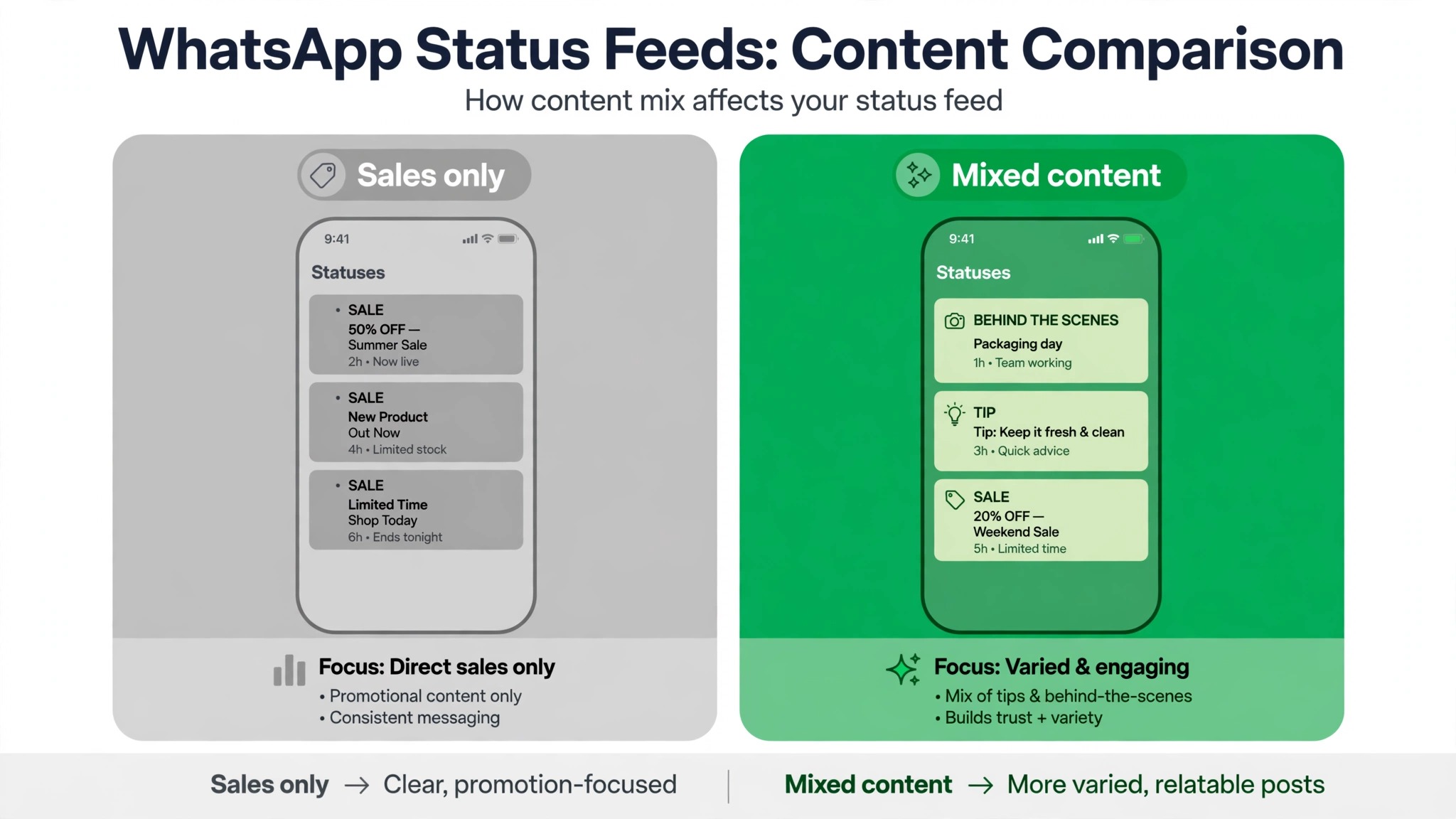
If every post is a sale, people stop watching. If no post ever sells, the channel earns nothing. The mix that works for most small businesses is three posts that give value or build trust for every one post that sells. That ratio keeps viewers coming back, and it keeps the selling posts effective because they arrive inside a feed people already enjoy. The table below shows the seven post types that fill the mix, with an example for each one.
| Post type | What it shows | Example | How often |
|---|---|---|---|
| New stock | One product, one price | Just arrived, blue cotton shirts, 850 taka | Two times a week |
| Behind the scenes | Work in progress | Packing today orders, 40 parcels ready | Two times a week |
| Customer proof | A thank you, with permission | A customer photo with her new curtains | Once a week |
| Useful tip | Advice tied to what you sell | How to keep fried snacks crisp for hours | Once a week |
| Offer | One product, one price, one deadline | Weekend special, 15 percent off till Sunday 8 pm | Once a week |
| Restock alert | A popular item is back | Back in stock, only 12 pieces | When it happens |
| Question | A poll style question | Which colour should we stock next, red or green | Once a week |
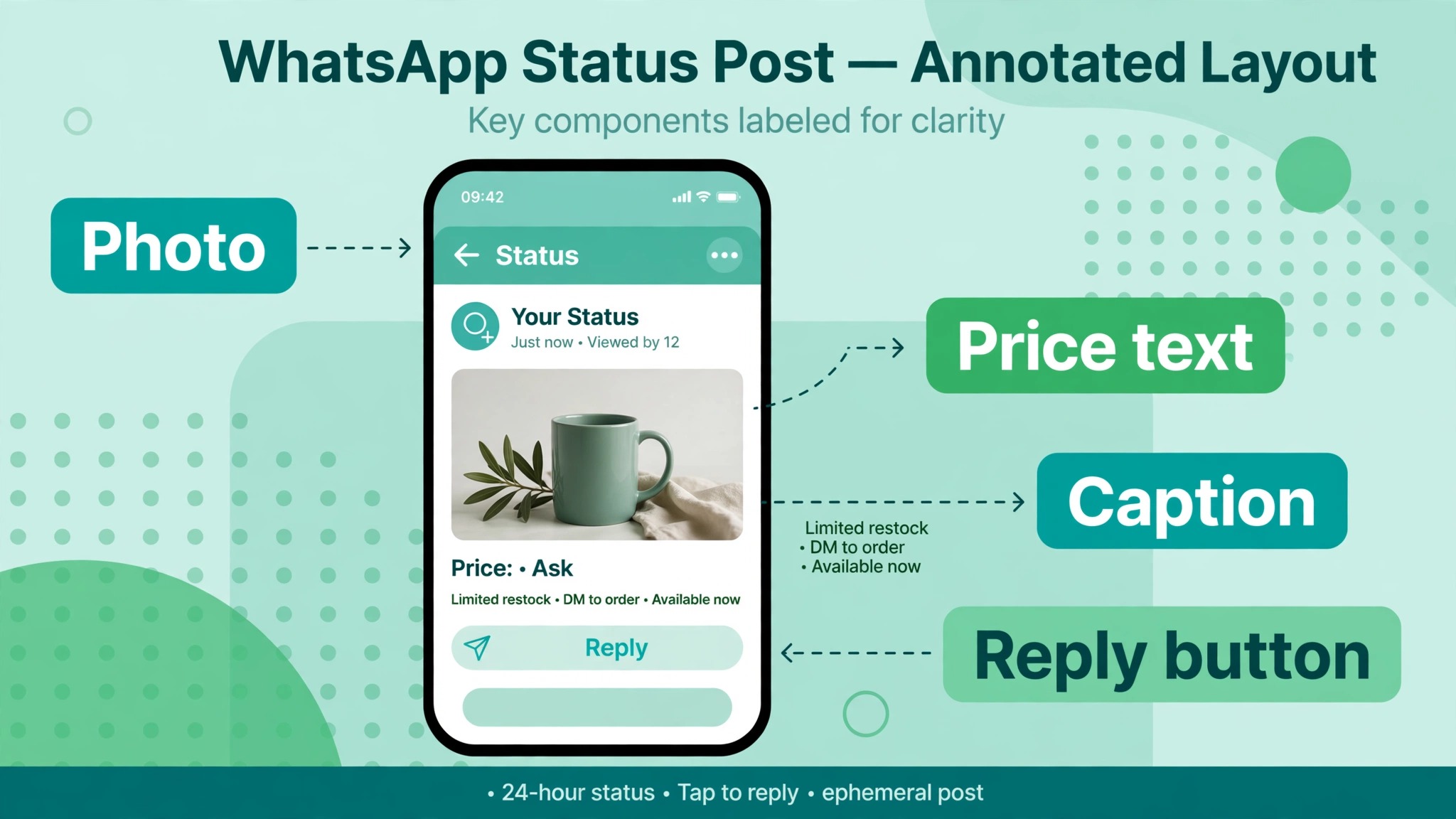
New stock posts should show one product at a time. A photo of a whole shelf tells the viewer nothing, while a single item with a price and a size range invites a reply. Take the photo in daylight, fill the frame with the product, and put the price in large text on the image itself, since many viewers watch with the sound off and read the image before the caption. If the product is food, show it fresh and steaming. If it is clothing, show it worn by a real person rather than folded on a table. Real photos beat stock photos every time, because customers trust a shop they can see.
Behind the scenes posts build the trust that closes sales. A short video of orders being packed, dough being kneaded or a delivery bike being loaded tells the customer that a real business with real hands stands behind the offer. Keep these clips under 30 seconds and shoot them vertically, since Status is a vertical format. Add a caption in your own words rather than a polished slogan.
Customer proof is the strongest post type in the mix, and it needs the most care. Always ask permission before sharing a customer photo, message or video, and share only what they agreed to. A screenshot of a thank you message with the name visible is powerful, but only with that customer approval. One genuine proof post a week does more for trust than a month of self praise.
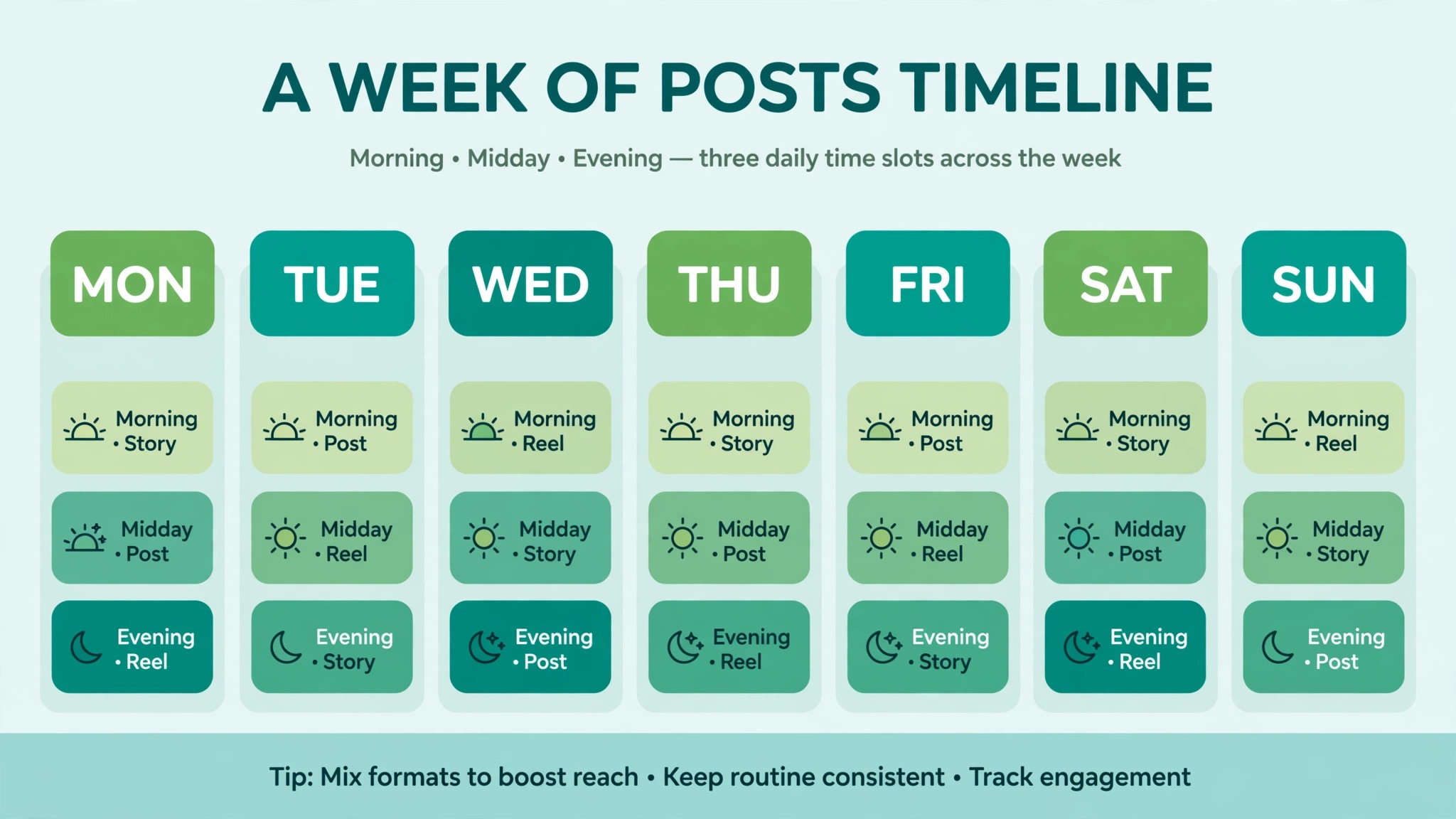
A Daily and Weekly Posting Schedule
Consistency beats volume. Two good posts a day are better than six rushed ones, and a schedule you can keep for months beats a heroic week followed by silence. The schedule below takes about ten minutes a day once you build the habit, and it is designed for a shop that opens in the morning and closes in the evening. Adjust the times to your own customers, since a food vendor and a tuition class have very different busy hours.
| Day | Morning post | Midday post | Evening post |
|---|---|---|---|
| Monday | We are open, today menu or stock | Behind the scenes clip | Question for viewers |
| Tuesday | New stock, one product | Useful tip | Customer proof |
| Wednesday | Restock alert or new arrival | Behind the scenes clip | Offer teaser for the weekend |
| Thursday | Useful tip | New stock, one product | Question for viewers |
| Friday | Weekend offer, full details | Orders being packed | Offer reminder, ends tonight |
| Saturday | Weekend offer reminder | Customer proof | Thank you and closing time |
| Sunday | Closed or next week preview | No post, rest day | Next week preview |
Morning posts catch people planning their day. A food vendor posts the menu, a salon posts the free slots, a clothing shop posts the new arrival. Midday posts catch the lunch break scroll, and a short video works best at that hour. Evening posts catch people at home with time to reply, which is why the offer and the question belong in the evening.
A word on volume. Three to six updates a day is a sensible ceiling for most small businesses. Beyond that, viewers start skipping your whole stack of updates, and some will mute you. If you have more to say, save it for tomorrow. The 24 hour expiry is your friend here. It forces you to post fresh material daily, and it gives you a clean slate each morning.
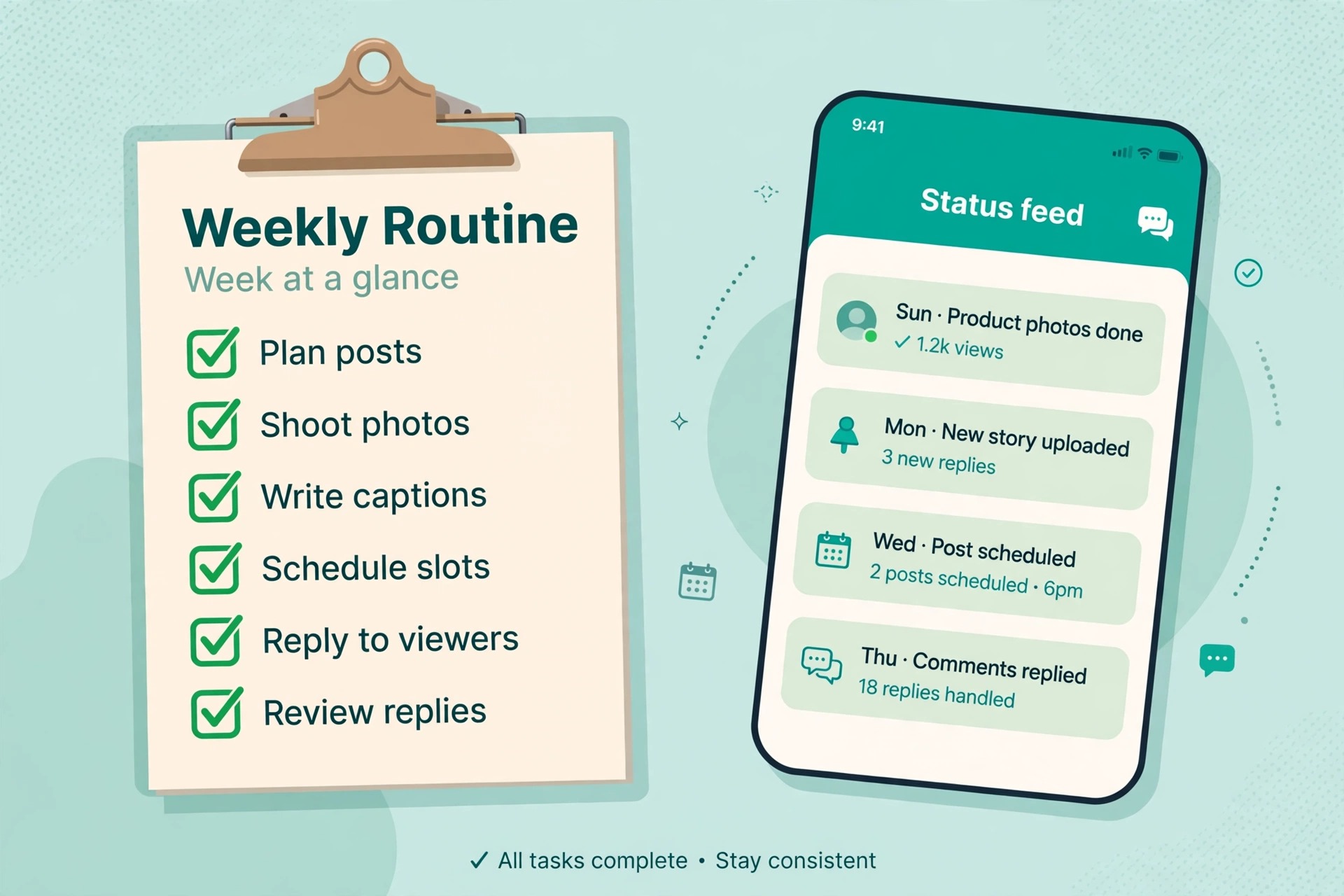
Prepare posts in batches to protect the habit. Spend 30 minutes on Sunday photographing the week products, writing the captions, and saving the images in a folder on your phone. Then each day is only a matter of opening the folder and posting. Batch preparation is also the moment to check every photo for spelling mistakes in the text on the image, since a price typed wrong on a photo is hard to fix after posting. A whatsapp status marketing strategy for small business lives or dies on this weekly routine, and the routine is what separates shops that post for a month from shops that post for a year.
Captions, Calls to Action and Replies
A Status post has two parts, the image or video and the caption, and most sellers write the caption as an afterthought. That is backwards. The image stops the scroll, but the caption earns the reply, and the reply is where the sale happens. Keep captions short, with one offer and one action.
Write the caption in the words your customers use. If they speak Bangla at the counter, write the caption in Bangla. If they mix languages, mix them the same way. Put the price in the caption as well as on the image, since some viewers will reply asking the price if it is missing, and every extra message is a chance for the customer to lose interest. End every selling caption with one clear action, such as reply with the word ORDER, reply with your size, or tap to see the catalog. One action, never two.
The reply is the moment that matters most. A reply to a Status post is a warm lead, and speed is the whole game. Answer within a few minutes when you can, and the same day at the very least. A reply that waits until tomorrow usually finds a customer who has already bought elsewhere. Set up quick replies for the three answers you send most, which are usually the price, the delivery charge and the payment details.
A quick reply is a saved message you can send with a shortcut, and it keeps your answers consistent even when a staff member is replying. Use labels to mark the chat the moment an order is agreed, so the delivery and payment follow up never slips.
Greeting messages and away messages cover the hours when you cannot reply. A greeting message welcomes a new customer and tells them what to do next, such as browse the catalog or send a photo of what they want. An away message tells a late night replier when you will answer, so they do not feel ignored. Both are set once inside the WhatsApp Business app and run automatically. They are small touches, and they are the difference between a business that feels alive and one that feels closed.
Status, Broadcast, Group or Channel: Which Tool for Which Job
Status is one of four audience tools inside WhatsApp, and using the wrong one for the job is a common mistake. The table below compares them so you can assign each job to the right tool instead of forcing everything through Status.
| Tool | Best job | Reach | Risk if overused |
|---|---|---|---|
| Status | Daily visibility, proof, offers | Contacts who saved your number | Viewers mute you |
| Broadcast list | One private message to many | Contacts who saved your number | Recipients block you |
| Group | Conversation among many people | Members who joined | Noise, members leave |
| Channel | One way announcements to followers | Followers who chose to follow | Low replies, easy to ignore |
A broadcast list sends one message that arrives as a private chat for each recipient, which makes it powerful and dangerous at the same time. It is the right tool for a rare important message, such as a price change or a one day flash sale, sent once or twice a week at most. Keep broadcasts rare, give each one a reason to arrive, and always include a deadline and a clear next step.
A group is the right tool when customers need to talk to each other, such as a class group, a reseller group or a community of regulars. It is the wrong tool for announcements, because every member can reply and the conversation quickly buries the message. If you run a group, set clear rules, post announcements sparingly, and consider a Channel instead for one way news. A Channel is a one way broadcast feed that followers choose to join, and it suits announcements that need no reply. Channels cannot replace Status for selling, since the replies and the personal touch are missing, but they are a useful second surface for the same announcements.
The practical mix for most small businesses is simple. Status carries the daily work, broadcasts carry the rare urgent message, a group carries community conversation only when one is genuinely needed, and a Channel carries announcements for followers who want them. A whatsapp status marketing strategy for small business works best when Status is the daily habit and the other tools stay in their lane.
Measuring What Works in Ten Minutes a Week
Status has no built in analytics dashboard for small business accounts, so you will measure it yourself with a notebook or a simple sheet. That is enough, because only four numbers matter. Count them every Sunday evening and the pattern will show itself within a month. The four numbers are new saves, replies per post, orders from Status, and revenue from those orders.
New saves are the audience number. Each week, count how many new customer chats appeared on your business phone and how many of those numbers you saved. That is the growth of the pool that can see your posts. If saves stall, the problem is not your content. It is the ask at the till, the printed number, or the reason you give people to save it. Fix the ask before you fix the posts.
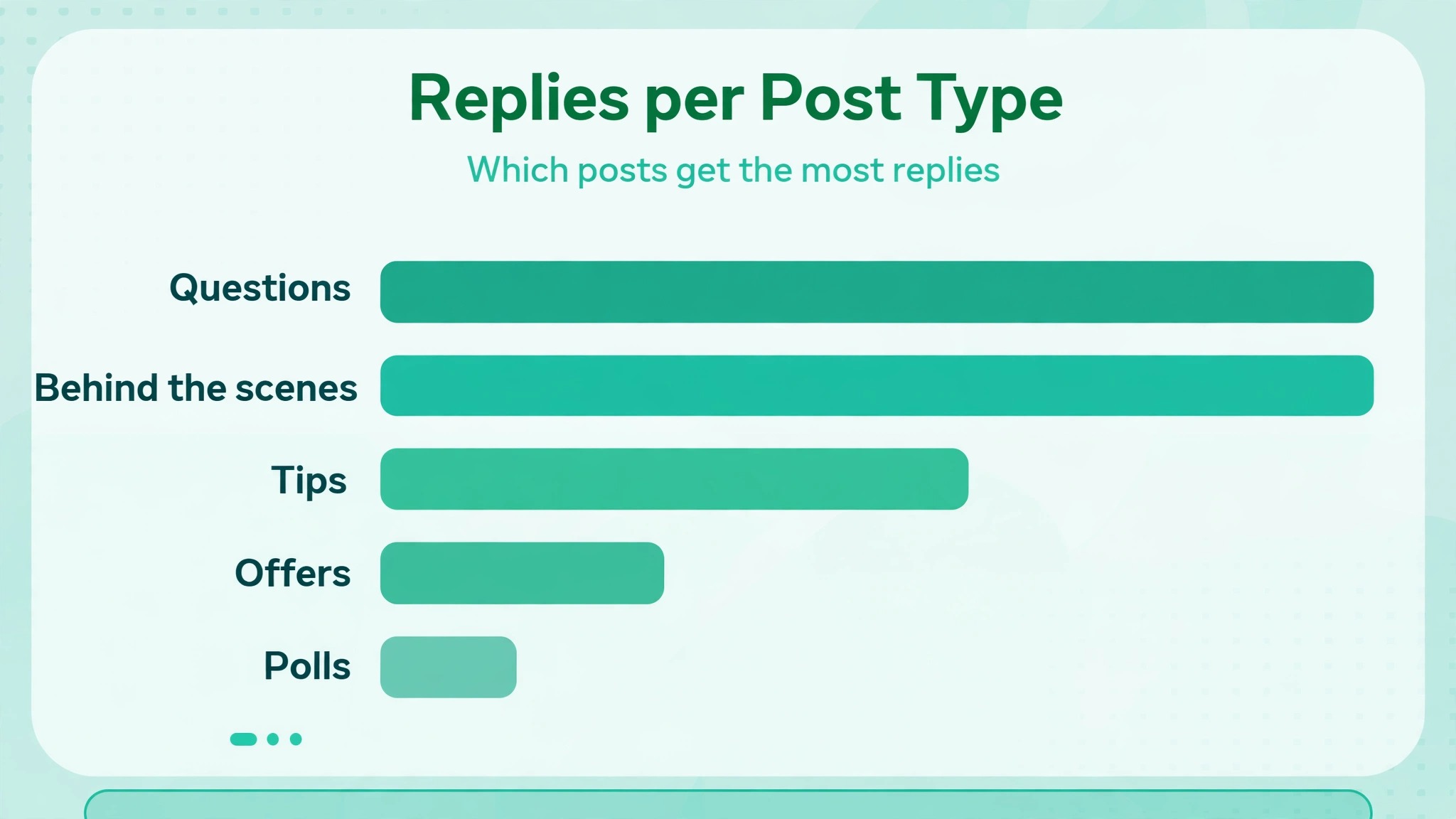
Replies per post are the content number. For each post, note the format, the time and the number of replies it earned. After a month you will see a clear ranking. Product photos may earn two replies each, behind the scenes clips may earn five, and questions may earn eight. That ranking is your content plan for the next month. Drop the weakest format and double the strongest one. Views are a weaker signal, since a view only means the post appeared on a screen, while a reply means a person chose to talk to you.
Orders and revenue are the money numbers. When an order arrives, ask one question, or mark it yourself from the chat history. Did this customer reply to a Status post, or did they message out of the blue. Label those chats so you can count them at the end of the week.
A shop that earns five orders a week from Status at an average of 500 taka each is earning 2,500 taka a week from a free channel and ten minutes a day. That is the number to report to yourself, not the view count. If the revenue number is flat while replies grow, the problem is usually the offer, the price, or the speed of your reply, and each of those is fixable in a day.
Mistakes That Quietly Kill a Status Strategy
The first mistake is posting only offers. A feed that is all discounts trains viewers to wait for a discount and to ignore everything else, and it trains them to mute you when the discounts stop being exciting. Keep the three to one mix even in a sale week, and let the proof and behind the scenes posts carry the trust that makes the offer believable. A sale post inside a trusted feed converts. The same post inside a feed of pure ads is skipped.
The second mistake is posting the same flyer ten times a day. Repetition does not multiply reach, since the same contacts see the same post again and learn to skip your whole stack. Post the offer once, then post proof or a reminder with a different photo and different words. If an offer runs for three days, change the image each day so the post feels new. Customers forgive a repeated offer. They do not forgive a repeated image.
The third mistake is slow replies. A customer who replies to a Status post is ready to buy now, not tomorrow. If your reply takes a day, they will have bought from a competitor or forgotten why they messaged. Keep the phone near the counter during open hours, use quick replies for the common answers, and set an away message that promises a reply time you can keep. A fast honest reply that says the item is sold out beats a slow reply that says it is available, because speed builds the trust that brings the customer back.
Your Weekly Status Checklist
Run this list every Sunday evening. It takes ten minutes and keeps the whole system honest.
- Count how many new customers saved your number this week and write the number down.
- Note your three best posts by replies and your weakest post, then drop the weakest format next week.
- Photograph next week products in daylight and save the images in one folder on your phone.
- Write the captions for the week, with one price and one action in each selling caption.
- Check that quick replies for price, delivery and payment are still correct.
- Count the orders that came from Status replies and the revenue they brought.
Frequently Asked Questions
How often should a small business post on WhatsApp Status?
Three to six updates a day is a sensible ceiling for most small businesses. Two good posts a day beat six rushed ones, and a schedule you can keep for months beats a heroic week followed by silence. Post in the morning, at midday and in the evening, and keep the three to one mix of useful posts to selling posts.
Why does nobody see my WhatsApp Status posts?
Status is mainly seen by contacts who have saved your number, so a small audience is usually the cause rather than bad content. Ask every customer at the till to save your number, print it on bills and bags, and give a specific reason such as daily offers or new stock first. Test visibility with a friend to confirm the saving runs both ways.
Can WhatsApp Status bring in new customers?
Not by itself, since nobody discovers Status through search or a public feed. Status keeps existing customers warm and turns them into repeat buyers. New customers come from the save itself, which happens at the till, on packaging, on your shop sign and on your other profiles. Treat Status as retention and repeat sales, and use your other channels to grow the list.
What is the best time to post on WhatsApp Status?
Morning posts catch people planning their day, midday posts catch the lunch break scroll, and evening posts catch people at home with time to reply. Put the offer up in the morning so it has the full day to be seen, and put questions and reminders in the evening. Test your own times for two weeks and keep what earns replies, since a food vendor and a tutor have different busy hours.
Should I use Status, broadcast lists or groups to sell?
Use Status for daily visibility, since it is passive and customers choose to view it. Use a broadcast list only for rare urgent messages, once or twice a week at most, because too many broadcasts earn blocks. Use a group only when customers need to talk to each other. A whatsapp status marketing strategy for small business works best when Status does the daily work and the other tools stay in their lane.
Is WhatsApp Business free for Status marketing?
Yes. The WhatsApp Business app is free to download and use, and posting Status updates costs nothing. The catalog, quick replies, labels, greeting messages and away messages inside the app are also free. The only paid pieces are optional ads that click to WhatsApp, which run on Facebook and Instagram, and the WhatsApp Business Platform for larger companies, which charges per conversation.
How do I know if my Status strategy is working?
Count four numbers every week. New saves, replies per post, orders from Status replies, and revenue from those orders. If replies grow but orders stay flat, the problem is usually the offer, the price, or the speed of your reply. If saves stall, fix the ask at the till before you fix the content. Judge the channel by revenue, not by views.
A Quiet Channel That Compounds
Status will not make a shop famous overnight, and that is exactly why it works for a small business. It costs nothing, it takes ten minutes a day, and it speaks to the people who already trust you enough to save your number. A whatsapp status marketing strategy for small business is a weekly rhythm rather than a campaign, and the rhythm is what compounds. Build the list one sale at a time, post proof and stock that invite a reply, answer every reply fast, and count the orders each Sunday.