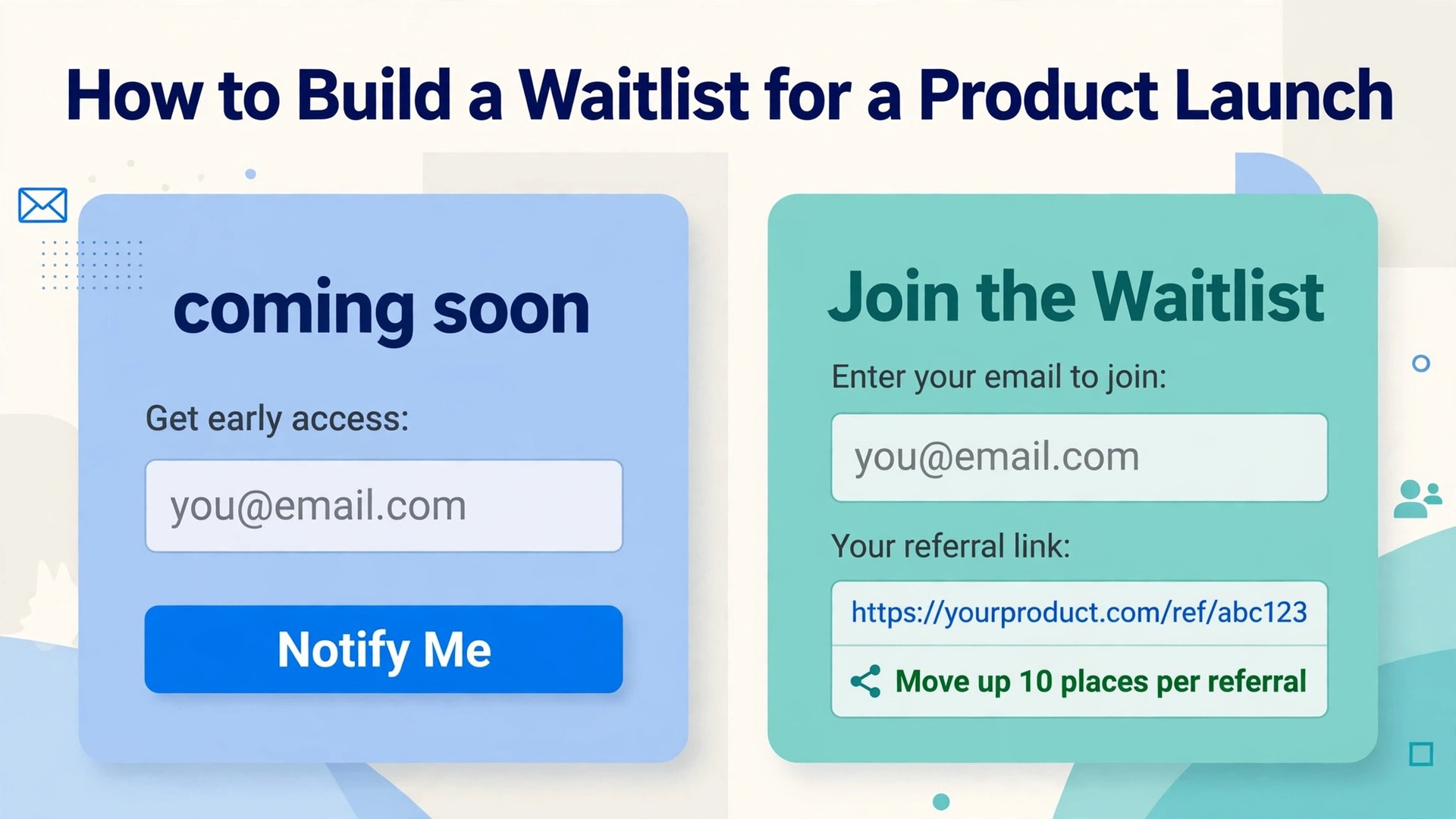
The short answer is that a waitlist works when it does three jobs at once, it proves people want the product, it grows itself through referrals, and it keeps signups warm until launch day. Most waitlists fail on the third job. Founders collect 200 emails, go silent for three months while they build, and then wonder why only a handful of people open the launch email. Learning how to build waitlist for product launch the right way means treating the list as your first product, not as a form on a coming soon page.
This guide walks through the full process in nine steps, from the promise on the page to the launch day email sequence. It uses real benchmarks, including the 11 percent median conversion rate reported by Waitlister across thousands of waitlists, and real examples, including Harry’s, which collected nearly 100,000 emails in a single week before selling a single razor, and Robinhood, which stacked up roughly a million people before the app opened. Every step is one you can finish this week with tools that cost little or nothing.
Why a Waitlist Works
A waitlist is a validation tool before it is a marketing tool. Five hundred signups with no product is evidence that the problem and the positioning resonate, while 12 signups after a month of promotion tells you the problem or the framing is wrong, before you have spent six months building. That signal is worth more than the emails themselves, because it tells you whether to keep building, change the pitch, or stop.
The numbers behind a good waitlist are strong. A well built waitlist page converts around 11 percent of visitors into signups, according to Waitlister’s published analysis of thousands of waitlists, against about 6.6 percent for a generic landing page in Unbounce’s benchmark report. Pages that state a specific outcome, such as what the visitor will be able to do on day one, convert at the top of the range, while a bare form with “be the first to know” copy converts near 1 percent. The difference is specificity, not design polish.
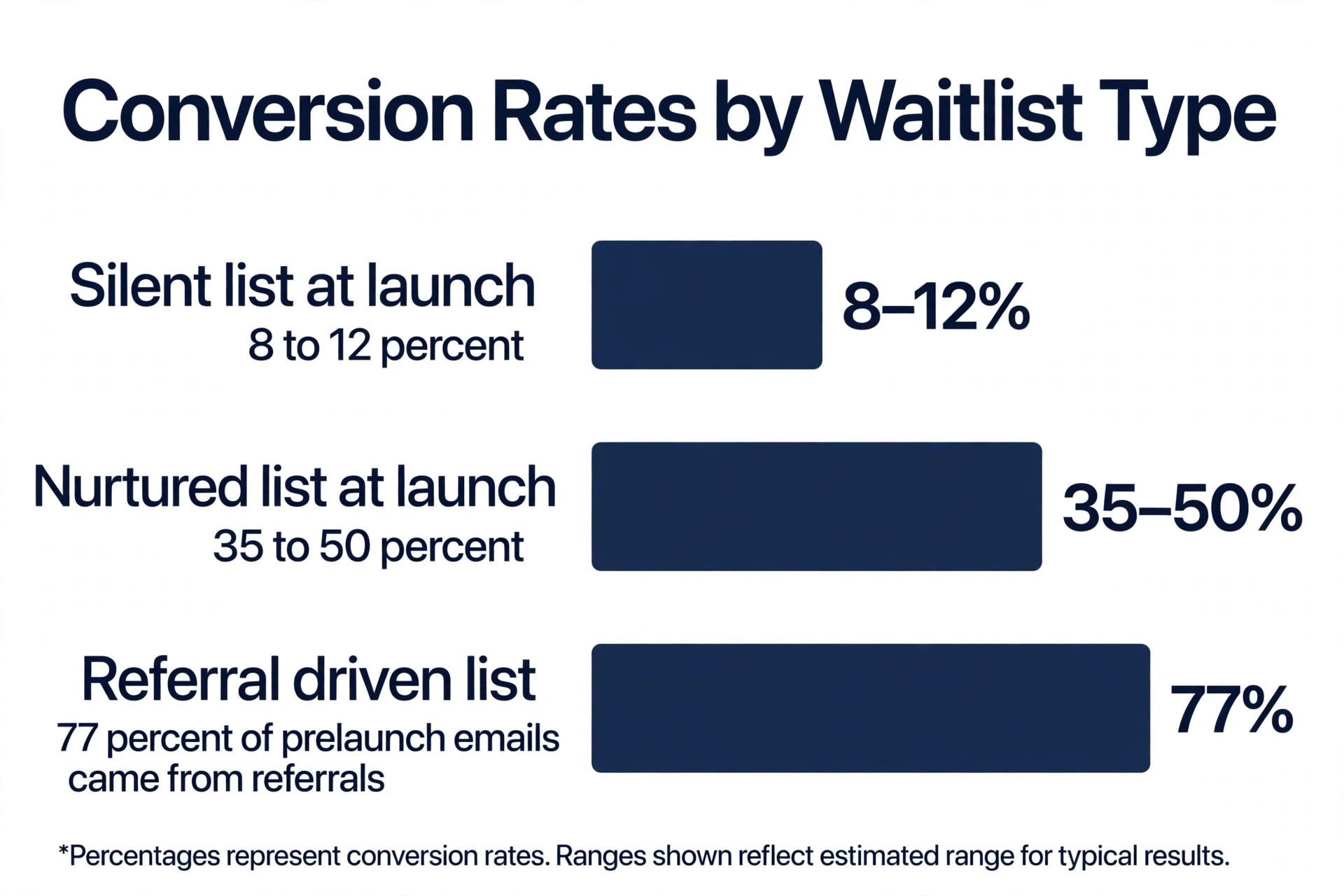
A waitlist also changes launch day from a whisper into an event. Waitlist members who receive regular updates convert at 35 to 50 percent on launch day, according to published founder playbooks, while members who hear nothing in the 30 days after signup convert at roughly 8 to 12 percent. Half of the members who will ever convert do so within 30 days of launch, and after 90 days that number drops to about 20 percent, so the waiting period is when the launch is won or lost. A list that is nurtured is a launch audience, and a list that is ignored is a list of strangers.
The pattern is consistent across the public case studies, and it explains why founders who study how to build waitlist for product launch properly spend most of their effort on the waiting period rather than on the page itself. The page is a one day job, while the nurture sequence, the referral loop, and the beta are a six to 12 week job. A founder who budgets a week for the page and a month for the waiting period will launch with a warm audience, while a founder who budgets a month for the page and nothing for the waiting period will launch to silence.
How to Build Waitlist for Product Launch, Step by Step
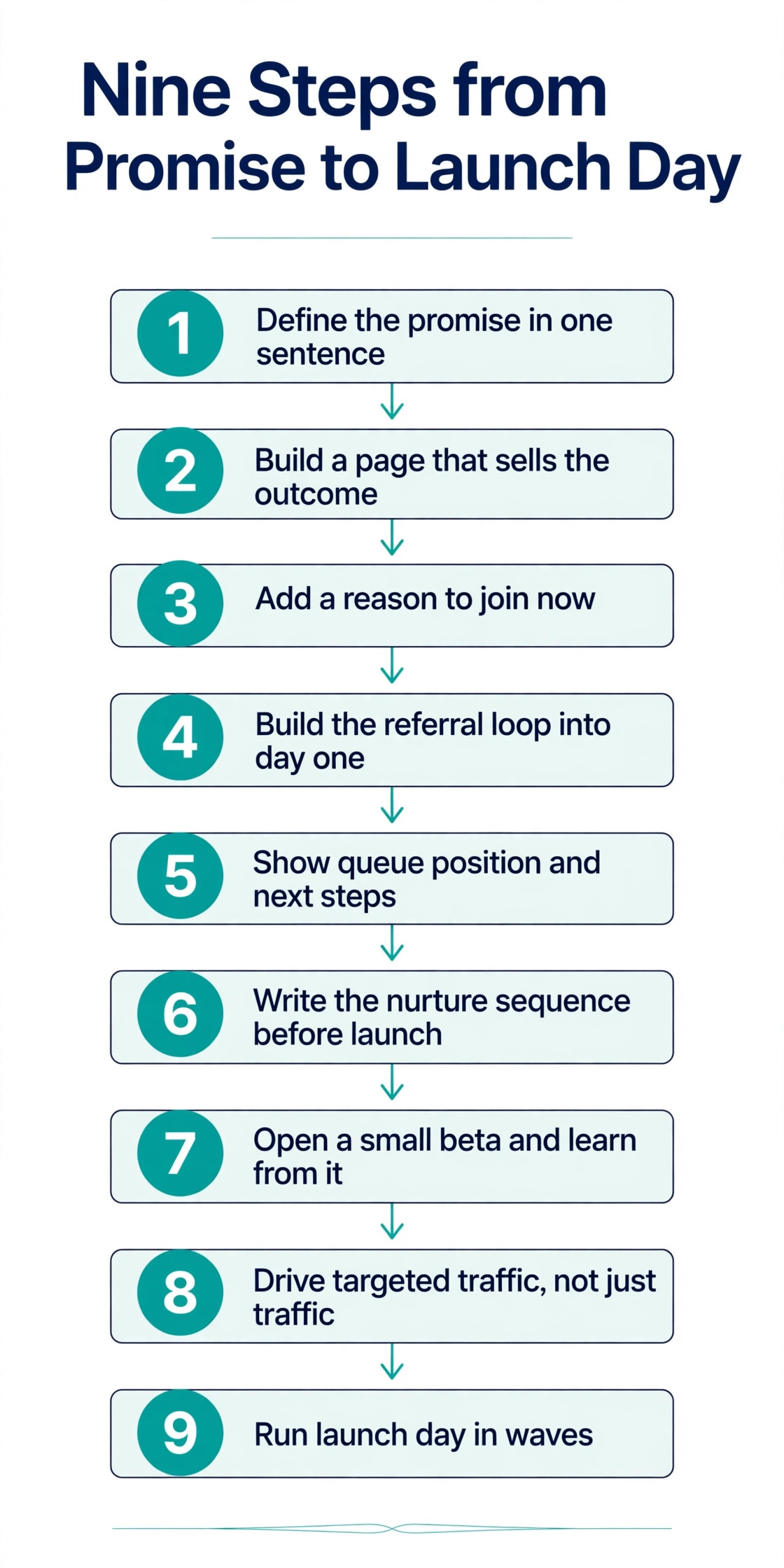
The nine steps below run in order, and each one builds on the last. Do not skip the referral loop or the nurture emails, because those two steps are where most waitlists lose their value. A page without a referral loop grows linearly, and a list without emails goes cold, so both need to be in place before you send the first visitor to the page. The steps cover the whole job of how to build waitlist for product launch from the first sentence to the launch day email, and each step ends with a clear action you can finish in a day or less.
1. Define the Promise in One Sentence
Start by writing the one sentence that explains what the product does for the visitor, in plain words, with no jargon. The sentence should name the person, the problem, and the outcome, such as a tool that turns a messy inbox into a daily plan for busy founders. If you cannot write that sentence, the waitlist page will not convert, because visitors will not understand what they are joining.
Test the sentence on five people who match your target customer and ask them what they think the product does. If three of them describe something different from your product, rewrite the sentence until they get it right. This test takes an hour and saves weeks of traffic sent to a page that confuses people. The promise sentence becomes the headline of the page, the first line of the confirmation email, and the opening of every social post that links to the waitlist.
2. Build a Page That Sells the Outcome
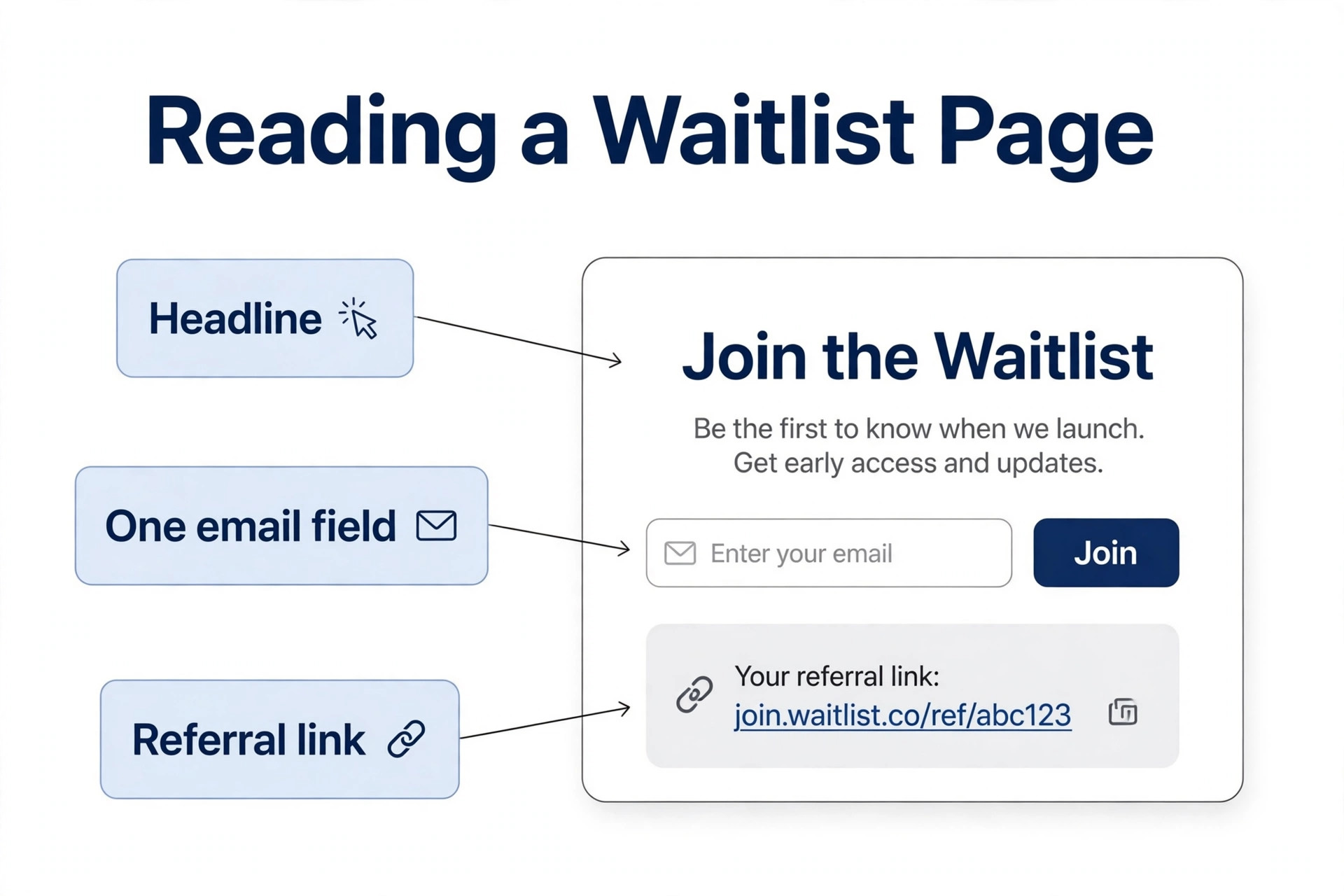
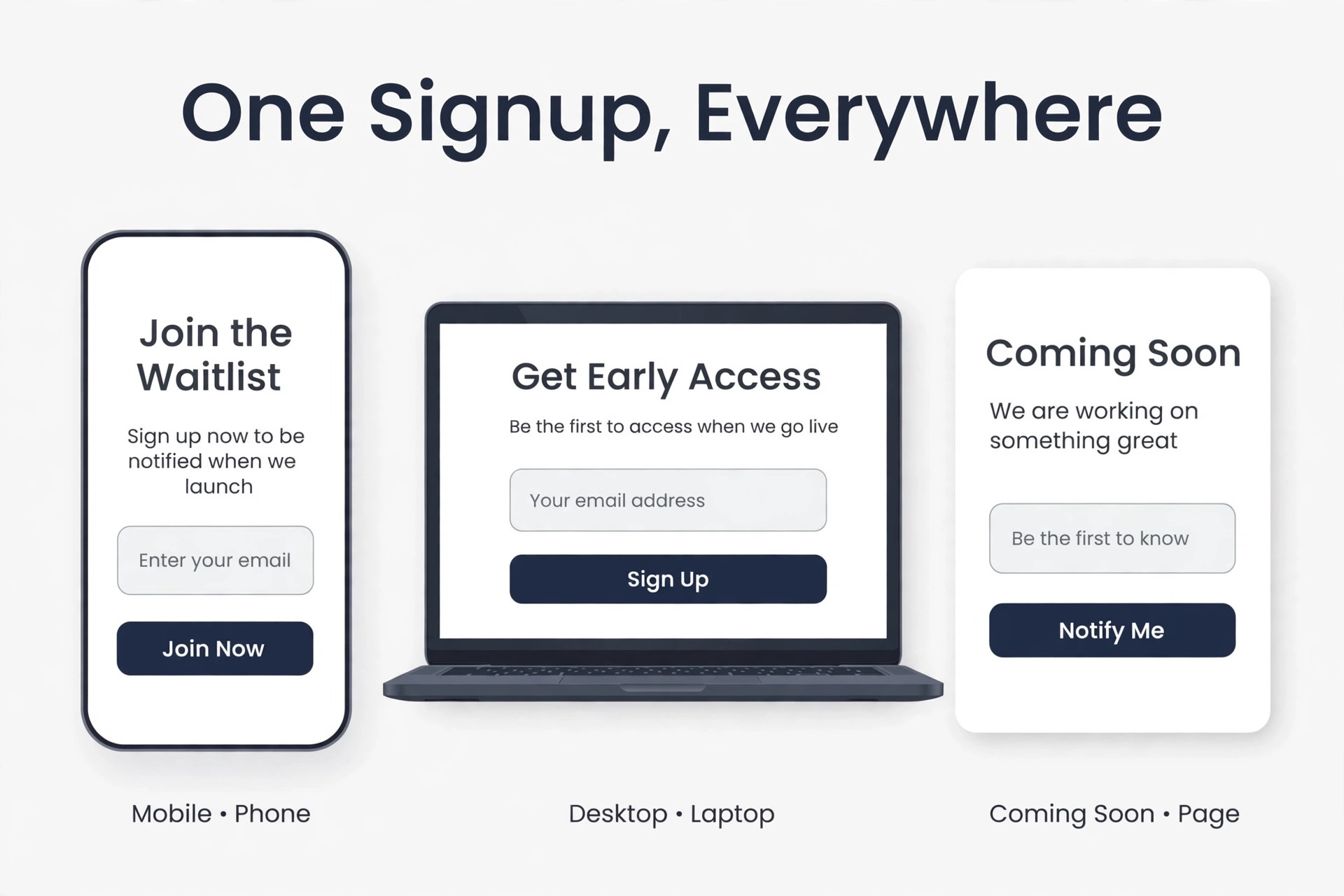
Build the waitlist page around the outcome, not the feature list. The headline states what the visitor will be able to do, the subheadline names who it is for, and three short points explain the benefit in concrete terms. Add a screenshot, a mockup, or a short demo video if you have one, because a visual of the product beats a paragraph of description. If the product is not built yet, use a mockup of the main screen, and label it as a preview so nobody feels misled.
The form itself should ask for one thing only, an email address. Every extra field cuts completion, with published research putting the loss at 10 to 20 percent per field, so a name field and a company field together can halve your signups. You can ask for more detail later, in a welcome survey sent after signup, when the visitor has already committed. Keep the page fast, keep it readable on a phone, and keep the signup button visible without scrolling on a mobile screen.
3. Add a Reason to Join Now
A waitlist with no reason to join now collects signups slowly, because there is no cost to waiting. Give visitors a concrete reason, such as a founding member discount, early access pricing locked in for life, or a bonus feature for the first 200 signups. The offer should be real and limited, because a fake deadline that never ends teaches visitors to ignore your next deadline.
Scarcity framing converts at roughly two to three times the rate of a generic newsletter signup, because a position on a list creates a sense of ownership. Show the number of people already waiting, show the number of early access spots left, and show the launch date or the launch window. A page that says “join 1,247 people waiting for early access” is more persuasive than a page that says “coming soon”, because it proves other people already decided the product is worth waiting for.
4. Build the Referral Loop Into Day One
The referral loop is the engine that turns a 100 person list into a 1,000 person list without extra ad spend. Give every signup a unique referral link, show them their queue position, and let them move up the queue by referring friends. Harry’s ran this exact mechanic, and 77 percent of its prelaunch emails came from referrals, with about 20,000 people referring roughly 65,000 friends, an average of more than three referrals each.
Design the reward ladder before launch. The first referral might move the signup up 10 places, three referrals might unlock early access, and five referrals might unlock a free month or a bonus feature. Keep the rewards tied to the product, because a generic prize attracts people who want the prize, not the product. Only about 7 percent of waitlists run a referral program at all, which is why the ones that do stand out so sharply in the results.
5. Show Queue Position and Next Steps
Transparency keeps people on the list. After signup, show the visitor their queue position, explain what happens next, and tell them when to expect the next email. A signup who knows they are number 312, that beta invites go out in batches of 50, and that the next update arrives on Friday will wait patiently. A signup who sees only a thank you message will forget the product within a week.
The confirmation page is also your best referral moment, because the visitor has just committed and is most likely to share. Put the referral link on that page with a one click share button for email and social, and show the queue jump the visitor gets for each referral. Do not make the visitor open an email to find the link, because every extra click loses sharers. The thank you email should repeat the same link and the same queue position, so the visitor can share from either place.
6. Write the Nurture Sequence Before Launch
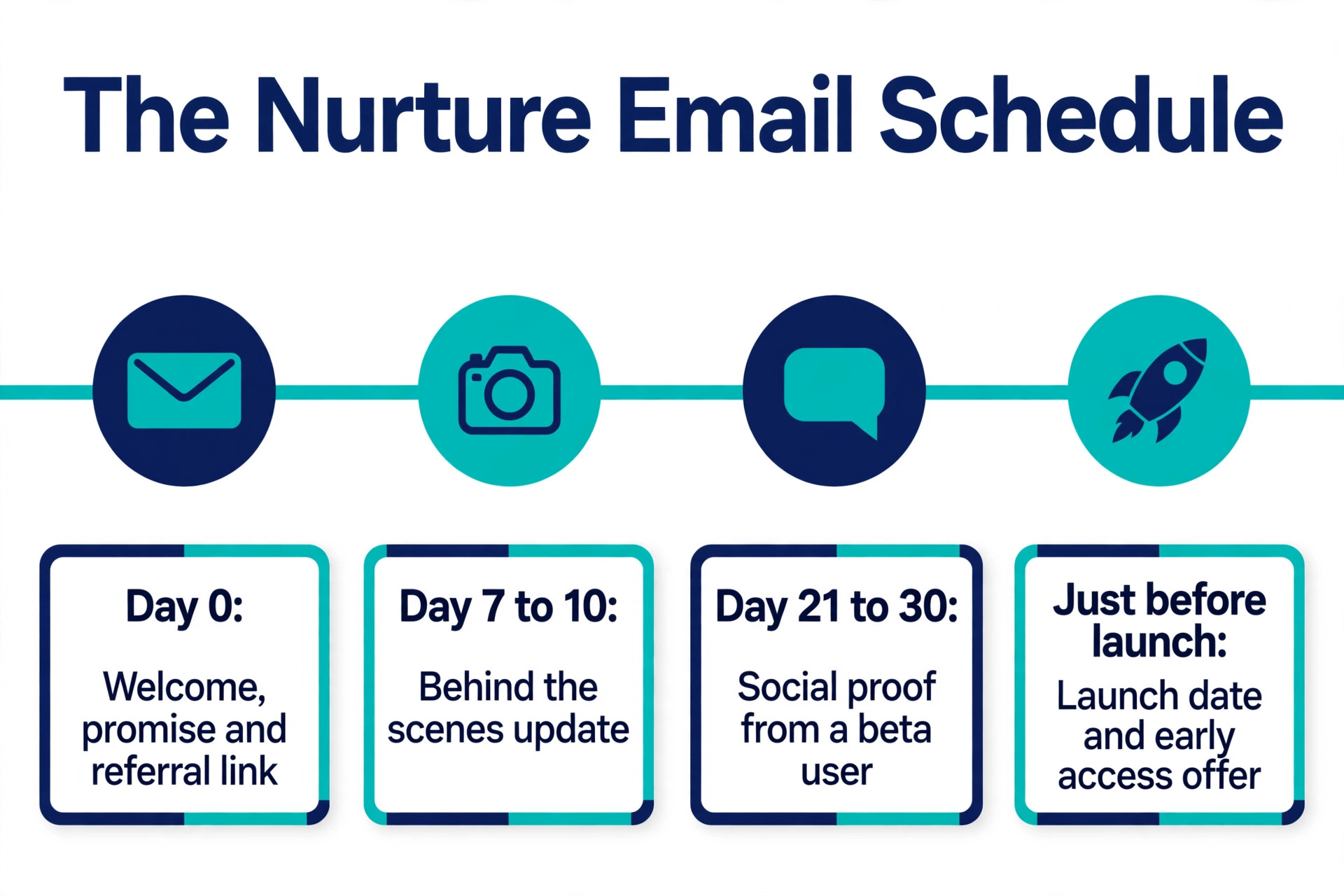
Write the nurture emails before you launch the waitlist, not after, because the first month of silence is what kills most lists. Plan four emails. The first goes out on day zero, confirms the signup, restates the promise in one sentence, and gives the referral link. The second goes out around day seven to ten, with a behind the scenes product update, something shipped, something discovered, or a real screenshot.
The third email goes out around day 21 to 30, with social proof from a beta user or an early tester, framed as a peer endorsement rather than a polished testimonial. The fourth email goes out just before launch, with the launch date, the early access window, and the offer for founding members. Send a short update at least every two weeks between those emails if the build runs long, because a list that hears nothing for 90 days sees open rates fall by 30 to 40 percent, and conversion drops below 10 percent.
7. Open a Small Beta and Learn From It
Invite the first 50 to 100 signups into a beta before the public launch, and treat the beta as a learning exercise, not a marketing event. Email those early members personally, ask for a 20 minute call, and frame it as their feedback shaping what gets built. Published playbooks report that 10 to 20 percent of early signups will say yes to a call, which gives you five to 20 conversations from a 100 person beta group.
Use the beta to fix the three things that matter most, the onboarding flow, the core feature, and the price. Watch where beta users get stuck, ask what they expected that was missing, and ask what they would pay. A beta user who feels heard becomes a launch advocate, and their quotes become the social proof for the third nurture email and the launch page. A product that launches without a beta is launching blind, and the first real feedback arrives as churn instead of as a fixable note.
8. Drive Targeted Traffic, Not Just Traffic
Building the page is about 20 percent of the work, and getting the right people to it is the other 80 percent. Share the waitlist where your target customers already gather, in communities, forums, newsletters, and social channels that match the problem you solve. A 25 percent conversion rate from 200 targeted visitors beats a 1 percent conversion rate from 10,000 irrelevant visitors, because the targeted list gives you signal and the irrelevant list gives you noise.
Product Hunt runs a coming soon page feature that lets you list a product before it launches, and it is worth using for the launch day audience it brings. Paid ads can validate the page fast, with 200 dollars in Meta or Google ads aimed at a tight audience, and a well targeted waitlist ad should bring signups at 1 to 5 dollars each for consumer products and 5 to 20 dollars each for B2B products. Personal outreach also works, with a short message to the right person converting at 15 to 30 percent, so 100 messages at 20 percent conversion brings 20 high quality signups from exactly the right audience.
9. Run Launch Day in Waves
Launch day works best in waves, not in one blast. Invite the beta users and the top referrers first, let them use the product for a day, and fix anything that breaks before the wider list arrives. Then email the rest of the list in two or three batches across the day, so support load stays manageable and the first users can post about the product while the later batches are still waiting.
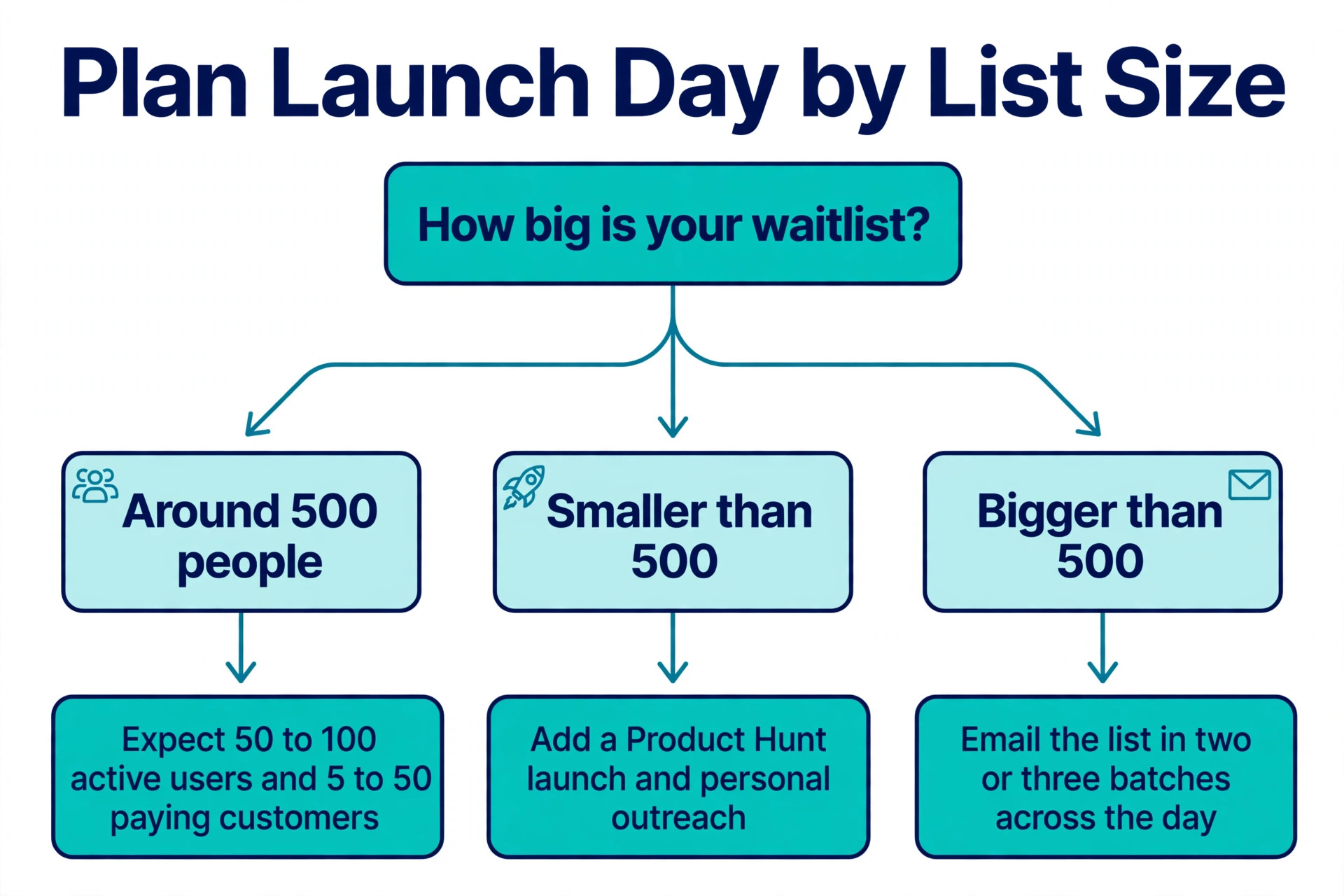
The launch email should be short, with one link, one offer, and one deadline. Remind the reader of the promise from the signup page, state the founding member offer, and give a clear window for early access pricing. Expect 10 to 20 percent of the list to convert to active users at launch, and 5 to 10 percent of those to become early paying customers, so a 500 person list should produce 50 to 100 active users and 5 to 50 paying customers.
Send a second email the next day to the people who did not open the first one, because half of all waitlist conversions happen within 30 days of launch, and the follow up catches the people who missed the first message.
Tools That Make It Easier
You do not need expensive software to run a waitlist, and the tools below cover the whole job for little money. Carrd is the cheapest way to build the page itself, with the Pro Standard plan at 19 dollars a year covering a custom domain and forms, which is all a waitlist page needs. LeadLanding is built specifically for waitlist pages, with referral tracking and queue positions included, and it can have a page live in about 30 minutes. Waitlister is another dedicated waitlist tool with referral mechanics and analytics, and it publishes the benchmark data cited in this guide.
The tool choice matters less than the setup, because any founder who understands how to build waitlist for product launch well can run a strong list on Carrd and a free email tier, while the most expensive tool will not save a list that has no referral loop and no nurture emails.
For the email side, ConvertKit and Mailchimp both handle the nurture sequence, the referral link merge tags, and the launch day sends, and both have free tiers that cover a small list. Product Hunt offers a coming soon page that puts the product in front of its launch audience before launch day. Pick one page tool and one email tool, connect them, and test the full signup flow yourself before you share the link anywhere. A waitlist built on two tools that talk to each other beats a waitlist built on five tools that do not.
| Tool | What it does | Price |
|---|---|---|
| Carrd | Simple waitlist page with custom domain | 19 dollars a year, Pro Standard |
| LeadLanding | Waitlist pages with referral tracking | Paid plans, free trial available |
| Waitlister | Waitlist pages with queue and analytics | Paid plans, free trial available |
| ConvertKit | Email nurture and launch sends | Free tier, paid from 9 dollars a month |
| Mailchimp | Email nurture and launch sends | Free tier, paid plans from 13 dollars a month |
| Product Hunt | Coming soon page and launch audience | Free to list |
Launch Checklist
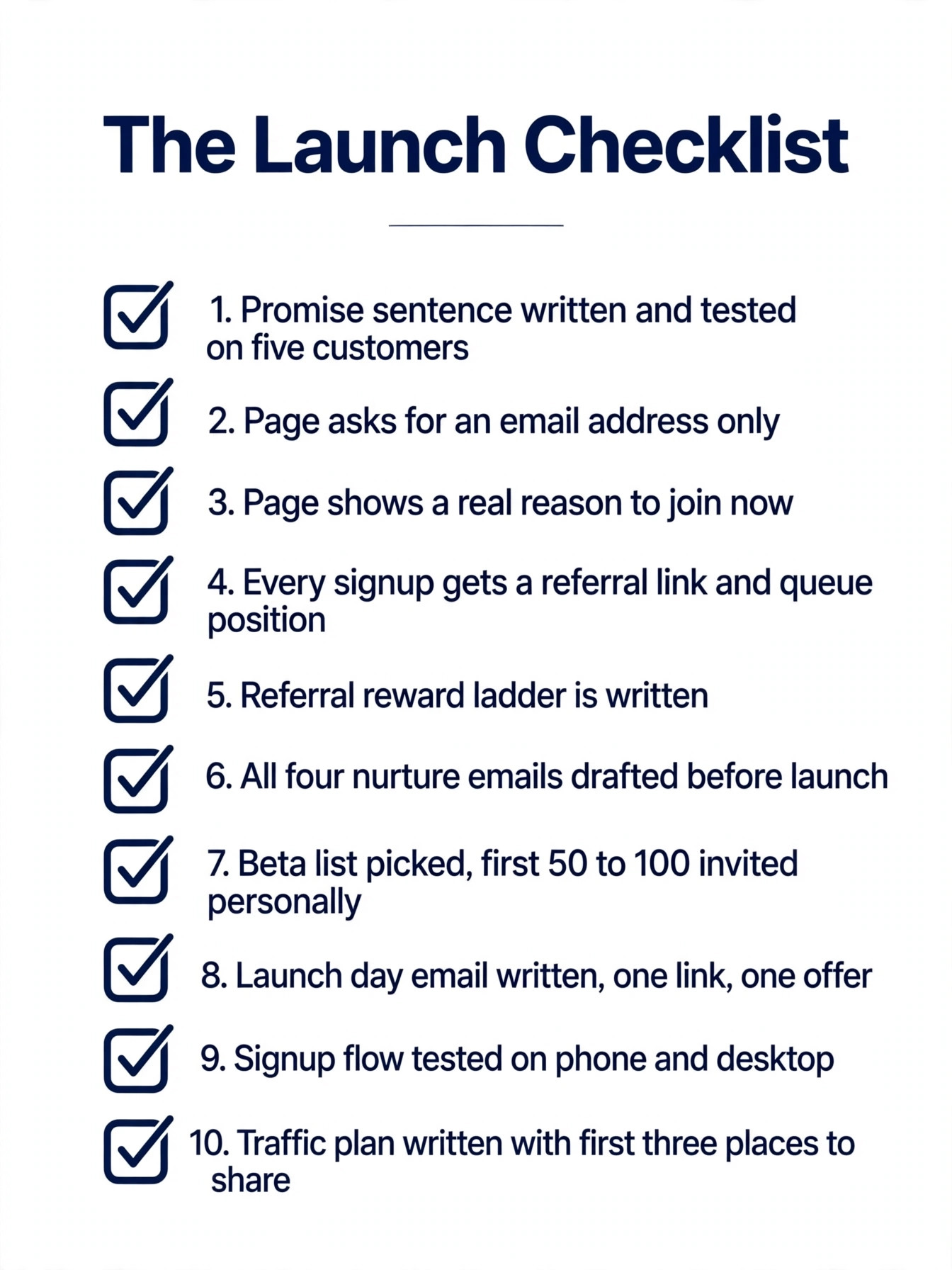
Use this checklist before you send the first visitor to the page, and again on the morning of launch day. Every item here is one of the failure points covered in the steps above, and a list that passes all of them is ready to grow. Treat the checklist as the final review for how to build waitlist for product launch in your own case, because a single missed item, such as a missing referral link or an undrafted nurture email, can cost you the first month of growth.
- The promise sentence is written, tested on five target customers, and used as the headline.
- The page asks for an email address only, with no extra form fields.
- The page shows a specific reason to join now, with a real limit or deadline.
- Every signup gets a unique referral link and a visible queue position.
- The referral reward ladder is written, with rewards tied to the product.
- All four nurture emails are drafted before the page goes live.
- The beta list is picked, with the first 50 to 100 signups invited personally.
- The launch day email is written, with one link, one offer, and one deadline.
- The full signup flow has been tested on a phone and a desktop.
- The traffic plan is written, with the first three places the link will be shared.
Mistakes That Kill a Waitlist
The biggest mistake is silence. A founder collects 300 emails and then goes quiet for six months while building, and by launch day the list has forgotten the product exists. The fix is simple, send a short update every two weeks, even when the update is small, because a list that hears from you regularly opens the launch email at 35 to 50 percent, while a silent list converts at 8 to 12 percent. When you learn how to build waitlist for product launch properly, the nurture sequence is the part that pays for all the rest.
The second mistake is asking for too much on the form. A name field, a company field, and a role dropdown together can halve signups, and none of that information is needed before the visitor has committed. Ask for the email only, then ask for the rest in a welcome survey after signup, when the visitor has already said yes. Every field you remove is a conversion gain you can measure in the first week.
The third mistake is a referral program with a weak reward. A generic prize attracts people who want the prize, not the product, and a reward that is too small attracts nobody at all. Tie the reward to the product, make the first referral easy to earn, and show the queue jump immediately, because a referrer who sees their position move will refer again. A waitlist without a referral loop grows linearly, and linear growth rarely reaches the numbers that make launch day matter.
Our Verdict
A waitlist is worth building for almost every product launch, because it validates the idea, builds the launch audience, and gives you a referral engine before the product exists. The whole setup takes a week at most, with a page on Carrd at 19 dollars a year, an email tool on a free tier, and a referral loop that runs itself once the reward ladder is set. The cost is time, not money, and the return is a launch day with real users instead of a quiet release.
Start with the promise sentence and the one field form, add the referral loop on day one, and write the nurture emails before you share the link. If the list grows slowly, fix the promise before you buy traffic, because a page that converts at 2 percent will waste any budget you send it. If the list grows fast, protect it with regular updates and a beta that listens, because a warm list is the most valuable asset a prelaunch product can own.
The founders who get the most from this process are the ones who treat the waitlist as a product in its own right, with its own metrics, its own weekly review, and its own owner. Track the visitor to signup rate, the share rate, and the open rate every week, and fix the weakest number before you spend on the next channel. That discipline is what separates a list that launches a business from a list that collects dust, and it is the real skill behind how to build waitlist for product launch successfully.
Frequently Asked Questions
How long before launch should I start a waitlist?
Start the waitlist as soon as you can describe the product in one sentence, which is often day one of the project, not month three. A waitlist that runs for six to 12 weeks gives you time to build the list, run the nurture sequence, and invite a beta group before launch. A waitlist that runs for less than two weeks rarely gathers enough signups to matter, while a waitlist that runs for more than six months without updates goes cold, so the sweet spot is a focused two to three month run with an email every two weeks.
How many people should be on a waitlist before launch?
There is no magic number, because a 500 person waitlist with strong engagement is worth more than a 5,000 person list of passive signups. As a rough guide, expect 10 to 20 percent of the list to become active users at launch, and 5 to 10 percent of those to pay, so a 500 person list should produce 50 to 100 active users and 5 to 50 paying customers. If your list is smaller than that, it can still work, but you should also plan a Product Hunt launch and personal outreach to add users on the day.
What is a good waitlist conversion rate?
A well built waitlist page converts around 11 percent of visitors into signups, according to Waitlister’s analysis of thousands of waitlists, and pages with warm traffic can reach 20 percent or more. A rate under 5 percent means the page or the offer is broken, and you should fix the headline and the reason to join before sending more traffic. Developer focused pages that show real technical value, such as code previews or API examples, can reach 15 to 30 percent, because the audience is judging the product, not the marketing.
Should a waitlist be free or should I charge a deposit?
A free waitlist gathers more signups, while a deposit waitlist gathers fewer but more committed signups, and the right choice depends on the product. A deposit of 10 to 20 dollars filters out casual signups and proves real intent, but it also cuts the list size sharply, so it suits products with a clear price and a strong promise. A free waitlist with a referral loop suits most launches, because the referral mechanic does the filtering for you, by rewarding the people who care enough to share. Test free first, and add a deposit option only if the list is large but unengaged.
How do I keep a waitlist warm while I build?
Send a short update every two weeks, with something real in it, such as a feature shipped, a decision made, a screenshot, or a beta user quote. Invite the earliest signups to a beta and to short feedback calls, because a member who feels heard stays engaged. Share the waitlist progress publicly, such as the number of people waiting and the next milestone, because progress creates a sense of momentum. The rule is simple, if the list has heard nothing in 30 days, it is going cold, and if it has heard nothing in 90 days, most of it is gone.
What tools do I need to build a waitlist?
You need two tools, a page builder and an email tool. Carrd at 19 dollars a year builds the page with a custom domain, or LeadLanding and Waitlister add referral tracking and queue positions for a monthly fee. ConvertKit and Mailchimp both handle the nurture sequence and the launch day sends, and both have free tiers for a small list. Product Hunt adds a coming soon page for extra launch day reach. Start with the cheapest combination that covers the referral loop, because the loop matters more than any single tool feature.
The tool stack is the easy part of how to build waitlist for product launch, and most founders overthink it, so pick two tools, connect them, and spend the saved time on the promise sentence and the nurture emails instead.