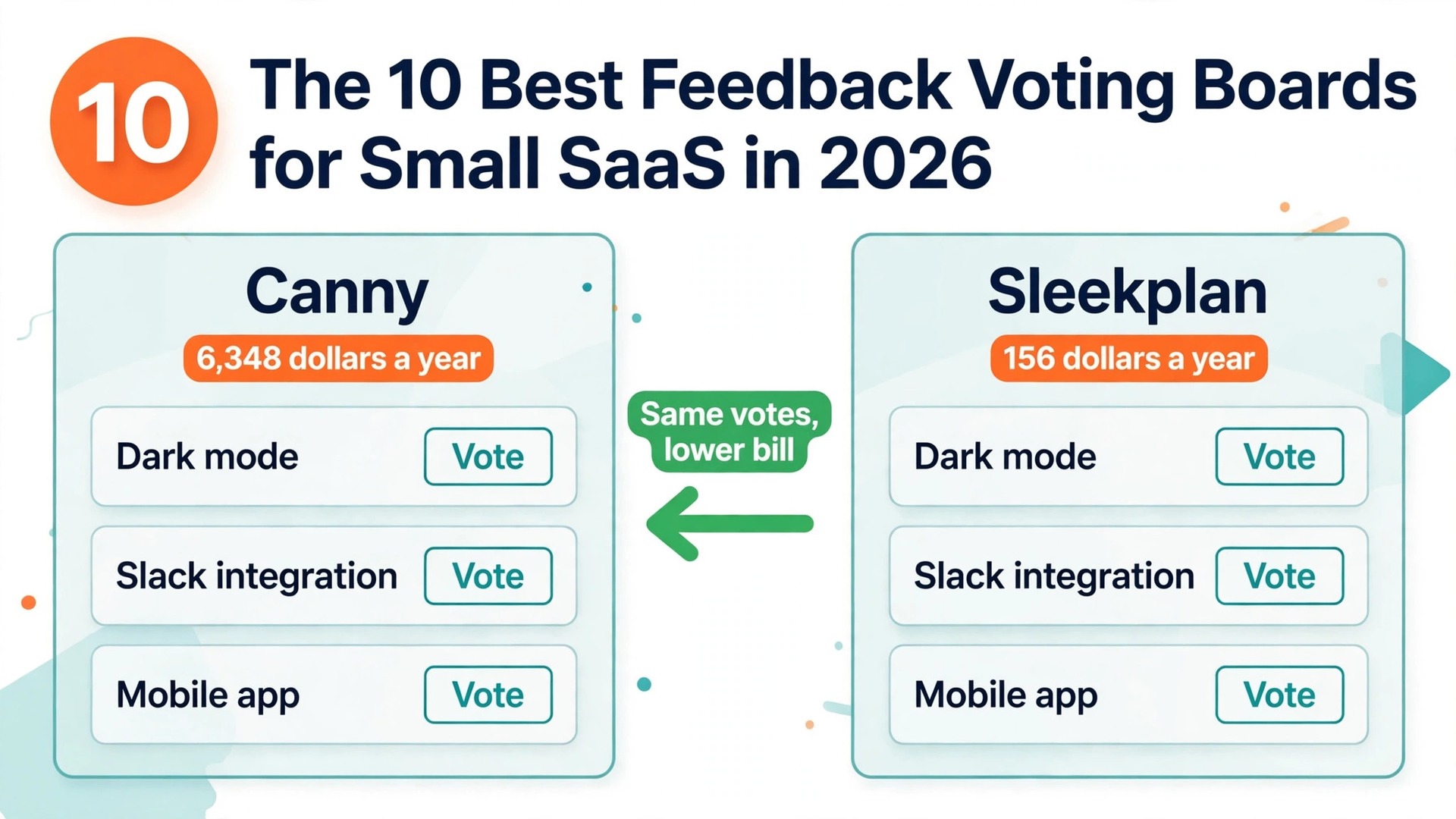
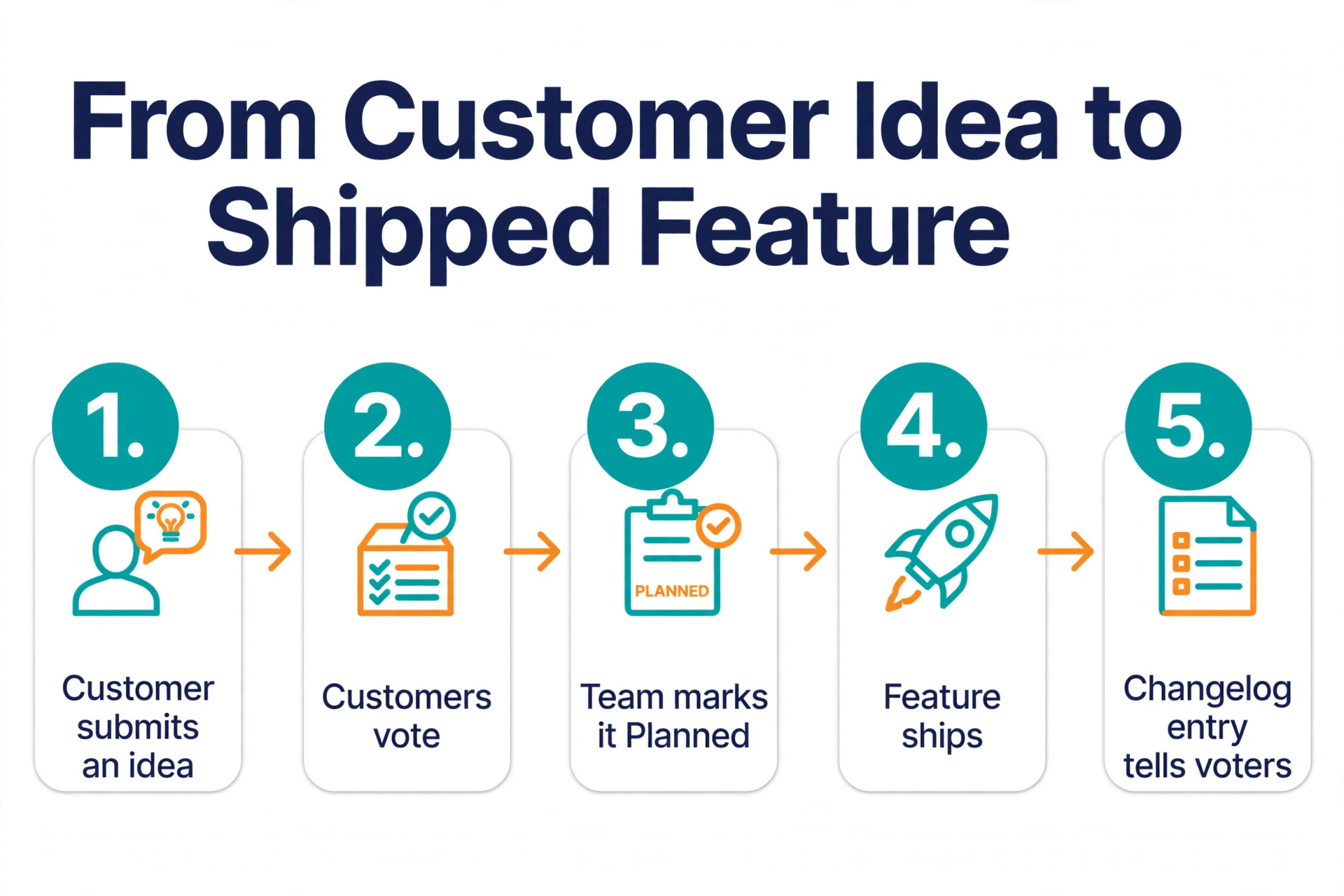
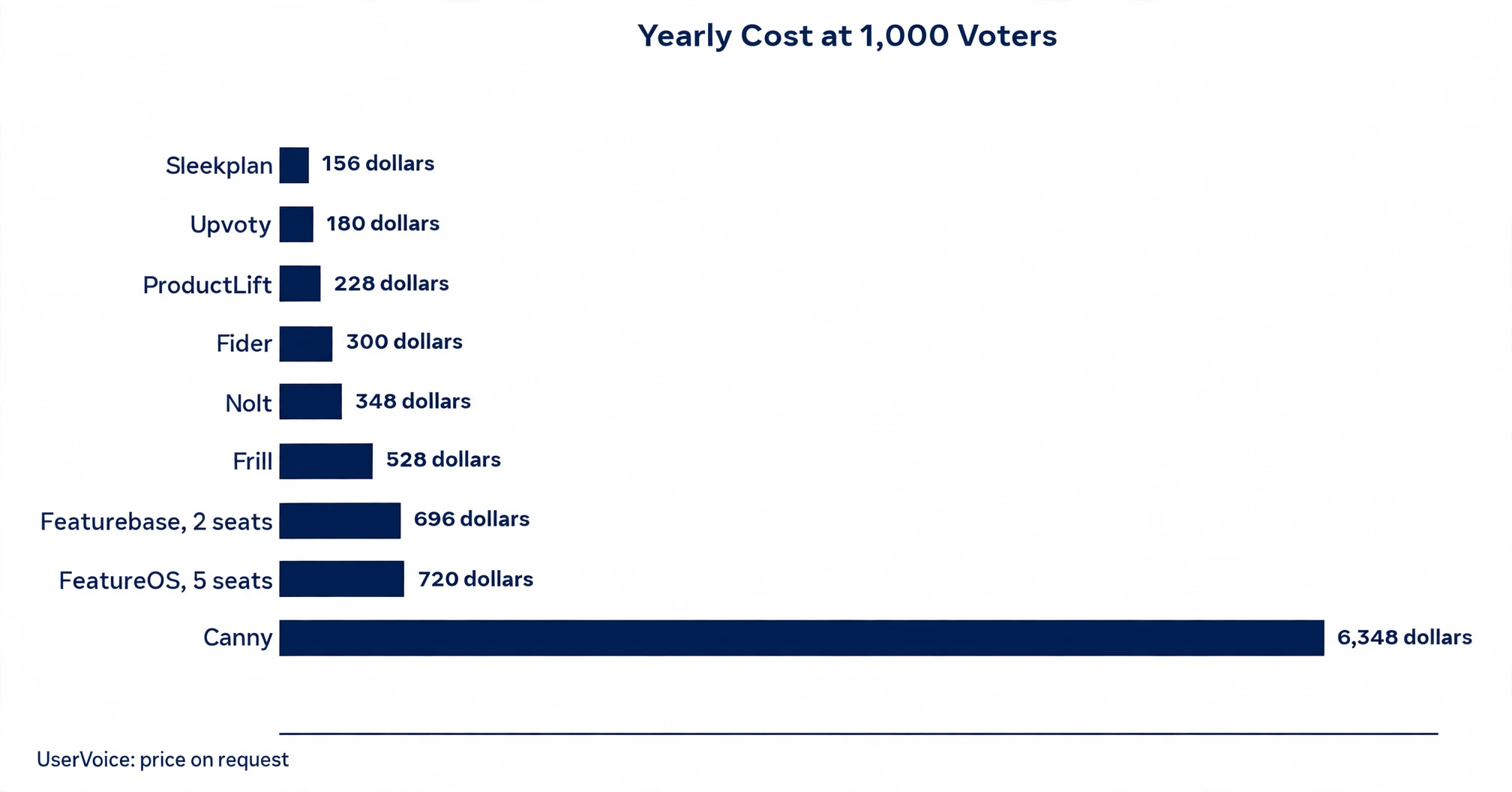
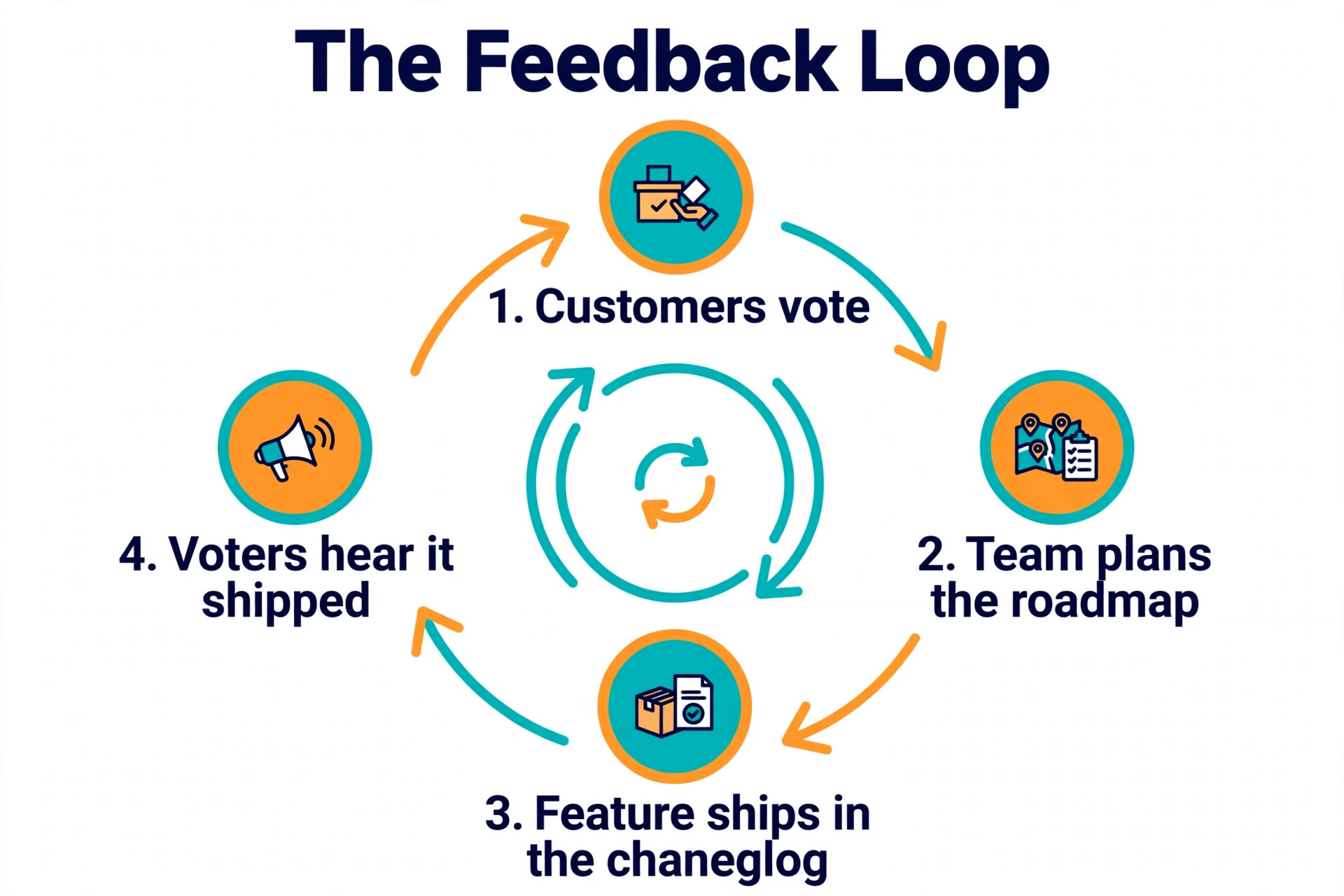
A board with 1,000 active voters costs 6,348 dollars a year on Canny Pro and 156 dollars a year on Sleekplan Starter, and both boards collect votes, rank requests and publish a roadmap. That gap is the first thing to understand about the best feedback voting boards, because the tools look similar on a feature list and differ wildly on the bill. The second thing to understand is that a voting board is only half the job. The board that wins is the one your team actually closes the loop on, marking requests as planned, shipped and announced, so voters see their idea become a feature.
We compared 10 boards on the work a small SaaS team actually does. We checked the published price on each vendor pricing page in late 2026, worked out the yearly cost for a board with 1,000 active voters, and noted how each tool prices, whether by tracked user, by seat, by board or by flat plan. We also compared voting, duplicate merging, roadmaps, changelogs, announcements, surveys, widgets and integrations, because a board that cannot close the loop becomes a graveyard of unanswered requests.
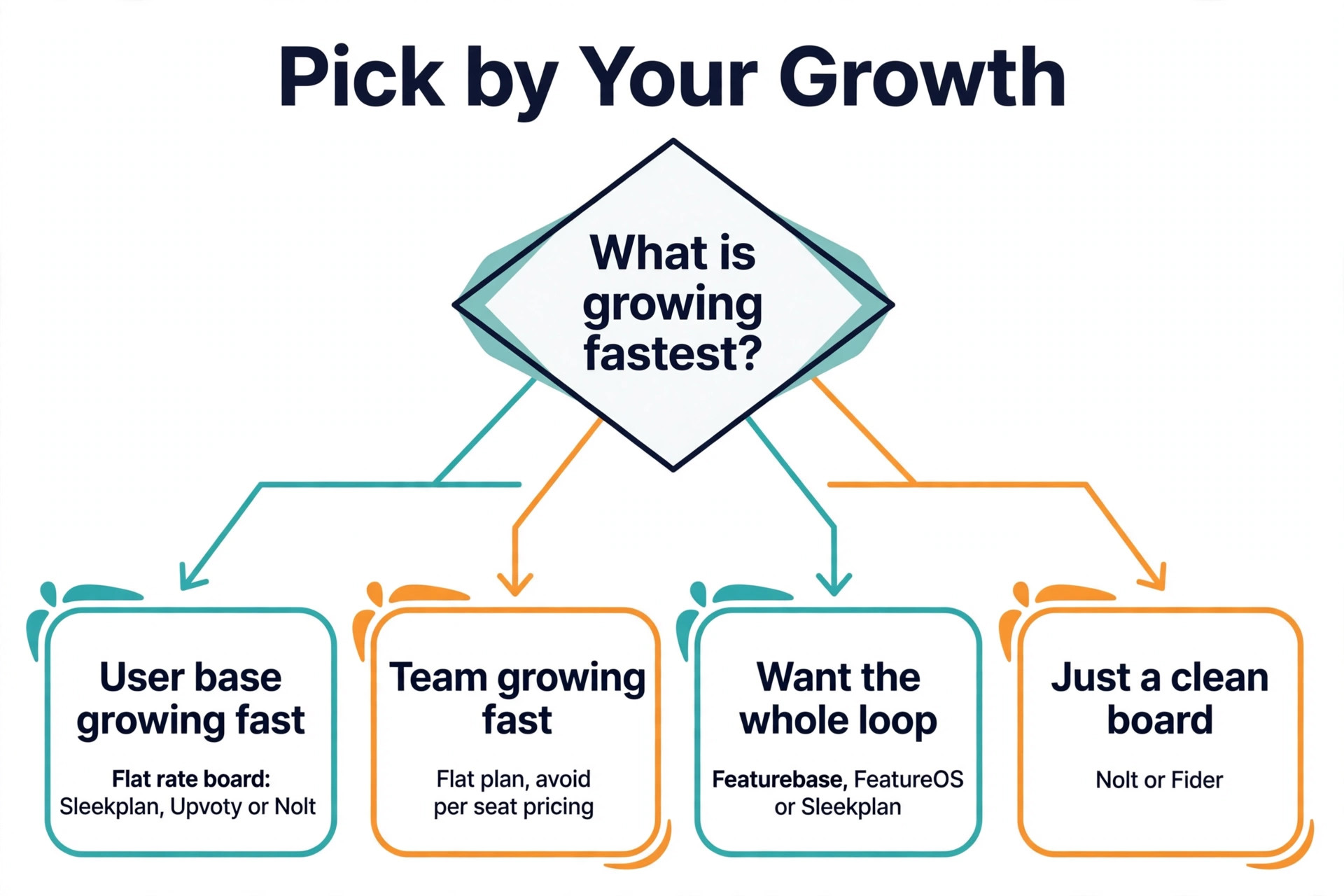
The split that matters most is the pricing model. Canny charges by tracked user, so the bill grows as more customers vote. Featurebase and FeatureOS charge by seat, so the bill grows as the team grows. Nolt, Upvoty, Sleekplan, Frill and Fider charge a flat plan price with unlimited voters, so the bill stays flat while the board grows. For a small SaaS team with a growing user base, that difference can be worth thousands of dollars a year, and it should decide the shortlist before any feature does.
How We Compared 10 Boards
We scored each board on five points that decide whether feedback turns into product decisions. Voting covered whether customers can submit ideas, vote, comment and follow a request, and whether the team can vote on behalf of a customer from a sales call. Prioritisation covered duplicate merging, segmentation, and whether votes can be weighted by plan or revenue. Roadmaps covered public and private roadmaps with statuses that voters can follow. Closing the loop covered changelogs and announcements that tell voters when their request ships. Price covered the yearly cost at 1,000 active voters, because that is the size where pricing models diverge most.
We also noted what each of the best feedback voting boards does beyond the board. Some boards are part of a wider loop with surveys, a help centre and a support inbox, while others do one thing and do it well. A small team that wants the whole loop in one tool should favour the wider products, while a team that only needs a clean public board should favour the focused ones. Prices in this guide were checked against vendor pricing pages and current 2026 comparisons, and you should confirm the price on the vendor page before you buy, because pricing in this category changes often.
The Best Pick for Each Job
| Job | Pick | Why it wins |
|---|---|---|
| The established name with deep integrations | Canny | Polished portal, AI capture, long integration list |
| The cheapest board that does the whole loop | Sleekplan | 13 dollars a month, surveys and changelog included |
| The best all in one for a growing team | Featurebase | Boards, roadmap, changelog, help centre and inbox |
| The cheapest paid board, period | Upvoty | 15 dollars a month, unlimited boards and voters |
| A clean board with no setup | Nolt | One board, unlimited admins, fast and simple |
| A simple loop for a startup | Frill | Ideas, roadmap and announcements from 25 dollars a month |
| Open source and self hosted | Fider | Own your data, hosted Pro at 25 dollars a month |
Use this table as a shortcut, then read the section for the board you are leaning toward. The cheapest board at 100 voters is rarely the cheapest at 1,000 voters, and the cost table later in this guide shows exactly where each pricing model breaks.
The Best Feedback Voting Boards in 2026, Ranked
The 10 boards below fall into three groups. The first group is the established names that cover the full feedback loop. The second group is the budget flat rate boards that keep the bill low as voters grow. The third group is the wider platforms and the enterprise option for teams that need more than a board. Read the group that matches your team size and your budget, then compare the two or three boards inside it.
1. Canny
Canny is the name most people know in this category, and it is the strongest focused feedback portal in this comparison. Customers submit ideas and vote on them, the team merges duplicates, attaches requests to tracked users, segments the evidence, publishes roadmap statuses, and closes the loop through a changelog. Autopilot uses AI to capture feedback automatically from tools such as Intercom and Zendesk, deduplicate it and summarise comments, and it runs on every plan, including the free one.
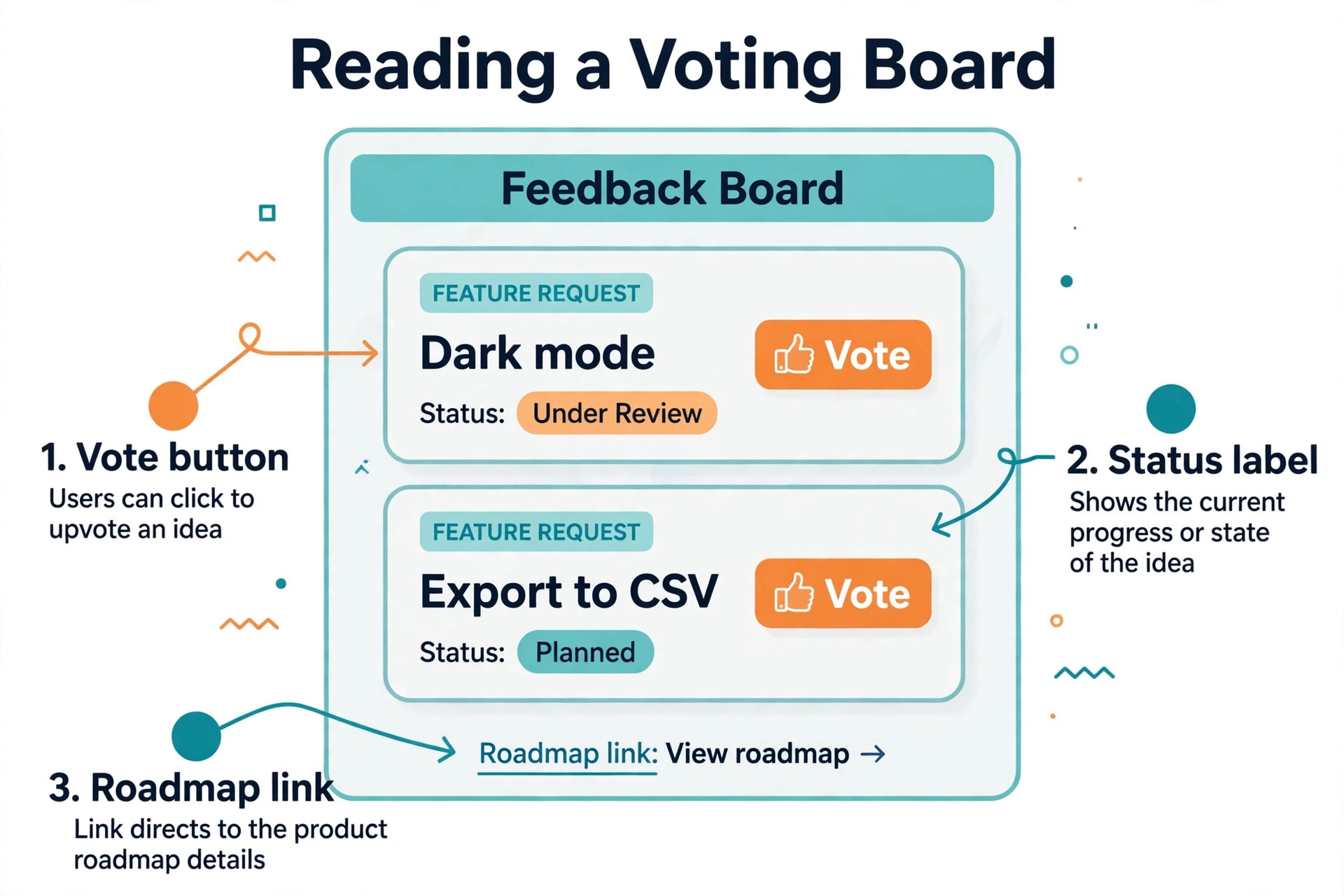
Pricing is the trade off, and it is the reason many small teams look elsewhere. The free plan covers 25 tracked users, and Pro starts at 79 dollars a month billed annually, or 99 dollars billed monthly, for 100 tracked users. The bill climbs with tracked users, reaching 229 dollars a month at 400 tracked users, 529 dollars a month at 1,000, and 1,079 dollars a month at 5,000. Canny is the strongest default when the main buying job is a polished request portal with voting, prioritisation and public follow up, and the budget can carry tracked user pricing. For a small SaaS team with a fast growing user base, the bill deserves a hard look before you commit.
2. Featurebase
Featurebase is the closest thing to Canny in feel, and the one to pick when a startup wants feedback, roadmap, changelog, help centre and support inbox under one roof. It covers feedback boards, a public roadmap, a changelog, in app surveys and a help centre, and it translates the portal into more than 40 languages automatically. An importer moves posts, votes and changelogs from other tools, which makes switching less painful than it sounds.
Pricing is per seat. The free plan gives one seat, one board and one roadmap with unlimited end users. Growth costs 29 dollars per seat per month billed yearly, Professional costs 59 dollars, and Enterprise costs 99 dollars. Five Growth seats come to 145 dollars a month, which is a fair price for the breadth, but a team that grows to 10 seats pays 290 dollars a month, so price the tool at the team size you will have next year. Featurebase suits a small SaaS team that wants the whole loop in one product and is willing to pay per seat for it. A team that only needs a voting board will find a cheaper home elsewhere.
3. Frill
Frill keeps feedback simple, and that simplicity is its appeal. It packages ideas, voting, a public roadmap, announcements, surveys and a widget you can drop into your product, and it looks good out of the box with little setup. A startup gets a credible replacement for a spreadsheet or an improvised request board without starting a product operations project, and the board is easy for customers to understand at first glance.
Pricing is flat. The Startup plan costs 25 dollars a month and includes 50 ideas and one survey. The Business plan costs 49 dollars a month and expands to unlimited ideas and three surveys. The Growth plan costs 149 dollars a month and adds privacy and white labelling, and Enterprise starts at 349 dollars a month. The limit to watch is the idea cap on Startup, because 50 active ideas runs out fast once customers start posting, and the step to Business is the real entry price for a live board. Frill suits a small team that wants a tidy feedback loop without much setup, and that does not yet need surveys, a knowledge base or deeper prioritisation.
4. Nolt
Nolt is a clean, focused feedback board with voting and a roadmap, and it does one thing well. The board is fast, the design is pleasant, and customers enjoy using it, which matters more than it sounds, because a board nobody visits collects nothing. Every plan includes unlimited admins, so support, product and engineering can all work the board for one fee, and the Pro plan adds Jira, Linear, Asana and Zapier integrations for teams that need the board to talk to their work tools.
Pricing is flat. The Essential plan costs 29 dollars a month, or 348 dollars billed annually, with one board. The Pro plan costs 69 dollars a month with five boards plus the integrations named above. There is no permanent free plan, only a 10 day Pro trial, so Nolt costs money from the start. Nolt suits a team that wants a delightful public board and a predictable flat bill, and that is happy to keep surveys and changelogs in other tools. A team that needs more than one board on a starter budget should check the board limit before buying.
5. Sleekplan
Sleekplan gives a startup the most for the least money, and it wins this list on value. It packs feedback boards, feature voting, NPS and CSAT surveys, a roadmap and a changelog into a single in app widget, with unlimited voters on every plan. The free Indie plan includes a feedback board, a changelog and announcements, and it is free forever. The Starter plan costs 13 dollars a month billed yearly and adds surveys, single sign on, API access, webhooks and 1,000 AI credits for three team members. The Business plan costs 38 dollars a month and adds topic analytics, a custom domain and branding removal.
The yearly cost for a board with 1,000 active voters is 156 dollars on Starter, which is less than a third of the cost of Frill Business and a fraction of Canny Pro at the same size. The trade off is depth. Sleekplan is lighter on analysis and planning than Productboard, and it will not replace a dedicated research repository. For a small SaaS team that wants a board, a roadmap, a changelog and surveys at the lowest honest price, Sleekplan is the pick. It suits indie developers and small teams who want a bit of everything without an enterprise bill.
6. Upvoty
Upvoty is the cheapest paid board on this list, and the simplest to reason about. Every plan includes unlimited boards and unlimited voters, a custom domain, custom single sign on, API access and branding removal, so the price you see is the price for the whole board, not a starting point that grows. The Power plan starts at 15 dollars a month on monthly billing, or 162 dollars a year with yearly billing, and it covers one project with a public roadmap. The Super plan costs 25 dollars a month and adds the changelog and every integration. The Hyper plan costs 49 dollars a month and covers unlimited projects with webhooks and SAML single sign on.
The limits are honest. Upvoty has no permanent free plan, only a 14 day trial, and it has no built in surveys and no AI duplicate detection, which competitors now ship at entry level. A team that wants Slack, Jira or Intercom links pays for Super, because Power leaves out the changelog and the integrations. Upvoty suits a solo founder or a small team that wants a budget voting board with a predictable bill and no tracked user maths. For 15 dollars a month it is hard to beat, and the yearly cost at 1,000 voters is 180 dollars, which is the lowest paid price in this guide.
7. Fider
Fider is the open source feedback board, and it is the pick for teams that want to own their data. You can host it yourself for free on a small server with Docker, and you get voting boards, comments and email notifications without a monthly bill. The hosted version is free within a fair use limit of 250 feedback items, and the hosted Pro plan costs 25 dollars a month with moderation and unlimited feedback items. Fider is open source under the AGPL 3.0 licence, with close to 4,000 GitHub stars, which gives it a community that the other boards on this list do not have.
The trade off is features. Fider is lighter on integrations, roadmaps and analysis than the paid products, and self hosting means you own the maintenance, the backups and the uptime. A team that needs a polished public portal with AI capture and deep integrations will find Canny or Featurebase a better fit. Fider suits a technical team that wants a free self hosted board, that cares about data ownership, and that is comfortable running a small service. For a budget of zero and a team that can host it, there is no cheaper honest option.
8. FeatureOS
FeatureOS covers feedback, roadmap, changelog and documentation in one tool for a growing team. It is built for SaaS teams that want the whole loop, from request to roadmap to release note, with support and sales in the tool, and it prices by seat bundles rather than by tracked user. The entry price is 60 dollars a month for five seats, which makes it cheaper than Featurebase for a five person team and more expensive for a one person team. There is no free plan, only a 14 day trial, so the first bill arrives quickly.
The strength is the breadth. Documentation sits beside the roadmap, so a feature that ships can be documented in the same place it was requested, and the changelog closes the loop for voters without a second tool. The weakness is that a small team pays for five seats whether it uses them or not, so a solo founder will find Upvoty or Sleekplan cheaper. FeatureOS suits a growing SaaS team of three to five people that wants feedback, roadmap, changelog and docs in one place, and that will use the seats it pays for. Price it at next year team size before you buy.
9. ProductLift
ProductLift covers feedback voting, a roadmap and a changelog for small SaaS teams at a low flat price. The Starter plan costs 19 dollars a month billed yearly, or 29 dollars billed monthly, with a flat rate plus 15 dollars per extra team member. That pricing is easy to reason about, because the bill grows with the team, not with the voters, and unlimited voters are included. The board is clean, the roadmap is public, and the changelog closes the loop when a request ships.
ProductLift is smaller than Canny and Featurebase, so the integration list is shorter and the AI features are thinner, but the core loop is solid and the price is honest. A team that wants a simple board with a roadmap and a changelog, without paying for a help centre or a support inbox it will not use, will find ProductLift a good fit. It suits a small SaaS team on a budget that has outgrown a spreadsheet and wants a real board without an enterprise price. Check the integration list before you buy, because a missing integration can cost more than the saving.
10. UserVoice
UserVoice is the enterprise option at the end of this list, and it is the pick for large B2B SaaS teams that need more than a public board. It covers feedback collection, prioritisation, roadmaps and closing the loop, with the governance, security and reporting that a large organisation requires. It is the tool that large product teams reach for when feedback must be segmented by account, tied to revenue, and reported to leadership in a form a board alone cannot provide.
Pricing is not published, and it is sold through a sales process with no free tier, which puts it out of reach for a small SaaS team. A small team that buys UserVoice pays enterprise prices for features it will not use, and the implementation takes longer than a self serve board. UserVoice suits a large B2B team with hundreds of accounts, a need for account level prioritisation, and a budget that covers a sales led purchase. Everyone else on this list should pick one of the nine boards above, and revisit UserVoice only when the team and the account base grow into it.
How to Choose the Right Board
Start with the pricing model, because it decides the bill among the best feedback voting boards at the size you will reach next year. If your user base is growing fast, a tracked user price such as Canny will climb with every new voter, and a flat rate board such as Sleekplan, Upvoty or Nolt will stay flat. If your team is growing fast, a per seat price such as Featurebase will climb with every hire, and a flat plan price will stay flat. Work out the yearly cost at 1,000 voters and at five team seats, and compare those two numbers, not the headline monthly price.
Next, decide how much of the loop you need. A team that only needs a public board should buy the simplest board that does voting and a roadmap well, and keep surveys and changelogs elsewhere. A team that wants the whole loop should buy a wider product such as Featurebase, FeatureOS or Sleekplan, and avoid paying for two tools that overlap. The board that covers the loop in one place saves more time than the board with the prettiest voting widget.
Then check the closing the loop features, because they decide whether the board stays alive. A board with a changelog and announcements tells voters when their idea ships, and that reply is what brings them back to vote again. A board with no changelog becomes a list of requests that nobody answers, and voters stop posting. Ask how the team will mark a request as planned, in progress and shipped, and how voters will hear about it, before you choose.
What a Board Costs at 1,000 Voters
The table below works out the yearly cost for a board with 1,000 active voters, using published prices checked in late 2026. Tracked user pricing climbs with voters, per seat pricing climbs with the team, and flat rate pricing stays flat. The figures assume a small team, and per seat tools are priced at two seats unless noted.
| Board | Billing basis | Yearly cost at 1,000 voters |
|---|---|---|
| Canny Pro | Per tracked user | 6,348 dollars |
| Featurebase Growth, 2 seats | Per seat | 696 dollars |
| Frill Business | Flat plan | 528 dollars |
| Nolt Essential | Flat plan | 348 dollars |
| Fider hosted Pro | Flat plan | 300 dollars |
| FeatureOS, 5 seats | Seat bundle | 720 dollars |
| ProductLift Starter | Flat plus per member | About 228 dollars |
| Upvoty Power | Flat plan | 180 dollars |
| Sleekplan Starter | Flat plan | 156 dollars |
| UserVoice | Enterprise sales | Price on request |
The pattern is plain. At 1,000 voters, the flat rate boards cost a few hundred dollars a year, the per seat boards cost around 700 dollars, and the tracked user board costs more than 6,000 dollars. The gap is not a small difference, and it is the reason the pricing model should decide the shortlist before any feature does.
Mistakes That Kill a Feedback Board
The most common mistake is launching a board and never closing the loop. A team collects hundreds of requests, marks none of them as planned or shipped, and wonders why voters stop posting. The fix is a weekly habit. Review new requests, merge duplicates, mark the top requests as planned, and publish a changelog when they ship. A board that answers voters stays alive, and a board that does not becomes a graveyard.
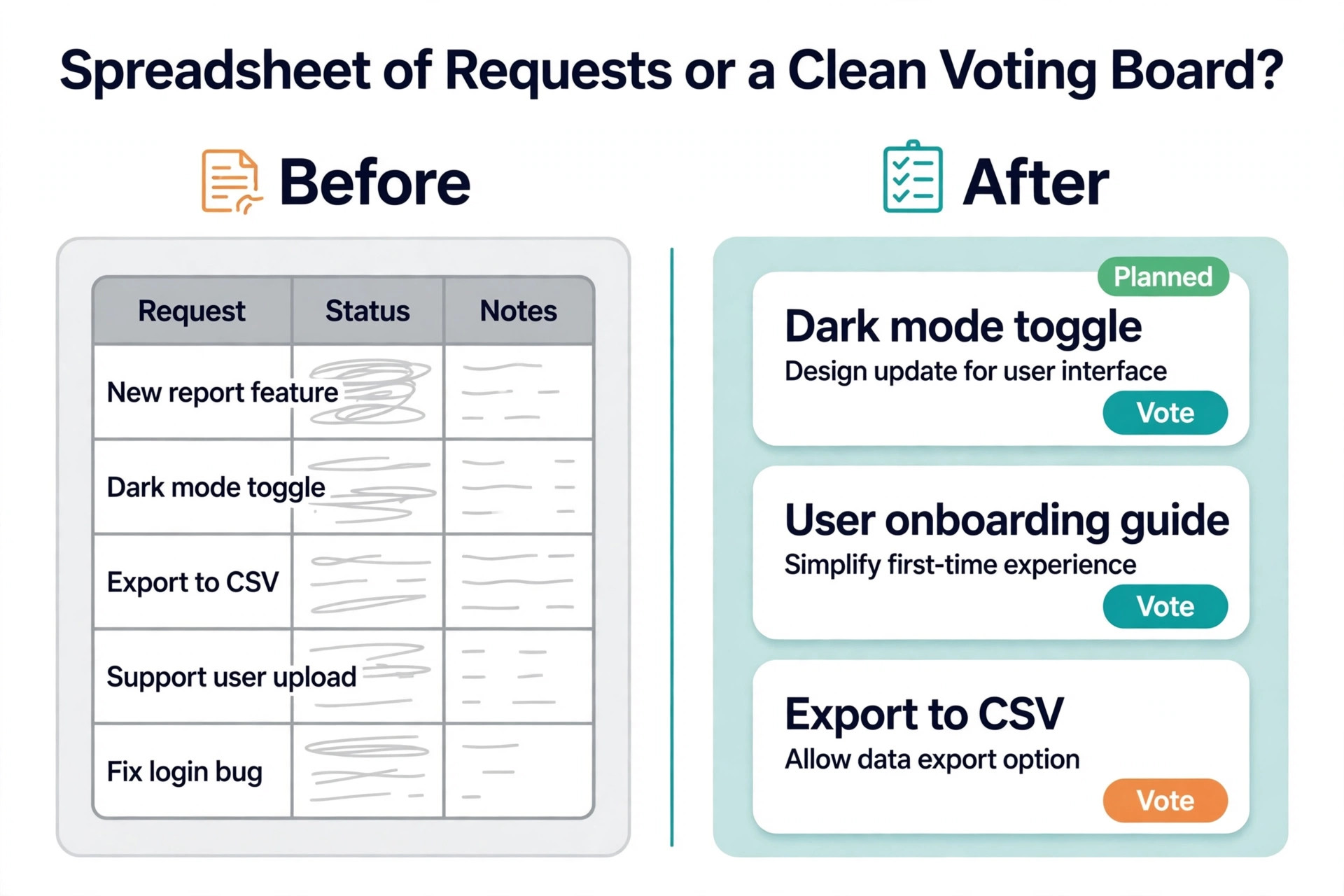
The second mistake is letting duplicates split the vote. Ten customers ask for the same feature in ten different words, and each request gets a few votes, so none of them looks important. Merge duplicates into one request and move the votes with them, so the true demand shows in one place. Tools with AI duplicate detection help, but a weekly manual merge works too, and it takes minutes.
The third mistake is pricing the board at today size instead of next year size. A team that picks a tracked user board at 100 voters and grows to 1,000 voters in a year can see the bill grow tenfold, and switching boards mid growth is painful. Price the board at the voter count and the team size you expect in a year, and pick the pricing model that stays flat at that size.
- Price the board at next year voter count and team size, not today size.
- Merge duplicates every week so the true demand shows in one request.
- Mark top requests as planned and publish a changelog when they ship.
- Reply to voters when their request ships, so they vote again.
- Keep the board public and easy to find, or voters will never see it.
Our Verdict
Sleekplan is the pick for most small SaaS teams, because it covers the board, the roadmap, the changelog and surveys for 13 dollars a month, with unlimited voters and a free plan to start. Upvoty is the pick when the budget is the tightest, because 15 dollars a month buys unlimited boards and voters with no tracked user maths. Featurebase is the pick when the team wants the whole loop in one product, with a help centre and a support inbox beside the board.
Canny is the pick when the team wants the established name with the deepest integrations and can carry tracked user pricing, and Frill is the pick when the team wants a simple tidy loop without much setup. Fider is the pick for a technical team that wants to own its data, and Nolt is the pick for a clean focused board with unlimited admins. Start on the free plan where one exists, price the board at next year size, and build the weekly habit of closing the loop, because the board that answers voters is the board that keeps working.
Frequently Asked Questions
What are the best feedback voting boards for a small SaaS team?
The best feedback voting boards for a small SaaS team are Sleekplan for value, Upvoty for the lowest paid price, Featurebase for the whole loop, and Canny for the established name. Sleekplan costs 13 dollars a month with unlimited voters, Upvoty costs 15 dollars a month with unlimited boards, Featurebase costs 29 dollars per seat a month, and Canny Pro starts at 79 dollars a month billed yearly for 100 tracked users.
How much does a feedback board cost at 1,000 voters?
A flat rate board costs 156 to 348 dollars a year at 1,000 voters, with Sleekplan Starter at 156 dollars and Upvoty Power at 180 dollars. A per seat board such as Featurebase Growth costs about 696 dollars a year for two seats. Canny Pro costs 6,348 dollars a year at 1,000 tracked users, because it prices by tracked user. The pricing model matters more than the headline monthly price at this size.
Is Canny worth the price for a small SaaS team?
Canny is worth the price when the team wants a polished portal with deep integrations and AI feedback capture, and the budget can carry tracked user pricing. It is the strongest focused feedback portal in this comparison. For a small team with a fast growing user base, the bill climbs quickly, and a flat rate board such as Sleekplan or Upvoty gives a similar public board for a fraction of the yearly cost.
Can I run a feedback board for free?
Yes. Canny offers a free plan for 25 tracked users, Featurebase offers a free plan for one seat with one board, Sleekplan offers a free Indie plan with a board and a changelog, and Fider is free to self host with a hosted free tier for up to 250 feedback items. A free plan suits a team that is testing whether customers will vote, and the paid plan becomes worth it once the board is active and the limits pinch.
What is the difference between a voting board and a roadmap?
A voting board is where customers submit ideas and vote on them, and a roadmap is where the team publishes what is planned, in progress and shipped. The best feedback voting boards include both, because the roadmap is how the team answers the votes. A board without a roadmap collects requests and never replies, while a roadmap without a board guesses what customers want instead of asking them.
How do I stop duplicate requests splitting the vote?
Merge duplicates into one request and move the votes with them, so the true demand shows in one place. Do it every week, and use a tool with AI duplicate detection if the volume is high. Canny Autopilot deduplicates automatically, and Featurebase and Sleekplan both help with merging. A weekly manual merge takes minutes and keeps the ranking honest, which is what makes the board useful for product decisions.
A feedback board is a promise to listen, and the promise only works if the team answers. Pick the board whose pricing stays flat at the size you will reach, merge duplicates every week, mark the top requests as planned, and publish a changelog when they ship. The best feedback voting boards make that loop easy, and the loop is what turns votes into features your customers asked for.