What makes a business name worth remembering? It is short enough to say in one breath, clear enough to spell after hearing it once, and strange enough that no other business already owns it. Most founders discover how hard that combination is when they sit down to name their company and every good idea is already taken, already trademarked, or already sounds like a competitor. That question is the starting point for learning how to name a business with an AI name generator.
This guide shows how to do it properly. You will learn what makes a name work, how to brief a generator so it returns useful ideas instead of noise, which tools to use for which kind of name, and how to check domains, trademarks, and social handles before you fall in love with a name you cannot own.
What Makes a Business Name Work
A good name passes five tests, and a name that fails any of them will cost you later. The first test is memory. A customer should be able to hear the name once and repeat it the next day. Short names win here. One or two syllables are ideal, three is workable, and four or more usually needs a strong reason. The second test is spelling. If a customer has to ask how to spell it, the name will leak traffic every time someone hears it on a podcast or in conversation. Alternate spellings like Lyft and Fiverr can work, but only when the twist is obvious.
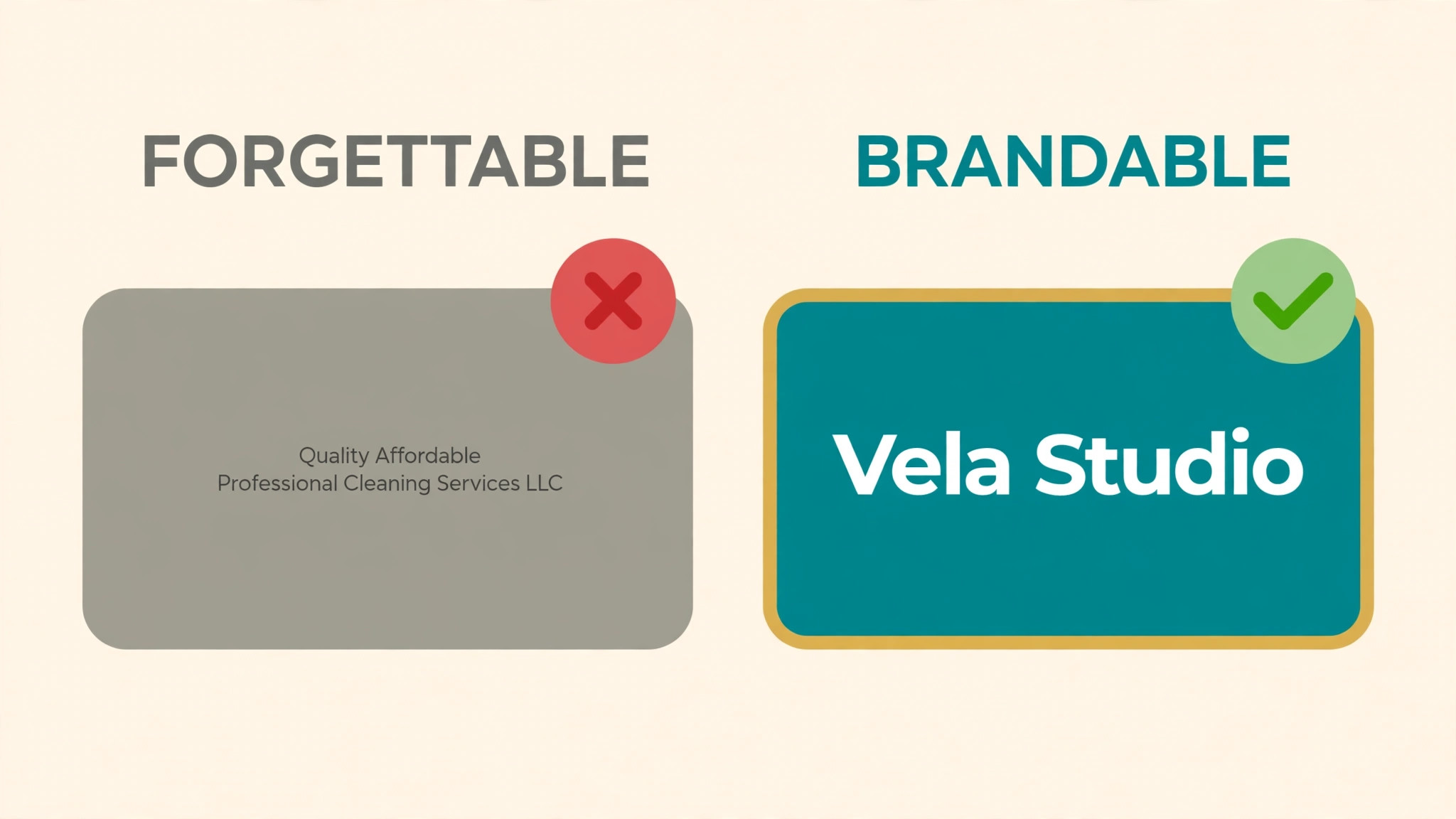
The third test is meaning. A name should hint at what the business does or how it feels, without describing it literally. A literal name like Best Cheap Plumbers of Chicago is clear but forgettable and hard to trademark. An evocative name like a made up word with the right sound can carry far more meaning over time, because customers fill it with their own experience of the business. Anyone learning how to name a business with an ai name generator should test every candidate against these five tests, because a name that passes all five is rare, and a name that fails one will cost money later.
The fourth test is availability. A name with no matching domain, no free social handles, and a trademark conflict is not a name. It is a legal problem with a logo attached. The fifth test is longevity. A name tied to one product, one town, or one trend will age badly when the business grows. Pick a name that still fits in five years, when the product line, the market, and the team have all changed.
Naming Styles an AI Generator Can Produce
AI name generators do not return one kind of name. They return several styles, and knowing the styles helps you brief the tool and judge the results. Brandable names are invented words that sound like real companies, in the style of Google or Spotify. They are the hardest to create and the most valuable when they work, because they are easy to trademark and easy to own. Compound names join two real words, in the style of FedEx or Microsoft, and they are clearer but harder to keep short.
Evocative names suggest a feeling or an outcome, in the style of Red Bull or Forever 21. Short phrase names describe the promise in a few words, in the style of Dollar Shave Club. Real word names take an ordinary word and give it a new meaning, in the style of Apple or Amazon, which works brilliantly when the word is free and fails completely when it is taken.
Alternate spelling names twist a familiar word, in the style of Lyft, and non English names borrow a word from another language, in the style of Toyota or Audi. Namelix offers eight of these styles as filters, including brandable, evocative, short phrase, compound, alternate spelling, non English, real words, and rhyming combinations, plus an auto mode that mixes them all. Start with brandable and compound, because those two styles produce the most usable names for a new business, then try evocative and alternate spelling when the first round feels stale.
Writing the Brief That Gets Good Names
A generator is only as good as the brief you give it, and most bad results come from a vague input rather than a weak tool. The brief has four parts. The first is the one sentence business description from the workflow above. The second is the feeling the name should carry. Calm, bold, playful, premium, and friendly all lead to different names, and a generator that does not know the feeling will return a random mix.
The third is the words to avoid. If you never want the words tech, pro, or hub in your name, say so in the keywords by leaving them out, and filter the results for them afterwards. The fourth is the style you want, using the style filters in the tool rather than hoping the generator guesses.
Run the same brief through two generators and compare. Namelix will invent brandable names, while Shopify will return practical ones, and the gap between the two lists tells you what the brief is doing. If both lists feel wrong in the same way, the brief is the problem, not the tools. Rewrite the sentence, change the keywords, and try again. The most useful skill in learning how to name a business with an ai name generator is not picking from a list. It is writing a brief that makes the list worth picking from, and that skill improves every time you run the workflow.
How to Name a Business with an AI Name Generator in 8 Steps
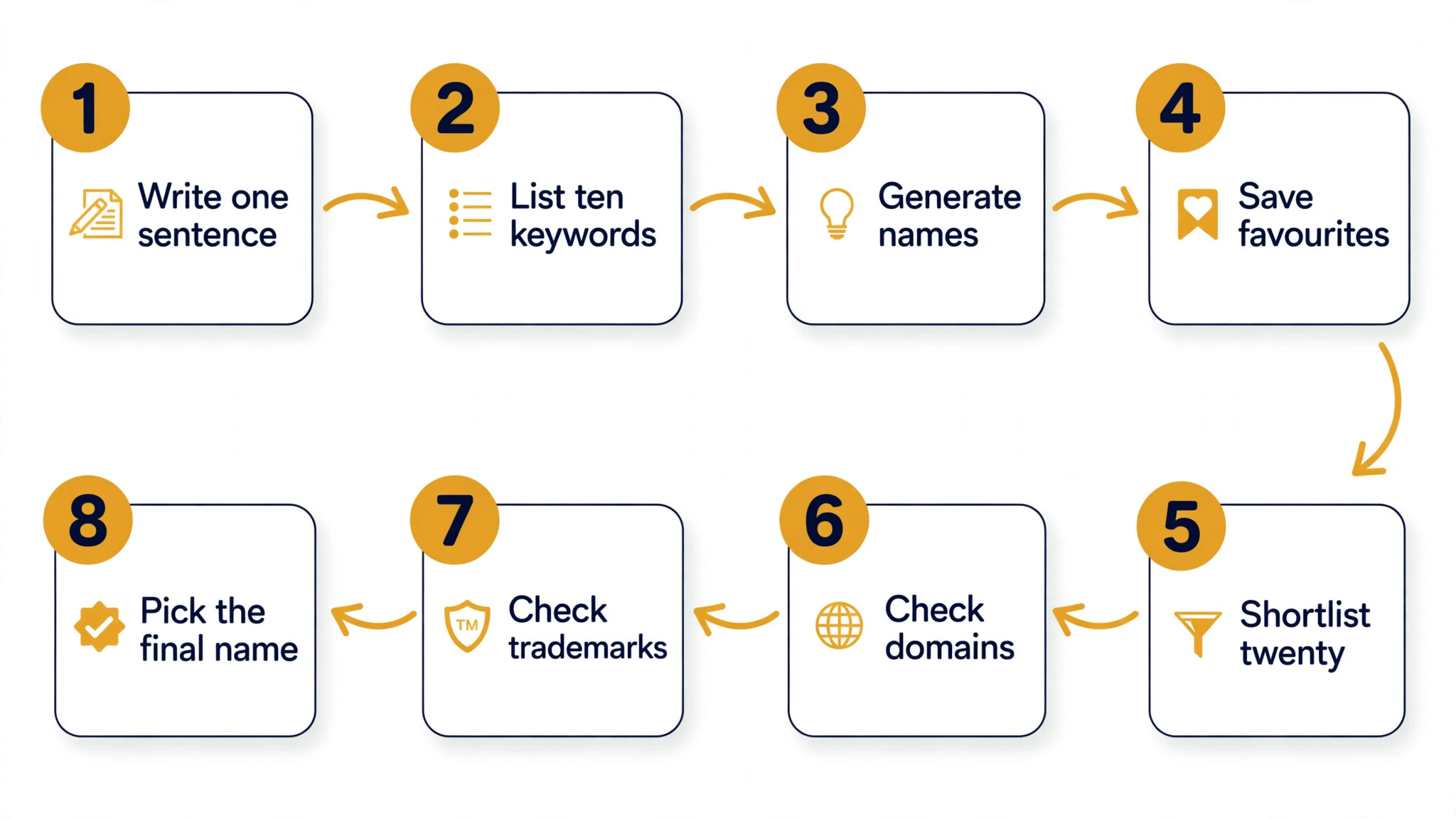
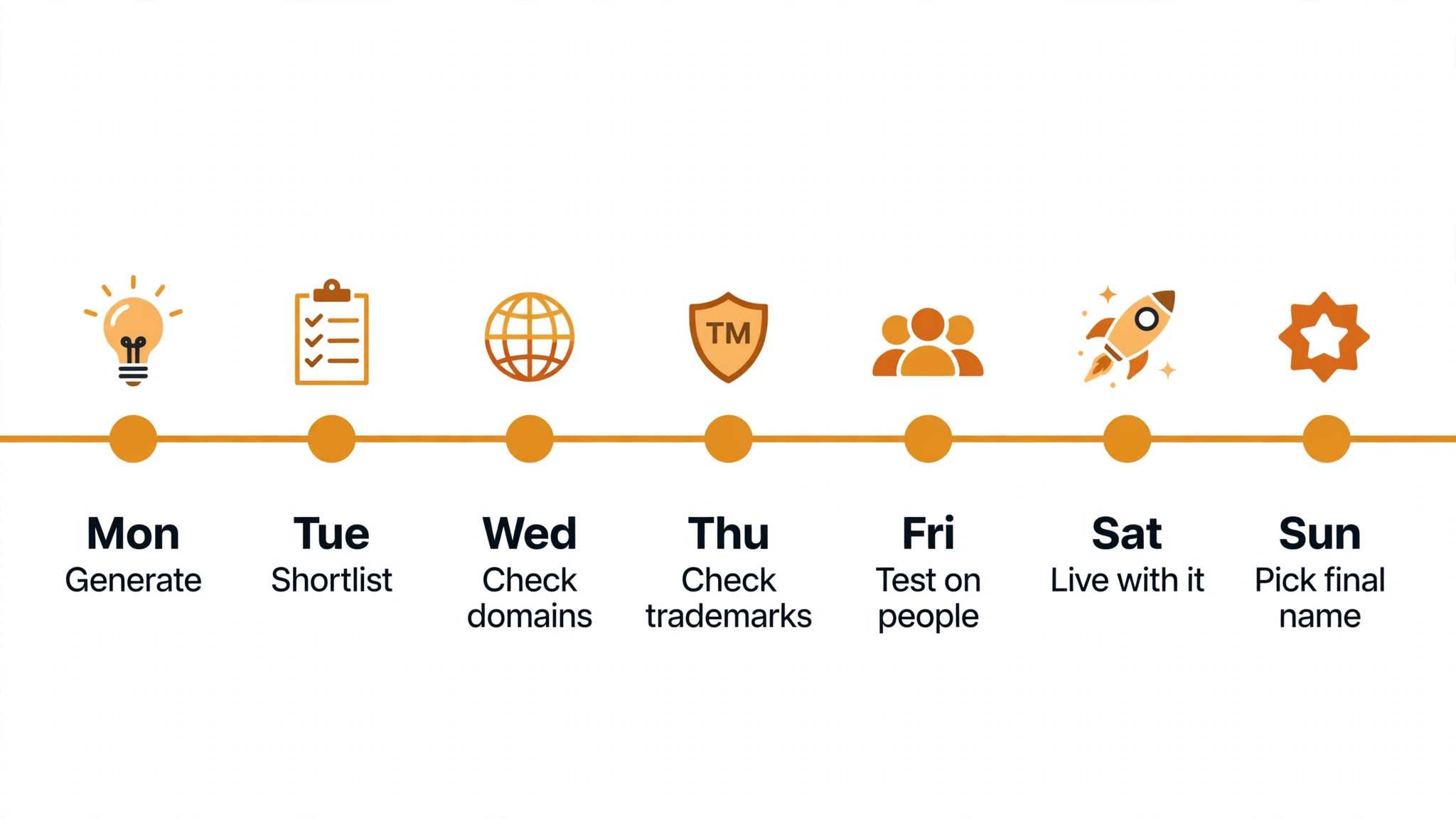
The workflow below takes about an hour, and it works with any generator. The order matters. Thinking first, generating second, and checking third is what separates a name you can use from a list of clever words you cannot own.
- Write one sentence about the business. What it does, who it serves, and what makes it different. A generator fed with a clear sentence returns better names than one fed with a single keyword.
- List ten keywords that describe the work, the feeling, and the customer. Include words about the outcome, not just the product. A coffee subscription is about mornings, ritual, and energy as much as it is about beans.
- Run two free generators with the same keywords. Namelix and the Shopify generator are a good pair, because one invents brandable names and the other checks domains instantly.
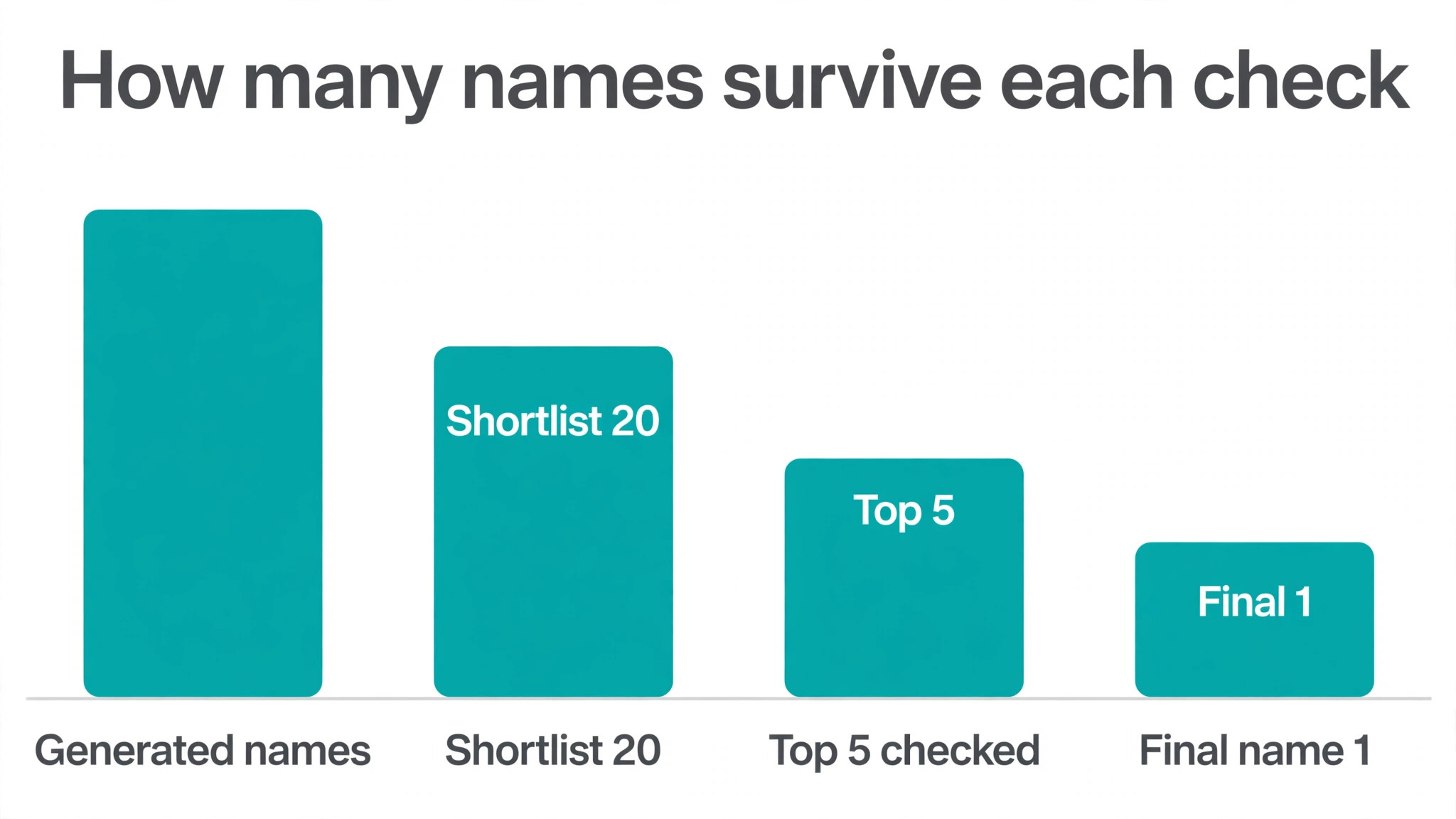
- Save every name you would say out loud in a sales call. Do not judge yet. A shortlist of twenty is better than a shortlist of three, because the checks will remove most of them.
- Run the survivors through a second generator with a different style. Try a high randomness setting in Namelix, or a different keyword set, to catch names the first round missed.
- Check domain availability for the shortlist. A matching dot com is ideal, but a clean dot co, dot io, or dot ai can work for a startup. Avoid names where the dot com belongs to a competitor.
- Check trademarks and social handles for the top five. Search your country trademark database, then check the handle on Instagram, X, TikTok, and LinkedIn. A name with no free handle is a name you will regret.
- Say the finalists out loud, test them on five people, and pick the one that survives. The best test is a stranger test. If five strangers can spell it after hearing it once, the name works.
The Best AI Name Generators Compared
| Tool | Free to generate | Standout feature | Best for |
|---|---|---|---|
| Namelix | Yes, unlimited | Learns from saved names, logo preview | Brandable invented names |
| Looka | Yes, naming free | Name flows into logo and brand kit | Name plus branding together |
| Brandmark | Yes, names free | Logo files from 25 dollars | Name plus logo files |
| Shopify | Yes | Instant domain check | Ecommerce names |
| Squadhelp | Yes, generator free | Human naming contests | Custom names with human input |
| NameSnack | Yes | Pairs with Looka for logos | Quick keyword names |
| Wix | Yes | Simple keyword names | Wix website owners |
| ChatGPT | Free tier | Open ended brainstorming | Unusual angles and slogans |
1. Namelix
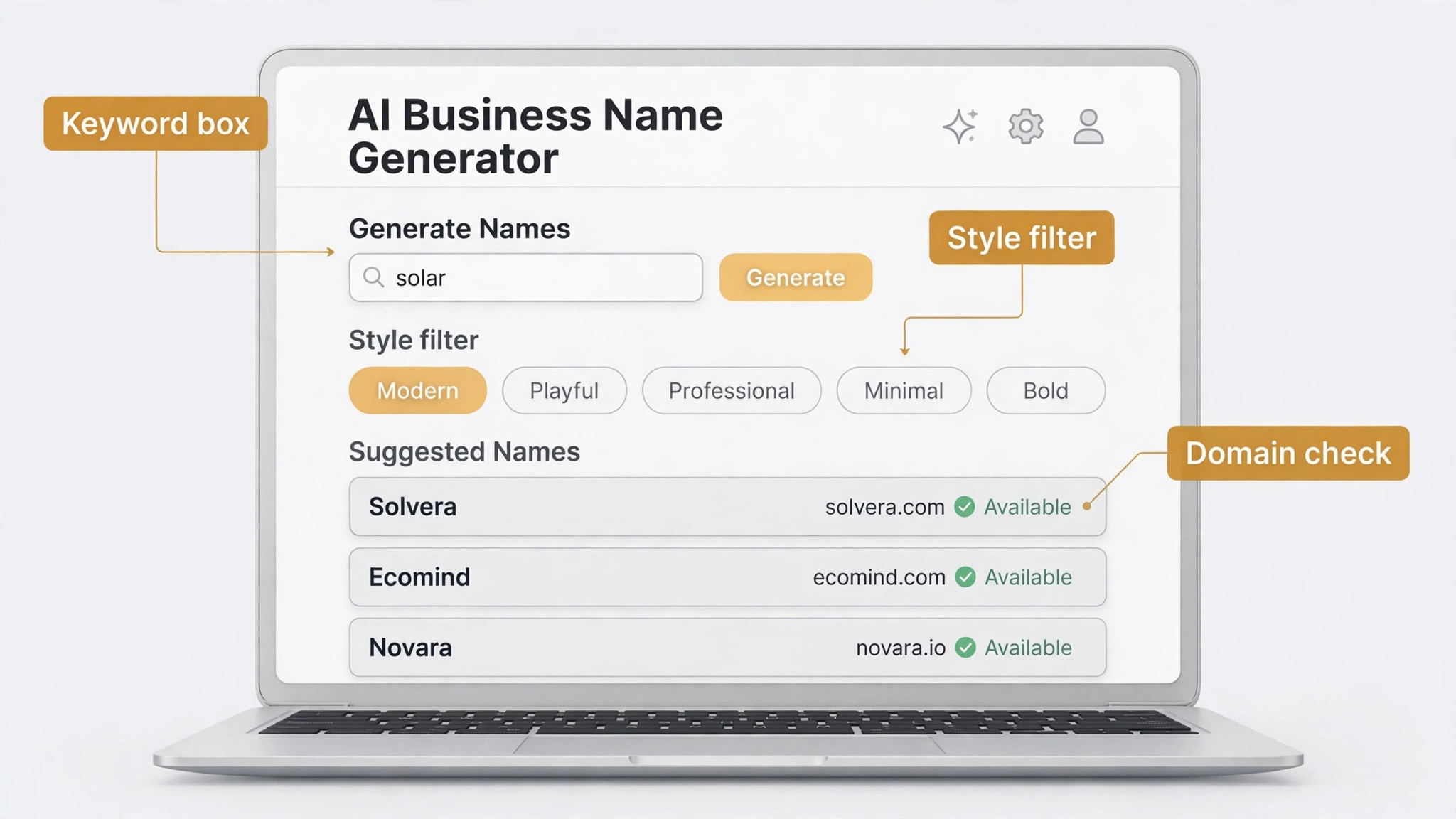
Namelix is the best free starting point for most founders, and it is built by the team behind Brandmark. You type two or three keywords, pick a naming style, and set a randomness slider, and the tool returns short, brandable names that sound like real companies rather than dictionary combinations. Each result comes with an instant logo preview and a live domain check across dot com, dot io, dot ai, dot app, and other extensions.
The tool learns from the names you save in a session, refining its suggestions as you go rather than repeating the same list. Generation is free and unlimited. Logo downloads run through Brandmark, with packages from about 25 dollars for a basic logo up to about 175 dollars for a full brand kit. Namelix does not do trademark searches, and its soft warnings are not a substitute for a real clearance check. Use it for ideas, then verify the winners yourself.
2. Looka
Looka is the best choice when the name is only the first step and a full brand is the goal. Its name generator is competent, though not dramatically different from Namelix, but a name you pick flows directly into an AI logo maker, a colour palette, font recommendations, and a complete brand kit with business cards, social templates, and letterhead, all in one session.
Name generation is free to browse, and you only pay if you want to download a logo. Logo packages run 20 dollars for a basic low resolution file or 65 dollars for the full vector set, and the Brand Kit subscription runs 96 dollars a year. Looka suits founders who want to name the business and brand it in one sitting, and who would rather pay for a finished system than assemble one from separate tools.
3. Brandmark
Brandmark is Namelix parent product, and it closes the gap between a name and a finished logo. Generate names in Namelix, then move a favourite into Brandmark for a vector logo, brand guidelines, business card templates, and social media kits. Logo packages start at about 25 dollars for a basic logo and scale toward 175 dollars for a full brand kit. The naming itself stays free, and the value is in the handoff. A name that already has a logo preview in Namelix becomes a downloadable brand in Brandmark without retyping anything. Brandmark suits founders who want a name and a logo from the same family of tools, and who prefer a one time purchase to a subscription.
4. Shopify Business Name Generator
Shopify free name generator is the fastest option for ecommerce founders. Enter a keyword, get a list of names with matching dot com domains, and register the domain through Shopify if the name sticks. There is no logo generation and no account required, which keeps the tool fast and simple. The names lean descriptive rather than brandable, which suits a local business or a store where a clear name helps with search and foot traffic. It is less useful for a startup that needs an invented, trademark friendly brand. Use it as a second generator in the workflow, to catch practical names the brandable tools miss, and to confirm domain availability in one step.
5. Squadhelp
Squadhelp, now also known as Atom, covers the same basic ground as Namelix with its free AI generator, but its real difference is the option to run a naming contest. Hundreds of human namers submit and refine ideas against your brief, with the AI layer assisting with domain checking and trademark risk screening rather than generating the creative work itself.
A contest costs money, and the price depends on the package, so check the current pricing before you commit. Squadhelp suits founders who have tried the free generators, found nothing they love, and want human creativity applied to the problem. The contest route is slower than an AI list, but the names are more considered, and the domain and trademark screening is built into the process.
6. NameSnack
NameSnack generates names quickly from keywords and pairs naturally with Looka for logo creation afterwards. It is a reasonable middle stop between Namelix and a full paid platform, and it suits founders who want a fast list without learning a new interface. The names are solid and practical, though rarely as inventive as the best Namelix results. Use it when you want a second opinion on a keyword set, or when you need a name for a local business where clarity matters more than invention. It is free to use, and the handoff to Looka means a favourite name can become a logo in the next step without starting over.
7. Wix Business Name Generator
Wix offers a simple free name generator for owners who plan to build their website on Wix. Enter a keyword, receive a list of names, and move directly into a Wix site if one sticks. The tool is basic compared with Namelix, with no style filters and no logo preview, but it is fast and it removes friction for a founder who already uses Wix. It suits side projects and local businesses that need a workable name today rather than a perfect brand. Treat it as a first pass, then verify the winner with the domain and trademark checks below.
8. ChatGPT
ChatGPT is not a name generator in the usual sense, and that is its strength. It can brainstorm from a paragraph about the business, suggest names in a style you describe, explain why each one works, and generate slogans to test alongside the names. The free tier is enough for brainstorming, and the results are most useful when the prompt is specific.
Tell it the audience, the feeling, and the words to avoid, and it will return angles a keyword tool cannot reach. The weakness is verification. ChatGPT does not check domains or trademarks, and it can suggest names that are already taken. Use it for ideas and angles, then run every favourite through Namelix or a domain checker before you trust it.
Best Pick by Job
| Job | Best pick | Why it wins |
|---|---|---|
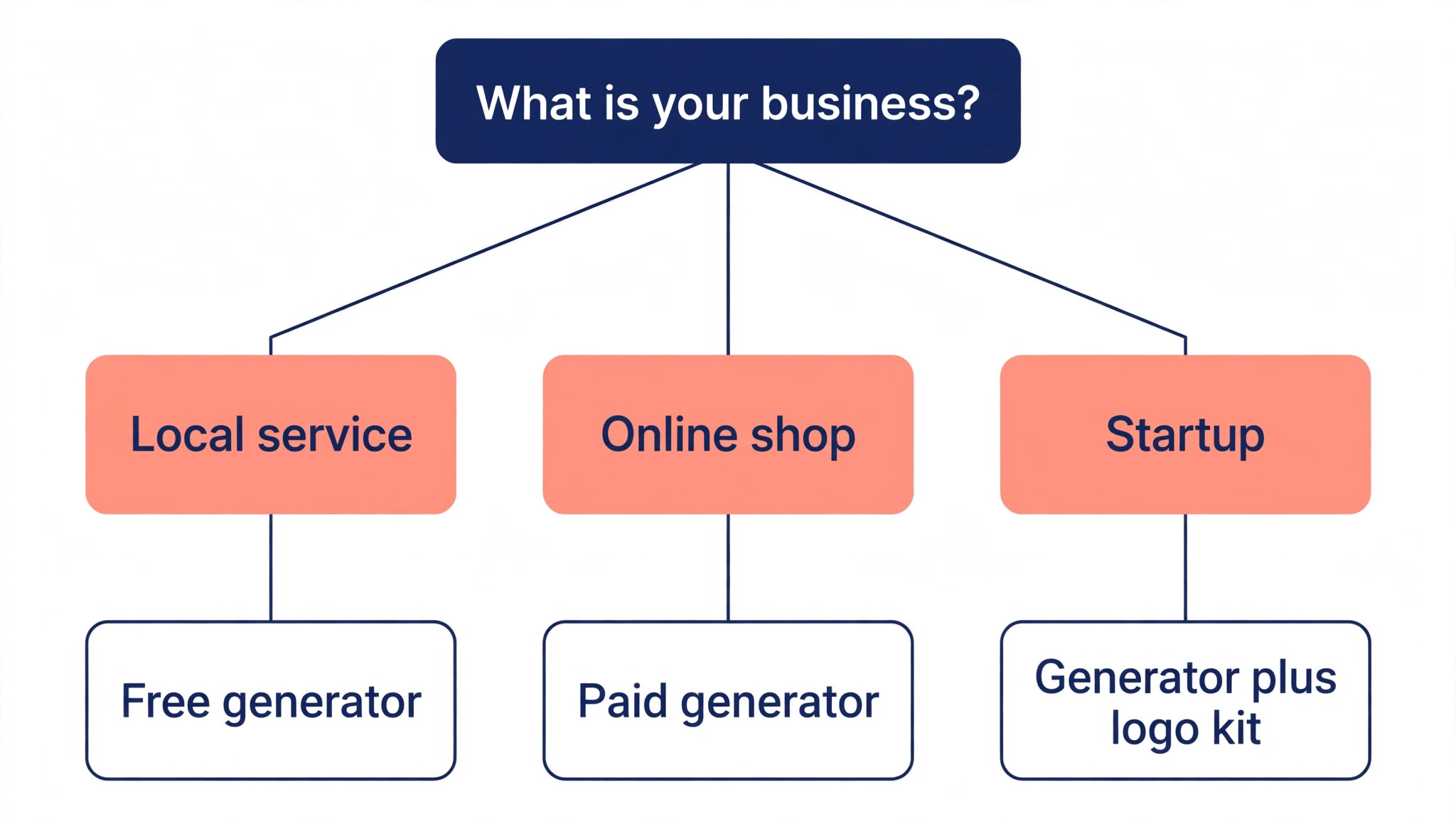
| Startup needing a brandable name | Namelix | Free, inventive, learns from your saves |
| Name plus full branding | Looka | Name flows into logo and brand kit |
| Name plus logo files | Brandmark | One time purchase, clean handoff |
| Ecommerce store | Shopify generator | Instant domain check, no signup |
| Stuck after free tools | Squadhelp contest | Human namers plus screening |
| Local business, clear name | NameSnack or Shopify | Fast, practical, descriptive |
| Brainstorming angles | ChatGPT | Open ended ideas and slogans |
Checking Domains, Trademarks, and Social Handles
A name is only yours when you can own it in the places that matter, and the checks should happen before you get attached. Start with the domain. A matching dot com is the ideal, because customers will type it from memory and email addresses look most credible on it. If the dot com is taken by a squatter, a clean dot co or a relevant extension like dot ai for a tech startup can work, but avoid a name where the dot com belongs to a direct competitor. That confusion will cost you traffic and trust for years.
Check trademarks next. Search your country trademark database for the name in your industry, and look for similar names as well as exact matches. A name that is close to an existing mark in the same category is a risk even if the spelling differs. Namelix gives soft warnings about potential conflicts, but that is not a substitute for a real search, and a professional clearance search is worth the cost when the brand matters to your revenue.
Check social handles last, on Instagram, X, TikTok, LinkedIn, and YouTube. A consistent handle across platforms makes the brand easy to find, and a name with no free handle on any platform is a name you will regret. If the exact handle is taken by an inactive account, a short prefix like get or try can work, but it is a compromise, and you should know you are making one.
Testing a Name Before You Commit
Testing is cheap and skipping it is expensive. Say the name out loud ten times. If it feels awkward on the tenth try, it will feel worse in a year. Call a friend, say the name once, and ask them to spell it. If they cannot, the name will leak traffic. Write it in an email subject line, on a business card mockup, and as a social handle. A name that looks good in a list can look wrong in context, and a name that looks plain in a list can look confident on a card.
Test it on five strangers, not five friends. Friends are kind, and kindness is not data. Strangers will tell you if the name sounds like something else, if it is hard to pronounce, or if it means something unfortunate in another language. Ask each person what kind of business they think it is. If the answers cluster around your actual business, the name is doing its job. If the answers scatter, the name is not communicating, and a different style may work better.
Finally, live with the shortlist for a week. A name that still feels right after seven days is a keeper. A name that felt exciting on Monday and tired by Friday was excitement about finishing, not about the name. This testing habit is the part of learning how to name a business with an ai name generator that most founders skip, and it is the part that saves the most regret.
Mistakes That Kill a Good Name
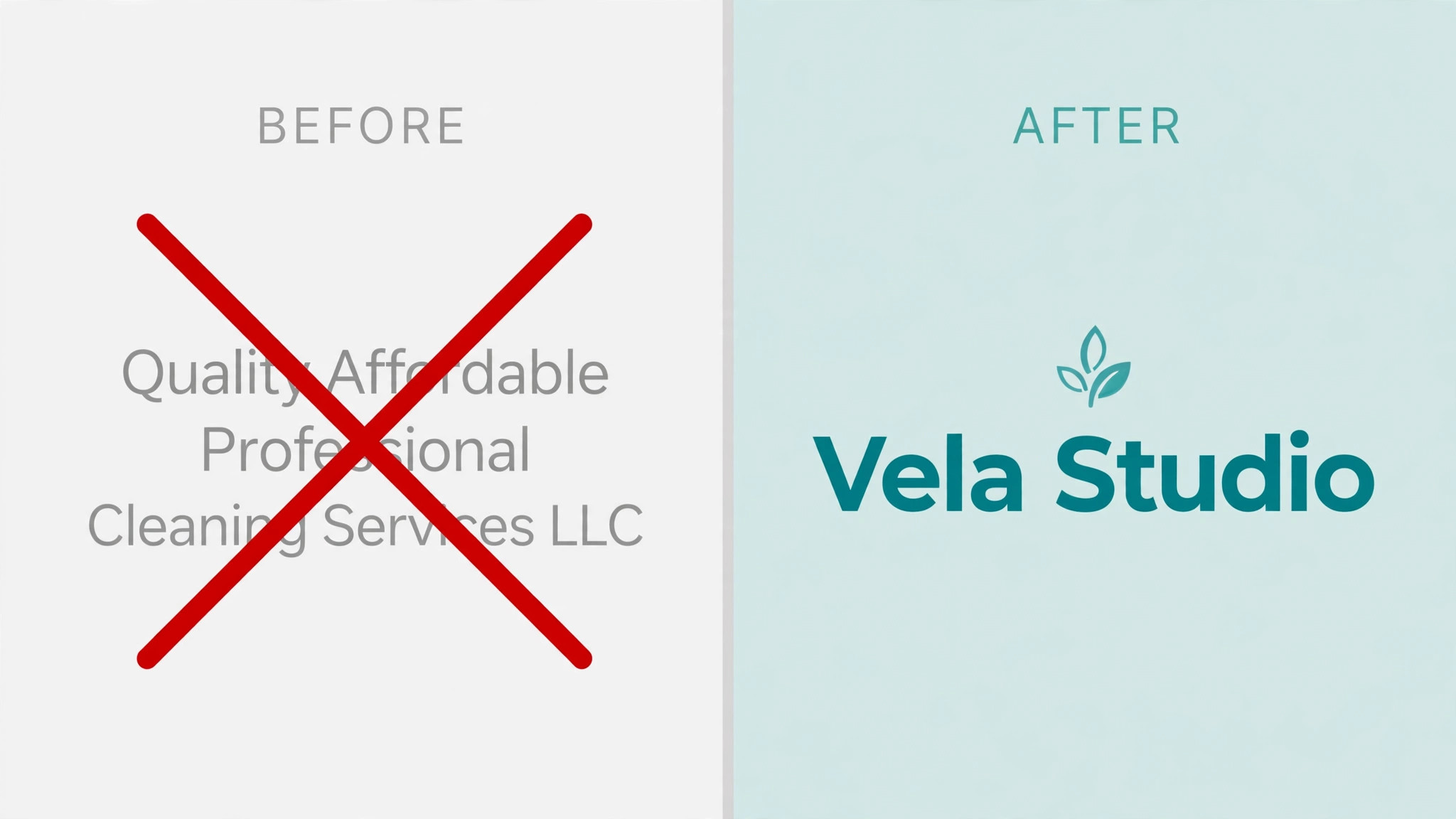
The first mistake is falling in love before checking availability. A name with no domain and no trademark clearance is a dead end, and the longer you love it, the harder it is to let go. Check first, love second. The second mistake is picking a name that is too clever. A pun that needs explaining, a spelling that needs spelling out, or a reference only you understand will cost you customers who never get the joke. Clarity beats cleverness, and a simple name that works is better than a brilliant name that confuses.
The third mistake is copying a competitor. A name that sounds like the market leader borrows their reputation for a moment and hands them your customers forever, because confused buyers pick the familiar one. The fourth mistake is choosing a name that traps the business. A name tied to one product, one town, or one trend becomes a cage when the business grows. Pick a name with room to expand.
The fifth mistake is ignoring the sound of the name. A name that is hard to say is hard to recommend, and word of mouth is the cheapest marketing a new business will ever get. If people cannot say it, they cannot share it. The whole point of learning how to name a business with an ai name generator is to find a name people can say, spell, and remember, so test the sound as seriously as the spelling.
What to Do When Every Good Name Is Taken
Every founder hits the wall where the shortlist is empty, the dot coms are gone, and the trademarks are taken. The wall is normal, and there are four ways through it. The first is to change the keywords. A generator fed with the same three words returns the same kind of names, so feed it different words. Use words about the customer, the outcome, and the feeling, not just the product. A coffee brand named after mornings will find names a coffee brand named after beans never reaches.
The second way is to raise the randomness. Namelix has a slider for this, and moving it toward high produces abstract, invented names that a literal search never finds. The third way is to change the style. If brandable names are all taken, try compound names, or a short phrase, or a non English word. A different style is a different search space, and the name you want may be sitting in a style you have not tried yet.
The fourth way is to add a word, not to change the name. A short prefix like get, try, or hello, or a suffix like labs, studio, or co, can free a taken name, though it is a compromise and you should know you are making one. If all four ways fail, the answer is a human contest on Squadhelp, where real namers apply creativity the generators cannot.
The wall is not a sign that naming is impossible. It is a sign that the first brief was too narrow, and a wider brief is the way through. Anyone learning how to name a business with an ai name generator will hit this wall once, and the founders who get past it are the ones who change the brief instead of giving up on the tool.
Frequently Asked Questions
How do I name my business with an AI generator?
Start with one sentence about the business, then list ten keywords about the work, the feeling, and the customer. Run the keywords through Namelix and a second generator like Shopify, save every name you would say in a sales call, then check domains, trademarks, and social handles for the top five. Test the finalists on strangers, and pick the name that survives spelling, pronunciation, and a week of living with it.
What is the best free AI business name generator?
Namelix is the best free starting point because it generates short, brandable names, learns from the names you save, and shows domain availability and logo previews inline. Shopify generator is the best free option for ecommerce names with instant domain checks. ChatGPT is the best free brainstorming partner for unusual angles and slogans, though it does not verify availability.
Can an AI name generator check trademarks?
Most generators do not do a real trademark search. Namelix gives soft warnings about potential conflicts, and Squadhelp contests include trademark risk screening, but neither replaces a search of your country trademark database. Always run your own search before you commit, and consider a professional clearance search when the brand matters to your revenue.
Should my business name match my domain exactly?
An exact match dot com is the ideal, because customers type it from memory and email looks most credible on it. When the exact dot com is taken, a clean dot co or a relevant extension can work, and a short prefix like get can fix a taken handle. Avoid a name where the dot com belongs to a direct competitor, because that confusion will cost you traffic for years.
How long should a business name be?
One or two syllables is ideal, three is workable, and four or more usually needs a strong reason. Short names are easier to remember, easier to spell, and easier to fit on a logo, a card, and a social handle. A longer name can work when it is a clear phrase with a strong promise, but test it by saying it out loud and asking strangers to spell it after one hearing.
Can I change my business name later?
You can, but it costs more than getting it right the first time. A rename means a new domain, new social handles, new legal filings, updated branding, and telling every customer about the change. Some confusion is unavoidable, and some search ranking is usually lost. That is why the checks and the week long test in this guide matter. A careful hour now saves a painful month later.
Do I need a logo before I pick a name?
No. Pick the name first, because the name decides the domain, the handles, and the legal checks. A logo preview helps you judge how the name will look, and Namelix shows one for every result, but the logo is a later step. Once the name is chosen and cleared, move it into Looka or Brandmark for the logo and brand kit, and the visual identity will follow naturally.