
A clerk who retypes the same invoice fields all morning will make a mistake by lunch, and most teams discover that error only when the accounts do not balance. The top 10 ai tools for data entry fix that gap by reading the document, pulling the fields out and checking them against the rules before a human ever touches a key.
The difference between a data tool that saves time and one that creates work is accuracy on the documents you actually receive. A good tool reads messy scans, handles the odd format and flags the one field it is unsure about, instead of guessing silently. The tools in this guide are judged on whether their output can go straight into the system, not on how they handle a perfect sample.
This guide compares ten tools on published prices, the entry job each one does best and the catch that only shows up after the trial ends. For data entry, every price in this guide is the vendor’s published starting price as of late 2026, and tools without a published rate are marked pricing on request. Start with the shortlist, then read the reviews that match the documents you enter most.
The Full Shortlist in One Place
Use it to narrow the top 10 ai tools for data entry to two or three candidates before you read the full reviews. Monthly list prices apply unless noted, and annual billing usually beats monthly billing for teams who enter documents every day.
| Job | Best tool | Why it wins |
|---|---|---|
| Accurate extraction from varied documents | Nanonets | Accuracy on messy documents |
| Invoice processing at scale | Rossum | Invoices that post themselves |
| Parsing PDFs into structured rows | Docparser | PDFs turned into clean rows |
| Email and PDF parsing for small teams | Parseur | The cheapest credible start |
| Automating the whole entry workflow | UiPath | Full workflow automation |
| Enterprise document automation | Automation Anywhere | Enterprise-scale automation |
| High-accuracy document AI | ABBYY Vantage | Accuracy for regulated documents |
| Handwriting and complex forms | Hyperscience | Hard documents handled well |
| Receipt and expense document capture | Klippa | Receipts captured cleanly |
| Entry inside the Microsoft stack | Microsoft Power Automate | Automation inside Microsoft 365 |
How We Chose the Top 10 Ai Tools For Data Entry
A tool earned a place here only when it enters a real document well in 2026, not when it added an AI label to an old scanner. The top 10 ai tools for data entry were judged on five things that decide whether a team keeps paying after the first month.
We ranked the tools first on the entry job each one does, because a single-purpose extraction tool usually beats a general automation platform that treats data entry as a side feature. Next came published pricing and how it scales, since per-document charges decide the real bill for a busy team. Output quality came third, because an error in a figure costs more to fix than a month of subscription. Fourth, fit with the accounting and database tools the team already runs, because a tool that cannot reach the system forces double entry on every document. Fifth, the catch, from free plans that cap pages to enterprise tools that need a sales call before the first trial.
| Check before you buy | What to ask | Why it matters |
|---|---|---|
| Published price | Is the rate on the pricing page | A hidden price is a hidden bill |
| Accuracy | Does it read your messy documents | A wrong figure is worse than a slow one |
| Field control | Can you teach it your fields | Fixed fields miss your data |
| System link | Does it export to your tools | Double entry eats the time it saves |
| Trial access | Can you test it on your real documents | A demo is not a trial |
| Contract terms | Monthly or annual, and what year two costs | Annual billing locks the price but not the need |
Tool by Tool
1. Nanonets
Starting price The entry paid tier costs 199 dollars a month. Best for Accurate extraction from varied documents. Watch out A steep entry price for small teams doing data entry.
Nanonets reads invoices, receipts and forms with high accuracy, learning the layout of each document type as it processes more of them. It handles the messy scans other tools misread, and it flags the fields it is unsure about instead of guessing.
The 199 dollar price is steep, and it only makes sense once the volume justifies it. Nanonets suits a team entering hundreds of documents a month where one error costs real money. For a small pile, Parseur is the cheaper first buy.
2. Rossum
Starting price Rossum is priced on request. Best for Invoice processing at scale. Watch out In call scripting, there is no list price, and setup is heavy.
Rossum reads invoices in any format, matches them to purchase orders and posts the data to the accounting system with almost no human touch. It is built for finance teams that process invoices all day, and the accuracy on invoices is the best on this list.
In data entry, the trade-off is the buying process, with no published price and a rollout that takes weeks. Rossum suits a finance team with real invoice volume. For a team entering a mixed pile, a general tool wins instead.
3. Docparser
Starting price The entry paid tier costs 39 dollars a month. Best for Parsing PDFs into structured rows. Watch out Templates need building for each format.
Docparser turns PDFs into structured data with rules you build once, then it runs the same extraction on every matching document. It suits a team with a steady stream of the same form, where the template pays for itself in a week.
At 39 dollars a month for data entry, it is a fair price, and the starter plan covers a small team. The trade-off is setup: each new format needs a template built by hand. For a team with five document types, that is fine. For fifty, look at Nanonets.
4. Parseur
Starting price From 32 dollars a month. Best for Email and PDF parsing for small teams. Watch out AI parsing needs checking on odd formats.
Parseur pulls data from emails, PDFs and attachments, sending the structured rows to Sheets, your CRM or your database. It is the fastest tool here to set up, with templates for the common document types and an AI parser for the rest.
The 32 dollar plan is the cheapest credible start on this list, and it covers the core parsing. Odd formats need a closer check, so keep a human eye on the first batches. For a small team, the speed alone pays for it.
5. UiPath
Starting price From 420 dollars a month. Best for Automating the whole entry workflow. Watch out Steep price and a learning curve.
UiPath automates the entire entry workflow, from opening the email to typing the data into the system, with AI document understanding in the middle. It is a platform, not a single tool, and it suits a team automating many processes at once.
At 420 dollars a month it is the most expensive tool here, and the learning curve is real. UiPath suits an operations team with several workflows to automate. For data entry alone, a dedicated tool is cheaper and faster.
6. Automation Anywhere
Starting price Automation Anywhere quotes its price on request. Best for Enterprise document automation. Watch out In call scripting, there is no list price, and the rollout is heavy.
Automation Anywhere runs document automation across a whole enterprise, with bots that read, check and enter data around the clock. It covers the governance and audit controls a large company needs, which smaller tools skip.
The price is quoted and the rollout is a real project, so a small team will find it heavy. Automation Anywhere suits a large operations team. For a team entering a few hundred documents a month, it is the wrong scale.
7. ABBYY Vantage
Starting price No published price for ABBYY Vantage; quotes on request. Best for High-accuracy document AI. Watch out No list price, and a technical setup.
ABBYY Vantage reads documents with high accuracy, including the low-quality scans that break other tools, and it keeps a full audit trail for regulated industries. It suits a team where the document is the record and the accuracy is the compliance.
The trade-off is the buying process and the technical setup. ABBYY suits a finance or insurance team with strict requirements. For a general pile of invoices, a simpler tool wins on speed and price.
8. Hyperscience
Starting price Hyperscience does not publish a price. Best for Handwriting and complex forms. Watch out Built for enterprise, with no trial you can start yourself.
Hyperscience reads handwriting and complex multi-page forms that other tools give up on, with a human review step built into the workflow. It is the tool for the documents nobody else can read.
Hyperscience is sold to large operations, so the price comes from a contract and the rollout takes weeks. A team with a pile of handwritten forms will get the most from it. A team with clean PDFs should look elsewhere.
9. Klippa
Starting price Klippa is priced on request. Best for Receipt and expense document capture. Watch out No published price, and a narrow focus in data entry.
Klippa captures receipts, invoices and identity documents from a phone photo, extracting the fields and sending them to the accounting system. It suits a team that collects expenses on the move and wants the receipt handled at the point of capture.
The price is quoted, and the focus is narrow: receipts and expenses. A team entering a mixed pile will find it thin. For an expenses-heavy team, Klippa is a strong fit.
10. Microsoft Power Automate
Starting price The entry paid tier costs 15 dollars a user a month. Best for Entry inside the Microsoft stack. Watch out Document AI needs the premium tier.
Power Automate moves data between Microsoft tools, with AI Builder reading documents on the premium tier. A team already on Microsoft 365 gets entry automation without a new vendor, and the flows sit beside the email and the spreadsheet they feed.
At 15 dollars a user a month it is cheap, but the document AI sits on the premium tier, so check that price before you judge it. Use Power Automate when the Microsoft link matters most, and add a specialist when the reading itself is the bottleneck.
The Comparison Table, Explained
The table below puts the top 10 ai tools for data entry side by side on price, best job and free plan, so you can compare the published prices against the quote-only tools at a glance.
The fastest way through the table is by document type, since teams pay more for a bargain tool that misreads an invoice than for a pricier one that gets it right first time. A misread figure eats another hour of corrections. For data entry, start with what each tool does best, then weigh the price, and the pick normally becomes clear in under a minute.
| Tool | Starting price | Best for | Free plan |
|---|---|---|---|
| Nanonets | From 199 dollars a month | Accurate extraction from varied documents | Trial |
| Rossum | Pricing on request | Invoice processing at scale | No |
| Docparser | From 39 dollars a month | Parsing PDFs into structured rows | Trial |
| Parseur | From 32 dollars a month | Email and PDF parsing for small teams | Trial |
| UiPath | From 420 dollars a month | Automating the whole entry workflow | Trial |
| Automation Anywhere | Pricing on request | Enterprise document automation | No |
| ABBYY Vantage | Pricing on request | High-accuracy document AI | No |
| Hyperscience | Pricing on request | Handwriting and complex forms | No |
| Klippa | Pricing on request | Receipt and expense document capture | Trial |
| Microsoft Power Automate | From 15 dollars a user a month | Entry inside the Microsoft stack | Trial |
Reading the Price Tags
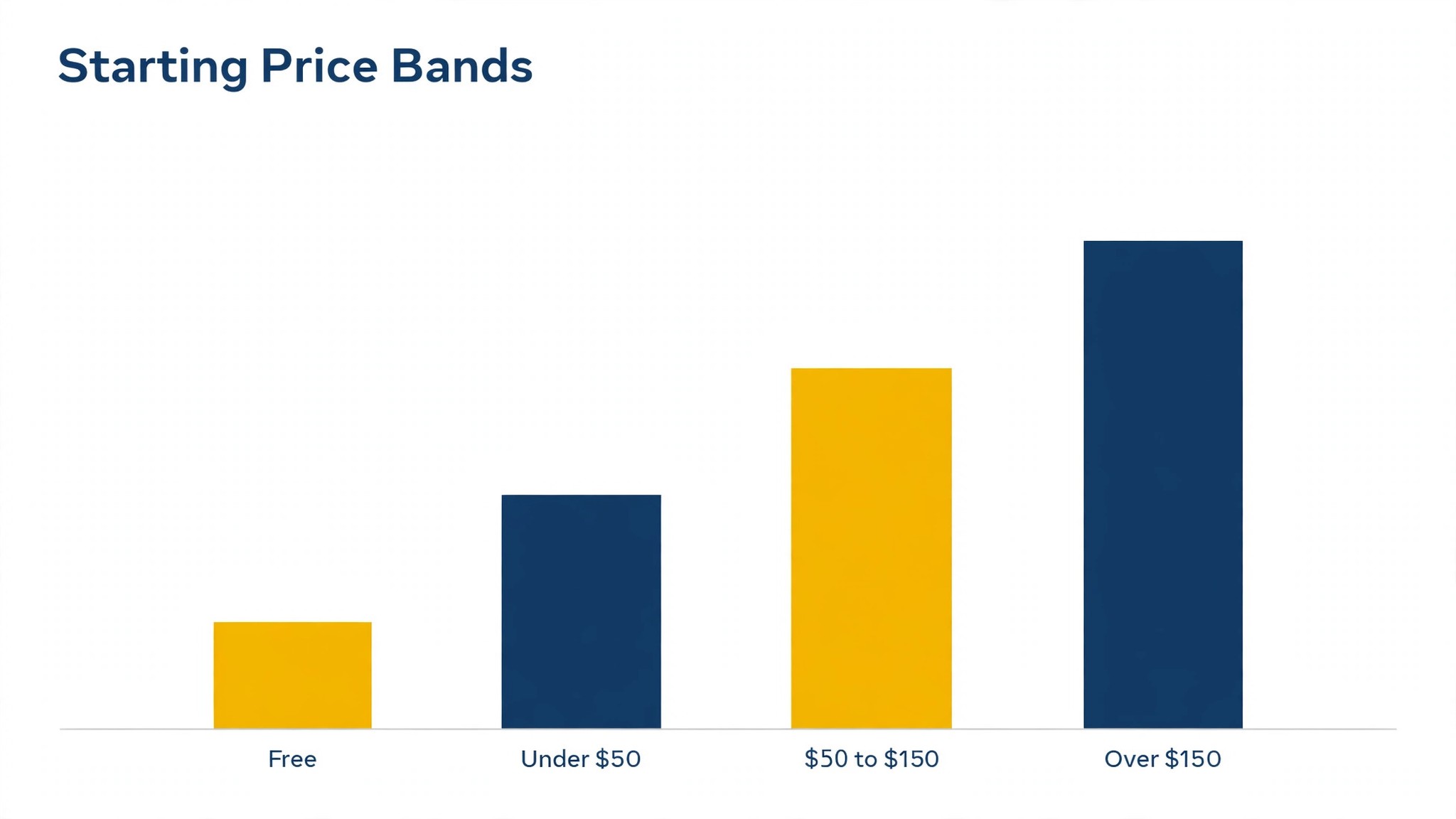
For data entry, the usual year-one overspend is the top tier bought for a feature used once. The entry tools on this list charge 15 to 420 dollars a month at the entry tier, and the gap between tiers is usually the page volume, the number of document types, and the export depth. Buy the tier that covers your current pile, and upgrade only when a document asks for something the tier cannot produce.
For data entry, free plans are worth a careful look, because several tools on this list let you start without a card. A free tier that caps pages to a handful, or blocks the export, is a trial in disguise. Count how many documents you will actually enter in a month, check whether the free tier covers them, and treat a free plan that fits as a genuine saving rather than a stepping stone.
The Numbers Behind the Choice
Manual data entry carries an error rate that surprises most managers. Studies of typing work put the error rate for routine entry at around one percent, which sounds small until it is applied to ten thousand rows, where it means a hundred wrong figures. Automated extraction with a human check on the uncertain fields brings that rate down sharply, and the saving is measured in the errors that never reach the accounts.
Invoices are the document type that causes the most trouble, because no two suppliers format them the same way. A tool that has seen thousands of invoice layouts will read a new one correctly, while a tool built on fixed templates will fail on the first unusual format. That is why the accuracy leaders in this category are the tools that learn from each document they process, rather than the ones that rely on a template the user must build.
The hidden cost of data entry is not the typing but the checking. A clerk who types a figure and then checks it against the original has done the work twice, and the check is where the time goes. Tools that flag only the fields they are unsure about let the human check ten fields instead of a hundred, which is where the real time saving lives.
Integration decides whether an entry tool survives its first month. A tool that exports clean rows to the accounting system, the database or the spreadsheet the team already uses will be adopted quickly, while a tool that exports a file somebody must reformat will be abandoned, however accurate it is. The export format should be tested on the first day, with real documents, before the subscription is committed to.
Volume pricing is the trap in this category. A tool that charges per page looks cheap at fifty pages a month and expensive at five thousand, and the bill can double without warning when a busy month arrives. Teams should price the tool at their busiest month, not their quietest, and ask what happens when the volume cap is hit, because a tool that stops mid-batch is worse than a slow one.
Handwriting remains the hardest problem in data entry, and it is the reason some documents still need a human. The tools that handle handwriting best pair the AI reading with a human review step, so the uncertain characters are checked rather than guessed. A team with a pile of handwritten forms should test that review step carefully, because it is the difference between a tool that works and one that creates more errors than it fixes.
Retention rules decide how long extracted data must be kept, and the answer varies by document type and by industry. An invoice may need to be kept for seven years, while a routine form may be deleted after one, and a tool that cannot apply different rules to different documents will either keep too much or delete too soon. That setting should be checked during the trial, because it is the kind of detail that only matters when an auditor asks.
How to Choose Without Overbuying
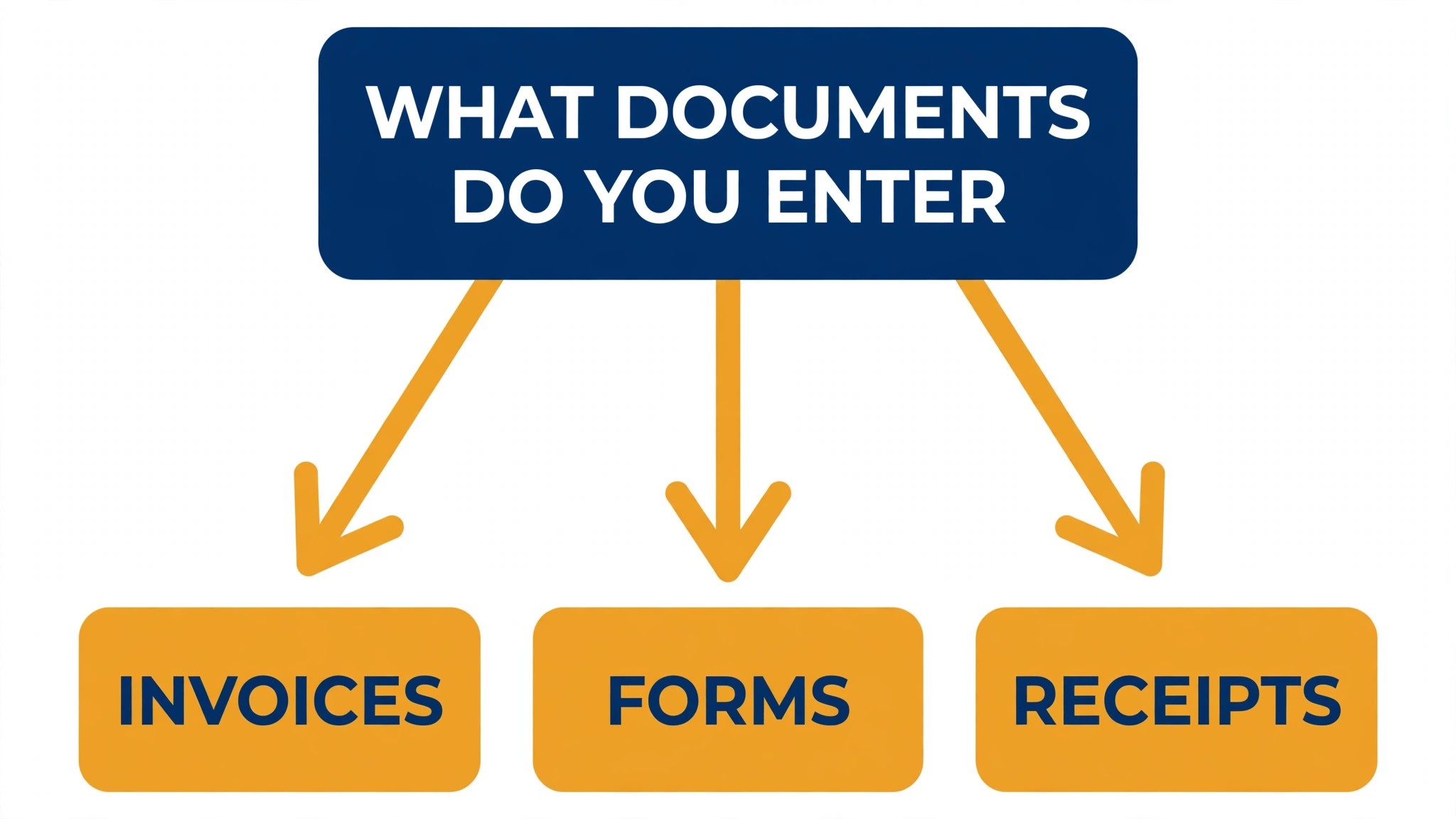
Start from the document pile that eats the most hours, not from the vendor homepage. A team drowning in invoices needs a different tool from one entering handwritten forms, and a small business needs something else again. The tool that fixes the slowest part of your entry week pays for itself first, and the rest can wait.
Price the whole entry stack, not the headline number. The table below prices year one for a solo operator and for a small team on the common combinations, at published starting prices. Ask for per-page charges in writing before signing, since those lines surprise teams, and annual billing usually cuts about twenty percent off the monthly rate.
| Stack | Monthly cost | What it covers |
|---|---|---|
| Parseur alone | Lowest starting price | One tool for the main job |
| Parseur plus Docparser | Mid-range | Core tool plus a second specialist |
| Nanonets plus Parseur | Higher | Core tool plus an accuracy specialist |
| Rossum plus Nanonets | Higher | Core tool plus an invoice specialist |
Best Pick by Job
Pick from the table below by the entry job you do most. The top 10 ai tools for data entry are not ranked by features alone; they are ranked by which job each one actually finishes, so the pick that matches your week is the pick that will still be in your stack a year from now.
| Your job | Best pick | Why it wins |
|---|---|---|
| Accurate extraction from varied documents | Nanonets | Accuracy on messy documents |
| Invoice processing at scale | Rossum | Invoices that post themselves |
| Parsing PDFs into structured rows | Docparser | PDFs turned into clean rows |
| Email and PDF parsing for small teams | Parseur | The cheapest credible start |
| Automating the whole entry workflow | UiPath | Full workflow automation |
| Enterprise document automation | Automation Anywhere | Enterprise-scale automation |
| High-accuracy document AI | ABBYY Vantage | Accuracy for regulated documents |
| Handwriting and complex forms | Hyperscience | Hard documents handled well |
| Receipt and expense document capture | Klippa | Receipts captured cleanly |
| Entry inside the Microsoft stack | Microsoft Power Automate | Automation inside Microsoft 365 |
Testing Before You Pay
A trial tells teams more in five working days than a month of reading reviews, but only when the trial runs on real documents. Pick the two tools that look closest after the shortlist, run them side by side on the same pile, and score them on time saved, accuracy and how the output reads in the system. Never trial on a demo file, because a demo hides the rough edges real documents expose.
Keep a simple log through the trial week, noting the daily entry task, the minutes it took, the errors found and whether the output could go into the system unchecked. For data entry, the log at the end of the week is the decision itself. The tool with the best log wins, even when it was not the expected favourite, because the log measures your own documents, not the vendor demo.
| Day | What to test | What good looks like |
|---|---|---|
| Day 1 | Setup and first real job | Working in under an hour, no IT ticket |
| Day 2 | The hardest job you do | Output needs light edits, not a rewrite |
| Day 3 | Integration with your core system | Data flows without double entry |
| Day 4 | A colleague tries it cold | They finish a job without asking for help |
| Day 5 | Count the time and the cost | Hours saved beat the monthly price |
Buying Mistakes to Skip
Mistake one is the cheapest plan, when the page volume you need sits two tiers up. Read every tier on the pricing page and pay for the tier that does the daily entry job, not the tier that looks cheap. The second mistake is a full-team rollout in data entry before a single person has used the tool for a week, because a favourite of one that burdens five is a cost, not a system.
In data entry, the third mistake is skipping the accuracy check. Ask a colleague to check the output against the original, read the error report and check the figures before the first real batch goes into the system, because fixing data after it has flowed downstream costs far more than checking it first. The fourth mistake is judging the tool on its best day, so trial it on the messiest document itself and let the messy document decide.
Your Questions, Answered
Which tool gives teams the cheapest good start
Parseur is the cheapest credible start on this list at 32 dollars a month, with Docparser close behind at 39 dollars a month. The top 10 ai tools for data entry include free tiers and free plans, so start with the document type you enter most, trial the free tier on real documents, and add a specialist only when the general tool cannot read a format you are judged on. That is the cheapest route to an entry stack, with no payment for features never used.
Can a manager tell the data was entered with AI
They can when the output goes in unchecked and a figure is wrong. AI tools draft a usable first extraction, but the facts, the checks and the judgement still come from the person doing the entry. An output that goes in unedited reads generic, and managers notice wrong figures fast. In data entry, use the AI to beat the pile, then change the details, the wording and the checks, so the result sounds like your team and not the tool.
For a small team, which data entry tool wins
Parseur is the pick for a small team, starting at 32 dollars a month with almost no setup, while Nanonets is the strongest all-round option as volume grows. The top 10 ai tools for data entry were ranked by the job each one finishes, not by the size of the feature list, so a small team should buy the tool that fixes its slowest weekly job first and add a second tool only when a specific limit starts costing time.
How much will a small team spend on data entry tools in year one
Plan on 30 to 60 dollars a month in year one for a general entry tool such as Parseur, rising to 150 to 400 dollars a month with a specialist such as Rossum added. Multiply the headline price by page count when you pay per page, since those charges surprise buyers. Price the whole stack and trial each tool on real documents before signing an annual contract.
Do teams need a specialist tool as well as a general one
Not always. Most teams get by with one general tool for months, and a separate specialist only earns its place when a specific entry task runs every week and the general tool cannot do it well. For data entry, time the last week before spending. For data entry, a specialist that turns hours into minutes is worth buying, while one that only trims a job that already takes minutes is a cost.
Do these data entry tools offer a trial before payment
Most tools on this list offer a free plan or a free trial, and Parseur and Nanonets both let teams test on real documents before paying. Use the trial on the document type you enter most, not on a demo, and count the time saved and the errors each output needs. In data entry, a real week on trial tells a team more than a sales call, and a tool that refuses a trial is one to treat with care.
The Verdict, in Brief
If you buy one tool this quarter, pick Parseur for a small team that needs documents parsed fast, and Nanonets when accuracy on varied documents is the bottleneck. Parseur is the easiest place to start at 32 dollars a month, and Nanonets is the strongest accuracy specialist. The top 10 ai tools for data entry earn their keep by giving you back the morning between the pile and the system, and both of these do that from the first week.
Whatever you pick, trial it on a real pile of documents, count the rows it produces and the errors each batch needs, and keep a human eye on every figure before it goes into the system. For data entry, every tool on this list does the job. The difference is whether the entry tool matches the documents you actually receive, and whether you measure the return in hours saved and errors avoided rather than in features used.