
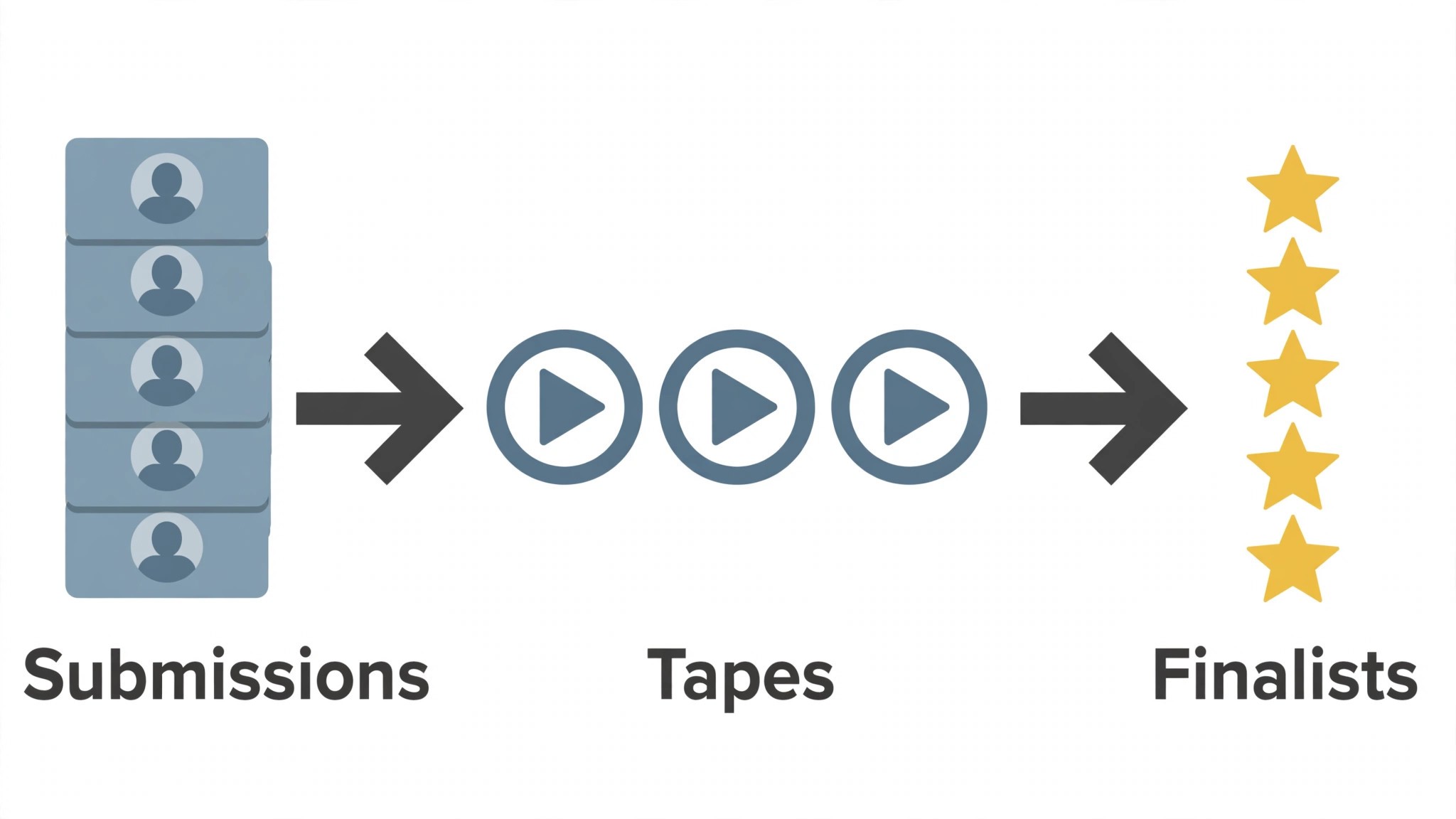
A casting director reads hundreds of headshots for one role, and the right actor is often buried on page forty of the submissions. The breakdown goes out, the tapes come in, and the shortlist has to be ready before the producer loses patience. The best ai tools for casting directors cut that pile down by matching submissions to the breakdown, sorting the tapes, and surfacing the actors who fit the role before the first callback is booked.
Casting is a judgement job, and no tool replaces the eye that spots a performance in a self-tape. What the tools on this list do is clear the admin, so the director spends the saved hours watching tapes instead of sorting files. A tool that promises to pick the cast for you is selling the wrong thing, and the platforms here were judged on how well they support the decision, not on whether they make it.
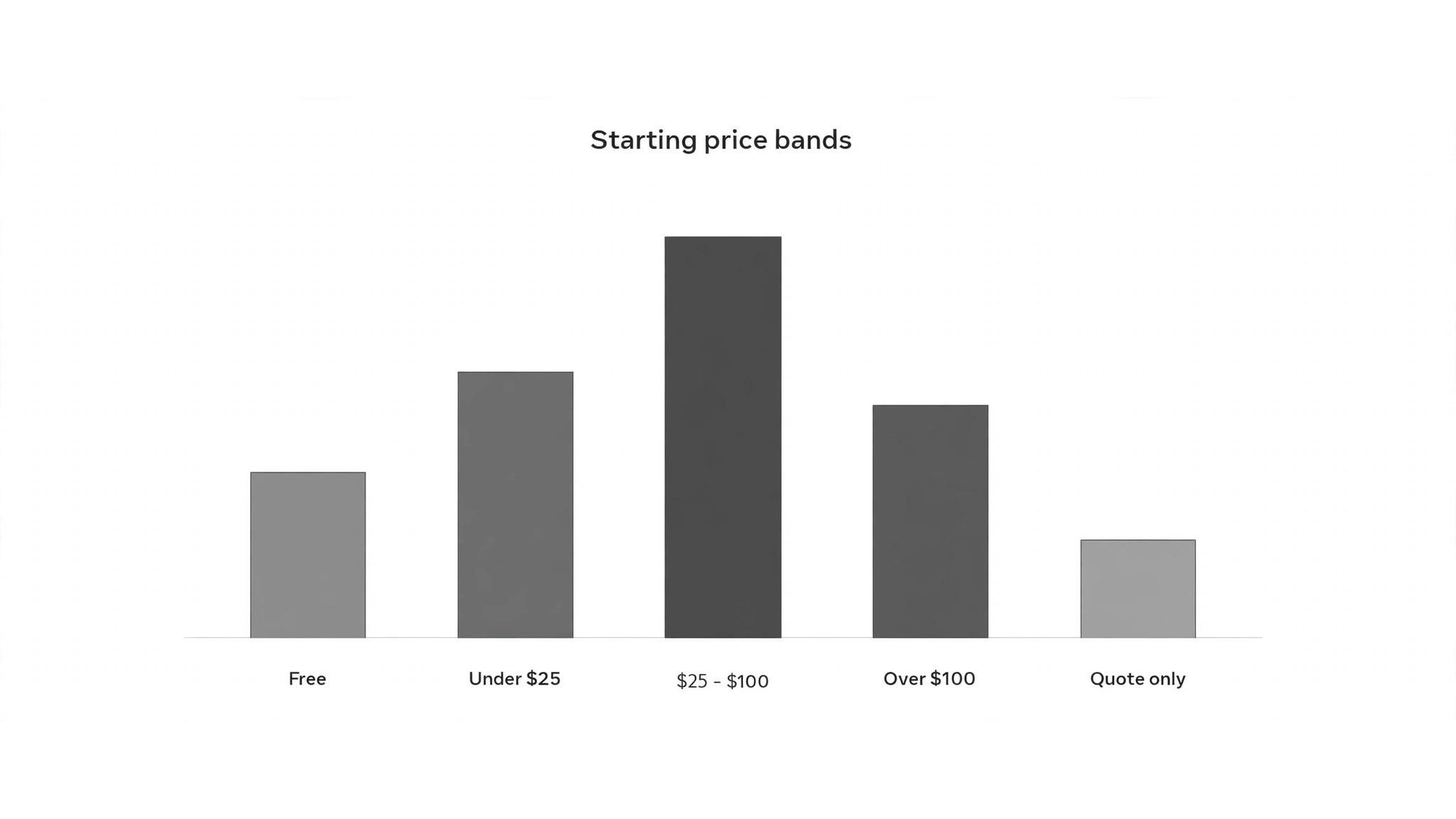
This guide compares eight tools on published starting prices, the casting job each one does best and the limit that only shows up after the trial ends. All prices in this guide are the vendors’ published starting rates from late 2026, and any casting breakdown tool without a published rate is marked pricing on request. Start with the shortlist, then read the reviews that match the productions you cast most.
The Casting Shortlist
Use it to narrow the best ai tools for casting directors to two or three candidates before you read the full reviews. Monthly list prices apply unless noted, and per-project pricing usually beats a monthly plan for a director who casts in bursts.
| Job | Best tool | Why it wins |
|---|---|---|
| Casting calls plus submissions at scale | Casting Networks | Casting Networks is the casting platform most US productions use to post breakdowns, collect |
| Affordable casting for small productions | Backstage | Backstage is a casting platform and talent marketplace where directors post roles and actors |
| Breakdowns from Breakdown Services | Actors Access | Actors Access is the submission platform behind Breakdown Services, the service most casting |
| Studio casting with deep workflow tools | Cast It Systems | Cast It Systems is a casting platform built for studios and large productions, covering |
| Background casting at volume | Castifi | Castifi is a casting platform built for background actors, handling the high-volume bookings |
| Casting in Los Angeles and New York | Casting Frontier | Casting Frontier is a casting platform and talent database strong in Los Angeles and New York, |
| UK casting with a verified talent pool | Spotlight | Spotlight is the UK casting platform, with a verified database of professional actors that |
| Tracking what is casting now | CastingAbout | CastingAbout tracks casting projects, breakdowns and production news across the industry, so a |
How We Chose the Best AI Tools for Casting Directors
A tool earned a place here only when it does a real casting job well in 2026, not when it added an AI label to an old database. The best ai tools for casting directors were judged on five things that decide whether a casting office keeps paying after the first production.
Talent coverage came first, because a platform with the wrong pool cannot cast the role, however good its search. Next came the matching quality, since a bad match wastes the director’s time instead of saving it. Pricing and how it scales per project came third, then the tape workflow, because a tool that cannot handle self-tapes forces a second system. The catch, from quote-only pricing to regional limits, came fifth.
| Check before you buy | What to ask | Why it matters |
|---|---|---|
| Published price | Is the rate on the pricing page | A hidden price is a hidden bill |
| Talent coverage | Does the pool cover the roles you cast | A thin pool cannot cast the role |
| Tape workflow | Can it sort and compare self-tapes | A bad tape flow wastes the director’s day |
| Actor-side fees | What actors pay to submit | High fees shrink your pool over time |
| Trial access | Can you test it on a real breakdown | A demo is not a trial |
| Contract terms | Per project or monthly, and what year two costs | Annual billing locks the price but not the need |
The Eight Platforms, Reviewed
The callback is where the tool earns its keep, because the first shortlist is only half the job. A platform that schedules the callbacks, sends the sides and collects the notes in one place saves the casting associate a day of phone calls, while one that stops at the shortlist leaves the hardest admin untouched. Test the scheduling on the trial with a real callback list.
Diversity of the pool is a number worth checking before you buy. A platform whose talent base skews one way will keep serving the same faces, and the director who wants a wider cast will keep searching outside the tool. Ask the vendor how the pool is built, test a breakdown that needs a specific background, and count what comes back.
A casting office that works across countries needs the platform to handle time zones, languages and local rules without a workaround. A tool built for one market will fight you on the second, with audition times in the wrong zone and submissions in the wrong format. If the next production shoots abroad, test the tool on that production’s breakdown before you sign.
1. Casting Networks
Starting price Pricing on request. Best for Casting calls plus submissions at scale. Watch out The talent-side fees, which actors notice.
Casting Networks is the casting platform most US productions use to post breakdowns, collect submissions and manage callbacks. The AI features match actors to the breakdown, sort the submissions by fit and surface the tapes that match the role, so the director starts from a ranked list instead of a raw pile.
Casting Networks is sold on a quote, which suits casting calls plus submissions at scale, and the price depends on seats, volume and the modules you take. The catch is the talent-side fees, which actors notice, so get the quote in writing before you pay for a year. A trial or a demo on one real casting breakdown tells you more than the sales call, because output quality on your own material decides whether the subscription survives month two.
Look at the export options before you commit, because casting breakdown work trapped in one system is expensive to move later.
Apply that test to the whole list of best ai tools for casting directors: an hour saved a week pays for almost any subscription, while a tool that needs rewriting on every job is a cost, not a saving.
2. Backstage
Starting price From 19.99 dollars a month. Best for Affordable casting for small productions. Watch out The talent pool, which is strongest in the US.
Backstage is a casting platform and talent marketplace where directors post roles and actors submit headshots, reels and self-tapes. The AI matching sorts submissions against the breakdown, the messaging tools keep the conversation in one place, and the price is low enough for a small production to use it without a budget meeting.
The starting price of 19.99 dollars a month puts Backstage in reach for affordable casting for small productions, and the paid tiers mostly add volume, seats or deeper integrations. Keep an eye on the talent pool, which is strongest in the US, since that is the limit buyers hit first. Put it through your toughest casting breakdown, not a simple one, and tally the fixes each result needs.
Help matters more than features here, since the first snag normally appears in week one and a slow reply holds up your casting work.
3. Actors Access
Starting price Pricing on request. Best for Breakdowns from Breakdown Services. Watch out The per-project costs, which add up across a season.
Actors Access is the submission platform behind Breakdown Services, the service most casting directors use to publish breakdowns to agents and managers. The AI features help actors match their profiles to the breakdown, and the director sees submissions arrive already sorted by representation, which keeps the inbox manageable.
Actors Access does not publish a price, which suits breakdowns from Breakdown Services but means the buying process takes longer. The thing to check first is the per-project costs, which add up across a season, because that shapes the real cost once the team grows. Trial it for five days on real casting breakdown jobs, log the time saved and the corrections needed, and let that log settle whether it earns a place.
Work out the price of the full casting work stack rather than the headline figure, and confirm any per-seat charges in writing first.
4. Cast It Systems
Starting price Pricing on request. Best for Studio casting with deep workflow tools. Watch out The enterprise pricing, which is built for studios.
Cast It Systems is a casting platform built for studios and large productions, covering breakdowns, submissions, scheduling and talent tracking in one system. The AI features rank submissions against the role, flag the actors who have worked with the production before and keep the whole casting history searchable.
For studio casting with deep workflow tools, Cast It Systems sells on a quote, and the higher tiers add the controls a bigger team needs. The weak spot is the enterprise pricing, which is built for studios, so confirm it on a trial before signing anything annual. Ask not whether it works in general, but whether it handles your casting work at your volume with no rewrite.
Measure it against the next tool here across a real week of casting breakdown jobs, instead of the vendor’s polished demo.
5. Castifi
Starting price Pricing on request. Best for Background casting at volume. Watch out The niche focus, since it is built for background work.
Castifi is a casting platform built for background actors, handling the high-volume bookings that a feature or a commercial needs. The AI features match background talent to the call, handle the paperwork and the payments, and keep the casting director’s list clean when a hundred people are needed for one day.
Starting with a quote rather than a list price, Castifi fits background casting at volume without a self-serve checkout. Watch for the niche focus, since it is built for background work, which is where the bill or the workflow usually surprises buyers. Run it for a week on live casting breakdown jobs, mark it on minutes saved and fixes needed, and weigh that mark against the next tool on this list before you commit.
Save an hour a week on genuine casting work and the tool pays for itself, but if it needs endless fixing it never will, at any price.
6. Casting Frontier
Starting price Pricing on request. Best for Casting in Los Angeles and New York. Watch out The regional strength, which is thinner elsewhere.
Casting Frontier is a casting platform and talent database strong in Los Angeles and New York, where most commercial and television casting happens. The AI matching sorts submissions by the breakdown, the self-tape tools keep the tapes organised, and the scheduling features handle the callback calendar.
Casting Frontier is quote-only and is aimed squarely at casting in Los Angeles and New York. The trade-off is the regional strength, which is thinner elsewhere, so ask what the quote covers and price that package, not the demo. Cheap on paper and slow on a real casting breakdown is dearer than a pricier tool that gets the job done first time.
Put it through one genuine casting breakdown from your week before you pay, and compare the output with how long the job took by hand.
7. Spotlight
Starting price Pricing on request. Best for UK casting with a verified talent pool. Watch out The membership model, which actors pay for.
Spotlight is the UK casting platform, with a verified database of professional actors that most British casting directors use as their first stop. The AI features match actors to the breakdown, the profile tools keep headshots and showreels current, and the Rooms service handles the audition scheduling.
Spotlight is sold on a quote, which suits UK casting with a verified talent pool, and the price depends on seats, volume and the modules you take. The catch is the membership model, which actors pay for, so get the quote in writing before you pay for a year. A trial or a demo on one real casting breakdown tells you more than the sales call, because output quality on your own material decides whether the subscription survives month two.
One timed casting breakdown with the edits counted is the trial that matters, and it comes before any decision.
8. CastingAbout
Starting price Pricing on request. Best for Tracking what is casting now. Watch out The subscription cost for a single-purpose tool.
CastingAbout tracks casting projects, breakdowns and production news across the industry, so a director can see what is casting, who is casting it and what is coming next. The AI features summarise the project pipeline, flag the productions that match a director’s history and keep the research in one place.
With pricing on request, CastingAbout is aimed at tracking what is casting now, and the quote usually reflects team size and the integrations you need. Keep an eye on the subscription cost for a single-purpose tool, since that is the limit buyers hit first. Put it through your toughest casting breakdown, not a simple one, and tally the fixes each result needs.
Before buying, ask the vendor how the first week runs, who supports setup, and how a faulty first casting breakdown output gets fixed.
Comparing Prices and Plans
The table below puts the best ai tools for casting directors side by side on price, best job and free plan, so you can compare the published prices against the quote-only tools at a glance.
The fastest way through the table is by production type. A director casting commercials should look at the high-volume platforms first, while one casting a feature should look at the tools with the deepest talent search, because the cheapest tool that misses the right actor costs more than a pricier one that finds them.
| Tool | Starting price | Best for | Free plan |
|---|---|---|---|
| Casting Networks | Pricing on request | Casting calls plus submissions at scale | No |
| Backstage | From 19.99 dollars a month | Affordable casting for small productions | Trial |
| Actors Access | Pricing on request | Breakdowns from Breakdown Services | No |
| Cast It Systems | Pricing on request | Studio casting with deep workflow tools | No |
| Castifi | Pricing on request | Background casting at volume | No |
| Casting Frontier | Pricing on request | Casting in Los Angeles and New York | No |
| Spotlight | Pricing on request | UK casting with a verified talent pool | No |
| CastingAbout | Pricing on request | Tracking what is casting now | No |
Buying for Your Next Production
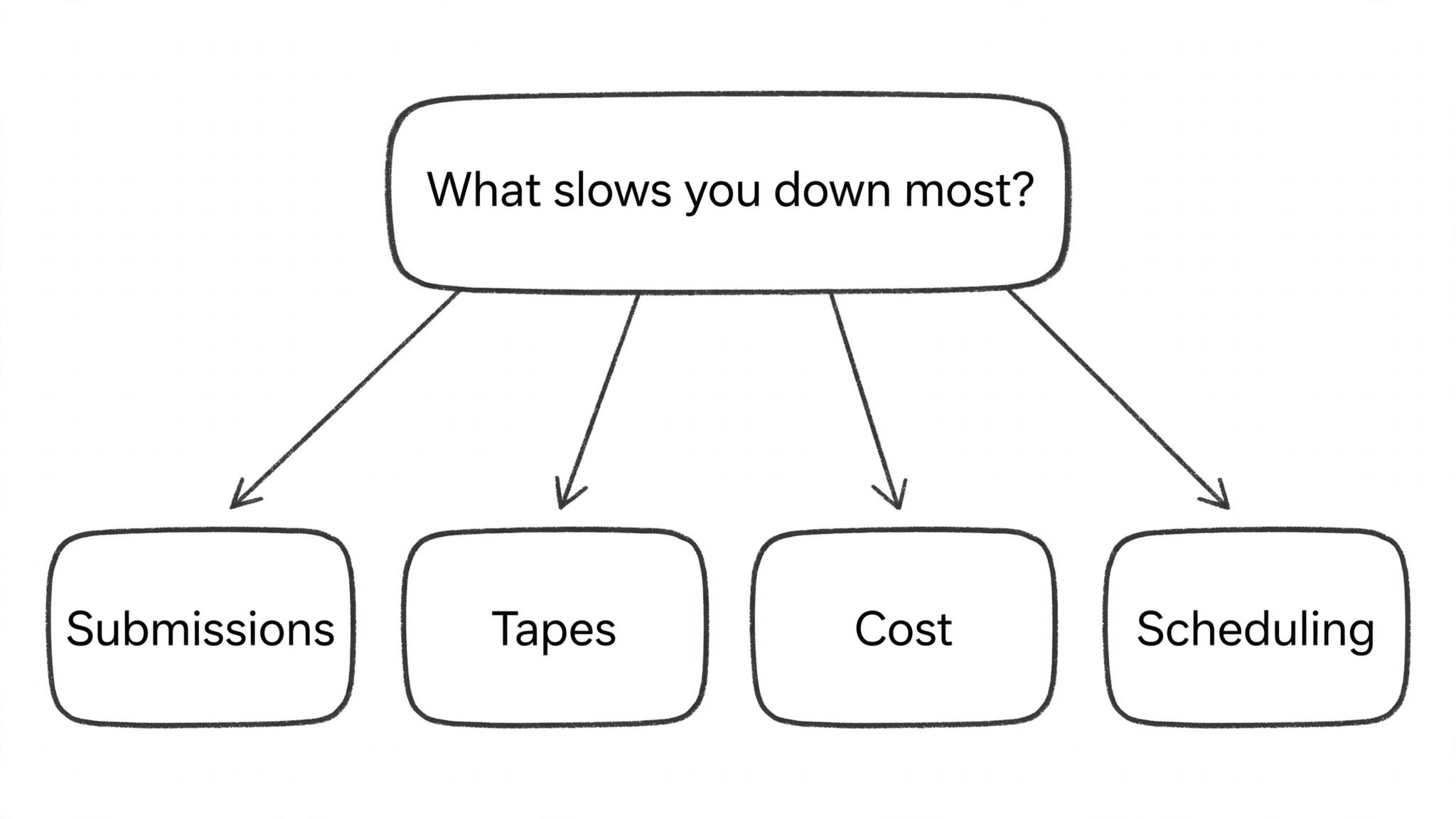
Start from the slowest part of your casting week, not from the vendor homepage. Directors buried in submissions should buy the matching tool that clears that pile first, and directors losing hours to tape logistics should buy the workflow tool before anything else. Fix the slowest part of your week on casting work first and that tool pays for itself, while the rest can wait.
Price the whole production, not the headline number. A platform plus a tape tool plus a scheduling tool can cost three subscriptions per show, so check whether one platform already covers two of your jobs. Ask for per-project charges in writing before signing, since those lines surprise small casting offices, and annual billing usually cuts about twenty percent off the monthly rate. The best ai tools for casting directors on this list were priced at published starting rates, so the stack maths in the table below uses real numbers.
| Stack | Monthly cost | What it covers |
|---|---|---|
| Casting Networks alone | Lowest starting price | One tool for the main job |
| Casting Networks plus Backstage | Mid-range | Core tool plus a second specialist |
| Backstage plus Actors Access | Mid-range | Specialist pair for a busy week |
| Casting Networks plus Actors Access | Check the pricing page | Core tool plus a workflow specialist |
Best Pick by Job
Pick from the table below by the casting job you do most each week. The best ai tools for casting directors are not ranked by features alone; they are ranked by which job each one actually finishes, so the pick that matches your week is the pick that will still be in your stack a year from now.
| Your job | Best pick | Why it wins |
|---|---|---|
| Casting calls plus submissions at scale | Casting Networks | Casting Networks is the casting platform most US productions use to post breakdowns, collect |
| Affordable casting for small productions | Backstage | Backstage is a casting platform and talent marketplace where directors post roles and actors |
| Breakdowns from Breakdown Services | Actors Access | Actors Access is the submission platform behind Breakdown Services, the service most casting |
| Studio casting with deep workflow tools | Cast It Systems | Cast It Systems is a casting platform built for studios and large productions, covering |
| Background casting at volume | Castifi | Castifi is a casting platform built for background actors, handling the high-volume bookings |
| Casting in Los Angeles and New York | Casting Frontier | Casting Frontier is a casting platform and talent database strong in Los Angeles and New York, |
| UK casting with a verified talent pool | Spotlight | Spotlight is the UK casting platform, with a verified database of professional actors that |
| Tracking what is casting now | CastingAbout | CastingAbout tracks casting projects, breakdowns and production news across the industry, so a |
Five Days on a Real Breakdown
A trial tells a casting team more in five working days than a month of reading reviews, but only when the trial runs on real work. Pick the two tools that look closest after the shortlist, run them side by side on the same breakdown, and score them on matches found, tapes sorted and how the shortlist reads to a producer. Never trial on a demo role, because a demo hides the rough edges real casting exposes. The best ai tools for casting directors are judged on the same five days, so the comparison stays fair.
| Day | What to test | What good looks like |
|---|---|---|
| Day 1 | Setup and first real breakdown | Working in under an hour, no IT ticket |
| Day 2 | The hardest breakdown you do | Output needs light edits, not a rewrite |
| Day 3 | Integration with your core system | Data flows without double entry |
| Day 4 | A colleague tries it cold | They finish a job without asking for help |
| Day 5 | Count the time and the cost | Hours saved beat the monthly price |
A trial without notes is a week wasted for a casting work team, because the vendors all sound good in the demo. Keep a short daily record of the casting breakdown job, the minutes saved, the corrections made and whether the output was fit to send. Five days of honest notes beat a month of reading reviews, and the tool with the strongest record on your casting work is the one to buy.
Mistakes Casting Teams Make
Mistake one is the cheapest plan, when the feature your team needs for casting work sits two tiers up. Study each tier before you pay, and choose the tier that does the daily casting breakdown rather than the tier with the lowest price. Mistake two is rolling out to the whole office before one director has tried the tool for a week, since a favourite of one and a burden to five is a cost, not a system.
The third mistake is skipping the talent-pool check. Ask where the actors come from, test the search on a role you already cast, and count the good matches it misses before the first real breakdown goes out, because fixing a missed actor after the fact costs far more than checking coverage first. The fourth mistake is judging the tool on its best day, so trial it on the hardest breakdown and let the hard breakdown decide.
Self-tapes changed the maths of casting. A breakdown that once drew fifty tapes now draws five hundred, and the sorting is the job. A tool that cannot group, label and compare tapes quickly is not saving time, whatever its matching score claims, so run your own tape count through the trial and time the sort.
Actors pay attention to the tools a casting office uses. A platform that charges actors high fees or makes submissions awkward will shrink your pool over time, and the best actors notice first. Ask the vendor what the actor side costs, read the actor forums, and weigh that against the time the tool saves you.
A breakdown is only as good as its wording, and the matching tools on this list are only as good as the breakdown they read. Spend ten minutes sharpening the role description before you test a tool, because a vague breakdown produces a vague shortlist, and the tool gets blamed for a problem the writing caused.
Casting Questions, Answered
Which tool gives a casting office the cheapest good start?
Backstage is the cheapest credible start on this list at 19.99 dollars a month, with Castifi close behind on a quote basis for background work. Start with the job you do most each week, trial the tool on a real breakdown, and add a specialist only when the general tool cannot do a job you are paid to do. That is the cheapest route to a casting stack, with no payment for features never used.
Can a team keep AI matching from missing the right actor?
It will miss when a team trusts the match score unchanged. AI tools draft a usable shortlist, but the performance, the look and the judgement still come from the director doing the work. Use the AI to clear the pile, then watch the tapes that matter, check the shortlist and the notes, so the result sounds like your office and not the tool.
For a small casting office, which tool wins?
Backstage is the pick for a small office, starting at 19.99 dollars a month with almost no setup, while Casting Networks is the strongest all-round platform as the productions grow. Start with the tool that clears your slowest weekly casting breakdown, then add another only when a clear limit starts eating time.
How much will a small office spend on casting tools in year one?
Plan on 20 to 100 dollars a month in year one for a general tool such as Backstage, rising to several hundred a month with a specialist such as Cast It Systems added. Multiply the headline price by projects when you pay per project, since those charges surprise buyers. Price the whole stack and trial each tool on real casting work before signing an annual contract.
Do these casting tools offer a trial before payment?
Most tools on this list offer a free trial or a demo, and Backstage and Castifi both let teams test on real breakdowns before paying. Use the trial on the casting job itself your team does most, not on a demo, and count the matches found and the tapes each output needs. A week-long trial on genuine casting breakdown jobs says more than any sales call.
Do actors like AI matching?
Actors like it when it works and hate it when it does not. A match that surfaces the right actor for the right role is a gift, while a match that buries a good actor under a bad score feels unfair. The director’s job is to watch the tapes the tool ranks low as well as high, because the score is a sorting aid, not a verdict.
The Bottom Line for Casting
If you buy one tool this quarter, pick Backstage for a small office or Casting Networks when you need the deepest talent pool. Backstage is the easiest place to start at 19.99 dollars a month, and Casting Networks is the strongest all-round platform for busy casting offices. The best ai tools for casting directors earn their keep by giving you back the days between a breakdown and a shortlist, and both of these do that from the first production.
Whatever you pick, trial it on a real breakdown, count the matches it finds and the tapes it sorts, and keep a human eye on every AI shortlist before it reaches a producer. Every tool here can handle a real casting workflow. The difference is whether the platform matches the productions you actually cast, and whether you measure the return in hours saved and roles filled rather than in features used.