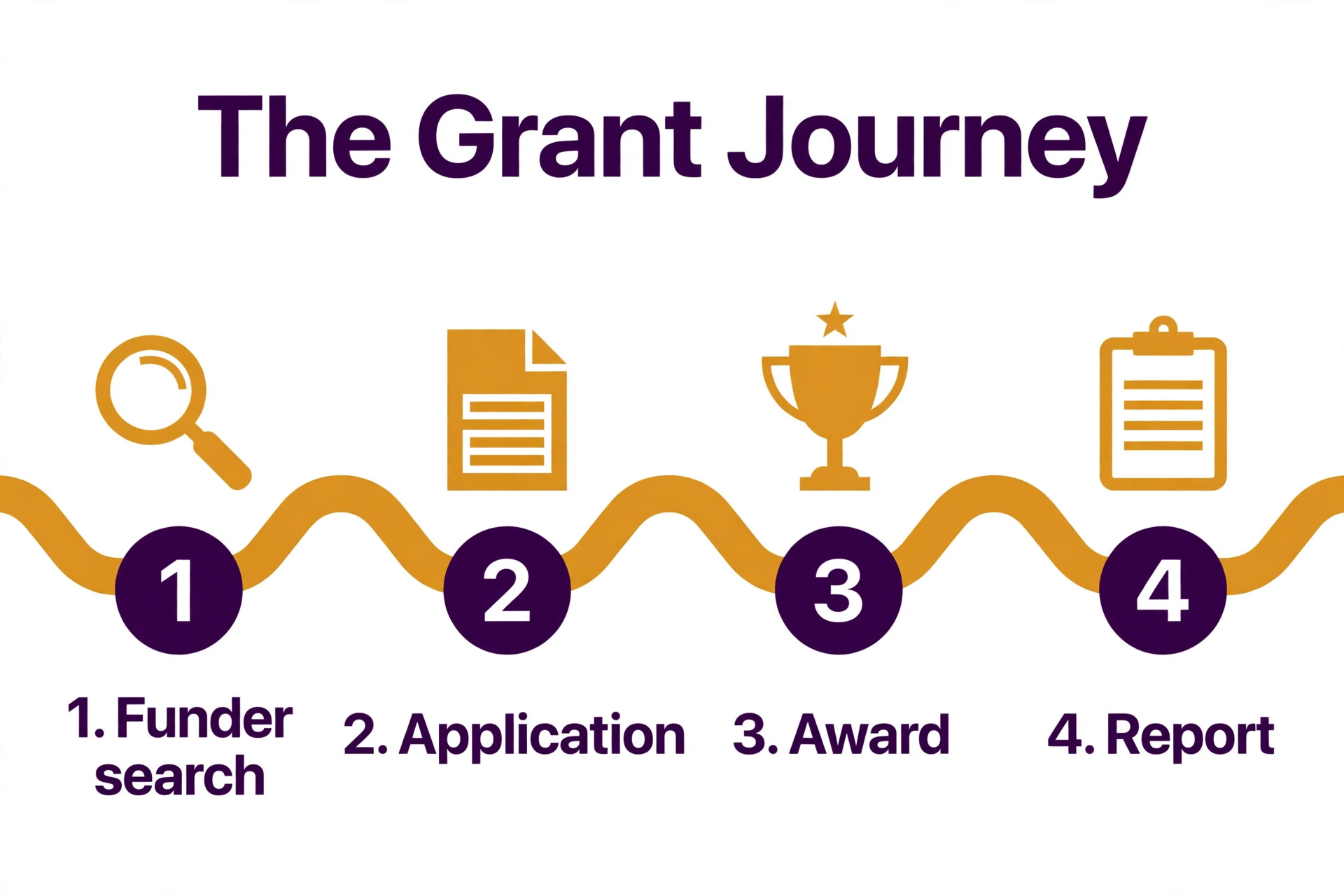
A small nonprofit that manages fifteen grants loses the same hours every week in three places. The development director hunts for a deadline, the program manager rebuilds a report from a spreadsheet, and the finance officer chases a compliance document that lives in someone inbox. The best grant management software for small nonprofits removes all three, because the funder, the deadline, the application and the report live in one record, and the system warns the team before a deadline is missed rather than after.
The price spread in this category is wide, and the cheapest tool is rarely the right one. A small nonprofit can pay nothing on a free plan, 50 dollars a month for tracking and AI writing, or 299 dollars a month for funder discovery, while the enterprise platforms cost 15,000 dollars a year and more. The right question is not what the subscription costs, but which of the three jobs the nonprofit needs, because discovery, tracking and compliance are three different products that vendors bundle in confusing ways.
This guide compares ten tools that small nonprofits actually use in 2026, with prices checked against vendor pages and current roundups in November 2026. Funder discovery, application tracking, post award compliance and per user pricing are all compared, so a small nonprofit can pick the tool that matches its grant volume and the side of the table it sits on, whether it applies for grants or awards them.
What to Check Before You Buy Grant Software
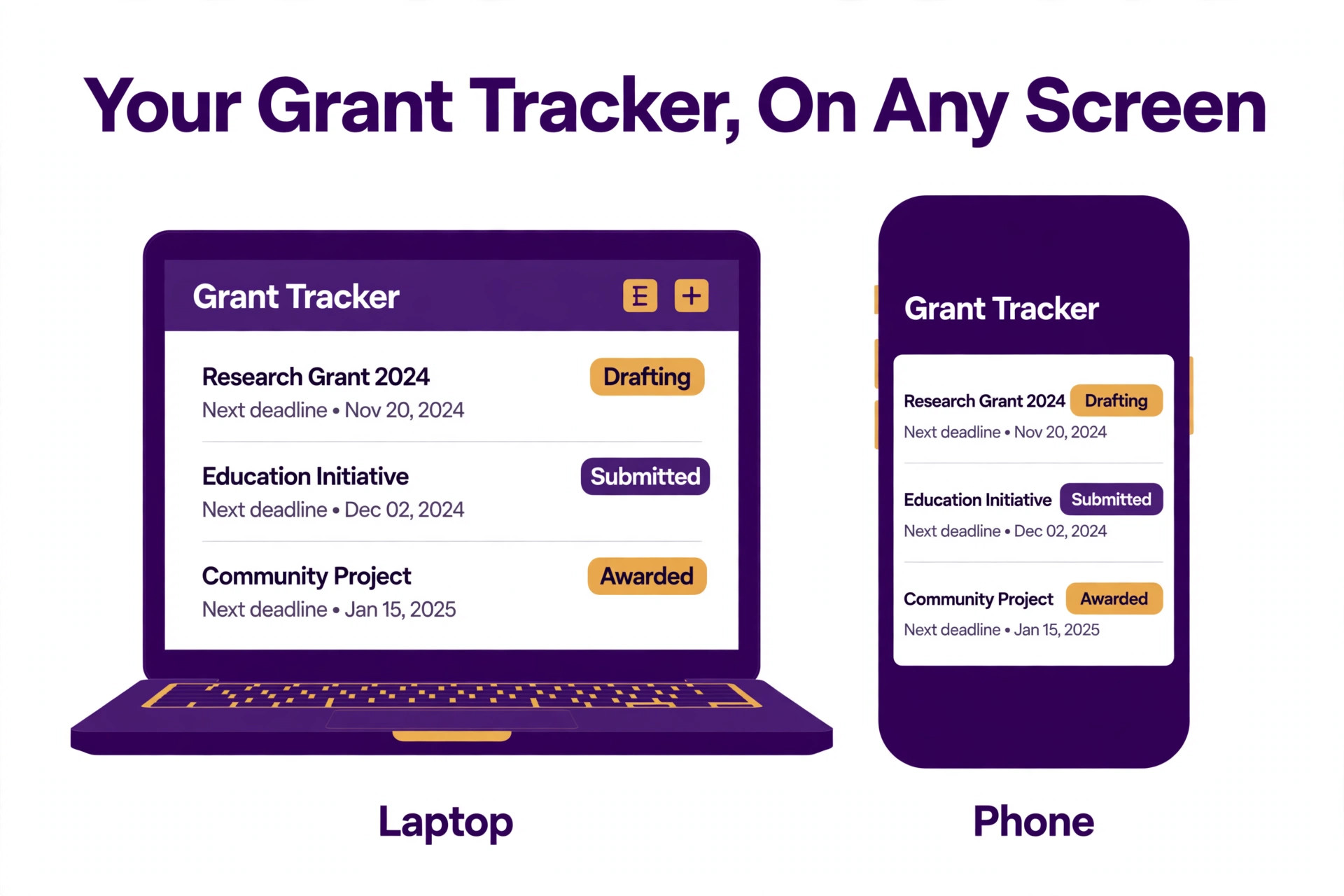
Start with the three jobs, because no tool does all three well. Discovery tools such as Instrumentl, GrantStation and GrantWatch find funders worth applying to. Tracking tools such as Grantable and Foundant GLM manage applications, deadlines and compliance once the money is won. Application review tools such as Submittable, Fluxx and Blackbaud Grantmaking help a foundation receive and review applications from others. Instrumentl comes closest to covering discovery and tracking together, but its own drafting AI is still labelled beta at the entry tier, and the post award features sit behind the most expensive plan.
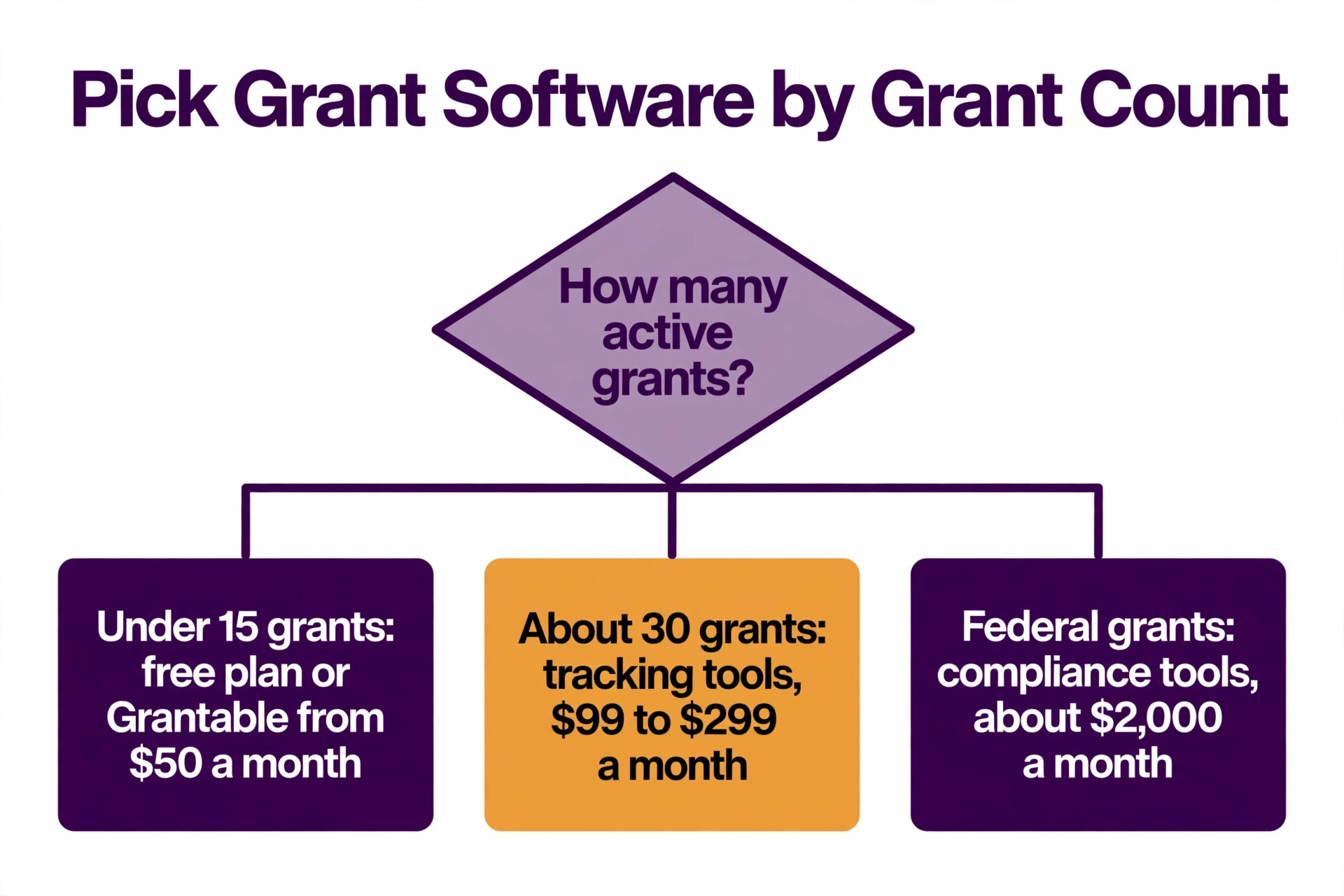
Grant volume is the second check, because it decides the price tier. A nonprofit with under fifteen active grants and a budget under 1,500 dollars a year can run on a free template or a 50 dollar a month tool. A nonprofit with thirty active grants needs deadline tracking, task reminders and document storage, which is the 99 to 299 dollar a month range. A nonprofit with federal grants needs compliance reporting and audit trails, which is the 2,000 dollar a month range and above. Count your active grants before you shop, because the number sets the budget.
Pricing is the third check, and it is where small nonprofits get surprised. Instrumentl prices changed during 2026, with some sources reporting 179 to 299 dollars a month and the vendor own page now showing 299 to 999 dollars a month billed annually, so confirm the current figure before you budget. Foundant GrantHub, the 99 dollar a month tracker, was reported discontinued by one research guide in 2026, so confirm it is still sold before you plan around it. Ask for the price in writing, with the seat count and the grant count it covers.
Best Grant Management Software for Small Nonprofits in 2026 at a Glance
| Tool | Starting price | Best for | Watch out |
|---|---|---|---|
| Instrumentl | 299 dollars a month billed annually | Discovery plus tracking | Price rose in 2026 |
| Grantable | free, paid plans from 50 dollars a month | Free all round start | Smaller funder database |
| GrantStation | 699 dollars a year | Funder research | No tracking |
| GrantWatch | 49 dollars a month | Cheapest discovery | No workflow |
| Foundant GLM | about 2,000 dollars a month | Federal compliance | About 2,000 dollars a month |
The first five tools cover the most common shop sizes, and the next five cover the cases where a specialist feature or a lower price changes the answer.
| Tool | Starting price | Best for | Watch out |
|---|---|---|---|
| Fluxx | quote only, 15,000 to 50,000 dollars a year reported | Foundations awarding grants | Wrong side for seekers |
| Submittable | about 10,000 dollars a year | Reviewing applications | Wrong side for seekers |
| Good Grants | 3,200 dollars a year | Transparent award programs | Wrong side for seekers |
| Blackbaud Grantmaking | quote only, 20,000 to 100,000 dollars a year reported | Blackbaud ecosystem | 20,000 dollars a year plus |
| GrantHub | 99 dollars a month billed annually | Simple deadline tracking | May be discontinued |
The 10 Tools, Reviewed in Full
The ten tools below are ordered by value for a small nonprofit, starting with the strongest seeker side pick and ending with the funder side platforms that only fit organisations that award grants.
1. Instrumentl
Instrumentl is the only major platform that meaningfully combines funder discovery with application tracking and post award management, and it is the strongest seeker side pick for a nonprofit with budget. It finds funders worth applying to, tracks deadlines and tasks, and adds AI drafting assistance on the higher tiers. Reviewers rate it 4.9 out of 5 on G2 and 5.0 out of 5 on Capterra, but they flag the pricing as prohibitive for small nonprofits, and the seat caps mean a growing team pays more as it adds users.
Pricing starts at 299 dollars a month billed annually. Instrumentl lists Discover at 299 dollars a month billed annually, or 349 dollars a month month to month, for up to three users. Pre Award pipeline tracking costs 499 dollars a month, and Full Lifecycle post award features cost 999 dollars a month, plus a custom Enterprise tier. Price conflict flagged. Some 2026 roundups report 179 to 299 dollars a month for Instrumentl, while the vendor page now shows 299 to 999 dollars a month. Confirm the current price before you budget.
Pick Instrumentl when you need discovery and tracking in one platform and have the budget for it. Skip it when you are a small nonprofit on a tight budget, because the entry price is now 299 dollars a month.
2. Grantable
Grantable is the best all round choice for a nonprofit managing its own applications, because tracking, funder discovery and AI proposal writing live in one workspace starting free. The paid plans from 50 dollars a month add more volume without per seat fees, which matters for a small team where everyone touches grants. It is newer than Instrumentl and the discovery database is smaller, but for a small nonprofit that needs the three jobs covered at the lowest price, it is the strongest value in this comparison.
Pricing starts at free, paid plans from 50 dollars a month. Grantable starts free, with paid plans from 50 dollars a month and no per seat fees. It combines deadline and pipeline tracking, funder discovery and AI proposal writing in one workspace, which is the most complete free starting point in this list.
Grantable fits best when you want tracking, discovery and AI writing in one workspace starting free. It fits worst when you need the deepest funder database, because Instrumentl covers more funders.
3. GrantStation
GrantStation is the research membership for a nonprofit that wants to find funders and learn how to write, rather than a workflow tool. It offers a funder database, search tools and education on grant writing, with AI search term generation to help the team find the right opportunities. The trade off is scope, because there is no pipeline tracking, no deadline reminders and no application drafting, so a nonprofit that buys GrantStation still needs a tracker such as Grantable or a spreadsheet to manage the applications it finds.
Pricing starts at 699 dollars a year. GrantStation costs 699 dollars a year, or 219 dollars a quarter, as a research and education membership. It is a research tool rather than workflow software, with no pipeline tracking and no application drafting, so it pairs with a tracker rather than replacing one.
Pick GrantStation when you want funder research and grant writing education without workflow software. Skip it when you need deadline tracking, because GrantStation does not track applications.
4. GrantWatch
GrantWatch is the cheapest entry point for a nonprofit that only needs to find grants. It lists more than 12,000 human verified opportunities, with a simple search and alert system that tells the team when a relevant grant opens. The annual plan at 249 dollars a year costs less than one month of Instrumentl, which makes it the best value for a small nonprofit that tracks applications in a spreadsheet and only needs the discovery job done. The gap is workflow, because there is no pipeline, no deadline tracking and no compliance reporting.
Pricing starts at 49 dollars a month. GrantWatch costs 22 dollars a week, 49 dollars a month, or 249 dollars a year for its best value annual plan, covering more than 12,000 human verified listings. It is the cheapest entry point in this list, and it suits a nonprofit that only needs to find opportunities rather than manage them.
GrantWatch fits best when you only need to find grants and you track applications elsewhere. It fits worst when you need deadline tracking or compliance, because GrantWatch does not manage grants.
5. Foundant GLM
Foundant Grant Lifecycle Manager is the purpose built system for a nonprofit that manages a mid size portfolio with federal money and compliance requirements. It reduces manual data entry, organises the full lifecycle from research to final reporting, and gives the development team one record for every grant across every program area. The trade off is price, because the reported 2,000 dollar a month range puts it beyond most small nonprofits, and it suits a team with the volume and the compliance burden to justify it.
Pricing starts at about 2,000 dollars a month. Foundant GLM is priced by quote, with roundups reporting about 2,000 dollars a month and more for mid size portfolios with federal compliance needs. It covers the full lifecycle from research to final reporting, with strong post award reporting for development teams that track grants across several program areas.
Pick Foundant GLM when you manage federal grants and need compliance reporting across several program areas. Skip it when you are a small nonprofit, because the reported price is about 2,000 dollars a month.
6. Fluxx
Fluxx is the funder side platform for a foundation or agency that awards grants, and it is the wrong tool for most readers of this guide. It handles intake, review, compliance, payments and reporting for organisations that give money away, with strong workflow automation, customisable application intake and multi currency operations. The trade off is audience, because a nonprofit that applies for grants will find no discovery and no application tracking for its own proposals, and the reported 15,000 to 50,000 dollar a year price puts it far beyond a small nonprofit budget.
Pricing starts at quote only, 15,000 to 50,000 dollars a year reported. Fluxx is priced by custom quote based on organisation size, with reported figures of 15,000 to 50,000 dollars a year and more. It is a funder side platform, built for foundations and agencies that award grants, not for nonprofits that apply for them.
Fluxx fits best when you are a foundation awarding grants and need intake, review and payments in one system. It fits worst when you are a nonprofit applying for grants, because Fluxx is built for the other side.
7. Submittable
Submittable is the application management platform for an organisation that receives applications, and it is the wrong tool for a nonprofit that writes them. It helps foundations, governments and corporate giving programs manage grant applications, scholarship programs and award submissions with configurable review workflows, and it streamlines the intake process from submission through decision. The trade off is audience and price, because a small nonprofit that applies for grants needs a seeker tool such as Grantable or Instrumentl, not a 10,000 dollar a year review system.
Pricing starts at about 10,000 dollars a year. Submittable starts around 10,000 dollars a year for nonprofits, with a custom quote for larger programs. It is a funder side platform for organisations that receive and review applications, such as foundations, governments and corporate giving programs.
Pick Submittable when you run a competitive grant or award program and need review workflows. Skip it when you are a nonprofit applying for grants, because Submittable is built for the other side.
8. Good Grants
Good Grants is the transparent funder side option for an organisation that runs a grant, scholarship or award program and wants a clean system without a sales process. The Intro plan at 3,200 dollars a year covers intake, review and award management, with a clear price that most competitors in this space do not publish. The trade off is audience, because it is built for organisations that receive applications, so a small nonprofit that applies for grants should look at Grantable or Instrumentl instead, and the price is still high for a small team.
Pricing starts at 3,200 dollars a year. Good Grants costs 3,200 dollars a year for the Intro plan, or 400 dollars a month, with higher tiers for larger programs. It offers transparent pricing and a clean feature set for organisations of any size, which is rare in the funder side of this category.
Good Grants fits best when you run an award program and want transparent pricing without a sales process. It fits worst when you are a nonprofit applying for grants, because Good Grants is built for the other side.
9. Blackbaud Grantmaking
Blackbaud Grantmaking is the enterprise platform for a large foundation or nonprofit already running Blackbaud products. It offers comprehensive grant tracking, disbursement management and funder relationship management, with the ecosystem integration that a Blackbaud shop needs to keep its data in one place. The trade off is scale and complexity, because the reported 20,000 to 100,000 dollar a year price and the complex implementation put it far beyond a small nonprofit, and it is overkill for a team tracking fewer than fifty grants.
Pricing starts at quote only, 20,000 to 100,000 dollars a year reported. Blackbaud Grantmaking is priced as an enterprise quote, with reported figures of 20,000 to 100,000 dollars a year and more. It integrates with the wider Blackbaud nonprofit software ecosystem, which is the main reason to choose it over a standalone tool.
Pick Blackbaud Grantmaking when you are a large foundation already on Blackbaud and need the full ecosystem. Skip it when you are a small nonprofit, because the price and the implementation are both enterprise scale.
10. GrantHub
GrantHub, from Foundant Technologies, is the clearest example of a platform that does one thing well and does not try to do more. It tracks opportunities, tasks, deadlines and document storage in one place, with the fastest onboarding in this list, and it suits a small nonprofit that needs deadline tracking only. The trade off is scope, because there is no funder discovery and no AI writing, and the availability is now uncertain, because one 2026 guide reports it has been discontinued while others still list the 99 dollar price. Confirm it is still sold before you buy.
Pricing starts at 99 dollars a month billed annually. GrantHub costs 99 dollars a month billed annually, with a free trial available, and it is the lightest tracker in the Foundant family. Availability flagged. One 2026 research guide reports that Foundant GrantHub has quietly been discontinued, while other guides still list it at 99 dollars a month. Confirm it is still sold before you plan around it.
GrantHub fits best when you need simple deadline tracking with the fastest onboarding. It fits worst when you need discovery or AI writing, or if the discontinuation report proves true.
Best Pick by Grant Volume
Grant volume decides the answer, because a nonprofit with five grants and a nonprofit with fifty grants buy different tools. Use the table below as the short version of this guide.
| Job | Pick | Why |
|---|---|---|
| Under 15 grants, tight budget | Grantable free plan | Tracking, discovery and AI writing at 0 dollars |
| Under 15 grants, tracking only | GrantHub | 99 dollars a month, if still sold |
| 15 to 40 grants, discovery needed | Instrumentl | Discovery plus tracking from 299 dollars a month |
| Discovery only, cheapest | GrantWatch | 249 dollars a year for 12,000 listings |
| Federal grants, compliance | Foundant GLM | Full lifecycle, about 2,000 dollars a month |
What a Small Nonprofit Actually Pays in a Year
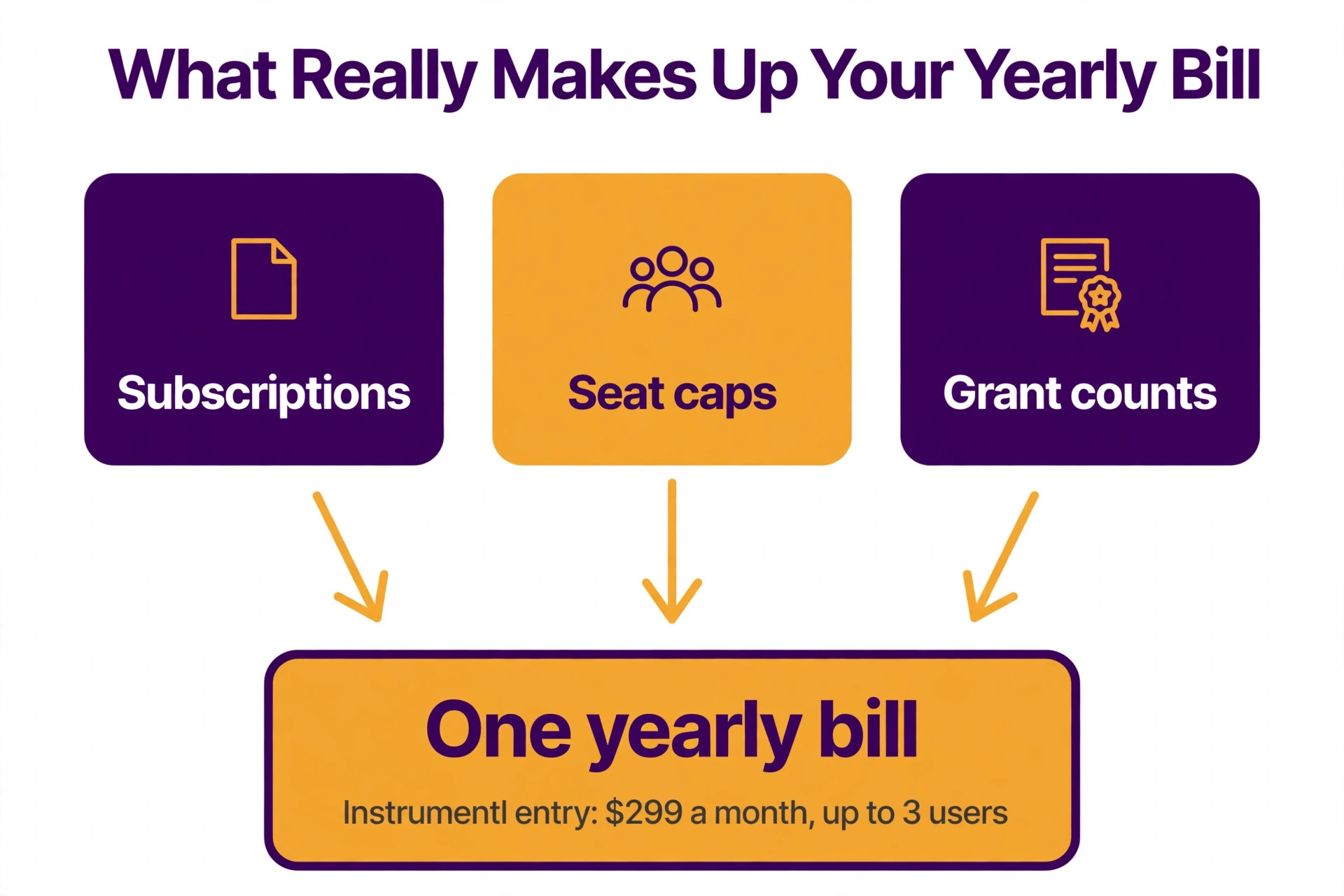
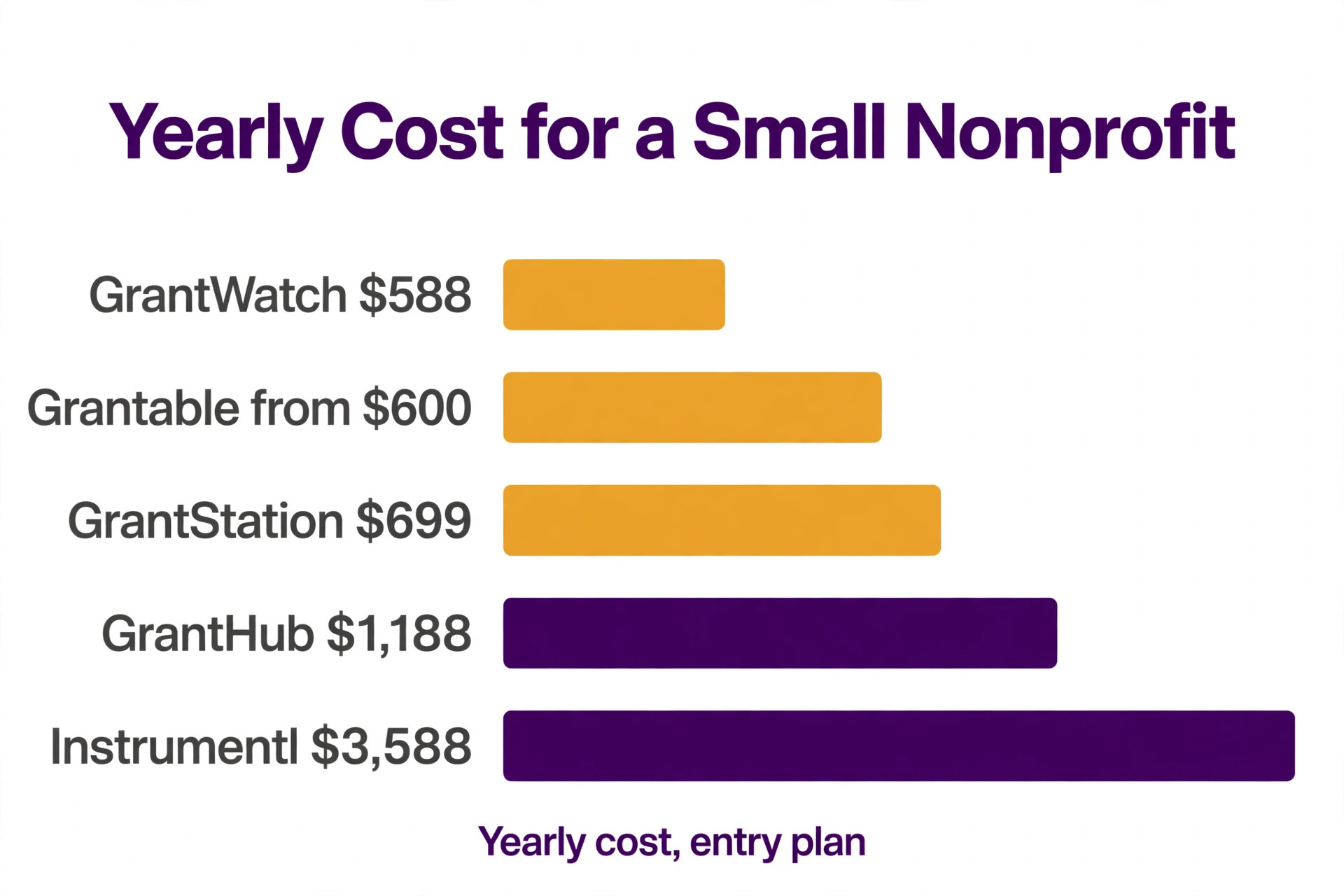
The monthly subscription is only the first line of the bill, because seat caps and grant counts decide the real cost. The table below shows the yearly cost for a small nonprofit with three users and fifteen active grants, before add ons. Grantable and GrantWatch together cost under 850 dollars a year, GrantHub costs 1,188 dollars a year if it is still sold, Instrumentl costs 3,588 dollars a year at the current entry price, and Foundant GLM costs about 24,000 dollars a year. The gap between the cheapest and the dearest is nearly thirty times, which is why the grant count matters more than the price.
| Tool | Monthly | Yearly | What is extra |
|---|---|---|---|
| GrantWatch annual | 20.75 dollars | 249 dollars | Discovery only |
| Grantable, from | 50 dollars | 600 dollars | No per seat fees |
| GrantHub | 99 dollars | 1,188 dollars | May be discontinued |
| Instrumentl Discover | 299 dollars | 3,588 dollars | Up to 3 users |
| Foundant GLM, about | 2,000 dollars | 24,000 dollars | Quote only |
The lesson is to count your active grants before you shop, because the number sets the budget. A nonprofit with under fifteen grants can run on a free tool or a 50 dollar a month plan, while a nonprofit with federal grants needs the compliance reporting that costs 2,000 dollars a month. Work out the twelve month cost for your grant count and your team size, confirm the price in writing, and the cheapest tool usually reveals itself in one line of maths. That comparison is the heart of choosing the best grant management software for small nonprofits.
Mistakes That Cost Small Nonprofits Money
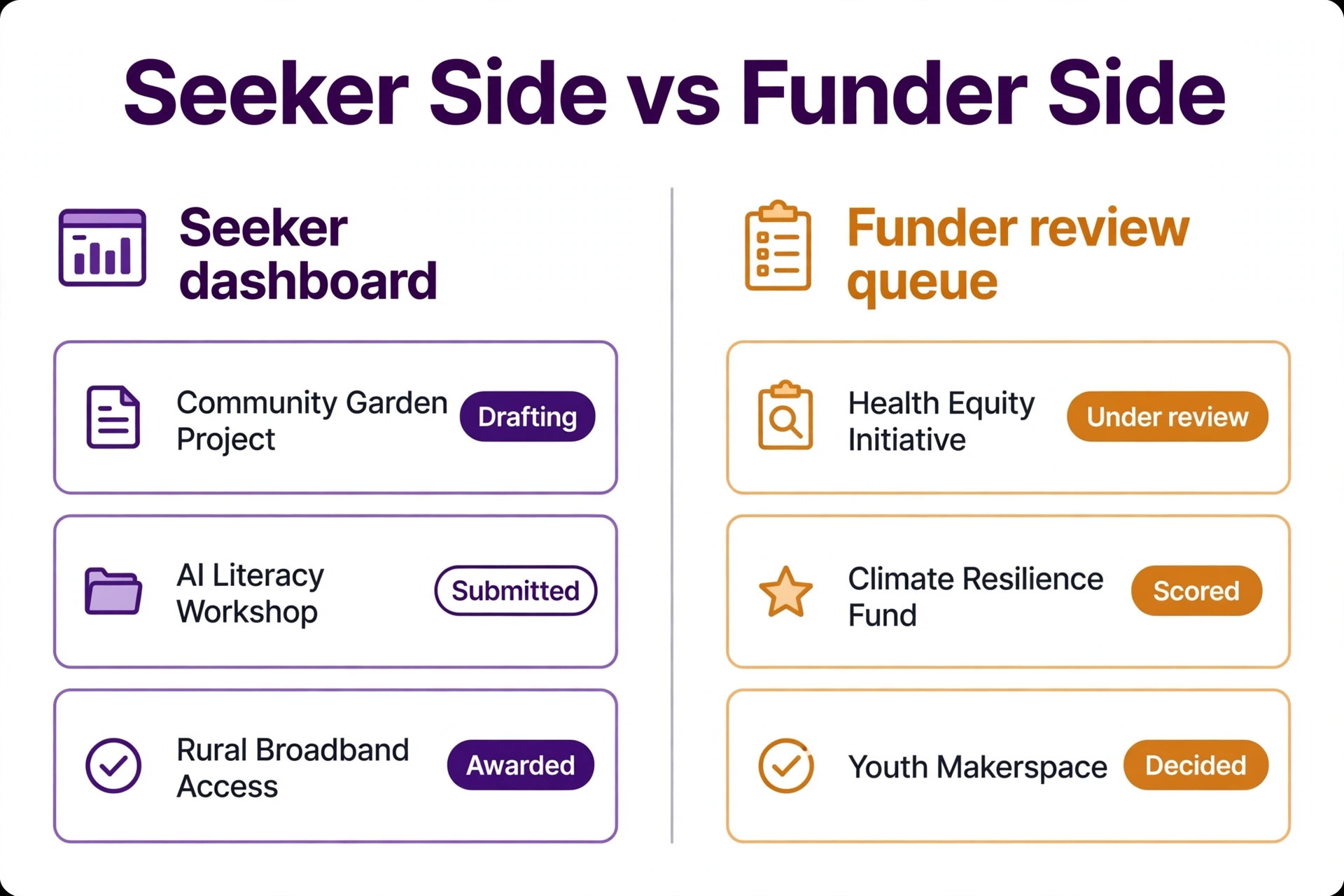
The most common mistake is buying a funder side tool when the nonprofit applies for grants. Submittable, Fluxx and Blackbaud Grantmaking are built for organisations that receive applications, not for nonprofits that write them, and a small nonprofit that buys one will find no discovery and no application tracking for its own proposals. Check which side of the table the tool sits on before you sign, because the names all sound alike and the mistake costs a year of budget.
The second mistake is paying for discovery when the nonprofit only needs tracking. A team with fifteen grants and a stable funder list does not need a 299 dollar a month discovery database, it needs a 50 dollar a month tracker with deadline reminders. Count your new funders per year, and if the number is under five, buy the tracker and spend the saving on the applications themselves.
The third mistake is trusting an old price. Instrumentl prices changed during 2026, with some sources reporting 179 to 299 dollars a month and the vendor page now showing 299 to 999 dollars a month, and GrantHub was reported discontinued by one guide while others still list it. Confirm the current price and availability in writing before you budget, because a quote from a six month old roundup is not a price.
Our Verdict
Grantable is the pick for most small nonprofits in this guide, because it combines deadline tracking, funder discovery and AI proposal writing in one workspace starting free, with paid plans from 50 dollars a month and no per seat fees. It is the tool most likely to cover the three jobs at a price a small nonprofit can defend to its board. That is why it leads this guide on the best grant management software for small nonprofits.
Instrumentl is the pick when the nonprofit has budget and needs the deepest funder database, from 299 dollars a month billed annually. GrantWatch is the pick when the nonprofit only needs discovery, at 249 dollars a year. Count your active grants, check which side of the table the tool sits on, and trial the tracker with real deadlines before you commit.
Frequently Asked Questions
What is the best grant management software for a small nonprofit?
Grantable is the strongest pick for most small nonprofits, because it combines tracking, discovery and AI writing in one workspace starting free, with paid plans from 50 dollars a month and no per seat fees. Instrumentl from 299 dollars a month is the best pick when the nonprofit needs the deepest funder database. That is the short answer on the best grant management software for small nonprofits for most readers.
How much does grant management software cost?
A small nonprofit can pay nothing on a free plan, 50 dollars a month for Grantable, 99 dollars a month for GrantHub, or 299 dollars a month for Instrumentl Discover billed annually. Funder side platforms start around 10,000 dollars a year for Submittable and reach 20,000 to 100,000 dollars a year for Blackbaud Grantmaking. The right price depends on grant volume and which side of the table the nonprofit sits on.
What is the difference between grant discovery and grant tracking?
Discovery tools such as Instrumentl, GrantStation and GrantWatch find funders worth applying to, while tracking tools such as Grantable and Foundant GLM manage applications, deadlines and compliance once the money is won. Instrumentl comes closest to covering both, but its drafting AI is still labelled beta at the entry tier. Most small nonprofits need tracking first and discovery second, so buy the tracker before the database.
Is Instrumentl worth 299 dollars a month for a small nonprofit?
It depends on how many new funders the nonprofit pursues each year. Instrumentl is the only major platform that combines discovery with tracking and post award management, and reviewers rate it 4.9 out of 5 on G2, but the price rose during 2026 from a reported 179 to 299 dollars a month to a listed 299 to 999 dollars a month. A nonprofit that applies to fewer than five new funders a year will get better value from Grantable at 50 dollars a month plus GrantWatch at 249 dollars a year.
Has GrantHub been discontinued?
One 2026 research guide reports that Foundant GrantHub has quietly been discontinued, while other guides still list it at 99 dollars a month billed annually with a free trial. The reports conflict, so confirm directly with Foundant whether GrantHub is still sold before you plan around it. If it is gone, Grantable at 50 dollars a month is the closest replacement for simple deadline tracking.
Do I need grant software if I only manage a few grants?
A nonprofit with under fifteen active grants and a budget under 1,500 dollars a year can run on a free template or a free tool such as Grantable, and that is often the right answer. The point to buy software is when deadlines start being missed, when reports take a day to rebuild, or when the team grows past three people touching grants. Buy the tracker when the spreadsheet starts costing more in missed deadlines than the subscription costs.
What is the difference between seeker side and funder side grant software?
Seeker side software helps a nonprofit find and apply for grants, which is Instrumentl, Grantable, GrantStation and GrantWatch. Funder side software helps a foundation receive and review applications, which is Submittable, Fluxx, Good Grants and Blackbaud Grantmaking. The names sound alike and the mistake is common, so check which side the tool sits on before you sign, because a funder side tool has no discovery for a nonprofit that applies for grants.
Count your active grants, check which side of the table the tool sits on, and trial the tracker with real deadlines before you commit.
That is the short answer on best grant management software for small nonprofits for most small businesses.
If you only remember one thing about best grant management software for small nonprofits, make it the total yearly cost, not the monthly sticker price.