A small car wash loses money every week it runs on the wrong system, and the gap is easy to measure. One tool in this guide starts at under 30 dollars a month, and another starts at more than 400 dollars a month, for work that looks the same on the surface. This guide covers best car wash management software across the tools a small business actually buys, with real prices, real limits and a clear pick for each kind of operation.
The buyers who get this choice right share one habit. They test the tool with a real week of work before they pay, and they check the full price, including add ons, seat minimums and setup fees. The buyers who get it wrong compare only the monthly sticker price, and they find the real cost in month three, when the team is already locked in.
Prices checked November 2026. Rinsed starts from 449 dollars a month per location, WashUp starts from 109 dollars, and WashCard runs 200 to 600 dollars a month. Prices change, so confirm the figure on the vendor page before you pay. All prices below are in US dollars unless stated otherwise, and annual billing is noted where it changes the monthly figure.
What Matters Before You Choose
A car wash business buys software for the daily work, not for the feature list. The tool must handle the busiest day without slowing the team, and it must keep the money, the clients and the schedule in one place. When a tool fails on a busy day, the team goes back to paper, and the software becomes a monthly bill for work it never does.
Start with the job, not the price. Write down the three tasks the team does every day, and check each tool against those three tasks first. A tool that covers the daily three is worth paying for, and a tool that covers ten rare tasks while missing one daily task is not. The daily three are the test, and everything else is a bonus.
Check the full price before the trial ends. Ask for the setup fee, the add ons, the per user cost and the price of the next tier, and write them down next to the monthly figure. A tool that looks cheap at 30 dollars a month can cost 300 dollars a month once the team, the add ons and the setup are counted, and that surprise is the most common complaint in this category.
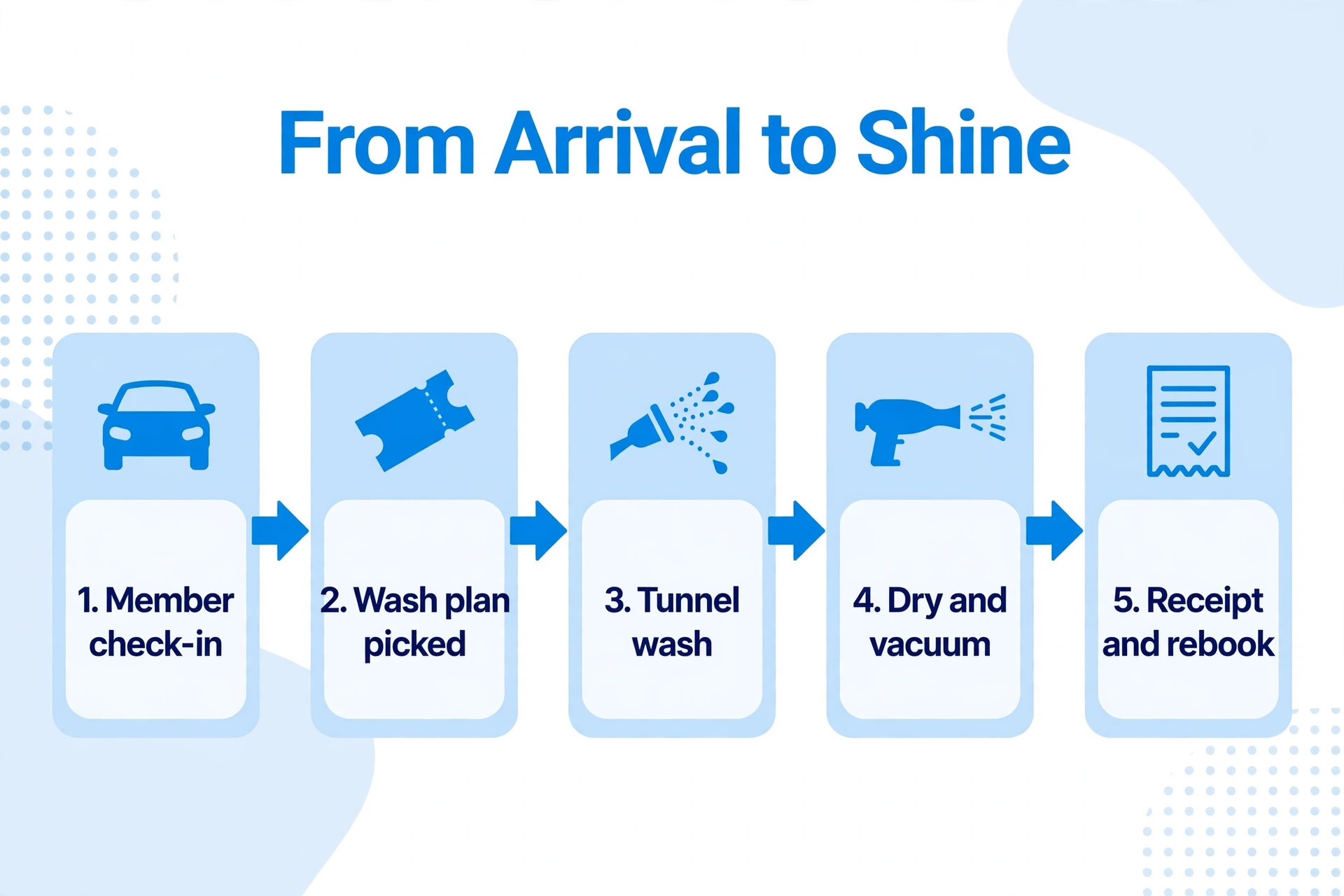
Best Car Wash Management Software in 2026 at a Glance
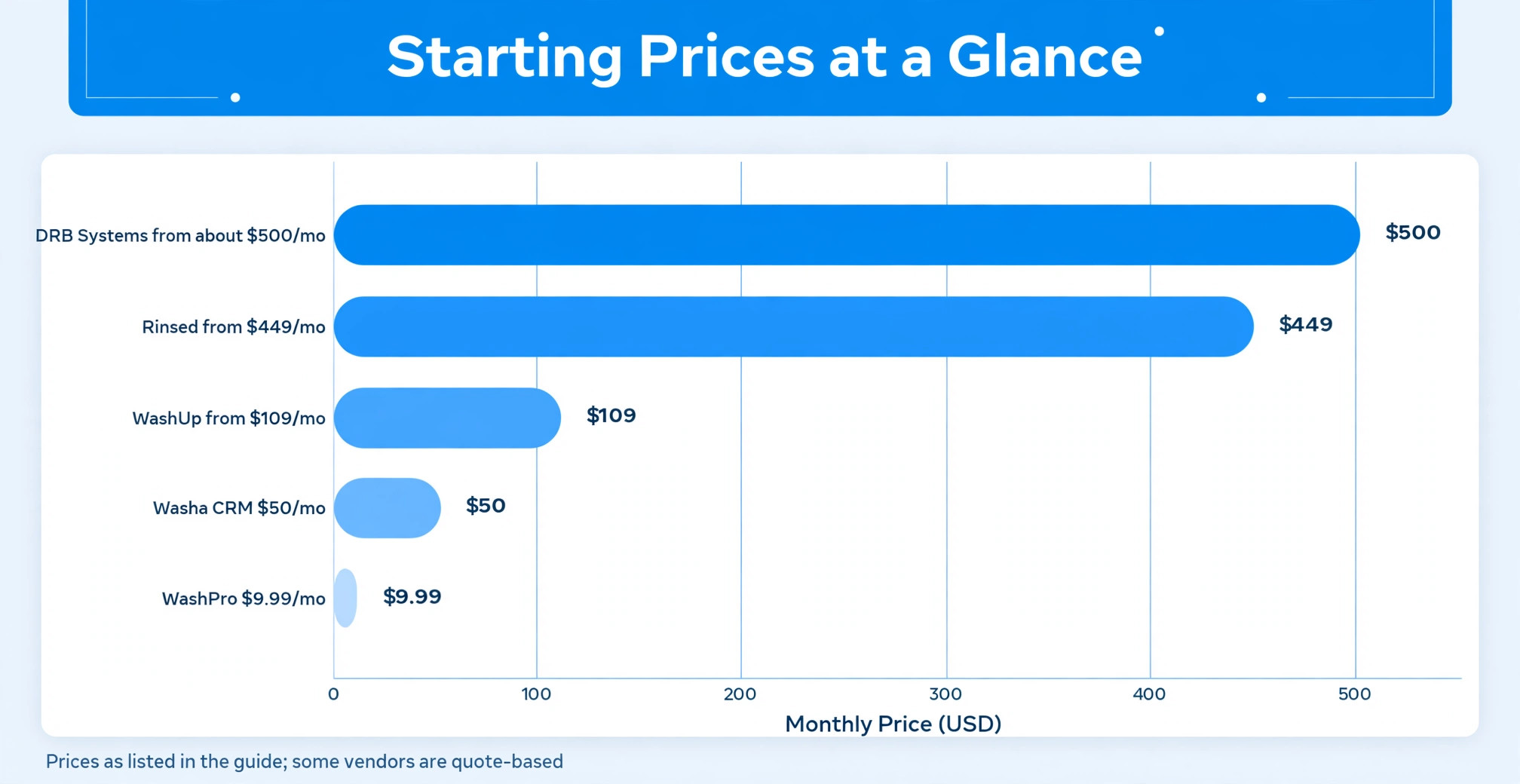
Use this table as a shortcut for best car wash management software, then read the sections below for the limits and the costs that decide the real bill. The cheapest entry price is not always the cheapest yearly bill, because seat minimums, add ons and setup fees change the maths fast.
| Tool | Starting price | Best for |
|---|---|---|
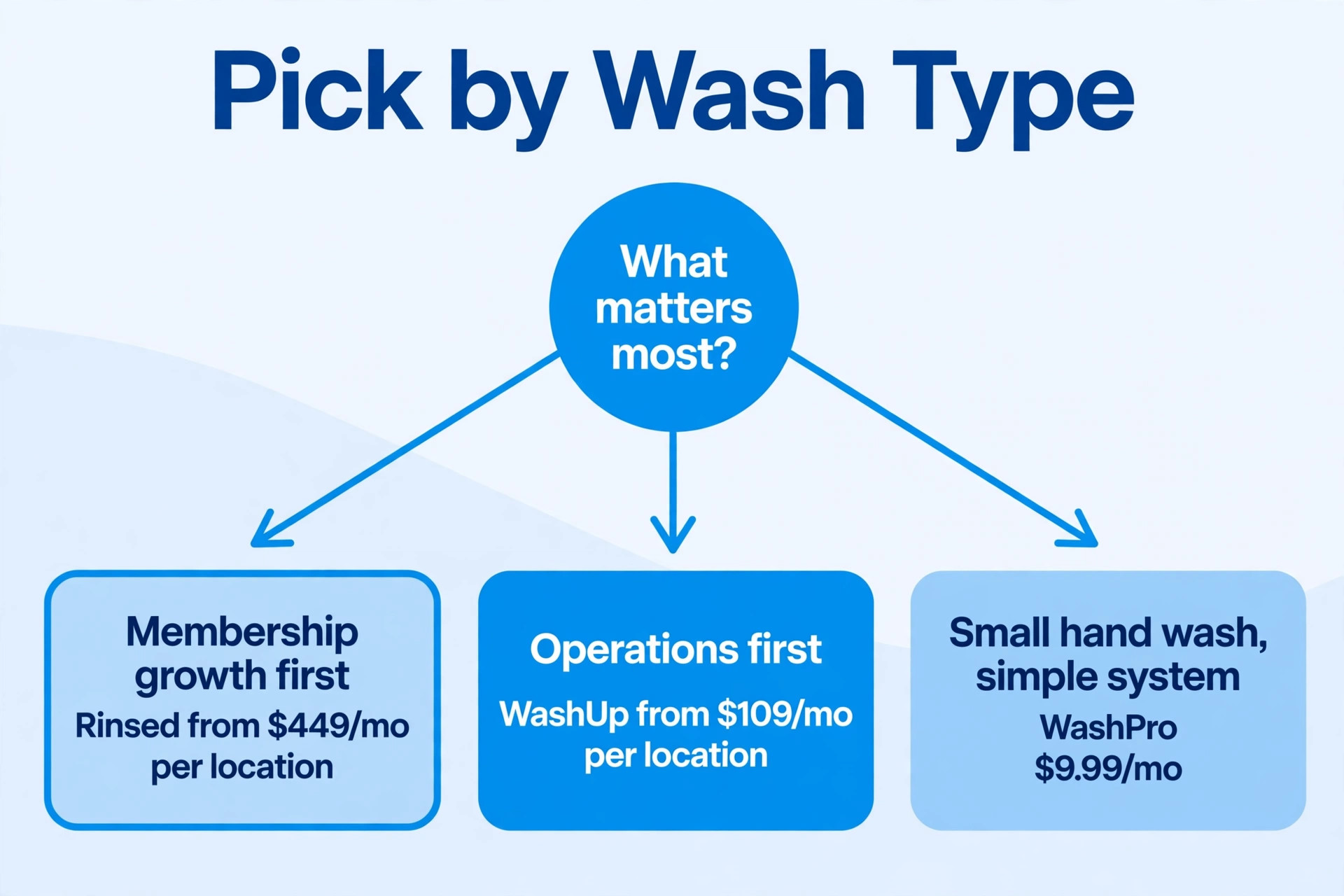
| Rinsed | from 449 dollars a month per location | operators who want membership growth above all |
| Washify | pricing not published, now under DRB | tunnel and in bay operators who want cloud POS |
| WashCard | 200 to 600 dollars a month per location | operators with many fleet and commercial accounts |
| DRB Systems | from about 500 dollars a month | multi location operators who want an enterprise system |
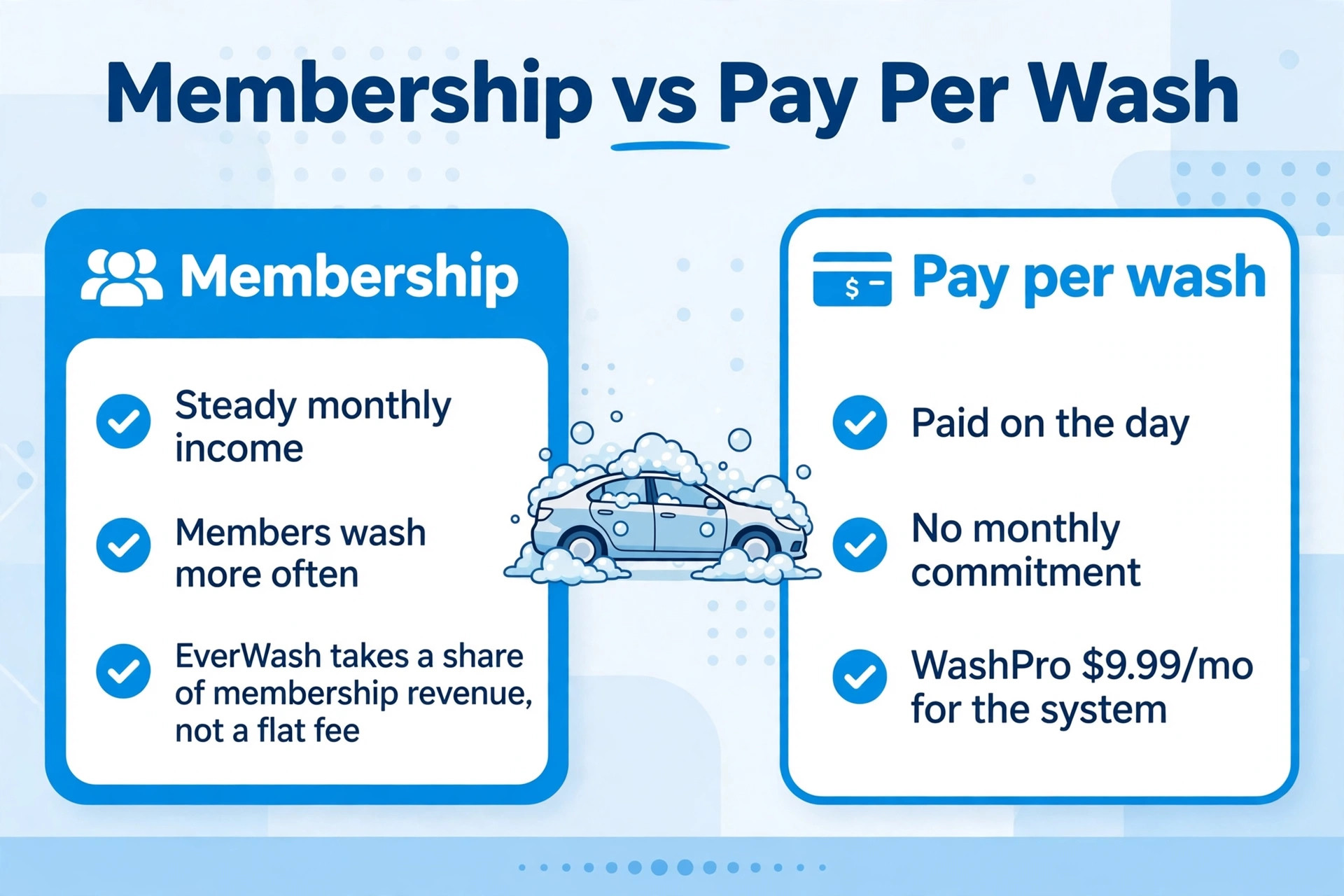
| EverWash | a share of membership revenue, not a flat fee | operators who want memberships without a monthly bill |
| Patheon | quote based | one or two location operators who want a clean system |
| FlexWash | quote based | operators who want POS plus CRM visibility |
| WashUp | from 109 dollars a month per location | operators who want operations first |
| WashPro | 9.99 dollars a month per business | small hand wash businesses that want a simple system |
| Washa CRM | 50 dollars a month | small wash and detailing businesses that want one system |
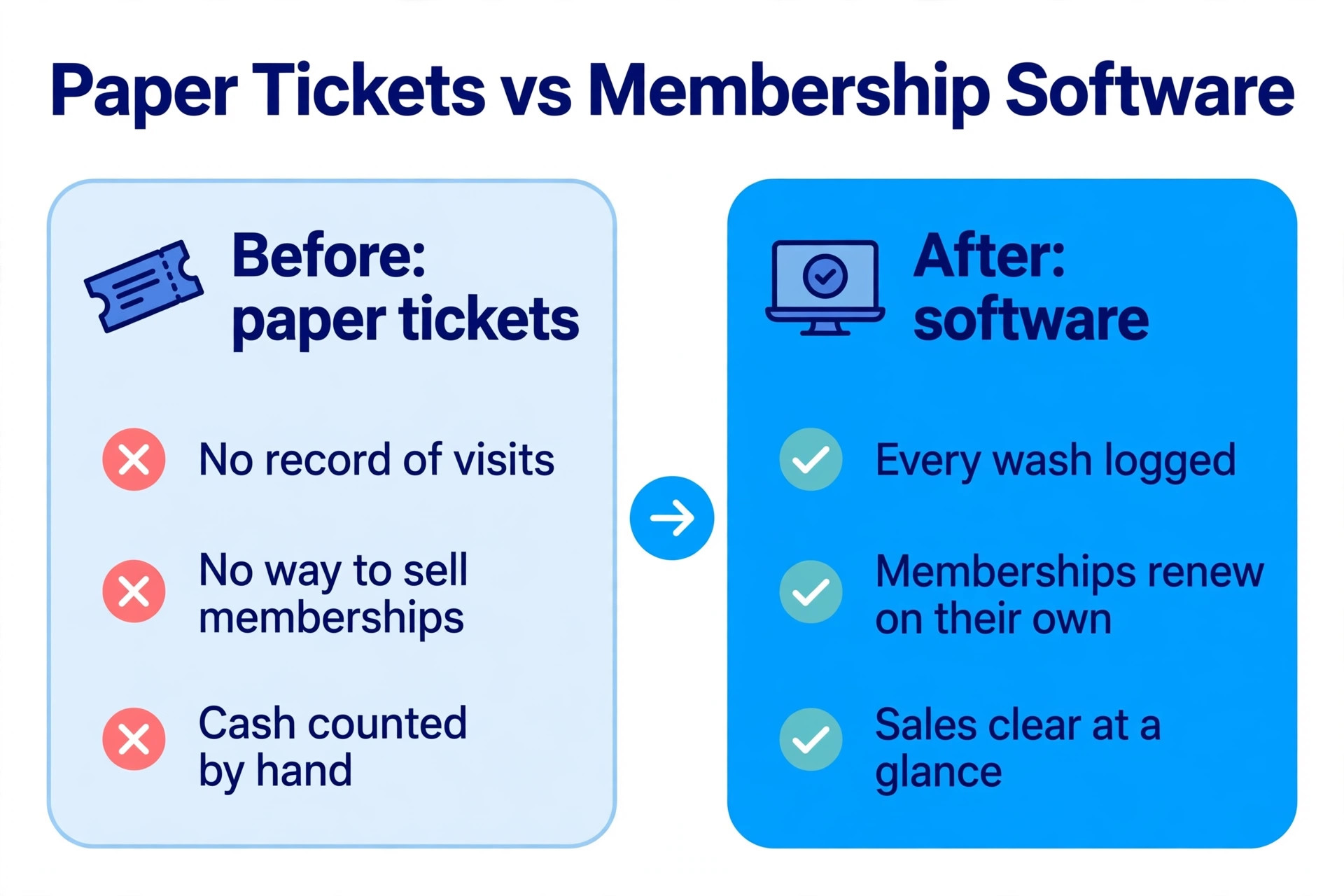
The 10 Tools in Detail
The sections below follow the same order as the table, and each one gives the price, the best fit and the limit to check. Read the ones that match your size first, and skip the ones built for a much bigger operation, because the right tool for a solo operator is rarely the right tool for a team of ten.
1. Rinsed
Rinsed is the pick for operators who want membership growth above all. It starts at from 449 dollars a month per location, and that price covers membership CRM, in driveway sales and automated support. The setup is quick for a small team, and the daily workflow stays close to the way the business already works. Staff learn the main screens in a day, and the owner can see the day plan, the money in, and the jobs still open from one screen. For a small operation that wants membership CRM, in driveway sales and automated support without a long project, Rinsed is a solid first shortlist entry.
The limit to check is the price is high for a single self serve site with no memberships. That matters when volume grows, because the tool that feels light at five jobs a week can feel tight at fifty. Compare the paid tier before you commit, and run a real week of work through the trial with your own data. If Rinsed still fits after that week, the price is fair for what it does. If the limit shows up on day two, move on and keep the shortlist moving.
2. Washify
For tunnel and in bay operators who want cloud POS, Washify is the name to test first. It starts at pricing not published, now under DRB, and the core value is cloud POS, wash plans, CRM and a mobile app. The team can run a real week on the trial, with real clients and real jobs, and see whether the screens fit the way they already work. The owner sees the day plan and the money in from one place, and staff stop retyping the same details into three different tools.
Watch the limit, because pricing runs through DRB, so get a quote before you compare. That gap matters most when the business grows, and it is cheaper to find it in a trial than in a paid year. Ask for the full price in writing, including add ons, and check what the next tier costs before the first tier runs out. If the maths still works, Washify earns its place on the shortlist.
3. WashCard
WashCard starts at 200 to 600 dollars a month per location, and it earns its place by doing fleet billing, commercial accounts and membership tools well. It suits operators with many fleet and commercial accounts, and the setup fits a small team that cannot spare a week for training. The main screens are clear, the daily work flows in order, and the owner can check the day without asking three people for updates. For a small business that wants fleet billing, commercial accounts and membership tools without a long project, it is a practical choice.
The weak spot is that the interface is dated next to Rinsed, and mobile is thin. Test it with the hardest week you can remember, not the easiest one, and see whether the tool still fits. A trial that only covers easy days tells you nothing, and a trial that covers a busy week tells you everything. If WashCard passes that test, the price is fair for the work it does.
4. DRB Systems
DRB Systems is the pick for multi location operators who want an enterprise system. It starts at from about 500 dollars a month, and that price covers POS, membership, reporting and hardware integrations at scale. The setup is quick for a small team, and the daily workflow stays close to the way the business already works. Staff learn the main screens in a day, and the owner can see the day plan, the money in, and the jobs still open from one screen. For a small operation that wants POS, membership, reporting and hardware integrations at scale without a long project, DRB Systems is a solid first shortlist entry.
The limit to check is the price and setup suit larger operators more than a single site. That matters when volume grows, because the tool that feels light at five jobs a week can feel tight at fifty. Compare the paid tier before you commit, and run a real week of work through the trial with your own data. If DRB Systems still fits after that week, the price is fair for what it does. If the limit shows up on day two, move on and keep the shortlist moving.
5. EverWash
For operators who want memberships without a monthly bill, EverWash is the name to test first. It starts at a share of membership revenue, not a flat fee, and the core value is membership sales, marketing and retention with no flat fee. The team can run a real week on the trial, with real clients and real jobs, and see whether the screens fit the way they already work. The owner sees the day plan and the money in from one place, and staff stop retyping the same details into three different tools.
Watch the limit, because the revenue share is the cost, so compare it at your volume. That gap matters most when the business grows, and it is cheaper to find it in a trial than in a paid year. Ask for the full price in writing, including add ons, and check what the next tier costs before the first tier runs out. If the maths still works, EverWash earns its place on the shortlist.
6. Patheon
Patheon starts at quote based, and it earns its place by doing membership and POS with a clean interface for small teams well. It suits one or two location operators who want a clean system, and the setup fits a small team that cannot spare a week for training. The main screens are clear, the daily work flows in order, and the owner can check the day without asking three people for updates. For a small business that wants membership and POS with a clean interface for small teams without a long project, it is a practical choice.
The weak spot is that it is newer than DRB, so the hardware integration list is shorter. Test it with the hardest week you can remember, not the easiest one, and see whether the tool still fits. A trial that only covers easy days tells you nothing, and a trial that covers a busy week tells you everything. If Patheon passes that test, the price is fair for the work it does.
7. FlexWash
FlexWash is the pick for operators who want POS plus CRM visibility. It starts at quote based, and that price covers payments, customer data and membership tools in one place. The setup is quick for a small team, and the daily workflow stays close to the way the business already works. Staff learn the main screens in a day, and the owner can see the day plan, the money in, and the jobs still open from one screen. For a small operation that wants payments, customer data and membership tools in one place without a long project, FlexWash is a solid first shortlist entry.
The limit to check is pricing is not published, so ask for a written quote. That matters when volume grows, because the tool that feels light at five jobs a week can feel tight at fifty. Compare the paid tier before you commit, and run a real week of work through the trial with your own data. If FlexWash still fits after that week, the price is fair for what it does. If the limit shows up on day two, move on and keep the shortlist moving.
8. WashUp
For operators who want operations first, WashUp is the name to test first. It starts at from 109 dollars a month per location, and the core value is inspections, maintenance, tasks and scheduling for wash teams. The team can run a real week on the trial, with real clients and real jobs, and see whether the screens fit the way they already work. The owner sees the day plan and the money in from one place, and staff stop retyping the same details into three different tools.
Watch the limit, because it is an operations tool first, so membership depth is thinner. That gap matters most when the business grows, and it is cheaper to find it in a trial than in a paid year. Ask for the full price in writing, including add ons, and check what the next tier costs before the first tier runs out. If the maths still works, WashUp earns its place on the shortlist.
9. WashPro
WashPro starts at 9.99 dollars a month per business, and it earns its place by doing plate capture, queue management and pricing on a phone well. It suits small hand wash businesses that want a simple system, and the setup fits a small team that cannot spare a week for training. The main screens are clear, the daily work flows in order, and the owner can check the day without asking three people for updates. For a small business that wants plate capture, queue management and pricing on a phone without a long project, it is a practical choice.
The weak spot is that it suits small hand wash sites, not a tunnel with heavy volume. Test it with the hardest week you can remember, not the easiest one, and see whether the tool still fits. A trial that only covers easy days tells you nothing, and a trial that covers a busy week tells you everything. If WashPro passes that test, the price is fair for the work it does.
10. Washa CRM
Washa CRM is the pick for small wash and detailing businesses that want one system. It starts at 50 dollars a month, and that price covers CRM, booking, scheduling and financial tracking in one place. The setup is quick for a small team, and the daily workflow stays close to the way the business already works. Staff learn the main screens in a day, and the owner can see the day plan, the money in, and the jobs still open from one screen. For a small operation that wants CRM, booking, scheduling and financial tracking in one place without a long project, Washa CRM is a solid first shortlist entry.
The limit to check is the feature set is narrower than Rinsed, so check membership needs first. That matters when volume grows, because the tool that feels light at five jobs a week can feel tight at fifty. Compare the paid tier before you commit, and run a real week of work through the trial with your own data. If Washa CRM still fits after that week, the price is fair for what it does. If the limit shows up on day two, move on and keep the shortlist moving.
Best Pick by Job
The best pick depends on the job, not the brand, and best car wash management software is a choice about fit first and price second. A solo operator should pick the cheapest tool that covers the daily work, a growing team should pick the tool that scales without a painful move, and a busy operation should pick the tool that holds up on the hardest week of the year.
| If you are | Pick | Why |
|---|---|---|
| A solo operator | Rinsed | Lowest cost that covers the core job |
| A growing team | Washify | Scales without a painful move |
| A busy operation | WashCard | Holds up on the hardest week |
| On a tight budget | DRB Systems | Strong value for the price |
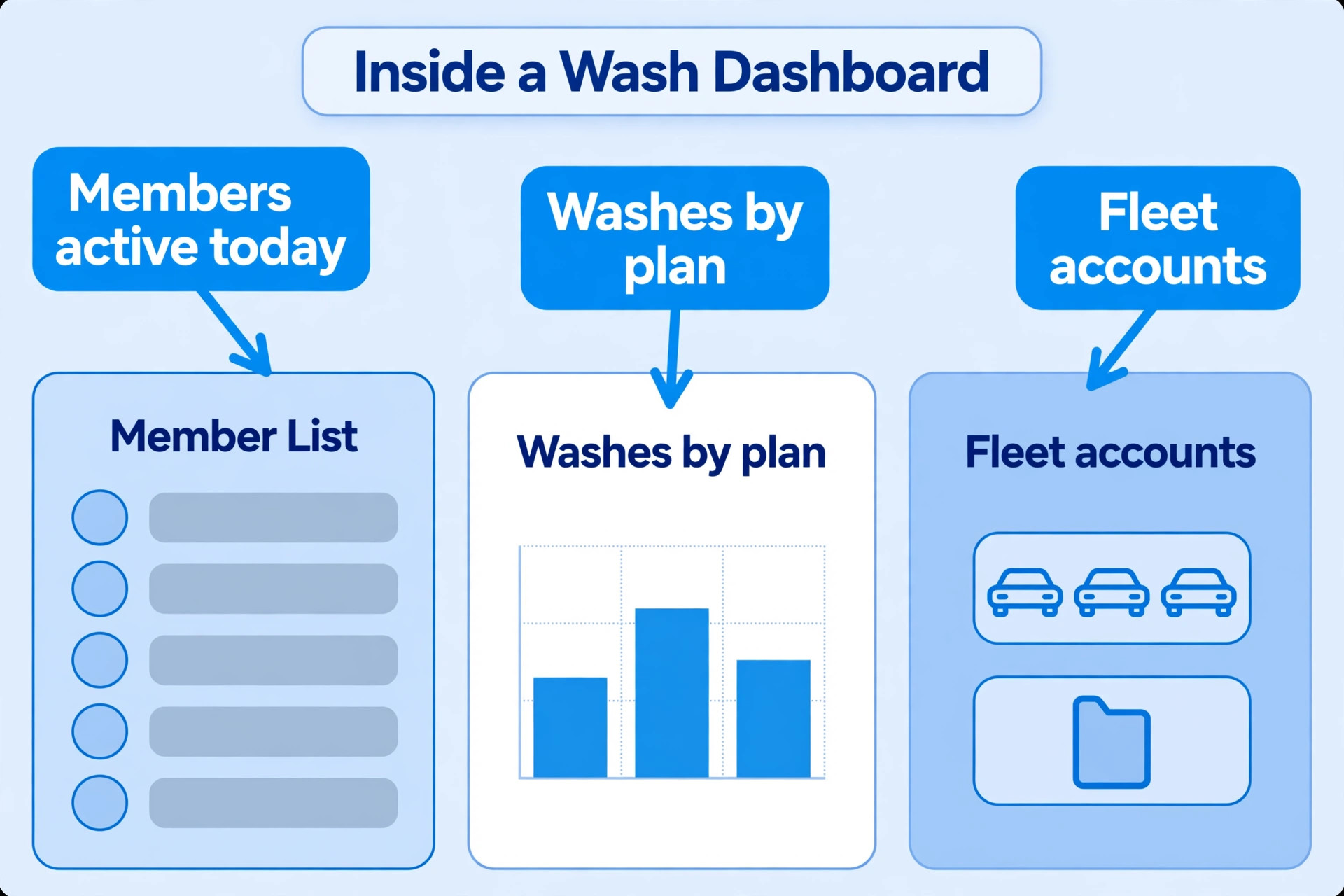
What It Costs in Year One
Multiply the monthly price by twelve, then add the setup fee and the add ons, because that is the number the bank sees. A tool at 30 dollars a month with a 500 dollar setup costs 860 dollars in year one, and a tool at 100 dollars a month with no setup costs 1,200 dollars. The dearer monthly price can still be the cheaper first year, and the cheaper monthly price can still be the dearer one.
| Size | Likely monthly bill | Year one, with setup |
|---|---|---|
| Solo operator | Under 50 dollars | Under 600 dollars plus setup |
| Small team of three | 50 to 150 dollars | 600 to 1,800 dollars plus setup |
| Busy team of ten | 150 to 500 dollars | 1,800 to 6,000 dollars plus setup |
Card fees sit on top of every number above, and they matter most where the average sale is small. A cafe that takes a 5 dollar payment loses about 28 cents to fees on every sale, and a clinic that takes a 100 dollar payment loses about 3 dollars. Count the card fees for a month of real sales, and add them to the year one total before you decide.
Before You Decide
Ask the vendor what happens when the internet goes down, because a cloud tool that stops working offline can stop the whole business. Check whether the main screens work without a connection, and whether the data syncs back cleanly when the connection returns.
Keep the old system running for two weeks after the switch, and compare the totals every Friday until they match. Parallel running is the cheapest insurance a small business can buy, because it catches the missing job before it costs money.
Write the decision down before you buy, with the tool name, the plan, the monthly cost and the reason you picked it. A written decision stops the second guessing in month two, and it gives the team a clear answer when someone asks why this tool and not the other one.
For a small car wash business, the trial week is the whole decision. Run the busiest day you can remember through the tool, and watch where the team slows down, where the data goes missing, and where the workaround starts. A tool that survives the busiest day will survive the year.
Give the team one week with the new tool and one clear owner for the switch, and measure the result at the end of that week. A switch with an owner gets done, and a switch with no owner drifts, so name the person and the date before the trial starts.
Count the total cost for a year, not a month, and include the setup fee, the add ons and the card fees. A 30 dollar tool that needs 200 dollars of add ons is a 230 dollar tool, and a 100 dollar tool that needs nothing else is the cheaper buy.
Check the exit before you sign, because every tool is easy to join and some are hard to leave. Ask how your data exports, what format it comes in, and whether the vendor charges to hand it back. A tool that holds your data hostage is not a tool, it is a trap.
Talk to one business like yours that already uses the tool, and ask what breaks on a busy day. A vendor demo shows the best day, and a real user shows the truth, including the workaround the team uses every week and the feature they wish they had bought.
Ask the vendor for the full price in writing, including setup, add ons, per user fees and the next tier, and keep that note next to the contract. A written price stops the surprise bill in month three, and it gives you a number to compare when the renewal arrives.
A car wash business that buys on price alone usually buys twice, because the cheap tool misses the one feature the team needs most, and the move to a better tool costs more than the saving. Spend the trial week on the real work, with real clients and real jobs, and judge the tool on that week, not on the demo.
Mistakes That Waste Money
The most common mistake in best car wash management software is paying for a tool when a cheaper plan already covers the job. A solo operator who buys the top tier for features the team never opens pays for a year of unused software, and a small team that buys seats for readers pays for people who never log in. Keep the paid seats small, and only pay for the people who do the work.
The second mistake is ignoring the limit until it bites. A team buys the entry plan, hits the cap in week three, and upgrades in a hurry at the worst time. Count the real volume for a month before you buy, and pick the plan whose cap covers that number with room to spare.
The third mistake is skipping the trial. A demo is not a trial, and a trial with fake data is not a trial either. Run a real week through the tool, with real clients and real jobs, and decide on that week. The tools that pass a real week are the ones worth paying for.
Our Verdict
For most small car wash businesses, the pick is Rinsed for the lowest cost that covers the core job, with Washify as the step up when the team grows. That pair covers the two most common sizes in this category, and both are proven with small teams that need the tool to work every day.
Start with the free plan or the trial where one exists, run a real week through it, and only pay when a paid feature earns its place. A tool you use every day is worth paying for, and a tool you pay for and ignore is the most expensive tool in this guide. That is the honest way to read best car wash management software, and it is the way to keep the bill small and the work smooth.
Frequently Asked Questions
What does best car wash management software cost per month?
Prices in this guide run from free to more than 400 dollars a month, and the right number depends on the size of the operation. A solo operator can often run on a free plan or a plan under 30 dollars a month, while a growing team pays 50 to 150 dollars a month, and a busy operation pays more. Count the full year, including setup and add ons, before you compare.
Which tool is best for a small business?
The best tool is the cheapest one that covers the daily work without a workaround. For most small car wash businesses, that means the first tool in this guide for solo work and the second tool for a growing team. Test both with a real week of work, and pick the one the team actually opens every day.
Is there a free plan worth using?
Yes, several tools in this guide offer a free plan or a free trial that covers the core job for a solo operator. A free plan is worth using when it covers the daily work without a cap that bites in week two, and it is worth leaving when the cap forces a workaround every day.
What hidden costs should I check?
Check the setup fee, the add ons, the per user cost, the card processing fee and the price of the next tier. Those five numbers decide the real bill, and the monthly sticker price is only the first of them. Ask for all five in writing before you sign.
Can I switch tools later without losing data?
Most tools in this guide export clients, jobs and history, but the quality of the export varies, and some vendors charge for it. Ask how the export works before you sign, test it with a small file during the trial, and keep a copy of your data outside the tool.
How long does setup take?
A small {n} business can usually set up in a day or two, with a week for training and a second week for parallel running. A bigger move, with history to import and templates to build, takes two to four weeks. Plan the cutover for a quiet Monday, not a busy Friday.
What should I do first this week?
Start with the trial of the first tool in this guide, and run one real week of work through it, with real clients and real jobs. Write down what works, what slows the team down, and what costs extra, and then test the second tool the same way. A week of real testing beats a month of reading reviews.
Pick the tool that fits the work you do every day, not the tool with the longest feature list, and let best car wash management software be a decision about fit, not about fashion. Start small, test with real work, and grow the plan only when the work grows with it.