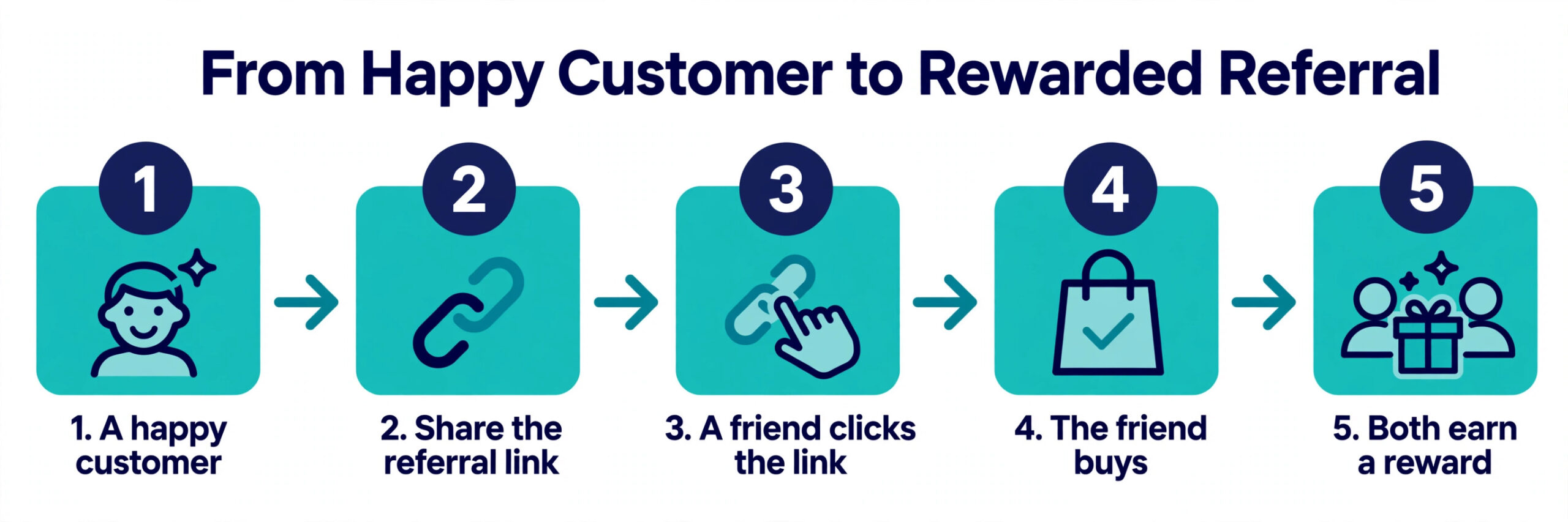
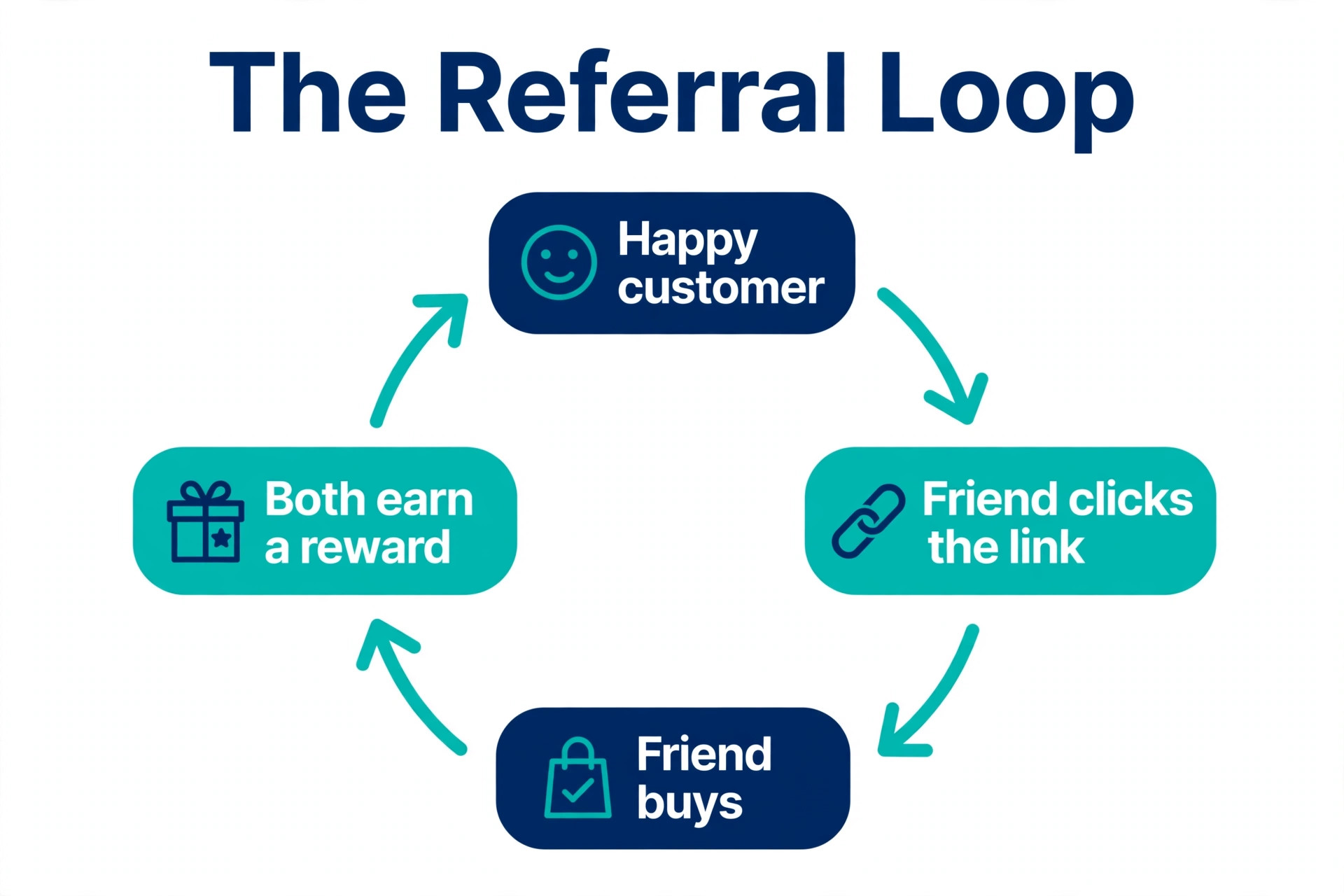
A referred customer costs about 45 dollars to acquire, against about 74 dollars for paid search, according to an Extole 2026 benchmark, and that gap is the whole case for referral marketing. A happy customer telling a friend beats an ad in almost every test of trust, and the friend arrives already believing the product works. The best referral program tools turn that moment into a system, with a link to share, a reward to earn, tracking that credits the right person, and fraud checks that stop self referrals from draining the budget.
This guide compares 10 referral platforms on the numbers that decide real cost, the entry price, what the price meters, the reward options, fraud controls, and how fast a small team can launch. Prices were checked against vendor pricing pages and current 2026 roundups in November 2026. Referral pricing changes often and several vendors hide prices behind quotes, so confirm the price on the vendor site before you pay.
How We Tested 10 Referral Tools
We scored each tool on five points, because the best referral program tools win on total cost and trust, not on the prettiest share widget. Total cost covered the entry price plus any success fee, commission, or per participant charge, since a cheap monthly fee can turn expensive once referrals start converting. Launch speed covered how much setup a non technical owner can finish without a developer, including templates, integrations, and embed options.
Reward flexibility covered cash, store credit, discounts, gift cards, and tiered rewards, because a program that can only offer a percentage discount fits fewer businesses. Fraud control covered duplicate detection, self referral blocks, and payout review, since a program with weak checks pays for fake referrals. Reporting covered whether the tool shows who shared, who converted, and what each referral cost, so you can see whether the program earns its keep.
We also separated tools by business model. An online store needs order tracking and a Shopify or WooCommerce install. A service business needs referral links that work offline, at the front desk, or in an email signature. A software business needs referral links inside the product itself. The ranking below keeps those differences visible, so a store owner and a consultant do not end up with the same pick.
The Best Pick for Each Job
| Job | Pick | Why it wins |
|---|---|---|
| Fastest launch for an online store | ReferralCandy | One click Shopify install, live in under 30 minutes |
| Flat price with no success fee | Referral Rock | 250 dollars a month, unlimited referrals |
| No code setup for a service business | Referral Factory | Templates and a visual builder, no developer needed |
| Referrals inside a product | GrowSurf | In product widgets priced by participant |
| Free start for a small store | Smile.io | Free plan covers referrals for up to 200 orders |
| Referrals plus loyalty and reviews | Yotpo | One suite for loyalty, referrals and reviews |
| Campaigns with testing | Talkable | A B testing on rewards and placements |
| A quick campaign on a budget | Viral Loops | Template campaigns from 49 dollars a month |
Use this table as a shortcut, then read the full section for the tool you are leaning toward. The cheapest monthly price is rarely the cheapest program once success fees and reward payouts are counted, so work out the cost at your expected referral volume before you commit.
The Best Referral Program Tools in 2026, Ranked
The 10 tools below fall into three groups. The first group serves online stores and launches fast. The second group serves service businesses, software teams, and agencies that need referrals outside a checkout. The third group serves larger brands that treat referral as a managed channel with testing and dedicated support.
1. ReferralCandy
ReferralCandy is the fastest launch for a Shopify or WooCommerce store, and it earns the top spot for most small businesses that sell online. It installs in one click, reads order data automatically, and starts rewarding customers without a developer touching the store. The dashboard covers referral pages, affiliate tracking, reward emails, fraud checks, store credit, payouts, and analytics in one place, and a built in AI agent can launch a program and suggest weekly improvements.
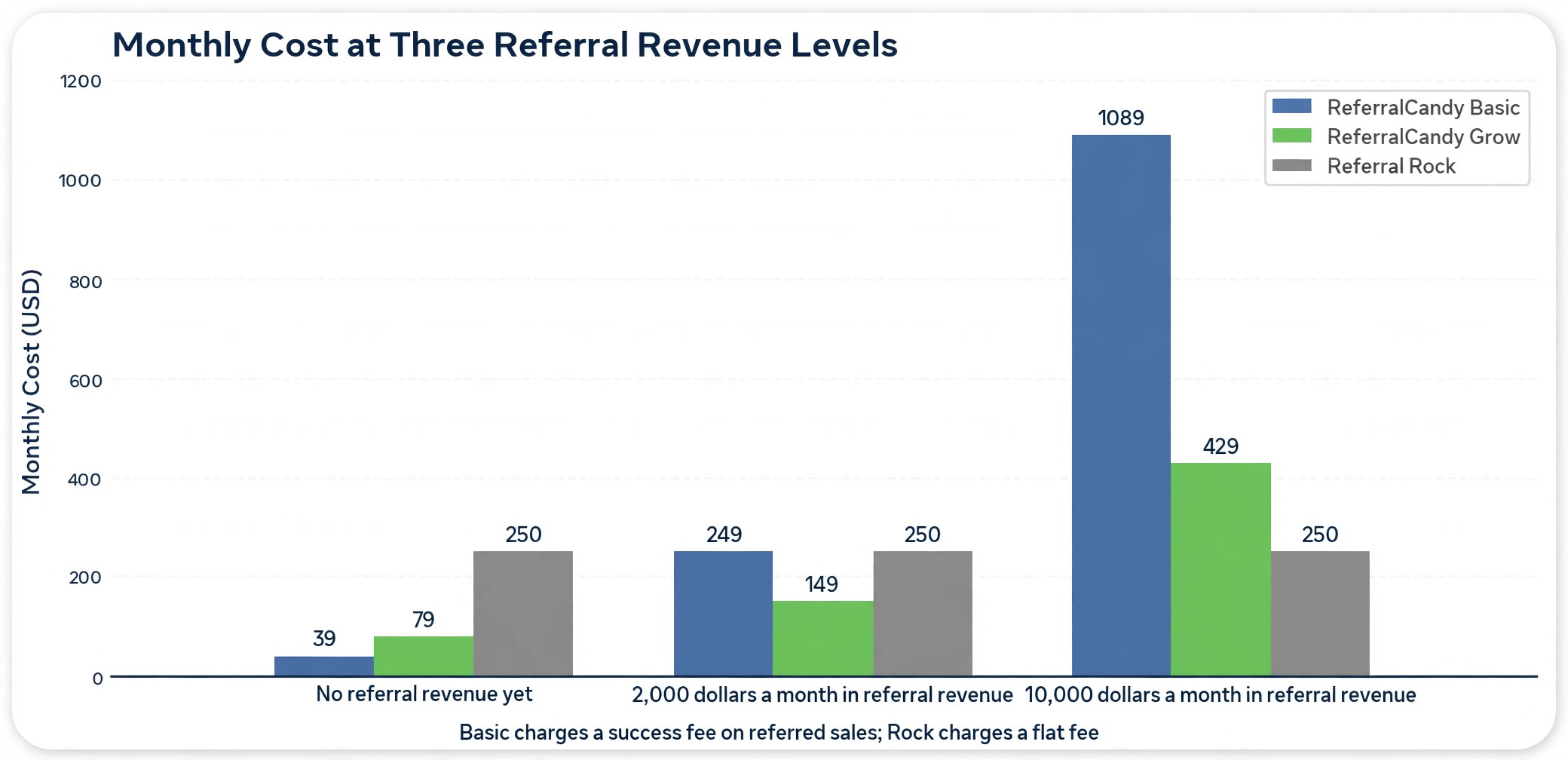
Pricing runs on a base fee plus a success fee on referred sales. Basic costs 39 dollars a month plus 10.5 percent on the first three orders from each new referred customer. Grow costs 79 dollars a month plus 3.5 percent, Scale costs 249 dollars a month plus 1.5 percent, and Enterprise costs 799 dollars a month plus 0.25 percent. At 10,000 dollars a month in referral revenue, Basic costs about 1,089 dollars in total while Grow costs about 429 dollars, so growing stores should move up a tier early. Older guides still quote 59 dollars a month for the entry plan, but the current vendor price is 39 dollars, and that older figure is out of date.
2. Referral Rock
Referral Rock is the pick for teams that hate variable costs. The Operator plan costs a flat 250 dollars a month with unlimited referrals and no commission taken on payouts, so the bill stays the same whether the program brings in 10 referrals or 1,000. That flat model suits service businesses, franchises, and B2B teams whose referrals arrive by phone, in person, or by email rather than through a checkout.
The platform covers referral tracking, reward fulfillment, email automation, and integrations with HubSpot and Salesforce, plus offline referral capture for businesses that meet customers face to face. A dedicated advisor is included on the Operator plan, which helps when a small team has no marketer to run the program. Some older guides list entry prices of 175 or 200 dollars a month, but the most recent October 2026 roundups list 250 dollars, so confirm the current price before you budget. Referral Rock is the right choice when volume is high enough that a success fee would cost more than a flat fee.
3. Referral Factory
Referral Factory suits small businesses and agencies that want a referral program without writing code. The visual builder and ready made templates let a marketer launch a campaign in an afternoon, and the platform covers referral links, landing pages, reward rules, and analytics without a developer. Agencies like it because one account can run campaigns for several clients, each with its own branding and reward structure.
Pricing is where sources disagree, and that disagreement matters. Some guides list entry plans from around 95 dollars a month, while several September and October 2026 roundups list the Basic plan at 200 dollars a month for up to 20,000 users, with Pro at 400 dollars a month and Enterprise from 1,000 dollars a month. The spread is wide enough that you should get a current quote from the vendor rather than trusting any single roundup. What is consistent across sources is the model, a flat fee with no success fee, which makes the true cost predictable once you know the tier.
4. Friendbuy
Friendbuy is a referral, loyalty, and influencer platform built for mid market and enterprise retail brands, and it is the most managed option on this list. White glove onboarding sets the program up, a success plan ties campaigns to the marketing calendar, and alerts flag dips in sharing or redemptions early. The analytics go deeper than most rivals, with segmentation, A B testing, and reporting that ties referrals to revenue rather than clicks.
Pricing is quote based, with entry pricing reported around 249 dollars a month on annual billing for referral only, and full referral plus loyalty packages reported from about 12,000 dollars a year. That puts Friendbuy out of reach for most small stores, and it is honest about that. The right buyer is a brand with meaningful referral volume that wants a team behind the program, not a self serve widget. Small businesses should look at ReferralCandy or Smile.io first and return to Friendbuy when the program outgrows them.
5. Viral Loops
Viral Loops is the pick for a fast campaign on a small budget. It ships proven referral templates, including waitlist campaigns, giveaway campaigns, and milestone reward ladders, so a founder can launch in a day instead of designing a program from scratch. The platform handles referral links, leaderboards, reward emails, and basic fraud checks, and it works for product launches as well as ongoing referral programs.
Pricing starts at 49 dollars a month for Starter, then 139 dollars a month for Plus, 229 dollars a month for Growing, and 399 dollars a month for Power. The Starter tier caps participants at 1,000, which is enough for a launch campaign or a small store. The main limit is depth, because Viral Loops is a campaign tool rather than a full loyalty suite, so brands that want points, tiers, and reviews alongside referrals should look at Yotpo or Smile.io instead.
6. GrowSurf
GrowSurf is built for software and app teams that want referral links inside the product itself. Instead of a checkout widget, it embeds referral prompts in the app, in onboarding emails, and in newsletters, and it prices by participant rather than by store revenue. That model fits SaaS founders, because the bill grows with the audience, not with the size of each order, and automated reward fulfillment handles gift cards, cash payouts, and account credits without manual work.
Pricing starts at 179 dollars a month for the Startup plan, which covers up to 2,500 participants, two team members, and two programs. Business costs 449 dollars a month for up to 10,000 participants. Some older guides list the Startup plan at 125 dollars a month, but the more recent September 2026 roundups list 179 dollars, so treat 125 as out of date. GrowSurf is the wrong pick for a retail store, but it is the strongest option here for a SaaS team that wants referrals to live inside the product.
7. Smile.io
Smile.io is where to start when the budget is zero. The free plan covers loyalty and referrals for up to 200 orders, which is enough for a new store to test whether customers will actually share. The platform is Shopify native, with points, VIP tiers, and referral rewards in one dashboard, and it also runs on point of sale, so a shop with a physical counter can reward in store customers as well as online buyers.
Paid plans start at 15 dollars a month, and the paid tiers raise order limits and add more customization, branding control, and analytics. The trade off is depth, because Smile.io is a loyalty platform first and a referral tool second, so its referral features are simpler than ReferralCandy or Referral Rock. For a small store that wants referrals plus loyalty in one cheap package, that trade is worth making, and the free plan means there is no reason not to test it.
8. Yotpo
Yotpo is the pick when referrals sit inside a broader retention suite. It combines loyalty programs, referral campaigns, reviews, and user generated content in one platform, so a customer who leaves a review, earns points, and refers a friend is tracked in one place. That single view matters for ecommerce brands, because it shows which customers drive revenue across every channel, not just through one referral link.
Pricing is the weak point, and sources disagree on it. Yotpo lists a free plan and a Pro tier at 199 dollars a month, while some roundups list entry pricing from 15 dollars a month for a basic loyalty tier. The 15 dollar figure does not cover the full referrals suite, so budget around the 199 dollar Pro tier if referrals are the goal. Yotpo suits brands that already want reviews and loyalty and will add referrals to that stack, not a business that only needs a referral link.
9. Talkable
Talkable is the enterprise campaign platform on this list, built for large ecommerce brands that run referral as a serious acquisition channel. Its homepage describes campaign management that adapts to seasonality without engineering support, A B testing for reward offers and placements, audience segmentation, fraud prevention, video referrals, and influencer and ambassador campaigns. That depth is why large retail brands choose it when a simple widget stops being enough.
Pricing is custom, with monthly fees plus implementation, and no public entry price. That means Talkable is not a realistic pick for a small business, and the sales process alone takes longer than launching a whole program on ReferralCandy. Include it here because it sets the standard for what testing and segmentation can do, and because a growing brand should know what the next step looks like. If your program is generating serious revenue and you want to test reward offers properly, Talkable is the upgrade path.
10. ReferralHero
ReferralHero is a referral and waitlist platform that suits product launches and subscription businesses. It builds referral leaderboards, viral waitlists, and giveaway campaigns, with subscriber tracking and reward automation that fits a launch better than a retail checkout. The platform also handles double sided rewards, where both the referrer and the friend get something, which tends to lift sharing rates above single sided offers.
Pricing starts at 249 dollars a month for Basic, which covers 1,000 subscribers and one campaign, and Pro costs 399 dollars a month with unlimited subscribers. That is expensive for a small store, and the subscriber based pricing means the bill grows with the list even before anyone buys. ReferralHero earns its place for founders running a launch or a subscription product who need a leaderboard and a waitlist in one tool, rather than for a shop that just wants a share link at checkout.
How to Choose the Right Referral Tool
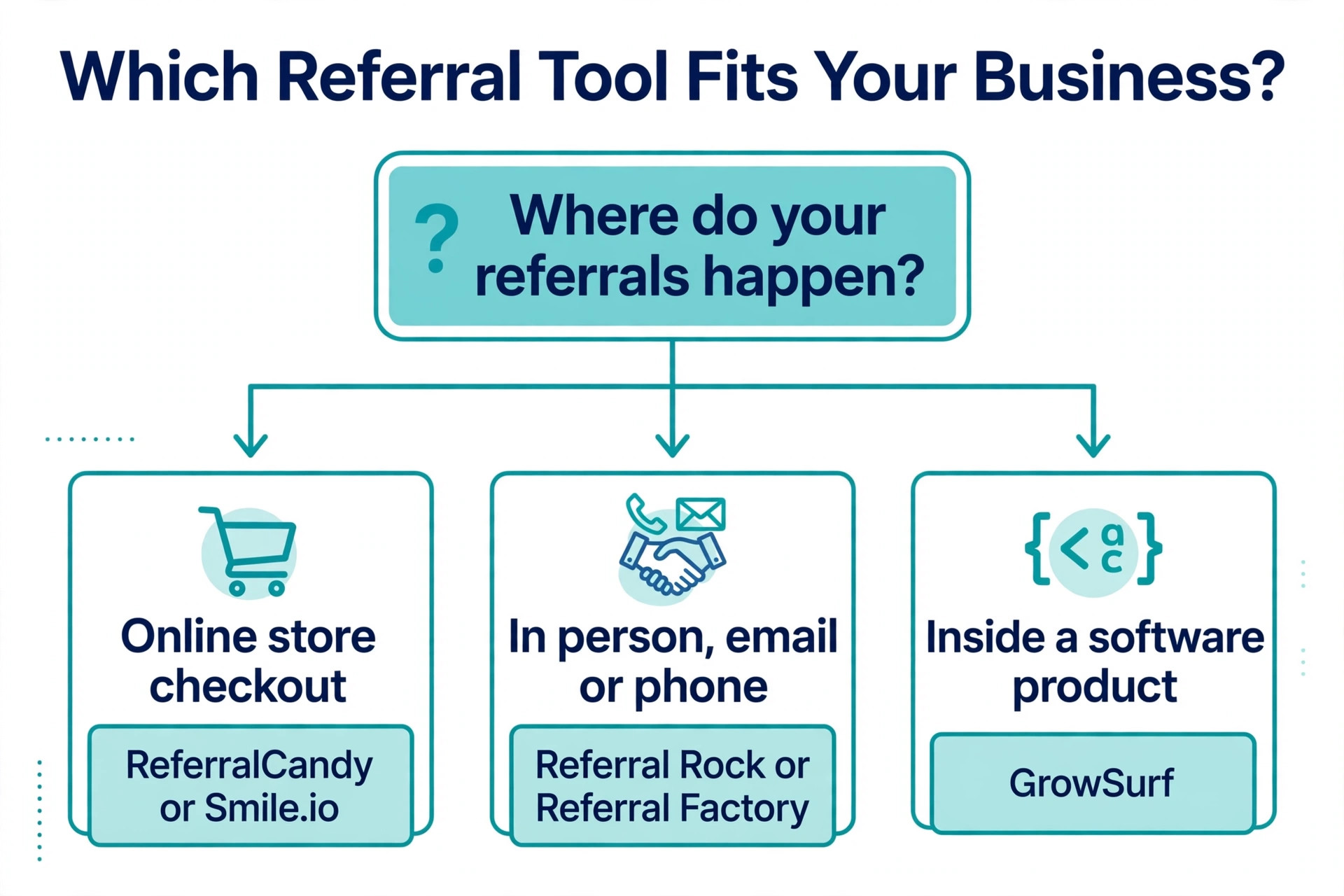
Start with where your referrals actually happen. An online store needs checkout tracking and a Shopify or WooCommerce install, so ReferralCandy or Smile.io fits. A service business needs links that work by email, at the front desk, or in person, so Referral Rock or Referral Factory fits. A software product needs referrals inside the app, so GrowSurf fits. A business that picks a tool built for a different model will spend months working around the mismatch, so match the tool to the moment of sharing before you compare prices.
Next, work out the true cost at your expected volume. A success fee looks cheap at 10 referrals a month and expensive at 500, while a flat fee looks expensive at 10 referrals and cheap at 500. Take your expected monthly referral revenue, apply the success fee, add the monthly fee, and compare that total with the flat fee alternatives. The crossover point for ReferralCandy Basic against Referral Rock is around 2,000 dollars a month in referral revenue, and above that the flat fee wins. Run the same math for reward payouts, because a 20 dollar reward on every referral is a bigger cost than any platform fee.
Then check the reward options against what your customers actually want. Store credit keeps the value inside your business and costs less than cash, but cash motivates more sharing. A discount for the friend plus a reward for the referrer, known as a double sided reward, usually beats a reward for the referrer alone, because the friend has a reason to use the link. If the tool cannot offer the reward shape your customers prefer, the program will stall no matter how good the tracking is.
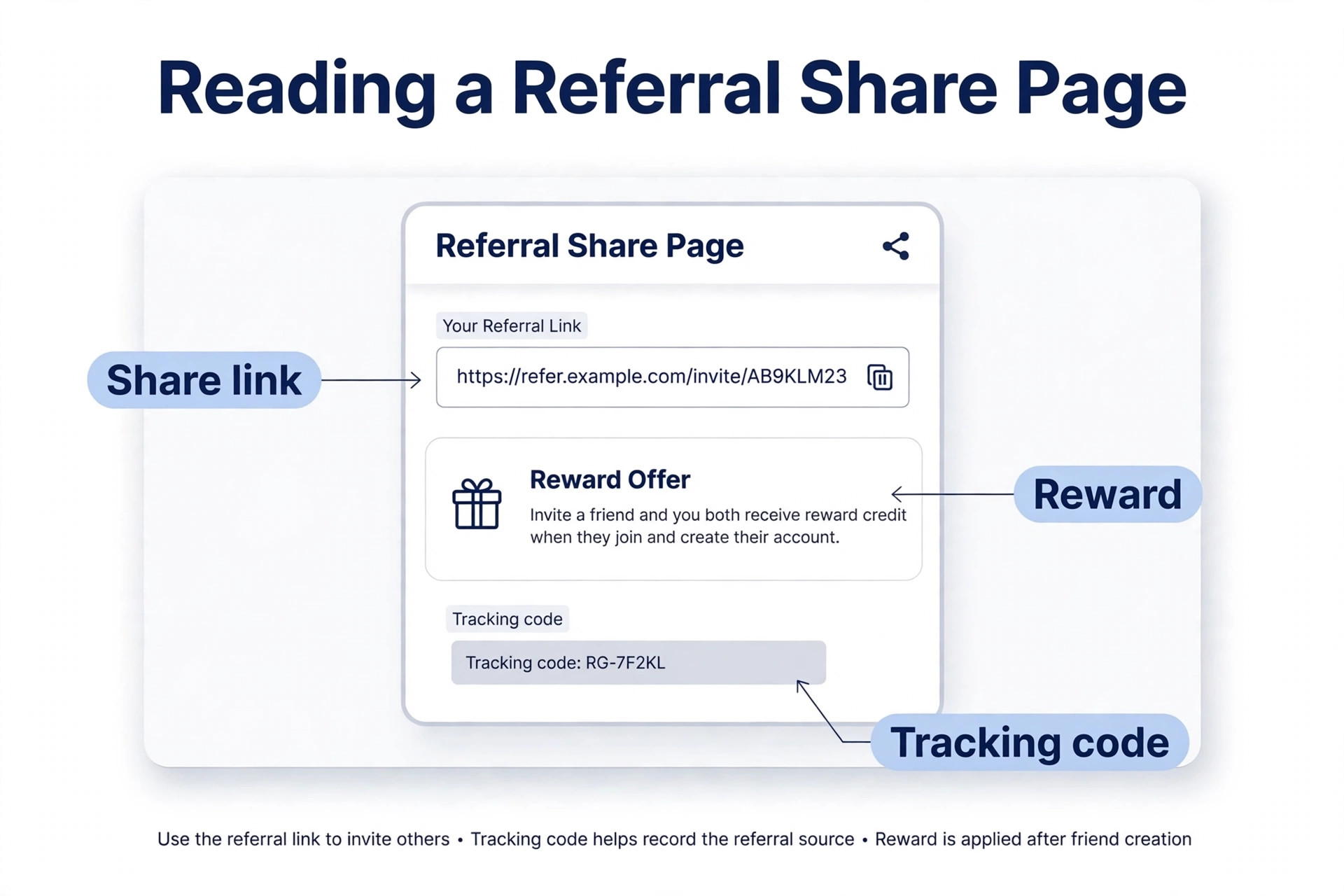
Finally, test the share experience yourself. Sign up as a customer, get a referral link, send it to a second email address, and complete a purchase or booking through it. Watch whether the reward arrives, whether the tracking credits the right person, and how the emails read. The best referral program tools make that whole loop feel simple, and a tool that confuses you in the test will confuse your customers at scale.
Also check how the tool handles the friend side of the referral. A friend who clicks a link and lands on a generic homepage is far less likely to buy than one who lands on a page that names the referrer, explains the reward, and shows the product in one view. Some tools build that landing page for you, while others leave it to your store theme, so look at the friend experience as closely as the referrer experience. A program where only the referrer is happy will stall, because the friend is the one who has to spend money first.
What to Check Before You Pay
Check the fraud controls first, because a referral program is a target for abuse from day one. Ask whether the tool blocks self referrals, detects duplicate accounts, limits rewards per household, and holds payouts for review. A program with no fraud checks will pay for referrals that were never real, and the cost shows up quietly in the reward budget. ReferralCandy, Referral Rock, and Talkable all publish fraud features, while simpler tools may rely on manual review.
Check the contract terms next. Some tools charge a success fee on the first three orders from a referred customer, while others charge on every order forever, and that difference changes the cost by a wide margin. Check whether the monthly fee is billed annually or monthly, whether there is a minimum term, and what happens to your referral data if you cancel. A tool that locks your referrer list behind an export fee is a tool you will regret choosing.
Check the integrations as well. A referral tool that connects to your store, your email platform, and your payment system will run itself, while one that needs manual exports will eat an hour a week. Confirm the integration exists for your exact platform and version, not just for the category, because a Shopify app that only supports the newest theme version is no use to a store on an older theme.
- Confirm the success fee, the orders it applies to, and the monthly fee at your volume.
- Confirm the tool blocks self referrals and duplicate accounts before payout.
- Confirm the reward options include the shape your customers prefer.
- Confirm the integration works with your store, email, and payment setup.
- Confirm you can export your referrer list if you cancel.
Mistakes That Waste Money
The most common mistake is picking a reward nobody wants. A 5 percent discount sounds safe to the owner and feels worthless to the customer, so nobody shares. A reward that costs the business 10 dollars but feels worth 20 dollars to the customer, such as store credit or a free product, moves far more referrals. Test two reward shapes in the first month and keep the one that produces more shares per customer, because guessing wrong here costs more than any platform fee.
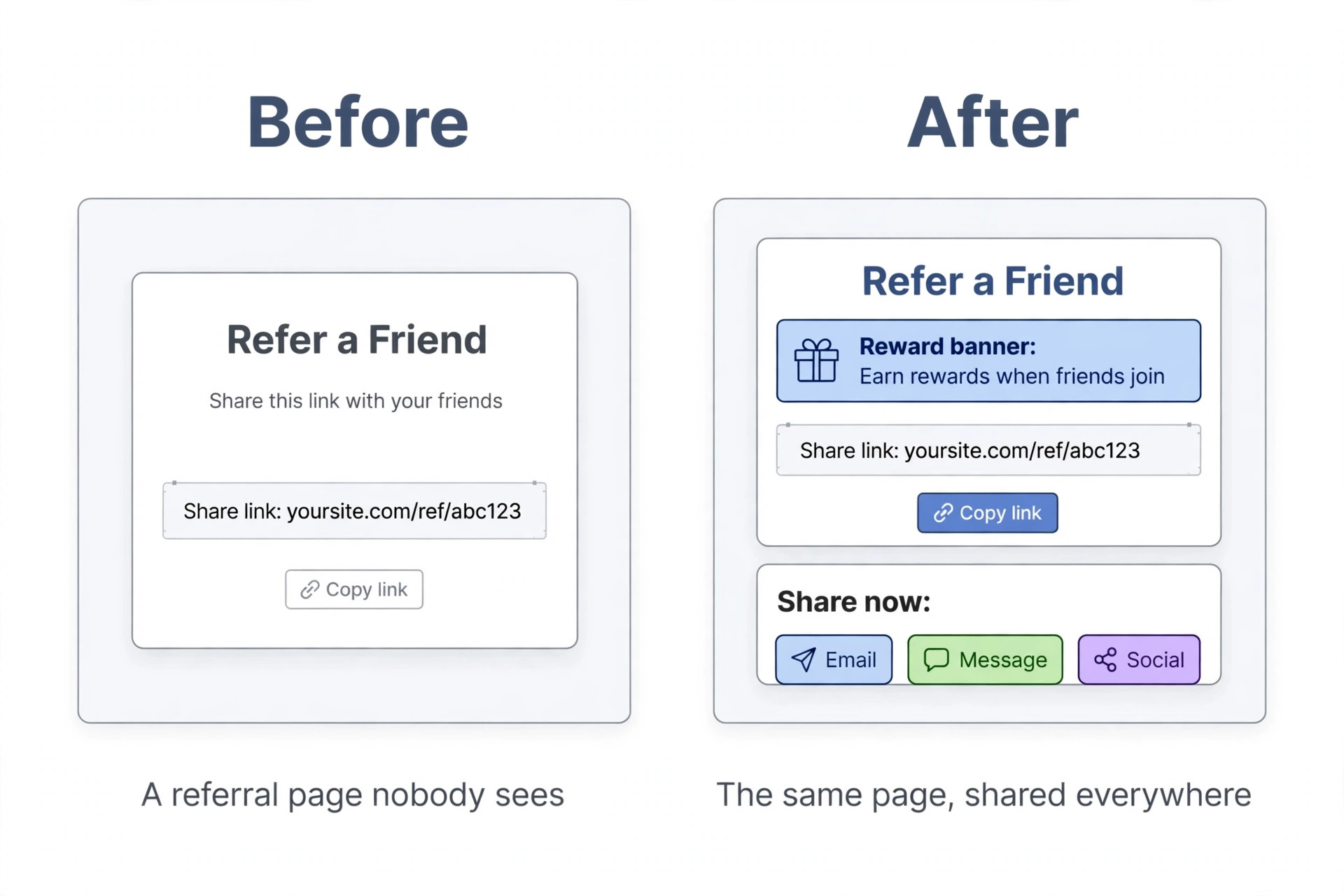
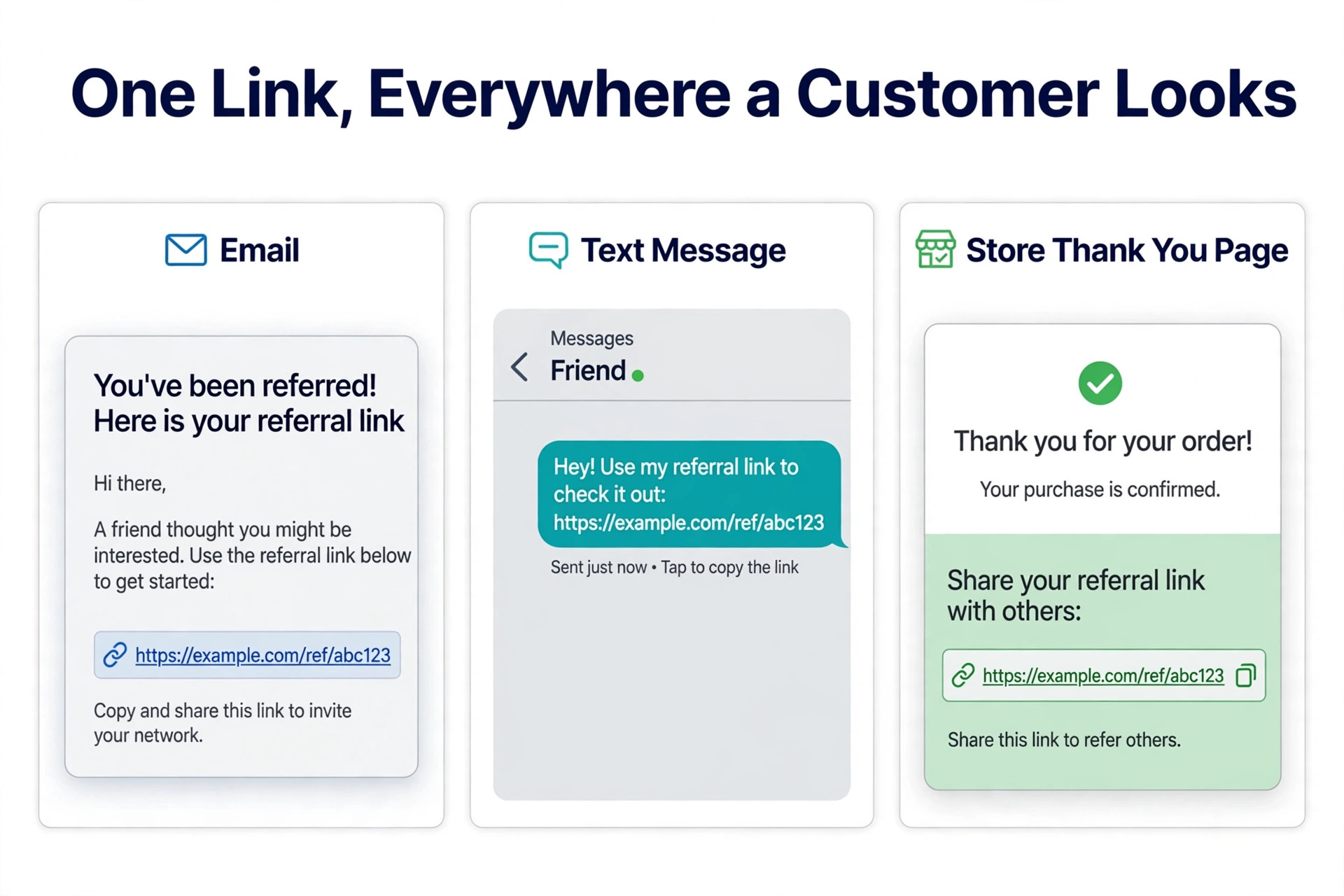
The second mistake is launching the program and never telling anyone about it. A referral link buried in an account page gets almost no use, while the same link in a post purchase email, a thank you page, and a packaging insert gets shared. The best referral program tools automate those placements, but they cannot invent them, so plan the announcement before launch day and put the link everywhere a happy customer already looks.
The third mistake is ignoring the first month of data. A program that brings in 50 referrals and zero purchases has a tracking problem or a reward problem, not a traffic problem, and waiting three months to look at the numbers wastes the launch window. Check the conversion rate weekly in the first month, fix the weak step, and only then scale the promotion.
Our Verdict
ReferralCandy is the pick for most small businesses that sell online, because the 39 dollar a month entry plan plus a success fee keeps the upfront cost low, and the one click Shopify install means the program is live the same day. The tier structure rewards growth, since moving to Grow at 79 dollars a month cuts the success fee from 10.5 percent to 3.5 percent, which saves real money once referral revenue passes a few thousand dollars a month.
Referral Rock is the pick for service businesses and B2B teams that want a flat 250 dollar a month bill with unlimited referrals and no success fee. Smile.io is the pick when the budget is zero, because the free plan covers a real test of whether customers will share. GrowSurf is the pick for software teams that need referrals inside the product. Start with the tool that matches where your referrals happen, test the reward in the first month, and let the numbers decide whether to stay or upgrade.
Frequently Asked Questions
Which of the best referral program tools is the cheapest?
Smile.io is the cheapest starting point, because the free plan covers referrals for up to 200 orders and paid plans start at 15 dollars a month. ReferralCandy is the cheapest paid option for a store that wants full referral and affiliate tracking, at 39 dollars a month plus a success fee. Among the best referral program tools, the cheapest monthly fee is not always the cheapest program, because a success fee can cost more than a flat fee once referral revenue grows, so work out the total at your expected volume.
How much should a referral reward be?
A reward worth 10 to 20 dollars, or 10 to 20 percent of a typical order, works for most small businesses. The reward should feel generous to the customer while costing less than the profit on the referred order. Double sided rewards, where both the referrer and the friend get something, usually lift sharing rates above single sided rewards, because the friend has a reason to use the link. Test two reward values in the first month and keep the one that produces more completed referrals per customer.
Do referral programs work for service businesses?
Yes, referral programs work well for service businesses, because a recommendation from a happy client carries more weight than any ad. The difference is the tracking, since referrals arrive by phone, email, or in person rather than through a checkout. Referral Rock and Referral Factory both handle offline referrals, with links that work in an email signature or a follow up message, and manual entry for referrals that arrive by phone. The key is asking every happy client for a referral at the moment they are most pleased, usually right after the work is done.
What is a success fee in referral software?
A success fee is a percentage of referred sales that the referral platform charges on top of the monthly fee. ReferralCandy charges 10.5 percent on its Basic plan, falling to 3.5 percent on Grow, 1.5 percent on Scale, and 0.25 percent on Enterprise, and the fee applies to the first three orders from each new referred customer. Flat fee tools such as Referral Rock and Referral Factory charge no success fee at all, which makes them cheaper once referral revenue grows past a few thousand dollars a month.
How long does it take to launch a referral program?
A store using ReferralCandy or Smile.io can launch in under an hour, because the install is one click and the templates cover the share page, the emails, and the reward rules. A service business using Referral Rock or Referral Factory needs a day or two to set up reward rules, write the announcement emails, and place the referral link where customers will see it. A managed program on Friendbuy or Talkable takes weeks, because onboarding, design, and testing are handled by the vendor team. Plan the reward and the announcement before you start the setup, so launch day is not delayed by copywriting.
Can I run a referral program without software?
You can run a small referral program with a spreadsheet and a manual reward, and some businesses do that for their first 20 referrals. The spreadsheet breaks down quickly, because tracking who referred whom, whether the friend bought, and who has been paid becomes a weekly chore, and disputes about missing rewards damage the relationship. Referral software earns its fee by automating tracking, fraud checks, and payouts, so the program can grow past 50 referrals without adding admin work. Start manual only if you expect fewer than 10 referrals a month.