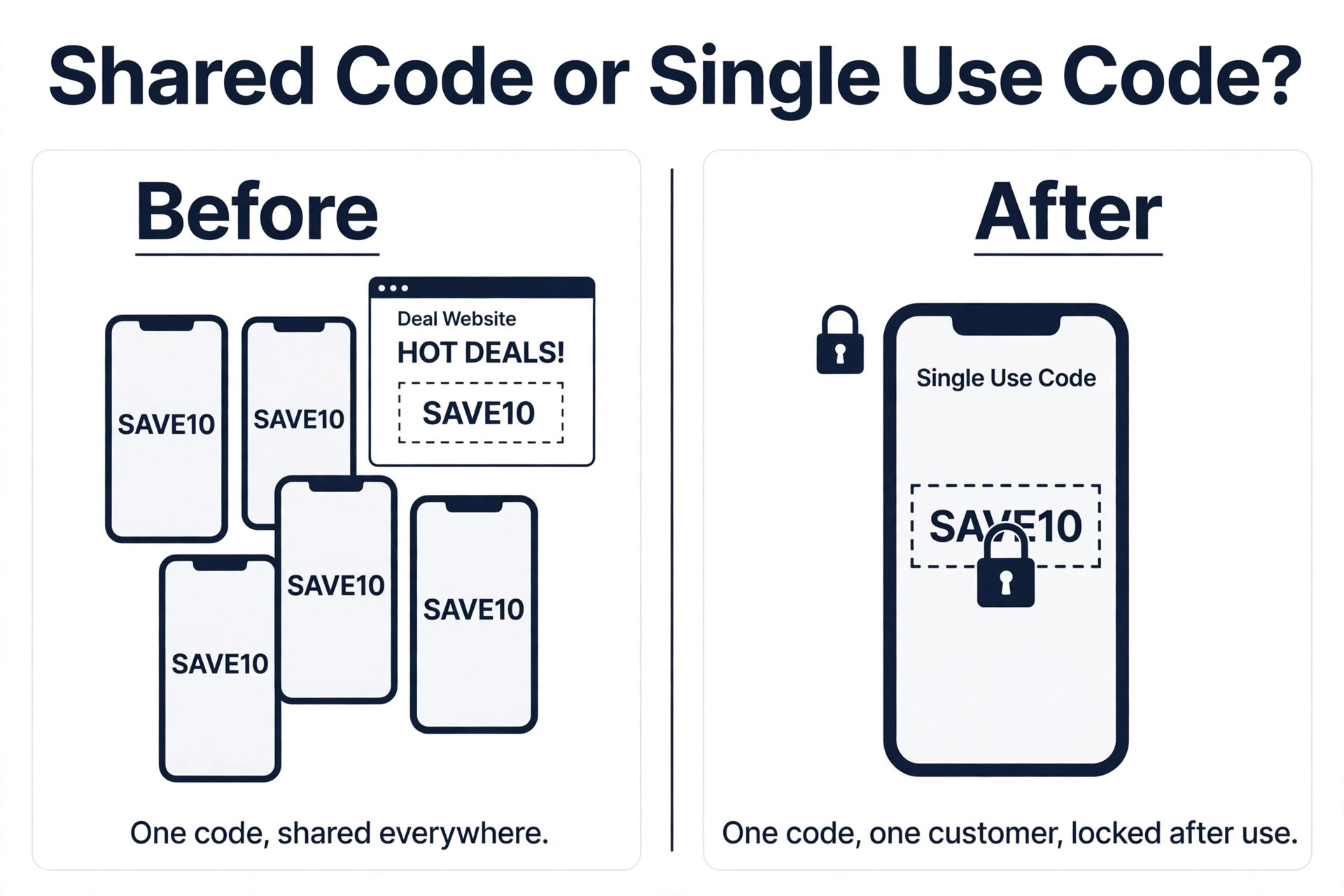
A 10 percent off code that gets shared on a deal site can cost a small store more than the sale it was meant to win. A single use code that locks the moment it is redeemed costs the store exactly one discount, and only to the customer it was meant for. That difference is the whole job of the best coupon tools for small stores, and it is why the cheapest coupon tool is rarely the one that saves the most money.
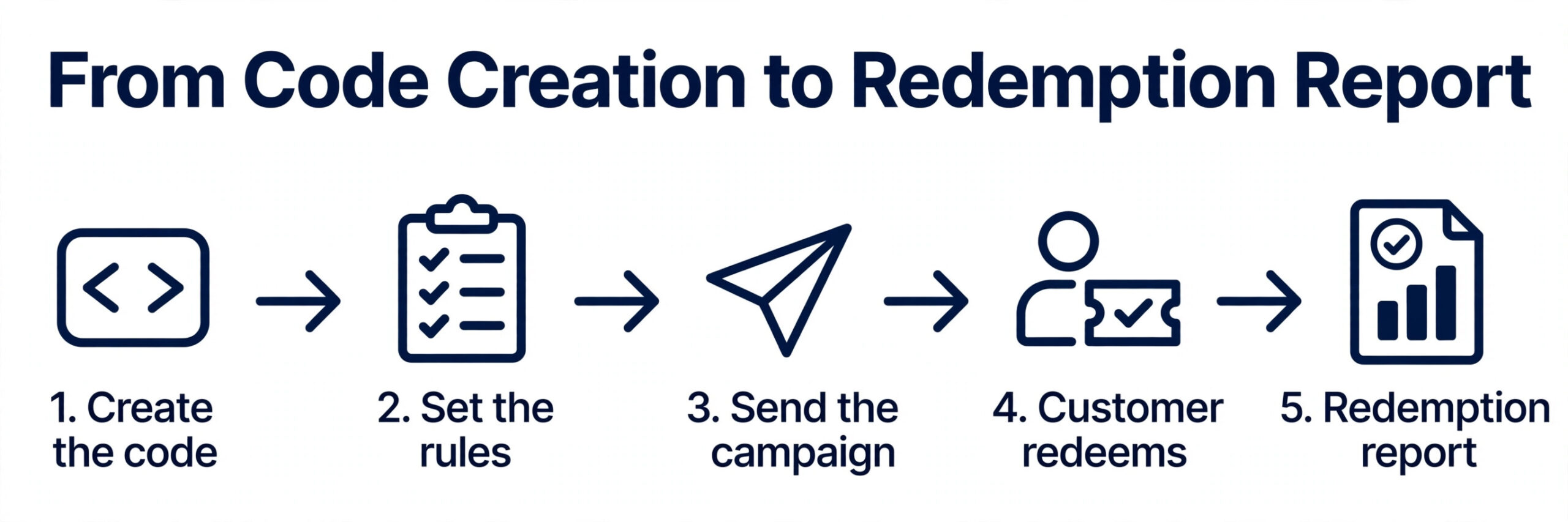
Coupons work when they are controlled. A controlled coupon has one use, one expiry date, one customer or one order, and a report that shows what it actually earned. An uncontrolled coupon has none of those things, and it spreads through screenshots, deal forums and group chats until the store is giving away margin to strangers. The tools in this guide are ranked on control first and price second, because control is what turns a promotion from a leak into a lever.
Most small stores also need coupons to do more than one job. A welcome code brings in a first order, a win back code brings back a lapsed customer, a referral code brings in a friend, and a loyalty reward keeps a regular customer coming back. A tool that handles all four jobs in one place is worth more than a tool that only generates codes, because the store owner has one dashboard to check instead of four.
How the Best Coupon Tools for Small Stores Were Compared
We checked vendor pricing pages and current 2026 roundups in November 2026, and we weighed each tool against the same five questions. First, can it issue unique single use codes that lock after one redemption, so a screenshot cannot be reused. Second, can it set real rules, such as expiry dates, usage limits per customer, minimum order values and product exclusions. Third, does it stop fraud, with IP tracking, usage limits and anti fraud triggers that catch abuse before it spreads. Fourth, does it connect to the store, the email tool and the point of sale system, so a code works everywhere the customer shops. Fifth, what does the real monthly cost look like at a small store order volume.
Prices in this guide were checked against vendor pricing pages and current 2026 roundups. Coupon tool pricing changes often, and several vendors charge by order volume, code volume or API calls, so the headline price is rarely the price a busy store pays. Price each tool against your real monthly order count and your real code count before you commit, and test it with a small campaign before you run a store wide promotion.
The Best Pick for Each Job
| Job | Pick | Why it wins |
|---|---|---|
| Single use codes on a budget | ReviewQR | 10 dollars a month with real single use redemption |
| Unique codes for email campaigns | Coupon Carrier | One job done well from 49 dollars a month |
| Advanced rules and API control | Voucherify | Webhook driven rules with strict redemption control |
| Loyalty plus coupons for Shopify | Smile.io | Free plan for up to 200 orders a month |
| Bulk codes with strict limits | Coupontools | Bulk generation with per customer limits |
Use this table as a shortcut, then read the full section for the tool you are leaning toward. The cheapest option is not the best value when it cannot stop a code from being shared, and the most expensive option is not the best choice when you only run a few campaigns a month.
The Best Coupon Tools for Small Stores in 2026, Ranked
The 10 tools below fall into three groups. The first group is code specialists, which issue and control unique codes and do little else. The second group is promotion engines, which handle complex rules, stacking and API driven campaigns for larger teams. The third group is loyalty apps, which bundle coupons with points, referrals and VIP tiers for stores that want repeat customers as well as new ones.
1. Voucherify
Voucherify is an API driven promotion engine for teams that value speed, structure and developer control. Coupons, referral incentives and promotional rules live inside one consistent model, which supports experimentation without constant rebuilds. It handles universal, personalised and contextual coupons, with conditional rules and flexible stacking, and its webhook driven eligibility reacts to real order states, so a code that should not apply does not apply.
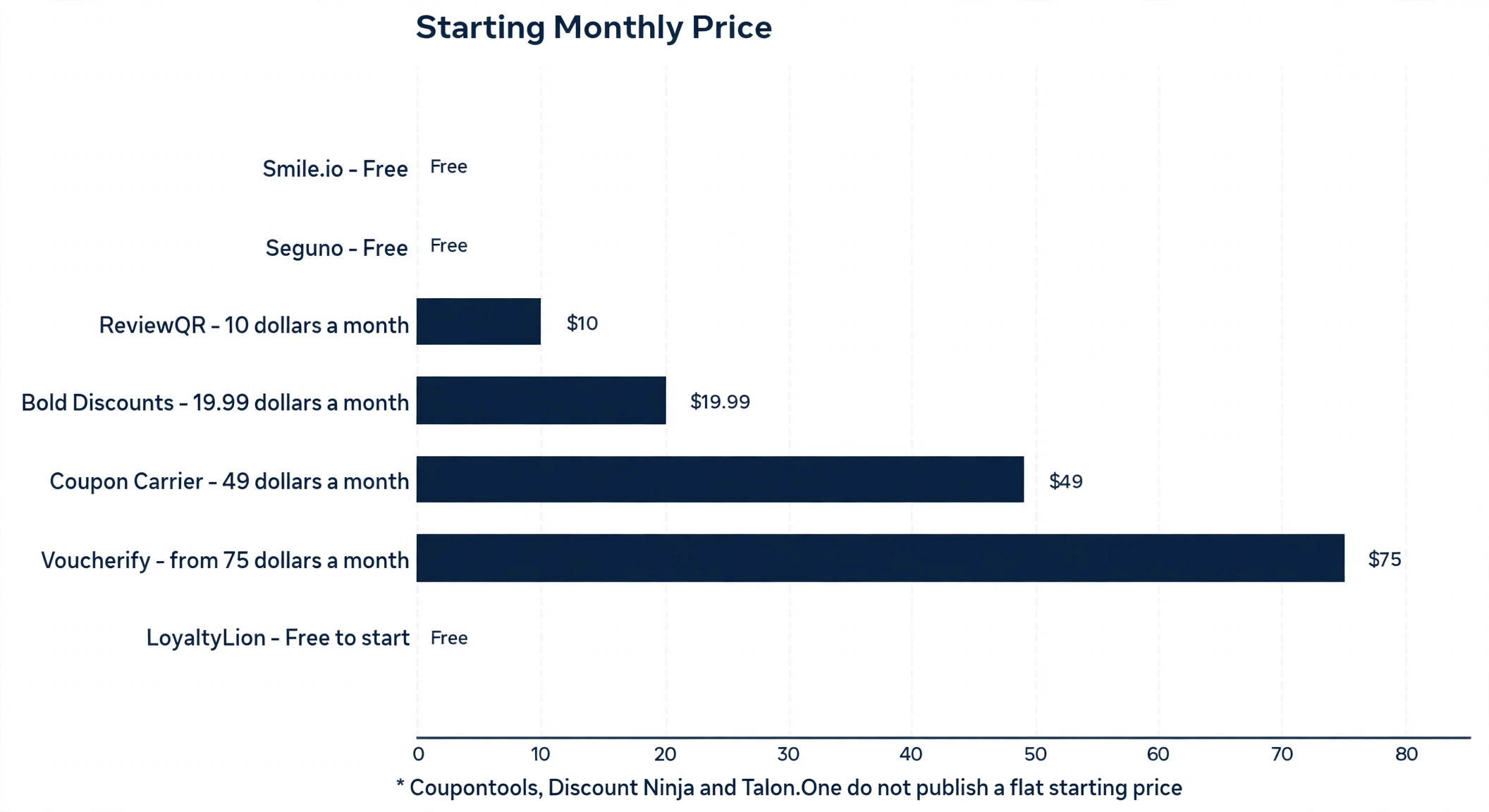
Pricing starts free with a limited tier, and paid plans start from 75 dollars a month in some summaries, with other summaries placing the paid entry at 170 dollars a month and higher tiers at 599 dollars a month. Confirm the current price on the vendor site before you budget, because the summaries conflict and the price scales with usage. Voucherify fits a mid market team with a developer, multi channel stacking rules and a need for strict redemption control, and it is far too heavy for a one location shop that just wants a welcome code.
2. Coupon Carrier
Coupon Carrier does exactly one thing, and it does that one thing well. It issues unique single use codes that staff verify and customers redeem once, and it does it for email signups, cart abandonment, restaurant promotions and software keys. The codes are time sensitive, the delivery is tracked, and the redemption is enforced at the point of use, so a code that has already been used cannot be used again.
Pricing runs from 49 dollars a month for 1,000 codes included per month, through 179 dollars a month for 10,000 codes, to 349 dollars a month for 50,000 codes, with annual billing saving up to 45 percent. A 7 day free trial caps at 50 code deliveries, and overage charges apply for codes beyond the plan monthly limit. The 49 dollar floor is steep for a shop running fewer than 50 redemptions a month, so Coupon Carrier suits an agency or a store running regular email campaigns, not a shop that sends one code a month.
3. Coupontools
Coupontools is a promotion tool built for teams that run frequent campaigns and need bulk code generation with strict redemption limits. It supports bulk generation and then enforces redemption limits consistently at checkout, with per customer and expiration checks applied the same way every time. That consistency matters when a store runs several campaigns at once, because a limit that works in one campaign and fails in another is worse than no limit at all.
Pricing is not published as a single flat rate in the summaries we checked, so confirm the current plans on the vendor site before you budget. Coupontools also offers API and automation hooks for repeatable campaign deployments tied to redemption behaviour, which suits a team that wants to launch the same campaign shape every month without rebuilding it. Choose Coupontools when bulk codes and strict limits are the daily job, and choose a simpler tool when you only need a handful of codes a month.
4. Bold Discounts
Bold Discounts is a Shopify app for stores that want BOGO deals, tiered pricing and scheduled discounts with stacking control. It handles the discount shapes that Shopify native discounts do not, such as buy one get one, volume pricing and time limited sales, and it lets the store control which discounts stack and which ones do not. That stacking control is the feature that saves margin, because two discounts that stack by accident can turn a profitable sale into a loss.
Pricing starts at 19.99 dollars a month, which makes it one of the cheapest paid tools on this list. The limits are basic fraud controls, with usage limits per customer rather than IP tracking or anti fraud triggers, so it suits a small Shopify store with a trusted audience rather than a store fighting code abuse. Choose Bold Discounts when your discounts are product based and your store runs on Shopify, and choose a code specialist when single use codes and fraud control are the priority.
5. Discount Ninja
Discount Ninja is a Shopify discount app for stores that want advanced discount rules without a developer. It covers percentage off, fixed amount, free shipping, BOGO and tiered discounts, with scheduling, customer targeting and stacking rules that the store owner can set without code. It suits a store that runs frequent promotions and wants to test different discount shapes without rebuilding the store each time.
Pricing is tiered by store size and features, so confirm the current plans on the vendor site before you budget. Discount Ninja is a stronger pick than Bold Discounts when you need more rule types and more targeting options, and it is a weaker pick than Voucherify when you need API driven rules across several channels. For a small Shopify store that runs a sale every month, it is a practical middle ground between a basic app and a full promotion engine.
6. Smile.io
Smile.io is the loyalty app most Shopify merchants try first, and it bundles coupons with points, referrals and VIP tiers in one place. Customers earn points on orders and swap them for a discount, a free shipping reward or a free product, and the store can run referral campaigns that reward both the referrer and the new customer. The free plan covers points and referrals for up to 200 monthly orders, which is enough for a new store to test loyalty without paying anything.
Pricing runs free for 200 orders a month, then Essential at 15 dollars a month for 500 orders, Standard at 79 dollars a month for 1,000 orders, Growth at 199 dollars a month for 2,500 orders, and Plus at 999 dollars a month billed annually for 7,500 orders. Store credit rewards need the Standard plan at 79 dollars, and VIP tiers and points expiry need the Growth plan at 199 dollars, so the real cost of a full loyalty program is higher than the entry price suggests. Smile.io is the best pick for a small Shopify store that wants loyalty and coupons together on a free start.
7. LoyaltyLion
LoyaltyLion is a dedicated loyalty platform with strong native support for Shopify and Shopify Plus, and it suits a growing store that uses Klaviyo and wants deeper integrations. It covers points, referrals, VIP tiers and product page points, with enhanced Shopify POS on higher tiers and multilingual support for stores selling in several languages. The free plan is recommended for stores processing 400 orders or fewer a month, and it covers points, discount rewards and on site notifications.
Pricing starts with the free plan, then Classic at 199 dollars a month for up to 500 orders, with Advanced and Plus priced by custom quote. VIP tiers cost extra even on Classic, and the vendor does not publish that price, so a store must talk to the sales team to find out. LoyaltyLion is a strong pick for a growing store that has outgrown Smile.io free plan and wants Klaviyo flows built for it, and it is a poor pick for a small store that wants a published price and a low entry point.
8. ReviewQR
ReviewQR is the cheapest real option on this list for a one location business that wants single use QR coupons without a sales call. It costs 10 dollars a month, with a 14 day free trial, and it enforces real single use redemption, so each code locks the moment it is scanned and screenshots cannot be reused. It also bundles Google reviews, which suits a cafe, salon, clinic or shop that wants both a coupon and a review from the same visit.
The limit is scale. ReviewQR suits a shop doing under 100 redemptions a month, and it is not a tool for an agency or a multi location retailer. The price gap tells the story. The cheapest real option is 10 dollars, and the most recommended specialist is 170 dollars, a gap of 17 times, so a small shop should start with ReviewQR and only move up when the redemption volume justifies a higher tier. For a one location store, it is the best value pick in this guide.
9. Talon.One
Talon.One is a rules based promotion and loyalty engine for enterprise teams that need to manage complex promotional logic at scale. It uses a single rule tree builder for complex campaigns, with one engine for coupons, loyalty, referrals and bundles, and it suits a retailer running promotions across several channels with different rules in each one. In July 2026 it was acquired by Adyen, the Dutch payments company, in a transaction valued at 750 million euros.
Pricing is custom and usage based, on API calls and active users, so a small store cannot model the cost without talking to sales. Talon.One is not a tool for a small store, and a small store should not buy it. It earns a place on this list because it is the engine a growing store graduates to when Voucherify rules start to feel limiting, and because knowing the top of the category helps a buyer avoid a tool they will outgrow in a year.
10. Seguno
Seguno is an email driven discount tool for Shopify stores that want simple discount rules tied to email lists. It focuses on email driven offers, with discount rules that follow the customer segment and the email campaign, and it integrates with Shopify Email and Klaviyo. The free plan is available, and paid tiers start at 15 dollars a month, which makes it one of the cheapest paid starts on this list.
The limit is rule depth. Seguno offers simple discount rules and limits on usage per email, with strong customer segmentation via email lists but without the API driven rules or fraud controls of Voucherify or Coupon Carrier. Choose Seguno when your coupons live inside email campaigns and your audience is small and trusted, and choose a code specialist when your codes need to work at the point of sale as well as in email. For a store that already runs email well, Seguno is a low cost way to add coupons to that flow.
How to Choose the Right Coupon Tool
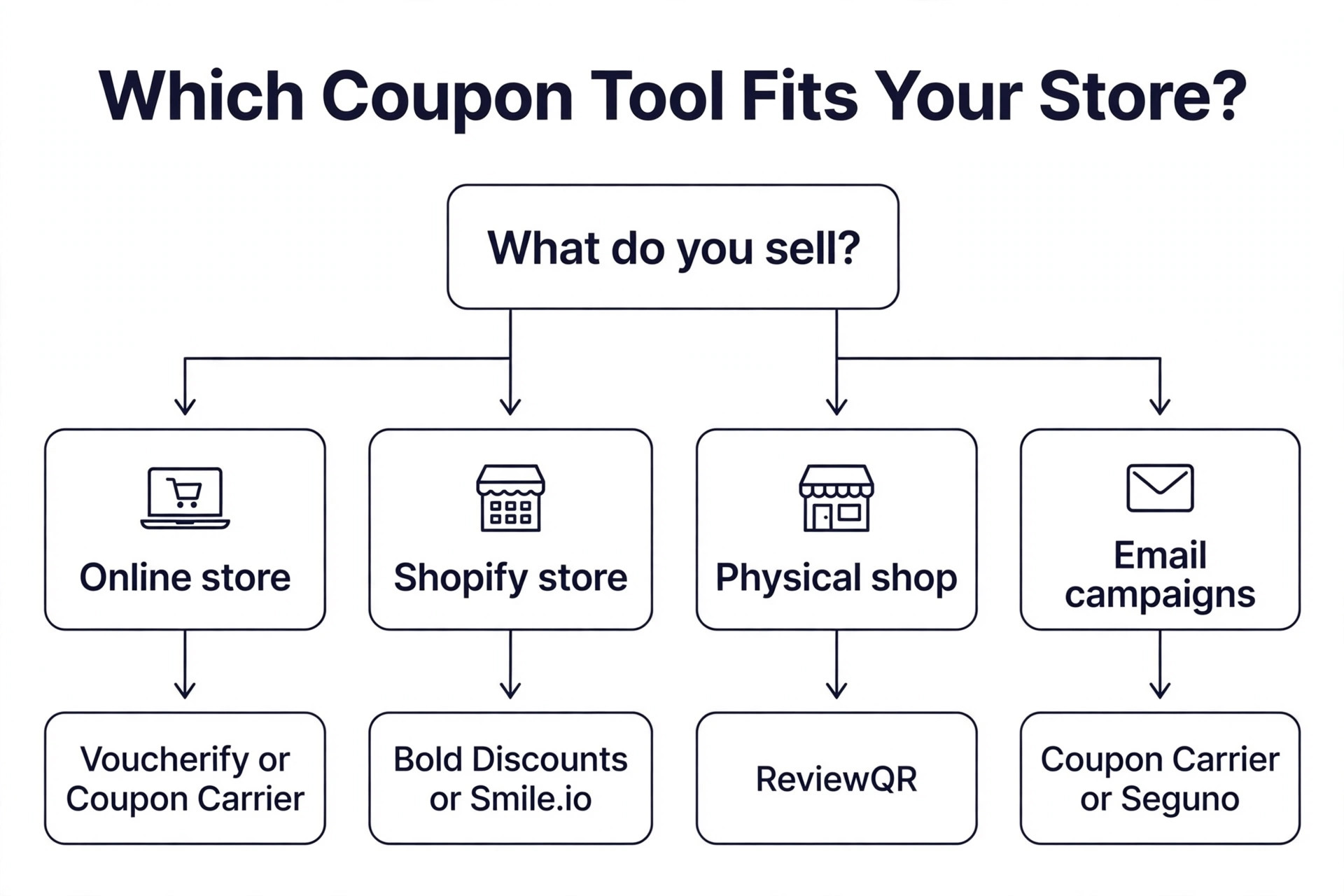
Start with your channel, because the channel decides the tool. A Shopify store needs a Shopify app such as Smile.io, Bold Discounts, Discount Ninja or Seguno, while a store with a physical point of sale needs a tool that works at the till as well as online, such as LoyaltyLion on a paid plan or ReviewQR for a single location. A store that sells through email needs a tool with strong email integration, and Coupon Carrier and Seguno both fit that job.
Next, count your redemptions. A shop doing under 100 redemptions a month should start with ReviewQR at 10 dollars or Smile.io free, because a 49 dollar or 170 dollar tool will cost more than the discounts it protects. A store doing 1,000 codes a month should look at Coupon Carrier at 49 dollars for 1,000 codes, and a store doing 10,000 codes a month should look at the 179 dollar tier. Write down your monthly code count before you compare prices, because the right tool for one volume is the wrong tool for another.
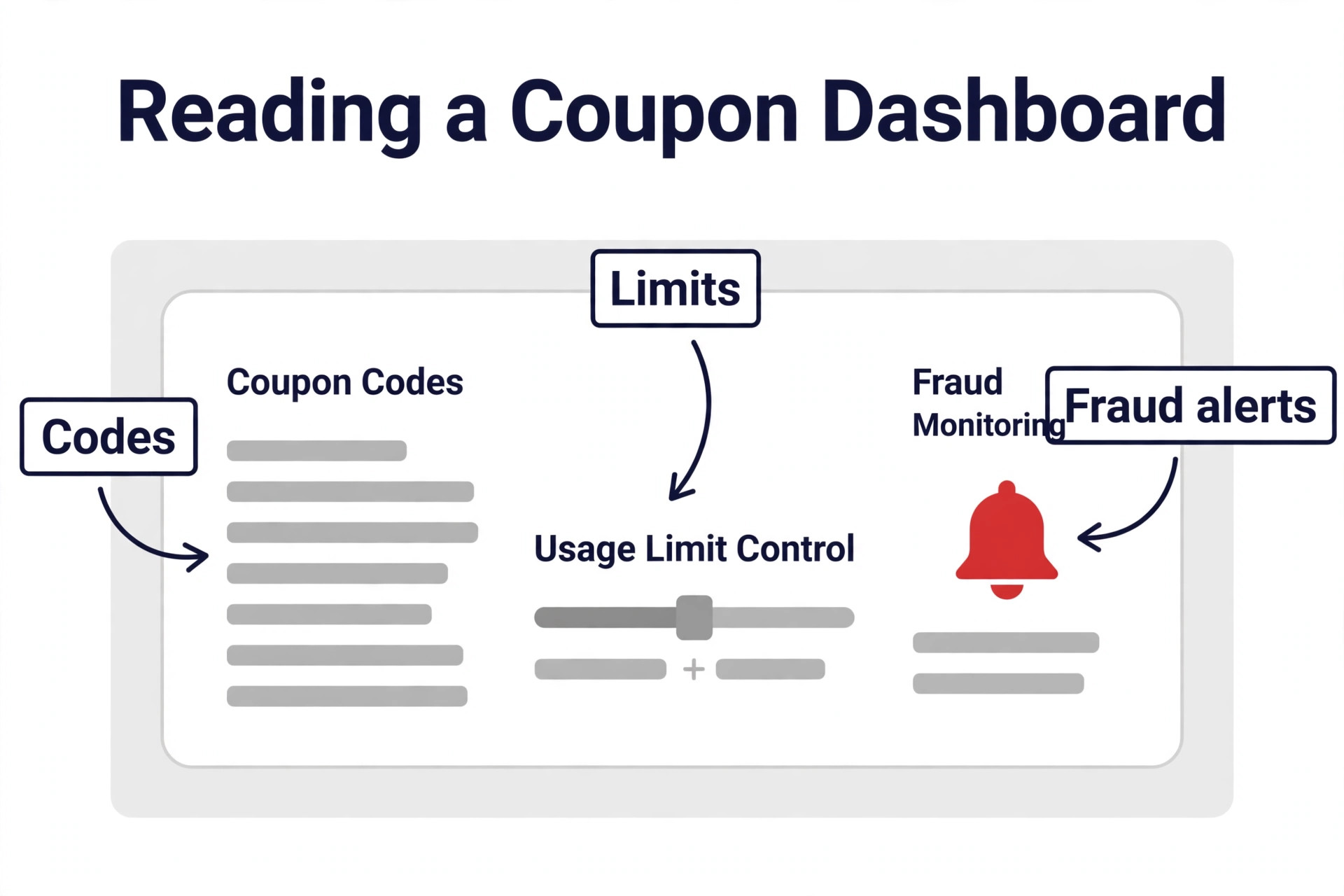
Then think about fraud. If your codes have already appeared on a deal site, you need single use codes with IP tracking and usage limits, and Voucherify, Coupon Carrier and Coupontools fit that job. If your codes have never been shared, a simpler tool such as Bold Discounts or Seguno will do, and you can upgrade when abuse appears. Test every tool with a 1 dollar product before you run a real campaign, because a rule that fails on a test product will fail on a real order too.
Finally, check the report. A coupon tool that cannot tell you which code earned which sale is a tool that cannot tell you whether the promotion worked. The best coupon tools for small stores earn their price in the report, not on the pricing page, so ask for a redemption report, a revenue report and a fraud report during the trial, and choose the tool whose reports you actually understand.
- Write down your channel, your monthly order count and your monthly code count.
- Test the tool with a 1 dollar product before you run a real campaign.
- Check single use enforcement, expiry dates and per customer limits.
- Ask for a redemption report and a fraud report during the trial.
- Add up 12 months of cost at your real volume before you pay.
What to Check Before You Pay for a Coupon Tool
Check the code limit before you enter card details, because several tools on this list charge by code volume and the overage fee is where the bill grows. Coupon Carrier includes 1,000 codes a month on its 49 dollar plan and charges overage for codes beyond that limit, so a store that sends 2,000 codes a month will pay far more than 49 dollars. Smile.io charges by monthly order volume, so a busy month can push you into a higher tier even when your code count stays the same. Ask for the overage price in writing before you buy, and model the cost at your busiest month, not your quietest one.
Check the integration list at the same time. A coupon tool that does not connect to your store, your email tool and your point of sale system will need manual work every time a campaign runs, and manual work is where codes get sent twice or not at all. The best coupon tools for small stores connect to Shopify, Klaviyo, Mailchimp and the main point of sale systems without a developer, so test the integration during the trial with a real campaign.
Also check the refund and cancellation terms, because a tool that locks you into a year of payments is a poor fit for a seasonal store. Month to month billing costs more per month but lets you drop a tier when the season ends, and that flexibility is worth the extra cost for a store under two years old.
Mistakes That Waste Money
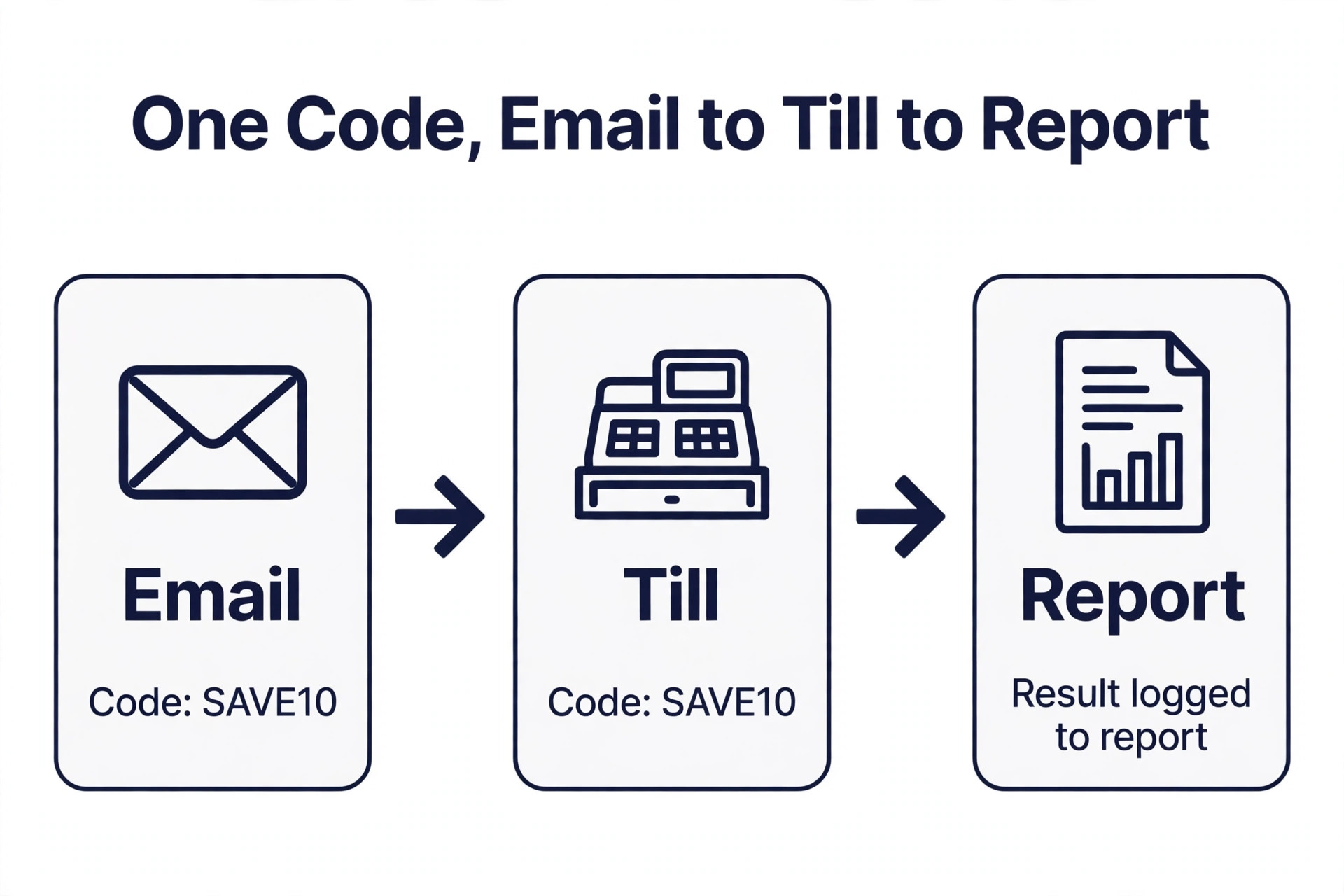
The most common mistake with the best coupon tools for small stores is running a generic code that anyone can share. A code such as SAVE10 posted on a deal site will be used by strangers who were never meant to get it, and the store will give away margin for months before anyone notices. Use unique single use codes for every campaign that matters, and keep generic codes for short, time limited sales where the sharing is part of the plan.
The second mistake is stacking discounts by accident. Two discounts that stack can turn a profitable sale into a loss, and a store that does not test stacking will find out from the bank statement rather than from the dashboard. Test stacking with a 1 dollar product, set the stacking rules before the campaign starts, and check the first 10 orders by hand. The third mistake is buying an enterprise engine for a small store. A 170 dollar a month tool with API rules and webhook events is a waste for a shop that sends one code a month, so start cheap, prove the volume, and upgrade only when the reports show the need.
Our Verdict
ReviewQR is the pick for most small stores among the best coupon tools for small stores, because 10 dollars a month buys real single use redemption and a review tool in one place, and the free trial lets you test it with real customers. Smile.io is the pick when your store runs on Shopify and you want loyalty and coupons together, because the free plan covers 200 orders a month and the Essential plan at 15 dollars a month covers 500 orders. Coupon Carrier is the pick when email campaigns are the main channel, because it does one job well from 49 dollars a month for 1,000 codes.
When your team has a developer and your rules are complex, Voucherify is the pick, because the API driven engine and webhook eligibility handle the campaigns a simpler tool cannot. When your store grows past 500 orders a month and you want Klaviyo flows built for you, LoyaltyLion Classic at 199 dollars a month is the step up. Pick the tool that matches your channel, your volume and your fraud risk, and your coupons will earn money instead of leaking it.
Frequently Asked Questions
What is the cheapest coupon tool for a small store?
ReviewQR is the cheapest real option, at 10 dollars a month with real single use redemption and a 14 day free trial. Smile.io is free for up to 200 orders a month, and Seguno has a free plan with paid tiers from 15 dollars a month. The cheapest tool is not always the best value, because a free tool that cannot stop a code from being shared will cost you more in lost margin than a 10 dollar tool that locks each code after one use.
How do single use coupon codes work?
A single use code is generated once, sent to one customer, and locked the moment it is redeemed, so a screenshot or a forwarded email cannot be used again. The tool tracks the code, the customer and the order, and it refuses a second redemption even when the code is entered correctly. That control is the main difference between a coupon tool and a generic code, because a generic code can be used by anyone who finds it, while a single use code can only be used by the person it was sent to.
Can I use coupons in a physical store as well as online?
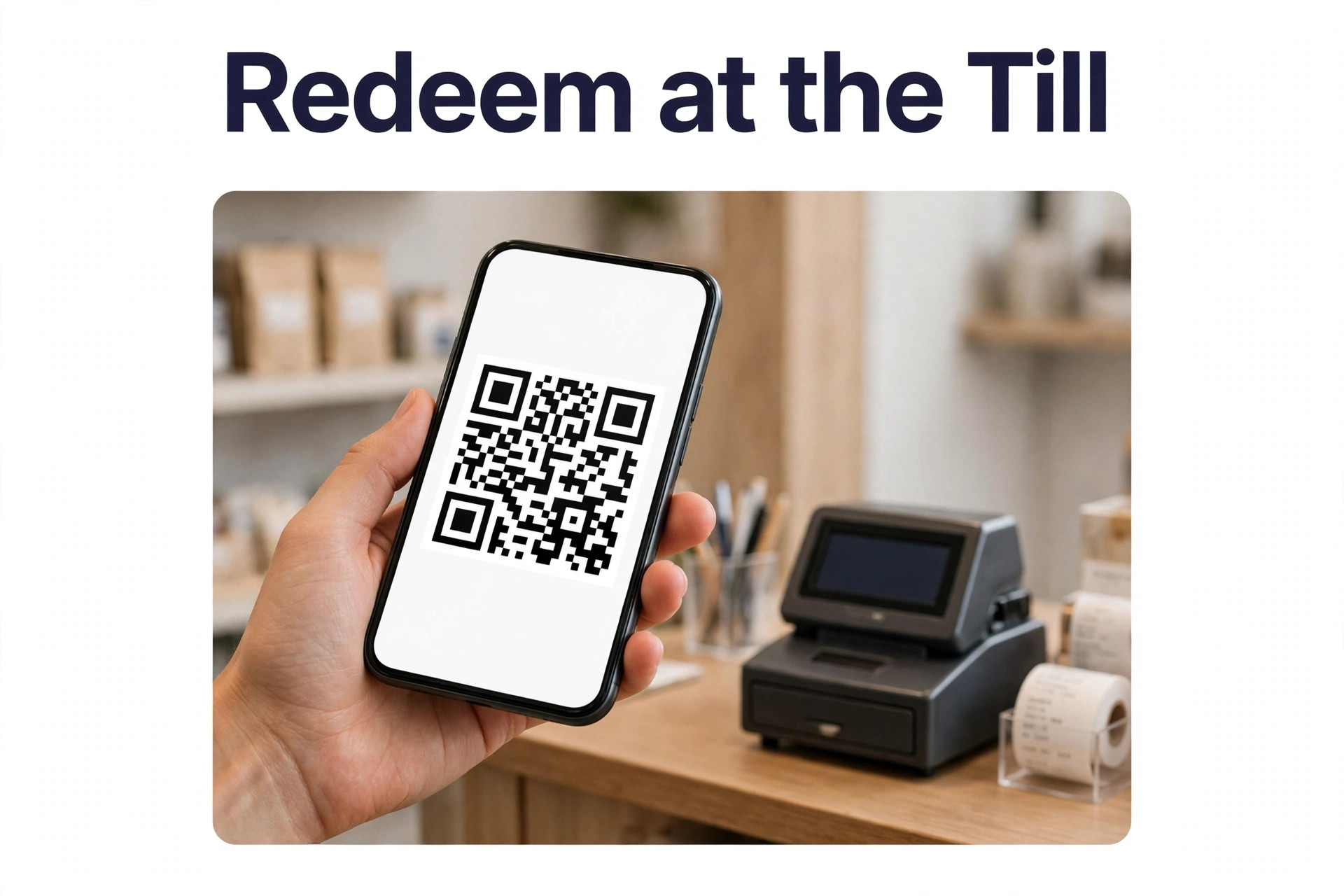
Yes, you can use coupons in a physical store as well as online when the tool supports point of sale redemption. LoyaltyLion adds Shopify POS on its Classic plan, Smile.io supports discount rewards in Shopify POS, and ReviewQR uses QR codes that staff scan at the till. Test the in store flow during the trial, because a code that works online and fails at the till will frustrate the customer standing in front of you.
How do I stop coupon codes from being shared on deal sites?
Use unique single use codes instead of generic codes, set an expiry date and a usage limit per customer, and turn on IP tracking and anti fraud triggers where the tool offers them. Voucherify, Coupon Carrier and Coupontools all offer those controls, and they will catch abuse before it spreads. Do not post a generic code on social media unless you accept that it will be shared, and keep generic codes short lived and time limited.
What is the difference between Voucherify and Coupon Carrier?
Voucherify is an API driven promotion engine for teams with a developer, with webhook driven rules, flexible stacking and multi channel campaigns, and paid plans from 75 dollars a month in some summaries. Coupon Carrier is a code distribution platform that does one job, issuing unique time sensitive codes for email signups, cart abandonment and promotions, from 49 dollars a month for 1,000 codes. Choose Voucherify when your rules are complex and you have a developer, and choose Coupon Carrier when you want unique codes without building an integration.
Do coupon tools work with Shopify?
Yes, several tools on this list work with Shopify, including Smile.io, LoyaltyLion, Bold Discounts, Discount Ninja and Seguno, which are all built as Shopify apps. Voucherify and Coupon Carrier also integrate with Shopify through an app or an API, and Shopify itself offers native discount functionality for basic percentage off, fixed amount, free shipping and automatic discounts. Native Shopify discounts cover simple offers well, and a dedicated app earns its price when you need single use codes, BOGO deals or loyalty rewards.
A good coupon tool gives you one code, one customer, one redemption and one report. Pick the tool that matches your channel and your volume, test it with a 1 dollar product, and let the redemption report decide whether the promotion worked. The store that controls its coupons keeps its margin, and the store that keeps its margin can afford to run the next promotion.