The short answer is that most small spa businesses should start with the cheapest tool that covers the core job, and only pay more when a specific limit forces it. This guide covers fix no shows in spa booking software across the tools a small business actually buys, with real prices, real limits and a clear pick for each kind of operation, so you can see the full cost before you commit.
That verdict comes from the pattern in the prices below. The entry tier of one tool covers the whole job for a solo operator, while the same tier of another tool leaves out the one feature the business needs most. The difference is rarely the brand name, and it is almost always the plan, the add ons and the limits.
Fresha is free to start, Vagaro starts at 25 dollars a month, GlossGenius starts at 24 dollars a month, Square Appointments is free to start, and Booksy starts at 29.99 dollars a month. Boulevard and Mangomint publish no fixed starting price, so get a quote before you budget. Prices change, so confirm the figure on the vendor page before you pay. All prices below are in US dollars unless stated otherwise, and annual billing is noted where it changes the monthly figure.
What Matters Before You Choose
A spa business buys software for the daily work, not for the feature list. The tool must handle the busiest day without slowing the team, and it must keep the money, the clients and the schedule in one place. When a tool fails on a busy day, the team goes back to paper, and the software becomes a monthly bill for work it never does.
Start with the job, not the price. Write down the three tasks the team does every day, and check each tool against those three tasks first. A tool that covers the daily three is worth paying for, and a tool that covers ten rare tasks while missing one daily task is not. The daily three are the test, and everything else is a bonus.
Check the full price before the trial ends. Ask for the setup fee, the add ons, the per user cost and the price of the next tier, and write them down next to the monthly figure. A tool that looks cheap at 30 dollars a month can cost 300 dollars a month once the team, the add ons and the setup are counted, and that surprise is the most common complaint in this category.
Fix No Shows In Spa Booking Software in 2026 at a Glance
Use this table as a shortcut for fix no shows in spa booking software, then read the sections below for the limits and the costs that decide the real bill. The cheapest entry price is not always the cheapest yearly bill, because seat minimums, add ons and setup fees change the maths fast.
| Tool | Starting price | Best for |
|---|---|---|
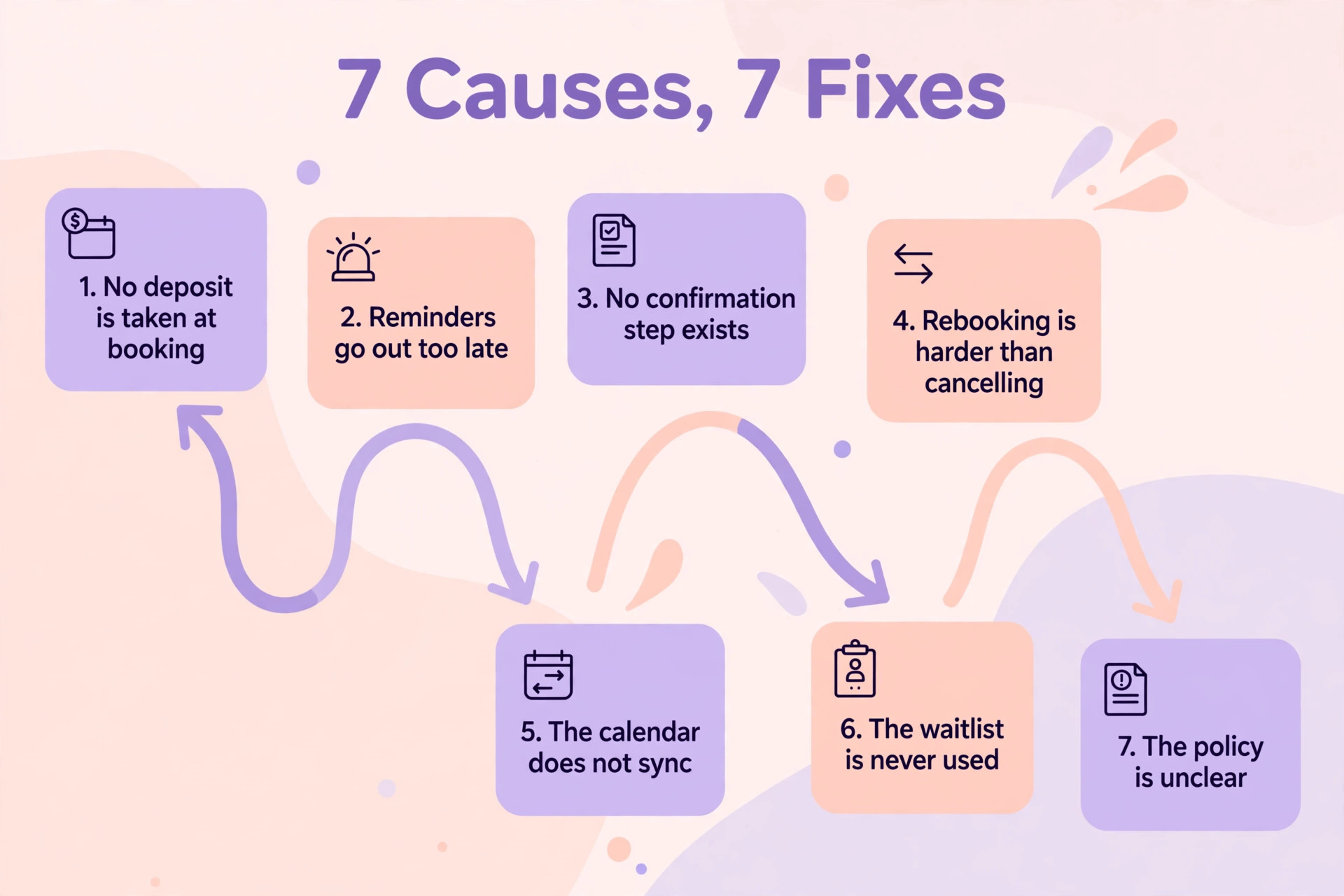
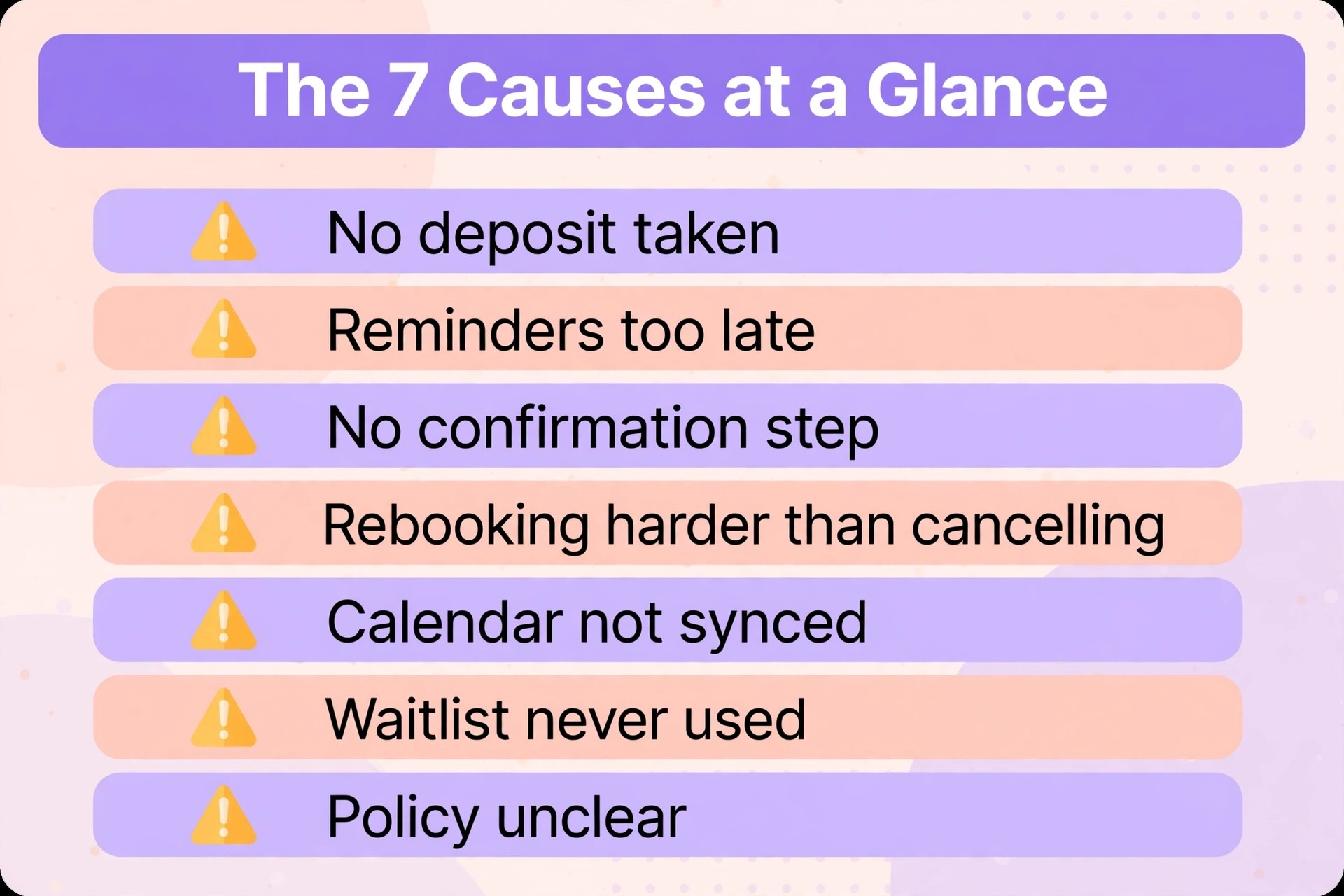
| Step 1 | No deposit is taken at booking | See the step section |
| Step 2 | Reminders go out too late | See the step section |
| Step 3 | No confirmation step exists | See the step section |
| Step 4 | Rebooking is harder than cancelling | See the step section |
| Step 5 | The calendar does not sync | See the step section |
| Step 6 | The waitlist is never used | See the step section |
| Step 7 | The policy is unclear | See the step section |
The 7 Steps in Detail
The sections below follow the same order as the table, and each one gives the price, the best fit and the limit to check. Read the ones that match your size first, and skip the ones built for a much bigger operation, because the right tool for a solo operator is rarely the right tool for a team of ten.
1. No deposit is taken at booking
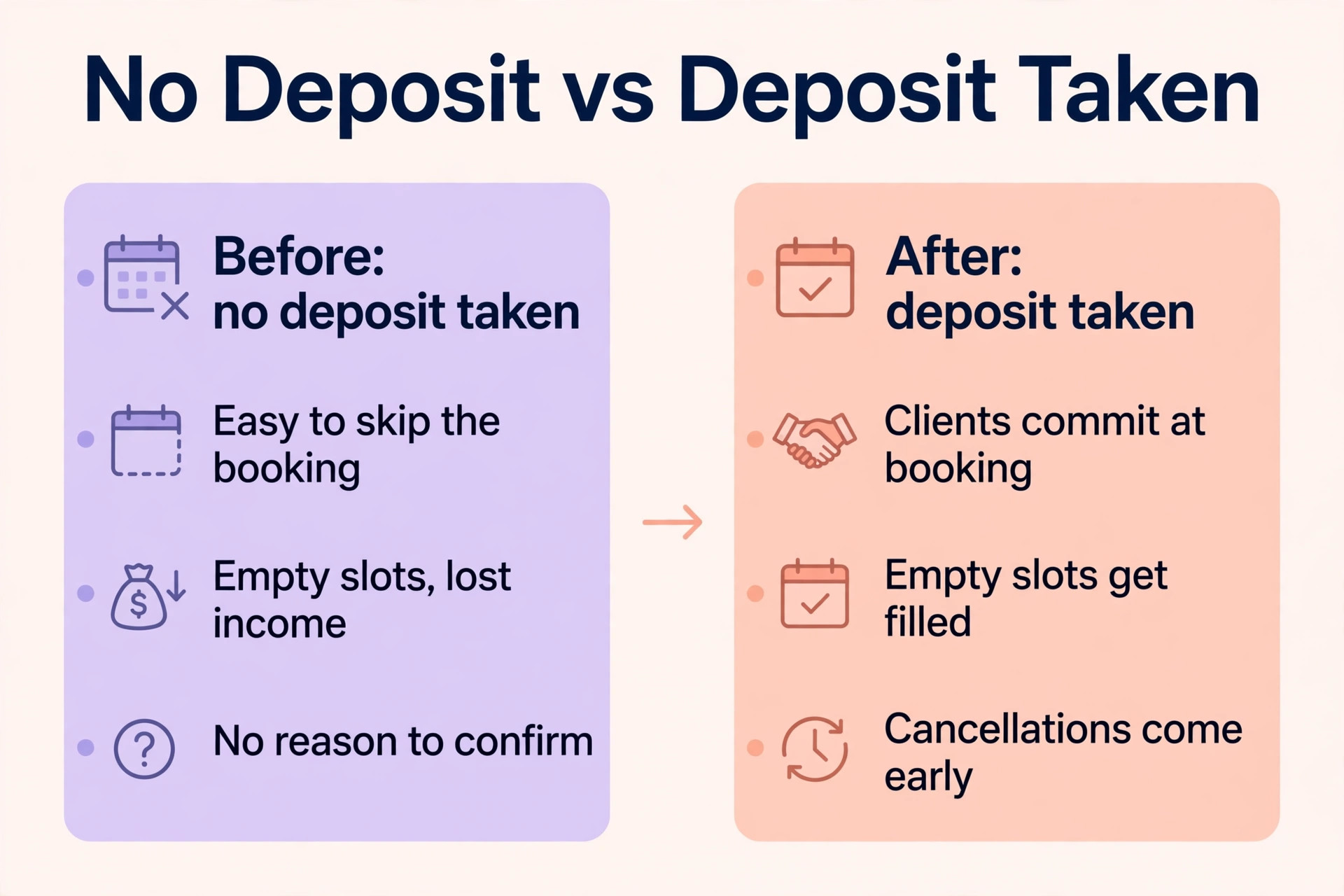
Clients book free and cancel free, so a no show costs them nothing and costs the spa a full slot. That is the core of this step, and it matters because a small fix here saves hours every week. The work is simple, but it needs a named owner and a date, or it will sit on the list while the same problem repeats. Set the owner, set the date, and check the result after one week of real bookings.
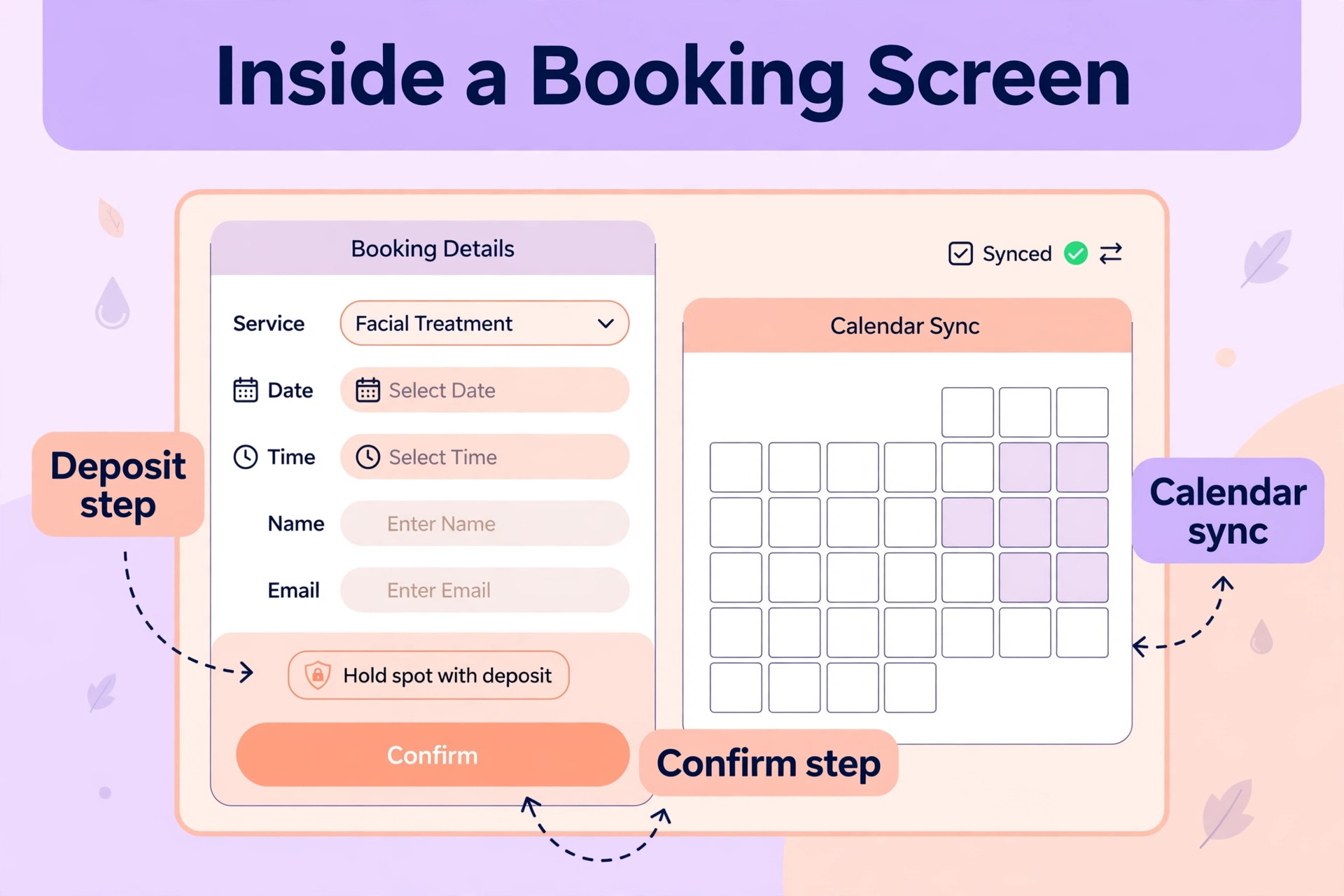
Take a deposit or a card on file at booking, and show the amount on the confirmation page so the client sees the commitment before they tap confirm. Keep the change small and visible, so the team can see it working, and measure the result before you add the next fix. A clinic or shop that fixes one cause at a time learns what actually works, and a team that changes everything at once learns nothing.
Write the result down when the step is done, and note the date and the person who did it. A written record stops the same step from being done twice, and it shows the next person exactly where the work stands. That record is the habit that keeps the whole switch on track.
2. Reminders go out too late
A reminder sent the morning of the appointment is too late for a client who already forgot the booking a week ago. Start here, because this cause is easy to spot and easy to test. Look at the last month of bookings, count how often this cause shows up, and write the number down. A number turns a feeling into a fact, and a fact is what gets a fix approved.
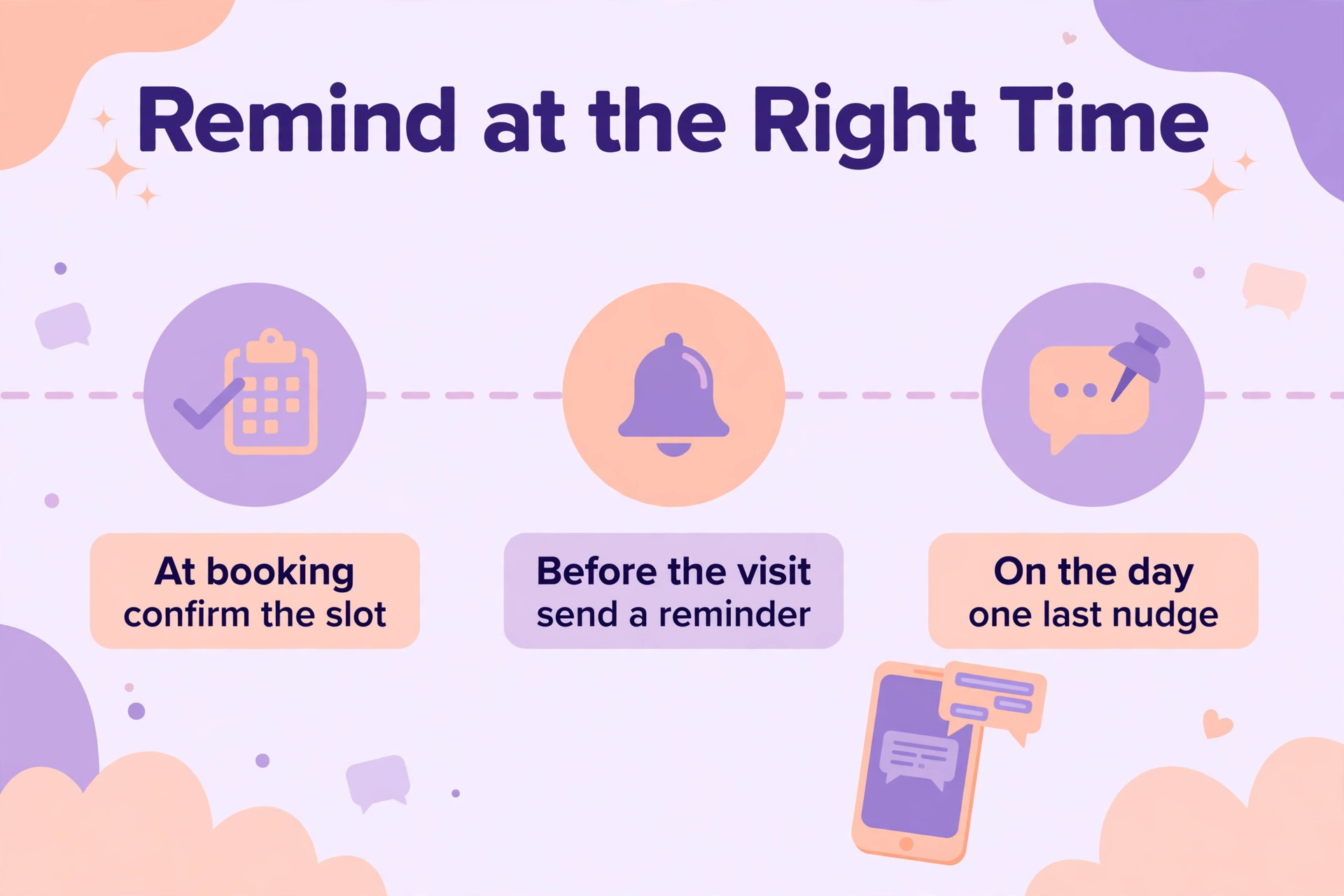
Send a reminder 48 hours before and again 24 hours before, and let the client confirm or move the booking from the message itself. Roll it out to one team or one location first, watch the numbers for two weeks, and then roll it out everywhere. A small test costs little, and it stops a good idea from turning into a bad week.
Tell the team why the step matters, not just what to do, because a team that understands the reason follows the step when no one is watching. A step that only works when the owner is in the room is not a system, it is a reminder.
3. No confirmation step exists
A booking that is never confirmed sits on the calendar as a guess, and the spa cannot tell a real visit from a forgotten one. This step takes an hour to set up and saves hours every month after that. The hard part is not the tool, it is the habit, because the team must use the new step the same way every time. Write the step down, put it where the team can see it, and check it for the first two weeks.
Ask every client to confirm by text or email, and free the slot automatically when no reply arrives by the cutoff you set. When the step works, keep it, and when it does not, change one thing and test again. A system that improves a little every week beats a system that changes completely once a year.
Check the step again after a month, and ask whether it still fits the way the team works. A step that made sense in week one can feel slow in week four, and a small change then is cheaper than a big fix later.
4. Rebooking is harder than cancelling
When moving a booking takes a phone call, clients simply do not show up instead of moving to a better time. That is the core of this step, and it matters because a small fix here saves hours every week. The work is simple, but it needs a named owner and a date, or it will sit on the list while the same problem repeats. Set the owner, set the date, and check the result after one week of real bookings.
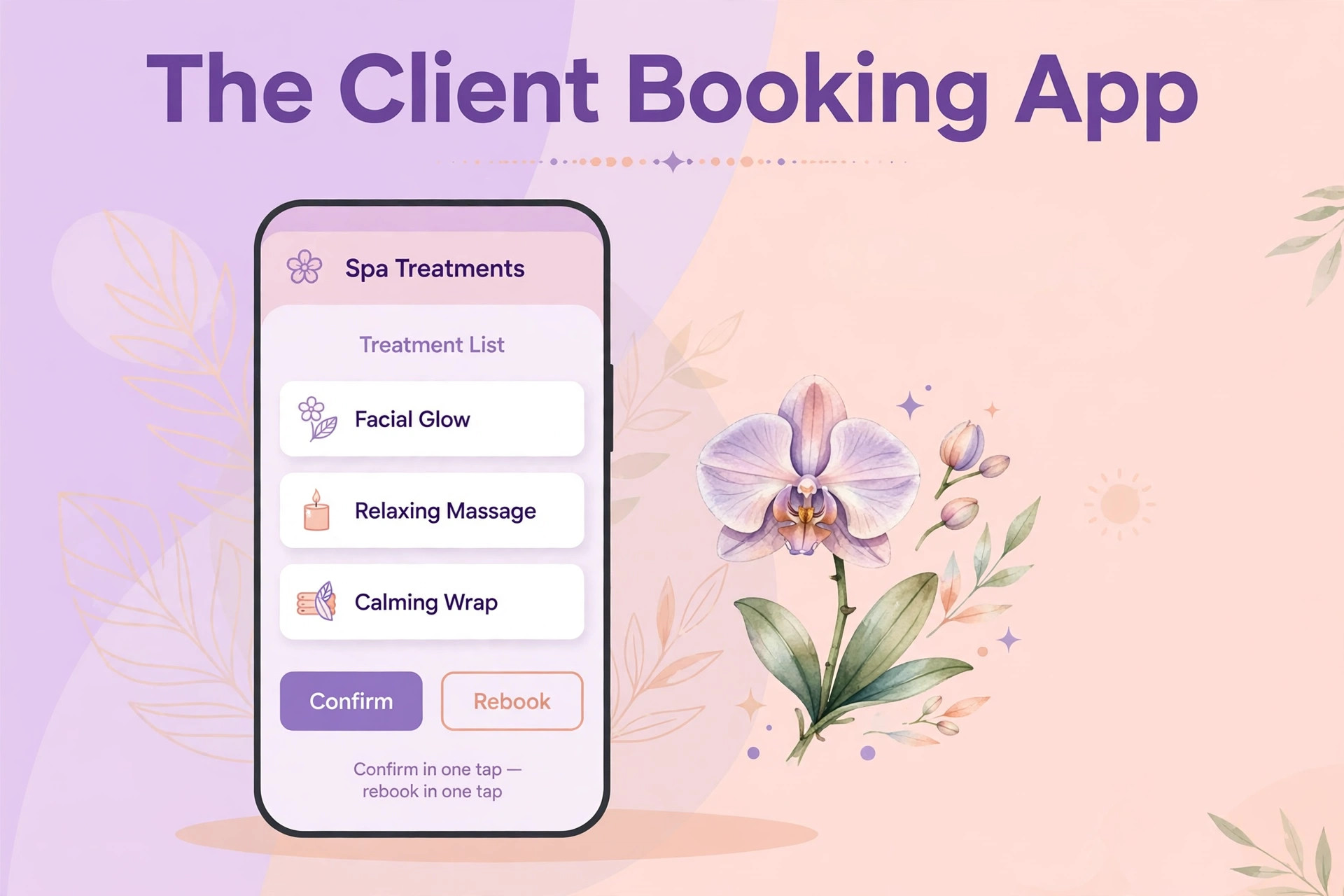
Put a move link in every reminder and confirmation, and let clients pick a new time without calling the front desk. Keep the change small and visible, so the team can see it working, and measure the result before you add the next fix. A clinic or shop that fixes one cause at a time learns what actually works, and a team that changes everything at once learns nothing.
Write the result down when the step is done, and note the date and the person who did it. A written record stops the same step from being done twice, and it shows the next person exactly where the work stands. That record is the habit that keeps the whole switch on track.
5. The calendar does not sync
A therapist calendar that lives apart from the booking calendar creates double bookings and phantom slots. Start here, because this cause is easy to spot and easy to test. Look at the last month of bookings, count how often this cause shows up, and write the number down. A number turns a feeling into a fact, and a fact is what gets a fix approved.
Sync every therapist calendar to one booking calendar, and block personal time the same way you block client time. Roll it out to one team or one location first, watch the numbers for two weeks, and then roll it out everywhere. A small test costs little, and it stops a good idea from turning into a bad week.
Tell the team why the step matters, not just what to do, because a team that understands the reason follows the step when no one is watching. A step that only works when the owner is in the room is not a system, it is a reminder.
6. The waitlist is never used
Empty slots stay empty because no one calls the clients who wanted that exact time. This step takes an hour to set up and saves hours every month after that. The hard part is not the tool, it is the habit, because the team must use the new step the same way every time. Write the step down, put it where the team can see it, and check it for the first two weeks.
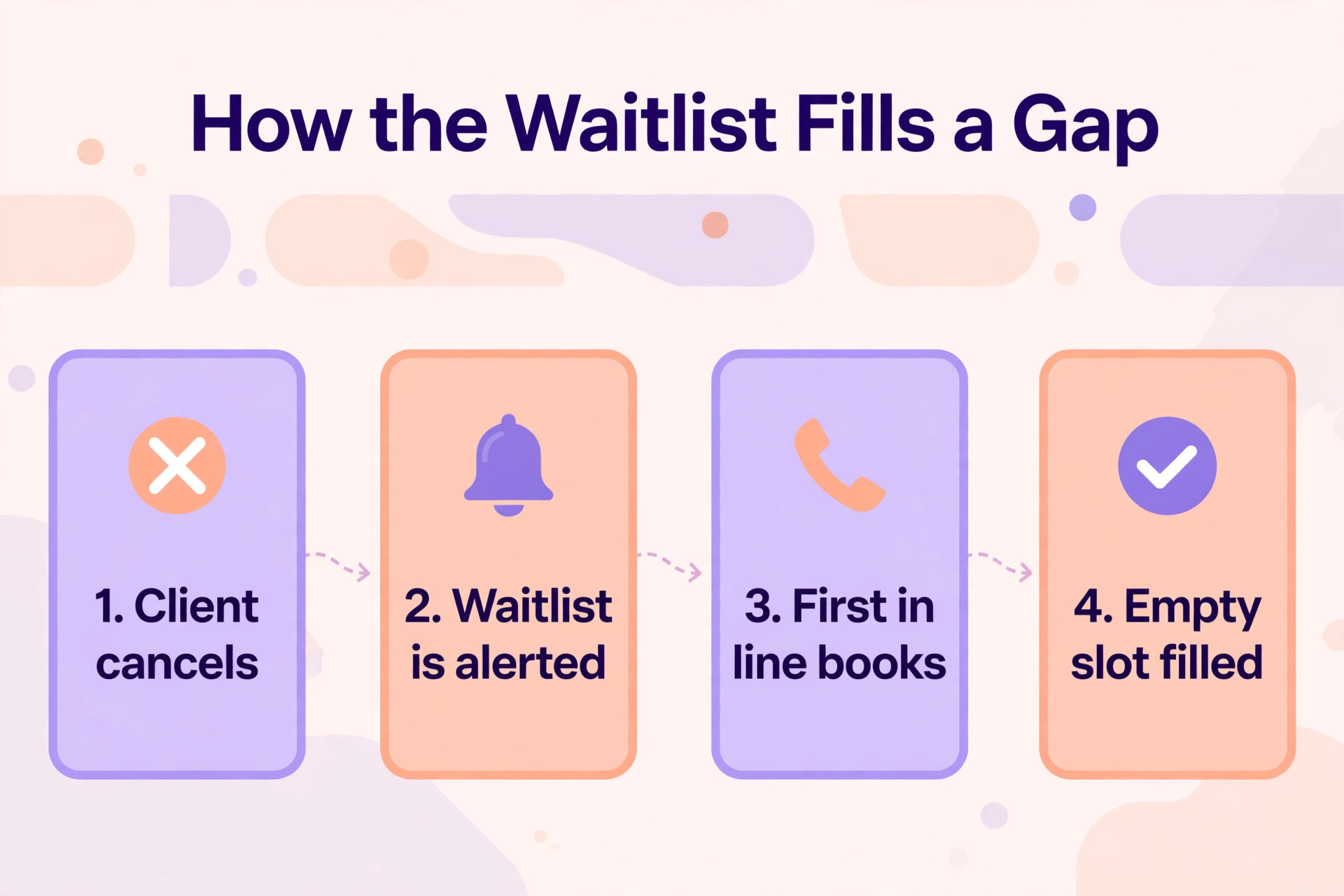
Keep a waitlist for every popular slot, and message the first three names the moment a cancellation lands. When the step works, keep it, and when it does not, change one thing and test again. A system that improves a little every week beats a system that changes completely once a year.
Check the step again after a month, and ask whether it still fits the way the team works. A step that made sense in week one can feel slow in week four, and a small change then is cheaper than a big fix later.
7. The policy is unclear
Clients who never read a no show policy cannot follow it, and staff who enforce it unevenly lose trust. That is the core of this step, and it matters because a small fix here saves hours every week. The work is simple, but it needs a named owner and a date, or it will sit on the list while the same problem repeats. Set the owner, set the date, and check the result after one week of real bookings.
Write the policy in plain words on the booking page, repeat it in the confirmation, and apply it the same way every time. Keep the change small and visible, so the team can see it working, and measure the result before you add the next fix. A clinic or shop that fixes one cause at a time learns what actually works, and a team that changes everything at once learns nothing.
Write the result down when the step is done, and note the date and the person who did it. A written record stops the same step from being done twice, and it shows the next person exactly where the work stands. That record is the habit that keeps the whole switch on track.
Your Checklist Before You Start
Work through this checklist in order, and do not skip a step, because fix no shows in spa booking software goes wrong when a step is missed, not when a step is hard. Tick each item off only when it is done in the real system, not when it is planned, and keep the list where the whole team can see it.
| Step | Done when |
|---|---|
| 1. No deposit is taken at booking | The step works with real data |
| 2. Reminders go out too late | The step works with real data |
| 3. No confirmation step exists | The step works with real data |
| 4. Rebooking is harder than cancelling | The step works with real data |
| 5. The calendar does not sync | The step works with real data |
| 6. The waitlist is never used | The step works with real data |
| 7. The policy is unclear | The step works with real data |
How Long Each Step Takes
Most small spa businesses finish this switch in two to four weeks, and the slowest part is never the software. It is the data, the training and the habit, and each of those takes a week of its own. Plan the work in order, give each step a date, and do not start the next step until the last one works with real data.
| Step | Time | Who does it |
|---|---|---|
| 1. No deposit is taken at booking | One day to one week | The owner, with the team |
| 2. Reminders go out too late | One day to one week | The owner, with the team |
| 3. No confirmation step exists | One day to one week | The owner, with the team |
| 4. Rebooking is harder than cancelling | One day to one week | The owner, with the team |
| 5. The calendar does not sync | One day to one week | The owner, with the team |
| 6. The waitlist is never used | One day to one week | The owner, with the team |
| 7. The policy is unclear | One day to one week | The owner, with the team |
Give the switch one owner and one date, and measure the result at the end of each week. A switch with an owner gets done, and a switch with no owner drifts, so name the person and the date before the first step starts. That single choice is worth more than any feature in the new tool.
Before You Decide
Set a review date for the tool three months after you buy it, and judge it on the numbers, not on the feeling. If the no show rate fell, the admin time fell and the team still opens it every day, keep it. If none of those moved, change it, and do not wait for the renewal to force the decision.
Ask the vendor for a named contact during the trial, not just a support inbox, because a named contact answers faster and remembers your setup. A trial with a real person behind it is a trial that gets finished, and a trial with only an inbox is a trial that drifts.
Keep a simple log of every change you make in the first month, with the date and the result. A log shows which change helped and which change did nothing, and it stops the team from undoing a fix that was actually working. That log is the cheapest management tool a small business owns.
Check whether the tool charges per user, per location or per booking, because the billing model decides the bill at your size. A per user tool is cheap for a solo operator and dear for a team of ten, while a per location tool stays flat as the team grows. Match the billing model to the way your team actually grows.
Do not buy the top tier on day one, because the top tier is built for a bigger team than yours. Start on the entry tier, learn what the team actually uses, and upgrade only when a limit forces it. An upgrade that follows real use is cheap, and an upgrade that follows a sales call is not.
Write down the three numbers that matter for your business, and check them every month after the switch. For most small businesses those numbers are the no show rate, the average job value and the time spent on admin, and a tool that moves all three in the right direction is a tool worth keeping.
Ask the vendor what happens when the internet goes down, because a cloud tool that stops working offline can stop the whole business. Check whether the main screens work without a connection, and whether the data syncs back cleanly when the connection returns.
Keep the old system running for two weeks after the switch, and compare the totals every Friday until they match. Parallel running is the cheapest insurance a small business can buy, because it catches the missing job before it costs money.
Write the decision down before you buy, with the tool name, the plan, the monthly cost and the reason you picked it. A written decision stops the second guessing in month two, and it gives the team a clear answer when someone asks why this tool and not the other one.
For a small spa business, the trial week is the whole decision. Run the busiest day you can remember through the tool, and watch where the team slows down, where the data goes missing, and where the workaround starts. A tool that survives the busiest day will survive the year.
Give the team one week with the new tool and one clear owner for the switch, and measure the result at the end of that week. A switch with an owner gets done, and a switch with no owner drifts, so name the person and the date before the trial starts.
Count the total cost for a year, not a month, and include the setup fee, the add ons and the card fees. A 30 dollar tool that needs 200 dollars of add ons is a 230 dollar tool, and a 100 dollar tool that needs nothing else is the cheaper buy.
Check the exit before you sign, because every tool is easy to join and some are hard to leave. Ask how your data exports, what format it comes in, and whether the vendor charges to hand it back. A tool that holds your data hostage is not a tool, it is a trap.
Talk to one business like yours that already uses the tool, and ask what breaks on a busy day. A vendor demo shows the best day, and a real user shows the truth, including the workaround the team uses every week and the feature they wish they had bought.
Ask the vendor for the full price in writing, including setup, add ons, per user fees and the next tier, and keep that note next to the contract. A written price stops the surprise bill in month three, and it gives you a number to compare when the renewal arrives.
A spa business that buys on price alone usually buys twice, because the cheap tool misses the one feature the team needs most, and the move to a better tool costs more than the saving. Spend the trial week on the real work, with real clients and real jobs, and judge the tool on that week, not on the demo.
Mistakes That Waste Money
The most common mistake in fix no shows in spa booking software is paying for a tool when a cheaper plan already covers the job. A solo operator who buys the top tier for features the team never opens pays for a year of unused software, and a small team that buys seats for readers pays for people who never log in. Keep the paid seats small, and only pay for the people who do the work.
The second mistake is ignoring the limit until it bites. A team buys the entry plan, hits the cap in week three, and upgrades in a hurry at the worst time. Count the real volume for a month before you buy, and pick the plan whose cap covers that number with room to spare.
The third mistake is skipping the trial. A demo is not a trial, and a trial with fake data is not a trial either. Run a real week through the tool, with real clients and real jobs, and decide on that week. The tools that pass a real week are the ones worth paying for.
Our Verdict
For most small spa businesses, the pick is No deposit is taken at booking for the lowest cost that covers the core job, with Reminders go out too late as the step up when the team grows. That pair covers the two most common sizes in this category, and both are proven with small teams that need the tool to work every day.
Start with the free plan or the trial where one exists, run a real week through it, and only pay when a paid feature earns its place. A tool you use every day is worth paying for, and a tool you pay for and ignore is the most expensive tool in this guide. That is the honest way to read fix no shows in spa booking software, and it is the way to keep the bill small and the work smooth.
Frequently Asked Questions
What does fix no shows in spa booking software cost per month?
Prices in this guide run from free to more than 400 dollars a month, and the right number depends on the size of the operation. A solo operator can often run on a free plan or a plan under 30 dollars a month, while a growing team pays 50 to 150 dollars a month, and a busy operation pays more. Count the full year, including setup and add ons, before you compare.
Which tool is best for a small business?
The best tool is the cheapest one that covers the daily work without a workaround. For most small spa businesses, that means the first tool in this guide for solo work and the second tool for a growing team. Test both with a real week of work, and pick the one the team actually opens every day.
Is there a free plan worth using?
Yes, several tools in this guide offer a free plan or a free trial that covers the core job for a solo operator. A free plan is worth using when it covers the daily work without a cap that bites in week two, and it is worth leaving when the cap forces a workaround every day.
What hidden costs should I check?
Check the setup fee, the add ons, the per user cost, the card processing fee and the price of the next tier. Those five numbers decide the real bill, and the monthly sticker price is only the first of them. Ask for all five in writing before you sign.
Can I switch tools later without losing data?
Most tools in this guide export clients, jobs and history, but the quality of the export varies, and some vendors charge for it. Ask how the export works before you sign, test it with a small file during the trial, and keep a copy of your data outside the tool.
How long does setup take?
A small {n} business can usually set up in a day or two, with a week for training and a second week for parallel running. A bigger move, with history to import and templates to build, takes two to four weeks. Plan the cutover for a quiet Monday, not a busy Friday.
What should I do first this week?
Start with the trial of the first tool in this guide, and run one real week of work through it, with real clients and real jobs. Write down what works, what slows the team down, and what costs extra, and then test the second tool the same way. A week of real testing beats a month of reading reviews.
Pick the tool that fits the work you do every day, not the tool with the longest feature list, and let fix no shows in spa booking software be a decision about fit, not about fashion. Start small, test with real work, and grow the plan only when the work grows with it.