The problem with best gift card software for small retailers is not a lack of choice. It is that every vendor describes the same job in different words, prices it in a different unit, and hides the limit that matters most on a page you never visit. This guide cuts through that by comparing the tools on price, on the unit they charge by, and on the limit that forces an upgrade.
Start with the job, not the tool. Write down the three tasks you do every week, the number of people who need a login, and the monthly volume you already handle. Those three numbers decide the right tool faster than any demo, because they expose which pricing model fits you and which free plan will run out first.
Prices in this guide were checked against vendor pricing pages and current 2026 guides in November 2026. Where sources disagree, the draft shows both figures and says so plainly, so you can confirm the current price on the checkout page before you pay. All prices below are in US dollars per month unless stated otherwise, and annual billing is noted where it changes the monthly figure.
How This List Was Built
We started from the tools small operators actually shortlist, then checked each price on the vendor pricing page or in a current 2026 guide. A tool made this list only if it serves small teams, publishes enough detail to compare fairly, and has real users behind it. Quote only tools are included where they are a serious option, and the draft says plainly when a price is a quote rather than a published figure.
Each tool below gets the same treatment. The entry price, the free plan limit, the strongest feature and the catch that matters most. The glance table gives the short version, the full reviews give the detail, and the decision table at the end matches each tool to the job it does best. Nothing here is a paid placement, and no vendor supplied the ranking.
Quote only tools are marked as such throughout this guide. A quote is not a price, so treat it as a starting point and ask for the figure in writing at your size, at the size you expect in a year, and with the add ons you need included. That written quote is the only number you can compare fairly with a published price.
Best Gift Card Software For Small Retailers Compared at a Glance
Use this table as a shortcut. Then read the full reviews below for the limits and the yearly maths that decide the real bill.
| Tool | Entry price | Free plan |
|---|---|---|
| Square Gift Cards | See vendor | No |
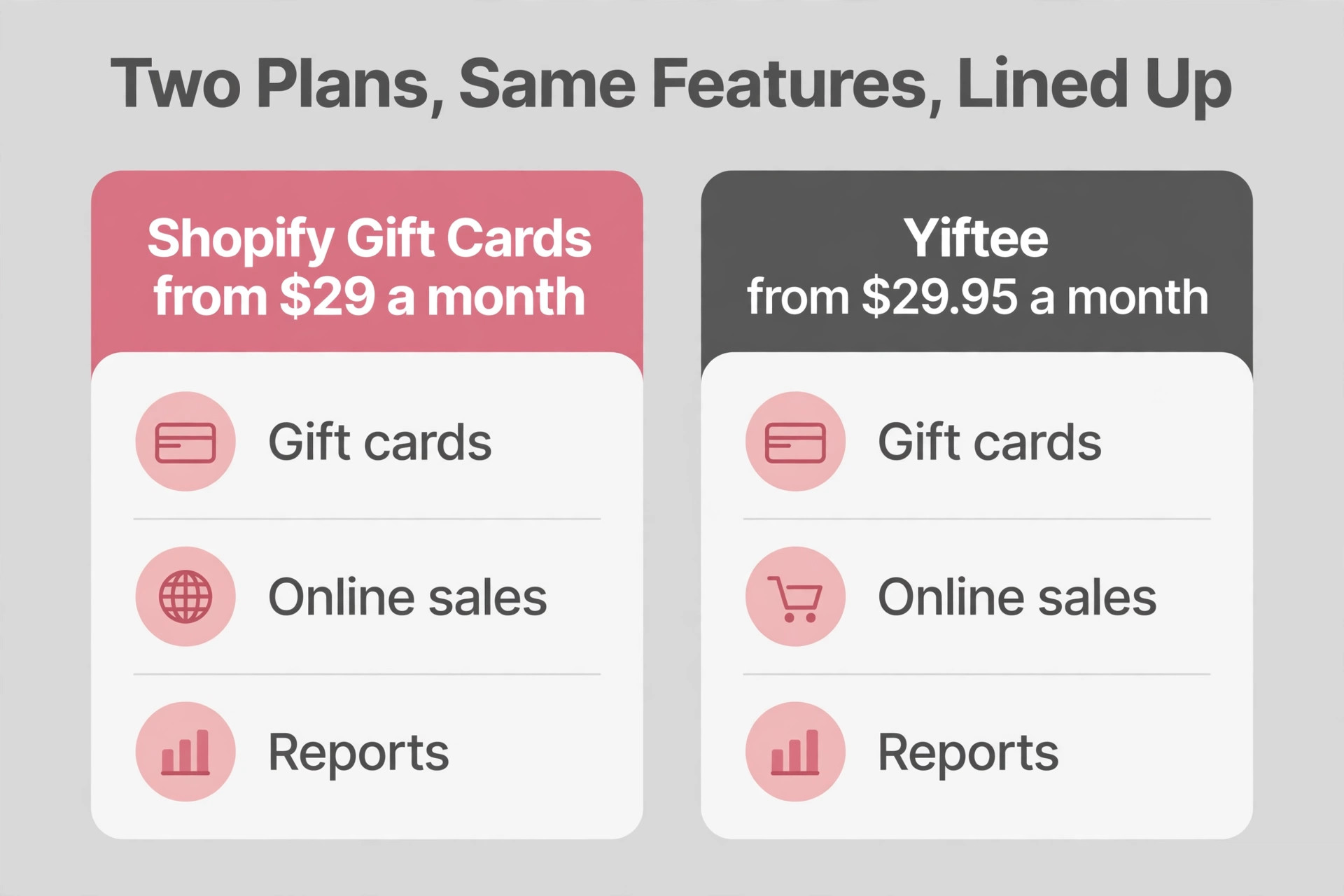
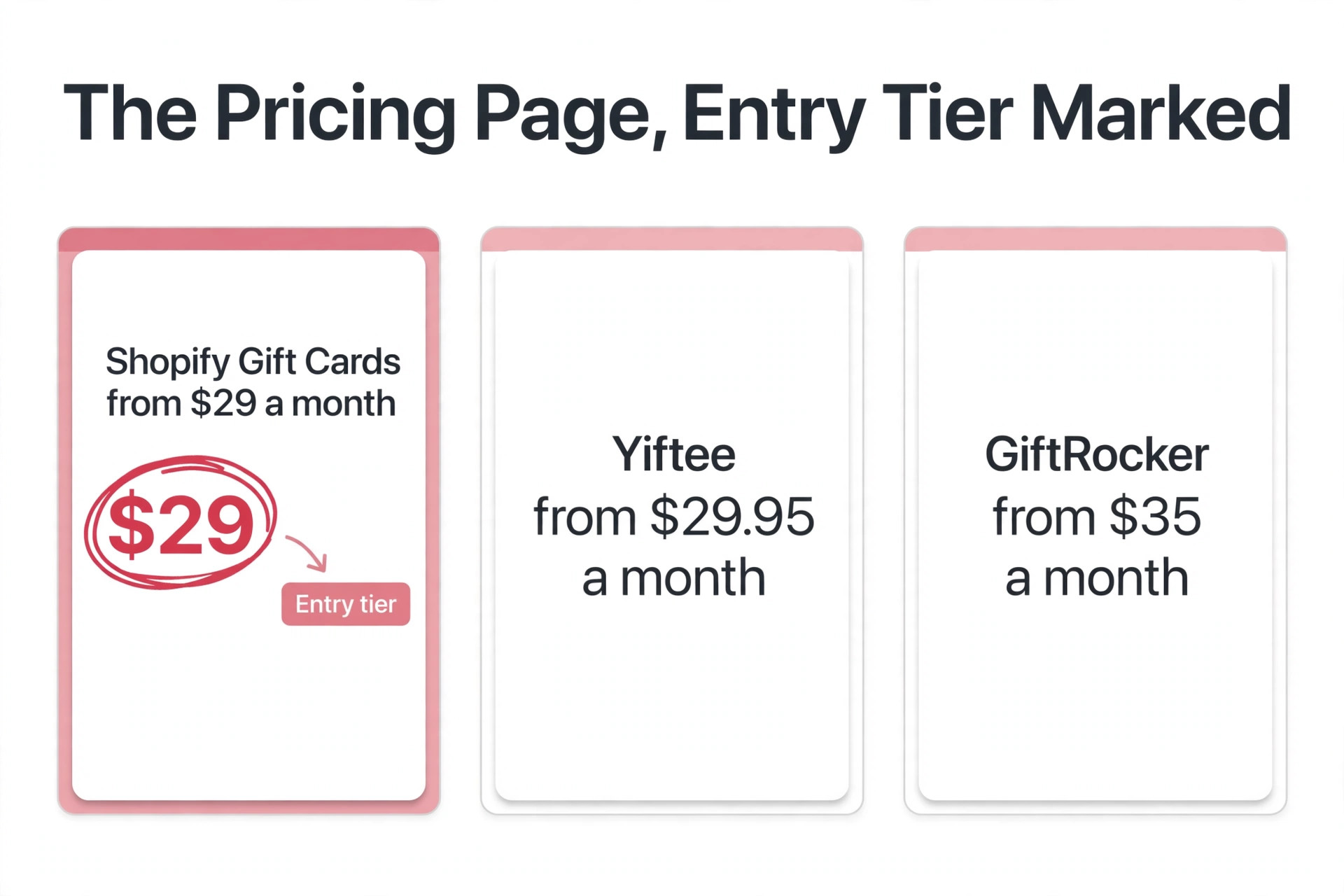
| Shopify Gift Cards | From $29 a month | No |
| Gift Up! | Commission | No |
| Yiftee | From $29.95 a month | No |
| GiftRocker | From $35 a month | No |
| Clover Gift Cards | In plan | No |
| Rise.ai | Quote only | No |
| Giftbit | Commission | No |
| Tango Card | Quote only | No |
| VoucherCart | Quote only | No |
| eGifter | Quote only | No |
| CashStar | Quote only | No |
Every Tool, Reviewed
The tools below are ordered by value for a small team, starting with the strongest all rounder and ending with the specialist tools that suit a narrower job. Each review gives the entry price, the free plan limit, the strongest feature and the catch to watch. This section is the heart of the guide to best gift card software for small retailers, so read the two or three tools that match your size before you skim the rest.
1. Square Gift Cards
Square Gift Cards is the pick for small retailers already on Square POS. It sells digital and physical gift cards inside Square POS and online, with balances tracked in the same dashboard as sales. Pricing has no monthly fee, with card production and transaction fees applying.
Physical card production costs extra, so price the card stock before you promise a printed card at the counter.
The price depends on your volume, so get a written figure at your size before you compare it with the published prices here. Ask support a real question during the trial, since the speed and quality of the answer tells you what help looks like later. Ask how the tool handles a failed payment, since a missed card can lock your team out at the worst moment.
2. Shopify Gift Cards
Shopify Gift Cards is the pick for online stores already on Shopify. It lets you design and sell branded gift cards directly on your Shopify site, with tracking and management built into the admin. Pricing is included in Shopify from $29 a month on annual billing.
It only works inside Shopify, so a retailer that sells mainly in store should compare Square or Clover first.
At the entry tier, a year costs roughly $348 before processing fees and add ons, so model that figure against your monthly volume before you commit. Confirm which integrations are included, since a missing link to your calendar or payment tool can add hours of manual work each week. Look for a public status page, since a tool that hides its outages is a tool that will surprise you later.
3. Gift Up!
Gift Up! is the pick for small businesses that want to start with no subscription. It sells digital gift cards that work in store or online across platforms, with no monthly fee to carry in a quiet month. Pricing has no monthly fee and charges a small percentage per transaction.
The percentage fee grows with sales, so a busy season can cost more than a flat priced rival, and you should model it at peak volume.
The cost is a share of each order rather than a monthly fee, so model it on your average order value before you compare it with a subscription. Look at the onboarding help before you buy, since a guided setup can save a week of trial and error. A free trial is the fastest way to test it, so run your real workflow through it for two weeks before you pay.
4. Yiftee
Yiftee is the pick for local businesses that want community gift cards. It runs eGift cards for more than 55,000 local businesses, with community cards that keep local dollars local and bulk gifting for employers. Pricing starts at $29.95 a month.
It can be expensive for a very small business, so a solo shop should compare Gift Up first.
At the entry tier, a year costs roughly $359.40 before processing fees and add ons, so model that figure against your monthly volume before you commit. Check the data export format, because a CSV you can open anywhere beats a backup file only the vendor can read. Read the pricing page for add ons, since the feature you need most is often one tier above the entry plan.
5. GiftRocker
GiftRocker is the pick for retailers that want gift cards on their own website. It sells digital and physical gift cards from your shop, website or mobile device, with online ordering pages that carry your branding. Pricing starts at $35 a month.
It is a smaller platform than Square or Shopify, so check the POS integration list before you commit.
At the entry tier, a year costs roughly $420 before processing fees and add ons, so model that figure against your monthly volume before you commit. Check whether your existing data imports cleanly, since a messy import can cost more staff time than the subscription saves. Run the numbers for a busy month rather than a quiet one, because most pricing models grow with volume.
6. Clover Gift Cards
Clover Gift Cards is the pick for retailers already on Clover hardware. It runs gift cards inside the Clover POS, so staff sell and redeem them at the counter without a second system. Pricing is included with Clover POS plans.
Pricing sits inside the Clover plan, so confirm whether gift cards are included on your tier or cost extra.
The cost sits inside a wider plan, so price that plan as a whole rather than comparing this tool on its own. Export your data during the trial as well, so you know how hard it is to leave if the tool stops fitting. Confirm the support hours in your time zone, because a tool with daytime only support can leave a night shift stranded.
7. Rise.ai
Rise.ai is the pick for online stores that want gift cards plus loyalty. It combines gift cards with store credit and loyalty, which suits a store that wants one retention stack rather than three apps. Pricing is priced by quote.
Quote only pricing means a sales conversation before you know the cost, which slows comparison with the published prices here.
Pricing is by quote, so the only way to compare it is to get a written figure at your size and put it beside the published prices here. Check the free plan limit in writing, because a cap on members, clients or responses is the limit that forces most upgrades. Confirm the minimum term on the annual plan, because a discount that locks you in for a year is only a bargain if the tool fits.
8. Giftbit
Giftbit is the pick for businesses that send gift cards as rewards. It lets you buy, send and track digital gift cards for rewards and incentives, with no monthly fee to carry. Pricing has no minimums and no subscriptions, with face value pricing and 50 percent back on unclaimed offers.
It is built for sending rather than selling, so a retailer that wants customers to buy cards should compare Gift Up first.
The cost is a share of each order rather than a monthly fee, so model it on your average order value before you compare it with a subscription. Check whether the price includes tax, because some vendors quote before tax and the invoice tells a different story. Check the contract term before you sign, because a yearly plan can lock in a price that a monthly plan would not.
9. Tango Card
Tango Card is the pick for businesses that want a wide brand catalog. It offers digital gift cards from more than 100 popular brands, with a free self serve dashboard for ordering and tracking. Pricing is priced by quote.
It is built for rewards programs rather than a single retailer storefront, so check the use case before you sign.
Pricing is by quote, so the only way to compare it is to get a written figure at your size and put it beside the published prices here. Ask whether the price changes when you add a second location, since multi site pricing can surprise a growing business. Test the mobile app with the people who will use it daily, because a weak app means the tool gets ignored in the field.
10. VoucherCart
VoucherCart is the pick for retailers that want gift cards, vouchers and tickets together. It sells gift cards, vouchers and tickets from one platform, which suits a retailer that also runs events or classes. Pricing is priced by quote.
Pricing is not published, so get a written quote at your expected volume before you compare it.
Pricing is by quote, so the only way to compare it is to get a written figure at your size and put it beside the published prices here. Ask what happens to your data when you cancel, since a short deletion window can turn a trial exit into a scramble.
11. eGifter
eGifter is the pick for retailers that want social and mobile gifting. It offers an engaging gifting experience across social and mobile, with partnerships across more than 300 brands. Pricing is priced by quote.
It is built for larger gifting programs, so a small retailer should confirm the entry cost before committing.
Pricing is by quote, so the only way to compare it is to get a written figure at your size and put it beside the published prices here. Count the seats you will actually pay for, because a low monthly price can still grow fast once every team member needs a login.
12. CashStar
CashStar is the pick for larger retailers that want fully brandable cards. It supports fully brandable digital and physical gift cards for B2B and B2C programs, with a platform built for scale. Pricing is priced by quote.
It is built for prominent retailers rather than a small shop, so the entry cost is likely to exceed the tools above.
Pricing is by quote, so the only way to compare it is to get a written figure at your size and put it beside the published prices here. Talk to a current user if you can, since a five minute conversation can surface the catch that no pricing page mentions.
Which Tool Fits Which Job
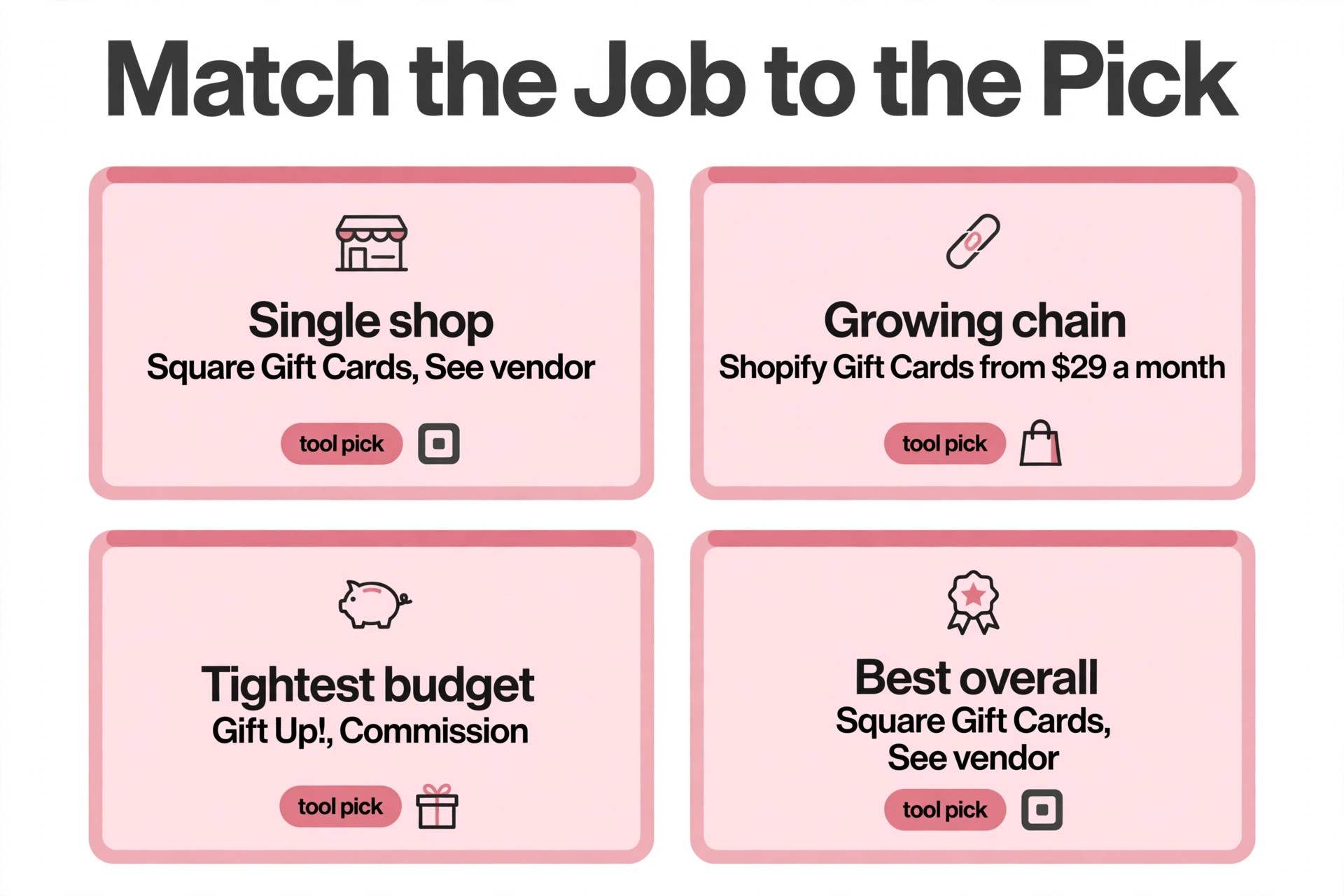
This table turns best gift card software for small retailers into a shortlist. Find the row that matches your situation, then read that tool full review before you buy, because the pick is only right if the limits fit your volume.
| Situation | Pick | Why |
|---|---|---|
| Tightest budget | Gift Up! | Lowest entry price here |
| Best overall | Square Gift Cards | Strongest balance of price and features |
| Most complete | Shopify Gift Cards | Deepest feature set for its job |
| Best for growth | Shopify Gift Cards | Scales best as volume grows |
If two tools tie on price, pick the one whose free plan covers your volume, because a free plan you can stay on beats a cheap plan you outgrow in three months. If two tools tie on features, pick the one with the clearest pricing page, because transparent pricing usually means transparent support too. The decision table is a starting point, not a verdict, so trial the top two before you commit. Run the top two on a trial for two weeks with real work, because a demo with sample data hides the limits that matter most.
The Real Monthly Bill
The sticker price is only part of best gift card software for small retailers. Card rates, per seat charges, per client fees and add ons decide the yearly bill, and the table below shows the entry price and the free plan for the five most compared tools in this guide.
| Tool | Entry price | Free plan |
|---|---|---|
| Square Gift Cards | See vendor | No |
| Shopify Gift Cards | From $29 a month | No |
| Gift Up! | Commission | No |
| Yiftee | From $29.95 a month | No |
| GiftRocker | From $35 a month | No |
Multiply the entry price by twelve before you compare, because a $29 a month plan costs $348 a year and a $159 a month plan costs $1,908 a year. Then add the processing rate on your real monthly volume, since a free plan at 4.99 percent can cost more than a paid plan at 2.75 percent once your revenue grows. A plan that looks cheap on the pricing page can still be the dearest option in this list once the maths is done properly.
Worked example. On $10,000 a month in card payments, a 4.99 percent processing rate costs $499 a month, while a 2.75 percent rate costs $275. The gap is $224 a month, or $2,688 a year, which is more than most subscriptions in this list. That is why the processing rate deserves the same attention as the monthly fee, especially on a free plan where the rate is usually the highest.
Price conflicts we found. Gift card pricing is mostly transaction fees rather than subscriptions, so guides disagree on whether to quote a monthly price at all. Square Gift Cards and Gift Up have no monthly fee and charge per transaction or per card, while Yiftee charges $29.95 a month and GiftRocker charges $35 a month. Compare the model that fits your sales volume rather than the headline alone.
Why There Is No Free Plan Here
No tool in this list offers a free plan, which is normal for this category. The vendors sell through trials and demos instead, and most offer a 14 day or 30 day trial with no card required. Use that trial on real work, because a demo with sample data hides the limits that matter most, and a trial that covers a full busy week tells you more than any sales call.
Quote only pricing is common here too. Get the figure in writing at your size, at the size you expect in a year, and with the add ons you need included, because a verbal estimate is not a budget. Compare that written quote with the published prices in this guide, and confirm the renewal price as well as the first year price before you sign.
Five Ways Buyers Overspend
The most common mistake is paying for a tool when the free plan already covers the job. The next three are just as costly, and all four are easy to avoid once you know to look for them.
- Paying for a tool when the free plan already covers the job. Trial the free plan for a full month before you enter card details, and count what you actually use. If the free tier handles your volume, the money stays in your pocket.
- Buying seats for readers. Keep the paid workspace small, share records by link where the tool allows it, and only pay for the people who do the work. A team that invites everyone to a paid workspace can double its bill overnight.
- Ignoring the cap until it bites. Count your monthly volume before you buy, and pick the plan whose cap covers that number with room to spare. A cap that looks generous on the pricing page can run out in the third week of a busy month.
- Skipping the export test. Export your data during the trial, so you know how hard it is to leave if the tool stops fitting. A tool that locks your data in is a tool that owns your business, not the other way round.
- Forgetting the processing rate. A free plan with a high card rate can cost more than a paid plan with a low rate once your revenue grows. Work out the rate on your real monthly volume before you compare the subscriptions, because the rate is often the bigger number.
Your First Month With the Winner
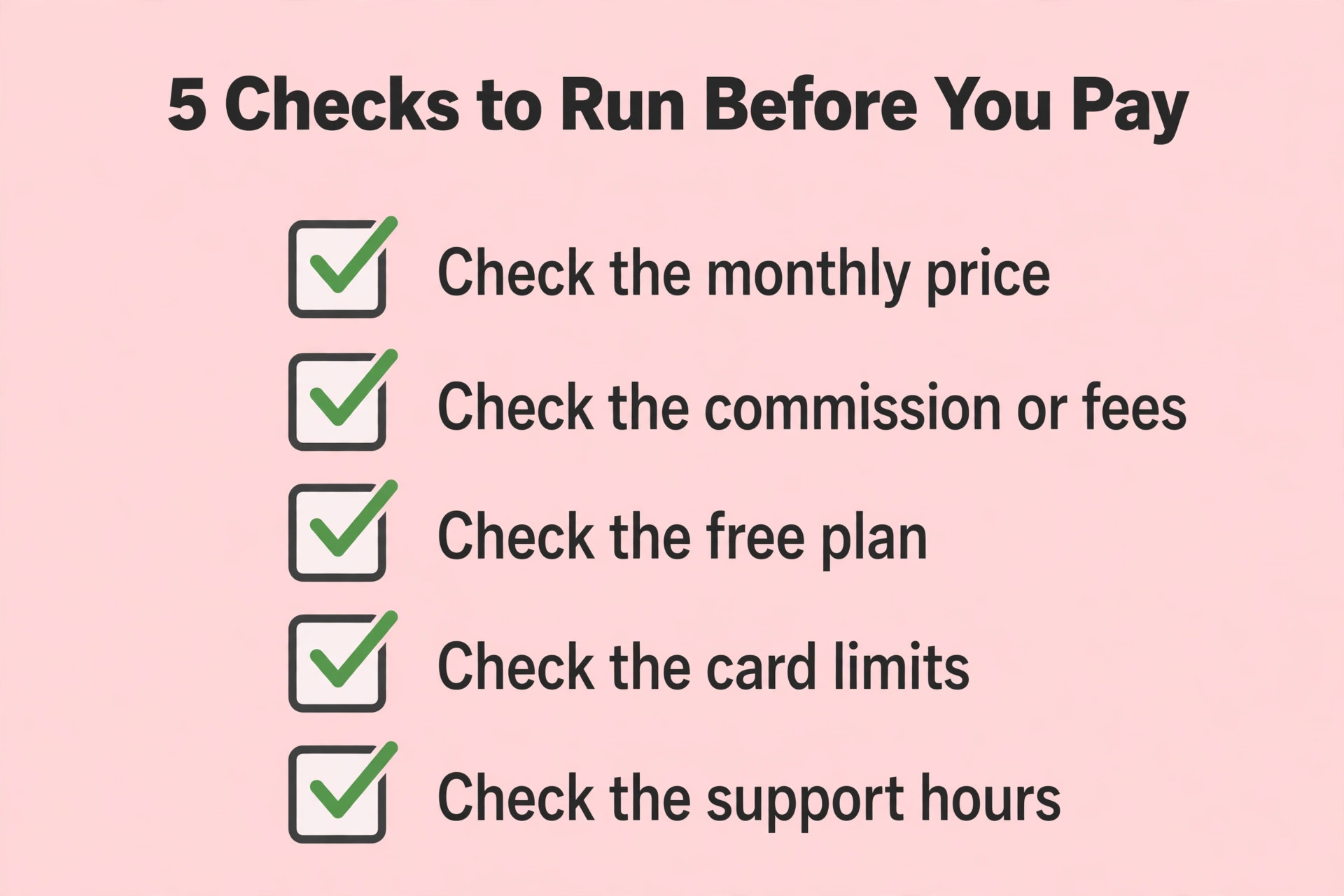
Work through these five checks before you pay. They take an afternoon, and they catch most of the surprises that make buyers regret a purchase.
- Write down the three tasks you do every week, and test those exact tasks in the trial. Test them with real data, not the demo data, so the trial shows the true workflow.
- Count the people who need a login, and price the plan for that number rather than for yourself alone. A plan that is cheap for one person can be dear once ten people need a login.
- Run the numbers for a busy month, and check the cap that forces the next upgrade. A cap that fits a quiet month can run out in the third week of a busy one.
- Export your data during the trial, and confirm the export includes everything you entered. A clean export is the proof that you can leave if the tool stops fitting.
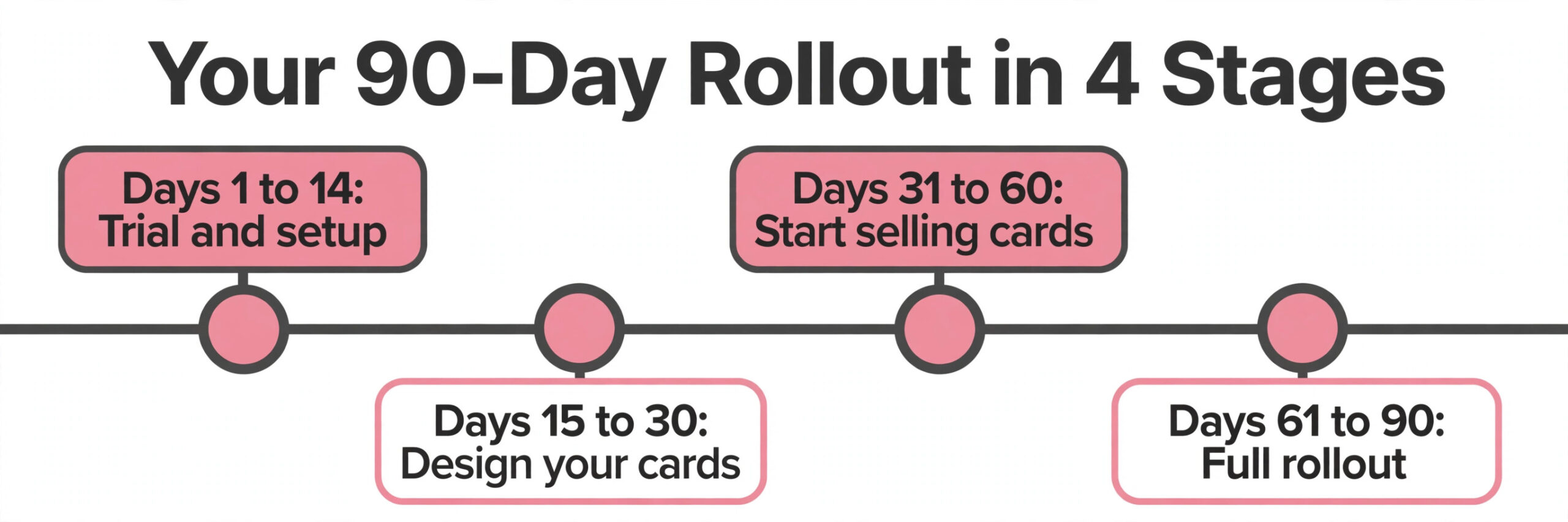
- Set a 90 day review date, and decide then whether the tool earns its price. By then you will know the real monthly cost and the limits you actually hit.
Our Verdict
For most readers, best gift card software for small retailers comes down to Square Gift Cards. It covers the core job at a fair price, it is quick to set up, and its limits are clear enough to plan around. Start there unless one of the rows in the decision table points you elsewhere, because the most popular pick is popular for a reason.
Gift Up! is the pick when budget leads the decision, because it keeps the entry price low without cutting the core features. Shopify Gift Cards is the pick when depth matters more than price, because it goes further on the feature that defines this category. Both are strong choices in best gift card software for small retailers, and the wrong one is the tool you buy without trialling first. Trial the top two side by side for two weeks and the choice usually makes itself.
Start free where a free plan exists, count your volume for a month, and only pay when a paid feature earns its place. A tool you use every day is worth paying for, and a tool you pay for and ignore is the most expensive tool in this list. If the winner stops fitting in a year, the export test you ran in the trial makes the next move easy, so keep that habit for every tool you buy.

Frequently Asked Questions
What is the cheapest gift card software for small retailers?
The cheapest option in this guide to best gift card software for small retailers is Square Gift Cards, which has no monthly fee, with card production and transaction fees applying. That makes it the lowest cost way to start, though the free plan limit decides whether it stays cheap as you grow. Check the cap before you commit, because a low entry price can still grow fast once volume rises, and the yearly total is the number that matters for your budget. The dearest entry in this list costs $35 a month, so the range from free to that figure shows how much the pricing model matters.
How much does Square Gift Cards cost?
Square Gift Cards has no monthly fee, with card production and transaction fees applying. That covers the entry tier, and higher tiers add more capacity and features, so price the tier that fits your volume rather than the entry tier alone. Annual billing usually cuts the monthly figure, so compare the yearly total before you decide, and confirm the current price on the pricing page before you pay. If the entry tier feels tight, check the next tier before you buy, because the upgrade that removes the cap is often the tier you will need within a year.
Is there a free gift card software for small retailers?
Yes. several tools here offer a free plan or a free start. The free plans are genuinely usable for a small volume, and the paid plans earn their money when you need more capacity, longer history or admin controls. Trial the free plan for a full month before you pay, and count what you use so you know when an upgrade becomes worth it. The free plans differ in what they cap, so compare the limit that matters to you, whether that is members, clients, bookings or responses, before you pick one.
Which gift card software for small retailers is best for a small retailer?
Square Gift Cards is the best fit for a small retailer, because it covers the core job at a fair price without a long setup. Gift Up! is the budget alternative, and Shopify Gift Cards suits a retailer that needs more depth. The decision table above matches each tool to its job, so start there and trial the top two before you decide. A small retailer should also check the support hours and the contract term, since a tool that fits today can still become a poor fit as the team grows.
What should I check before I buy gift card software for small retailers?
Check the pricing unit first, then the free plan cap, then the add ons. Confirm which integrations are included, test the mobile app with the people who will use it daily, and export your data during the trial. Those five checks catch most of the surprises that make buyers regret a purchase, and they take less than an afternoon to run. A written quote helps too, because quote only tools can vary the price by size, and a quote at your size is the only figure you can budget on.
Can I switch to another gift card software for small retailers later without losing my data?
Yes, if you plan the move. Export your data during the trial of the new tool, map the fields before you import, and run both tools in parallel for a month. The tools in this guide all export the core records, though the ease of the export varies, so test it before you commit to a migration. A migration that looks clean in a demo can still miss a field you rely on, so keep the old system running until the new one has handled a full busy week.
A good choice in best gift card software for small retailers is the one that fits your volume, your budget and your workflow, not the one with the longest feature list. Trial the free plan, count what you use, and pick the plan whose limits match the way you actually work.